

SIST EN 14072:2004
(Main)Glass in furniture - Test methods
General Information
- Abstract
This European Standard specifies test methods for horizontal and vertical glass used in furniture. It applies to both flat and curved glass.
The test methods can be applied to furniture in all fields of application from domestic to contract use.
The test methods are designed to represent forces caused by impacts with parts of the human body.
The test methods do not apply to glass shelves nor to glass supported over its entire area, including wall fixed mirrors.
The standard does not apply to testing and classification of the glass itself as covered by EN 12600.The standard does not include any requirements.
- Status
- Published
- Publication Date
- 31-Dec-2003
- Technical Committee
- POH - Furniture
- Current Stage
- 6060 - National Implementation/Publication (Adopted Project)
- Start Date
- 01-Jan-2004
- Due Date
- 01-Jan-2004
- Completion Date
- 01-Jan-2004


Overview
SIST EN 14072:2004 - Glass in Furniture - Test Methods is a European standard developed by CEN (European Committee for Standardization). This standard specifies test methods for assessing the safety and performance of both horizontal and vertical glass used in furniture. It covers both flat and curved glass, ensuring that furniture containing glass components meets consistent evaluation criteria in terms of resistance to impact and accidental contact, simulating real-world scenarios involving human interaction. Notably, this standard does not set requirements or classifications for the glass itself-that aspect is addressed under EN 12600. SIST EN 14072:2004 applies across domestic, commercial, and contract furniture applications, but it excludes glass shelves, glass fully supported over its area, and wall-fixed mirrors.
Key Topics
Scope and Coverage
- Test methods for both flat and curved glass in furniture
- Applicable to horizontal and vertical glass components
- Excludes glass shelves and fully-supported glass, such as wall mirrors
Simulated Impact Testing
- Tests designed to simulate impact forces from parts of the human body
- Ensures that glass in furniture can withstand everyday use and accidental impacts
Test Equipment and Conditions
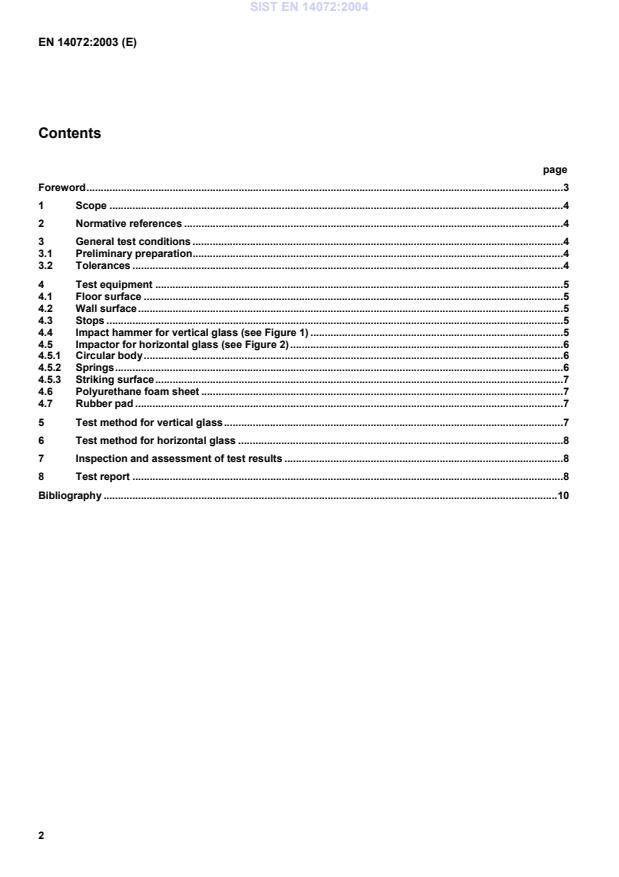
- Specifies the use of impact hammers and impactors for vertical and horizontal glass respectively
- Outlines the use of supporting surfaces, stops, and cushioning materials (polyurethane foam, rubber pads)
- Establishes environmental and preparation conditions for testing
Assessment of Test Results
- Procedures for evaluating post-test conditions of glass, such as fragment shapes and attachment
- Types of glass breakage considered: complete fragmentation, cracks with held fragments, or relatively harmless disintegration
Test Reporting
- Detailed documentation required: reference to the standard, product details, test parameters, and outcomes
Applications
SIST EN 14072:2004 is essential for manufacturers, specifiers, and testing laboratories involved in the design and assessment of furniture containing glass components. Practical applications of the standard include:
- Furniture Safety Testing: Ensures that glass integrated into tables, cabinet doors, partitions, and similar furniture is tested to withstand accidental human impact.
- Product Development: Helps designers create safer glass furniture by incorporating testable, impact-resistant elements.
- Quality Assurance: Supports manufacturers in demonstrating compliance with European safety assessment methods for glass in furniture.
- Public and Commercial Environments: Provides assurance for contract furniture in high-traffic locations such as offices, hotels, schools, and public spaces.
- Domestic Use: Offers guidelines for safe integration of glass elements in home furniture.
Related Standards
- EN 12600: Glass in building - Pendulum test - Impact test method and classification for flat glass. While SIST EN 14072:2004 specifies test methods, EN 12600 addresses the performance and classification of flat glass itself, often referenced when additional properties or classifications are required.
- EN ISO 2439: Flexible cellular polymeric materials - Determination of hardness (indentation technique). Referenced within EN 14072 for assessing cushioning materials used during testing.
- ISO 7619: Rubber - Determination of indentation hardness, relevant to evaluating the hardness of pads employed in the test setups.
By adhering to SIST EN 14072:2004, manufacturers and testers contribute to higher safety standards and risk reduction in environments where glass furniture is utilized, enhancing both product reliability and consumer safety. For highest relevance and compliance, EN 14072 should be considered alongside the latest editions of referenced standards.
Relations
- Effective Date
- 28-Jan-2026
- Effective Date
- 28-Jan-2026
- Effective Date
- 01-Jul-2026
- Referred By
SIST EN 12521:2010 - Furniture - Strength, durability and safety - Requirements for domestic tables - Effective Date
- 28-Jan-2026
- Effective Date
- 28-Jan-2026
- Effective Date
- 28-Jan-2026
- Effective Date
- 28-Jan-2026
- Effective Date
- 28-Jan-2026
- Effective Date
- 28-Jan-2026
- Referred By
SIST EN 12521:2016 - Furniture - Strength, durability and safety - Requirements for domestic tables - Effective Date
- 28-Jan-2026
- Effective Date
- 28-Jan-2026
- Effective Date
- 28-Jan-2026
- Referred By
SIST EN 12521:2024 - Furniture - Safety, strength and durability - Requirements for domestic tables - Effective Date
- 28-Jan-2026
- Effective Date
- 28-Jan-2026
- Effective Date
- 28-Jan-2026
Frequently Asked Questions
SIST EN 14072:2004 is a standard published by the Slovenian Institute for Standardization (SIST). Its full title is "Glass in furniture - Test methods". This standard covers: This European Standard specifies test methods for horizontal and vertical glass used in furniture. It applies to both flat and curved glass. The test methods can be applied to furniture in all fields of application from domestic to contract use. The test methods are designed to represent forces caused by impacts with parts of the human body. The test methods do not apply to glass shelves nor to glass supported over its entire area, including wall fixed mirrors. The standard does not apply to testing and classification of the glass itself as covered by EN 12600.The standard does not include any requirements.
This European Standard specifies test methods for horizontal and vertical glass used in furniture. It applies to both flat and curved glass. The test methods can be applied to furniture in all fields of application from domestic to contract use. The test methods are designed to represent forces caused by impacts with parts of the human body. The test methods do not apply to glass shelves nor to glass supported over its entire area, including wall fixed mirrors. The standard does not apply to testing and classification of the glass itself as covered by EN 12600.The standard does not include any requirements.
SIST EN 14072:2004 is classified under the following ICS (International Classification for Standards) categories: 81.040.30 - Glass products; 97.140 - Furniture. The ICS classification helps identify the subject area and facilitates finding related standards.
SIST EN 14072:2004 has the following relationships with other standards: It is inter standard links to SIST EN ISO 6149-2:2007, SIST EN ISO 2439:2009, SIST EN 581-3:2026, SIST EN 12521:2010, SIST EN 16121:2024, SIST EN 14749:2016, SIST EN 14749:2006, SIST EN 16121:2014, SIST EN 16121:2014+A1:2018, SIST EN 12521:2016, SIST EN 14727:2006, SIST EN 15372:2008, SIST EN 12521:2024, SIST EN 1730:2012, SIST EN 14749:2016+A1:2022. Understanding these relationships helps ensure you are using the most current and applicable version of the standard.
SIST EN 14072:2004 is available in PDF format for immediate download after purchase. The document can be added to your cart and obtained through the secure checkout process. Digital delivery ensures instant access to the complete standard document.
Standards Content (Sample)
2003-01.Slovenski inštitut za standardizacijo. Razmnoževanje celote ali delov tega standarda ni dovoljeno.Steklo v pohištvu – Preskusne metodeGlas in Möbeln - PrüfverfahrenVerre en ameublement - Méthodes d'essaiGlass in furniture - Test methods97.140PohištvoFurniture81.040.30Izdelki iz steklaGlass productsICS:Ta slovenski standard je istoveten z:EN 14072:2003SIST EN 14072:2004en01-januar-2004SIST EN 14072:2004SLOVENSKI
STANDARD
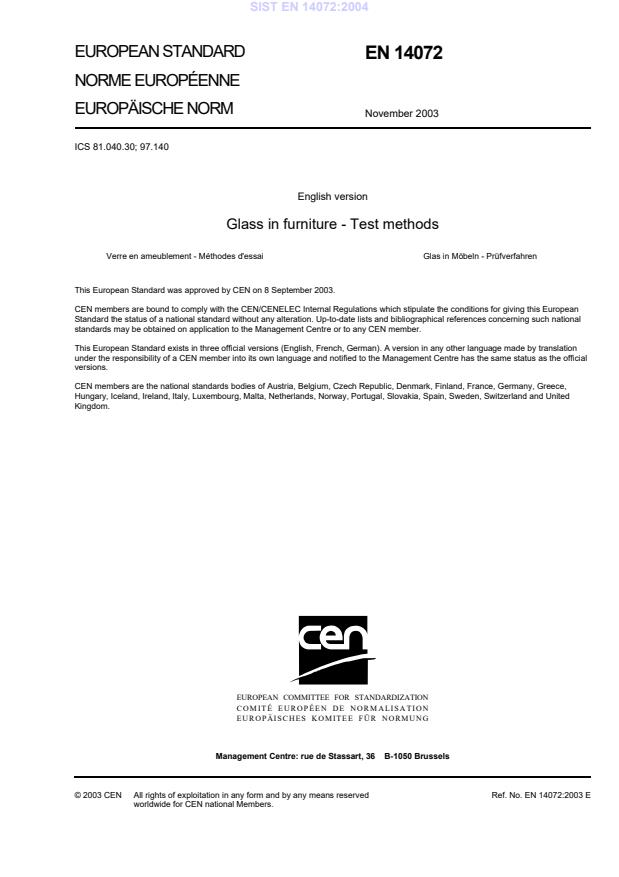
EUROPEAN STANDARDNORME EUROPÉENNEEUROPÄISCHE NORMEN 14072November 2003ICS 81.040.30; 97.140English versionGlass in furniture - Test methodsVerre en ameublement - Méthodes d'essaiGlas in Möbeln - PrüfverfahrenThis European Standard was approved by CEN on 8 September 2003.CEN members are bound to comply with the CEN/CENELEC Internal Regulations which stipulate the conditions for giving this EuropeanStandard the status of a national standard without any alteration. Up-to-date lists and bibliographical references concerning such nationalstandards may be obtained on application to the Management Centre or to any CEN member.This European Standard exists in three official versions (English, French, German). A version in any other language made by translationunder the responsibility of a CEN member into its own language and notified to the Management Centre has the same status as the officialversions.CEN members are the national standards bodies of Austria, Belgium, Czech Republic, Denmark, Finland, France, Germany, Greece,Hungary, Iceland, Ireland, Italy, Luxembourg, Malta, Netherlands, Norway, Portugal, Slovakia, Spain, Sweden, Switzerland and UnitedKingdom.EUROPEAN COMMITTEE FOR STANDARDIZATIONCOMITÉ EUROPÉEN DE NORMALISATIONEUROPÄISCHES KOMITEE FÜR NORMUNGManagement Centre: rue de Stassart, 36
B-1050 Brussels© 2003 CENAll rights of exploitation in any form and by any means reservedworldwide for CEN national Members.Ref. No. EN 14072:2003 ESIST EN 14072:2004
...