

SIST EN 60068-3-4:2002
(Main)Environmental testing -- Part 3-4: Supporting documentation and guidance - Damp heat tests
General Information
- Abstract
Provides the necessary information to assist in preparing relevant specifications, such as standards for components or equipment, in order to select appropriate tests and test severities for specific products and, in some cases, specific types of application. The object of damp heat tests is to determine the ability of products to withstand the stresses occurring in a high relative humidity environment, with or without condensation, and with special regard to variations of electrical and mechanical characteristics. Damp heat tests may also be utilized to check the resistance of a specimen to some forms of corrosion attack.
- Status
- Withdrawn
- Publication Date
- 31-Aug-2002
- Withdrawal Date
- 04-Aug-2026
- Technical Committee
- I09 - Imaginarni 09
- Current Stage
- 9900 - Withdrawal (Adopted Project)
- Start Date
- 04-Aug-2026
- Due Date
- 27-Aug-2026
- Completion Date
- 05-Aug-2026

Overview
EN 60068-3-4:2002 (Environmental testing - Part 3-4: Supporting documentation and guidance - Damp heat tests) is a CLC/CENELEC adoption of IEC 60068-3-4:2001. This informative guidance document supports the selection and specification of damp heat tests for electrotechnical products and components. Its purpose is to help standards writers, specifiers and test engineers choose appropriate test types and severities to assess performance in high relative humidity environments, with or without condensation.
Key topics
- Purpose of damp heat tests: guidance on using damp heat to determine product resistance to high humidity, condensation and related stresses.
- Selection of tests and severities: how to determine which test procedure and severity level are relevant for specific products or application types.
- Electrical and mechanical characteristic variation: emphasis on monitoring changes in electrical and mechanical performance during/after damp heat exposure.
- Corrosion considerations: use of damp heat tests to check susceptibility to some forms of corrosion attack.
- Supporting documentation: recommended information to include in specifications and test plans; annex A provided as informative guidance.
- Harmonization with other IEC/EN test methods: positions Part 3-4 as complementary to the IEC 60068 family of methods (Part 1 & Part 2 series).
Practical applications
- Use EN 60068-3-4 when preparing product or component specifications that require environmental qualification for humidity exposure.
- Apply the guidance to define realistic test programs for electronics, electrotechnical equipment and assemblies destined for humid or condensing environments.
- Aid procurement, quality and compliance teams in specifying humidity test types and severities for supplier testing and acceptance criteria.
- Support environmental test laboratories in interpreting product- or application-specific test selection and reporting expectations.
Who should use this standard
- Standards developers and technical committees writing component or equipment standards.
- Test engineers and environmental laboratories designing damp heat test campaigns.
- Product design and reliability engineers validating humidity resistance.
- Quality assurance, certification bodies and procurement specialists who require clear humidity-test specifications.
Related standards
Relevant members of the IEC/EN 60068 family referenced alongside EN 60068-3-4 include:
- EN/IEC 60068-1 (general guidance)
- EN/IEC 60068-2 series (individual test methods such as -2-1, -2-10, -2-14, -2-17, -2-30, -2-38, -2-39, -2-61, -2-66, -2-67, -2-78)
Keywords: EN 60068-3-4, damp heat tests, environmental testing, humidity testing, condensation testing, IEC 60068, test severity, electrotechnical standards, corrosion resistance.
Relations
- Effective Date
- 06-May-2014
- Effective Date
- 01-May-2024
- Effective Date
- 09-Feb-2026
- Effective Date
- 03-Feb-2026
- Referred By
SIST EN 60068-2-6:2001 - Environmental testing -- Part 2: Tests - Test Fc: Vibration (sinusoidal) - Effective Date
- 03-Feb-2026
- Effective Date
- 03-Feb-2026
- Effective Date
- 03-Feb-2026
- Effective Date
- 03-Feb-2026
- Effective Date
- 03-Feb-2026
- Effective Date
- 03-Feb-2026
- Effective Date
- 03-Feb-2026
- Effective Date
- 03-Feb-2026
Get Certified
Connect with accredited certification bodies for this standard

IMQ S.p.A. (Certification)
Italian electrical product certification.

SLG Prüf- und Zertifizierungs GmbH
German testing and certification body.

UL Solutions
Global safety science company with testing, inspection and certification.
Sponsored listings
Frequently Asked Questions
SIST EN 60068-3-4:2002 is a standard published by the Slovenian Institute for Standardization (SIST). Its full title is "Environmental testing -- Part 3-4: Supporting documentation and guidance - Damp heat tests". This standard covers: Provides the necessary information to assist in preparing relevant specifications, such as standards for components or equipment, in order to select appropriate tests and test severities for specific products and, in some cases, specific types of application. The object of damp heat tests is to determine the ability of products to withstand the stresses occurring in a high relative humidity environment, with or without condensation, and with special regard to variations of electrical and mechanical characteristics. Damp heat tests may also be utilized to check the resistance of a specimen to some forms of corrosion attack.
Provides the necessary information to assist in preparing relevant specifications, such as standards for components or equipment, in order to select appropriate tests and test severities for specific products and, in some cases, specific types of application. The object of damp heat tests is to determine the ability of products to withstand the stresses occurring in a high relative humidity environment, with or without condensation, and with special regard to variations of electrical and mechanical characteristics. Damp heat tests may also be utilized to check the resistance of a specimen to some forms of corrosion attack.
SIST EN 60068-3-4:2002 is classified under the following ICS (International Classification for Standards) categories: 19.040 - Environmental testing; 29.020 - Electrical engineering in general. The ICS classification helps identify the subject area and facilitates finding related standards.
SIST EN 60068-3-4:2002 has the following relationships with other standards: It is inter standard links to SIST HD 323.2.28 S1:2003, SIST EN IEC 60068-3-4:2024, SIST EN 15267-3:2008, SIST EN 62606:2014, SIST EN 60068-2-6:2001, SIST EN 60068-3-6:2002, SIST HD 62640:2015, SIST EN 61009-1:2013, SIST EN 60127-6:2015, SIST EN 60426:2007, SIST EN 62752:2016/A1:2020, SIST EN 60747-15:2004. Understanding these relationships helps ensure you are using the most current and applicable version of the standard.
SIST EN 60068-3-4:2002 is available in PDF format for immediate download after purchase. The document can be added to your cart and obtained through the secure checkout process. Digital delivery ensures instant access to the complete standard document.
Standards Content (Sample)
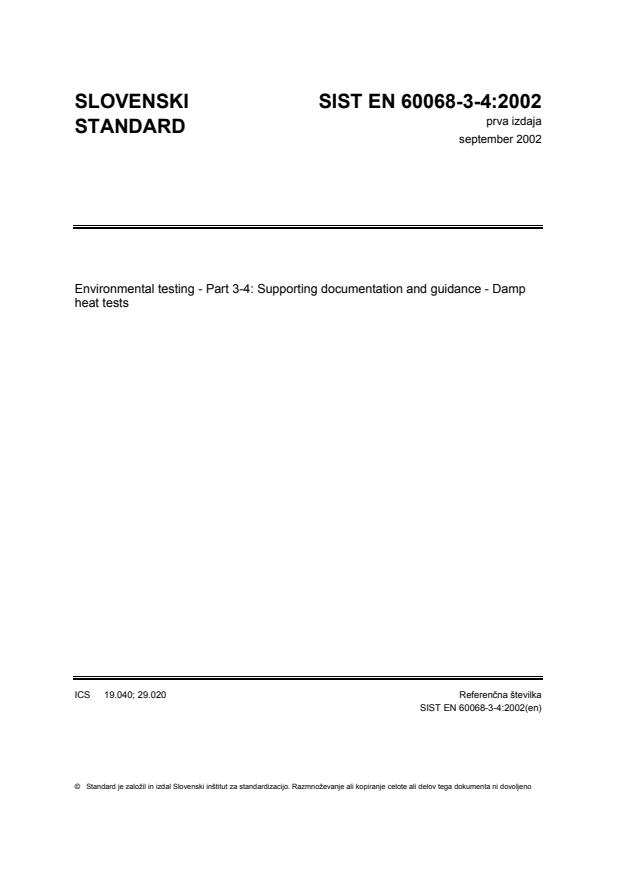
SLOVENSKI SIST EN 60068-3-4:2002
prva izdaja
STANDARD
september 2002
Environmental testing - Part 3-4: Supporting documentation and guidance - Damp
heat tests
ICS 19.040; 29.020 Referenčna številka
© Standard je založil in izdal Slovenski inštitut za standardizacijo. Razmnoževanje ali kopiranje celote ali delov tega dokumenta ni dovoljeno
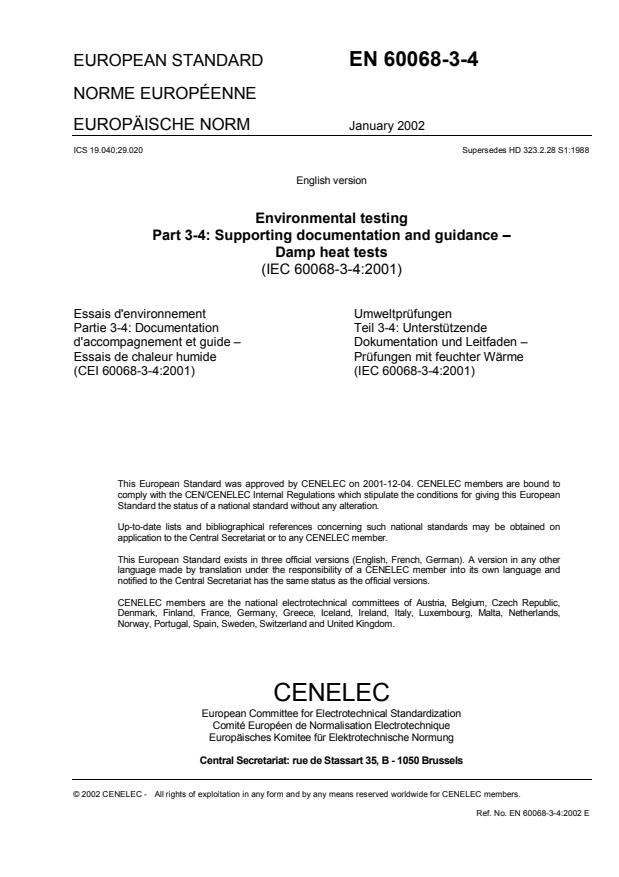
EUROPEAN STANDARD EN 60068-3-4
NORME EUROPÉENNE
EUROPÄISCHE NORM January 2002
ICS 19.040;29.020 Supersedes HD 323.2.28 S1:1988
English version
Environmental testing
Part 3-4: Supporting documentation and guidance –
Damp heat tests
(IEC 60068-3-4:2001)
Essais d'environnement Umweltprüfungen
Partie 3-4: Documentation Teil 3-4: Unterstützende
d'accompagnement et guide – Dokumentation und Leitfaden –
Essais de chaleur humide Prüfungen mit feuchter Wärme
(CEI 60068-3-4:2001) (IEC 60068-3-4:2001)
This European Standard was approved by CENELEC on 2001-12-04. CENELEC members are bound to
comply with the CEN/CENELEC Internal Regulations which stipulate the conditions for giving this European
Standard the status of a national standard without any alteration.
Up-to-date lists and bibliographical references concerning such national standards may be obtained on
application to the Central Secretariat or to any CENELEC member.
This European Standard exists in three official versions (English, French, German). A version in any other
language made by translation under the responsibility of a CENELEC member into its own language and
notified to the Central Secretariat has the same status as the official versions.
CENELEC members are the national electrotechnical committees of Austria, Belgium, Czech Republic,
Denmark, Finland, France, Germany, Greece, Iceland, Ireland, Italy, Luxembourg, Malta, Netherlands,
Norway, Portugal, Spain, Sweden, Switzerland and United Kingdom.
CENELEC
European Committee for Electrotechnical Standardization
Comité Européen de Normalisation Electrotechnique
Europäisches Komitee für Elektrotechnische Normung
Central Secretariat: rue de Stassart 35, B - 1050 Brussels
© 2002 CENELEC - All rights of exploitation in any form and by any means reserved worldwide for CENELEC members.
Ref. No. EN 60068-3-4:2002 E
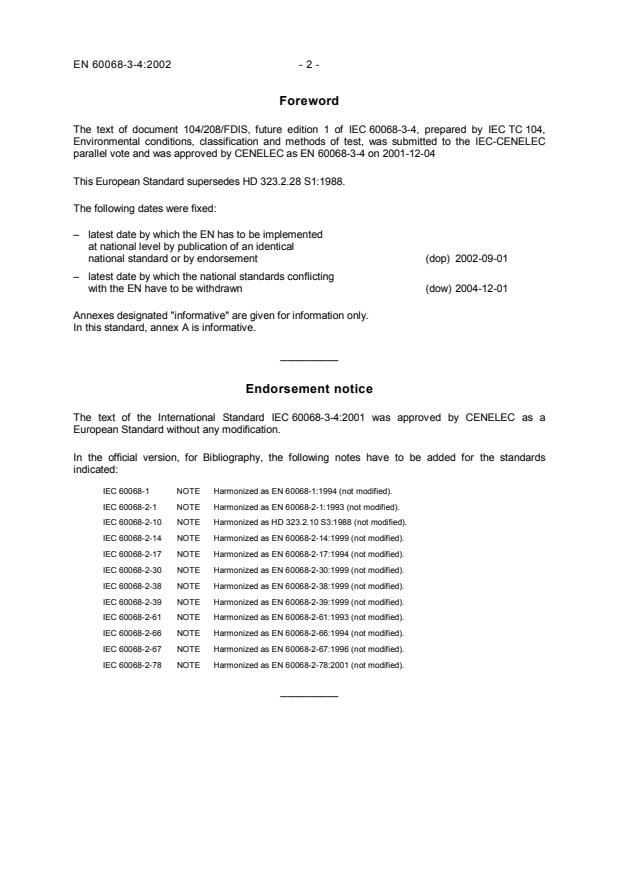
Foreword
The text of document 104/208/FDIS, future edition 1 of IEC 60068-3-4, prepared by IEC TC 104,
Environmental conditions, classification and methods of test, was submitted to the IEC-CENELEC
parallel vote and was approved by CENELEC as EN 60068-3-4 on 2001-12-04
This European Standard supersedes HD 323.2.28 S1:1988.
The following dates were fixed:
– latest date by which the EN has to be implemented
at national level by publication of an identical
national standard or by endorsement (dop) 2002-09-01
– latest date by which the national standards conflicting
with the EN have to be withdrawn (dow) 2004-12-01
Annexes designated "informative" are given for information only.
In this standard, annex A is informative.
__________
Endorsement notice
The text of the International Standard IEC 60068-3-4:2001 was approved by CENELEC as a
European Standard without any modification.
In the official version, for Bibliography, the following notes have to be added for the standards
indicated:
IEC 60068-1 NOTE Harmonized as EN 60068-1:1994 (not modified).
IEC 60068-2-1 NOTE Harmonized as EN 60068-2-1:1993 (not modified).
IEC 60068-2-10 NOTE Harmonized as HD 323.2.10 S3:1988 (not modified).
IEC 60068-2-14 NOTE Harmonized as EN 60068-2-14:1999 (not modified).
IEC 60068-2-17 NOTE Harmonized as EN 60068-2-17:1994 (not modified).
IEC 60068-2-30 NOTE Harmonized as EN 60068-2-30:1999 (not modified).
IEC 60068-2-38 NOTE Harmonized as EN 60068-2-38:1999 (not modified).
IEC 60068-2-39 NOTE Harmonized as EN 60068-2-39:1999 (not modified).
IEC 60068-2-61 NOTE Harmonized as EN 60068-2-61:1993 (not modified).
IEC 60068-2-66 NOTE Harmonized as EN 60068-2-66:1994 (not modified).
IEC 60068-2-67 NOTE Harmonized as EN 60068-2-67:1996 (not modified).
IEC 60068-2-78 NOTE Harmonized as EN 60068-2-78:2001 (not modified).
__________
�����
���
�������������� ���
���������
�������������
����������������
��������
�������������
�������
������������������������
�����������
�����������������������������������������
����������� �!���� �����
������������!����������
���������
"��������������������������������������
����� ���������
©�����������������������&���$!����������’����⎯����&(��)"����% ���)"��������’��
�$!$���&%��������!�����&$* �!%�������� &�$�� +������&���$���� �� ��� &%��� �,� �"��� &$* �!%����� �%(� *�� ��&���$!��� ��� $�� �0��� ��
$�� �������$��#$� #$��,�����#$��!����������&%��%$!$��&��!���- %�(� ,���� ��� *(� %�(� ��%��-� � �!�����!� ��� ��!"%��!% -
� �!�����#$�� �$� ��!%��#$�-� (� !��&���� %� &"���!�&��� ��� �� ��! $���)� &"���!�&(��)� %��� ��!��,� �-� 1��"�$�� &���������� ��
��!��,� ��-��%��� .%!!�����!������� .�����$�/ 1�����)�,�����"��&$* ��"��/
������%����% �� �!�����!"��!% ����������� 2-��$�����3%���*���4���’%-��1��0�� %��
�� �,%56�78�����9�9��2�� ���%� 6����%� :��!/!" �����1�*�������"��&6;;111/��!/!"
��������<
������������ � �!�����!"��#$�� ������%����% �
�
����������
�������%����% � � �!�����!"��!% � ����������
������������������������������������
��������������������������������
=��=��2�8�>����6���� ?�2�?
��������
����@���///////////////////////////////////////////////////////////////////////////////////////////////////////////////////////////A
������B�����/////////////////////////////////////////////////////////////////////////////////////////////////////////////////////C
� �!�&� ///////////////////////////////////////////////////////////////////////////////////////////////////////////////////////////////9
� ��,�������� ////////////////////////////////////////////////////////////////////////////////////////////////////////////////////////9
2 ���!��$����,����"��&���$!�����%���!����� ��,�"$�����( ///////////////////////////////////////////////////// ��
2/� 4����% /////////////////////////////////////////////////////////////////////////////////////////////////////////////////��
2/� ��D�!������,�1%����E�&�%(��)F /////////////////////////////////////////////////////////////////////////////////// ��
2/2 ��D�!������,�1%����’%&�$��E���%�F /////////////////////////////////////////////////////////////////////////// ��
2/8 �%�$�%������(&� ////////////////////////////////////////////////////////////////////////////////////////////////////// ��
2/A �$�,%!���’%&��%����/////////////////////////////////////////////////////////////////////////////////////////////// ��
2/= �#$��$���� $����� ///////////////////////////////////////////////////////////////////////////////////////////////// �2
2/C ��"$����,�!%���� //////////////////////////////////////////////////////////////////////////////////////////////////// �2
2/� ������ ��,�"$�����(///////////////////////////////////////////////////////////////////////////////////////////////// �2
8 �"(��!% �%&&�%�%�!���,��"���,,�!����,�"$�����( //////////////////////////////////////////////////////////////// �2
8/� �������%���� //////////////////////////////////////////////////////////////////////////////////////////////////////// �2
8/� �����&���� ///////////////////////////////////////////////////////////////////////////////////////////////////////////// �A
8/2 �*���&���� ///////////////////////////////////////////////////////////////////////////////////////////////////////////// �A
8/8 ��,,$���� //////////////////////////////////////////////////////////////////////////////////////////////////////////////// �A
A �!!� ��%����//////////////////////////////////////////////////////////////////////////////////////////////////////////////////// �A
A/� 4����% /////////////////////////////////////////////////////////////////////////////////////////////////////////////////�A
A/� �!!� ��%�����,%!���///////////////////////////////////////////////////////////////////////////////////////////////// �C
= ���&%�������,����%�(���%���%���!(! �!������ //////////////////////////////////////////////////////////////////// �C
=/� ������6��%�&�"�%�-����%�(���%��//////////////////////////////////////////////////////////////////////////// �C
=/� ������*6��%�&�"�%�-�!(! �!�����////////////////////////////////////////////////////////////////////////////// �C
=/2 ��#$��!����,�������%���!��&����������� //////////////////////////////////////////////////////////////// �C
C ��, $��!���,��������’�������������&�!����� //////////////////////////////////////////////////////////////////// �9
C/� �"%�)���,�&"(��!% �!"%�%!�������!� ///////////////////////////////////////////////////////////////////////// �9
C/� �"%�)���,�� �!���!% �!"%�%!�������!�//////////////////////////////////////////////////////////////////////// �9
C/2 ��������� ////////////////////////////////////////////////////////////////////////////////////////////////////////////// ��
����5����E��,���%��’�F��G$�����(��,,�!�����%)�%� ////////////////////////////////////////////////////////////////// �2
H�* ��)�%&"( ////////////////////////////////////////////////////////////////////////////////////////////////////////////////////////// 2�
��)$����/��?��"(��!% �&��!��������’� ’������"$�����(�������)////////////////////////////////////////////////// �C
=��=��2�8�>����6���� ?�A�?
������������������������G����������������
IIIIIIIIIIII
�#$�%&#’�#()*�(�"(�#+��
����������"��������������������������������������
������ ���������
����@���
�F �"������E������%����% �� �!�����!"��!% �����������F����%�1�� �1������)%��0%�����,�����%��%���0%�����!��&�����)
% � �%����% � � �!�����!"��!% � !���������� E���� �%����% � ����������F/� �"�� �*D�!�� �,� �"�� ���� ��� ��� &������
������%����% �!���&��%��������% �#$��������!��!�����)���%��%���0%���������"��� �!���!% �%���� �!�����!� ,�� ��/� ��
�"��� ���� %��� ��� %�������� ��� ��"��� %!��’�����-� �"�� ���� &$* ��"��� ������%����% � ��%��%���/� �"���� &��&%�%����� ��
����$����� ��� ��!"��!% � !���������J� %�(� ���� �%����% � ���������� ����������� ��� �"�� �$*D�!�� ��% �� 1��"� �%(
&%���!�&%��� ��� �"��� &��&%�%���(� 1��K/� ������%����% -� )�’�������% � %��� ����)�’�������% � ��)%��0%������ �%����)
1��"��"������% ���&%���!�&%�������"���&��&%�%����/��"������!� %*��%����! ��� (�1��"��"��������%����% ���)%��0%����
,��� ��%��%���0%����� E���F� ��� %!!���%�!�� 1��"� !���������� ����������� *(� %)�������� *��1���� �"�� �1�
��)%��0%�����/
�F �"�� ,���% � ��!������� ��� %)��������� �,� �"�� ���� ��� ��!"��!% � �%������ �5&����-� %�� ��%� (� %�� &����* �-� %�
������%����% �!������$���,��&����������"���� �’%����$*D�!������!���%!"���!"��!% �!���������"%�� ��&������%����
,����% �������������%����% �����������/
2F �"����!$������&���$!���"%’���"��,�����,���!������%������,���������%����% �$���%���%���&$* ��"�������"��,���
�,� ��%��%���-� ��!"��!% � �&�!�,�!%�����-� ��!"��!% � ��&����� ��� )$����� %��� �"�(� %��� %!!�&���� *(� �"�� �%����%
���������������"%�������/
8F ��� ������ ��� &������� ������%����% � $��,�!%����-� ���� �%����% � ����������� $�����%K�� ��� %&& (� ���� ������%����%
��%��%���� ��%��&%���� (� ��� �"�� �%5��$�� �5����� &����* �� ��� �"���� �%����% � %��� ��)���% � ��%��%���/� ��(
��’��)��!�� *��1���� �"�� ���� ��%��%��� %��� �"�� !�����&�����)� �%����% � ��� ��)���% � ��%��%��� �"% � *�� ! �%� (
����!%��������"�� %����/
AF �"�� ���� &��’����� ��� �%�K��)� &��!��$��� ��� ����!%��� ���� %&&��’% � %��� !%����� *�� ��������� ���&����* �� ,��� %�(
�#$�&�������! %�������*�����!��,�����(�1��"������,�������%��%���/
=F�� ���������������%1������"��&����*� ��(��"%��������,��"��� ��������,��"���������%����% ���%��%����%(�*���"���$*D�!�
�,�&%�������)"��/��"�������"% �����*��"� �����&����* ��,���������,(��)�%�(����% ��$!"�&%�������)"��/
������%����% � ��%��%��� ���� =��=��2�8� "%�� *���� &��&%���� *(� ���� ��!"��!% � ���������� ��86
��’��������% �!���������-�! %���,�!%�����%������"�����,�����/
�"��� ,����� �������� �,� ���� =��=��2�8� ��& %!��� %��� !%�!� �� �"�� �"���� �������� �,� ���� =��=������-
&$* ��"�������99�-��,�1"�!"����!������$����%���!"��!% ���’�����/
�"����5���,��"�����%��%������*%��������"��,� �1��)���!$�����6
���� ��&�������’����)
��8;���;���� ��8;��A;�3�
�$ � ��,���%����� ��� �"�� ’����)� ,��� �"�� %&&��’% � �,� �"��� ��%��%��� !%�� *�� ,�$��� ��� �"�� ��&���� ��
’����)�����!%��������"��%*�’���%* �/
�"���&$* �!%�����"%��*������%,�������%!!���%�!��1��"��"�����;��������!��’��-��%���2/
����5������,�����,���%������� (/
�"�� !��������� "%�� ��!����� �"%�� �"�� !�������� �,� �"��� &$* �!%����� 1� � ���%��� $�!"%�)��� $���
���=/�����"����%��-��"��&$* �!%�����1� �*�
• ��!��,�����J
• 1��"��%1�J
• ��& %!���*(�%���’������������-���
• %������/
=��=��2�8�>����6���� ?�C�?
������B�����
���&��%�$���%����� %��’��"$�����(�E�GF��,��"��%��-����’%�(��)�!��*��%�����-�%���! ��%��!�,%!����
1"�!"�%!��$&���%�&���$!���$���)�����%)�-���%��&���%�����%����&��%����/
������� �)�!% � ��%�$�������� �%��� �’��� �%�(� (�%��� "%’�� �"�1�� �"%�� %� �� %��’�� "$�����(
L9A�M� !��*����� 1��"� %� ���&��%�$��� L2�� N�� ����� ���� �!!$�� ��� ,���� %��� !���������� �’��� ��)
&������-� �5!�&�� ��� ��)����� 1��"� �5������ ! ��%���/� ��� �1� ��)� ������ %��� 1��K�"�&�
���&��%�$���� �,� L2�� N�� �%(� �!!$�� *$�� ��� ����� !%���� %��� !��*����� 1��"� %� �1��� �� %��’�
"$�����(��"%������"���&���%��/
�&�!�% � !���������� �5���� ��� !���%��� 1��� ������ ,��� �5%�& �-� ��� �"�� !"���!% � ���$���(-
���% $�)�!% � & %���-� �����-� � �!���& %���)� & %���� %��� %$������-� 1"���� �"�� ���&��%�$��� !%�
��%!"�8A�N��!��*�����1��"�%��� %��’��"$�����(�$&�����%�$�%������’��� ��)�&������/
����%����#$�&�����& %!���$�����&%���!$ %��!�����������%(�*���$*D�!��������� %��’��"$����������,
����� �"%�� 9A�M� %�� "�)"��� ���&��%�$���/� �"��� �%(� "%&&��� 1"��� �"�� �#$�&����� ��� & %!��� ��
��! ��$���-��$!"�%��’�"�! ��-����������%��!�%,��!�!K&���-����!���"���!%�����$ �������������"�%���)
�"��$)"� �� %�� �%��%����� 1"� �-� *�!%$��� �,� ��%��#$%��� ’���� %����-� %�(� "$�����(� �"%�� �%(� *�
��’� �&���1� �*�����%�����&���%���� (�1��"����"����������/
��� ������ "%’��)� ��’��% � "�%�� ��$�!��-� ���&��%�$���� %��� �� %��’�� "$��������� �%(� ’%�(� ��
��,,������&%�����,��"������/
�����&"���!� &� $����� !%�� �������,(� �"�� �,,�!��� �,� %� �%�&� ! ��%��� ��� &���$!��/� ���������� ��
��%1������"��� ,%!�� *�!%$��� �,� ���� )����% � ��&���%�!�-� % �"�$)"� &� $�%���� %��� ���� !���%����� ��
�"��%����&"�����$����,����%�&�"�%��������)/��,��"���,,�!����,�&� $�%���-�,����5%�& ��!��������
%��� ��$ �� )��1�"-� %��� ��� *�� ��’����)%���-� %� �$��%* �� ����� ,���� �"�� ���� =��=���� ������� �"�$ �
*��$���/
=��=��2�8�>����6���� ?�9�?
�#$�%&#’�#()*�(�"(�#+��
����������"��������������������������������������
����� ���������
,� "����
�"��� &%��� �,� ���� =��=�� &��’����� �"�� ��!���%�(� ��,���%����� ��� %������ ��� &��&%���)� �� �’%��
�&�!�,�!%�����-��$!"�%����%��%����,���!��&�����������#$�&����-��������������� �!��%&&��&��%��
������%����������’��������,����&�!�,�!�&���$!���%��-���������!%���-��&�!�,�!��(&����,�%&& �!%����/
�"���*D�!���,��%�&�"�%�������������������������"��%*� ��(��,�&���$!������1��"��%����"����������
�!!$����)� ��� %� "�)"� �� %��’�� "$�����(� ��’��������-� 1��"� ��� 1��"�$�� !������%����-� %��� 1��"
�&�!�% ���)%������’%��%�������,�� �!���!% �%�����!"%��!% �!"%�%!�������!�/��%�&�"�%���������%(
% ���*��$�� �0������!"�!K��"��������%�!���,�%��&�!�������������,������,�!���������%��%!K/
-� ��.��������
�����"��&$�&�����,��"���&%����,�����=��=�-��"��,� �1��)���,���������%&& (/
-/,
������������
&��!�&��%����� �,� 1%���� ’%&�$�� ��� %� �$�,%!�� 1"��� �"�� �$�,%!�� ���&��%�$��� ��� �1��� �"%�� �"�
��1&��������&��%�$����,��"��%�*�����%���1"���*(�1%���������%��,������,����’%&�$������"�� �#$��
��%����,�%))��)%����
-/-
����������
%�"����!���,�1%����’%&�$���� �!$ ������%��$�,%!��1"����"���$�,%!�����&��%�$������"�)"����"%�
�"����1&��������&��%�$��
-/�
�0��������
%!!$�$ %������,�1%������ �!$ ���1��"���%��%����%
-/�
��.�����
��%��&���%������,�1%������ �!$ ����"��$)"�%��%����% -�&���$!���*(�%�&%���% �&����$�����,,����!�
������ ��,,$��������$ ������%�*% %�!���,�&%���% �&����$���-�1"� ���, �1�E�$!"�%���"��$)"� �%K�-�1"����"������������
�,��$!"� �%K��%���)��%�����$)"����&��’����’��!�$����� %���%��, �1F�% 1%(��,��% (����$ �������"��*% %�!���,��"�����%
&����$���/
-/1
0���� ���
�5!"%�)�� �,� %��� *��1���� %� "� �1� �&%!�� %��� ���� �$���$����)�-� &���$!��� *(� !"%�)��� �,
���&��%�$��
=��=��2�8�>����6���� ?����?
�� �����������.���� �����������������������!��.� ������2
�/,� +�����!
�"����%���%�)��%���$�*����,�"$�����(������!"%�*����%’%� %* �-��#$�&&���1��"���,,���������"���
�,�"$�����(�)����%�����%����,�"$�����(�!����� /
����� ��� ��� ������0��� 1%���� �"�$ �� *�� $���/� �"�� 1%���� �"�$ �� "%’�� %� &G� ’% $�� *��1���� =-�
%���C-��%���%������$���������’��(��,��-�A��Ω/!�/
� �������% �&%�����,��"��!"%�*����"�$ ��*���%���%��������%�! �%��!��������/
��� �"�� ,� �1��)� �$*! %$���-� �� (� �"�� &���!�&% � ���"���� �,� )����%����� �,� "$�����(� %��
���������/
�/-� ��3��������.�4�����5����2���6
@%�������%����0������’��(�,����&%���! ���������& ���/
�"���&�%(�&���$!�������"���1%(�����������"��%�������%��*�,���������������"��1��K��)��&%!�-��"�
)��%����&%����,��"�����& �����’%&��%���)�����"��1%(/���% ����& �����,�1%�����%(����%�������"�
%��, �1/
����!��1%������D�!�����������"��1��K��)��&%!���$���*��%’�����/
�"������& ���(�����)�’����%&���"$����,�!%�����%�����#$����� ��� ���%�����%�!�/
�/�� ��3��������.�4������������5�����6
�’%&��%����1%����E���%�F����* �1��������"��1��K��)��&%!���,��"��!"%�*��/
�"��� �(����� )�’��� �%&��� "$����,�!%����-� %��� ��� �%����� �%���%����� E���%�� ’% ’�F/� G�1�’��-� �"�
���$ �%���"�%����&$���%(���!�����%���%�������% �!�� ��)�1��"�&����* ����"$����,�!%������,,�!��/
�/�� "�����������2��
�������* �1���"��$)"�%�’���� �!���%����)�1%���-��"$��*�!����)��%�$�%����1��"�’%&�$�/
���%�,�5���%��, �1-��"��"$�����(����!����� ���*(�!"%�)��)��"��1%�������&��%�$��/��,�%����!��%��
�,� "$����,�!%����� ��� &���$!��� *(� ��!��%���)� �"�� 1%���� ���&��%�$��-� �"��� �%(� !%$��� %
���&��%�$��� ����� ��� �"�� 1��K��)� �&%!�� %��-� �$�� ��� �"�� �"���% � !%&%!��(� �,� �"�� 1%���-� �"�
���&����� ����� �%(� *�� ��)��/� �"��� �%(� ��!�����%��� %�������% � !�� ��)� 1��"� &����* �� ���
"$����,�!%������,,�!��/
�,�*$** ����!!$���"�(��%(�&���$!��%���% �%��$����,��&�%(�1"���*$�����)/
�/1� "��.���������������
�"�� %��� ��� "$����,���� *(� &%����)� ��� �’��� %� %�)�� �$�,%!�� %��%� �,� 1%���/� ��,,������ ���"���� %��
$���-�,����5%�& ����&�%����%���, �1��’�����%����)�1%�������1%����D����!�$**��)��’���%�’����!%
�$�,%!��1��"��"��%�������%�����!�$�����!$�����/
=��=��2�8�>����6���� ?��2�?
��� �"��� �(����-� �"�� �&�%(� ��� ������0��/� �"�� "$�����(� ��� !����� ��� *(� !"%�)��)� �"�� 1%���
���&��%�$��/��$������"���"���% �!%&%!��(��,��"��1%���-��"�����&�����������%(�*�� ��)��/
�/��
...