

EN 60749-24:2004
(Main)Semiconductor devices - Mechanical and climatic test methods - Part 24: Accelerated moisture resistance - Unbiased HAST
General Information
- Abstract
The unbiased highly accelerated stress test is performed for the purpose of evaluating the reliability of non-hermetically packaged solid-state devices in humid environments. It employs temperature and humidity under non-condensing conditions to accelerate the penetration of moisture through the external protective material or along the interface between the external protective material and the metallic conductors which pass through it.
- Status
- Published
- Publication Date
- 15-Apr-2004
- Withdrawal Date
- 31-Mar-2007
- Technical Committee
- CLC/TC 47X - Semiconductor devices and trusted chips
- Drafting Committee
- IEC/TC 47 - IEC_TC_47
- Parallel Committee
- IEC/TC 47 - IEC_TC_47
- Current Stage
- 6060 - Document made available - Publishing
- Start Date
- 16-Apr-2004
- Completion Date
- 16-Apr-2004

Overview
EN 60749-24:2004 specifies test methods for evaluating the resistance of non-hermetically packaged semiconductor devices to accelerated moisture exposure using the Unbiased Highly Accelerated Stress Test (HAST). Published by the European Committee for Electrotechnical Standardization (CENELEC/CLC), this standard is harmonized with IEC 60749-24:2004, providing consistent requirements across Europe and internationally.
The unbiased HAST methodology is designed to assess the reliability of solid-state semiconductor devices, particularly focusing on the ability of their protective materials to resist moisture penetration. By simulating humid environments under non-condensing conditions, this test method accelerates moisture-induced failure mechanisms, enabling manufacturers and quality engineers to evaluate device robustness and predict long-term performance.
Key Topics
- Test Environment: The standard establishes parameters for temperature and humidity levels under non-condensing conditions, accelerated to simulate years of exposure in a much shorter test period.
- Unbiased Testing: Emphasizes the use of HAST without electrical bias, isolating the mechanical and material responses to moisture ingress rather than electrically induced failure modes.
- Moisture Penetration: Evaluates how moisture infiltrates through the external encapsulation or along the interface between the packaging and embedded metal conductors.
- Applicability: Targets non-hermetically packaged solid-state devices, which are more susceptible to environmental humidity in real-world operating conditions.
- Reliability Assessment: Supports quality assurance and reliability engineering by providing data relevant to product lifetime and performance in various climates.
Applications
EN 60749-24:2004 is widely used in multiple contexts related to semiconductor manufacturing and electronics reliability:
- Device Qualification: Integrated circuit manufacturers use this standard to qualify new packaging materials and designs, ensuring compliance with moisture-resistance requirements before market release.
- Quality Control: Routine batch testing during mass production to monitor process consistency and catch potential encapsulation flaws.
- Failure Analysis: Identifying root causes of field failures related to moisture ingress, guiding improvements in package design and material selection.
- Supplier Assessment: Allows OEMs and component purchasers to specify standardized reliability benchmarks for third-party suppliers.
- Regulatory Compliance: Facilitates conformity with European and international regulations regarding electronic device reliability in humid and variable climatic environments.
Semiconductor devices assessed under this standard include microprocessors, memory chips, sensors, and other solid-state components commonly used in automotive, industrial, consumer, and telecommunications applications.
Related Standards
Several standards complement or are referenced by EN 60749-24:2004, forming part of a comprehensive suite for mechanical and climatic testing of semiconductor devices:
- EN 60749-5 - Steady-State Temperature Humidity Bias Life Test: Focuses on long-term exposure under simultaneous electrical bias and environmental stress.
- EN 60749-33 - Accelerated Moisture Resistance, Unbiased Autoclave: Similar in scope to Part 24 but employs autoclave conditions for acceleration.
- IEC 60749 Series: Covers mechanical, thermal, and moisture test methods for semiconductors.
- IEC 60068 Series: General environmental testing methods applicable to a wide range of electronic components.
Practical Value
Implementing EN 60749-24:2004 enables organizations involved in semiconductor design, production, and procurement to:
- Reduce risk of moisture-induced failures and warranty issues.
- Improve long-term reliability and customer satisfaction.
- Demonstrate robust quality control processes to regulatory bodies and customers.
- Streamline cross-border product acceptance thanks to harmonized standards.
Adherence to this standard supports a culture of reliability and continuous improvement in the fast-evolving electronics industry.
Relations
- Effective Date
- 23-Jul-2024
- Effective Date
- 03-Feb-2026
- Effective Date
- 03-Feb-2026
- Effective Date
- 03-Feb-2026
- Effective Date
- 03-Feb-2026
Frequently Asked Questions
EN 60749-24:2004 is a standard published by CLC. Its full title is "Semiconductor devices - Mechanical and climatic test methods - Part 24: Accelerated moisture resistance - Unbiased HAST". This standard covers: The unbiased highly accelerated stress test is performed for the purpose of evaluating the reliability of non-hermetically packaged solid-state devices in humid environments. It employs temperature and humidity under non-condensing conditions to accelerate the penetration of moisture through the external protective material or along the interface between the external protective material and the metallic conductors which pass through it.
The unbiased highly accelerated stress test is performed for the purpose of evaluating the reliability of non-hermetically packaged solid-state devices in humid environments. It employs temperature and humidity under non-condensing conditions to accelerate the penetration of moisture through the external protective material or along the interface between the external protective material and the metallic conductors which pass through it.
EN 60749-24:2004 is classified under the following ICS (International Classification for Standards) categories: 31.080 - Semiconductor devices. The ICS classification helps identify the subject area and facilitates finding related standards.
EN 60749-24:2004 has the following relationships with other standards: It is inter standard links to EN IEC 60749-24:2026, EN 60749-5:2003, EN 60749-33:2004, EN 60749-30:2005, EN 62047-4:2010. Understanding these relationships helps ensure you are using the most current and applicable version of the standard.
EN 60749-24:2004 is available in PDF format for immediate download after purchase. The document can be added to your cart and obtained through the secure checkout process. Digital delivery ensures instant access to the complete standard document.
Standards Content (Sample)
SLOVENSKI SIST EN 60749-24:2004
STANDARD
julij 2004
Semiconductor devices - Mechanical and climatic test methods - Part 24:
Accelerated moisture resistance, unbiased HAST (IEC 60749-24:2004)
ICS 31.080.01 Referenčna številka
© Standard je založil in izdal Slovenski inštitut za standardizacijo. Razmnoževanje ali kopiranje celote ali delov tega dokumenta ni dovoljeno
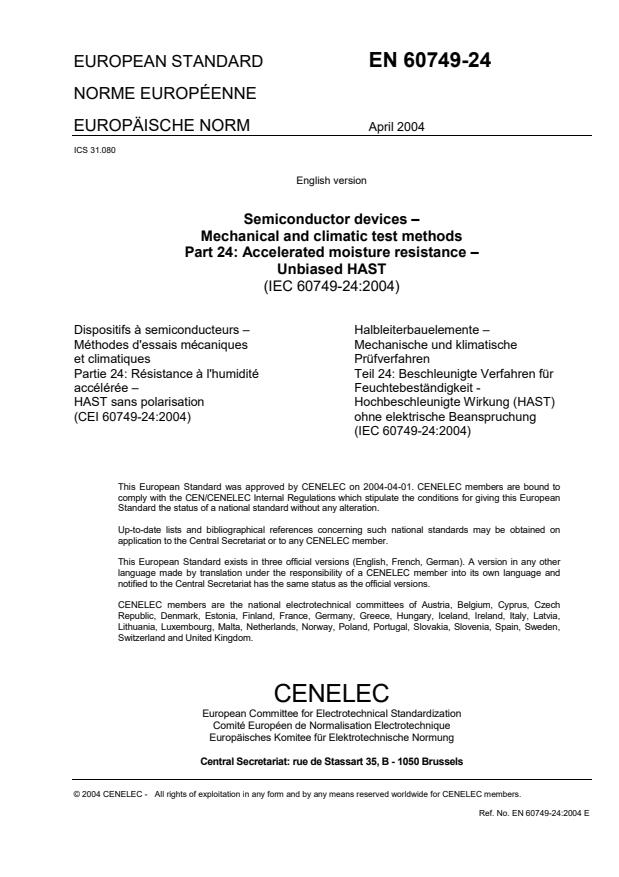
EUROPEAN STANDARD EN 60749-24
NORME EUROPÉENNE
EUROPÄISCHE NORM April 2004
ICS 31.080
English version
Semiconductor devices –
Mechanical and climatic test methods
Part 24: Accelerated moisture resistance –
Unbiased HAST
(IEC 60749-24:2004)
Dispositifs à semiconducteurs – Halbleiterbauelemente –
Méthodes d'essais mécaniques Mechanische und klimatische
et climatiques Prüfverfahren
Partie 24: Résistance à l'humidité Teil 24: Beschleunigte Verfahren für
accélérée – Feuchtebeständigkeit -
HAST sans polarisation Hochbeschleunigte Wirkung (HAST)
(CEI 60749-24:2004) ohne elektrische Beanspruchung
(IEC 60749-24:2004)
This European Standard was approved by CENELEC on 2004-04-01. CENELEC members are bound to
comply with the CEN/CENELEC Internal Regulations which stipulate the conditions for giving this European
Standard the status of a national standard without any alteration.
Up-to-date lists and bibliographical references concerning such national standards may be obtained on
application to the Central Secretariat or to any CENELEC member.
This European Standard exists in three official versions (English, French, German). A version in any other
language made by translation under the responsibility of a CENELEC member into its own language and
notified to the Central Secretariat has the same status as the official versions.
CENELEC members are the national electrotechnical committees of Austria, Belgium, Cyprus, Czech
Republic, Denmark, Estonia, Finland, France, Germany, Greece, Hungary, Iceland, Ireland, Italy, Latvia,
Lithuania, Luxembourg, Malta, Netherlands, Norway, Poland, Portugal, Slovakia, Slovenia, Spain, Sweden,
Switzerland and United Kingdom.
CENELEC
European Committee for Electrotechnical Standardization
Comité Européen de Normalisation Electrotechnique
Europäisches Komitee für Elektrotechnische Normung
Central Secretariat: rue de Stassart 35, B - 1050 Brussels
© 2004 CENELEC - All rights of exploitation in any form and by any means reserved worldwide for CENELEC members.
Ref. No. EN 60749-24:2004 E
Foreword
The text of document 47/1736/FDIS, future edition 1 of IEC 60749-24, prepared by IEC TC 47,
Semiconductor devices, was submitted to the IEC-CENELEC parallel vote and was approved by
CENELEC as EN 60749-24 on 2004-04-01.
The following dates were fixed:
– latest date by which the EN has to be implemented
at national level by publication of an identical
national standard or by endorsement (dop) 2005-01-01
– latest date by which the national standards conflicting
with the EN have to be withdrawn (dow) 2007-04-01
Annex ZA has been added by CENELEC.
__________
Endorsement notice
The text of the International Standard IEC 60749-24:2004 was approved by CENELEC as a European
Standard without any modification.
__________
- 3 - EN 60749-24:2004
Annex ZA
(normative)
Normative references to international publications
with their corresponding European publications
The following referenced documents are indispensable for the application of this document. For dated
references, only the edition cited applies. For undated references, the latest edition of the referenced
document (including any amendments) applies.
NOTE Where an international publication has been modified by common modifications, indicated by (mod), the relevant
EN/HD applies.
Publication Year Title EN/HD Year
1) 2)
IEC 60749-33 - Semiconductor devices - Mechanical and EN 60749-33 2004
climatic test methods
Part 33: Accelerated moisture resistance -
Unbiased autoclave
1) 2)
IEC 60749-5 - Part 5: Steady-state temperature humidity EN 60749-5 2003
bias life test
1)
Undated reference.
2)
Valid edition at date of issue.
�
�
�������������� ���
�
�
��������� ��������
�
�
�
�
�
�������������
�������
�
�
������������������������
���������������������������������������
���������
���������������������������������
!�"������# �$ �
©�����������⎯����’*��58����;<<���58��������=���
��� ’;��� ��� �8��� ’��<��;����� �;*� ��� ��’�������� ��� ���<�>��� ��� ;�*� ����� ��� �*� ;�*� ��;��?� �<��������� ���
���8;���;
������;����;<� �<��������8���;<� ����������?� � �?� ���� ��� G;����H?� K�� L�M� N�N?� �Q�N�NN� R���=;� ��?� �B��>��<;��
��<�’8���#�U�N����"N"����NN� ��<��;M#�U�N����"N"������� ���;�<#����;�
K����������
������������<��������8��X���������;����;<� R�
������;����;<��<��������8���;<����������� �
������������� ������������������ ��������
��������������������������������
� Y���Y� �!�"���� ©����#����$�%�
������������������������Q��������ZZ�������
[[[[[[[[[[[[�
�
�����&’*!�$&+�*�,�������
���# ’�� -� ’*��-�� $���$��$���$#&*��� �
�
��������� ���������������������������������!�"������# �$�
�
�
����W����
N%� �8��������;����;<��<��������8���;<������������$���%����;�B��<�B������5;��>;�����������;��;���>;��������’�����5�
;<<� �;����;<� �<��������8���;<� ����������� $���� �;����;<� ����������%D� �8�� ��\���� ��� ���� ��� ��� ’�������
������;����;<�����’��;��������;<<�X������������������5���;��;���>;���������8���<������;<�;����<������������<��D����
�8��� ���� ;��� ��� ;�������� ��� ��8��� ;���=�����?� ���� ’��<��8��� ������;����;<� ��;��;���?� ���8���;<� �’������;�����?�
���8���;<� ��’����?� K��<��<*� �=;�<;�<�� �’������;������ $K��%� ;��� R������ $8���;����� ��������� ��� ;�� ]����
K��<��;����$�%^%D��8����’��’;�;������������������������8���;<�����������‘�;�*������;����;<����������������������
��� �8�� ���\���� ��;<�� B��8� �;*� ’;�����’;��� ��� �8��� ’��’;�;���*� B��zD� ������;����;
5�=�������;<� ��5;��>;������ <�;����5� B��8� �8�� ���� ;<��� ’;�����’;��� ��� �8��� ’��’;�;����D� ���� ��<<;���;���� �<���<*�
B��8� �8�� ������;����;<� ��5;��>;����� ���� ��;��;���>;����� $���%� ��� ;�����;���� B��8� ����������� ����������� �*�
;5�����������B�����8���B����5;��>;�����D�
�%� �8������;<��������������;5����������������������8���;<��;�������M’����?�;����;�<*�;��’�����<�?�;��������;����;<�
���������� ��� �’������ ��� �8�� ��<�=;��� ���\����� ������ �;�8� ���8���;<� ���������� 8;�� ��’������;����� ����� ;<<�
����������������;����;<�����������D��
�%� ���� K��<��;������ 8;=�� �8�� ����� ��� ���������;������ ���� ������;����;<� ���� ;��� ;��� ;���’���� �*� ���� �;����;<�
����������� ��� �8;�� �����D� W8�<�� ;<<� ��;���;�<�� �������� ;��� �;��� ��� ������� �8;�� �8�� ���8���;<� �������� ��� ����
K��<��;������ ��� ;����;��?� ���� �;����� ��� 8�<�� ���’�����<�� ���� �8�� B;*� ��� B8��8� �8�*� ;��� ����� ��� ���� ;�*�
��������’���;������*�;�*���������D�
�%� ��� ������ ��� ’������� ������;����;<� ���������*?� ���� �;����;<� ����������� ������;z�� ��� ;’’<*� ���� K��<��;������
��;��’;����<*� ��� �8�� �;M����� �M����� ’�����<�� ��� �8���� �;����;<� ;��� ��5���;<� ’��<��;�����D� ��*� ��=��5�����
���B����;�*�����K��<��;�����;����8��������’�����5��;����;<������5���;<�’��<��;������8;<<�����<�;�<*������;�������
�8��<;����D�
{%� ���� ’��=����� ��� �;�z��5� ’��������� ��� �����;��� ���� ;’’��=;<� ;��� �;����� ��� ��������� ���’�����<�� ���� ;�*�
�X��’��������<;����������������������*�B��8�;������K��<��;����D�
%� �<<��������8��<����������8;���8�*�8;=���8��<;�����������������8���’��<��;����D�
!%� ���<�;��<��*��8;<<�;��;�8������������������������?���’<�*���?����=;�������;5��������<����5�����=���;<��M’�����;���
������������������8���;<������������;��������;����;<����������������;�*�’�����;<���\��*?�’��’���*��;�;5�����
��8��� �;�;5�� ��� ;�*� �;����� B8;����=��?� B8��8��� ������� ��� ��������?� ��� ���� ������ $���<����5� <�5;<� ����%� ;���
�M’������ ;�����5� ���� ��� �8�� ’��<��;����?� ���� ��?� ��� ��<�;���� �’��?� �8��� ���� K��<��;����� ��� ;�*� ��8��� ����
K��<��;�����D��
|%� ������������� ��;B������8�� ����;��=�����������������������8���’��<��;����D� }�������8�� �����������’��<��;���������
�����’���;�<�������8����������;’’<��;���������8���’��<��;����D�
"%� ���������� ��� ��;B�� ��� �8�� ’������<��*� �8;�� ����� ��� �8�� �<������� ��� �8��� ���� K��<��;����� �;*� ��� �8�� ���\���� ���
’;�������58��D������8;<<��������8�<�����’�����<�������������*��5�;�*����;<<����8�’;�������58��D�
������;����;<� ��;��;��� ���� �!�"���� 8;�� ����� ’��’;���� �*� ���� ���8���;<� ���������� �!#�
����������������=����D�
�8��� ��;��;��� �;���<�� ;��� ��’<;���� ���~K��� ��� � ’��<��8��� ��� ����D� �8��� ������ ��������
������������;����8���;<���=�����D�
�8����M������8�����;��;�������;��������8����<<�B��5����������#�
����� ��’�������=����5�
�!~N!� ~����� �!~N!� ~�G��
�
��<<�������;���������8��=����5������8��;’’��=;<�����8�����;��;����;���������������8����’�������
=����5������;��������8��;��=���;�<�D�
�8���’��<��;�����8;���������;��������;�����;����B��8��8�����~�����������=��?�K;����D�
�!�"���� ©����#����$�%� Y���Y�
�8������������8;�� ���������8;���8���������������8���’��<��;����� B�<<����;������8;�5�������<�
���!D�����8����;��?��8��’��<��;�����B�<<�����
�� �����������‘�
�� B��8��;B�‘�
�� ��’<;�����*�;���=������������?����
�� ;������D�
� Y���Y� �!�"���� ©����#����$�%�
�����&’*!�$&+�*�,�������
���# ’�� -� ’*��-�� $���$��$���$#&*��� �
�
��������� ���������������������������������!�"������# �$�
�
�
�
/� ���0�������"1�����
�8�� ����;���� 8�58<*� ;���<��;���� ������� ������5� $Q���%� ��� ’��������� ���� �8�� ’��’���� ���
�=;<�;���5� �8�� ��<�;��<��*� ��� ����8�������;<<*� ’;�z;5��� ��<�����;��� ��=����� ��� 8�����
��=���������D��
������;�8�58<*�;���<��;���������B8��8���’<�*�����’��;�����;���8������*��������������������5�
����������� ��� ;���<��;��� �8�� ’�����;
...