

ASTM D8560-24
(Guide)Standard Guide for Determination of Airborne PFAS in the Indoor Air Environment
General Information
- Abstract
SIGNIFICANCE AND USE
5.1 Some PFAS have been implicated in adverse human health impacts (4, 5, 6). Therefore, quantifying PFAS concentrations in indoor air is important for accurate and meaningful exposure analysis and risk assessments.
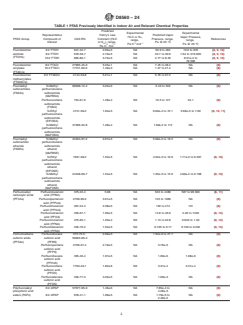
5.2 PFAS found in air can have a wide range of chemical characteristics that will impact sampling practice selection. For example, estimated vapor pressure values can vary by ten orders of magnitude, while estimated Henry’s Law constants can vary by five orders of magnitude (Table 1). This means that sampling and analytical methods that are appropriate for one PFAS compound may not be appropriate for other PFAS compounds. Hence, prior to sampling and selecting analytic methods for PFAS measurement in indoor air, it is critical to establish that the chosen PFAS sampling method(s) is appropriate for the target compound(s), the sampling location, and the environmental conditions.
5.3 The measurement of PFAS in indoor air is an active and growing research topic. Understanding of PFAS properties, sampling and analytic approaches and techniques is constantly evolving. This includes the determination of physical-chemical properties of many PFAS, which may not even have been measured experimentally or which have a wide range of experimentally determined properties (that is, 8:2 FTOH in Table 1). This guide describes methods that are in use at the time of publication.
5.4 PFAS in indoor air may come from a wide range of sources, including consumer products, building materials, food packaging, outdoor air, and other miscellaneous sources. PFAS is also commonly quantified in indoor dust. There are several methods that quantify these chemicals in solid and liquid media including, but not limited to Guide E3302, Test Method D7968, Test Method D7979, Test Method D8421, Test Method D8535, US EPA 533, and US EPA 537.1. US EPA OTM-45 quantifies some PFAS in the combined gas and particle phases of stationary sources, such as incinerator stack sampling.
5.5 Thi...
SCOPE
1.1 This guide describes methods for determining Per- and Polyfluoroalkyl Substances (PFAS) concentrations in indoor air.
1.2 This guide is focused on PFAS measurement technologies applicable to indoor air (including in vehicles and indoor workplaces) and other relevant air volumes such as, air in chambers, bags, or both. The described technologies were developed for indoor air; they may or may not be applicable to other types of air samples.
1.3 This guide describes available technologies and methods that can be used to measure indoor air PFAS concentrations in the gaseous or particulate phases, or both, in indoor air.
1.4 This guide describes each method and its advantages and limitations.
1.5 This guide does not attempt to differentiate between the effectiveness of the methods nor determine equivalence of the methods.
1.6 The sorbent-based sampling strategies addressed in this guide are for PFAS compounds with a molecular mass greater than 200 g mol-1 (1, 2, 3).2 Compounds less than 200 g mol-1, such as CF4, C2F6, or PFAS degradation products may require real-time analytical methods described in this guide or other methods that are not presented here.
1.7 Units—The values stated in SI units are to be regarded as the standard. No other units of measurement are included in this standard.
1.8 This standard does not purport to address all of the safety concerns, if any, associated with its use. It is the responsibility of the user of this standard to establish appropriate safety, health, and environmental practices and determine the applicability of regulatory limitations prior to use.
1.9 This international standard was developed in accordance with internationally recognized principles on standardization established in the Decision on Principles for the Development of International Standards, Guides and Recommendations issued by the World Trade Organization Technical Barriers to Trade (TBT) Committee.
- Status
- Published
- Publication Date
- 31-Mar-2024
- Technical Committee
- D22 - Air Quality
- Drafting Committee
- D22.05 - Indoor Air
Overview
ASTM D8560-24, Standard Guide for Determination of Airborne PFAS in the Indoor Air Environment, establishes techniques for measuring per- and polyfluoroalkyl substances (PFAS) concentrations in indoor air. Recognizing the potential adverse health effects linked to some PFAS compounds, this guide provides best practices for sampling and analytical methods. It encompasses environments such as buildings, vehicles, and workplace settings, helping organizations and researchers perform accurate exposure assessments and risk analyses related to airborne PFAS.
This standard is developed by ASTM to align with internationally recognized principles, ensuring consistency and reliability in the determination of indoor air PFAS worldwide.
Key Topics
- PFAS Measurement Technologies: The standard outlines current technologies suitable for indoor air sampling, covering gas and particulate phases.
- Phase-Appropriate Methods: Not all PFAS share the same chemical properties; therefore, the guide emphasizes that sampling and analysis methods must be chosen based on the specific PFAS compounds, environmental conditions, and sampling objectives.
- Sampling Strategies: Describes both active and passive strategies, including sorbent-based approaches for compounds with molecular mass greater than 200 g/mol.
- Practical Limitations & Considerations: Offers guidance on advantages and limitations of various methods, stressing the importance of method suitability and quality control.
- Emerging Research: Recognizes rapid advancements in PFAS research and encourages regular review of methods as new information and technologies become available.
- Sources of Indoor PFAS: Identifies the variety of indoor PFAS sources, such as consumer products, building materials, food packaging, and infiltration from outdoor air, along with their typical inclusion in indoor dust.
Applications
- Exposure and Risk Assessment: Enables environmental health and safety professionals, building owners, and regulatory agencies to quantify PFAS concentrations in indoor air, which is vital for assessing potential human exposure and conducting health risk analyses.
- Indoor Air Quality Management: Supports the development of monitoring and mitigation strategies in indoor environments, especially in locations with known PFAS emissions or use of PFAS-containing materials.
- Research and Policy: Provides standardized methods for academic and industrial researchers investigating PFAS dynamics, sources, or mitigation. The guide also helps policymakers establish regulatory or voluntary indoor air quality guidelines involving PFAS.
- Workplace Safety: Assists organizations in evaluating workplace exposures in environments such as manufacturing plants, laboratories, or any site where PFAS may be present or processed.
Related Standards
ASTM D8560-24 references and complements several international methods and standards for PFAS and indoor air analysis, including:
- ASTM E3302: Guide for PFAS Analytical Methods Selection
- ASTM D7968, D7979, D8421, D8535: Test methods for PFAS in soil, water, and biosolid matrices
- ASTM D8141: Guide for VOC and SVOC Emission Testing Methods
- ISO 16000-6, ISO 16017-1: International standards for indoor air sampling and analysis
- US EPA Methods 533, 537.1, and OTM-45: US EPA methods for PFAS determination in drinking water and stationary source air emissions
Practical Value
Implementing ASTM D8560-24 in indoor environments provides:
- Enhanced Accuracy: Consistent, scientifically robust approaches for PFAS detection increase the reliability of exposure data.
- Comprehensive Guidance: Clear instructions for method selection, practical implementation, and awareness of limitations help users navigate the complexities of PFAS sampling.
- Current Relevance: Adopts methods recognized by both ASTM and major international and regulatory bodies, ensuring broad acceptability and harmonization in global reporting.
- Supports Compliance: Facilitates adherence to regulatory and institutional requirements concerning indoor air quality and occupational health with regards to PFAS.
By integrating ASTM D8560-24, stakeholders can better protect human health, meet environmental responsibilities, and contribute to a growing body of knowledge on PFAS in the indoor environment.
Frequently Asked Questions
ASTM D8560-24 is a guide published by ASTM International. Its full title is "Standard Guide for Determination of Airborne PFAS in the Indoor Air Environment". This standard covers: SIGNIFICANCE AND USE 5.1 Some PFAS have been implicated in adverse human health impacts (4, 5, 6). Therefore, quantifying PFAS concentrations in indoor air is important for accurate and meaningful exposure analysis and risk assessments. 5.2 PFAS found in air can have a wide range of chemical characteristics that will impact sampling practice selection. For example, estimated vapor pressure values can vary by ten orders of magnitude, while estimated Henry’s Law constants can vary by five orders of magnitude (Table 1). This means that sampling and analytical methods that are appropriate for one PFAS compound may not be appropriate for other PFAS compounds. Hence, prior to sampling and selecting analytic methods for PFAS measurement in indoor air, it is critical to establish that the chosen PFAS sampling method(s) is appropriate for the target compound(s), the sampling location, and the environmental conditions. 5.3 The measurement of PFAS in indoor air is an active and growing research topic. Understanding of PFAS properties, sampling and analytic approaches and techniques is constantly evolving. This includes the determination of physical-chemical properties of many PFAS, which may not even have been measured experimentally or which have a wide range of experimentally determined properties (that is, 8:2 FTOH in Table 1). This guide describes methods that are in use at the time of publication. 5.4 PFAS in indoor air may come from a wide range of sources, including consumer products, building materials, food packaging, outdoor air, and other miscellaneous sources. PFAS is also commonly quantified in indoor dust. There are several methods that quantify these chemicals in solid and liquid media including, but not limited to Guide E3302, Test Method D7968, Test Method D7979, Test Method D8421, Test Method D8535, US EPA 533, and US EPA 537.1. US EPA OTM-45 quantifies some PFAS in the combined gas and particle phases of stationary sources, such as incinerator stack sampling. 5.5 Thi... SCOPE 1.1 This guide describes methods for determining Per- and Polyfluoroalkyl Substances (PFAS) concentrations in indoor air. 1.2 This guide is focused on PFAS measurement technologies applicable to indoor air (including in vehicles and indoor workplaces) and other relevant air volumes such as, air in chambers, bags, or both. The described technologies were developed for indoor air; they may or may not be applicable to other types of air samples. 1.3 This guide describes available technologies and methods that can be used to measure indoor air PFAS concentrations in the gaseous or particulate phases, or both, in indoor air. 1.4 This guide describes each method and its advantages and limitations. 1.5 This guide does not attempt to differentiate between the effectiveness of the methods nor determine equivalence of the methods. 1.6 The sorbent-based sampling strategies addressed in this guide are for PFAS compounds with a molecular mass greater than 200 g mol-1 (1, 2, 3).2 Compounds less than 200 g mol-1, such as CF4, C2F6, or PFAS degradation products may require real-time analytical methods described in this guide or other methods that are not presented here. 1.7 Units—The values stated in SI units are to be regarded as the standard. No other units of measurement are included in this standard. 1.8 This standard does not purport to address all of the safety concerns, if any, associated with its use. It is the responsibility of the user of this standard to establish appropriate safety, health, and environmental practices and determine the applicability of regulatory limitations prior to use. 1.9 This international standard was developed in accordance with internationally recognized principles on standardization established in the Decision on Principles for the Development of International Standards, Guides and Recommendations issued by the World Trade Organization Technical Barriers to Trade (TBT) Committee.
SIGNIFICANCE AND USE 5.1 Some PFAS have been implicated in adverse human health impacts (4, 5, 6). Therefore, quantifying PFAS concentrations in indoor air is important for accurate and meaningful exposure analysis and risk assessments. 5.2 PFAS found in air can have a wide range of chemical characteristics that will impact sampling practice selection. For example, estimated vapor pressure values can vary by ten orders of magnitude, while estimated Henry’s Law constants can vary by five orders of magnitude (Table 1). This means that sampling and analytical methods that are appropriate for one PFAS compound may not be appropriate for other PFAS compounds. Hence, prior to sampling and selecting analytic methods for PFAS measurement in indoor air, it is critical to establish that the chosen PFAS sampling method(s) is appropriate for the target compound(s), the sampling location, and the environmental conditions. 5.3 The measurement of PFAS in indoor air is an active and growing research topic. Understanding of PFAS properties, sampling and analytic approaches and techniques is constantly evolving. This includes the determination of physical-chemical properties of many PFAS, which may not even have been measured experimentally or which have a wide range of experimentally determined properties (that is, 8:2 FTOH in Table 1). This guide describes methods that are in use at the time of publication. 5.4 PFAS in indoor air may come from a wide range of sources, including consumer products, building materials, food packaging, outdoor air, and other miscellaneous sources. PFAS is also commonly quantified in indoor dust. There are several methods that quantify these chemicals in solid and liquid media including, but not limited to Guide E3302, Test Method D7968, Test Method D7979, Test Method D8421, Test Method D8535, US EPA 533, and US EPA 537.1. US EPA OTM-45 quantifies some PFAS in the combined gas and particle phases of stationary sources, such as incinerator stack sampling. 5.5 Thi... SCOPE 1.1 This guide describes methods for determining Per- and Polyfluoroalkyl Substances (PFAS) concentrations in indoor air. 1.2 This guide is focused on PFAS measurement technologies applicable to indoor air (including in vehicles and indoor workplaces) and other relevant air volumes such as, air in chambers, bags, or both. The described technologies were developed for indoor air; they may or may not be applicable to other types of air samples. 1.3 This guide describes available technologies and methods that can be used to measure indoor air PFAS concentrations in the gaseous or particulate phases, or both, in indoor air. 1.4 This guide describes each method and its advantages and limitations. 1.5 This guide does not attempt to differentiate between the effectiveness of the methods nor determine equivalence of the methods. 1.6 The sorbent-based sampling strategies addressed in this guide are for PFAS compounds with a molecular mass greater than 200 g mol-1 (1, 2, 3).2 Compounds less than 200 g mol-1, such as CF4, C2F6, or PFAS degradation products may require real-time analytical methods described in this guide or other methods that are not presented here. 1.7 Units—The values stated in SI units are to be regarded as the standard. No other units of measurement are included in this standard. 1.8 This standard does not purport to address all of the safety concerns, if any, associated with its use. It is the responsibility of the user of this standard to establish appropriate safety, health, and environmental practices and determine the applicability of regulatory limitations prior to use. 1.9 This international standard was developed in accordance with internationally recognized principles on standardization established in the Decision on Principles for the Development of International Standards, Guides and Recommendations issued by the World Trade Organization Technical Barriers to Trade (TBT) Committee.
ASTM D8560-24 is available in PDF format for immediate download after purchase. The document can be added to your cart and obtained through the secure checkout process. Digital delivery ensures instant access to the complete standard document.
Standards Content (Sample)
This international standard was developed in accordance with internationally recognized principles on standardization established in the Decision on Principles for the
Development of International Standards, Guides and Recommendations issued by the World Trade Organization Technical Barriers to Trade (TBT) Committee.
Designation: D8560 − 24
Standard Guide for
Determination of Airborne PFAS in the Indoor Air
Environment
This standard is issued under the fixed designation D8560; the number immediately following the designation indicates the year of
original adoption or, in the case of revision, the year of last revision. A number in parentheses indicates the year of last reapproval. A
superscript epsilon (´) indicates an editorial change since the last revision or reapproval.
1. Scope ization established in the Decision on Principles for the
Development of International Standards, Guides and Recom-
1.1 This guide describes methods for determining Per- and
mendations issued by the World Trade Organization Technical
Polyfluoroalkyl Substances (PFAS) concentrations in indoor
Barriers to Trade (TBT) Committee.
air.
2. Referenced Documents
1.2 This guide is focused on PFAS measurement technolo-
gies applicable to indoor air (including in vehicles and indoor 3
2.1 ASTM Standards:
workplaces) and other relevant air volumes such as, air in
D1356 Terminology Relating to Sampling and Analysis of
chambers, bags, or both. The described technologies were
Atmospheres
developed for indoor air; they may or may not be applicable to
D6196 Practice for Choosing Sorbents, Sampling Param-
other types of air samples.
eters and Thermal Desorption Analytical Conditions for
Monitoring Volatile Organic Chemicals in Air
1.3 This guide describes available technologies and meth-
ods that can be used to measure indoor air PFAS concentrations D7968 Test Method for Determination of Polyfluorinated
Compounds in Soil by Liquid Chromatography Tandem
in the gaseous or particulate phases, or both, in indoor air.
Mass Spectrometry (LC/MS/MS)
1.4 This guide describes each method and its advantages
D7979 Test Method for Determination of Per- and Polyfluo-
and limitations.
roalkyl Substances in Water, Sludge, Influent, Effluent,
1.5 This guide does not attempt to differentiate between the
and Wastewater by Liquid Chromatography Tandem Mass
effectiveness of the methods nor determine equivalence of the
Spectrometry (LC/MS/MS)
methods.
D8141 Guide for Selecting Volatile Organic Compounds
(VOCs) and Semi-Volatile Organic Compounds (SVOCs)
1.6 The sorbent-based sampling strategies addressed in this
Emission Testing Methods to Determine Emission Param-
guide are for PFAS compounds with a molecular mass greater
-1 2 -1
eters for Modeling of Indoor Environments
than 200 g mol (1, 2, 3). Compounds less than 200 g mol ,
D8421 Test Method for Determination of Per- and Polyfluo-
such as CF , C F , or PFAS degradation products may require
4 2 6
roalkyl Substances (PFAS) in Aqueous Matrices by Co-
real-time analytical methods described in this guide or other
solvation followed by Liquid Chromatography Tandem
methods that are not presented here.
Mass Spectrometry (LC/MS/MS)
1.7 Units—The values stated in SI units are to be regarded
D8535 Test Method for Determination of Per- and Polyfluo-
as the standard. No other units of measurement are included in
roalkyl Substances (PFAS) in Soil/Biosolid Matrices by
this standard.
Solvent Extraction, Filtering, and Followed by Liquid
1.8 This standard does not purport to address all of the
Chromatography Tandem Mass Spectrometry (LC/MS/
safety concerns, if any, associated with its use. It is the
MS)
responsibility of the user of this standard to establish appro-
E3302 Guide for PFAS Analytical Methods Selection
priate safety, health, and environmental practices and deter-
2.2 EPA Standards:
mine the applicability of regulatory limitations prior to use.
EPA Method 537.1 Determination of Selected Per- and
1.9 This international standard was developed in accor-
Polyfluorinated Alkyl Substances in Drinking Water by
dance with internationally recognized principles on standard-
For referenced ASTM standards, visit the ASTM website, www.astm.org, or
This guide is under the jurisdiction of ASTM Committee D22 on Air Quality contact ASTM Customer Service at service@astm.org. For Annual Book of ASTM
and is the direct responsibility of Subcommittee D22.05 on Indoor Air. Standards volume information, refer to the standard’s Document Summary page on
Current edition approved April 1, 2024. Published April 2024. DOI: 10.1520/ the ASTM website.
D8560-24. Available from United States Environmental Protection Agency (EPA), William
The boldface numbers in parentheses refer to a list of references at the end of Jefferson Clinton Bldg., 1200 Pennsylvania Ave., NW, Washington, DC 20460,
this standard. http://www.epa.gov.
Copyright © ASTM International, 100 Barr Harbor Drive, PO Box C700, West Conshohocken, PA 19428-2959. United States
D8560 − 24
Solid Phase Extraction and Liquid Chromatography/ 3.3 Acronyms:
Tandem Mass Spectrometry (LC/MS/MS)
5MS 5 %-Phenyl 95 % methylpoly/arylene siloxane
ACFs Activated carbon fiber felts
US EPA Method 533 Determination of per- and polyfluoro-
AOF Adsorbable organic fluorine
alkyl substances in drinking water by isotope dilution
CI Chemical ionization
anion exchange solid phase extraction and liquid
CIC Combustion ion chromatography
CIMS Chemical ionization mass spectrometer
chromatography/tandem mass spectrometry
diPAP Fluorotelomer phosphate diester
US EPA Method 8327 Per- and Polyfluoroalkyl Substances
DPPO 2,6-diphenyl-p-phenylene oxide
EI Electron ionization
(PFAS) by Liquid Chromatography/Tandem Mass Spec-
EOF Extractable organic fluorine
trometry (LC/MS/MS)
EtFOSA N-Ethyl perfluorooctane sulfonamide
US EPA OTM-45 Other Test Method 45 Measurement of
EtFOSE N-Ethyl perfluorooctane sulfonamido ethanol
ESI Electrospray ionization
Selected Per- and Polyfluorinated Alkyl Substances from
FASAs Fluoroalkyl sulfonamides
Stationary Sources
FASEs Fluoroalkyl sulfonamido ethanols
FBET 2-Perfluorobutyl ethanol (4:2)
2.3 ISO Standards:
FDET 2-Perfluorodecyl ethanol (10:2)
ISO 16000-6 Indoor air — Part 6: Determination of organic FHEA 2-Perfluorohexyl ethanoic acid (6:2)
FHET 2-Perfluorohexyl ethanol (6:2)
compounds (VVOC, VOC, SVOC) in indoor and test
FMACrs Fluorotelomer methacrylates
chamber air by active sampling on sorbent tubes, thermal
FOEA 2-Perfluorooctyl ethanoic acid (8:2)
FOSA Perfluorooctane sulfonamide
desorption and gas chromatography using MS or MS FID
FOSAs Referring to combination of MeFOSA and EtFOSA
ISO 16017-1 Indoor, ambient and workplace air — Sam-
FOET 2-Perfluorooctyl ethanol (8:2)
pling and analysis of volatile organic compounds by FTA Fluorotelomer acids
FTACrs Fluorotelomer acrylates
sorbent tube/thermal desorption/capillary gas chromatog-
FTUCAs Fluorotelomer unsaturated carboxylic acids
raphy — Part 1: Pumped sampling
FTOHs Fluorotelomer alcohols
GC Gas chromatography
GFFs Glass fiber filters
3. Terminology
HPLC High-performance liquid chromatography
HFPO-DA Hexafluoropropylene oxide dimer acid
3.1 For definitions of terms commonly used for sampling
HRMS High-resolution mass spectrometry
IDL Instrument detection limit
and analysis of atmospheres, refer to Terminology D1356.
LC Liquid chromatography
3.2 Definitions of Terms Specific to This Standard: MeFBSA N-Methyl perfluorobutane sulfonamide
MeFBSE N-Methyl perfluorobutane sulfonamido ethanol
3.2.1 perfluoroalkyl and polyfluoroalkyl substances (PFAS),
MeFOSA N-Methyl perfluorooctane sulfonamide
n—fluorinated substances that contain at least one fully fluo-
MeFOSE N-Methyl perfluorooctane sulfonamido ethanol
MeFOSEA N-Methyl perfluorooctane sulfonamidethyl acrylate
rinated methyl or methylene carbon atom.
MDL Method detection limit
3.2.1.1 Discussion—Perfluoroalkyl chemicals are those
MTBE Methyl tert-butyl ether
MS Mass spectrometry
chemicals where all hydrogen (H) atoms associated with the
MS/MS Tandem mass spectrometry
carbon (C) atoms of an aliphatic chain have been replaced by
NCI Negative chemical ionization
ND Non-detect
fluorine (F) atoms. Polyfluoroalkyl chemicals are those chemi-
NPSDBR Nonionic polystyrene divinylbenzene resin
cals in which not all H atoms of the aliphatic chain have been
OECD Organization for Economic Co-operation and
replaced by F atoms. Not all PFAS will be found in air (Section
Development
PAHs Polycyclic aromatic hydrocarbons
6) and not all PFAS have quantifiable airborne methods
PAPs Polyfluoroalkyl phosphoric acid esters
(Section 7).
PCBs Polychlorinated biphenyls
PCI Positive chemical ionization
3.2.2 perfluorooctane sulfonic acid (PFOS), n—a chemical
PE Polyethylene
PEG Polyethylene glycol
compound having an eight-carbon fluorocarbon chain and a
PFAAs Perfluoroalkyl acids
sulfonic acid functional group.
PFAS Perfluoroalkyl and Polyfluoroalkyl Substances
PFASA Perfluoroalkane sulfonamides
PFBA Perfluorobutanoic acid
PFBS Perfluorobutane sulfonic acid
PFCAs Perfluorocarboxylic acids
Available from International Organization for Standardization (ISO), ISO
PFDA Perfluorodecanoic acid
Central Secretariat, Chemin de Blandonnet 8, CP 401, 1214 Vernier, Geneva,
Switzerland, https://www.iso.org.
D8560 − 24
compounds. Hence, prior to sampling and selecting analytic
PFE Pressurized fluid extraction
PFHpA Perfluoroheptanoic acid
methods for PFAS measurement in indoor air, it is critical to
PFHxA Perfluorohexanoic acid
establish that the chosen PFAS sampling method(s) is appro-
PFHxS Perfluorohexane sulfonic acid
priate for the target compound(s), the sampling location, and
PFNA Perfluorononanoic acid
PFOA Perfluorooctanoic acid
the environmental conditions.
PFOS Perfluorooctane sulfonic acid
PFOSA Perfluorooctanesulfonamide 5.3 The measurement of PFAS in indoor air is an active and
PFPeA Perfluoropentanoic acid
growing research topic. Understanding of PFAS properties,
PFPeS Perfluoropentane sulfonic acid
sampling and analytic approaches and techniques is constantly
PFSAs Perfluoroalkane sulfonic acids
evolving. This includes the determination of physical-chemical
PFTA Perfluorotetradecanoic acid
PIGE Particle-induced gamma ray-emission
properties of many PFAS, which may not even have been
spectroscopy
measured experimentally or which have a wide range of
PLOT Porous layer open tubular
PM Particulate matter experimentally determined properties (that is, 8:2 FTOH in
PPT Part per trillion on a molar basis
Table 1). This guide describes methods that are in use at the
PTFE Polytetrafluoroethylene
time of publication.
PTR-MS Proton transfer reaction mass spectrometry
PUF Polyurethane foam
5.4 PFAS in indoor air may come from a wide range of
QA/QC Quality assurance and quality control
sources, including consumer products, building materials, food
QFFs Quartz fiber filters
Q-Trap-MS Quadrupole-Trap mass spectrometry
packaging, outdoor air, and other miscellaneous sources. PFAS
RH Relative humidity
is also commonly quantified in indoor dust. There are several
SIFT-MS Selected-ion flow-tube mass spectrometry
methods that quantify these chemicals in solid and liquid media
SIM Selective ion monitoring
SIP Sorbent-impregnated PUF
including, but not limited to Guide E3302, Test Method D7968,
SPE Solid-phase extraction
Test Method D7979, Test Method D8421, Test Method D8535,
SVOCs Semivolatile organic compounds
US EPA 533, and US EPA 537.1. US EPA OTM-45 quantifies
TD Thermal desorption
TOF-MS Time-of-flight mass spectrometry
some PFAS in the combined gas and particle phases of
TOP Total oxidizable precursor
stationary sources, such as incinerator stack sampling.
UHPLC Ultra-high performance liquid chromatography
UPLC Ultra performance liquid chromatography
5.5 This guide is applicable to sampling PFAS in indoor air
US EPA United States Environmental Protection Agency
(typically 15 °C to 30 °C, 20 % to 80 % relative humidity
VOCs Volatile organic compounds
VVOCs Very volatile organic compounds
(RH)). While sources like soil vapor intrusion impact indoor
WCOT Wall-coated open tubular
air, the methods described here have not necessarily been
applied or verified in other gaseous environments, such as soil
4. Summary of Guide
pore vapor, stack samples, or under ambient outdoor air
4.1 This guide is intended to provide the user with an
conditions (<10 °C, >30 °C, <20 % RH, >80 % RH). The
overview of (1) the types of PFAS measured in air (Section 6)
methods and information presented here may apply or be
and (2) the range and applicability of published methods for
compatible with determination of other PFAS or PFAS-like
measuring PFAS in indoor air.
compounds, such as freons and greenhouse gases in other
4.2 This guide describes a range of airborne PFAS sampling environments, including other collection and acquisition
schemes, such as canister methods. However, the scope of this
methods, and the advantages and limitations for each method.
These descriptions include both passive and active sampling guide is limited to observationally reported PFAS in indoor air.
methods (Section 7), extraction and separation methods (Sec-
tion 8), and analytical methodologies (for example, gas 6. PFAS in Indoor Air
chromatograph, liquid chromatograph, Section 9).
6.1 Both perfluoroalkyl and polyfluoroalkyl substances have
4.3 This guide discusses published analytical methods that been found in indoor air. Perfluoroalkyl chemicals are those
have been used in the analysis of PFAS in air. This guide is not
chemicals where all hydrogen (H) atoms associated with the
intended to be a comprehensive list of all possible collection carbon (C) atoms of an aliphatic chain have been replaced by
and sampling methods for indoor air PFAS.
fluorine (F) atoms. In contrast, polyfluoroalkyl chemicals are
those chemicals in which not all H atoms of the aliphatic chain
5. Significance and Use
have been replaced by F atoms (Guide E3302). Either group
5.1 Some PFAS have been implicated in adverse human may contain functional groups with carbon, sulfur, oxygen, or
health impacts (4, 5, 6). Therefore, quantifying PFAS concen- other atoms. Based on the most recent Organization for
trations in indoor air is important for accurate and meaningful Economic Co-operation and Development (OECD) definition,
exposure analysis and risk assessments. PFAS are defined as fluorinated substances that contain at least
one fully fluorinated methyl or methylene carbon atom, al-
5.2 PFAS found in air can have a wide range of chemical
though a few exceptions exist.
characteristics that will impact sampling practice selection. For
example, estimated vapor pressure values can vary by ten 6.2 Thousands of different PFAS have been produced, with
orders of magnitude, while estimated Henry’s Law constants a wide range of production volumes. PFAS can be found in air
can vary by five orders of magnitude (Table 1). This means that both sorbed onto particles and in the gas phase. Based on their
sampling and analytical methods that are appropriate for one vapor pressures, PFAS sometimes are classified using generic
PFAS compound may not be appropriate for other PFAS terms like very volatile organic compounds (VVOCs), volatile
D8560 − 24
TABLE 1 PFAS Previously Identified in Indoor Air and Relevant Chemical Properties
Predicted
Experimental Experimental
Representative Henry’s Law Predicted Vapor
HLC or K , Vapor Pressure,
H
PFAS Group Compound of CAS RN Constant (HLC Pressure, range, References
range, range,
Interest or K ), range, Pa @ 25 °C
H 3 -1
Pa m mol Pa @ 25 °C
3 -1
Pa m mol
Fluorotelomer 6:2 FTOH 647-42-7 2.65e-5 NA 50.9 to 293 10.0 to 876 (8, 9, 10)
alcohols 8:2 FTOH 678-39-7 2.10e-5 NA 22.7 to 30.9 1.64 to 316 000 (8, 9, 10)
(FTOHs) 10:2 FTOH 865-86-1 3.72e-5 NA 2.77 to 8.25 8.31e-2 to (8, 9, 10)
79 500
Fluorotelomer 8:2 FTACr 27905-45-9 5.25e-1 NA 7.45 to 38.4 NA (8)
acrylates 10:2 FTACr 17741-60-5 1.49e-3 NA 1.27 to 21.2 NA (8)
(FTACrs)
Fluorotelomer 6:2 FTMACr 2144-53-8 5.21e-1 NA 5.76 to 57.2 NA (8)
methacrylates
(FTMACrs)
Fluoroalkyl N-Methyl 68298-12-4 3.22e-5 NA 3.43 to 549 NA (8)
sulfonamides perfluorobutane
(FASAs) sulfonamide
(MeFBSA)
Perfluorooctane 754-91-6 1.28e-4 NA 10.5 to 127 33.1 (8)
sulfonamide
(FOSA)
N-Ethyl 4151-50-2 1.62e-5 NA 6.69e-4 to 72.1 5.69e-5 to 7.00 (8, 10, 11)
perfluorooctane
sulfonamide
(EtFOSA)
N-Methyl 31506-32-8 1.28e-4 NA 1.60e-2 to 112 NA (8)
perfluorooctane
sulfonamide
(MeFOSA)
Fluoroalkyl N-Methyl 34454-97-2 2.67e-5 NA 5.58e-2 to 19.2 NA (8)
sulfonamido perfluorobutane
ethanols sulfonamido
(FASEs) ethanol
(MeFBSE)
N-Ethyl 1691-99-2 1.52e-5 NA 4.52e-3 to 10.6 1.71e-3 to 0.507 (8, 10)
perfluorooctane
sulfonamido
ethanol
(EtFOSE)
N-Methyl 24448-09-7 1.54e-5 NA 1.35e-3 to 15.6 4.00e-4 to 0.708 (8, 10)
perfluorooctane
sulfonamido
ethanol
(MeFOSE)
Perfluoroalkyl Perfluorobutanoic 375-22-4 5.08 NA 523 to 4480 587 to 98 000 (8, 11)
carboxylic acids acid (PFBA)
(PFCAs)
Perfluoropentanoic 2706-90-3 3.01e-5 NA 123 to 1060 NA (8)
acid (PFPeA)
Perfluorohexanoic 307-24-4 2.38e-5 NA 120 to 412 121 (8)
acid (PFHxA)
Perfluorooctanoic 335-67-1 1.95e-5 NA 14.8 to 46.0 2.20 to 1330 (8, 12)
acid (PFOA)
Perfluorononanoic 375-95-1 1.20e-4 NA 1.13 to 22.8 0.640 to 1.30 (8, 12)
acid (PFNA)
Perfluorodecanoic 335-76-2 1.52e-5 NA 0.195 to 6.17 0.100 to 0.232 (8, 12)
acid (PFDA)
Perfluoroalkane Perfluorobutane 375-73-5; 2.99e-5 NA 1.52e-6 to 27.7 NA (8)
sulfonic acids sulfonic acid 59933-66-3
(PFSAs) (PFBS)
Perfluoropentane 2706-91-4 2.19e-5 NA 3.76e-5 NA (8)
sulfonic acid
(PFPS)
Perfluorohexane 355-46-4 1.97e-5 NA 1.09e-6 1.08e-6 (8)
sulfonic acid
(PFHxS)
Perfluorooctane 1763-23-1 1.82e-6 NA 3.31e-4 3.31e-4 (8)
sulfonic acid
(PFOS)
Perfluorodecane 335-77-3 3.35e-5 NA 1.09e-3 NA (8)
sulfonic acid
(PFDS)
Polyfluoroalkyl 6:2 diPAP 57677-95-9 1.46e-6 NA 7.85e-4 to NA (8)
phosphoric acid 4.28e-3
esters (PAPs) 8:2 diPAP 678-41-1 1.08e-5 NA 1.79e-5 to NA (8)
2.48e-5
D8560 − 24
organic compounds (VOCs), and semivolatile organic com- (Section 10). MDLs reported in recently published literature
pounds (SVOCs). Guide D8141 demonstrates that criteria are summarized in Appendix X1 (Table X1.1). Most sorbent-
-3
defining these classifications can depend on the defining based MDLs in these analyses were below 10 pg m , with
-3
organization. In general, the vapor pressure delineation be- some as low as 0.01 pg m . Chemical ionization mass spec-
tween a VVOC and a VOC is typically defined as 15 kPa, trometry (CIMS) MDLs can be orders of magnitude higher
while the delineation between a VOC and a SVOC is typically than sorbent-based methods due to the sampling durations of
-8
at 10 kPa (Guide D8141). Importantly, characteristics of seconds rather than hours.
PFAS in air and their analytical responses do not always
7. Sampling of PFAS in Indoor Air
correlate to the vapor pressures of the individual chemicals.
Table 1 lists eight major groups of PFAS that have been 7.1 Identifying and quantifying PFAS in indoor air requires
experimentally observed in indoor air. Table 1 lists both
fit-for-purpose sampling. Prior to choosing a sampling method,
estimated and experimentally-determined Henry’s Law con- the intent of the data collection should be established (Guide
stants and vapor pressures for each chemical. Given the
E3302). Need for airborne PFAS sampling can occur for
relatively recent nature of PFAS research and the large number several reasons that impact the choice of sampling and analysis
of different PFAS compounds, most PFAS do not have method.
experimentally-determined chemical properties reported in the
7.1.1 Indoor air can be sampled for qualitative screening
literature. purposes or can be sampled for qualitative and quantitative
determination.
6.3 Within each group, PFAS can have a wide range of
7.1.2 Indoor PFAS air sampling in field conditions can
chemical properties. For example, perfluorocarboxylic acids
impart different requirements for analytical methods than for
(PFCAs) have estimated Henry’s Law constants and vapor
controlled laboratory sampling conditions.
pressures that vary by multiple orders of magnitude. This
7.1.3 Sampling can take the form of integrative, time-
indicates the potential need for chemical-specific and not class-
averaged sampling over days or weeks, and can also be
or group-specific measurement strategies of these PFAS in air.
performed for shorter time periods of seconds to hours. The
6.4 Fig. 1 and Fig. 2 present how this range of Henry’s Law
analytical technique and required measurement sensitivity
constants and vapor pressures for PFAS compare to more
influences the minimum and maximum sampling times as a
traditional chemicals quantified in indoor air.
function of the sampler breakthrough for compounds of interest
6.5 Table 2 presents the range of PFAS concentrations that (in sorbent-based techniques) and the overall sensitivity of the
have been measured to-date in indoor air for the eight groups technique. However, breakthrough data for many sorbent-
of chemicals found in Table 1. Measured PFAS concentrations based methods and sampling techniques is currently unknown
-3
in air have ranged from non-detect (ND) to 135 000 ng m . or infrequently reported for most analytes of interest.
However, most PFAS have been quantified with indoor air
7.2 Some PFAS predominantly exist in their speciated, polar
-3
concentrations below 100 ng m . Indoor air PFAS concentra-
form at typical environmental pH levels. This is particularly
tions are a function of the indoor conditions, source emissions
the case for many perfluoroalkyl acids (PFAAs), for example,
strength, space volume, space surface, ventilation rate, particle
perfluorooctanoic acid (PFOA), perfluorooctane sulfonic acid
concentration, particle surface pH, and sorption/deposition of
(PFOS), and the polyfluoroalkyl phosphoric acid esters. Hence,
the specific chemical.
they are mostly associated with airborne hygroscopic particles
6.6 Method detection limits (MDLs) depend on the and will only be present in the gas phase at low concentrations,
chemical, the instrument, the extraction method (if required) if at all. Uncharged, non-speciated PFAS may also partition to
and the analytical method, as well as on background concen- organic components of particles. In contrast, other PFAS such
trations in field blanks. The ubiquitous presence of PFAS as fluorotelomer alcohols (FTOHs) will be primarily present in
requires appropriate quality assurance and control procedures the gas phase. Some airborne sampling methods are specific to
Guide D8141 volatility ranges are demonstrated by shading. Dark blue indicates the VVOC range and blue indicates the VOC range.
FIG. 1 Vapor Pressures (Pa at 25 °C) for Select PFAS and Other Typically Analyzed Chemicals in Indoor Air
D8560 − 24
White indicates the SVOC range and blue indicates the VOC range (7).
3 -1
FIG. 2 Predicted Henry’s Law Constant (Pa*m mol at 25 °C) for Select PFAS and Other Typically Analyzed Chemicals in Indoor Air
TABLE 2 Observational Concentrations of PFAS in Indoor Air
Representative Compound of Concentration in Indoor Air
PFAS Group CAS RN References
-3
Interest (Total Air), range, ng m
Fluorotelomer alcohols 6:2 FTOH 647-42-7 ND to 135 000 (1)
(FTOHs) 8:2 FTOH 678-39-7 0.36 to 117 000 (1, 13)
10:2 FTOH 865-86-1 ND to 117 000 (1)
Fluorotelomer acrylates 8:2 FTACr 27905-45-9 ND to 47.7 (13-15)
(FTACrs) 10:2 FTACr 17741-60-5 ND to 17.4 (14, 15)
Fluorotelomer methacrylates 6:2 FTMACr 2144-53-8 ND to 13.0 (16)
(FTMACrs)
Fluoroalkyl sulfonamides N-Methyl perfluorobutane 68298-12-4 0.3 to 3.4 (14)
(FASAs) sulfonamide (MeFBSA)
Perfluorooctane sulfonamide 754-91-6 ND to 1.3 (17, 18)
(FOSA)
N-Ethyl perfluorooctane sulfo- 4151-50-2 ND to 0.9 (16-19)
namide (EtFOSA)
N-Methyl perfluorooctane 31506-32-8 ND to 0.8 (16-19)
sulfonamide (MeFOSA)
Fluoroalkyl sulfonamido etha- N-Methyl perfluorobutane 34454-97-2 0.6 to 141 (14)
nols (FASEs) sulfonamido ethanol
(MeFBSE)
N-Ethyl perfluorooctane 1691-99-2 ND to 7.7 (16-19)
sulfonamido ethanol
(EtFOSE)
N-Methyl perfluorooctane 24448-09-7 ND to 9.5 (15, 18, 19)
sulfonamido ethanol
(MeFOSE)
Perfluoroalkyl carboxylic acids Perfluorobutanoic acid 375-22-4 ND to 2.9 (1)
(PFCAs) (PFBA)
Perfluoropentanoic acid 2706-90-3 ND to 439 (1)
(PFPeA)
Perfluorohexanoic acid 307-24-4 ND to 7.9 (1, 16)
(PFHxA)
Perfluorooctanoic acid 335-67-1 ND to 9.5 (1, 16, 18)
(PFOA)
Perfluorononanoic acid 375-95-1 ND to 3.5 (1, 16, 18)
(PFNA)
Perfluorodecanoic acid 335-76-2 ND to 2.2 (1, 16)
(PFDA)
Perfluoroalkane sulfonic acids Perfluorobutane sulfonic acid 375-73-5; 59933-66-3 ND to 0.90 (1, 16)
(PFSAs) (PFBS)
Perfluoropentane sulfonic 2706-91-4 ND to 0.27 (18)
acid (PFPS)
Perfluorohexane sulfonic acid 355-46-4 ND to 0.59 (1, 16, 18)
(PFHxS)
Perfluorooctane sulfonic acid 1763-23-1 ND to 1.8 (1, 16, 18)
(PFOS)
Perfluorodecane sulfonic acid 335-77-3 0.0009 to 0.0019 (20)
(PFDS)
Polyfluoroalkyl phosphoric 6:2 diPAP 57677-95-9 ND to 0.094 (1)
acid esters (PAPs)
8:2 diPAP 678-41-1 ND to 0.031 (1)
just the gas phase, some to just the particle phase, and some properties in the phase of interest. In addition, for methods that
methods sample both the gas and particle phases together delineate the difference between gas and particle phases, the
(defined as total air in Table 4). Selecting a sampling method size cutoff for particle sampling should be understood,
should account for the expected phase and the analyte chemical considered, and reported.
D8560 − 24
TABLE 3 Passive Sampling Methods for PFAS in Air: Advantages and Disadvantages
Published
Equivalent Shipping and
Sampling Targeted Targeted Time of Commercially
Sampling Storage References Notes
Media Phase Species Deployment Available
Rates or Considerations
Volumes
Polyurethane Gas phase FTOHs, 17 days to 120 Yes Yes; some Samples (20, 28, 2, 29) Not
foam (PUF) and some FOSEs, days assembly wrapped in Al recommended
disks particulate EtFOSA, required foil; stored at for FTOHs (2)
matter (PM) MeFOSEA, -18 °C
PFSAs,
PFCAs
Sorbent- Gas phase FTOHs, 14 days to 83 Yes No; assembly Kept at -20 °C (14, 16, 18, Direct sunlight
impregnated FTACrs, days challenging (14); stored in 19, 20, 2) to be avoided
PUF (SIP) FASEs, airtight Al-lined (14); some
disks FASAs, jars at -21 °C, uptake data
FTACrs, shipped in derived from
FTMACrs, cooler (16) outdoor
PFSAs samplers (16)
(C4-C10),
PFCAs (C4-
C10)
Activated Gas phase FTOHs, 8:2 7 days to 21 Yes Yes; some Storage in (13) No details
carbon fiber and PM FTACr, 8:2 days assembly polyethylene about sampler
felts (ACFs) FTMACr required bags, kept at construction
-30 °C provided
Polyethylene Gas phase FTOHs, 14 days to 28 Yes Yes; some Kept at -20 °C (30) No details
(PE) sheets and PM FTACrs, days assembly until analysis about sampler
FASAs, FASEs required construction
provided
Glass or PM FTOHs, 17 days Limited Yes; minimal Kept at -20 °C (29) Sampling in
quartz fiber FTACrs, assembly until analysis occupational
filters (GFFs FASAs, required indoor setting
or QFFs) FASEs,
PFCAs,
PFSAs,
FTUCAs,
HFPO-DA
7.3 Existing approaches to airborne sampling for PFAS can bination. Active sampling apparatuses are of relatively higher
be divided into three major approaches: active sorbent cost than passive samplers, can require pump calibration, and
sampling, passive sorbent sampling, and online sampling. Both require training to deploy. Active sampling sorbents can either
active and passive sorbent approaches are usually applied as
be extracted by liquids (7.7) or thermally (7.8).
“offline” methods, that is, a sample is first collected and then
7.5 For samples collected onto sorptive media, manufac-
brought to a laboratory for analysis. However, “online” sam-
turer storage and handling recommendations should be
pling and analysis methods, where a sample is actively
followed, if available. Storage temperatures of 4 °C to -30 °C
collected and immediately analyzed, are becoming more com-
have been reported in the literature for samples collected using
mon. Online PFAS measurement strategies are discussed in
this type of media. Further details can be found in Table 3 and
7.9.
Table 4. Generally, it is recommended to keep the time between
7.4 Active sorbent sampling draws air through a sorbent
sampling and analysis as short as possible. When ready for
sampler using a downstream pump. Passive sorbent sampling
analysis, the PFAS on sorptive media are then desorbed
exposes a sorptive sampling media to the air and relies on
(extracted) into a liquid, gas, or secondary sorbent phase using
diffusion of target PFAS compounds onto the sampler.
techniques described in Section 8 and analyzed using instru-
7.4.1 Passive samplers (7.6) are relatively easy to deploy,
mentation described in Section 9.
use, and are often less expensive than active sampling, but they
7.6 Passive Sorbent Sampling for Liquid Extraction—
can have limited analyte applicability and concentration
During passive sorbent sampling, sorbent media are exposed to
ranges. To use passive samplers, a compound- and sampling
ambient or indoor air environments. Two types of passive
media-specific sampling rate must be known to calculate
samplers are typically used: those operating in the linear uptake
concentrations in air; however, these sampling rates may also
vary depending on the sampler design and environmental range and those acting as equilibrium samplers. Depending on
the sampling regime and compounds of interest, passive
conditions (21). Sorbents for PFAS passive sampling are
typically extracted in liquids prior to analysis. sampling sorbents vary in material, shape, and design. Widely
used polyurethane foam (PUF) passive samplers are typically
7.4.2 Active sampling methods collect PFAS at a higher rate
and over a shorter time than passive sampling. For active disc-shaped with a diameter of roughly 15 cm and a thickness
of about 1 cm, but other sorbents have also been used,
sampling sorbent-based techniques, the breakthrough volume
needs to be determined for each PFAS/sampling media com- including some in porous containers. For example, rectangular
D8560 − 24
TABLE 4 Active and Online Sampling Methods for PFAS in Air: Advantages and Disadvantages
Shipping and
Sampling Targeted Targeted Time of Typical Commercially
Storage References Notes
Media Phase Species Deployment Volumes Available
Considerations
Polyurethane Total air or gas SVOC PFAS hours to days 100’s m Yes NA (21, 31) Large
foam (PUF) phase only only EtFOSE, extraction
MeFOSE, volumes
MeFOSEA needed; pre-
cleaning of
PUF may be
necessary
3 3
PUF- Total air or gas Wide analyte hours to days m to 100’s m Yes Wrap in clean (15, 21, 32-33) Large extrac-
NPSDBR- phase only range – aluminum foil, tion volumes
PUF sandwich FTOHs, place in needed, high
cartridges FTACrs, sealed plastic and low vol-
FASEs, FASAs zipper bag, ume sampling
and store at possible
-15 °C
3 3
NPSDBR Total air or gas Wide analyte hours m to 10’s m Yes Store at -20 °C (21, 30) Can be
phase only range – packed in dif-
FTOHs, ferent types of
FTACrs, high- or low-
FASEs, FASAs volume sam-
pling car-
tridges
3 3
Solid-phase Total air or gas FTOHs, up to 24 h m to 100 m Yes Wrap in clean (1, 34, 35) Depending on
extraction phase only FASAs, and aluminum foil, sorbent, vari-
(SPE) car- FASEs by place in ous PFAS
tridges GC-MS sealed plastic groups can be
zipper bag, targeted
PFCAs and store at
(C4 to C12), -20 °C
PFSAs (C4 to
C8), FTUCAs,
diPAPs by
HPLC-MS/MS
Glass or Particle phase PFCAs, hours to days 10’s m to Yes Place in clean (36-40) Can be used
quartz fiber only PFSAs, 100’s m aluminum foil, with multi-
filters (GFFs FTUCAs, place in plastic stage
or QFFs) PFOSA, and zipper bag or impactors,
6:2 FTS by plastic petri denuders, or
LC-MS/MS slides, or both, to collect spe-
store at 4 °C cific particle
FTOHs, to -20 °C sizes (for
FASAs, example,
FASEs, and PM2.5 or
fluorotelomer PM10) or to
olefins (FTOs) remove par-
by GC-MS ticles for gas-
phase only
sampling.
Pre-treatment
(baking) of
filters is nec-
essary
Thermal des- Total air or gas PFCAs, minutes to mL to 100’s L Yes Seal with (41-43, 44, Tubes are
A
orption (TD) phase only FTOHs, days brass storage 45) reusable, no
tubes FTACrs, caps, analysis extraction
FOSEs, should be car- needed,
FOSAs, ried out within samples can
FASEs, and 1 month be split and
FASAs, saved (re-
MeFOSE, Me- collected) for
FOSA re-analysis at
a later time
Chemical Ion- Total air or gas FTOHs, seconds to NA Yes Instrument (26, 27) Direct mea-
ization Mass phase only FTACrs, minutes must be trans- surement with
Spectrometry PFCAs ported to and no sample
(CIMS) PFSAs, from the sam- preparation,
FTUCAs, di- pling location no isomeric
PAPs in most cases information.
Expensive and
requires
trained
operator
A
See also proposed ASTM Standard: Test Method for Determination of Fluorotelomer Alcohols in Air by Thermal Desorption Gas Chromatography/Tandem Mass
Spectrometry.
D8560 − 24
polyethylene (PE) sheets have been used as equilibrium (uptake rate under these conditions is unknown for PFAS) (22).
samplers (~10 cm wide, ~40 cm long, and 25 μm or 50 μm However, in most indoor environments, temperatures and air
thick) without housing to sample PFAS in indoor air. The speeds vary within a much narrower range and therefore, these
passive sampler is delivered to the sampling location in a variations will not have as big an effect on the sampling rate as
outdoors. However, even these small variations in indoor
sealed sample container. The sample container is then opened
at the start of the sampling period. The analyte of interest temperature and air speed should be considered when choosing
sampling locations and designs for passive samplers. For
moves either across or around the housing containing the
sorbent (if present) or directly to the sorbent via existing air example, the samplers should be positioned in a way that drafts
from open windows or doors as well as strong direct sunlight
movement. The analyte then migrates into the sorbent material
are avoided. At the same time, air flow directly near and across
by diffusion. Most sorbent housings are constructed of stainless
the passive sampler should not be hindered by objects or walls.
steel or plastic, while transport containers are typically made of
plastic if PFAS are targeted. Passive PFAS sampling events 7.6.4 Uptake or deposition, or both, of particles must be
typically last for 14 days to 60 days, after which the sorbent considered when deploying passive samplers. The sampler
material is sealed in a transport container and returned to a housing should protect the sampling media from deposition of
laboratory for extraction and analysis. As reported to date, large particles without restricting air movement. Diffusion of
liquid extraction methods are most commonly used for passive small particles into the sampler may still be an issue; low-
density PUF samplers may be especially susceptible to accu-
PFAS sampling sorbents. While there is nothing fundamentally
preventing passive sampling via thermal desorption for PFAS, mulating particles (21). SIP disks are generally considered
gas-phase only samplers (21). To determine the extent of the
very few relevant compounds have been tested to date.
Therefore, this option is excluded from this guide for the time influence of particles on the sampling results, passive sampler
calibration against active samplers can provide valuable in-
being.
sights (21).
7.6.1 A range of sorbents have been used in passive PFAS
7.6.5 Diffusive uptake data, in particular equivalent sam-
samplers. Commercially available media samplers include:
pling rates, sampling volumes, and sampler-air partitioning
PUF disks, activated carbon fiber felts (ACFs), PE sheets, and
coefficients, can be found in the literature for different passive
glass or quartz fiber filters (GFFs or QFFs). Sorbent-
sampling media and for a broad range of PFAS. For example,
impregnated PUF (SIP) disks have also been used but are
Shoeib et al. (2) provide measured partition coefficients,
currently not commercially available. Usually, a nonionic
mass-transfer coefficients, and sampling rates for several neu-
polystyrene divinylbenzene resin (NPSDBR) is used as sorbent
tral PFAS for passive samplers using PUF or SIP disks.
to impregnate PUF disks for passive sampling. Commercially
Karaskova et al. (20) tested passive samplers with PUF disks
available products may be more reproducible than samplers
indoors and outdoors, and determined PUF-air partition coef-
that are not commercially available. Each sorbent material has
ficients (K ) for PFSAs, PFCAs, and FOSAs/FOSEs
only been evaluated for a limited number of PFAS (see targeted PUF-air
based on octanol-air partition coefficient data. The resulting log
species in Table 3). Chemical-specific performance testing for
(K ) values ranged from -0.5 for PFBA to 1.7 for PFTA
each sorption media must be completed prior to using the PUF-air
(20). Goosey and Harrad (17) measured sampling rates for SIP
media beyond previously tested PFAS.
disks using a part-sheltered (indoor) housing configuration of
7.6.2 To quantify the PFAS concentration in air using
their passive samplers as well as a fully sheltered (outdoor)
passive samplers, an effective air sampling rate must be
housing configuration. The indoor sampling rates ranged from
calculated for the sampling device operating in the linear
3 -1 3 -1
0.8 m day for PFOS to 2.4 m day for MeFOSA; the PFAS
uptake range, or the equilibrium partition coefficient needs to
included were PFOS, PFOA, PFHxS, MeFOSA, EtFOSA,
be known (at the temperature of deployment). The sampling
FOSA, MeFOSE, and EtFOSE (17). Additional information on
rate is a function of the housing design, sorbent, and environ-
equivalent sampling rates or volumes for each type of passive
mental conditions. A review by Melymuk et. al. (21) demon-
sampling media is summarized in Table 3 and details can be
strated that sampling rates for passive samplers can vary from
3 -1 3 -1 found in the references therein.
0.02 m s to 20 m s and may be compound-specific. While
7.6.6 It must be noted that the uptake data varies with the
the passive sampling rate is not critical for screening sampling
chemical species, the sampler housing design, and indoor
objectives, it is critical to determining accurate air concentra-
conditions. It may also vary with the density of the sampling
tions. For accurate quantification, the air sampling rate needs to
media, for example, not all PUF disks have the same density
remain constant throughout the sampling period. For reference,
and therefore their uptake of PFAS will vary. Outdoor passive
non-linear uptake to passive samplers has been shown for
sampler uptake data may not apply to indoor passive samplers,
polychlorinated biphenyls (PCBs) and polycyclic aromatic
because wind and weather conditions outdoors may result in
hydrocarbons (PAHs) after six to nine weeks (22). Different
very different sampling rates (17, 21). Calibration of passive
sorbent media have different linear uptake durations and should
samplers or at least comparison of air concentrations obtained
only be compared for time periods when both are in the linear
by passive sampling to active sampling data for quality control
uptake range.
is recommended.
7.6.3 When outside ambient air passive sampling is
performed, air temperature (0 °C to 20 °C) and wind speed 7.7 Active Sorbent Sampling for Liquid Extraction—In ac-
-1 -1
(1.5 m s to 3 m s ) have been shown to affect the linear tive air sorbent sampling, air containing PFAS is drawn
uptake duration by factors of two or more for PCBs and PAHs through a sorbent using a pump. For that purpose, a pump set
D8560 − 24
to a specific, known flow is connected to a sampling device. PUF plugs. If another NPSDBR cartridge was put in line
Knowledge of the sampling flow rate and duration allows the downstream of the PUF-NPSDBR-PUF sandwich cartridge,
total sampling volume to be determined. Hence the concentra- 30 % breakthrough of 6:2 FTOH was observed at a sampling
tion of an analyte in air can be calculated in a more direct volume of 60 m , but no other analyte was detected in the
second cartridge (2). Huber et al. (3) measured breakthrough of
manner than compared to passive sampling. Sampling times
are also often much shorter (hours to days) than for passive PUF-NPSDBR-PUF sandwich cartridges using analyte spikes
at two different concentrations. They saw 36 % to 73 %
sampling (days to weeks). Increased noise from the pump as
well as the need for a power supply for extended pump breakthrough of 4:2 FTOH, <13 % breakthrough of 6:2 FTOH,
<2 % breakthrough of 8:2 FTOH, 10:2 FTOH and FOSEs, and
operation beyond the 24 h typically provided by batteries are
no breakthrough of FOSAs. Yao et al. (1) used a similar
limitations to consider for sorbent-based active sampling. It
approach to assess breakthrough of PFAS sampled with SPE
must be ensured that all the applied sampling equipment,
cartridges. No breakthrough for any of the FTOHs, FOSEs, or
including pumps, tubing, cartridge housing, and sampling
FOSAs at either spike amount was observed, but low (<1 %)
media, are appropriate for the sampling environment and
breakthrough was measured at the low spike amount (10 ng,
conditions.
5 m sampling volume) for PFBA, PFHpA, PFNA, and 8:2
7.7.1 Sampling media used for active sampling with liquid
diPAP. In summary, the more volatile chemicals show higher
extraction are similar to those used for passive sampling (Table
breakthroughs during active sampling.
4). Common media consist of cartridges containing PUF plugs
7.7.4 Particle-phase sampling on QFFs or GFFs is possible
or NPSDBR resin sandwiched between two PUF plugs. Both
using active sampling. If particulates are the target of the
types of cartridges are commercially available. The cartridge
sampling effort, the particle-size cut-off should be determined
housings are usually made of glass. Different types of solid-
based on the sampling flow rate and orifice diameter. It should
phase extraction (SPE) cartridges, commercially available and
be further determined to what degree, if any, PFAS in the gas
self-packed versions, have been used for active PFAS sam-
phase adsorb to the filter during sampling, because this effect
pling. SPE cartridge housings are often made of polypropylene.
may distort particle phase results (23).
The specific sampling media in the SPE cartridges corresponds
7.7.5 Filters may also be used to remove the particle phase
to the targeted PFAS species and intended analytical method.
prior to gas-phase sampling. The extent at which the filter is
As for passive sampling, chemical-specific performance testing
capturing gas-phase PFAS should also be determined (23).
for each media must be completed prior to using a particular
sampler.
7.8 Active Sorbent Sampling for Thermal Extraction—Once
7.7.2 Depending on the flow rate, active sampling using
collected on thermal desorption (TD) tubes, this approach uses
sorbents that require liquid extraction can be classified as either
heat and flow of inert gas for transferring analytes from a TD
3 -1 3 -1 3 -1
low volume (<3 m h to 5 m h ) or high volume (15 m h
tube to a gas chromatograph. This approach does not require
3 -1
to 80 m h ), with corresponding lower or higher total
solvent extraction of sample media before analysis. When
sampling volumes (21). High-volume sorbent samplers have a
performing sampling prior to thermal desorption, tubes con-
typical total sampling volume of about 600 m , while low-
taining a suitable, TD-compatible sorbent type or series of
volume sorbent samplers process about 100 m of air or less.
sorbents has to be selected for the class and volatility of the
The size or mass of the sampling media must be matched to the
PFAS to be sampled. When suitable sorbents are chosen, the
sampling flow rate and expected total sampling volume.
PFAS compounds are retained by the sorbent tube(s) and
Sampling durations for active sorbent sampling can vary from removed from a flowing air stream. Sorbents for thermal
several hours to a month (21); however, longer sampling can
desorption can be separated into three common classes: porous
lead to breakthrough. Breakthrough is defined as the volume of polymers, which are typically weak sorbents (that is, 2,6-
a known atmosphere that can be passed through the sorbent diphenyl-p-phenylene oxide, DPPO, etc.); graphitized carbon
sampler before the concentration of the vapor eluting from the sorbents, which span from weak to medium strength; and
tube reaches 5 % of the applied test concentration (
...