

ASTM D787-18
(Specification)Standard Specification for Ethyl Cellulose Molding and Extrusion Compounds
General Information
- Abstract
ABSTRACT
This specification covers the standard requirements for plasticized ethyl cellulose thermoplastic compounds suitable for injection molding and extrusion. It does not however include special materials compounded for special applications. Materials shall be ethyl cellulose plastics in the form of pellets with uniform size and composition and may contain colorants in nominal amounts. Test specimens shall conform to the following physical property requirements: unpigmented specific gravity; Rockwell hardness; tensile strength; impact strength; deflection temperature; water absorption; and weight loss on heating.
SCOPE
1.1 This specification covers requirements for plasticized ethyl cellulose thermoplastic compounds suitable for injection molding and extrusion. It does not include special materials compounded for special applications.
1.2 The values stated in SI units are to be regarded as standard. The English values given are for information only.
1.3 The following precautionary statement pertains only to the Test Methods portion, Section 9 of this specification. This standard does not purport to address all of the safety concerns, if any, associated with its use. It is the responsibility of the user of this standard to establish appropriate safety, health, and environmental practices and determine the applicability of regulatory limitations prior to use.
Note 1: There is no known ISO equivalent to this specification.
1.4 This international standard was developed in accordance with internationally recognized principles on standardization established in the Decision on Principles for the Development of International Standards, Guides and Recommendations issued by the World Trade Organization Technical Barriers to Trade (TBT) Committee.
- Status
- Published
- Publication Date
- 31-Mar-2018
- Technical Committee
- D20 - Plastics
- Drafting Committee
- D20.15 - Thermoplastic Materials
Buy Documents

ASTM D787-18 - Standard Specification for Ethyl Cellulose Molding and Extrusion Compounds

REDLINE ASTM D787-18 - Standard Specification for Ethyl Cellulose Molding and Extrusion Compounds
Overview
ASTM D787-18, Standard Specification for Ethyl Cellulose Molding and Extrusion Compounds, defines the essential requirements for plasticized ethyl cellulose thermoplastic compounds produced for use in injection molding and extrusion processes. Developed by ASTM International, this specification details the material properties, classification, testing methods, and certification procedures to ensure consistent performance and reliable quality in manufacturing. The standard is widely referenced in the plastics industry for its clear, practical guidance on ethyl cellulose compound characteristics, contributing to safer, more efficient production workflows.
Key Topics
- Material Scope: The standard applies to ethyl cellulose plastics in pellet form designed for molding and extrusion, excluding special-purpose compounds. The pellets must be uniform in size, composition, and free from contamination.
- Types and Grades: D787-18 classifies materials into two types - general purpose (Type I) and high-impact resistant (Type II), with multiple grades based on their physical properties.
- Physical Property Requirements: Materials must conform to strict requirements for:
- Specific gravity (unpigmented)
- Rockwell hardness
- Tensile strength
- Izod impact strength (both at room and low temperatures)
- Deflection temperature under load
- Water absorption (24-hour immersion)
- Weight loss on heating (thermal stability)
- Testing Methods: The specification references key ASTM test methods (such as D638, D256, D648, D785, D792, D570) for accurate, standardized evaluation of material properties.
- Sampling and Certification: Outlines statistically sound sampling and lot-acceptance procedures, ensuring compliance with quality standards before shipment.
- Packaging and Marking: Requirements for packaging materials to prevent contamination or damage during transport, and for clear labeling of material identity, type, batch/lot number, and quantity.
Applications
Ethyl cellulose compounds standardized under ASTM D787-18 are widely used in industries where high-quality thermoplastic materials are essential for molded or extruded products. Practical applications include:
- Electronic components: Used for housing and insulation requiring consistent electrical properties and chemical resistance.
- Automotive parts: Employed in housings and trim parts benefiting from the material's impact resistance and thermal properties.
- Medical devices: Utilized where chemical inertness and low water absorption are critical.
- Consumer goods: Applied in products where non-toxic, durable plastics are required, such as toys, containers, and appliance components.
- Industrial equipment: Used for functional molded or extruded parts exposed to mechanical stress and varying temperatures.
The standard ensures that ethyl cellulose compounds meet rigorous requirements for uniformity, reliability, and suitability in demanding manufacturing sectors. By adhering to ASTM D787-18, manufacturers and end-users achieve greater confidence in product performance, process repeatability, and regulatory compliance.
Related Standards
Several ASTM standards complement or are referenced in D787-18 for testing and terminology related to ethyl cellulose molding and extrusion compounds:
- ASTM D256: Test Methods for Impact Resistance of Plastics
- ASTM D570: Test Method for Water Absorption of Plastics
- ASTM D618: Practice for Conditioning Plastics for Testing
- ASTM D638: Test Method for Tensile Properties of Plastics
- ASTM D648: Test Method for Deflection Temperature Under Load
- ASTM D785: Test Method for Rockwell Hardness of Plastics
- ASTM D792: Test Methods for Density and Specific Gravity of Plastics
- ASTM D883: Terminology Relating to Plastics
- ASTM D3892: Packaging/Packing of Plastics
Adoption of ASTM D787-18 supports best practices in selection, testing, and certification of ethyl cellulose compounds, aligning with globally recognized quality and performance benchmarks.
Relations
- Effective Date
- 01-Apr-2018
- Effective Date
- 01-Feb-2024
- Effective Date
- 01-Nov-2023
- Effective Date
- 01-Jan-2020
- Effective Date
- 01-Aug-2019
- Effective Date
- 15-Apr-2019
- Effective Date
- 01-Feb-2019
- Effective Date
- 01-Dec-2018
- Effective Date
- 01-Nov-2018
- Effective Date
- 01-Apr-2018
- Effective Date
- 15-Aug-2017
- Effective Date
- 01-Sep-2015
- Effective Date
- 01-Mar-2014
- Effective Date
- 15-Nov-2012
- Effective Date
- 15-Apr-2012
Buy Documents
ASTM D787-18 - Standard Specification for Ethyl Cellulose Molding and Extrusion Compounds
REDLINE ASTM D787-18 - Standard Specification for Ethyl Cellulose Molding and Extrusion Compounds
Get Certified
Connect with accredited certification bodies for this standard

DIN CERTCO
DIN Group product certification.

Smithers Quality Assessments
US management systems and product certification.
Sponsored listings
Frequently Asked Questions
ASTM D787-18 is a technical specification published by ASTM International. Its full title is "Standard Specification for Ethyl Cellulose Molding and Extrusion Compounds". This standard covers: ABSTRACT This specification covers the standard requirements for plasticized ethyl cellulose thermoplastic compounds suitable for injection molding and extrusion. It does not however include special materials compounded for special applications. Materials shall be ethyl cellulose plastics in the form of pellets with uniform size and composition and may contain colorants in nominal amounts. Test specimens shall conform to the following physical property requirements: unpigmented specific gravity; Rockwell hardness; tensile strength; impact strength; deflection temperature; water absorption; and weight loss on heating. SCOPE 1.1 This specification covers requirements for plasticized ethyl cellulose thermoplastic compounds suitable for injection molding and extrusion. It does not include special materials compounded for special applications. 1.2 The values stated in SI units are to be regarded as standard. The English values given are for information only. 1.3 The following precautionary statement pertains only to the Test Methods portion, Section 9 of this specification. This standard does not purport to address all of the safety concerns, if any, associated with its use. It is the responsibility of the user of this standard to establish appropriate safety, health, and environmental practices and determine the applicability of regulatory limitations prior to use. Note 1: There is no known ISO equivalent to this specification. 1.4 This international standard was developed in accordance with internationally recognized principles on standardization established in the Decision on Principles for the Development of International Standards, Guides and Recommendations issued by the World Trade Organization Technical Barriers to Trade (TBT) Committee.
ABSTRACT This specification covers the standard requirements for plasticized ethyl cellulose thermoplastic compounds suitable for injection molding and extrusion. It does not however include special materials compounded for special applications. Materials shall be ethyl cellulose plastics in the form of pellets with uniform size and composition and may contain colorants in nominal amounts. Test specimens shall conform to the following physical property requirements: unpigmented specific gravity; Rockwell hardness; tensile strength; impact strength; deflection temperature; water absorption; and weight loss on heating. SCOPE 1.1 This specification covers requirements for plasticized ethyl cellulose thermoplastic compounds suitable for injection molding and extrusion. It does not include special materials compounded for special applications. 1.2 The values stated in SI units are to be regarded as standard. The English values given are for information only. 1.3 The following precautionary statement pertains only to the Test Methods portion, Section 9 of this specification. This standard does not purport to address all of the safety concerns, if any, associated with its use. It is the responsibility of the user of this standard to establish appropriate safety, health, and environmental practices and determine the applicability of regulatory limitations prior to use. Note 1: There is no known ISO equivalent to this specification. 1.4 This international standard was developed in accordance with internationally recognized principles on standardization established in the Decision on Principles for the Development of International Standards, Guides and Recommendations issued by the World Trade Organization Technical Barriers to Trade (TBT) Committee.
ASTM D787-18 is classified under the following ICS (International Classification for Standards) categories: 83.140.99 - Other rubber and plastics products. The ICS classification helps identify the subject area and facilitates finding related standards.
ASTM D787-18 has the following relationships with other standards: It is inter standard links to ASTM D787-12, ASTM D883-24, ASTM D883-23, ASTM D883-20, ASTM D883-19c, ASTM D883-19a, ASTM D883-19, ASTM D883-18a, ASTM D883-18, ASTM D648-18, ASTM D883-17, ASTM D3892-15, ASTM D3641-14, ASTM D883-12e1, ASTM D3641-12. Understanding these relationships helps ensure you are using the most current and applicable version of the standard.
ASTM D787-18 is available in PDF format for immediate download after purchase. The document can be added to your cart and obtained through the secure checkout process. Digital delivery ensures instant access to the complete standard document.
Standards Content (Sample)
This international standard was developed in accordance with internationally recognized principles on standardization established in the Decision on Principles for the
Development of International Standards, Guides and Recommendations issued by the World Trade Organization Technical Barriers to Trade (TBT) Committee.
Designation:D787 −18
Standard Specification for
Ethyl Cellulose Molding and Extrusion Compounds
This standard is issued under the fixed designation D787; the number immediately following the designation indicates the year of
original adoption or, in the case of revision, the year of last revision.Anumber in parentheses indicates the year of last reapproval.A
superscript epsilon (´) indicates an editorial change since the last revision or reapproval.
This standard has been approved for use by agencies of the U.S. Department of Defense.
1. Scope* D785Test Method for Rockwell Hardness of Plastics and
Electrical Insulating Materials
1.1 This specification covers requirements for plasticized
D792Test Methods for Density and Specific Gravity (Rela-
ethyl cellulose thermoplastic compounds suitable for injection
tive Density) of Plastics by Displacement
molding and extrusion. It does not include special materials
D883Terminology Relating to Plastics
compounded for special applications.
D1505Test Method for Density of Plastics by the Density-
1.2 The values stated in SI units are to be regarded as
Gradient Technique
standard. The English values given are for information only.
D3641Practice for Injection Molding Test Specimens of
1.3 The following precautionary statement pertains only to
Thermoplastic Molding and Extrusion Materials
the Test Methods portion, Section 9 of this specification. This D3892Practice for Packaging/Packing of Plastics
standard does not purport to address all of the safety concerns,
if any, associated with its use. It is the responsibility of the user 3. Terminology
of this standard to establish appropriate safety, health, and
3.1 Terms in this specification are in accordance with
environmental practices and determine the applicability of
Terminology D883.
regulatory limitations prior to use.
4. Classification
NOTE 1—There is no known ISO equivalent to this specification.
1.4 This international standard was developed in accor-
4.1 Thisspecificationcoverstwotypesandelevengradesof
dance with internationally recognized principles on standard-
ethyl cellulose molding and extrusion compounds as classified
ization established in the Decision on Principles for the
in accordance with Table 1. Type I materials are general
Development of International Standards, Guides and Recom- purpose and Type II are characterized by improved resistance
mendations issued by the World Trade Organization Technical
to impact, especially at low temperatures. The grades are
Barriers to Trade (TBT) Committee.
classified in accordance with their physical properties as
specified in Table 1.
2. Referenced Documents
4.1.1 A typical call out of material covered by this specifi-
cation would contain the number of this specification and the
2.1 ASTM Standards:
required type and grade chosen from Table 1, for example,
D256Test Methods for Determining the Izod Pendulum
D787 Type 1, Grade 1.
Impact Resistance of Plastics
D570Test Method for Water Absorption of Plastics
5. Materials and Manufacture
D618Practice for Conditioning Plastics for Testing
D638Test Method for Tensile Properties of Plastics
5.1 Materialssuppliedunderthisspecificationshallbeethyl
D648Test Method for Deflection Temperature of Plastics
cellulose plastics in the form of pellets unless otherwise
Under Flexural Load in the Edgewise Position
specified.
5.2 Material supplied shall be as uniform in composition
and size and as free of contamination as can be achieved by
This specification is under the jurisdiction of ASTM Committee D20 on
good manufacturing practice.
Plastics and is the direct responsibility of Subcommittee D20.15 on Thermoplastic
Materials.
5.3 These materials possibly contain colorants in the nomi-
Current edition approved April 1, 2018. Published April 2018. Originally
nal amounts ordinarily employed. Only those materials of this
approved in 1944. Last previous edition approved in 2012 as D787– 12. DOI:
kind that meet the properties specified are covered by this
10.1520/D0787-18.
For referenced ASTM standards, visit the ASTM website, www.astm.org, or standard.
contact ASTM Customer Service at service@astm.org. For Annual Book of ASTM
5.4 The color and transparency or opacity of items fabri-
Standards volume information, refer to the standard’s Document Summary page on
the ASTM website. cated under the conditions recommended by the manufacturer
*A Summary of Changes section appears at the end of this standard
Copyright © ASTM International, 100 Barr Harbor Drive, PO Box C700, West Conshohocken, PA 19428-2959. United States
D787−18
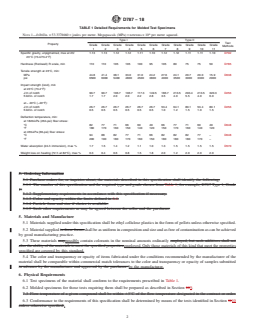
TABLE 1 Detailed Requirements for Molded Test Specimens
NOTE 1—ft·lbf/in.×53.3378660=joules per metre. Megapascals (MPa)=newtons×10 per metre squared.
Type I Type II
Test
Property
Grade Grade Grade Grade Grade Grade Grade Grade Grade Grade Grade
Methods
1 2 3 4 5 6 7 8 9 10 11
Specific gravity, unpigmented, max at 23/ 1.13 1.13 1.12 1.12 1.11 1.10 1.12 1.12 1.11 1.11 1.10 D792
23°C (73.4/73.4°F)
Hardness (Rockwell) R scale, min 110 110 105 105 100 95 105 80 75 75 50 D785
Tensile strength at 23°C, min:
MPa 44.8 41.4 38.1 33.0 31.0 24.2 27.6 24.1 20.7 20.0 15.9 D638
psi 6500 6000 5400 4800 4500 3800 4000 3500 3000 3300 2900
Impact strength (Izod), min
at 23°C (73.4°F):
J/m of notch 90.7 90.7 106.7 106.7 117.3 149.5 186.7 213.5 293.4 213.5 320.3 D256
ft·lbf/in. of notch 1.7 1.7 2.0 2.0 2.2 2.8 3.5 4.0 5.5 4.0 6.0
at − 40°C (−40°F):
J/m of notch 26.7 26.7 26.7 26.7 26.7 26.7 53.4 64.1 80.1 53.4 80.1 D256
ft·lbf/in. of notch 0.5 0.5 0.5 0.5 0.5 0.5 1.0 1.2 1.5 1.0 1.5
Deflection temperature, min:
at 1820-kPa (264-psi) fiber stress:
°C 82 77 71 66 60 49 66 77 71 60 49 D648
°F 180 170 160 150 140 120 150 170 160 140 120
at 455-kPa (66-psi) fiber stress:
°C 94 88 82 77 71 66 82 82 82 77 – D648
°F 200 190 180 170 160 150 180 180 180 170 –
Water absorption (24-h immersion), max % 1.7 1.5 1.4 1.2 1.1 1.0 1.3 1.5 1.5 1.5 1.5 D570
Weight loss on heating (72 h at 82°C), max % 0.3 0.4 0.6 0.8 1.5 1.8 2.0 1.2 2.0 2.0 2.0
of the material shall be comparable within commercial match compression-molded blanks or extruded strips can be used if it
tolerances to the color and transparency or opacity of samples can be shown that the results are comparable.
submitted by the manufacturer.
9.2 Prior to molding ethyl cellulose, dry the material to a
moisturecontentof0.2%orless.Arecommendedprocedureis
6. Physical Requirements
to keep the material, spread to a maximum depth of 51 mm (2
6.1 Test specimens of the material shall conform to the
in.) in a tray, in a circulating-air oven at 76.5 to 88°C (170 to
requirements prescribed in Table 1.
190°F) for 3 hours. Control the injection molding condition on
6.2 Molded specimens for those tests requiring them shall
...
This document is not an ASTM standard and is intended only to provide the user of an ASTM standard an indication of what changes have been made to the previous version. Because
it may not be technically possible to adequately depict all changes accurately, ASTM recommends that users consult prior editions as appropriate. In all cases only the current version
of the standard as published by ASTM is to be considered the official document.
Designation: D787 − 12 D787 − 18
Standard Specification for
Ethyl Cellulose Molding and Extrusion Compounds
This standard is issued under the fixed designation D787; the number immediately following the designation indicates the year of
original adoption or, in the case of revision, the year of last revision. A number in parentheses indicates the year of last reapproval. A
superscript epsilon (´) indicates an editorial change since the last revision or reapproval.
This standard has been approved for use by agencies of the U.S. Department of Defense.
1. Scope*
1.1 This specification covers requirements for plasticized ethyl cellulose thermoplastic compounds suitable for injection
molding and extrusion. It does not include special materials compounded for special applications.
1.2 The values stated in SI units are to be regarded as standard. The English values given are for information only.
1.3 The following precautionary statement pertains only to the Test Methods portion, Section 109 of this specification. This
standard does not purport to address all of the safety concerns, if any, associated with its use. It is the responsibility of the user
of this standard to establish appropriate safety safety, health, and healthenvironmental practices and determine the applicability
of regulatory limitations prior to use.
NOTE 1—There is no known ISO equivalent to this specification.
1.4 This international standard was developed in accordance with internationally recognized principles on standardization
established in the Decision on Principles for the Development of International Standards, Guides and Recommendations issued
by the World Trade Organization Technical Barriers to Trade (TBT) Committee.
2. Referenced Documents
2.1 ASTM Standards:
D256 Test Methods for Determining the Izod Pendulum Impact Resistance of Plastics
D570 Test Method for Water Absorption of Plastics
D618 Practice for Conditioning Plastics for Testing
D638 Test Method for Tensile Properties of Plastics
D648 Test Method for Deflection Temperature of Plastics Under Flexural Load in the Edgewise Position
D785 Test Method for Rockwell Hardness of Plastics and Electrical Insulating Materials
D792 Test Methods for Density and Specific Gravity (Relative Density) of Plastics by Displacement
D883 Terminology Relating to Plastics
D1505 Test Method for Density of Plastics by the Density-Gradient Technique
D3641 Practice for Injection Molding Test Specimens of Thermoplastic Molding and Extrusion Materials
D3892 Practice for Packaging/Packing of Plastics
3. Terminology
3.1 Terms in this specification are in accordance with Terminology D883.
4. Classification
4.1 This specification covers two types and eleven grades of ethyl cellulose molding and extrusion compounds as classified in
accordance with Table 1. Type I materials are general purpose and Type II are characterized by improved resistance to impact,
especially at low temperatures. The grades are classified in accordance with their physical properties as specified in Table 1.
4.1.1 A typical call out of material covered by this specification would contain the number of this specification and the required
type and grade chosen from Table 1, for example, D787 Type 1, Grade 1.
This specification is under the jurisdiction of ASTM Committee D20 on Plastics and is the direct responsibility of Subcommittee D20.15 on Thermoplastic Materials.
Current edition approved Aug. 1, 2012April 1, 2018. Published August 2012April 2018. Originally approved in 1944. Last previous edition approved in 20092012 as
D787 – 09.12. DOI: 10.1520/D0787-12.10.1520/D0787-18.
For referenced ASTM standards, visit the ASTM website, www.astm.org, or contact ASTM Customer Service at service@astm.org. For Annual Book of ASTM Standards
volume information, refer to the standard’s Document Summary page on the ASTM website.
*A Summary of Changes section appears at the end of this standard
Copyright © ASTM International, 100 Barr Harbor Drive, PO Box C700, West Conshohocken, PA 19428-2959. United States
D787 − 18
TABLE 1 Detailed Requirements for Molded Test Specimens
NOTE 1—ft·lbf/in. × 53.3378660 = joules per metre. Megapascals (MPa) = newtons × 10 per metre squared.
Type I Type II
Test
Property
Grade Grade Grade Grade Grade Grade Grade Grade Grade Grade Grade
Methods
1 2 3 4 5 6 7 8 9 10 11
Specific gravity, unpigmented, max at 23/ 1.13 1.13 1.12 1.12 1.11 1.10 1.12 1.12 1.11 1.11 1.10 D792
23°C (73.4/73.4°F)
Hardness (Rockwell) R scale, min 110 110 105 105 100 95 105 80 75 75 50 D785
Tensile strength at 23°C, min:
MPa 44.8 41.4 38.1 33.0 31.0 24.2 27.6 24.1 20.7 20.0 15.9 D638
psi 6500 6000 5400 4800 4500 3800 4000 3500 3000 3300 2900
Impact strength (Izod), min
at 23°C (73.4°F):
J/m of notch 90.7 90.7 106.7 106.7 117.3 149.5 186.7 213.5 293.4 213.5 320.3 D256
ft·lbf/in. of notch 1.7 1.7 2.0 2.0 2.2 2.8 3.5 4.0 5.5 4.0 6.0
at − 40°C (−40°F):
J/m of notch 26.7 26.7 26.7 26.7 26.7 26.7 53.4 64.1 80.1 53.4 80.1 D256
ft·lbf/in. of notch 0.5 0.5 0.5 0.5 0.5 0.5 1.0 1.2 1.5 1.0 1.5
Deflection temperature, min:
at 1820-kPa (264-psi) fiber stress:
°C 82 77 71 66 60 49 66 77 71 60 49 D648
°F 180 170 160 150 140 120 150 170 160 140 120
at 455-kPa (66-psi) fiber stress:
°C 94 88 82 77 71 66 82 82 82 77 – D648
°F 200 190 180 170 160 150 180 180 180 170 –
Water absorption (24-h immersion), max % 1.7 1.5 1.4 1.2 1.1 1.0 1.3 1.5 1.5 1.5 1.5 D570
Weight loss on heating (72 h at 82°C), max % 0.3 0.4 0.6 0.8 1.5 1.8 2.0 1.2 2.0 2.0 2.0
5. Ordering Information
5.1 Purchase orders for, or inquiries about, the materials described in this specification shall identify the following:
5.1.1 The number of this specification and the required type and grade chosen from Table 1, for example, D787 Type 1, Grade
1.
5.1.2 Supplementary requirements in accordance with this specification if necessary.
5.1.3 Color and opacity within the limits defined in 6.4.
5.1.4 Particle form and size if choice is available.
5.1.5 Such other requirements as may be agreed between the seller and the purchaser.
5. Materials and Manufacture
5.1 Materials supplied under this specification shall be ethyl cellulose plastics in the form of pellets unless otherwise specified.
5.2 Material supplied in these forms shall be as uniform in composition and size and as free of contamination as can be achieved
by good manufacturing practice.
5.3 These materials maypossibly contain colorants in the nominal amounts ordinarily employed, but such additives shall not
alter the ability of the materials to meet the specified properties.employed. Only those materials of this kind that meet the properties
specified are covered by this standard.
5.4 The color and transparency or opacity of items fabricated under the conditions recommended by the manufacturer of the
material shall be comparable within commercial match tolerances to the color and transparency or opacity of samples submitted
in advance by the manufacturer and approved by the purchaser. by the manufacturer.
6. Physical Requirements
6.1 Test specimens of the material shall conform to the requirements prescribed in Table 1.
6.2 Molded specimens for those tests requiring them shall be prepared as described in Section 109.
7.3 Flow temperature of a given compound shall be within 65°C of the flow temperature designated in the contract or or
...