

ASTM D5422-17
(Test Method)Standard Test Method for Measurement of Properties of Thermoplastic Materials by Screw-Extrusion Capillary Rheometer
General Information
- Abstract
SIGNIFICANCE AND USE
5.1 This test method is useful for the characterization of thermoplastics and thermoplastic compounds, in terms of viscosity, or resistance to flow.
5.2 The data produced by this test method has been found useful in both quality-control testing and compound development. However, direct correlation with factory conditions is not implied.
5.3 Flow-performance data permits quality control of incoming thermoplastics and thermoplastic compounds because the flow parameters are sensitive to molecular weight and molecular-weight distribution. Therefore, this test method may distinguish differences between lots.
5.4 The shear viscosity or flow viscosity of thermoplastics and thermoplastic compounds will not only be sensitive to the raw-polymer molecular properties, but will also be affected by the type and amount of filler, additive, plasticizer, or stabilizer, by the type of copolymer blend, and by the addition of other compounding materials. This test method can serve as a quality-control tool for either incoming materials or for in-house quality-assurance checks on production mixing. This test method is useful to the research and development of new products in that the rheological behavior of a yet uncharacterized thermoplastic or thermoplastic compound can be measured and considered for comparative analysis.
SCOPE
1.1 This test method covers the use of a screw-extrusion-type capillary rheometer for the measurement of flow properties of thermoplastics and thermoplastic compounds. The measured flow properties, which are obtained through laboratory investigation, may help to describe the material behavior that occurs in factory processing.
1.2 Since a screw-type capillary rheometer imparts shear energy to the material during testing, the measurements will usually differ from those obtained with a piston-type capillary rheometer (see Test Method D3835).
1.3 Capillary rheometer measurements for thermoplastics and thermoplastic compounds are described in Test Method D3835.
1.4 The values stated in SI units are to be regarded as standard.
1.5 This standard does not purport to address all of the safety concerns, if any, associated with its use. It is the responsibility of the user of this standard to establish appropriate safety, health, and environmental practices and determine the applicability of regulatory limitations prior to use.
Note 1: There is no known ISO equivalent to this standard. The scope of this standard is mentioned in ISO 11443:2014, Plastics—Determination of the fluidity of plastics using capillary and slit-die rheometers,” Annex C, “Uncertainties in the determination of shear viscosity by capillary extrusion.”
1.6 This international standard was developed in accordance with internationally recognized principles on standardization established in the Decision on Principles for the Development of International Standards, Guides and Recommendations issued by the World Trade Organization Technical Barriers to Trade (TBT) Committee.
- Status
- Published
- Publication Date
- 30-Nov-2017
- Technical Committee
- D20 - Plastics
- Drafting Committee
- D20.30 - Thermal Properties
Buy Documents
ASTM D5422-17 - Standard Test Method for Measurement of Properties of Thermoplastic Materials by Screw-Extrusion Capillary Rheometer
REDLINE ASTM D5422-17 - Standard Test Method for Measurement of Properties of Thermoplastic Materials by Screw-Extrusion Capillary Rheometer
Overview
ASTM D5422-17 is a standard test method developed by ASTM International for the measurement of flow properties of thermoplastic materials and compounds using a screw-extrusion capillary rheometer. This method delivers crucial data related to viscosity and flow resistance, supporting both quality-control testing and the development of new thermoplastic compounds. Utilizing a screw-extrusion rheometer, the procedure provides insight into how thermoplastic materials are likely to behave under processing conditions, offering valuable information for manufacturers, processors, and researchers in the plastics industry.
Key Topics
- Viscosity and Flow Resistance: The test method quantifies the viscosity of thermoplastics, which is essential for understanding material flow behavior.
- Quality Control: Sensitivity to molecular weight and molecular-weight distribution allows this method to distinguish between different batches or lots of raw materials and compounds.
- Effects of Additives: The measurement of flow properties is influenced by fillers, additives, plasticizers, stabilizers, and various blends, making the method useful for monitoring compounding variations.
- Corrective Calculations: Use of corrections such as Bagley and Rabinowitsch addresses die entrance/exit effects and non-Newtonian polymer behavior for more accurate results.
- Reported Parameters: Standardized reporting includes details on rheometer type, die dimensions, shear rates, shear stresses, corrected viscosities, and shear sensitivity, providing a comprehensive dataset for comparative analysis.
Applications
- Incoming Material Qualification: Manufacturers use this method for quality assessment of incoming thermoplastic materials, ensuring consistency and performance in subsequent processing.
- In-house Quality Assurance: Production facilities rely on ASTM D5422-17 as a tool for ongoing quality control during in-house mixing and compounding, safeguarding process stability.
- Compound Development: Research and development teams apply this method to evaluate and compare the rheological properties of new or modified thermoplastic formulations.
- Process Optimization: Understanding the flow properties under conditions similar to commercial extrusion, molding, or calendering processes aids in optimizing production parameters and troubleshooting processing issues across a variety of thermoplastic materials.
- Distinguishing Material Batches: The method can identify variations in flow characteristics caused by changes in raw polymer properties or processing additives, supporting reliable material selection and traceability.
Related Standards
- ASTM D3835: Test Method for Determination of Properties of Polymeric Materials by Means of a Capillary Rheometer, referenced for piston-type rheometers and related parameters.
- ASTM D618: Practice for Conditioning Plastics for Testing, important for sample preparation when required.
- ASTM D883: Terminology Relating to Plastics, providing definitions relevant to rheology and material property measurements.
- ASTM D1238: Test Method for Melt Flow Rates of Thermoplastics by Extrusion Plastometer, another core method for characterizing melt flow.
- ISO 11443: While not an ISO equivalent, the scope of ASTM D5422-17 aligns partially with ISO 11443:2014 for the determination of the fluidity of plastics using capillary and slit-die rheometers.
Keywords: ASTM D5422-17, capillary rheometer, screw extrusion, thermoplastics, flow properties, viscosity, quality control, rheological behavior, polymer processing, molecular weight, additive effects, material testing, plastics industry standards.
Relations
- Effective Date
- 01-Feb-2024
- Refers
ASTM D1238-23a - Standard Test Method for Melt Flow Rates of Thermoplastics by Extrusion Plastometer - Effective Date
- 15-Nov-2023
- Effective Date
- 01-Nov-2023
- Effective Date
- 01-Jan-2020
- Effective Date
- 01-Aug-2019
- Effective Date
- 15-Apr-2019
- Effective Date
- 01-Feb-2019
- Effective Date
- 01-Dec-2018
- Effective Date
- 01-Nov-2018
- Effective Date
- 15-Aug-2017
- Refers
ASTM D1238-13 - Standard Test Method for Melt Flow Rates of Thermoplastics by Extrusion Plastometer - Effective Date
- 01-Aug-2013
- Effective Date
- 01-May-2013
- Effective Date
- 15-Nov-2012
- Effective Date
- 01-Nov-2011
- Effective Date
- 15-May-2011
Buy Documents
ASTM D5422-17 - Standard Test Method for Measurement of Properties of Thermoplastic Materials by Screw-Extrusion Capillary Rheometer
REDLINE ASTM D5422-17 - Standard Test Method for Measurement of Properties of Thermoplastic Materials by Screw-Extrusion Capillary Rheometer
Get Certified
Connect with accredited certification bodies for this standard

DIN CERTCO
DIN Group product certification.

Smithers Quality Assessments
US management systems and product certification.
Sponsored listings
Frequently Asked Questions
ASTM D5422-17 is a standard published by ASTM International. Its full title is "Standard Test Method for Measurement of Properties of Thermoplastic Materials by Screw-Extrusion Capillary Rheometer". This standard covers: SIGNIFICANCE AND USE 5.1 This test method is useful for the characterization of thermoplastics and thermoplastic compounds, in terms of viscosity, or resistance to flow. 5.2 The data produced by this test method has been found useful in both quality-control testing and compound development. However, direct correlation with factory conditions is not implied. 5.3 Flow-performance data permits quality control of incoming thermoplastics and thermoplastic compounds because the flow parameters are sensitive to molecular weight and molecular-weight distribution. Therefore, this test method may distinguish differences between lots. 5.4 The shear viscosity or flow viscosity of thermoplastics and thermoplastic compounds will not only be sensitive to the raw-polymer molecular properties, but will also be affected by the type and amount of filler, additive, plasticizer, or stabilizer, by the type of copolymer blend, and by the addition of other compounding materials. This test method can serve as a quality-control tool for either incoming materials or for in-house quality-assurance checks on production mixing. This test method is useful to the research and development of new products in that the rheological behavior of a yet uncharacterized thermoplastic or thermoplastic compound can be measured and considered for comparative analysis. SCOPE 1.1 This test method covers the use of a screw-extrusion-type capillary rheometer for the measurement of flow properties of thermoplastics and thermoplastic compounds. The measured flow properties, which are obtained through laboratory investigation, may help to describe the material behavior that occurs in factory processing. 1.2 Since a screw-type capillary rheometer imparts shear energy to the material during testing, the measurements will usually differ from those obtained with a piston-type capillary rheometer (see Test Method D3835). 1.3 Capillary rheometer measurements for thermoplastics and thermoplastic compounds are described in Test Method D3835. 1.4 The values stated in SI units are to be regarded as standard. 1.5 This standard does not purport to address all of the safety concerns, if any, associated with its use. It is the responsibility of the user of this standard to establish appropriate safety, health, and environmental practices and determine the applicability of regulatory limitations prior to use. Note 1: There is no known ISO equivalent to this standard. The scope of this standard is mentioned in ISO 11443:2014, Plastics—Determination of the fluidity of plastics using capillary and slit-die rheometers,” Annex C, “Uncertainties in the determination of shear viscosity by capillary extrusion.” 1.6 This international standard was developed in accordance with internationally recognized principles on standardization established in the Decision on Principles for the Development of International Standards, Guides and Recommendations issued by the World Trade Organization Technical Barriers to Trade (TBT) Committee.
SIGNIFICANCE AND USE 5.1 This test method is useful for the characterization of thermoplastics and thermoplastic compounds, in terms of viscosity, or resistance to flow. 5.2 The data produced by this test method has been found useful in both quality-control testing and compound development. However, direct correlation with factory conditions is not implied. 5.3 Flow-performance data permits quality control of incoming thermoplastics and thermoplastic compounds because the flow parameters are sensitive to molecular weight and molecular-weight distribution. Therefore, this test method may distinguish differences between lots. 5.4 The shear viscosity or flow viscosity of thermoplastics and thermoplastic compounds will not only be sensitive to the raw-polymer molecular properties, but will also be affected by the type and amount of filler, additive, plasticizer, or stabilizer, by the type of copolymer blend, and by the addition of other compounding materials. This test method can serve as a quality-control tool for either incoming materials or for in-house quality-assurance checks on production mixing. This test method is useful to the research and development of new products in that the rheological behavior of a yet uncharacterized thermoplastic or thermoplastic compound can be measured and considered for comparative analysis. SCOPE 1.1 This test method covers the use of a screw-extrusion-type capillary rheometer for the measurement of flow properties of thermoplastics and thermoplastic compounds. The measured flow properties, which are obtained through laboratory investigation, may help to describe the material behavior that occurs in factory processing. 1.2 Since a screw-type capillary rheometer imparts shear energy to the material during testing, the measurements will usually differ from those obtained with a piston-type capillary rheometer (see Test Method D3835). 1.3 Capillary rheometer measurements for thermoplastics and thermoplastic compounds are described in Test Method D3835. 1.4 The values stated in SI units are to be regarded as standard. 1.5 This standard does not purport to address all of the safety concerns, if any, associated with its use. It is the responsibility of the user of this standard to establish appropriate safety, health, and environmental practices and determine the applicability of regulatory limitations prior to use. Note 1: There is no known ISO equivalent to this standard. The scope of this standard is mentioned in ISO 11443:2014, Plastics—Determination of the fluidity of plastics using capillary and slit-die rheometers,” Annex C, “Uncertainties in the determination of shear viscosity by capillary extrusion.” 1.6 This international standard was developed in accordance with internationally recognized principles on standardization established in the Decision on Principles for the Development of International Standards, Guides and Recommendations issued by the World Trade Organization Technical Barriers to Trade (TBT) Committee.
ASTM D5422-17 is classified under the following ICS (International Classification for Standards) categories: 83.080.20 - Thermoplastic materials. The ICS classification helps identify the subject area and facilitates finding related standards.
ASTM D5422-17 has the following relationships with other standards: It is inter standard links to ASTM D883-24, ASTM D1238-23a, ASTM D883-23, ASTM D883-20, ASTM D883-19c, ASTM D883-19a, ASTM D883-19, ASTM D883-18a, ASTM D883-18, ASTM D883-17, ASTM D1238-13, ASTM E691-13, ASTM D883-12e1, ASTM E691-11, ASTM D883-11. Understanding these relationships helps ensure you are using the most current and applicable version of the standard.
ASTM D5422-17 is available in PDF format for immediate download after purchase. The document can be added to your cart and obtained through the secure checkout process. Digital delivery ensures instant access to the complete standard document.
Standards Content (Sample)
This international standard was developed in accordance with internationally recognized principles on standardization established in the Decision on Principles for the
Development of International Standards, Guides and Recommendations issued by the World Trade Organization Technical Barriers to Trade (TBT) Committee.
Designation: D5422 − 17
Standard Test Method for
Measurement of Properties of Thermoplastic Materials by
Screw-Extrusion Capillary Rheometer
This standard is issued under the fixed designation D5422; the number immediately following the designation indicates the year of
original adoption or, in the case of revision, the year of last revision.Anumber in parentheses indicates the year of last reapproval.A
superscript epsilon (´) indicates an editorial change since the last revision or reapproval.
INTRODUCTION
This test method uses capillary rheometry to measure the rheological properties of thermoplastics
and thermoplastic compounds. This test method utilizes a screw-extrusion-type capillary rheometer.
1. Scope* mendations issued by the World Trade Organization Technical
Barriers to Trade (TBT) Committee.
1.1 This test method covers the use of a screw-extrusion-
type capillary rheometer for the measurement of flow proper-
2. Referenced Documents
ties of thermoplastics and thermoplastic compounds. The
2.1 ASTM Standards:
measured flow properties, which are obtained through labora-
D618Practice for Conditioning Plastics for Testing
tory investigation, may help to describe the material behavior
D883Terminology Relating to Plastics
that occurs in factory processing.
D1238Test Method for Melt Flow Rates of Thermoplastics
1.2 Since a screw-type capillary rheometer imparts shear
by Extrusion Plastometer
energy to the material during testing, the measurements will
D3835Test Method for Determination of Properties of
usually differ from those obtained with a piston-type capillary
Polymeric Materials by Means of a Capillary Rheometer
rheometer (see Test Method D3835).
E691Practice for Conducting an Interlaboratory Study to
1.3 Capillary rheometer measurements for thermoplastics
Determine the Precision of a Test Method
and thermoplastic compounds are described in Test Method
D3835. 3. Terminology
1.4 The values stated in SI units are to be regarded as
3.1 Definitions: (See Terminology D883):
standard. 3.1.1 apparent shear rate (γ˙ )—shear strain rate (or velocity
a
gradient) of the thermoplastic or thermoplastic compound
1.5 This standard does not purport to address all of the
extrudate as it passes through the capillary die.
safety concerns, if any, associated with its use. It is the
3.1.1.1 Discussion—This velocity gradient is not uniform
responsibility of the user of this standard to establish appro-
through the cross-section of the capillary die. The shear rate is
priate safety, health, and environmental practices and deter-
calculated for the region of highest shear, which is at the wall
mine the applicability of regulatory limitations prior to use.
ofthecapillary.Byselectingadiediameterandcontrollingthe
NOTE1—ThereisnoknownISOequivalenttothisstandard.Thescope
volume flow per unit time through the die, a specific level of
ofthisstandardismentionedinISO11443:2014,Plastics—Determination
apparent shear rate is achieved. Alternately, the shear stress
of the fluidity of plastics using capillary and slit-die rheometers,” Annex
(entrance pressure) is controlled, and the apparent shear rate
C, “Uncertainties in the determination of shear viscosity by capillary
extrusion.”
measured.
3.1.1.2 Discussion—Mathematically,theapparentshearrate
1.6 This international standard was developed in accor-
atthewallofthecapillaryforaNewtonianfluidatthecapillary
dance with internationally recognized principles on standard-
wall is given by the following:
ization established in the Decision on Principles for the
Development of International Standards, Guides and Recom-
32·Q
γ˙ 5 (1)
a 3
π·D
ThistestmethodisunderthejurisdictionofASTMCommitteeD20onPlastics
and is the direct responsibility of Subcommittee D20.30 on Thermal Properties
(Section D20.30.08). For referenced ASTM standards, visit the ASTM website, www.astm.org, or
Current edition approved Dec. 1, 2017. Published January 2018. Originally contact ASTM Customer Service at service@astm.org. For Annual Book of ASTM
approved in 1993. Last previous edition approved in 2009 as D5422–09. DOI: Standards volume information, refer to the standard’s Document Summary page on
10.1520/D5422-17. the ASTM website.
*A Summary of Changes section appears at the end of this standard
Copyright © ASTM International, 100 Barr Harbor Drive, PO Box C700, West Conshohocken, PA 19428-2959. United States
D5422 − 17
where: obtained by applying the Bagley Correction Factor (E)tothe
−1
apparent shear stress (see 3.1.7.1 and 3.1.7.2). The Bagley
γ˙ = apparent shear rate, s ,
a
correction compensates for energy losses at the entrance and
Q = quantity of fluid extruded per time, mm /s,
π = 3.142, and exit of the die.
D = diameter of the measuring capillary, mm.
3.1.6.1 Discussion—This correction is often applied as
though it were an additional length of capillary.The correction
3.1.2 apparent shear stress (τ )—the measured resistance to
a
is often termed “end effect.” Capillary entrance angle and
the flow through a capillary die. It may be determined by
measuring the die entrance pressure for a specific die, then geometry have great influence on the magnitude of this
correction.
applying appropriate geometric factors.
3.1.2.1 Discussion—Mathematically, apparent shear stress
3.1.6.2 Discussion—TheBagleycorrectionwillalsoremove
is given by the following:
the influence of any static pressure in the system that does not
vary with die length.
P
τ 5 (2)
a
3.1.6.3 Discussion—Since the magnitude of correction is a
4·~L/D!
function of shear rate, data for this correction are obtained by
where:
using two or more dies of different length, but of the same
τ = apparent shear stress, Pa,
a
diameter (and thus the same apparent shear rate, as calculated
P = pressure at the entrance of the measuring capillary, Pa,
in3.1.4.2).Ifthedatafromtheseadditionaldiesarecompared,
L = length of the measuring capillary, mm, and
either graphically or mathematically, a linear relationship of
D = diameter of the measuring capillary, mm.
extrusion pressure with die geometry is usually obtained in the
3.1.3 apparent viscosity (η )—ratio of apparent shear stress
a following form:
to apparent shear rate, Pa·s.
L
3.1.3.1 Discussion—For an extrusion capillary rheometer,
P 5 c· 1E (4)
F G
D
the ratio is usually calculated at a given shear rate.At constant
temperature, the apparent viscosity of most polymers is not where:
constant, but varies with shear rate. The viscosity is generally
E = the Bagley Correction Factor. (This term is often called
annotated with the shear rate at which the measurement was
“end effect.” It is expressed as the equivalent length of
made.
capillarynecessarytoextrapolatethepressure-linevalue
3.1.4 capillary rheometer—an instrument in which thermo- on the P versus L/D plot to zero, mm.)
c = slope of the line.
plastics or thermoplastic compounds can be forced from a
reservoir through a capillary die. The temperature, pressure
The Bagley Correction Factor (E) and the slope (c) are
enteringthedie,andflowratethroughthediecanbecontrolled
functions of the thermoplastic compound and the shear rate.
and accurately measured.
Corrected shear stress is therefore as follows:
3.1.5 corrected shear rate (γ˙ )—the actual shear rate at the
w
P
τ 5 (5)
wall of the capillary die determined by applying the Rabinow- w
4· L/D 1E
@~ ! #
−1
itsch correction for non-Newtonian materials, s .
3.1.6.4 Discussion—Each value of corrected shear stress
3.1.5.1 Discussion—The Rabinowitsch correction math-
must be annotated with the shear rate with which it is
ematically adjusts the shear-rate values to compensate for
measured.
non-Newtonian behavior of the polymer. To obtain corrected
3.1.7 corrected viscosity (η)—the ratio of corrected shear
shear rate, at least two measurements of apparent shear stress
stress to corrected shear rate, Pa·s.
and apparent shear rate are made. This is generally accom-
plished by increasing the rate of extrusion (Q) while using the
3.1.7.1 Discussion—Since both the material properties and
same measuring capillary. the correction equations are functions of shear rate, it is very
3.1.5.2 Discussion—As a first step, the Bagley correction important to state the particular value of shear rate at which
(as stated in 3.1.6) is made to the shear-stress values. Then, each measurement is made.
either by algebraic means (if only two measurements are
3.1.7.2 Discussion—Other corrections to measured values
made), or by a regression method (for a greater number of
are often made in rheological research studies to compensate
points), the equation in 3.1.11 is solved for n, using the
for the effects of pressure, viscous heating, compressibility,
corrected shear stress (τ ).
w time effects, etc. The terms “true shear stress,” “true shear
3.1.5.3 Discussion—The corrected shear rate (γ˙ ) is deter-
w rate,”and“trueviscosity”areoftenusedfortheresultsofsuch
mined by the following:
exhaustive calculations. This test method addresses only the
two most important corrections, Bagley and Rabinowitsch.
3 11
n
γ˙ 5 ·γ˙ (3)
F G
w a
n
3.1.8 die entrance pressure (P)—the pressure in the reser-
voir at the die entrance.
For most thermoplastics and thermoplastic compounds,
the magnitude of shear sensitivity (n) will vary, depending
3.1.9 newtonian fluid—a material for which the measure-
on material composition.
ment of viscosity is not changed by changing the shear rate.
3.1.6 corrected shear stress (τ )—the actual shear stress at Simple liquids, such as water, are considered Newtonian
W
the wall of the capillary die, Pa. The corrected shear stress is whereas most polymeric materials are not.
D5422 − 17
3.1.10 power-law fluid—a material for which the viscosity shear stress, corrected shear rate, corrected viscosity, shear
varies with the shear rate in accordance with the following sensitivity, and entrance/exit effects.
known relationship:
n 5. Significance and Use
τ 5 K· γ˙ (6)
~ !
a a
5.1 This test method is useful for the characterization of
where:
thermoplastics and thermoplastic compounds, in terms of
τ = apparent shear stress, Pa,
a
viscosity, or resistance to flow.
−1
γ˙ = apparent shear rate, s ,
a
5.2 The data produced by this test method has been found
K = a material constant, often called “consistency index,”
useful in both quality-control testing and compound develop-
and
ment. However, direct correlation with factory conditions is
n = shear sensitivity, dimensionless.
not implied.
Most non-Newtonian fluids follow this relationship for at
least short ranges of the shear rate variable. The power-law 5.3 Flow-performance data permits quality control of in-
equation is generally used in its logarithmic form as follows: coming thermoplastics and thermoplastic compounds because
the flow parameters are sensitive to molecular weight and
log τ 5 log K 1n log γ˙ (7)
~ !
~ ! ~ ~ !!
a a
molecular-weight distribution.Therefore, this test method may
3.1.11 shear sensitivity (n)—a dimensionless material
distinguish differences between lots.
parameter, also called the “power-law index,” that represents
5.4 The shear viscosity or flow viscosity of thermoplastics
the magnitude of the shear sensitivity of a polymer. It is equal
and thermoplastic compounds will not only be sensitive to the
to 1.00 for Newtonian fluids, and generally less than 0.8 for
raw-polymer molecular properties, but will also be affected by
non-Newtonian fluids.
the type and amount of filler, additive, plasticizer, or stabilizer,
3.1.11.1 Discussion—Mathematically, the shear sensitivity
by the type of copolymer blend, and by the addition of other
is given by the following:
compounding materials. This test method can serve as a
dlog~τ !
w
quality-control tool for either incoming materials or for in-
n 5 (8)
dlog γ˙
~ !
a housequality-assurancechecksonproductionmixing.Thistest
method is useful to the research and development of new
where:
products in that the rheological behavior of a yet uncharacter-
ized thermoplastic or thermoplastic compound can be mea-
d log(τ ) = the change in log corrected shear stress over
w
sured and considered for comparative analysis.
varying extrusion rates, and
d log(γ˙ ) = the change in log apparent shear rate over
a
6. Interferences and Precautions
varying extrusion rates.
6.1 Since the flow properties of non-Newtonian materials
4. Summary of Test Method are not linear, capillary rheometers should be operated at
conditions of flow (temperature, pressure, and rate) similar to
4.1 The thermoplastic material is fed into a laboratory
those of selected commercial processes. These processes in-
extruder, the barrel of which is equipped with a temperature
clude mixing, calendering, molding, and extrusion of thermo-
control. The output end of the extruder is equipped with a
plastics and thermoplastic compounds.
capillary die containing an insert of specified dimensions.
6.2 Screw-extrusion-type rheometers impart significant
Temperatures of the extruder barrel and capillary die are
normallykeptconstant.(Itmaybenecessarytoalterthedie-set amounts of energy to the thermoplastic or thermoplastic
compound before the measurement is made. Interpretation of
temperature only to compensate for shear heating of the
the data for factory operations such as production extrusion,
material at different extrusion rates.)
calendering, or injection molding is therefore more straightfor-
4.2 A suitable pressure transducer and temperature-
ward than for compression-molding operations, where factory-
measuring device, such as a thermocouple, are positioned in
work input is quite small.
the die just before the entrance to the insert.
6.3 Increasing the rate of extrusion will induce shear
4.3 Therateofmaterialextrusion,ormassthroughput(Q)is
heating,andthereforemayalterthetemperatureofthematerial
determined by collecting extrudate over a timed interval and
flowing through the capillary die. It is essential to maintain a
then weighing it. The extrusion rate is controlled by adjusting
constant melt temperature in the die in order to perform
the drive speed.
accurate viscosity measurements. It may be necessary to
4.4 In order to calculate the flow properties of the material,
compensate for shear heating by manually adjusting the
extrusion is performed at a minimum of two different drive die-heater set temperature.
speedsthroughaninsertofspecifieddimensions(DieA).Then,
6.4 Extruder residence time and shearing actions at a
extrusionisperformedagain,atthesamedrivespeeds,through
particular melt temperature will often affect a material’s
at least one additional die insert of different specified dimen-
viscosity. It is recommended that consideration be given to the
sions (Die B or Die C).
temperature and shear-stability characteristics of each thermo-
4.5 This procedure allows for the determination of apparent plastic or thermoplastic compound before using this test
s
...
This document is not an ASTM standard and is intended only to provide the user of an ASTM standard an indication of what changes have been made to the previous version. Because
it may not be technically possible to adequately depict all changes accurately, ASTM recommends that users consult prior editions as appropriate. In all cases only the current version
of the standard as published by ASTM is to be considered the official document.
Designation: D5422 − 09 D5422 − 17
Standard Test Method for
Measurement of Properties of Thermoplastic Materials by
Screw-Extrusion Capillary Rheometer
This standard is issued under the fixed designation D5422; the number immediately following the designation indicates the year of
original adoption or, in the case of revision, the year of last revision. A number in parentheses indicates the year of last reapproval. A
superscript epsilon (´) indicates an editorial change since the last revision or reapproval.
INTRODUCTION
This test method uses capillary rheometry to measure the rheological properties of thermoplastics
and thermoplastic compounds. This test method utilizes a screw-extrusion-type capillary rheometer.
1. Scope*
1.1 This test method covers the use of a screw-extrusion-type capillary rheometer for the measurement of flow properties of
thermoplastics and thermoplastic compounds. The measured flow properties, which are obtained through laboratory investigation,
may help to describe the material behavior that occurs in factory processing.
1.2 Since a screw-type capillary rheometer imparts shear energy to the material during testing, the measurements will usually
differ from those obtained with a piston-type capillary rheometer (see Test Method D3835).
1.3 Capillary rheometer measurements for thermoplastics and thermoplastic compounds are described in Test Method D3835.
1.4 The values stated in SI units are to be regarded as standard.
1.5 This standard does not purport to address all of the safety concerns, if any, associated with its use. It is the responsibility
of the user of this standard to establish appropriate safety safety, health, and healthenvironmental practices and determine the
applicability of regulatory limitations prior to use.
NOTE 1—There is no known ISO equivalent to this standard. The scope of this standard is mentioned in ISO 11443:2014, Plastics—Determination of
the fluidity of plastics using capillary and slit-die rheometers,” Annex C, “Uncertainties in the determination of shear viscosity by capillary extrusion.”
1.6 This international standard was developed in accordance with internationally recognized principles on standardization
established in the Decision on Principles for the Development of International Standards, Guides and Recommendations issued
by the World Trade Organization Technical Barriers to Trade (TBT) Committee.
2. Referenced Documents
2.1 ASTM Standards:
D618 Practice for Conditioning Plastics for Testing
D883 Terminology Relating to Plastics
D1238 Test Method for Melt Flow Rates of Thermoplastics by Extrusion Plastometer
D3835 Test Method for Determination of Properties of Polymeric Materials by Means of a Capillary Rheometer
E691 Practice for Conducting an Interlaboratory Study to Determine the Precision of a Test Method
3. Terminology
3.1 Definitions: (See Terminology D883):
3.1.1 apparent shear rate (γ˙ ) —)—shear strain rate (or velocity gradient) of the thermoplastic or thermoplastic compound
a
extrudate as it passes through the capillary die.
This test method is under the jurisdiction of ASTM Committee D20 on Plastics and is the direct responsibility of Subcommittee D20.30 on Thermal Properties (Section
D20.30.08).
Current edition approved April 1, 2009Dec. 1, 2017. Published April 2009January 2018. Originally approved in 1993. Last previous edition approved in 20032009 as
D5422 – 03.D5422 – 09. DOI: 10.1520/D5422-09.10.1520/D5422-17.
For referenced ASTM standards, visit the ASTM website, www.astm.org, or contact ASTM Customer Service at service@astm.org. For Annual Book of ASTM Standards
volume information, refer to the standard’s Document Summary page on the ASTM website.
*A Summary of Changes section appears at the end of this standard
Copyright © ASTM International, 100 Barr Harbor Drive, PO Box C700, West Conshohocken, PA 19428-2959. United States
D5422 − 17
3.1.1.1 Discussion—
This velocity gradient is not uniform through the cross-section of the capillary die. The shear rate is calculated for the region of
highest shear, which is at the wall of the capillary. By selecting a die diameter and controlling the volume flow per unit time
through the die, a specific level of apparent shear rate is achieved. Alternately, the shear stress (entrance pressure) is controlled,
and the apparent shear rate measured.
3.1.1.2 Discussion—
Mathematically, the apparent shear rate at the wall of the capillary for a Newtonian fluid at the capillary wall is given by the
following:
32·Q
˙γ 5 (1)
a 3
π·D
where:
−1
γ˙ = apparent shear rate, s ,
a
Q = quantity of fluid extruded per time, mm /s,
π = 3.142, and
D = diameter of the measuring capillary, mm.
3.1.2 apparent shear stress (τ ) —)—the measured resistance to the flow through a capillary die. It may be determined by
a
measuring the die entrance pressure for a specific die, then applying appropriate geometric factors.
3.1.2.1 Discussion—
Mathematically, apparent shear stress is given by the following:
P
τ 5 (2)
a
4· L/D
~ !
where:
τ = apparent shear stress, Pa,
a
P = pressure at the entrance of the measuring capillary, Pa,
L = length of the measuring capillary, mm, and
D = diameter of the measuring capillary, mm.
3.1.3 apparent viscosity (η ) —)—ratio of apparent shear stress to apparent shear rate, Pa·s.
a
3.1.3.1 Discussion—
For an extrusion capillary rheometer, the ratio is usually calculated at a given shear rate. At constant temperature, the apparent
viscosity of most polymers is not constant, but varies with shear rate. The viscosity is generally annotated with the shear rate at
which the measurement was made.
3.1.4 capillary rheometer—an instrument in which thermoplastics or thermoplastic compounds can be forced from a reservoir
through a capillary die. The temperature, pressure entering the die, and flow rate through the die can be controlled and accurately
measured.
3.1.5 corrected shear rate (γ˙ ) —)—the actual shear rate at the wall of the capillary die determined by applying the
w
−1
Rabinowitsch correction for non-Newtonian materials, s .
3.1.5.1 Discussion—
The Rabinowitsch correction mathematically adjusts the shear-rate values to compensate for non-Newtonian behavior of the
polymer. To obtain corrected shear rate, at least two measurements of apparent shear stress and apparent shear rate are made. This
is generally accomplished by increasing the rate of extrusion (Q) while using the same measuring capillary.
3.1.5.2 Discussion—
D5422 − 17
As a first step, the Bagley correction (as stated in 3.1.6) is made to the shear-stress values. Then, either by algebraic means (if only
two measurements are made), or by a regression method (for a greater number of points), the equation in 3.1.11 is solved for n,
using the corrected shear stress (τ ).
w
3.1.5.3 Discussion—
The corrected shear rate (γ˙ ) is determined by the following:
w
3 11
n
˙γ 5 ·˙γ (3)
F G
w a
n
For most thermoplastics and thermoplastic compounds, the magnitude of shear sensitivity (n) will vary, depending on ma-
terial composition.
3.1.6 corrected shear stress (τ ) —)—the actual shear stress at the wall of the capillary die, Pa. The corrected shear stress is
W
obtained by applying the Bagley Correction Factor (E) to the apparent shear stress (see 3.1.7.1 and 3.1.7.2). The Bagley correction
compensates for energy losses at the entrance and exit of the die.
3.1.6.1 Discussion—
This correction is often applied as though it were an additional length of capillary. The correction is often termed “end effect.”
Capillary entrance angle and geometry have great influence on the magnitude of this correction.
3.1.6.2 Discussion—
The Bagley correction will also remove the influence of any static pressure in the system that does not vary with die length.
3.1.6.3 Discussion—
Since the magnitude of correction is a function of shear rate, data for this correction are obtained by using two or more dies of
different length, but of the same diameter (and thus the same apparent shear rate, as calculated in 3.1.4.2). If the data from these
additional dies are compared, either graphically or mathematically, a linear relationship of extrusion pressure with die geometry
is usually obtained in the following form:
L
P 5 c· 1E (4)
F G
D
where:
E = the Bagley Correction Factor. (This term is often called “end effect.” It is expressed as the equivalent length of capillary
necessary to extrapolate the pressure-line value on the P versus L/D plot to zero, mm.)
c = slope of the line.
The Bagley Correction Factor (E) and the slope (c) are functions of the thermoplastic compound and the shear rate. Corrected
shear stress is therefore as follows:
P
τ 5 (5)
w
4·@~L/D!1E#
3.1.6.4 Discussion—
Each value of corrected shear stress must be annotated with the shear rate with which it is measured.
3.1.7 corrected viscosity (η)—the ratio of corrected shear stress to corrected shear rate, Pa·s.
3.1.7.1 Discussion—
Since both the material properties and the correction equations are functions of shear rate, it is very important to state the particular
value of shear rate at which each measurement is made.
3.1.7.2 Discussion—
D5422 − 17
Other corrections to measured values are often made in rheological research studies to compensate for the effects of pressure,
viscous heating, compressibility, time effects, etc. The terms “true shear stress,” “true shear rate,” and “true viscosity” are often
used for the results of such exhaustive calculations. This test method addresses only the two most important corrections, Bagley
and Rabinowitsch.
3.1.8 die entrance pressure (P)—the pressure in the reservoir at the die entrance.
3.1.9 newtonian fluid—a material for which the measurement of viscosity is not changed by changing the shear rate. Simple
liquids, such as water, are considered Newtonian whereas most polymeric materials are not.
3.1.10 power-law fluid—a material for which the viscosity varies with the shear rate in accordance with the following known
relationship:
n
τ 5 K· ˙γ (6)
~ !
a a
where:
τ = apparent shear stress, Pa,
a
−1
γ˙ = apparent shear rate, s ,
a
K = a material constant, often called “consistency index,” and
n = shear sensitivity, dimensionless.
Most non-Newtonian fluids follow this relationship for at least short ranges of the shear rate variable. The power-law equation
is generally used in its logarithmic form as follows:
log τ 5 log K 1n log ˙γ (7)
~ !
~ ! ~ ~ !!
a a
3.1.11 shear sensitivity (n)—a dimensionless material parameter, also called the “power-law index,” that represents the
magnitude of the shear sensitivity of a polymer. It is equal to 1.00 for Newtonian fluids, and generally less than 0.8 for
non-Newtonian fluids.
3.1.11.1 Discussion—
Mathematically, the shear sensitivity is given by the following:
dlog τ
~ !
w
n 5 (8)
dlog~˙γ !
a
where:
d log(τ ) = the change in log corrected shear stress over varying extrusion rates, and
w
d = the change in log apparent shear rate over varying extrusion rates.
log(γ˙ )
a
4. Summary of Test Method
4.1 The thermoplastic material is fed into a laboratory extruder, the barrel of which is equipped with a temperature control. The
output end of the extruder is equipped with a capillary die containing an insert of specified dimensions. Temperatures of the
extruder barrel and capillary die are normally kept constant. (It may be necessary to alter the die-set temperature only to
compensate for shear heating of the material at different extrusion rates.)
4.2 A suitable pressure transducer and temperature-measuring device, such as a thermocouple, are positioned in the die just
before the entrance to the insert.
4.3 The rate of material extrusion, or mass throughput (Q) is determined by collecting extrudate over a timed interval and then
weighing it. The extrusion rate is controlled by adjusting the drive speed.
4.4 In order to calculate the flow properties of the material, extrusion is performed at a minimum of two different drive speeds
through an insert of specified dimensions (Die A). Then, extrusion is performed again, at the same drive speeds, through at least
one additional die insert of different specified dimensions (Die B or Die C).
4.5 This procedure allows for the determination of apparent shear rate, apparent shear stress, apparent viscosity, corrected shear
stress, corrected shear rate, corrected viscosity, shear sensitivity, and entrance/exit effects.
5. Significance and Use
5.1 This test method is useful for the characterization of thermoplastics and thermoplastic compounds, in terms of viscosity, or
resistance to flow.
D5422 − 17
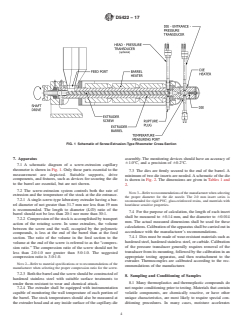
FIG. 1 Schematic of Screw-Extrusion-Type Rheometer Cross-Section
5.2 The data produced by this test method has been found useful in both quality-control testing and compound development.
However, direct correlation with factory conditions is not implied.
5.3 Flow-performance data permits quality control of incoming thermoplastics and thermoplastic compounds because the flow
parameters are sensitive to molecular weight and molecular-weight distribution. Therefore, this test method may distinguish
differences between lots.
5.4 The shear viscosity or flow viscosity of thermoplastics and thermoplastic compounds will not only be sensitive to the
raw-polymer molecular properties, but will also be affected by the type and amount of filler, additive, plasticizer, or stabilizer, by
the type of copolymer blend, and by the addition of other compounding materials. This test method can serve as a quality-control
tool for either incoming materials or for in-house quality-assurance checks on production mixing. This test method is useful to the
research and development of new products in that the rheological behavior of a yet uncharacterized thermoplastic or thermoplastic
compound can be measured and considered for comparative analysis.
6. Interferences and Precautions
6.1 Since the flow properties of non-Newtonian materials are not linear, capillary rheometers should be operated at conditions
of flow (temperature, pressure, and rate) similar to those of selected commercial processes. These processes include mixing,
calendering, molding, and extrusion of thermoplastics and thermoplastic compounds.
6.2 Screw-extrusion-type rheometers impart significant amounts of energy to the thermoplastic or thermoplastic compound
before the measurement is made. Interpretation of the data for factory operations such as production extrusion, calendering, or
injection molding is therefore more straightforward than for compression-molding operations, where factory-work input is quite
small.
6.3 Increasing the rate of extrusion will induce shear heating, and therefore may alter the temperature of the material flowing
through the capillary die. It is essential to maintain a constant melt temperature in the die in order to perform accurate viscosity
measurements. It may be necessary to compensate for shear heating by manually adjusting the die-heater set temperature.
6.4 Extruder residence time and shearing actions at a particular melt temperature will often affect a material’s viscosity. It is
recommended that con
...