

ASTM E2539-14(2021)
(Test Method)Standard Test Method for Multiangle Color Measurement of Interference Pigments
General Information
- Abstract
SIGNIFICANCE AND USE
5.1 This test method is designed to provide color data obtained from spectral reflectance factors at specific illumination and detection angles for interference pigments. Information presented in this test method is based upon data taken on materials exclusively pigmented with interference pigments.
5.2 These data can be used for acceptance testing, design purposes, research, manufacturing control, and quality control.
5.3 Specimens must be statistically representative of the end use.
5.4 Applicability of this test method for other materials, including combining interference pigments with absorbing and scattering pigments should be confirmed by the user.
SCOPE
1.1 This test method covers the instrumental requirements and required parameters needed to make instrumental color measurements of thin film interference pigments. This test method is designed to encompass interference pigments used in architectural applications, automobiles, coatings, cosmetics, inks, packaging, paints, plastics, printing, security, and other applications.
1.2 Characterization of the optical behavior of materials colored with interference pigments requires measurement at multiple angles of illumination and detection.
1.3 Data taken utilizing this test method are quantitative and are appropriate for quality control of interference pigment color.
1.4 The measurement results are usually expressed as reflectance factors, tristimulus color values, or as CIE L*a*b* color coordinates and color difference.
1.5 The totality of data taken may not be necessary for evaluating mixtures also containing non-interference pigments. The committee is investigating and evaluating the appropriateness of this test method for those materials. It is the responsibility of the users to determine the applicability of this test method for their specific applications.
1.6 Interference pigments are typically evaluated for color and color appearance in a medium, such as paint or ink. The gonioapparent effect depends strongly on the physical and chemical properties of the medium. Some of the properties affecting color and color appearance include vehicle viscosity, thickness, transparency, and volume solids. As a general rule, for quality control purposes, interference pigments are best evaluated in a masstone product form. In some cases this product form may be the final product form, or more typically a qualified simulation of the intended product form (such as a paint drawdown) that in terms of color and appearance correlates to final product application.
1.7 This standard does not address the requirements for characterizing materials containing metal flake pigments. Measurements of the optical characteristics of materials containing metal flake pigments are described in Test Method E2194.
1.8 The values stated in SI units are to be regarded as the standard. The values given in parentheses are for information only.
1.9 This standard does not purport to address all of the safety concerns, if any, associated with its use. It is the responsibility of the user of this standard to establish appropriate safety, health, and environmental practices and determine the applicability of regulatory limitations prior to use.
1.10 This international standard was developed in accordance with internationally recognized principles on standardization established in the Decision on Principles for the Development of International Standards, Guides and Recommendations issued by the World Trade Organization Technical Barriers to Trade (TBT) Committee.
- Status
- Published
- Publication Date
- 31-May-2021
- Technical Committee
- E12 - Color and Appearance
- Drafting Committee
- E12.12 - Gonioapparent Color
Overview
ASTM E2539-14(2021): Standard Test Method for Multiangle Color Measurement of Interference Pigments provides a comprehensive approach to quantitatively assessing color characteristics of interference pigments. Interference pigments are widely used for their unique gonioapparent effects-where the perceived color changes with angle of view and illumination. This standard specifies instrumental requirements, measurement procedures, and recommended practices for determining color data at multiple illumination and detection angles, specifically targeting thin film interference pigments.
This ASTM standard is key for industries that use or manufacture products with special-effect pigments in mediums such as paints, coatings, inks, plastics, packaging, cosmetics, and security features. By adhering to ASTM E2539-14(2021), organizations can ensure reproducible, accurate color measurements critical for research, product design, manufacturing, and quality control.
Key Topics
- Multiangle Color Measurement: The test method details the use of multiangle spectrometers, including geometries for illumination and detection, essential for accurately characterizing gonioapparent effects of interference pigments.
- Instrumental Requirements: Outlines the necessary calibration, standardization, and validation procedures to ensure reliable spectral reflectance and colorimetric data.
- Specimen Handling: Specifies methods for preparing, cleaning, and conditioning specimens to ensure statistical representation and minimize measurement errors.
- Measurement Data Expression: Results are typically reported as reflectance factors, CIE tristimulus values, or CIE Lab* coordinates-standards in color science for quantifying color and color differences.
- Applicability and Limitations: While focused on materials exclusively pigmented with interference pigments, users must confirm applicability when pigments are mixed with absorbing or scattering materials.
- Precision and Quality Control: Provides strategies to maximize precision, such as averaging multiple measurements, and underlines the importance of representative sampling and consistent specimen orientation.
Applications
ASTM E2539-14(2021) is widely applicable across sectors where color appearance and consistency are critical, such as:
- Automotive Finishes: Ensures consistent effect pigment color in car bodies and components.
- Architectural Coatings: Controls the visual properties of pearlescent and interference pigment-coated building materials.
- Cosmetics: Supports uniformity in color-shifting makeup and personal care products.
- Printing and Packaging: Enables reliable color matching in security features and eye-catching designs.
- Plastics and Inks: Facilitates the development and quality assurance of materials with variable color effects.
Organizations use this standard for:
- Acceptance and conformity testing of colored products
- Research and development of new effect pigment products
- Ongoing production and quality control processes
Related Standards
To achieve comprehensive color measurement practices, ASTM E2539-14(2021) references and complements several key international and ASTM standards, including:
- ASTM E2194: Standard Test Method for Multiangle Color Measurement of Metal Flake Pigmented Materials
- ASTM E284: Terminology of Appearance
- ASTM E308: Practice for Computing the Colors of Objects by Using the CIE System
- ASTM E805: Practice for Identification of Instrumental Methods of Color or Color-Difference Measurement of Materials
- ASTM E1164: Practice for Obtaining Spectrometric Data for Object-Color Evaluation
- ASTM E1345: Practice for Reducing the Effect of Variability of Color Measurement by Use of Multiple Measurements
- ASTM E1708: Practice for Electronic Interchange of Color and Appearance Data
- ASTM E1767: Practice for Specifying the Geometries of Observation and Measurement to Characterize the Appearance of Materials
- CIE Publications: CIE No. 15: Colorimetry; ISO 11664-1/2: Joint ISO/CIE Standards
These standards collectively form the foundation for accurate, reproducible, and internationally recognized color measurement practices-ensuring consistent results throughout the supply chain and across markets.
Keywords: multiangle color measurement, interference pigments, ASTM E2539, gonioapparent, color quality control, special-effect pigments, spectral reflectance, CIE Lab*, effect pigment standards, color appearance, instrument calibration.
Relations
- Refers
ASTM E1164-23 - Standard Practice for Obtaining Spectrometric Data for Object-Color Evaluation - Effective Date
- 01-Nov-2023
- Effective Date
- 01-May-2020
- Effective Date
- 01-Nov-2019
- Refers
ASTM E1708-14(2019) - Standard Practice for Electronic Interchange of Color and Appearance Data - Effective Date
- 01-May-2019
- Effective Date
- 01-May-2019
- Effective Date
- 01-May-2017
- Effective Date
- 01-Apr-2015
- Effective Date
- 01-Nov-2014
- Effective Date
- 01-Nov-2014
- Effective Date
- 01-May-2014
- Effective Date
- 01-Nov-2013
- Effective Date
- 01-Jun-2013
- Effective Date
- 01-Jan-2013
- Refers
ASTM E1164-12e1 - Standard Practice for Obtaining Spectrometric Data for Object-Color Evaluation - Effective Date
- 01-Jul-2012
- Effective Date
- 01-Jul-2012
Get Certified
Connect with accredited certification bodies for this standard

BSMI (Bureau of Standards, Metrology and Inspection)
Taiwan's standards and inspection authority.
Sponsored listings
Frequently Asked Questions
ASTM E2539-14(2021) is a standard published by ASTM International. Its full title is "Standard Test Method for Multiangle Color Measurement of Interference Pigments". This standard covers: SIGNIFICANCE AND USE 5.1 This test method is designed to provide color data obtained from spectral reflectance factors at specific illumination and detection angles for interference pigments. Information presented in this test method is based upon data taken on materials exclusively pigmented with interference pigments. 5.2 These data can be used for acceptance testing, design purposes, research, manufacturing control, and quality control. 5.3 Specimens must be statistically representative of the end use. 5.4 Applicability of this test method for other materials, including combining interference pigments with absorbing and scattering pigments should be confirmed by the user. SCOPE 1.1 This test method covers the instrumental requirements and required parameters needed to make instrumental color measurements of thin film interference pigments. This test method is designed to encompass interference pigments used in architectural applications, automobiles, coatings, cosmetics, inks, packaging, paints, plastics, printing, security, and other applications. 1.2 Characterization of the optical behavior of materials colored with interference pigments requires measurement at multiple angles of illumination and detection. 1.3 Data taken utilizing this test method are quantitative and are appropriate for quality control of interference pigment color. 1.4 The measurement results are usually expressed as reflectance factors, tristimulus color values, or as CIE L*a*b* color coordinates and color difference. 1.5 The totality of data taken may not be necessary for evaluating mixtures also containing non-interference pigments. The committee is investigating and evaluating the appropriateness of this test method for those materials. It is the responsibility of the users to determine the applicability of this test method for their specific applications. 1.6 Interference pigments are typically evaluated for color and color appearance in a medium, such as paint or ink. The gonioapparent effect depends strongly on the physical and chemical properties of the medium. Some of the properties affecting color and color appearance include vehicle viscosity, thickness, transparency, and volume solids. As a general rule, for quality control purposes, interference pigments are best evaluated in a masstone product form. In some cases this product form may be the final product form, or more typically a qualified simulation of the intended product form (such as a paint drawdown) that in terms of color and appearance correlates to final product application. 1.7 This standard does not address the requirements for characterizing materials containing metal flake pigments. Measurements of the optical characteristics of materials containing metal flake pigments are described in Test Method E2194. 1.8 The values stated in SI units are to be regarded as the standard. The values given in parentheses are for information only. 1.9 This standard does not purport to address all of the safety concerns, if any, associated with its use. It is the responsibility of the user of this standard to establish appropriate safety, health, and environmental practices and determine the applicability of regulatory limitations prior to use. 1.10 This international standard was developed in accordance with internationally recognized principles on standardization established in the Decision on Principles for the Development of International Standards, Guides and Recommendations issued by the World Trade Organization Technical Barriers to Trade (TBT) Committee.
SIGNIFICANCE AND USE 5.1 This test method is designed to provide color data obtained from spectral reflectance factors at specific illumination and detection angles for interference pigments. Information presented in this test method is based upon data taken on materials exclusively pigmented with interference pigments. 5.2 These data can be used for acceptance testing, design purposes, research, manufacturing control, and quality control. 5.3 Specimens must be statistically representative of the end use. 5.4 Applicability of this test method for other materials, including combining interference pigments with absorbing and scattering pigments should be confirmed by the user. SCOPE 1.1 This test method covers the instrumental requirements and required parameters needed to make instrumental color measurements of thin film interference pigments. This test method is designed to encompass interference pigments used in architectural applications, automobiles, coatings, cosmetics, inks, packaging, paints, plastics, printing, security, and other applications. 1.2 Characterization of the optical behavior of materials colored with interference pigments requires measurement at multiple angles of illumination and detection. 1.3 Data taken utilizing this test method are quantitative and are appropriate for quality control of interference pigment color. 1.4 The measurement results are usually expressed as reflectance factors, tristimulus color values, or as CIE L*a*b* color coordinates and color difference. 1.5 The totality of data taken may not be necessary for evaluating mixtures also containing non-interference pigments. The committee is investigating and evaluating the appropriateness of this test method for those materials. It is the responsibility of the users to determine the applicability of this test method for their specific applications. 1.6 Interference pigments are typically evaluated for color and color appearance in a medium, such as paint or ink. The gonioapparent effect depends strongly on the physical and chemical properties of the medium. Some of the properties affecting color and color appearance include vehicle viscosity, thickness, transparency, and volume solids. As a general rule, for quality control purposes, interference pigments are best evaluated in a masstone product form. In some cases this product form may be the final product form, or more typically a qualified simulation of the intended product form (such as a paint drawdown) that in terms of color and appearance correlates to final product application. 1.7 This standard does not address the requirements for characterizing materials containing metal flake pigments. Measurements of the optical characteristics of materials containing metal flake pigments are described in Test Method E2194. 1.8 The values stated in SI units are to be regarded as the standard. The values given in parentheses are for information only. 1.9 This standard does not purport to address all of the safety concerns, if any, associated with its use. It is the responsibility of the user of this standard to establish appropriate safety, health, and environmental practices and determine the applicability of regulatory limitations prior to use. 1.10 This international standard was developed in accordance with internationally recognized principles on standardization established in the Decision on Principles for the Development of International Standards, Guides and Recommendations issued by the World Trade Organization Technical Barriers to Trade (TBT) Committee.
ASTM E2539-14(2021) is classified under the following ICS (International Classification for Standards) categories: 17.180.20 - Colours and measurement of light; 87.060.10 - Pigments and extenders. The ICS classification helps identify the subject area and facilitates finding related standards.
ASTM E2539-14(2021) has the following relationships with other standards: It is inter standard links to ASTM E1164-23, ASTM E1708-20, ASTM E1708-19, ASTM E1708-14(2019), ASTM E1345-98(2019), ASTM E308-17, ASTM E308-15, ASTM E1345-98(2014), ASTM E2194-14, ASTM E1708-14, ASTM E284-13b, ASTM E284-13a, ASTM E284-13, ASTM E1164-12e1, ASTM E805-12a. Understanding these relationships helps ensure you are using the most current and applicable version of the standard.
ASTM E2539-14(2021) is available in PDF format for immediate download after purchase. The document can be added to your cart and obtained through the secure checkout process. Digital delivery ensures instant access to the complete standard document.
Standards Content (Sample)
This international standard was developed in accordance with internationally recognized principles on standardization established in the Decision on Principles for the
Development of International Standards, Guides and Recommendations issued by the World Trade Organization Technical Barriers to Trade (TBT) Committee.
Designation: E2539 − 14 (Reapproved 2021)
Standard Test Method for
Multiangle Color Measurement of Interference Pigments
This standard is issued under the fixed designation E2539; the number immediately following the designation indicates the year of
original adoption or, in the case of revision, the year of last revision.Anumber in parentheses indicates the year of last reapproval.A
superscript epsilon (´) indicates an editorial change since the last revision or reapproval.
INTRODUCTION
Objects that exhibit a change in color with different angles of illumination and view are said to be
“gonioapparent.” The tristimulus colorimetric values of gonioapparent objects are derived using the
spectral reflectance factors obtained from spectrometric measurements or colorimetric measurements
atvariousanglesofilluminationanddetection.Thetristimuluscolorimetricvaluesarecomputedusing
the spectral reflectance factors of the object, the CIE Standard Observer, and the spectral power
distribution of the illuminant, as described in Practice E308. This Test Method, E2539, specifies the
color measurement of interference pigments at various illumination and detection angles.
1. Scope 1.6 Interference pigments are typically evaluated for color
and color appearance in a medium, such as paint or ink. The
1.1 This test method covers the instrumental requirements
gonioapparent effect depends strongly on the physical and
and required parameters needed to make instrumental color
chemical properties of the medium. Some of the properties
measurements of thin film interference pigments. This test
affecting color and color appearance include vehicle viscosity,
methodisdesignedtoencompassinterferencepigmentsusedin
thickness, transparency, and volume solids. As a general rule,
architectural applications, automobiles, coatings, cosmetics,
for quality control purposes, interference pigments are best
inks, packaging, paints, plastics, printing, security, and other
evaluated in a masstone product form. In some cases this
applications.
product form may be the final product form, or more typically
1.2 Characterization of the optical behavior of materials
a qualified simulation of the intended product form (such as a
colored with interference pigments requires measurement at
paint drawdown) that in terms of color and appearance
multiple angles of illumination and detection.
correlates to final product application.
1.3 Datatakenutilizingthistestmethodarequantitativeand
1.7 This standard does not address the requirements for
are appropriate for quality control of interference pigment
characterizingmaterialscontainingmetalflakepigments.Mea-
color.
surements of the optical characteristics of materials containing
metal flake pigments are described in Test Method E2194.
1.4 The measurement results are usually expressed as re-
flectance factors, tristimulus color values, or as CIE L*a*b*
1.8 The values stated in SI units are to be regarded as the
color coordinates and color difference.
standard. The values given in parentheses are for information
1.5 The totality of data taken may not be necessary for only.
evaluatingmixturesalsocontainingnon-interferencepigments.
1.9 This standard does not purport to address all of the
The committee is investigating and evaluating the appropriate-
safety concerns, if any, associated with its use. It is the
ness of this test method for those materials. It is the responsi-
responsibility of the user of this standard to establish appro-
bility of the users to determine the applicability of this test
priate safety, health, and environmental practices and deter-
method for their specific applications.
mine the applicability of regulatory limitations prior to use.
1.10 This international standard was developed in accor-
dance with internationally recognized principles on standard-
This test method is under the jurisdiction of ASTM Committee E12 on Color
and Appearance and is the direct responsibility of Subcommittee E12.12 on
ization established in the Decision on Principles for the
Gonioapparent Color.
Development of International Standards, Guides and Recom-
Current edition approved June 1, 2021. Published June 2021. Originally
mendations issued by the World Trade Organization Technical
approved in 2008. Last previous edition approved in 2017 as E2539–14 (2017).
DOI: 10.1520/E2539-14R21. Barriers to Trade (TBT) Committee.
Copyright © ASTM International, 100 Barr Harbor Drive, PO Box C700, West Conshohocken, PA 19428-2959. United States
E2539 − 14 (2021)
2. Referenced Documents 5.2 These data can be used for acceptance testing, design
2 purposes, research, manufacturing control, and quality control.
2.1 ASTM Standards:
E284Terminology of Appearance
5.3 Specimensmustbestatisticallyrepresentativeoftheend
E308PracticeforComputingtheColorsofObjectsbyUsing
use.
the CIE System
5.4 Applicability of this test method for other materials,
E805Practice for Identification of Instrumental Methods of
includingcombininginterferencepigmentswithabsorbingand
Color or Color-Difference Measurement of Materials
scattering pigments should be confirmed by the user.
E1164PracticeforObtainingSpectrometricDataforObject-
Color Evaluation
6. Environmental Conditions
E1345Practice for Reducing the Effect of Variability of
Color Measurement by Use of Multiple Measurements
6.1 If the standard laboratory conditions listed below
E1708Practice for Electronic Interchange of Color and
change during the test or from test to test by an appreciable
Appearance Data
amount,theseconditionsmayreduceaccuracyandprecisionof
E1767Practice for Specifying the Geometries of Observa-
this test method. In some cases these effects may only be
tion and Measurement to Characterize the Appearance of
observed during the performance of the test.
Materials
6.2 Factors Affecting Test Results—The following factors
E2194Test Method for Multiangle Color Measurement of
are known to affect the test results.
Metal Flake Pigmented Materials
6.2.1 Extraneous Radiation—Light from sources other than
E2480Practice for Conducting an Interlaboratory Study to
theilluminator(s)andanynear-infrared(NIR)mustbeshielded
Determine the Precision of a Test Method with Multi-
from entering the test apparatus.
Valued Measurands
6.2.2 Vibrations—Mechanical oscillations that cause com-
2.2 ISCC Publications:
ponents of the apparatus to move relative to one another may
Technical Report 2003–1Guide to Material Standards and
cause errors in test results.
Their Use in Color Measurement
6.2.3 Thermal Changes—Temperature changes occurring
3. Terminology
during a test or differences in temperature between testing
locations may affect calibration.
3.1 Terms and definitions in Terminology E284, and Prac-
6.2.4 Power Input Fluctuations—Large changes in the line
tice E1767 and Test Method E2194 are applicable to this test
frequency or supply voltage may cause the apparatus to report
method. See Section 5 of E284 for “Specialized Terminology
erroneous results.
on Gonioapparent Phenomena.”
6.3 Standardization—The system must allow for successful
4. Summary of Test Method
standardization. If the system cannot be standardized, consult
4.1 This test method describes the instrumental geometries,
the manufacturer’s user guide.
including abridged goniospectrometry, used to measure inter-
6.4 Controlling Factors—Accuracy and precision can be
ference pigments. Optical characterization requires color mea-
enhanced by controlling and regulating each factor within the
surementatmultipleilluminationandmultipledetectionangles
constraintsoftheallowableexperimentalerror.Thevaluesand
specified in this procedure. These sets of illumination and
limitsforthesefactorsaretypicallydeterminedexperimentally
detection angles are specified in the test method. Standardiza-
by the user.
tion and verification of the instrument used to measure these
materials are defined. The requirements for selection of speci-
7. Apparatus
mens and measurement procedures are provided. The results
are reported in terms of reflectance factors, CIE tristimulus
7.1 Multiangle Spectrometer—Thistestmethodspecifiesthe
values,andothercolorcoordinatesystemsthatdefinethecolor
required illumination and detection angles of multiangle spec-
of the object. Expected values of precision are presented.
trometers. These multiangle spectrometers are designed spe-
cifically to characterize the optical behavior of materials
5. Significance and Use
coloredwithinterferencepigments.Geometriesarespecifiedin
Section8.Thespectrometermayeitherbeagoniospectrometer
5.1 This test method is designed to provide color data
obtained from spectral reflectance factors at specific illumina- or an abridged goniospectrometer.
tion and detection angles for interference pigments. Informa-
7.1.1 Bi-directional spectrometers or colorimeters with a
tion presented in this test method is based upon data taken on
single angle of measurement; such as 45°:0° or 0°:45°, and
materials exclusively pigmented with interference pigments.
spectrometers using hemispherical geometry cannot ad-
equately characterize the gonioapparency of these materials.
7.1.2 Multiangle spectrometers or colorimeters similar to
For referenced ASTM standards, visit the ASTM website, www.astm.org, or
those specified in Test Method E2194 cannot adequately
contact ASTM Customer Service at service@astm.org. For Annual Book of ASTM
characterize the gonioapparency of these materials.
Standards volume information, refer to the standard’s Document Summary page on
the ASTM website.
7.2 System Validation Materials—The precision and bias of
Available from the Inter-Society Color Council, 1191 Sunset Hills Road,
Reston, VA 20190, www.iscc.org. the entire measurement system, including calculation of CIE
E2539 − 14 (2021)
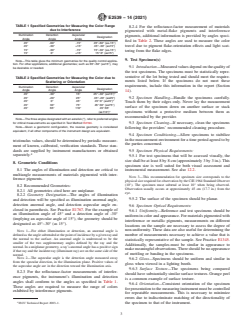
TABLE 1 Specified Geometries for Measuring the Color Range
8.2.4 For the reflectance-factor measurement of materials
due to Interference
pigmented with metal-flake pigments and interference
Illumination Detection Aspecular
pigments, additional information is provided by angles speci-
Designation
Angle Angle Angle
fied in Table 2. These angles are used to measure the color
45° -60° -15° 45°:-60° (as-15°)
travel due to pigment flake-orientation effects and light scat-
45° -30° +15° 45°:-30° (as15°)
15° -30° -15° 15°:-30° (as-15°)
tering from the flake edges.
15° 0° +15° 15°:0° (as15°)
9. Test Specimen(s)
Note—This table gives the minimum geometries for the quality control applica-
tion. For other applications, additional geometries; such as 65°:-50° (as15°), may
9.1 Introduction—Measuredvaluesdependonthequalityof
be desirable or needed.
the test specimens. The specimens must be statistically repre-
sentative of the lot being tested and should meet the require-
TABLE 2 Specified Geometries for Measuring the Color due to
Scattering or Orientation ments listed below. If the specimens do not meet these
requirements, include this information in the report (Section
Illumination Detection Aspecular
Designation
Angle Angle Angle
14).
45° -30° 15° 45°:-30° (as15°)*
45° -20° 25° 45°:-20° (as25°) 9.2 Specimen Handling—Handle the specimens carefully.
45° 0° 45° 45°:0° (as45°)*
Touch them by their edges only. Never lay the measurement
45° 30° 75° 45°:30° (as75°)
surface of the specimen down on another surface or stack
45° 65° 110° 45°:65°
(as110°)* specimens without a protective medium between them as
recommended by the provider.
Note—The three angles designated with an asterisk (*), refer to preferred angles
for critical measurements as specified in Test Method E2194.
9.3 Specimen Cleaning—If necessary, clean the specimens
Note—Given a geometric configuration, the reverse geometry is considered
following the providers’ recommended cleaning procedure.
equivalent, if all other components of the instrument design are equivalent.
9.4 Specimen Conditioning—Allow specimens to stabilize
inthemeasurementenvironmentforatimeperiodagreedtoby
tristimulus values, should be determined by periodic measure-
the parties concerned.
ment of known, calibrated, verification standards. These stan-
dards are supplied by instrument manufacturers or obtained
9.5 Specimen Physical Requirements:
separately.
9.5.1 For test specimens that will be assessed visually, the
sizeshallbeatleast8by8cm(approximately3by3in.).This
8. Geometric Conditions
specimen size is well suited for both visual assessment and
8.1 The angles of illumination and detection are critical to
instrumental measurement. See also 12.2.
multiangle measurements of materials pigmented with inter-
NOTE 3—This recommendation for specimen size corresponds to the
ference pigments.
physicalsizerequiredforobservationbytheCIE1964StandardObserver
(10°). The specimen must subtend at least 10° when being observed.
8.2 Recommended Geometries:
Observation usually occurs at approximately 45 cm (17.7 in.) from the
8.2.1 All geometries cited here are uniplanar.
eye.
8.2.2 Geometry Designation—The angles of illumination
9.5.2 The surface of the specimen should be planar.
and detection will be specified as illumination anormal angle,
detection anormal angle, and detection aspecular angle en-
9.6 Specimen Optical Requirements:
closed in parenthesis. See Practice E1767. For the example of
9.6.1 Uniformity—Reference and test specimens should be
an illumination angle of 45° and a detection angle of -30°
uniformincolorandappearance.Formaterialspigmentedwith
(implying an aspecular angle of 15°), the geometry should be
interference or metallic pigments, measurements on different
designated as 45°:-30° (as 15°).
locations on the sample are necessary to assess the degree of
non-uniformity. These data are also useful for determining the
NOTE 1—For either illumination or detection, an anormal angle is
definedastheanglesubtendedatthepointofincidencebyagivenrayand number of measurements necessary to achieve a value that is
the normal to the surface. An anormal angle is understood to be the
statistically representative of the sample. See Practice E1345.
smaller of the two supplementary angles defined by the ray and the
Additionally, the samples-must be similar in appearance to
normal. In a uniplanar geometry, a ray’s anormal angle has a positive sign
makemeaningfulobservations.Thereshouldbenoappearance
if that ray and the incident ray (illuminant ray) are on the same side of the
of mottling or banding in the specimens.
normal.
NOTE 2—The aspecular angle is the detection angle measured away
9.6.2 Gloss—Specimens should be uniform and similar in
from the specular direction, in the illumination plane. Positive values of
gloss when viewed in a lighting booth.
the aspecular angle are in the direction toward the illumination axis.
9.6.3 Surface Texture—The specimens being compared
8.2.3 For the reflectance-factor measurements of interfer-
should have substantially similar surface textures. Orange peel
ence pigments, the instrument’s illumination and detection
is a common example of surface texture.
angles shall conform to the angles as specified in Table 1.
9.6.4 Orientation—Consistent orientation of the specimen
These angles are required to measure the range of colors
forpresentationtothemeasuringinstrumentmustbecontrolled
exhibited by interference pigments.
for repeatable measurements. This is necessary to minimize
errors due to indiscriminate matching of the directionality of
ISCC Technical Report 2003–1. the specimen to that of the instrument.
E2539 − 14 (2021)
10. Instrument Standardization 12.1.1 Select the illumination and detection geometries.
See Section 8 for the specification of angles when measuring
10.1 Standardization is necessary to adjust the instruments
gonioapparentmaterialspigmentedwithinterferencepigments.
output to correspond to a previously established calibration
12.1.2 Select the desired standard observer function.
using one or more homogeneous specimens or reference
12.1.3 Select the desired illuminant.
materials. For the measurement of reflectance factor, full scale
12.1.4 Select the desired CIE colorimetric space such as
and zero standardization are necessary. See Practice E1164.
CIELAB.
10.2 Full-Scale Standardization Plaque—A standardization
12.2 Variation in measurements of gonioapparent materials
plaque with assigned spectral reflectance factors relative to the
is largely due to the inherent non-uniformity of these materials
perfect reflecting diffuser, traceable to a national standardizing
and the difficulty in positioning non flat samples relative to the
laboratory, for each illumination and detection angle is re-
measurement device.
quired to standardize the instrument. The instrument manufac-
turer typically supplies and assigns the standardization values 12.3 Averaging the values made
...