

ASTM D7058-19
(Test Method)Standard Test Method for Determination of the Red Dye Concentration and Estimation of Saybolt Color of Aviation Turbine Fuels and Kerosine Using a Portable Visible Spectrophotometer
General Information
- Abstract
SIGNIFICANCE AND USE
5.1 In the United States, high sulfur content distillate products and diesel fuel used for off-road purposes, other than aviation turbine fuel, are required to contain red dye. A similar dye requirement exists for tax-free distillates. Contamination of aviation turbine fuel by small quantities of red dye has occurred. Such contamination presents major problems because airframe and engine manufacturers have severely limited operation on aviation turbine fuel containing red dye.
5.2 An alternate methodology for the determination of the presence of red dye in aviation turbine fuel is the observation of the color of the fuel when placed in a white bucket. The presence of the dye can be masked in aviation turbine fuels having dark Saybolt color. This test method provides an objective means of quickly measuring red dye concentration, but to avoid confusion with trace levels of other materials which will be indicated by the instrument, the method requires that instrument readings below 0.026 mg/L be reported as No Dye Present.
5.3 The color of the base fuel is masked by the presence of the red dye. This test method provides a means of estimating the base color of aviation turbine fuel and kerosine in the presence of red dye.
SCOPE
1.1 This test method covers the determination of the red dye concentration of aviation turbine fuel and kerosine and the estimation of the Saybolt color of undyed and red dyed (D1655 and D3699. Red dye concentrations are determined at levels equivalent to 0.026 mg/L to 0.750 mg/L of Solvent Red 26 in samples with Saybolt colors ranging from +30 to –16. The Saybolt color of the base fuel for samples dyed red with concentration levels equivalent to 0.026 mg/L to 0.750 mg/L of Solvent Red 26 is estimated in the Saybolt Color range +30 to –16. The Saybolt Color for undyed samples is estimated in the Saybolt color range from +30 to –16.
1.2 The values stated in SI units are to be regarded as standard. No other units of measurement are included in this standard.
1.3 This standard does not purport to address all of the safety concerns, if any, associated with its use. It is the responsibility of the user of this standard to establish appropriate safety, health, and environmental practices and determine the applicability of regulatory limitations prior to use.
1.4 This international standard was developed in accordance with internationally recognized principles on standardization established in the Decision on Principles for the Development of International Standards, Guides and Recommendations issued by the World Trade Organization Technical Barriers to Trade (TBT) Committee.
- Status
- Published
- Publication Date
- 30-Apr-2019
- Technical Committee
- D02 - Petroleum Products, Liquid Fuels, and Lubricants
- Drafting Committee
- D02.05 - Properties of Fuels, Petroleum Coke and Carbon Material
Buy Documents
ASTM D7058-19 - Standard Test Method for Determination of the Red Dye Concentration and Estimation of Saybolt Color of Aviation Turbine Fuels and Kerosine Using a Portable Visible Spectrophotometer
REDLINE ASTM D7058-19 - Standard Test Method for Determination of the Red Dye Concentration and Estimation of Saybolt Color of Aviation Turbine Fuels and Kerosine Using a Portable Visible Spectrophotometer
Overview
ASTM D7058-19 is the standard test method for the determination of red dye concentration and estimation of Saybolt color in aviation turbine fuels and kerosine using a portable visible spectrophotometer. It provides a rapid and objective approach to detecting and quantifying the presence of red dye (notably Solvent Red 26) in aviation fuels and kerosine, as well as assessing the base color of these fuels (Saybolt color scale), even in cases where dye may obscure other visual detection methods.
This standard is especially significant in regulatory contexts where the presence of red dye is closely monitored, such as in distinguishing taxed and non-taxed fuels or preventing the contamination of aviation fuels with off-road diesel or other dyed distillates.
Key Topics
- Red Dye Detection: Quantifies red dye content in aviation turbine fuel and kerosine in the range from 0.026 mg/L to 0.750 mg/L Solvent Red 26.
- Saybolt Color Estimation: Estimates the color of undyed and dyed fuels over the Saybolt color range from +30 (lightest) to –16 (darkest).
- Portable Visible Spectrophotometry: Utilizes a portable visible spectrophotometer, enabling on-site and rapid measurement.
- Contamination Prevention: Addresses concerns around contamination of aviation turbine fuel by red dye, which can lead to operational restrictions due to manufacturer limitations.
- Objectivity and Repeatability: Provides an objective, instrument-based alternative to subjective visual methods, reducing ambiguity where dark fuel can mask dye presence.
- Reporting Standards: Instrument readings below 0.026 mg/L are to be reported as "No Dye Present" to ensure clarity in trace level results.
Applications
- Aviation Quality Assurance: Used by fuel suppliers, distributors, and quality control laboratories to verify the absence of red dye in aviation turbine fuel, ensuring compliance with strict industry and manufacturer requirements.
- Regulatory Compliance: Helps government agencies, fuel tax authorities, and regulatory bodies confirm proper use, labeling, and taxation of fuel products by differentiating aviation fuel from taxed/non-taxed distillates.
- On-site Analysis: The portable nature of the required equipment enables field technicians and inspectors to quickly assess fuel samples at refineries, terminals, airports, and distribution points.
- Contamination Prevention: Immediately identifies contamination events, facilitating timely corrective actions to protect engines and airframes from non-compliant fuel.
- Base Color Analysis: Useful for estimating the underlying Saybolt color of aviation fuels and kerosine, even when colored dyes are present, supporting downstream fuel quality specifications.
Related Standards
- ASTM D156 - Test Method for Saybolt Color of Petroleum Products (Saybolt Chromometer Method), referenced for color scale determination.
- ASTM D1655 - Specification for Aviation Turbine Fuels, details the relevant fuel types analyzed.
- ASTM D3699 - Specification for Kerosine, applicable for kerosine product testing.
- ASTM D1319 - Method for Hydrocarbon Analysis, referenced for adsorption processes.
- ASTM D4052 - Method for Density, Relative Density, and API Gravity determination.
- ASTM D4057 / D4177 - Practices for Manual and Automatic Sampling of Petroleum Products.
- ASTM D6045 - Method for Color determination by Automatic Tristimulus.
- ASTM E203 - Karl Fischer Method for water content determination.
- ASTM E1655 / E2056 - Practices for Infrared Multivariate Quantitative Analysis and Spectrophotometer Qualification.
Keywords: ASTM D7058, red dye concentration, Saybolt color, aviation turbine fuel, kerosine, portable visible spectrophotometer, Solvent Red 26, fuel quality, fuel contamination, fuel color, petroleum testing standards.
By following ASTM D7058-19, laboratories and field inspectors can ensure the integrity and compliance of aviation and kerosine fuels, prevent costly contamination incidents, and maintain adherence to industry and regulatory requirements.
Relations
- Effective Date
- 01-May-2019
- Effective Date
- 15-Mar-2024
- Effective Date
- 01-Jan-2024
- Effective Date
- 01-Oct-2023
- Effective Date
- 01-Oct-2023
- Effective Date
- 01-Oct-2018
- Effective Date
- 01-May-2018
- Effective Date
- 01-Jan-2018
- Effective Date
- 01-Dec-2017
- Effective Date
- 01-Dec-2016
- Effective Date
- 01-Sep-2016
- Effective Date
- 01-Jun-2016
- Effective Date
- 01-Apr-2016
- Effective Date
- 01-Oct-2015
- Effective Date
- 15-Jul-2015
Buy Documents
ASTM D7058-19 - Standard Test Method for Determination of the Red Dye Concentration and Estimation of Saybolt Color of Aviation Turbine Fuels and Kerosine Using a Portable Visible Spectrophotometer
REDLINE ASTM D7058-19 - Standard Test Method for Determination of the Red Dye Concentration and Estimation of Saybolt Color of Aviation Turbine Fuels and Kerosine Using a Portable Visible Spectrophotometer
Get Certified
Connect with accredited certification bodies for this standard

Element Materials Technology
Materials testing and product certification.

ABS Group Brazil
ABS Group certification services in Brazil.

ABS Quality Evaluations Inc.
American Bureau of Shipping quality certification.
Sponsored listings
Frequently Asked Questions
ASTM D7058-19 is a standard published by ASTM International. Its full title is "Standard Test Method for Determination of the Red Dye Concentration and Estimation of Saybolt Color of Aviation Turbine Fuels and Kerosine Using a Portable Visible Spectrophotometer". This standard covers: SIGNIFICANCE AND USE 5.1 In the United States, high sulfur content distillate products and diesel fuel used for off-road purposes, other than aviation turbine fuel, are required to contain red dye. A similar dye requirement exists for tax-free distillates. Contamination of aviation turbine fuel by small quantities of red dye has occurred. Such contamination presents major problems because airframe and engine manufacturers have severely limited operation on aviation turbine fuel containing red dye. 5.2 An alternate methodology for the determination of the presence of red dye in aviation turbine fuel is the observation of the color of the fuel when placed in a white bucket. The presence of the dye can be masked in aviation turbine fuels having dark Saybolt color. This test method provides an objective means of quickly measuring red dye concentration, but to avoid confusion with trace levels of other materials which will be indicated by the instrument, the method requires that instrument readings below 0.026 mg/L be reported as No Dye Present. 5.3 The color of the base fuel is masked by the presence of the red dye. This test method provides a means of estimating the base color of aviation turbine fuel and kerosine in the presence of red dye. SCOPE 1.1 This test method covers the determination of the red dye concentration of aviation turbine fuel and kerosine and the estimation of the Saybolt color of undyed and red dyed (D1655 and D3699. Red dye concentrations are determined at levels equivalent to 0.026 mg/L to 0.750 mg/L of Solvent Red 26 in samples with Saybolt colors ranging from +30 to –16. The Saybolt color of the base fuel for samples dyed red with concentration levels equivalent to 0.026 mg/L to 0.750 mg/L of Solvent Red 26 is estimated in the Saybolt Color range +30 to –16. The Saybolt Color for undyed samples is estimated in the Saybolt color range from +30 to –16. 1.2 The values stated in SI units are to be regarded as standard. No other units of measurement are included in this standard. 1.3 This standard does not purport to address all of the safety concerns, if any, associated with its use. It is the responsibility of the user of this standard to establish appropriate safety, health, and environmental practices and determine the applicability of regulatory limitations prior to use. 1.4 This international standard was developed in accordance with internationally recognized principles on standardization established in the Decision on Principles for the Development of International Standards, Guides and Recommendations issued by the World Trade Organization Technical Barriers to Trade (TBT) Committee.
SIGNIFICANCE AND USE 5.1 In the United States, high sulfur content distillate products and diesel fuel used for off-road purposes, other than aviation turbine fuel, are required to contain red dye. A similar dye requirement exists for tax-free distillates. Contamination of aviation turbine fuel by small quantities of red dye has occurred. Such contamination presents major problems because airframe and engine manufacturers have severely limited operation on aviation turbine fuel containing red dye. 5.2 An alternate methodology for the determination of the presence of red dye in aviation turbine fuel is the observation of the color of the fuel when placed in a white bucket. The presence of the dye can be masked in aviation turbine fuels having dark Saybolt color. This test method provides an objective means of quickly measuring red dye concentration, but to avoid confusion with trace levels of other materials which will be indicated by the instrument, the method requires that instrument readings below 0.026 mg/L be reported as No Dye Present. 5.3 The color of the base fuel is masked by the presence of the red dye. This test method provides a means of estimating the base color of aviation turbine fuel and kerosine in the presence of red dye. SCOPE 1.1 This test method covers the determination of the red dye concentration of aviation turbine fuel and kerosine and the estimation of the Saybolt color of undyed and red dyed (D1655 and D3699. Red dye concentrations are determined at levels equivalent to 0.026 mg/L to 0.750 mg/L of Solvent Red 26 in samples with Saybolt colors ranging from +30 to –16. The Saybolt color of the base fuel for samples dyed red with concentration levels equivalent to 0.026 mg/L to 0.750 mg/L of Solvent Red 26 is estimated in the Saybolt Color range +30 to –16. The Saybolt Color for undyed samples is estimated in the Saybolt color range from +30 to –16. 1.2 The values stated in SI units are to be regarded as standard. No other units of measurement are included in this standard. 1.3 This standard does not purport to address all of the safety concerns, if any, associated with its use. It is the responsibility of the user of this standard to establish appropriate safety, health, and environmental practices and determine the applicability of regulatory limitations prior to use. 1.4 This international standard was developed in accordance with internationally recognized principles on standardization established in the Decision on Principles for the Development of International Standards, Guides and Recommendations issued by the World Trade Organization Technical Barriers to Trade (TBT) Committee.
ASTM D7058-19 is classified under the following ICS (International Classification for Standards) categories: 75.160.20 - Liquid fuels. The ICS classification helps identify the subject area and facilitates finding related standards.
ASTM D7058-19 has the following relationships with other standards: It is inter standard links to ASTM D7058-04(2014), ASTM D1655-24, ASTM E203-24, ASTM D1655-23a, ASTM D156-23, ASTM D3699-18a, ASTM D3699-18, ASTM D1655-18, ASTM D1655-17a, ASTM D1655-16c, ASTM D1655-16b, ASTM D1655-16, ASTM E2056-04(2016), ASTM D1655-15d, ASTM D1655-15b. Understanding these relationships helps ensure you are using the most current and applicable version of the standard.
ASTM D7058-19 is available in PDF format for immediate download after purchase. The document can be added to your cart and obtained through the secure checkout process. Digital delivery ensures instant access to the complete standard document.
Standards Content (Sample)
This international standard was developed in accordance with internationally recognized principles on standardization established in the Decision on Principles for the
Development of International Standards, Guides and Recommendations issued by the World Trade Organization Technical Barriers to Trade (TBT) Committee.
Designation: D7058 − 19
Standard Test Method for
Determination of the Red Dye Concentration and Estimation
of Saybolt Color of Aviation Turbine Fuels and Kerosine
Using a Portable Visible Spectrophotometer
This standard is issued under the fixed designation D7058; the number immediately following the designation indicates the year of
original adoption or, in the case of revision, the year of last revision. A number in parentheses indicates the year of last reapproval. A
superscript epsilon (´) indicates an editorial change since the last revision or reapproval.
1. Scope* 2. Referenced Documents
2.1 ASTM Standards:
1.1 This test method covers the determination of the red dye
D156 Test Method for Saybolt Color of Petroleum Products
concentration of aviation turbine fuel and kerosine and the
(Saybolt Chromometer Method)
estimation of the Saybolt color of undyed and red dyed
D1319 Test Method for Hydrocarbon Types in Liquid Petro-
(<0.750 mg⁄L of Solvent Red 26 equivalent) aviation turbine
leum Products by Fluorescent Indicator Adsorption
fuel and kerosine. The test method is appropriate for use with
D1655 Specification for Aviation Turbine Fuels
aviation turbine fuel and kerosine described in Specifications
D3699 Specification for Kerosine
D1655 and D3699. Red dye concentrations are determined at
D4052 Test Method for Density, Relative Density, and API
levels equivalent to 0.026 mg⁄Lto 0.750 mg⁄Lof Solvent Red
Gravity of Liquids by Digital Density Meter
26 in samples with Saybolt colors ranging from +30 to –16.
D4057 Practice for Manual Sampling of Petroleum and
The Saybolt color of the base fuel for samples dyed red with
Petroleum Products
concentration levels equivalent to 0.026 mg⁄L to 0.750 mg⁄L
D4177 Practice for Automatic Sampling of Petroleum and
of Solvent Red 26 is estimated in the Saybolt Color range +30
Petroleum Products
to –16. The Saybolt Color for undyed samples is estimated in
D6045 Test Method for Color of Petroleum Products by the
the Saybolt color range from +30 to –16.
Automatic Tristimulus Method
1.2 The values stated in SI units are to be regarded as
E203 Test Method for Water Using Volumetric Karl Fischer
standard. No other units of measurement are included in this
Titration
standard. E1655 Practices for Infrared Multivariate Quantitative
Analysis
1.3 This standard does not purport to address all of the
E2056 Practice for Qualifying Spectrometers and Spectro-
safety concerns, if any, associated with its use. It is the
photometers for Use in Multivariate Analyses, Calibrated
responsibility of the user of this standard to establish appro-
Using Surrogate Mixtures
priate safety, health, and environmental practices and deter-
mine the applicability of regulatory limitations prior to use.
3. Terminology
1.4 This international standard was developed in accor-
3.1 Definitions:
dance with internationally recognized principles on standard-
3.1.1 Saybolt color, n—the name of an empirical scale for
ization established in the Decision on Principles for the
expressing of the color of a clear petroleum liquid based on a
Development of International Standards, Guides and Recom-
scale of –16 (darkest) to +30 (lightest) and determined by Test
mendations issued by the World Trade Organization Technical
Method D156.
Barriers to Trade (TBT) Committee.
3.1.2 surrogate calibration, n—a multivariate calibration
that is developed using a calibration set which consists of
This test method is under the jurisdiction of ASTM Committee D02 on
Petroleum Products, Liquid Fuels, and Lubricants and is the direct responsibility of
SubcommitteeD02.05onPropertiesofFuels,PetroleumCokeandCarbonMaterial. For referenced ASTM standards, visit the ASTM website, www.astm.org, or
Current edition approved May 1, 2019. Published June 2019. Originally contact ASTM Customer Service at service@astm.org. For Annual Book of ASTM
approved in 2004. Last previous edition approved in 2014 as D7058 – 04 (2014). Standards volume information, refer to the standard’s Document Summary page on
DOI: 10.1520/D7058-19. the ASTM website.
*A Summary of Changes section appears at the end of this standard
Copyright © ASTM International, 100 Barr Harbor Drive, PO Box C700, West Conshohocken, PA 19428-2959. United States
D7058 − 19
mixtureswithpre-specifiedandreproduciblecompositionsthat naphthol) can interfere with the accurate determination of the
contain substantially fewer chemical components than the red dye concentration reported as Solvent Red 26 equivalent,
samples, which will ultimately be analyzed. or the accurate estimation of the base fuel color. If there is
controversy over whether the indicated dye concentration is
3.1.3 surrogate method, n—standard test method that is
from the alkyl derivatives of azobenzene-4-azo-2-naphthol, the
based on a surrogate calibration.
procedure described in Annex A5 shall be used to confirm the
3.2 Definitions of Terms Specific to This Standard:
presence of a red dye.
3.2.1 product dyes—alkyl derivative of azobenzene-4-azo-
2-naphthol (methyl derivatives of Color Index No. 26105)
7. Apparatus
which are more soluble in diesel fuel.
7.1 Filter Spectrophotometer, is equipped with specimen
3.2.2 red dye, n—substance that, when added to fuel,
chamber, visible wavelength source, three 10 nm 6 2nm
absorbs green light and imparts a red color to the product. For
bandpass wavelength discriminating filters having center
this test method, red dye is:
wavelengths at approximately 420 nm 6 5 nm, 520 nm 6
3.2.2.1 Solvent Red 26—an azobenzene-4-azo-2-naphthol
5 nm, and 650 nm 6 5 nm. The bandpass filters are used in
dye of a specific chemical structure that is used to gauge the
conjunctionwiththevisiblewavelengthsourcetoproducelight
amount of red dye present in a given sample.
in the blue, green, and red regions of the electromagnetic
spectrum. A detector converts the transmitted light to an
4. Summary of Test Method
electronic signal that is processed by an A-D converter and a
3,4
microprocessor.
4.1 A sample is introduced into the liquid specimen cell.
The cell is placed into the light path of the apparatus. A beam
7.2 Sample Cell, constructed of polymethacrylate or clear
of visible light is imaged through the sample onto a detector,
optical glass having a path length of approximately 12 cm. If
and the detector response is determined. Wavelengths of the
more than one cell is used for calibration, validation, and
spectrum, which correlate highly with the red dye concentra-
sample measurement, the path length of the cells must be
tion and with the estimation of Saybolt color, are selected for
matched to 60.005 cm.
analysis using selective bandpass filters. A multivariate math-
ematical analysis converts the detector response for the se-
8. Sampling
lected wavelengths to the red dye concentration and the
8.1 Samples shall be taken in accordance with Practice
estimated Saybolt color.
D4057 or D4177.
8.2 Precautions shall be taken to shield the samples from
5. Significance and Use
light prior to analysis.
5.1 In the United States, high sulfur content distillate
products and diesel fuel used for off-road purposes, other than
9. Calibration and Standardization of the Apparatus
aviation turbine fuel, are required to contain red dye.Asimilar
9.1 Calibrate the instrument according to the procedure
dye requirement exists for tax-free distillates. Contamination
described in Annex A2.
of aviation turbine fuel by small quantities of red dye has
NOTE 1—The instruments are calibrated at the factory by the vendor.
occurred. Such contamination presents major problems be-
cause airframe and engine manufacturers have severely limited
9.2 Qualify the instrument according to the procedure de-
operation on aviation turbine fuel containing red dye.
scribed in Annex A3.
5.2 An alternate methodology for the determination of the
NOTE 2—The instruments are qualified at the factory by the vendor.
presence of red dye in aviation turbine fuel is the observation
9.2.1 If the qualification procedure is performed by the
of the color of the fuel when placed in a white bucket. The
vendor, then the user shall perform a quality control check
presence of the dye can be masked in aviation turbine fuels
according to the procedure described in Section 10.
having dark Saybolt color. This test method provides an
objective means of quickly measuring red dye concentration,
10. Quality Control Checks
but to avoid confusion with trace levels of other materials
10.1 To confirm the performance of the instrument
which will be indicated by the instrument, the method requires
periodically, measure the red dye concentration and the esti-
that instrument readings below 0.026 mg⁄L be reported as No
mated Saybolt color of three control samples using the proce-
Dye Present.
dure outlined in Section 11. The quality control check stan-
5.3 The color of the base fuel is masked by the presence of
dards shall be analyzed at least once a week or before the
the red dye. This test method provides a means of estimating
the base color of aviation turbine fuel and kerosine in the
presence of red dye.
JT100S instruments, manufactured by PAC, LP, 300 Bammel Westfield Road,
Houston, TX 77090, were used in the development of this test method. This is not
6. Interferences
an endorsement or certification by ASTM International.
The sole source of supply of the apparatus known to the committee at this time
6.1 The presence of colorants resulting from the refining
isprovided.Ifyouareawareofalternativesuppliers,pleaseprovidethisinformation
process or crude oil or the presence of red dye other than the
to ASTM headquarters. Your comments will receive careful consideration at a
quantified types (alkyl derivatives of azobenzene-4-azo-2- meeting of the responsible technical committee , which you may attend.
D7058 − 19
sample analysis if the instrument is used less frequently than r 5 0.006 mg/L
weekly or if the instrument is moved to a different laboratory
13.1.1.2 for samples in the Saybolt color range of –16 to
or field location.
+30:
11. Procedure
r 5 1.1 Saybolt color units
11.1 Prepare the spectrophotometer for operation in accor-
13.1.2 Reproducibility—The difference between two single
dance with the manufacturer’s instructions.
and independent results obtained from different instruments on
identical samples, would in the long run, in normal and correct
11.2 Equilibrate the sample to between 20 °C and 25 °C.
operation of the test method, exceed the following value in
11.3 Fill a clean, dry, sample cell. The external optical
only one case in twenty:
surfaces must be clean. If not, wipe clean, and dry with a piece
13.1.2.1 for Solvent Red 26 dye concentrations between
of lint free paper (for example, lens paper).
0 mg⁄L to 0.750 mg/L:
11.4 Insert the sample cell into the cell chamber of the
R 5 0.026 mg/L
instrument.
13.1.2.2 for samples in the Saybolt color range of –16 to
11.5 Record the Solvent Red 26 equivalent concentration
+30:
and the estimated Saybolt color.
R 5 4.6 Saybolt color units
12. Report
13.2 Bias—Since there is no accepted reference material
12.1 Report the dye concentration below 0.026 mg⁄L as No
suitable for determining the bias for the procedure in this test
Dye Present.
method, bias has not been determined.
12.2 Report the red dye concentration at or above
13.3 Relative Bias (Dye Concentration)—Among certain
0.026 mg⁄L to the nearest 0.001 ⁄L as Solvent Red 26 equiva-
samples, some bias proportional to the dye concentration was
lent dye.
observed when the dye concentration results were compared to
theexpectedconcentrations.Theobservedbiasdoesnotappear
12.3 Report the color value as units of estimated Saybolt
to be of a systematic nature and is not known to be related to
color.
the accuracy of this test method, since the activity levels of the
13. Precision and Bias
dye in sample preparation have not been determined, only
estimated.
13.1 Interlaboratory tests of the procedure were carried out
using 18 samples covering the red dye concentration range
13.4 Relative Bias (Saybolt Color)—Some bias was ob-
equivalent from 0.000 mg⁄L to 0.374 mg⁄L of Solvent Red 26
served when the color results were compared to the Test
equivalents and covering the range of Saybolt color from –13
Method D156 results, however, this bias was observed only for
to +30. Seven laboratories participated in the interlaboratory
samples that had high concentration of the dye (>0.180 mg⁄L).
tests. The precision of this procedure, as determined by the
ThebiasforthebasefuelswaswithinthestandarderrorofTest
statistical examination of the interlaboratory test results, is as
Method D156.
follows:
13.5 Theprecisionstatementsin13.1werederivedfromthe
13.1.1 Repeatability—The difference between successive
1997 interlaboratory test program. Participants analyzed seven
results, obtained with the same apparatus under constant
sets of undyed base fuels and 13 sets of dyed base fuel/color
operating conditions on identical samples, would in the long
combinations in duplicate in the Saybolt color range of –16 to
run, in normal and correct operation of the test method, exceed
+30 and dye concentration from 0 mg⁄L to 0.374 mg⁄L, seven
the following value in only one case in twenty:
laboratories participated with the automatic apparatus and five
13.1.1.1 for Solvent Red 26 equivalent dye concentrations
laboratories participated with the manual Test Method D156
between 0 mg⁄L to 0.750 mg/L:
apparatus.
Supporting data, results of the 1997 Interlaboratory Cooperative Test Program, 14. Keywords
have been filed at ASTM International Headquarters and may be obtained by
14.1 aviation turbine fuel; kerosine; red dye concentration;
requesting Research Report RR:D02-1521. Contact ASTM Customer Service at
service@astm.org. Saybolt color; visible spectrometry
D7058 − 19
ANNEXES
(Mandatory Information)
A1. PROCEDURE FOR PREPARATION OF RED DYE/SAYBOLT COLOR STANDARDS, QUALIFICATION SAMPLES,
AND QUALITY CONTROL SAMPLES
A1.1 Scope A1.3.2 Dyes:
A1.3.2.1 3-Methyl-1-(phenyl azo)-pyrazol-5-ol (Yellow
A1.1.1 This annex is a description of the preparation of dye
5GS-EX), with CAS Registry No. 4314-14-1.
concentration and color standard samples used for calibration
A1.3.2.2 1-(phenyl azo)-2-naphthalenol (Orange EX), with
and qualification. It also describes the preparation of possible
CAS Registry No. 842-07-9.
standard samples that can be used for periodic checks.
A1.3.2.3 1,4 bis (butylamino)-9,10-anthracenedione (Blue
A1.2 Apparatus
SB), with CAS Registry No. 17354-14-2.
A1.3.2.4 1-[[2,5-dimethyl-4[(2-methylphenyl)azo]phenyl]
A1.2.1 Spectrophotometer, equipped to measure the absor-
bance of solutions in the spectral region from 380 nm to azo]-2-naphthol (Solvent Red 26), with CAS Registry no.
4477-79-6.
780 nm with an effective spectral slit width of 10 nm 62nm
or5 nm 61 nm.Wavelengthmeasurementsshallberepeatable
A1.3.3 1,1-bis(3,4-dimethylphenyl)ethane, (90 % min pu-
and known to be accurate to 0.1 nm. The photometric linearity
rity).
is to be 60.5 % of full scale and a photometric reproducibility
A1.3.4 Dodecane, anhydrous (99 % min purity).
of 60.2 %.
A1.3.5 Xylenes, A.C.S. reagent grade.
A1.2.2 Sample Cells, constructed of optical glass or quartz
having a path length of 1 cm 6 0.001 cm for use with the
A1.4 Preparation Procedure for the Saybolt Standard
spectrophotometer described in A1.2.1.
Samples
A1.2.3 Filter Spectrophotometer, see 7.1.
A1.4.1 Measure 0.2500 g 6 0.0005 g of Yellow 5GS-EX
A1.2.4 Sample Cell, see 7.2. For use with the spectropho-
into a 50 mL beaker and dissolve the dye in 20 mL of
tometer described in A1.2.3.
1,1-bis(3,4-dimethylphenyl)ethane. Quantitatively transfer the
A1.2.5 Balance, with a readability of 0.1 mg, or better. Yellow 5GS- EX solution to a 250 mL volumetric flask, dilute
to the mark with 1,1-bis(3,4-dimethylphenyl)ethane and mix
A1.2.6 Pipettes, 0.5 mL, 1 mL, and 2 mLcapacity, ClassA.
well. This solution is called the Yellow 5GS-EX dye solution.
A1.2.7 Volumetric Flasks, 100 mL, 200 mL, and 250 mL
A1.4.2 Repeat the above procedure for the Orange EX and
capacity, Class A.
Blue SB dyes. These solutions are called Orange EX dye
A1.2.8 Beaker, 50 mL capacity.
solution and Blue SB dye solution, respectively.
A1.3 Reagents
A1.4.3 Pipet 2 mL of the Yellow 5GS-EX solution into a
200 mLvolumetric flask, dilute to the mark with dodecane and
A1.3.1 Purity of Reagents—Reagent grade chemicals shall
mix well. Using separate flasks repeat this procedure with the
be used in all tests. Unless other wise indicated, it is intended
Orange EX dye solution and the Blue SB dye solution.
thatallreagentsconformtothespecificationsoftheCommittee
on Analytical Reagents of the American Chemical Society
A1.4.4 AtthewavelengthsindicatedinTableA1.1,measure
where such specifications are available. Other grades may be
the absorbance of these solutions using the spectrophotometer
used, provided it is first asserted that the reagent is of
and cells described in A1.2.1 and A1.2.2, respectively. Use
sufficiently high purity to permit its use without lessening the
dodecane as the reference material. If the measured absor-
accuracy of the determination.
bances are not within the indicated ranges, adjust the solution
either by adding more of the solid dye if the measured
absorbances are less than the indicated absorbance range or by
Reagent Chemicals, American Chemical Society Specifications, American
adding more 1,1-bis(3,4-dimethylphenyl)ethane if the mea-
Chemical Society, Washington, DC. For Suggestions on the testing of reagents not
sured absorbances exceed the indicated absorbance range.
listed by the American Chemical Society, see Annual Standards for Laboratory
Chemicals, BDH Ltd., Poole, Dorset, U.K., and the United States Pharmacopeia
A1.4.5 If the dye solutions meet the criteria of Table A1.1,
and National Formulary, U.S. Pharmacopeial Convention, Inc. (USPC), Rockville,
then weigh 30.000 g 6 0.010 g of the Yellow 5GS-EX dye
MD.
solution, 10.000 g 6 0.005 g of Orange EX dye solution and
1.000 g 6 0.001 g of Blue SB dye solution into a 100 mL
TABLE A1.1 Dye Solution Absorption Range
amberglassbottle.Weigh45.000 g 60.001 gofdodecaneinto
Dye Solution Wavelength (nm) Absorption
the same bottle and mix well. This solution is called the
Yellow 5GS-EX 395 0.881 to 0.935
Saybolt color mixed dye solution.
Orange EX 465 0.519 to 0.541
Blue SB 600 0.412 to 0.438
A1.4.6 Prepare the Solvent Red 26 solution by weighing
645 0.465 to 0.494
0.0750 g 6 0.0005 g of Solvent Red 26 into a 250 mL
D7058 − 19
TABLE A1.2 Indicated Dye Mixture Masses (g) for Synthesis of
volumetric flask, diluting to the mark with xylenes and mixing
C
...
This document is not an ASTM standard and is intended only to provide the user of an ASTM standard an indication of what changes have been made to the previous version. Because
it may not be technically possible to adequately depict all changes accurately, ASTM recommends that users consult prior editions as appropriate. In all cases only the current version
of the standard as published by ASTM is to be considered the official document.
Designation: D7058 − 04 (Reapproved 2014) D7058 − 19
Standard Test Method for
Determination of the Red Dye Concentration and Estimation
of Saybolt Color of Aviation Turbine Fuels and Kerosine
Using a Portable Visible Spectrophotometer
This standard is issued under the fixed designation D7058; the number immediately following the designation indicates the year of
original adoption or, in the case of revision, the year of last revision. A number in parentheses indicates the year of last reapproval. A
superscript epsilon (´) indicates an editorial change since the last revision or reapproval.
1. Scope Scope*
1.1 This test method covers the determination of the red dye concentration of aviation turbine fuel and kerosine and the
estimation of the Saybolt color of undyed and red dyed (<0.750 mg ⁄L of Solvent Red 26 equivalent) aviation turbine fuel and
kerosine. The test method is appropriate for use with aviation turbine fuel and kerosine described in Specifications D1655 and
D3699. Red dye concentrations are determined at levels equivalent to 0.0260.026 mg ⁄L to 0.7500.750 mg mg/L ⁄L of Solvent Red
26 in samples with Saybolt colors ranging from +30 to –16. The Saybolt color of the base fuel for samples dyed red with
concentration levels equivalent to 0.0260.026 mg ⁄L to 0.7500.750 mg mg/L ⁄L of Solvent Red 26 is estimated in the Saybolt Color
range +30 to –16. The Saybolt Color for undyed samples is estimated in the Saybolt color range from +30 to –16.
1.2 The values stated in SI units are to be regarded as standard. No other units of measurement are included in this standard.
1.3 This standard does not purport to address all of the safety concerns, if any, associated with its use. It is the responsibility
of the user of this standard to establish appropriate safety safety, health, and healthenvironmental practices and determine the
applicability of regulatory limitations prior to use.
1.4 This international standard was developed in accordance with internationally recognized principles on standardization
established in the Decision on Principles for the Development of International Standards, Guides and Recommendations issued
by the World Trade Organization Technical Barriers to Trade (TBT) Committee.
2. Referenced Documents
2.1 ASTM Standards:
D156 Test Method for Saybolt Color of Petroleum Products (Saybolt Chromometer Method)
D1319 Test Method for Hydrocarbon Types in Liquid Petroleum Products by Fluorescent Indicator Adsorption
D1655 Specification for Aviation Turbine Fuels
D3699 Specification for Kerosine
D4052 Test Method for Density, Relative Density, and API Gravity of Liquids by Digital Density Meter
D4057 Practice for Manual Sampling of Petroleum and Petroleum Products
D4177 Practice for Automatic Sampling of Petroleum and Petroleum Products
D6045 Test Method for Color of Petroleum Products by the Automatic Tristimulus Method
E203 Test Method for Water Using Volumetric Karl Fischer Titration
E1655 Practices for Infrared Multivariate Quantitative Analysis
E2056 Practice for Qualifying Spectrometers and Spectrophotometers for Use in Multivariate Analyses, Calibrated Using
Surrogate Mixtures
3. Terminology
3.1 Definitions:
3.1.1 Saybolt color, n—the name of an empirical definition scale for expressing of the color of a clear petroleum liquid based
on a scale of –16 (darkest) to +30 (lightest) and determined by Test Method D156.
This test method is under the jurisdiction of ASTM Committee D02 on Petroleum Products, Liquid Fuels, and Lubricants and is the direct responsibility of Subcommittee
D02.05 on Properties of Fuels, Petroleum Coke and Carbon Material.
Current edition approved May 1, 2014May 1, 2019. Published July 2014June 2019. Originally approved in 2004. Last previous edition approved in 20092014 as
D7058 – 04 (2009).(2014). DOI: 10.1520/D7058-04R14.10.1520/D7058-19.
For referenced ASTM standards, visit the ASTM website, www.astm.org, or contact ASTM Customer Service at service@astm.org. For Annual Book of ASTM Standards
volume information, refer to the standard’s Document Summary page on the ASTM website.
*A Summary of Changes section appears at the end of this standard
Copyright © ASTM International, 100 Barr Harbor Drive, PO Box C700, West Conshohocken, PA 19428-2959. United States
D7058 − 19
3.1.2 surrogate calibration, n—a multivariate calibration that is developed using a calibration set which consists of mixtures
with pre-specified and reproducible compositions that contain substantially fewer chemical components than the samples, which
will ultimately be analyzed.
3.1.3 surrogate method, n—standard test method that is based on a surrogate calibration.
3.2 Definitions of Terms Specific to This Standard:
3.2.1 product dyes—alkyl derivative of azobenzene-4-azo-2-naphthol (methyl derivatives of Color Index No. 26105) which are
more soluble in diesel fuel.
3.2.2 red dye, n—substance that, when added to fuel, absorbs green light and imparts a red color to the product. For this test
method, red dye is:
3.2.2.1 Solvent Red 26—an azobenzene-4-azo-2-naphthol dye of a specific chemical structure that is used to gauge the amount
of red dye present in a given sample.
4. Summary of Test Method
4.1 A sample is introduced into the liquid specimen cell. The cell is placed into the light path of the apparatus. A beam of visible
light is imaged through the sample onto a detector, and the detector response is determined. Wavelengths of the spectrum, which
correlate highly with the red dye concentration and with the estimation of Saybolt color, are selected for analysis using selective
bandpass filters. A multivariate mathematical analysis converts the detector response for the selected wavelengths to the red dye
concentration and the estimated Saybolt color.
5. Significance and Use
5.1 In the United States, high sulfur content distillate products and diesel fuel used for off-road purposes, other than aviation
turbine fuel, are required to contain red dye. A similar dye requirement exists for tax-free distillates. Contamination of aviation
turbine fuel by small quantities of red dye has occurred. Such contamination presents major problems because airframe and engine
manufacturers have severely limited operation on aviation turbine fuel containing red dye.
5.2 An alternate methodology for the determination of the presence of red dye in aviation turbine fuel is the observation of the
color of the fuel when placed in a white bucket. The presence of the dye can be masked in aviation turbine fuels having dark
Saybolt color. This test method provides an objective means of quickly measuring red dye concentration, but to avoid confusion
with trace levels of other materials which will be indicated by the instrument, the method requires that instrument readings below
0.0260.026 mg mg/L ⁄L be reported as No Dye Present.
5.3 The color of the base fuel is masked by the presence of the red dye. This test method provides a means of estimating the
base color of aviation turbine fuel and kerosine in the presence of red dye.
6. Interferences
6.1 The presence of colorants resulting from the refining process or crude oil or the presence of red dye other than the quantified
types (alkyl derivatives of azobenzene-4-azo-2-naphthol) can interfere with the accurate determination of the red dye concentration
reported as Solvent Red 26 equivalent, or the accurate estimation of the base fuel color. If there is controversy over whether the
indicated dye concentration is from the alkyl derivatives of azobenzene-4-azo-2-naphthol, the procedure described in Annex A5
shall be used to confirm the presence of a red dye.
7. Apparatus
7.1 Filter Spectrophotometer, is equipped with specimen chamber, visible wavelength source, three 1010 nm 6 2 nm 2 nm
bandpass wavelength discriminating filters having center wavelengths at approximately 420 6 5 nm, 520 6 5 nm, and 650 6 5
nm. 420 nm 6 5 nm, 520 nm 6 5 nm, and 650 nm 6 5 nm. The bandpass filters are used in conjunction with the visible
wavelength source to produce light in the blue, green, and red regions of the electromagnetic spectrum. A detector converts the
3,4
transmitted light to an electronic signal that is processed by an A-D converter and a microprocessor.
7.2 Sample Cell, constructed of polymethacrylate or clear optical glass having a path length of approximately 12 cm. 12 cm.
If more than one cell is used for calibration, validation, and sample measurement, the path length of the cells must be matched
to 60.005 cm.60.005 cm.
8. Sampling
8.1 Samples shall be taken in accordance with Practice D4057 or D4177.
8.2 Precautions shall be taken to shield the samples from light prior to analysis.
JT100S instruments, manufactured by PAC, LP, 300 Bammel Westfield Road, Houston, TX 77090, were used in the development of this test method. This is not an
endorsement or certification by ASTM International.
The sole source of supply of the apparatus known to the committee at this time is provided. If you are aware of alternative suppliers, please provide this information
to ASTM headquarters. Your comments will receive careful consideration at a meeting of the responsible technical committee , which you may attend.
D7058 − 19
9. Calibration and Standardization of the Apparatus
9.1 Calibrate the instrument according to the procedure described in Annex A2.
NOTE 1—The instruments are calibrated at the factory by the vendor.
9.2 Qualify the instrument according to the procedure described in Annex A3.
NOTE 2—The instruments are qualified at the factory by the vendor.
9.2.1 If the qualification procedure is performed by the vendor, then the user shall perform a quality control check according
to the procedure described in Section 10.
10. Quality Control Checks
10.1 To confirm the performance of the instrument periodically, measure the red dye concentration and the estimated Saybolt
color of three control samples using the procedure outlined in Section 11. The quality control check standards shall be analyzed
at least once a week or before the sample analysis if the instrument is used less frequently than weekly or if the instrument is moved
to a different laboratory or field location.
11. Procedure
11.1 Prepare the spectrophotometer for operation in accordance with the manufacturer’s instructions.
11.2 Equilibrate the sample to between 2020 °C and 25°C.25 °C.
11.3 Fill a clean, dry, sample cell. The external optical surfaces must be clean. If not, wipe clean, and dry with a piece of lint
free paper (for example, lens paper).
11.4 Insert the sample cell into the cell chamber of the instrument.
11.5 Record the Solvent Red 26 equivalent concentration and the estimated Saybolt color.
12. Report
12.1 Report the dye concentration below 0.0260.026 mg mg/L ⁄L as No Dye Present.
12.2 Report the red dye concentration at or above 0.026 mg ⁄L to the nearest 0.001 ⁄L as Solvent Red 26 equivalent dye.
12.3 Report the color value as units of estimated Saybolt color.
13. Precision and Bias
13.1 Interlaboratory tests of the procedure were carried out using 18 samples covering the red dye concentration range
equivalent from 0.0000.000 mg ⁄L to 0.3740.374 mg mg/L ⁄L of Solvent Red 26 equivalents and covering the range of Saybolt
color from –13 to +30. Seven laboratories participated in the interlaboratory tests. The precision of this procedure, as determined
by the statistical examination of the interlaboratory test results, is as follows:
13.1.1 Repeatability—The difference between successive results, obtained with the same apparatus under constant operating
conditions on identical samples, would in the long run, in normal and correct operation of the test method, exceed the following
value in only one case in twenty:
13.1.1.1 for Solvent Red 26 equivalent dye concentrations between 00 mg ⁄L to 0.750 mg/L:
r 5 0.006 mg/L
13.1.1.2 for samples in the Saybolt color range of –16 to +30:
r 51.1 Saybolt color units
13.1.2 Reproducibility—The difference between two single and independent results obtained from different instruments on
identical samples, would in the long run, in normal and correct operation of the test method, exceed the following value in only
one case in twenty:
13.1.2.1 for Solvent Red 26 dye concentrations between 00 mg ⁄L to 0.750 mg/L:
R 5 0.026 mg/L
13.1.2.2 for samples in the Saybolt color range of –16 to +30:
R 54.6 Saybolt color units
13.2 Bias—Since there is no accepted reference material suitable for determining the bias for the procedure in this test method,
bias has not been determined.
Supporting data, results of the 1997 Interlaboratory Cooperative Test Program, have been filed at ASTM International Headquarters and may be obtained by requesting
Research Report RR:D02-1521. Contact ASTM Customer Service at service@astm.org.
D7058 − 19
13.3 Relative Bias (Dye Concentration)—Among certain samples, some bias proportional to the dye concentration was
observed when the dye concentration results were compared to the expected concentrations. The observed bias does not appear
to be of a systematic nature and is not known to be related to the accuracy of this test method, since the activity levels of the dye
in sample preparation have not been determined, only estimated.
13.4 Relative Bias (Saybolt Color)—Some bias was observed when the color results were compared to the Test Method D156
results, however, this bias was observed only for samples that had high concentration of the dye (>0.180(>0.180 mg mg/L). ⁄L).
The bias for the base fuels was within the standard error of Test Method D156.
13.5 The precision statements in 13.1 were derived from the 1997 interlaboratory test program. Participants analyzed seven sets
of undyed base fuels and 13 sets of dyed base fuel/color combinations in duplicate in the Saybolt color range of –16 to +30 and
dye concentration from 00 mg ⁄L to 0.3740.374 mg mg/L, ⁄L, seven laboratories participated with the automatic apparatus and five
laboratories participated with the manual Test Method D156 apparatus.
14. Keywords
14.1 aviation turbine fuel; kerosine; red dye concentration; Saybolt color; visible spectrometry
ANNEXES
(Mandatory Information)
A1. PROCEDURE FOR PREPARATION OF RED DYE/SAYBOLT COLOR STANDARDS, QUALIFICATION SAMPLES,
AND QUALITY CONTROL SAMPLES
A1.1 Scope
A1.1.1 This annex is a description of the preparation of dye concentration and color standard samples used for calibration and
qualification. It also describes the preparation of possible standard samples that can be used for periodic checks.
A1.2 Apparatus
A1.2.1 Spectrophotometer, equipped to measure the absorbance of solutions in the spectral region from 380380 nm to 780 nm
780 nm with an effective spectral slit width of 1010 nm 6 2 nm 2 nm or 55 nm 6 1 nm. 1 nm. Wavelength measurements shall
be repeatable and known to be accurate to 0.1 nm. 0.1 nm. The photometric linearity is to be 60.5 % of full scale and a photometric
reproducibility of 60.2 %.
A1.2.2 Sample Cells, constructed of optical glass or quartz having a path length of 11 cm 6 0.001 cm 0.001 cm for use with the
spectrophotometer described in A1.2.1.
A1.2.3 Filter Spectrophotometer, see 7.1.
A1.2.4 Sample Cell, see 7.2. For use with the spectrophotometer described in A1.2.3.
A1.2.5 Balance, with a readability of 0.1 mg, 0.1 mg, or better.
A1.2.6 Pipettes, 0.5 mL, 1 mL, and 2 mL 0.5 mL, 1 mL, and 2 mL capacity, Class A.
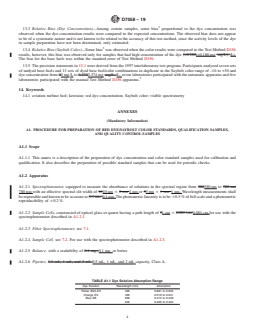
TABLE A1.1 Dye Solution Absorption Range
Dye Solution Wavelength (nm) Absorption
Yellow 5GS-EX 395 0.881 to 0.935
Orange EX 465 0.519 to 0.541
Blue SB 600 0.412 to 0.438
645 0.465 to 0.494
D7058 − 19
A1.2.7 Volumetric Flasks, 100 mL, 200 mL, and 250 mL 100 mL, 200 mL, and 250 mL capacity, Class A.
A1.2.8 Beaker, 50 mL capacity.
A1.3 Reagents
A1.3.1 Purity of Reagents—Reagent grade chemicals shall be used in all tests. Unless other wise indicated, it is intended that all
reagents conform to the specifications of the Committee on Analytical Reagents of the American Chemical Society where such
specifications are available. Other grades may be used, provided it is first asserted that the reagent is of sufficiently high purity
to permit its use without lessening the accuracy of the determination.
A1.3.2 Dyes:
A1.3.2.1 3-Methyl-1-(phenyl azo)-pyrazol-5-ol (Yellow 5GS-EX),with CAS Registry No. 4314-14-1.
A1.3.2.2 1-(phenyl azo)-2-naphthalenol (Orange EX),with CAS Registry No. 842-07-9.
A1.3.2.3 1,4 bis (butylamino)-9,10-anthracenedione (Blue SB),with CAS Registry No. 17354-14-2.
A1.3.2.4 1-[[2,5-dimethyl-4[(2-methylphenyl)azo]phenyl] azo]-2-naphthol (Solvent Red 26),with CAS Registry no. 4477-79-6.
A1.3.3 1,1-bis(3,4-dimethylphenyl)ethane, (90 % min purity).
A1.3.4 Dodecane, anhydrous (99 % min purity).
A1.3.5 Xylenes, A.C.S. reagent grade.
A1.4 Preparation Procedure for the Saybolt Standard Samples
A1.4.1 Measure 0.25000.2500 g 6 0.0005 g 0.0005 g of Yellow 5GS-EX into a 50 mL 50 mL beaker and dissolve the dye in 20
mL 20 mL of 1,1-bis(3,4-dimethylphenyl)ethane. Quantitatively transfer the Yellow 5GS- EX solution to a 250-mL250 mL
volumetric flask, dilute to the mark with 1,1-bis(3,4-dimethylphenyl)ethane and mix well. This solution is called the Yellow
5GS-EX dye solution.
A1.4.2 Repeat the above procedure for the Orange EX and Blue SB dyes. These solutions are called Orange EX dye solution and
Blue SB dye solution, respectively.
A1.4.3 Pipet 2 mL 2 mL of the Yellow 5GS-EX solution into a 200 mL 200 mL volumetric flask, dilute to the mark with dodecane
and mix well. Using separate flasks repeat this procedure with the Orange EX dye solution and the Blue SB dye solution.
A1.4.4 At the wavelengths indicated in Table A1.1, measure the absorbance of these solutions using the spectrophotometer and
cells described in A1.2.1 and A1.2.2, respectively. Use dodecane as the reference material. If the measured absorbances are not
within the indicated ranges, adjust the solution either by adding more of the solid dye if the measured absorbances are less than
the indicated absorbance range or by adding more 1,1-bis(3,4-dimethylphenyl)ethane if the measured absorbances exceed the
indicated absorbance range.
A1.4.5 If the dye solutions meet the criteria of Table A1.1, then weigh 30.00030.000 g 6 0.010 g 0.010 g of the Yellow 5GS-EX
dye solution, 10.00010.000 g 6 0.005 g 0.005 g of Orange EX dye solution and 1.0001.000 g 6 0.001 g 0.001 g of Blue SB dye
Reagent Chemicals, American Chemical Society Specifications, American Chemical Society, Washington, DC. For Suggestions on the testing of reagents not listed by
the American Chemical Society, see Annual Standards for Laboratory Chemicals, BDH Ltd., Poole, Dorset, U.K., and the United States Pharmacopeia and National
Formulary, U.S. Pharmacopeial Convention, Inc. (USPC), Rockville, MD.
D7058 − 19
TABLE A1.2 Indicated Dye Mixture Masses (g) for Synthesis of
Calibration Standards
Amount of the
Saybolt Saybolt Color Amount of the Solvent
Samples
Number Mixed Dye Red 26 Solution
Solution (g)
1 30 0.200 ± 0.001 0.000
2 25 0.472 ± 0.002 0.000
3 19 1.087 ± 0.002 0.000
4 15 1.724 ± 0.003 0.000
5 12 2.083 ± 0.004 0.000
6 0 4.545 ± 0.005 0.000
7 -15 8.772 ± 0.010 0.000
8 30 0.200 ± 0.001 0.050
9 25 0.472 ± 0.002 0.050
10 19 1.087 ± 0.002 0.050
...