

IEC TR 63222-101:2025
(Main)Power quality management - Part 101: Power quality data application
General Information
- Abstract
IEC TR 63222-101:2025 aims to provide guidelines for power quality data applications on different aspects in public power supply systems at voltage ranges from LV, MV and HV with 50 Hz or 60 Hz rated frequency. It intends to provide a methodology for mining hidden knowledge and support power quality management based on PQ data analytics. Its primary goal is to serve different aspects of power system to promote the system maintaining its normal state and improve efficiency. It can also help avoid unexpected system events, equipment malfunction/maloperation, and production process interruption. The various methodologies and methods mentioned in this document are optional.
- Status
- Published
- Publication Date
- 29-Jul-2025
- Technical Committee
- TC 8 - System aspects of electrical energy supply
- Drafting Committee
- WG 11 - TC 8/WG 11
Overview
IEC TR 63222-101:2025 - Power quality management, Part 101: Power quality data application provides guidelines for applying power quality (PQ) data across public power supply systems at LV, MV and HV voltage levels with 50 Hz or 60 Hz rated frequency. The Technical Report focuses on methodologies for PQ data analytics to mine hidden knowledge, support power quality management, maintain normal system operation, improve efficiency, and help avoid unexpected system events, equipment malfunction, or production interruption. The document presents optional methods and practical examples rather than mandatory requirements.
Key topics
- Understanding power quality data
- Distinction between continuous and discontinuous PQ phenomena
- Aggregation methods, sampling rules and their impact on PQ indicators
- Data pre-processing
- Missing-data filling and abnormal-data identification workflows
- Analysis methodologies
- Mechanism-based methods (physics/engineering interpretation)
- Non-mechanism methods (statistical and machine-learning approaches)
- Applications and case studies
- System economical operation (e.g., analysis of transformer and line losses caused by harmonics)
- Potential risk early warning (transformer overheating, capacitor faults, subsynchronous resonance)
- Management and consultancy services (voltage-dip source identification, source location, harmonic contribution determination, temporal distribution analysis)
- Practical measurement and diagnostic procedures
- Use of PQ monitoring results, event description (point-on-wave, event currents), and impedance estimation
- Optional techniques and examples
- Statistical reporting (95 % probability values), modelling workflows (e.g., KFCM-SVM mentioned), and case-study data visualizations
Applications
IEC TR 63222-101 is intended to be used to:
- Improve grid reliability and operational efficiency through data-driven PQ decisions
- Provide early warning of equipment stress or network resonances
- Quantify economic impacts of harmonics on transformer and line losses
- Support fault source identification and location (voltage dips, harmonics)
- Inform consulting, asset management, and regulatory compliance analyses
Practical outputs from applying the report include targeted mitigation measures, prioritized maintenance actions, and informed planning for harmonic filters, damping measures, or operational changes.
Who should use this standard
- Utility planners and grid operators
- Power quality engineers and technical consultants
- Asset and reliability managers
- Manufacturers of PQ monitors and analytics software
- Researchers applying PQ data analytics across LV/MV/HV networks
Related standards
- IEC 61000-4-30 (relevant aggregation and measurement principles referenced in the report)
- Other IEC power-quality guidance and TRs for measurement and instrumentation
This TR is a practical resource for organizations seeking to convert PQ measurements into actionable analytics, early warnings, and operational improvements.
Get Certified
Connect with accredited certification bodies for this standard

IMQ S.p.A. (Certification)
Italian electrical product certification.

SLG Prüf- und Zertifizierungs GmbH
German testing and certification body.

UL Solutions
Global safety science company with testing, inspection and certification.
Sponsored listings
Frequently Asked Questions
IEC TR 63222-101:2025 is a technical report published by the International Electrotechnical Commission (IEC). Its full title is "Power quality management - Part 101: Power quality data application". This standard covers: IEC TR 63222-101:2025 aims to provide guidelines for power quality data applications on different aspects in public power supply systems at voltage ranges from LV, MV and HV with 50 Hz or 60 Hz rated frequency. It intends to provide a methodology for mining hidden knowledge and support power quality management based on PQ data analytics. Its primary goal is to serve different aspects of power system to promote the system maintaining its normal state and improve efficiency. It can also help avoid unexpected system events, equipment malfunction/maloperation, and production process interruption. The various methodologies and methods mentioned in this document are optional.
IEC TR 63222-101:2025 aims to provide guidelines for power quality data applications on different aspects in public power supply systems at voltage ranges from LV, MV and HV with 50 Hz or 60 Hz rated frequency. It intends to provide a methodology for mining hidden knowledge and support power quality management based on PQ data analytics. Its primary goal is to serve different aspects of power system to promote the system maintaining its normal state and improve efficiency. It can also help avoid unexpected system events, equipment malfunction/maloperation, and production process interruption. The various methodologies and methods mentioned in this document are optional.
IEC TR 63222-101:2025 is classified under the following ICS (International Classification for Standards) categories: 17.220.99 - Other standards related to electricity and magnetism; 29.020 - Electrical engineering in general. The ICS classification helps identify the subject area and facilitates finding related standards.
IEC TR 63222-101:2025 is available in PDF format for immediate download after purchase. The document can be added to your cart and obtained through the secure checkout process. Digital delivery ensures instant access to the complete standard document.
Standards Content (Sample)
IEC TR 63222-101 ®
Edition 1.0 2025-07
TECHNICAL
REPORT
Power quality management -
Part 101: Power quality data application
ICS 17.220.99; 29.020 ISBN 978-2-8327-0578-0
All rights reserved. Unless otherwise specified, no part of this publication may be reproduced or utilized in any form or
by any means, electronic or mechanical, including photocopying and microfilm, without permission in writing from either
IEC or IEC's member National Committee in the country of the requester. If you have any questions about IEC copyright
or have an enquiry about obtaining additional rights to this publication, please contact the address below or your local
IEC member National Committee for further information.
IEC Secretariat Tel.: +41 22 919 02 11
3, rue de Varembé info@iec.ch
CH-1211 Geneva 20 www.iec.ch
Switzerland
About the IEC
The International Electrotechnical Commission (IEC) is the leading global organization that prepares and publishes
International Standards for all electrical, electronic and related technologies.
About IEC publications
The technical content of IEC publications is kept under constant review by the IEC. Please make sure that you have the
latest edition, a corrigendum or an amendment might have been published.
IEC publications search - IEC Products & Services Portal - products.iec.ch
webstore.iec.ch/advsearchform Discover our powerful search engine and read freely all the
The advanced search enables to find IEC publications by a publications previews, graphical symbols and the glossary.
variety of criteria (reference number, text, technical With a subscription you will always have access to up to date
committee, …). It also gives information on projects, content tailored to your needs.
replaced and withdrawn publications.
Electropedia - www.electropedia.org
The world's leading online dictionary on electrotechnology,
IEC Just Published - webstore.iec.ch/justpublished
Stay up to date on all new IEC publications. Just Published containing more than 22 500 terminological entries in English
details all new publications released. Available online and and French, with equivalent terms in 25 additional languages.
once a month by email. Also known as the International Electrotechnical Vocabulary
(IEV) online.
IEC Customer Service Centre - webstore.iec.ch/csc
If you wish to give us your feedback on this publication or
need further assistance, please contact the Customer
Service Centre: sales@iec.ch.
CONTENTS
FOREWORD . 4
INTRODUCTION . 6
1 Scope . 7
2 Normative references . 7
3 Terms and definitions . 7
3.1 Terms and definitions. 7
3.2 Abbreviated symbols . 8
4 Understanding power quality data . 9
4.1 General . 9
4.2 For continuous power quality phenomenon . 9
4.2.1 General . 9
4.2.2 Equivalent thermal effect but covering up the cause of possible
overload . 10
4.2.3 Aggregation covering up the inducement for event of circuit tripping . 10
4.2.4 Comparison of different aggregation methods . 11
4.2.5 Impacts of sampling rules for aggregation . 11
4.3 For discontinuous PQ phenomenon . 13
4.3.1 General . 13
4.3.2 Detailed event description . 13
4.3.3 Aggregation for event . 13
4.3.4 Critical current information with corresponding event . 13
5 Methodology for power quality data application. 14
5.1 General . 14
5.2 Data pre-processing . 14
5.2.1 General . 14
5.2.2 Missing power quality data filling . 14
5.2.3 Abnormal power quality data identification . 15
5.3 Mechanism method . 16
5.4 Non-mechanism method . 16
6 Application on system economical operation . 16
6.1 General . 16
6.2 Approach . 16
6.2.1 Analysis of additional loss of transformer . 16
6.2.2 Analysis of additional loss of lines . 19
6.3 Case . 20
6.3.1 Overview . 20
6.3.2 Background . 20
6.3.3 Measured harmonic data . 21
7 Application on potential risk early warning . 24
7.1 General . 24
7.2 Approach . 24
7.2.1 Transformer overheating early warning . 24
7.2.2 Capacitor fault early warning . 26
7.2.3 Subsynchronous resonance early warning . 27
7.3 Case . 31
8 Application on management and consultation service . 33
8.1 General . 33
8.2 Approach . 33
8.2.1 Voltage dip source identification . 33
8.2.2 Voltage dip source location . 37
8.2.3 Harmonic contribution determination . 40
8.2.4 Daily/weekly/yearly distribution demonstration . 46
8.3 Case . 51
8.3.1 Harmonic contribution determination . 51
8.3.2 Voltage dip source identification . 57
Bibliography . 60
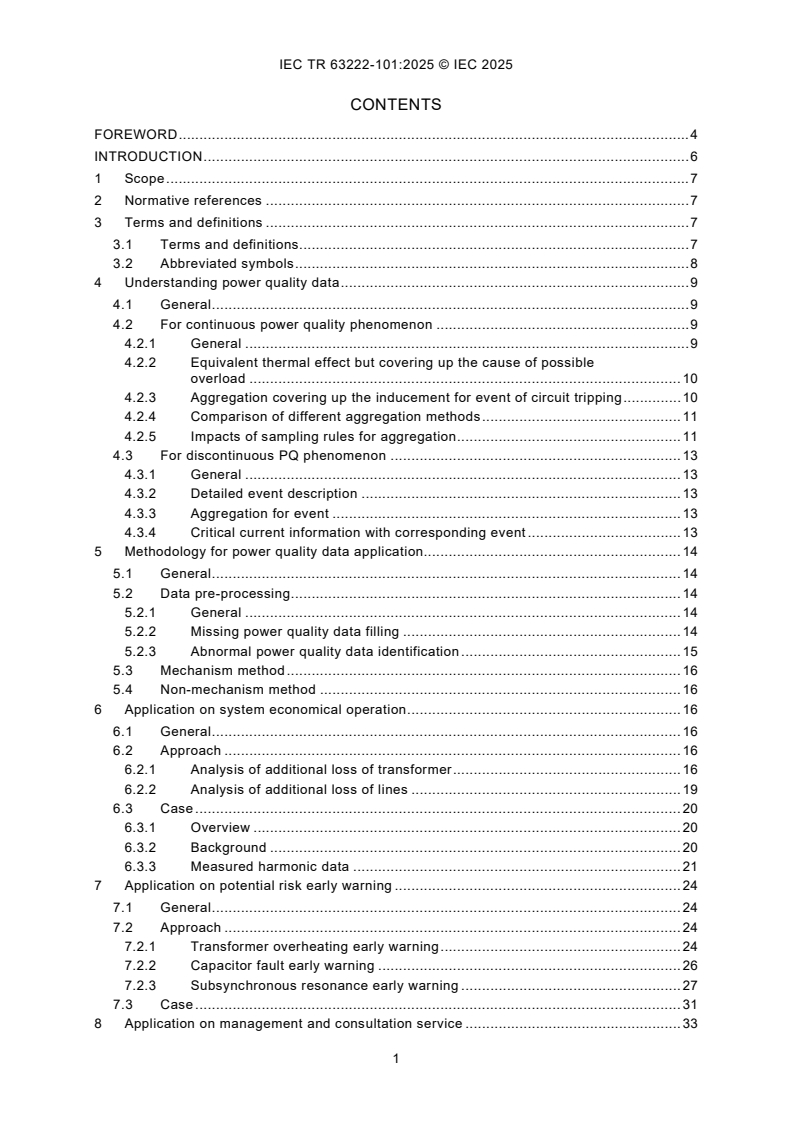
Figure 1 – Characteristics of original disturbance variation . 10
Figure 2 – Resultant aggregation data . 10
Figure 3 – Cycle-by-cycle and IEC 61000-4-30 aggregation THD . 11
Figure 4 – Resultant aggregation data for different sampling rules . 12
Figure 5 – An example showing information of a single event . 13
Figure 6 – Point on wave of the event with the corresponding current . 14
Figure 7 – Flowchart of missing power quality data filling . 15
Figure 8 – Flowchart of abnormal power quality data identification . 15
Figure 9 – Single line schematic diagram for testing wiring . 20
Figure 10 – Spot welding machine . 21
Figure 11 – Equivalent circuit of spot welding machine system . 21
Figure 12 – Average harmonic voltage ratio of 0,4 kV busbar. 22
Figure 13 – 95 % probability maximum value of harmonic voltage of 0,4 kV busbar . 22
Figure 14 – Average harmonic current of 0,4 kV incoming line . 23
Figure 15 – 95 % probability value of each harmonic current of 0,4 kV incoming line . 23
Figure 16 – The technical flowchart for subsynchronous resonance analysis and early
warning . 28
Figure 17 – Network impedance with a series resonance near 46 Hz . 29
Figure 18 – Network impedance with a distant resonance near 36 Hz . 29
Figure 19 – Distance resonances dominated by resistance – an example case with
negative reactance dip . 30
Figure 20 – Minimum and maximum impedances for impedance dip calculation . 31
Figure 21 – IEEE 12-bus test system . 32
Figure 22 – Distant Resonances – 12 bus system . 33
Figure 23 – Block diagram of voltage dip sources identification. 34
Figure 24 – The lowest amplitude frequency . 36
Figure 25 – Modelling procedure of KFCM-SVM . 37
Figure 26 – Equivalent circuit for dip source location . 38
Figure 27 – Distribution of suspected fault points . 40
Figure 28 – Distribution system configuration for harmonic contribution determination
at PCC . 41
Figure 29 – Current source equivalent circuit for harmonic analysis . 41
Figure 30 – Impedance measurement methods . 42
Figure 31 – Voltage and current during a disturbance . 43
Figure 32 – Transient waveforms and frequency contents . 43
Figure 33 – Harmonic voltage and current at the PCC when K = 0,5, K =10 . 52
1 2
Figure 34 – Fundamental voltage and current at the PCC . 54
Figure 35 – Estimation of harmonic impedance Z . 55
u
Figure 36 – Polar diagrams of the distributions of 3rd background harmonic voltage . 56
th
Figure 37 – Polar diagrams of the distributions of the 11 background harmonic
voltage . 56
th
Figure 38 – Polar diagrams of the distributions of the 13 background harmonic
voltage . 56
Figure 39 – Variation curve of V . 57
XB
Figure 40 – 2 Distribution of feature samples in three-dimension space . 58
Figure 41 – Typical waveforms of five categories . 59
Table 1 – Comparison of different aggregation methods . 11
Table 2 – Aggregation results for different sampling rules . 12
Table 3 – 10 kV/0,4 kV distribution transformer parameters . 21
Table 4 – Statistical report on the THD of 0,4 kV bus voltage during the testing period . 22
Table 5 – Statistical report on harmonic current of 0,4 kV incoming line . 23
Table 6 – The no-load loss caused by harmonic voltage . 24
Table 7 – The load loss caused by harmonic current . 24
Table 8 – Example – Measures for damping of series resonance . 32
Table 9 – List of distant resonances – 12 bus system . 32
Table 10 – Types of statistical values for pass rate calculation . 47
Table 11 – Types of statistical values for judging whether or not the standard is
exceeded . 47
Table 12 – Values of network components . 51
Table 13 – Contrast of calculation errors of |Zu| . 52
Table 14 – 3 Contrast of calculation errors of ∠Zu . 53
Table 15 – Calculation average value of the utility harmonic impedance . 55
Table 16 – 95 % Probability values of the customer-side harmonic voltage contribution . 57
Table 17 – 95 % Probability values of the utility-side harmonic voltage contribution . 57
Table 18 – Feature database of voltage dip . 57
Table 19 – Recognition result of SVM . 59
INTERNATIONAL ELECTROTECHNICAL COMMISSION
____________
Power quality management -
Part 101: Power quality data application
FOREWORD
1) The International Electrotechnical Commission (IEC) is a worldwide organization for standardization comprising
all national electrotechnical committees (IEC National Committees). The object of IEC is to promote international
co-operation on all questions concerning standardization in the electrical and electronic fields. To this end and
in addition to other activities, IEC publishes International Standards, Technical Specifications, Technical Reports,
Publicly Available Specifications (PAS) and Guides (hereafter referred to as "IEC Publication(s)"). Their
preparation is entrusted to technical committees; any IEC National Committee interested in the subject dealt with
may participate in this preparatory work. International, governmental and non-governmental organizations liaising
with the IEC also participate in this preparation. IEC collaborates closely with the International Organization for
Standardization (ISO) in accordance with conditions determined by agreement between the two organizations.
2) The formal decisions or agreements of IEC on technical matters express, as nearly as possible, an international
consensus of opinion on the relevant subjects since each technical committee has representation from all
interested IEC National Committees.
3) IEC Publications have the form of recommendations for international use and are accepted by IEC National
Committees in that sense. While all reasonable efforts are made to ensure that the technical content of IEC
Publications is accurate, IEC cannot be held responsible for the way in which they are used or for any
misinterpretation by any end user.
4) In order to promote international uniformity, IEC National Committees undertake to apply IEC Publications
transparently to the maximum extent possible in their national and regional publications. Any divergence between
any IEC Publication and the corresponding national or regional publication shall be clearly indicated in the latter.
5) IEC itself does not provide any attestation of conformity. Independent certification bodies provide conformity
assessment services and, in some areas, access to IEC marks of conformity. IEC is not responsible for any
services carried out by independent certification bodies.
6) All users should ensure that they have the latest edition of this publication.
7) No liability shall attach to IEC or its directors, employees, servants or agents including individual experts and
members of its technical committees and IEC National Committees for any personal injury, property damage or
other damage of any nature whatsoever, whether direct or indirect, or for costs (including legal fees) and
expenses arising out of the publication, use of, or reliance upon, this IEC Publication or any other IEC
Publications.
8) Attention is drawn to the Normative references cited in this publication. Use of the referenced publications is
indispensable for the correct application of this publication.
9) IEC draws attention to the possibility that the implementation of this document may involve the use of (a)
patent(s). IEC takes no position concerning the evidence, validity or applicability of any claimed patent rights in
respect thereof. As of the date of publication of this document, IEC had not received notice of (a) patent(s), which
may be required to implement this document. However, implementers are cautioned that this may not represent
the latest information, which may be obtained from the patent database available at https://patents.iec.ch. IEC
shall not be held responsible for identifying any or all such patent rights.
IEC TR IEC 63222-101 has been prepared by IEC technical committee 8: System aspects of
electrical energy supply. It is a Technical Report.
The text of this Technical Report is based on the following documents:
Draft Report on voting
8/1744/DTR 8/1750/RVDTR
Full information on the voting for its approval can be found in the report on voting indicated in
the above table.
The language used for the development of this Technical Report is English.
A list of all parts in the IEC 63222 series, published under the general title Power quality
management, can be found on the IEC website.
This document was drafted in accordance with ISO/IEC Directives, Part 2, and developed in
accordance with ISO/IEC Directives, Part 1 and ISO/IEC Directives, IEC Supplement, available
at www.iec.ch/members_experts/refdocs. The main document types developed by IEC are
described in greater detail at www.iec.ch/publications.
The committee has decided that the contents of this document will remain unchanged until the
stability date indicated on the IEC website under webstore.iec.ch in the data related to the
specific document. At this date, the document will be
– reconfirmed,
– withdrawn, or
– revised.
INTRODUCTION
With the development of modern industry, the integration of nonlinear loads, such as power-
electronic-based equipment, electric locomotives, etc., causes direct or indirect power quality
(PQ) issues.
The wide spread use of power quality monitoring instruments in recent years has accumulated
massive PQ monitoring data hiding rich information for data applications in different fields. A
typical case is the analysis of equipment operation condition, as many equipment failures
present unique signatures in the voltage and current.
This technical report (TR) is prepared to support PQ management for PQ data application of
system economical operation, potential risk early warning and consultation service. The
mechanism and non-mechanism methodologies are introduced for various aspects of
application scenarios including additional loss calculation, capacitor fault warning, harmonic
source location, etc.,
PQ data application is based on the purposes and needs, the cases are limited in this document
and cannot include all instances. The typical cases presented in this document are for fully
understanding the application of power quality data.
1 Scope
This part of IEC 63222, which is a Technical Report, aims to provide guidelines for power quality
data applications on different aspects in public power supply systems at voltage ranges from
LV, MV and HV with 50 Hz or 60 Hz rated frequency.
It intends to provide a methodology for mining hidden knowledge and support power quality
management based on PQ data analytics. Its primary goal is to serve different aspects of power
system to promote the system maintaining its normal state and improve efficiency. It can also
help avoid unexpected system events, equipment malfunction/maloperation, and production
process interruption. The various methodologies and methods mentioned in this document are
optional.
NOTE The boundaries between the various voltage levels can be different for different countries/regions. In the
context of this document, the following terms for system voltage are used:
• low voltage (LV) refers to U ≤ 1 kV
N
• medium voltage (MV) refers to 1 kV < U ≤ 35 kV
N
• high voltage (HV) refers to 35 kV < U ≤ 230 kV
N
2 Normative references
There are no normative references in this document.
3 Terms and definitions
3.1 Terms and definitions
For the purposes of this document, the following terms and definitions apply.
ISO and IEC maintain terminology databases for use in standardization at the following
addresses:
– IEC Electropedia: available at https://www.electropedia.org/
– ISO Online browsing platform: available at https://www.iso.org/obp
3.1.1
electricity
set of the phenomena associated with electric charges and electric currents
[SOURCE: IEC 60050-121:1998,121-11-76]
3.1.2
point of common coupling (PCC)
point in a public power supply network, electrically nearest to a particular load, at which other
loads are or may be connected
[SOURCE: IEC 60050-617:2009, 617-01-05, modified – "electric current, voltage and
frequencies" replaced by "electricity"]
3.1.3
power quality
characteristics of the electricity at a given point on an electrical system, evaluated against a set
of reference technical parameters
[SOURCE: IEC 60050-617:2009, 617-01-05, modified – "electric current, voltage and
frequencies" replaced by "electricity"]
3.1.4
voltage deviation
difference between supply voltage (U) and nominal voltage (U ), often expressed by relative
N
value
3.1.5
voltage dip
sudden reduction of the voltage at a point in an electrical system followed by voltage recovery
after a short period of time, usually from a few cycles to a few seconds
Note 1 to entry: The starting threshold of voltage dip generally is 90 % of reference voltage.
[SOURCE: IEC 60050-161:1990, 161.08.10, modified – "from" replaced with "usually from",
addition of Note 1 to entry.]
3.1.6
flicker
impression of unsteadiness of visual sensation induced by a light stimulus whose luminance or
spectral distribution fluctuates with time
[SOURCE: IEC 60050-161:1990, 161-08-13]
3.1.7
harmonic frequency
f
H,h
frequency which is an integer multiple of the power supply (fundamental) frequency
[SOURCE: IEC 61000-4-7:2002/AMD1:2008, 3.2.1]
3.1.8
Harmonic order
h
integer ratio of a harmonic frequency (f ) to the power supply frequency (f )
H,h H,1
3.1.9
voltage unbalance
in a polyphase system, a condition in which the magnitudes of the phase voltages or the phase
angles between consecutive phases are not all equal (fundamental component)
[SOURCE: IEC 60050-161:1990, 161-08-09]
3.2 Abbreviated symbols
β voltage deviation value
D voltage unbalance degree
, γ , γ current unbalance degree of phase A, phase B, and phase C
γ
A B C
I , I , I the fundamental current of phase A, phase B, and phase C
A1 B1 C1
I the RMS value of current
I the h-th harmonic current
h
U the h-th harmonic voltage
h
h maximum harmonic order
max
R the h-th harmonic resistance of a transformer
t,h
R the h-th harmonic resistance of the line
L,h
tanδ the h-th harmonic loss coefficient of the line (loss angle tangent value)
h
4 Understanding power quality data
4.1 General
Power quality indices are measured according to the methods defined in IEC 61000-4-30.
Understanding the whole chain of measurement processing is critical for power quality data
applications for different purposes.
Typically, raw unaggregated power quality measurement data are most useful for applications,
as they permit any type of post-processing preferred.
The information in this clause is to help engineers in different areas to further understand PQ
data for promoting PQ data application in expected areas.
4.2 For continuous power quality phenomenon
4.2.1 General
For continuous power quality phenomenon indices like voltage deviation, unbalance and
harmonics (inter-harmonics), the basic record time duration is defined by IEC 61000-4-30 as
10 cycles for 50 Hz system and 12 cycles for 60 Hz system. The aggregation method is also
defined as follows for getting the 150/180 cycle records and 10 min records respectively based
on 10/12 cycle records.
22 2
(1)
X x+ x++ x
( )
12 n
n
where x , x ,, x are each of 10/12 cycle records included in 150/180 (or 3 s) cycles or 10 mins,
12 n
n is the total record number, and X is the resultant aggregation record.
It is indicated that data stored in PQ measurement instrument or database is the RMS value of
the corresponding variation signal during the specific time duration. The following cases try to
illustrate the information issues relevant to PQ data.
For index of flicker, the basic record time duration is 10 min, the aggregation method below is
used for getting the long term flicker ( P ):
lt
N
P
∑
st,i
i1= (2)
P =
lt
N
where P (i = 1, 2, 3, .) are consecutive readings of the short-term severity P .
st,i st
=
For index of frequency, the basic record time duration is 10 s, no aggregation method is defined.
4.2.2 Equivalent thermal effect but covering up the cause of possible overload
If 10 A current keeping for 1 s flows through a resistor with 1 Ω in 1 min, the aggregation method
is used to get the final measurement result during a 1 min time duration. It will be 1,291 A.
Figure 1 – Characteristics of original disturbance variation
Figure 2 – Resultant aggregation data
Figure 1 and Figure 2 show different information of the disturbance. It is only equivalent to the
thermal effect (Q = 100 J). If the resistor is damaged by the overcurrent of 10 A in 1 s, the
resultant aggregation data of 1,291 A in 1 min loses the inrush current information. Therefore,
for power-quality data applications, unaggregated data can be more useful.
4.2.3 Aggregation covering up the inducement for event of circuit tripping
Reference [35] shows that for finding out the reasons for the event of circuit tripping, the
measurement data measured according to IEC 61000-4-30 is useless, but the data measured
in 1 cycle duration can be used for explaining the insight inducement. It is the harmonics
keeping less than 1 cycle triggering this event, the aggregation result of 10 min data averages
and immerses the short time rushing harmonics (Figure 3). The paper proposed that standards
are created to provide an equal starting point for the power quality analysis and to help meters
show the same values. However, in many cases limiting the information to standards prevented
the troubleshooting engineer from monitoring the anomalies, not to mention identifying their
sources.
___________
Numbers in square brackets refer to the Bibliography.
Figure 3 – Cycle-by-cycle and IEC 61000-4-30 aggregation THD
4.2.4 Comparison of different aggregation methods
Ten sets of data in a normal distribution with a standard deviation between 0,1 to 1 and an
average value limited to around 4 are created. The aggregation methods like Maximum,
Minimum, average, method defined by IEC 61000-4-30, and percentile are imposed on each
set of data. The aggregation results are listed in Table 1.
It is illustrated that the results aggregated by IEC 61000-4-30 are very close to the average
value and to the 50 % percentile value, showing that during almost 50 % times duration the
disturbances are more serious than that reflected by the IEC 61000-4-30 aggregation result. It
is also reminded that for power quality data applications, the focus can be paid to another 50 %
times duration, and even different aggregation methods can be needed.
Table 1 – Comparison of different aggregation methods
Aggregation 1 2 3 4 5 6 7 8 9 10
methods
Standard 0,1102 0,2094 0,3042 0,3626 0,4661 0,6318 0,6780 0,8324 0,8683 1,0462
deviation
Min 3,6954 3,4468 3,2394 3,2329 2,8577 2,3240 2,5510 1,8140 1,7697 1,5389
Max 4,2810 4,5268 4,7443 5,0200 5,1880 5,8521 6,1268 5,8502 6,5328 6,2683
Average 4,0082 4,0339 3,9600 4,0156 4,0283 3,9725 4,0502 4,0659 3,9996 3,8286
IEC 61000-4-30 4,0097 4,0393 3,9716 4,0318 4,0549 4,0219 4,1060 4,1494 4,0919 3,9676
C50% 4,0108 4,0366 3,9353 4,0204 4,0467 3,9553 4,0780 4,0901 3,9715 3,7753
C95% 4,1959 4,4015 4,4751 4,5729 4,8009 4,9364 5,1349 5,6145 5,3161 5,6885
C99% 4,2573 4,5259 4,7194 4,9696 5,1474 5,5681 5,7674 5,7937 6,1646 6,1857
4.2.5 Impacts of sampling rules for aggregation
The data X [,μδ ] ( X is the i-th 10 cycle recorder) is created with normal distribution, e.g.,
i
X: [3,5, 0,365 ] (total number is 432 000 in 1 day). For raw data obtained in different sampling
rules below, same aggregation method defined by IEC 61000-4-30 is used, the resultant 95 %
confidence intervals on the μ and δ are carried out, the results are listed in Table 2 and shown
in Figure 4.
– In 150 cycles equally sampling 1 time 10 cycle recorder.
– In 150 cycles equally sampling 3 times 10 cycle recorders.
– In 150 cycles equally sampling 5 times 10 cycle recorders.
– In 150 cycles equally sampling 15 times 10 cycle recorders (as defined by IEC 61000-4-30).
Table 2 – Aggregation results for different sampling rules
Confidence intervals Sampling rule
X 1 time 3 times 5 times 15 times
sampling sampling sampling sampling
Average 3,5 3,496 766 3,512 729 3,513 632 3,517 614
Standard deviation 0,364 137 0,361 993 0,209 539 0,162 014 0,0 948
95 % confidence intervals for
3,498 914 3,492 585 3,510 309 3,511 761 3,516 519
average range
3,501 086 3,500 947 3,51 515 3,515 503 3,518 709
95 % confidence intervals for
0,363 371 0,359 061 0,207 842 0,160 702 0,094 032
standard deviation range
0,364 907 0,364 973 0,211 265 0,163 349 0,09 558
95 % 4,098 505 4,090 555 3,860 124 3,783 118 3,672 845
Max 5,116 398 4,922 223 4,455 225 4,274 328 3,904 971
Figure 4 – Resultant aggregation data for different sampling rules
Figure 4 and Table 2 illustrate that:
– For different sampling rules, the distribution of the resultant aggregation data is also normal
distribution with an almost unchanged average value.
– With the increase of the sampling times, the standard deviation of the resultant aggregation
data drops rapidly, the distribution tends to be concentrated, and the 95 % percentile value
and the maximum value are also reduced.
– 1 time sampling almost does not change the data distribution, likely no aggregation method
is applied.
4.3 For discontinuous PQ phenomenon
4.3.1 General
For discontinuous PQ phenomena like voltage dip, swell and short-time interruption, the
characteristics are defined by residual voltage and duration measured according to
IEC 61000-4-30. It is also mentioned that the uncertainty of a dip or swell time duration is equal
to 1 cycle for class A or 1 or 2 cycles for class S. Like continuous PQ phenomena, the
aggregation methods for events can also be applied.
4.3.2 Detailed event description
Residual voltage and time duration rely on the defined threshold. For an event like Figure 5,
there are many sets of residual voltage with corresponding time duration according to defined
thresholds. The only one set cannot describe the event in detail. A detailed curve of RMS
variation might be needed for post analysis; even the point-on-wave curve is needed for deeply
analysing the event insight.
Figure 5 – An example showing information of a single event
4.3.3 Aggregation for event
As mentioned in Annex B of IEC TS 62749:2020, different aggregation methods can be applied
for event assessment, the rules of how the events to be aggregated depend on the specific
purposes for a particular assessment. The resultant aggregation data can be more roughly used
for specific area data applications.
4.3.4 Critical current information with corresponding event
For PQ data application, voltage disturbance combining the corresponding current variation
(e.g., Figure 6) might be more useful. The information of current is invaluable in determining
sources/causes of power quality disturbances, e.g., it can help to determine if the cause of the
problem is up stream or downstream of the measuring instrument.
Figure 6 – Point on wave of the event with the corresponding current
5 Methodology for power quality data application
5.1 General
Some preliminary work might be needed before the application of power quality data. In this
clause, the algorithms for missing power quality data filling and abnormal power quality data
identification are introduced. Meanwhile, the mechanism method and non-mechanism method
are also introduced.
5.2 Data pre-processing
5.2.1 General
Data cleaning is the first step of power quality data pre-processing. Data cleaning guarantees
the consistency, correctness, completeness of power quality data, so that to achieve the
effective development of power quality data application. The main concerns of power quality
data cleaning are missing data filling, and abnormal data identification.
5.2.2 Missing power quality data filling
5.2.2.1 Basic principles
Power quality data missing can occur due to the failure and maintenance of CTs/PTs and
monitoring equipment, or partial data loss due to interference in the channel during the
propagation of the communication channel (e.g., power line carrier). The missing of power
quality data will lead to deviations in data analysis, and the analysis result will not reflect the
realistic system operation, affecting the decision-making as well. Power quality data has
intrinsic characteristics such as temporal characteristics and data autocorrelation; these
intrinsic characteristics are an important basis for missing data filling.
The general flowchart of missing data inferred by the available data is shown in Figure 7.
Figure 7 – Flowchart of missing power quality data filling
5.2.2.2 Related algorithms
5.2.2.2.1 Regression analysis-based method
The process of the regression analysis-based method is as follows:
a) To calculate the correlation coefficients between the index to be filled and different power
quality indices, find out strong correlated indices.
b) Regression method will be used based on the monitoring dataset for establishing the
regression prediction model.
c) Use the prediction model to get the missing data.
5.2.2.2.2 Mean value-based method
In case of short-time data missing, the mean value-based method can be used. This simple
method uses the information from the existing data to infer the missing value. The weighted
mean value method is also recommended in this document.
5.2.3 Abnormal power quality data identification
5.2.3.1 Basic principles
Abnormal power quality data can be caused by hardware failure of PQ monitoring equipment,
monitoring environment worsening, parameter configuration errors, and manual misoperation.
The purpose of abnormal power quality data identification is to avoid a misleading decision-
making process. The general flowchart of abnormal power quality data identification is shown
in Figure 8.
Figure 8 – Flowchart of abnormal power quality data identification
5.2.3.2 Related algorithms
5.2.3.2.1 Correlation-based method
The process of the correlation-based method is as follows:
a) To calculate the correlation coefficients between the index to be identified and different
power quality indices, find out the strongest correlated index.
b) Use raw data of index to be identified and the selected correlated index to establish a
regression model.
c) Use the established regression model to get the regression values, which are compared
with the corresponding monitoring data for estimating error.
Threshold is set for identifying the abnormal data.
5.2.3.2.2 Time series-based method
The process of the time series-based method is as follows:
a) Obtain the time series data set of the index to be identified.
b) Get the time series model by the aforementioned data set.
c) Use the time series model to predict the entire time series data set, calculate the relative
error set between the predicted data and the raw data.
d) Threshold is set for identifying the abnormal data.
5.2.3.2.3 Wavelet-based method
The process of the wavelet-based method is as follows:
a) Create an abnormal waveforms database based on the possible scenarios that might occur.
b) Use wavelet-based method on the abnormal waveform to form a library of resultant
coefficients.
c) Use a wavelet-based method on the data set to be identified to get the corresponding
resultant coefficients.
d) Threshold is set for identifying the abnormal data by comparing two sets of the resultant
coefficient.
5.3 Mechanism method
The mechanism method is based on the mechanism model. The mechanism model is obtained
by listing various balance equations according to theories of physics and electricity, which has
clear physical meaning.
5.4 Non-mechanism method
The non-mechanism method is based on the non-mechanism model. The non-mechanism
model is also called the I/O Model. In the non-mechanism model, the input variables are the
power quality data and the output variables are the corresponding results of the power quality
data application scenarios. Internal physical processes are uncertain. In cases where the
mechanical model cannot be constructed properly, non-mechanism method might be needed.
6 Application on system economical operation
6.1 General
According to IEC TR 63222-100, power quality phenomena can result in additional loss of
equipment and power system. Additional loss can be calculated based on power quality data,
which contributes to power grid economic operation analysis.
6.2 Approach
6.2.1 Analysis of additional loss of transformer
6.2.1.1 Mechanism method
The additional loss of the transformer is:
ΔΔP P +ΔP +ΔP
(3)
T T_deviation T_unbalance T_harmonic
=
Where: ΔP is the additional loss of transformer caused by voltage deviation,
T_deviation
ΔP is the additional loss of transformer caused by voltage unbalance, ΔP is
T_unbalance T_harmonic
the additional loss of transformer caused by harmonic current/voltage.
a) The additional loss of transformer caused by voltage unbalance is:
ΔP = f (,DU )
(4)
T_unbalance
Where: D is the voltage unbalance degree. The formula corresponding to a specific
transformer is to be provided by the relevant manufacturer.
b) The additional loss of transformer caused by voltage deviation is:
ΔP ΔP+ΔP
(5)
T _ deviation Fe Cu
Where: ΔP is the additional loss of transformer iron loss caused by voltage deviation,
Fe
ΔP is the additional copper loss caused by the voltage deviation.
Cu
1) The additional loss of transformer iron loss caused by voltage deviation is:
U
2 N
(6)
ΔP = (2ββ+ ) P
Fe 0
U
TN
Where: β is the voltage deviation value, U is the rated voltage of the transformer
TN
secondary side, P is the rated iron loss of the transformer, ΔP is the actual iron loss
0 Fe
of the transformer.
2) The additional copper loss caused by the voltage deviation is:
i) When the access load type in the system is constant power load:
2 22
(ββ+ 2)SL
N
ΔP =− R
(7)
Cu C
2 2
(β+1) U
N
Where:β is the voltage deviation value, S is the rated capacity of the transformer,
N
U is the rated voltage of the transformer's secondary side, I is the rated current of
N N
is the line resistance or the
the transformer's secondary side, L is the load rate, R
C
total resistance of the primary and secondary voltage windings of the transformer,
ΔP is the copper loss.
...