

EN 2591-202:1996
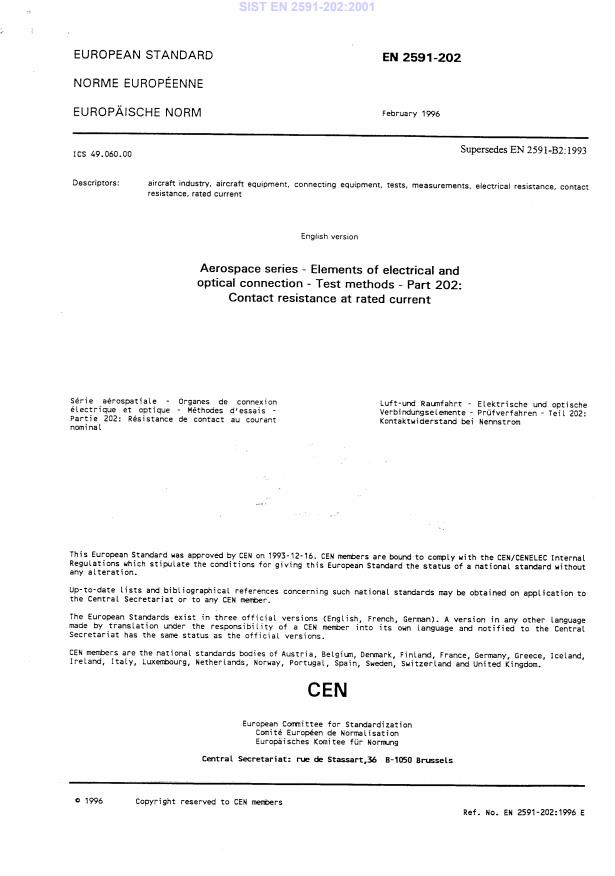
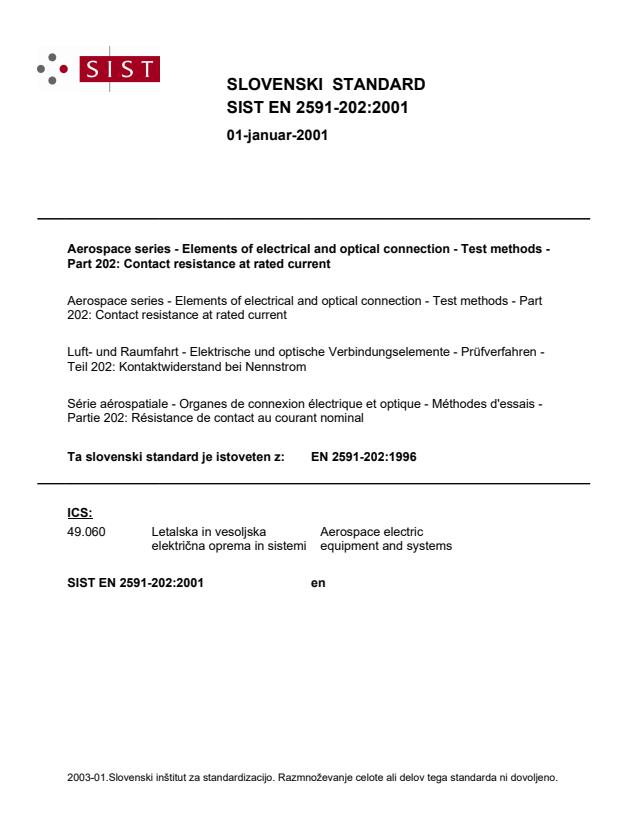
(Main)Aerospace series - Elements of electrical and optical connection - Test methods - Part 202: Contact resistance at rated current
General Information
- Abstract
This standard specifies a method for measuring the electrical resistance at rated current across a pair of mated contacts and their terminations. It shall be used together with EN 2591.
- Status
- Published
- Publication Date
- 20-Feb-1996
- Withdrawal Date
- 30-Aug-1996
- Technical Committee
- ASD-STAN - Aerospace
- Drafting Committee
- ASD-STAN/D 2 - Electrical
- Current Stage
- 9093 - Decision to confirm - Review Enquiry
- Start Date
- 01-Jun-2017
- Completion Date
- 30-Sep-2026

Overview
EN 2591-202:1996 is a critical standard developed by CEN for the aerospace industry, focusing on the reliability of electrical and optical connection systems. Titled "Aerospace series - Elements of electrical and optical connection - Test methods - Part 202: Contact resistance at rated current," this standard defines a specific method for measuring the electrical resistance across a pair of mated contacts and their terminations when operating at rated current. Proper assessment of contact resistance is vital for the safety and performance of aerospace electrical equipment and systems. EN 2591-202:1996 is intended to be used in conjunction with EN 2591, ensuring comprehensive testing of connectors in demanding environments.
Key Topics
Contact Resistance Measurement
The standard details procedures for accurately determining the electrical resistance between mated contacts at rated current, helping to identify potential failure points in electrical connections.Aerospace Application
Electrical and optical connectors in aerospace applications are subjected to high levels of stress, vibration, and environmental extremes. This standard ensures connectors maintain low resistance for optimal performance and safety.Integration with EN 2591
EN 2591-202 is one part of the larger EN 2591 series, which covers a variety of test methods for electrical and optical elements in aerospace connectors.Testing Conditions
The standard specifies conditions under which contact resistance should be measured, ensuring repeatability and consistency of results across different tests and laboratories.Quality Assurance
Using standardized methods for contact resistance testing strengthens the quality assurance processes for manufacturers and suppliers of aerospace connectors.
Applications
EN 2591-202:1996 is widely utilized across the aerospace sector and other high-reliability industries, including:
Connector Qualification and Acceptance
Ensures that new connector designs meet stringent performance standards before integration into aircraft, spacecraft, or satellite systems.Maintenance and Troubleshooting
Provides a reliable method for assessing connectors during scheduled maintenance or after suspected electrical issues, supporting continued airworthiness and operational reliability.Supplier and Production Testing
Used by manufacturers and suppliers as part of quality control procedures during the production of electrical and optical connectors for aerospace applications.Research and Development
Supports R&D efforts by offering a clear, reproducible test method that facilitates product improvement and innovation in connector technology.
Related Standards
EN 2591 Series
A comprehensive set of standards focusing on various test methods for elements of electrical and optical connection within the aerospace industry.EN 2591-100: General Requirements
Outlines the general framework and definitions applicable to all specific test methods in the EN 2591 series.EN 3155 Series
Covers detailed requirements and tests for electrical contacts.IEC and ISO Standards for Connectors
International standards that complement the EN 2591 series, supporting harmonization across global aerospace supply chains.
EN 2591-202:1996 plays a pivotal role in ensuring the safety, reliability, and longevity of aerospace electrical connection systems through standardized test methods for contact resistance at rated current. Correct application of this standard contributes to improved performance and confidence in mission-critical aerospace systems.
Relations
- Effective Date
- 24-Jun-2026
- Effective Date
- 24-Jun-2026
- Effective Date
- 10-Jun-2026
- Effective Date
- 10-Jun-2026
- Effective Date
- 10-Jun-2026
- Effective Date
- 10-Jun-2026
- Effective Date
- 10-Jun-2026
- Effective Date
- 29-Apr-2026
- Effective Date
- 15-Apr-2026
- Effective Date
- 15-Apr-2026
- Effective Date
- 28-Jan-2026
- Effective Date
- 28-Jan-2026
- Effective Date
- 28-Jan-2026
- Effective Date
- 28-Jan-2026
- Effective Date
- 28-Jan-2026
Get Certified
Connect with accredited certification bodies for this standard

BUREAU VERITAS Certification Germany
Bureau Veritas certification in Germany.

Element Materials Technology
Materials testing and product certification.

AQMS Ltd.
AQMS provides ISO certification to SMEs across the UK.
Sponsored listings
Frequently Asked Questions
EN 2591-202:1996 is a standard published by the European Committee for Standardization (CEN). Its full title is "Aerospace series - Elements of electrical and optical connection - Test methods - Part 202: Contact resistance at rated current". This standard covers: This standard specifies a method for measuring the electrical resistance at rated current across a pair of mated contacts and their terminations. It shall be used together with EN 2591.
This standard specifies a method for measuring the electrical resistance at rated current across a pair of mated contacts and their terminations. It shall be used together with EN 2591.
EN 2591-202:1996 is classified under the following ICS (International Classification for Standards) categories: 49.060 - Aerospace electric equipment and systems. The ICS classification helps identify the subject area and facilitates finding related standards.
EN 2591-202:1996 has the following relationships with other standards: It is inter standard links to EN 3155-075:2026, EN 3155-017:2026, EN 3155-045:2026, EN 3155-044:2026, EN 3155-071:2026, EN 3155-074:2026, EN 3155-070:2026, EN 3155-015:2026, EN 3155-008:2026, EN 3155-003:2026, EN 3660-022:2008, EN 2591-302:1997, EN 3155-063:2009, EN 4701-001:2013, EN 3155-014:2019. Understanding these relationships helps ensure you are using the most current and applicable version of the standard.
EN 2591-202:1996 is available in PDF format for immediate download after purchase. The document can be added to your cart and obtained through the secure checkout process. Digital delivery ensures instant access to the complete standard document.
Standards Content (Sample)
2003-01.Slovenski inštitut za standardizacijo. Razmnoževanje celote ali delov tega standarda ni dovoljeno.Aerospace series - Elements of electrical and optical connection - Test methods - Part 202: Contact resistance at rated currentLuft- und Raumfahrt - Elektrische und optische Verbindungselemente - Prüfverfahren - Teil 202: Kontaktwiderstand bei NennstromSérie aérospatiale - Organes de connexion électrique et optique - Méthodes d'essais - Partie 202: Résistance de cont
...