

EN 2591-306:1998
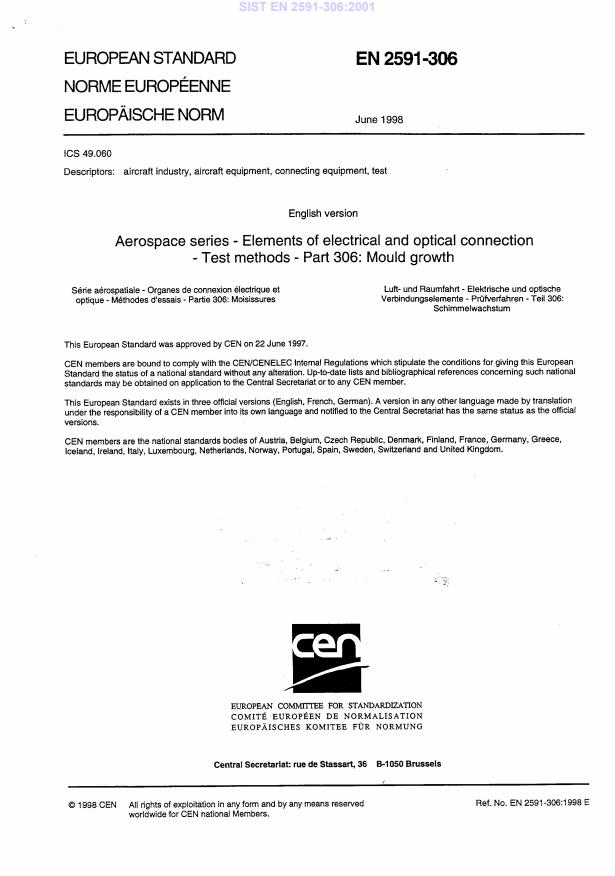
(Main)Aerospace series - Elements of electrical and optical connection - Test methods - Part 306: Mould growth
General Information
- Abstract
This standard specifies a method of assessing the ability of elements of connection or of samples of their component materials to withstand mould growth. It shall be used together with EN 2591.
- Status
- Published
- Publication Date
- 16-Jun-1998
- Withdrawal Date
- 30-Dec-1998
- Technical Committee
- ASD-STAN - Aerospace
- Drafting Committee
- ASD-STAN/D 2 - Electrical
- Current Stage
- 9093 - Decision to confirm - Review Enquiry
- Start Date
- 21-Jan-2024
- Completion Date
- 23-Sep-2026

Overview
EN 2591-306:1998 is a crucial aerospace standard developed by CEN, focused on the assessment of mould growth resistance in elements of electrical and optical connection. Part of the broader EN 2591 series, this standard provides a reliable test method to evaluate how well connection components and their materials withstand exposure to mould. This is essential in aerospace environments, where electrical and optical reliability is critical, and equipment is often subject to challenging humidity and temperature conditions that can foster mould growth.
Key Topics
- Purpose of Testing: The primary goal is to ensure the longevity and safety of electrical and optical connections by verifying their resistance to mould growth, which can compromise performance and safety.
- Scope of Application: Applies to both complete elements of connection and samples of component materials used in aerospace assemblies.
- Integration with EN 2591: This test method should be used alongside other procedures in the EN 2591 series, ensuring comprehensive qualification of aerospace connectors.
- Environmental Relevance: The standard addresses harsh environmental risk factors, supporting the development and maintenance of robust aerospace connections.
Applications
- Aerospace Equipment Manufacturing: EN 2591-306:1998 is directly relevant for manufacturers of electrical and optical connectors seeking compliance with international quality standards. It helps guarantee that products will function in high-humidity, enclosed, or temperature-variable aerospace environments.
- Component Material Qualification: The standard is used during material selection and validation, qualifying materials that resist biological contamination and degradation from mould.
- Quality Assurance and Testing: Aerospace companies, test laboratories, and quality assurance teams use this standard for routine inspection, certification, and lifecycle management of electrical and optical connections.
- Risk Mitigation: By identifying materials and products susceptible to mould, the standard helps mitigate risks of electrical failure, signal loss, and maintenance issues in aircraft or spacecraft.
Related Standards
- EN 2591 Series: EN 2591-306:1998 is part of a wider family of standards that address different test methods for aerospace connection elements, including electrical, mechanical, and environmental tests.
- EN 2591: The general standard for elements of electrical and optical connection test methods, of which Part 306 addresses mould growth specifically.
- Other Aerospace Electrical Standards: Standards such as EN 3155 and IEC 60512 cover related areas of electrical connector performance and environmental resistance in aerospace contexts.
- ISO/IEC Standards: These may provide further protocols for testing electrical and optical connectors in various industrial and high-reliability applications.
Practical Value
Meeting EN 2591-306:1998 ensures aerospace electrical and optical connectors are robust against environmental threats like mould, extending product lifecycles and reducing maintenance. Adherence to this standard supports European and international market access, improves safety records, and enhances client trust through certified, high-quality connectors.
Key benefits include:
- Enhanced reliability in harsh environments
- Reduced risk of system failures due to biological contamination
- Streamlined qualification and certification processes
- Compliance with globally recognized aerospace standards
Organizations in the aerospace sector rely on this standard to demonstrate product durability, support regulatory compliance, and maintain the high safety standards expected of airborne electrical and optical systems.
Relations
- Effective Date
- 28-Jan-2026
- Effective Date
- 28-Jan-2026
- Effective Date
- 28-Jan-2026
- Effective Date
- 28-Jan-2026
- Effective Date
- 24-Jun-2026
- Effective Date
- 10-Jun-2026
- Effective Date
- 28-Jan-2026
- Effective Date
- 28-Jan-2026
- Effective Date
- 28-Jan-2026
- Effective Date
- 28-Jan-2026
- Effective Date
- 28-Jan-2026
- Effective Date
- 28-Jan-2026
- Effective Date
- 28-Jan-2026
- Effective Date
- 28-Jan-2026
- Effective Date
- 28-Jan-2026
Get Certified
Connect with accredited certification bodies for this standard

BUREAU VERITAS Certification Germany
Bureau Veritas certification in Germany.

Element Materials Technology
Materials testing and product certification.

AQMS Ltd.
AQMS provides ISO certification to SMEs across the UK.
Sponsored listings
Frequently Asked Questions
EN 2591-306:1998 is a standard published by the European Committee for Standardization (CEN). Its full title is "Aerospace series - Elements of electrical and optical connection - Test methods - Part 306: Mould growth". This standard covers: This standard specifies a method of assessing the ability of elements of connection or of samples of their component materials to withstand mould growth. It shall be used together with EN 2591.
This standard specifies a method of assessing the ability of elements of connection or of samples of their component materials to withstand mould growth. It shall be used together with EN 2591.
EN 2591-306:1998 is classified under the following ICS (International Classification for Standards) categories: 49.060 - Aerospace electric equipment and systems. The ICS classification helps identify the subject area and facilitates finding related standards.
EN 2591-306:1998 has the following relationships with other standards: It is inter standard links to EN 2591-206:1996, EN 2591-207:1996, EN 2591-101:1994, EN 2591:1992, EN 3155-075:2026, EN 3155-074:2026, EN 3660-015:2008, EN 3660-022:2008, EN 3155-013:2006, EN 3660-065:2022, EN 3660-019:2009, EN 3155-063:2009, EN 3660-026:2009, EN 3155-060:2006, EN 3155-014:2019. Understanding these relationships helps ensure you are using the most current and applicable version of the standard.
EN 2591-306:1998 is available in PDF format for immediate download after purchase. The document can be added to your cart and obtained through the secure checkout process. Digital delivery ensures instant access to the complete standard document.
Standards Content (Sample)
2003-01.Slovenski inštitut za standardizacijo. Razmnoževanje celote ali delov tega standarda ni dovoljeno.Aerospace series - Elements of electrical and optical connection - Test methods - Part 306: Mould growthLuft- und Raumfahrt - Elektrische und optische Verbindungselemente - Prüfverfahren - Teil 306: SchimmelwachstumSérie aérospatiale - Organes de connexion électrique et optique - Méthodes d'essais - Partie 306: MoisissuresAerospace series - Elements of electri
...