

ASTM F2194-22e1
(Specification)Standard Consumer Safety Specification for Bassinets and Cradles
General Information
- Abstract
SCOPE
1.1 This consumer safety specification covers performance requirements, test methods, and marking requirements to promote safe use of bassinets and cradles.
1.2 This consumer safety performance specification is intended to minimize the risks of incidents to an infant resulting from normal use and reasonably foreseeable misuse of a bassinet or cradle.
1.3 This consumer safety performance specification covers products primarily intended to provide sleeping accommodations for an infant up to approximately 5 months in age or when the child begins to push up on hands and knees, whichever comes first.
1.3.1 Examples of Products under the Scope:
1.3.1.1 Bassinets, cradles, compact bassinets, and compact cradles.
1.3.1.2 Cradle swings with an incline less than or equal to 10° from horizontal while in the rest (non-rocking) position.
1.3.1.3 Multi-use products when they are in the bassinet/cradle or compact bassinet/cradle use mode as defined in 3.1.1 or 3.1.3.
1.3.1.4 Bassinet/cradle accessories to products when removed from the product and used in the bassinet/cradle mode or as a compact bassinet/cradle product. See 3.1.2 for an example.
1.3.1.5 Bassinet/cradle features for carriage/stroller when removed from the carriage/stroller and used in the bassinet/cradle mode or compact bassinet/cradle product mode.
1.3.2 Examples of Products Excluded from the Scope:
1.3.2.1 Sleep products that have only inclined sleeping surfaces intended to be greater than 10° from horizontal while in the rest (non-rocking) position.
1.3.2.2 In-bed portable sleepers.
1.3.2.3 Enclosed travel tents.
1.4 No bassinet or cradle produced after the approval date of this consumer safety performance specification shall, either by label or other means, indicate compliance with this specification unless it conforms to all requirements contained herein.
1.5 This consumer safety performance specification is not intended to address incidents and injuries resulting from alteration or unreasonable abuse or misuse of the product by a child or child care giver.
1.6 The values stated in inch-pound units are to be regarded as standard. The values given in parentheses are mathematical conversions to SI units that are provided for information only and are not considered standard.
1.7 The following precautionary caveat pertains only to the test method portion Section 7 of this consumer safety performance specification This standard does not purport to address all of the safety concerns, if any, associated with its use. It is the responsibility of the user of this standard to establish appropriate safety, health, and environmental practices and determine the applicability of regulatory limitations prior to use.
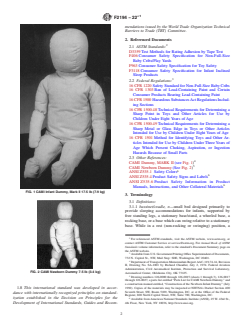
FIG. 1 CAMI Infant Dummy, Mark II 17.5 lb (7.9 kg)
FIG. 2 CAMI Newborn Dummy 7.5 lb (3.4 kg)
1.8 This international standard was developed in accordance with internationally recognized principles on standardization established in the Decision on Principles for the Development of International Standards, Guides and Recommendations issued by the World Trade Organization Technical Barriers to Trade (TBT) Committee.
- Status
- Published
- Publication Date
- 31-Dec-2021
- Technical Committee
- F15 - Consumer Products
Overview
ASTM F2194-22e1 is the Standard Consumer Safety Specification for Bassinets and Cradles, developed by ASTM International. This standard establishes performance requirements, test methods, and labeling criteria aimed at enhancing the safety of bassinets and cradles. It applies to products primarily designed to provide sleeping accommodations for infants up to about 5 months old or until the child begins to push up on hands and knees, whichever occurs first.
This specification is integral to ensuring that bassinet and cradle products minimize the risk of suffocation, tipover, collapse, hood detachment, and other hazards identified through incident data from the U.S. Consumer Product Safety Commission (CPSC). By mandating rigorous manufacturing and labeling standards, ASTM F2194-22e1 helps manufacturers, retailers, and caregivers provide safer sleep environments for infants.
Key Topics
- Performance Requirements: Specifies construction and design features to reduce hazards such as suffocation, tipover, and collapse.
- Test Methods: Defines procedures and conditions for testing products to verify compliance with safety criteria, including static load and stability tests.
- Labeling and Marking: Addresses permanent labeling requirements, including caution and warning statements necessary to inform caregivers of safe use.
- Scope of Products: Applies to bassinets, cradles, compact variants, cradle swings with certain inclines, and related accessories when used in bassinet/cradle mode.
- Hazard Minimization: Focuses on preventing common infant hazards, including entrapment, sharp edges, hazardous small parts, and unsafe side heights or mattress gaps.
Applications
ASTM F2194-22e1 is used by a variety of stakeholders in the infant sleep product industry:
- Manufacturers: To design and produce bassinets and cradles that meet or exceed mandated safety standards, facilitating market access and regulatory compliance.
- Product Testing Laboratories: To validate product safety through structured, repeatable test methods, ensuring products do not pose risks to infants during normal and foreseeable misuse.
- Retailers and Distributors: To verify that products offered to consumers are compliant with recognized safety benchmarks, reducing liability and enhancing consumer trust.
- Regulatory Bodies: As a reference for safety inspections, compliance verification, and enforcement actions related to infant sleep products.
- Parents and Caregivers: To identify products that meet recognized safety specifications, providing greater peace of mind when selecting sleeping environments for infants.
Product Examples Covered:
- Traditional and compact bassinets and cradles
- Cradle swings with a rest angle of 10° or less
- Multi-use products in bassinet/cradle mode
- Bassinet/cradle attachments for strollers or play yards
Products Outside Scope:
- Sleep products with an incline greater than 10°
- In-bed portable sleepers and enclosed travel tents
Related Standards
ASTM F2194-22e1 references and aligns with other key standards and regulations, including:
- ASTM F406: Safety specification for non-full-size baby cribs/play yards
- ASTM F963: Standard for toy safety, relevant for bassinets/cradles with toy accessories
- ASTM F3118: Safety specification for infant inclined sleep products
- 16 CFR 1220: Safety standard for non-full-size baby cribs (U.S. federal regulation)
- 16 CFR 1303: Ban on lead-containing paint for consumer products
- ANSI Z535 Series: Standards for safety colors, labeling, and product manuals
Why Compliance Matters:
ASTM F2194-22e1 is recognized internationally and promotes harmonization across jurisdictions, supporting trade and consumer safety objectives set by organizations such as the World Trade Organization (WTO).
Summary
Conformance with ASTM F2194-22e1 is crucial for producing safe, compliant bassinets and cradles. The standard benefits product manufacturers, retailers, and ultimately infants and caregivers by establishing robust, evidence-based requirements for design, testing, and labeling. Following this consumer safety specification helps reduce the risk of injuries, supports regulatory compliance, and increases consumer confidence in infant sleep products. For comprehensive safety and marketability, manufacturers are encouraged to integrate ASTM F2194-22e1 into their product development and quality assurance processes.
Relations
- Effective Date
- 01-Aug-2023
- Effective Date
- 01-Dec-2017
- Effective Date
- 01-Jan-2017
- Effective Date
- 01-Oct-2016
- Effective Date
- 01-Aug-2016
- Effective Date
- 01-May-2016
- Effective Date
- 01-Nov-2015
- Effective Date
- 01-Apr-2015
- Effective Date
- 01-May-2013
- Refers
ASTM F406-12a - Standard Consumer Safety Specification for Non-Full-Size Baby Cribs/Play Yards - Effective Date
- 01-May-2012
- Effective Date
- 15-Jan-2012
- Effective Date
- 01-Dec-2011
- Refers
ASTM F406-11b - Standard Consumer Safety Specification for Non-Full-Size Baby Cribs/Play Yards - Effective Date
- 15-Aug-2011
- Refers
ASTM F406-11a - Standard Consumer Safety Specification for Non-Full-Size Baby Cribs/Play Yards - Effective Date
- 01-Jul-2011
- Effective Date
- 15-May-2011
Frequently Asked Questions
ASTM F2194-22e1 is a technical specification published by ASTM International. Its full title is "Standard Consumer Safety Specification for Bassinets and Cradles". This standard covers: SCOPE 1.1 This consumer safety specification covers performance requirements, test methods, and marking requirements to promote safe use of bassinets and cradles. 1.2 This consumer safety performance specification is intended to minimize the risks of incidents to an infant resulting from normal use and reasonably foreseeable misuse of a bassinet or cradle. 1.3 This consumer safety performance specification covers products primarily intended to provide sleeping accommodations for an infant up to approximately 5 months in age or when the child begins to push up on hands and knees, whichever comes first. 1.3.1 Examples of Products under the Scope: 1.3.1.1 Bassinets, cradles, compact bassinets, and compact cradles. 1.3.1.2 Cradle swings with an incline less than or equal to 10° from horizontal while in the rest (non-rocking) position. 1.3.1.3 Multi-use products when they are in the bassinet/cradle or compact bassinet/cradle use mode as defined in 3.1.1 or 3.1.3. 1.3.1.4 Bassinet/cradle accessories to products when removed from the product and used in the bassinet/cradle mode or as a compact bassinet/cradle product. See 3.1.2 for an example. 1.3.1.5 Bassinet/cradle features for carriage/stroller when removed from the carriage/stroller and used in the bassinet/cradle mode or compact bassinet/cradle product mode. 1.3.2 Examples of Products Excluded from the Scope: 1.3.2.1 Sleep products that have only inclined sleeping surfaces intended to be greater than 10° from horizontal while in the rest (non-rocking) position. 1.3.2.2 In-bed portable sleepers. 1.3.2.3 Enclosed travel tents. 1.4 No bassinet or cradle produced after the approval date of this consumer safety performance specification shall, either by label or other means, indicate compliance with this specification unless it conforms to all requirements contained herein. 1.5 This consumer safety performance specification is not intended to address incidents and injuries resulting from alteration or unreasonable abuse or misuse of the product by a child or child care giver. 1.6 The values stated in inch-pound units are to be regarded as standard. The values given in parentheses are mathematical conversions to SI units that are provided for information only and are not considered standard. 1.7 The following precautionary caveat pertains only to the test method portion Section 7 of this consumer safety performance specification This standard does not purport to address all of the safety concerns, if any, associated with its use. It is the responsibility of the user of this standard to establish appropriate safety, health, and environmental practices and determine the applicability of regulatory limitations prior to use. FIG. 1 CAMI Infant Dummy, Mark II 17.5 lb (7.9 kg) FIG. 2 CAMI Newborn Dummy 7.5 lb (3.4 kg) 1.8 This international standard was developed in accordance with internationally recognized principles on standardization established in the Decision on Principles for the Development of International Standards, Guides and Recommendations issued by the World Trade Organization Technical Barriers to Trade (TBT) Committee.
SCOPE 1.1 This consumer safety specification covers performance requirements, test methods, and marking requirements to promote safe use of bassinets and cradles. 1.2 This consumer safety performance specification is intended to minimize the risks of incidents to an infant resulting from normal use and reasonably foreseeable misuse of a bassinet or cradle. 1.3 This consumer safety performance specification covers products primarily intended to provide sleeping accommodations for an infant up to approximately 5 months in age or when the child begins to push up on hands and knees, whichever comes first. 1.3.1 Examples of Products under the Scope: 1.3.1.1 Bassinets, cradles, compact bassinets, and compact cradles. 1.3.1.2 Cradle swings with an incline less than or equal to 10° from horizontal while in the rest (non-rocking) position. 1.3.1.3 Multi-use products when they are in the bassinet/cradle or compact bassinet/cradle use mode as defined in 3.1.1 or 3.1.3. 1.3.1.4 Bassinet/cradle accessories to products when removed from the product and used in the bassinet/cradle mode or as a compact bassinet/cradle product. See 3.1.2 for an example. 1.3.1.5 Bassinet/cradle features for carriage/stroller when removed from the carriage/stroller and used in the bassinet/cradle mode or compact bassinet/cradle product mode. 1.3.2 Examples of Products Excluded from the Scope: 1.3.2.1 Sleep products that have only inclined sleeping surfaces intended to be greater than 10° from horizontal while in the rest (non-rocking) position. 1.3.2.2 In-bed portable sleepers. 1.3.2.3 Enclosed travel tents. 1.4 No bassinet or cradle produced after the approval date of this consumer safety performance specification shall, either by label or other means, indicate compliance with this specification unless it conforms to all requirements contained herein. 1.5 This consumer safety performance specification is not intended to address incidents and injuries resulting from alteration or unreasonable abuse or misuse of the product by a child or child care giver. 1.6 The values stated in inch-pound units are to be regarded as standard. The values given in parentheses are mathematical conversions to SI units that are provided for information only and are not considered standard. 1.7 The following precautionary caveat pertains only to the test method portion Section 7 of this consumer safety performance specification This standard does not purport to address all of the safety concerns, if any, associated with its use. It is the responsibility of the user of this standard to establish appropriate safety, health, and environmental practices and determine the applicability of regulatory limitations prior to use. FIG. 1 CAMI Infant Dummy, Mark II 17.5 lb (7.9 kg) FIG. 2 CAMI Newborn Dummy 7.5 lb (3.4 kg) 1.8 This international standard was developed in accordance with internationally recognized principles on standardization established in the Decision on Principles for the Development of International Standards, Guides and Recommendations issued by the World Trade Organization Technical Barriers to Trade (TBT) Committee.
ASTM F2194-22e1 is classified under the following ICS (International Classification for Standards) categories: 97.190 - Equipment for children. The ICS classification helps identify the subject area and facilitates finding related standards.
ASTM F2194-22e1 has the following relationships with other standards: It is inter standard links to ASTM F963-23, ASTM F406-17, ASTM F3118-17, ASTM F3118-16a, ASTM F963-16, ASTM F3118-16, ASTM F406-15, ASTM F3118-15, ASTM F406-13, ASTM F406-12a, ASTM F406-12, ASTM F963-11, ASTM F406-11b, ASTM F406-11a, ASTM F406-11. Understanding these relationships helps ensure you are using the most current and applicable version of the standard.
ASTM F2194-22e1 is available in PDF format for immediate download after purchase. The document can be added to your cart and obtained through the secure checkout process. Digital delivery ensures instant access to the complete standard document.
Standards Content (Sample)
This international standard was developed in accordance with internationally recognized principles on standardization established in the Decision on Principles for the
Development of International Standards, Guides and Recommendations issued by the World Trade Organization Technical Barriers to Trade (TBT) Committee.
´1
Designation:F2194 −22
Standard Consumer Safety Specification for
Bassinets and Cradles
This standard is issued under the fixed designation F2194; the number immediately following the designation indicates the year of
original adoption or, in the case of revision, the year of last revision. A number in parentheses indicates the year of last reapproval. A
superscript epsilon (´) indicates an editorial change since the last revision or reapproval.
ε NOTE—Editorial corrections were made throughout in July 2022.
INTRODUCTION
This consumer safety performance specification addresses infant bassinet and cradle incidents
identified by the U.S. Consumer Product Safety Commission (CPSC).
In response to the incident data compiled by the CPSC, this consumer safety performance
specificationattemptstominimizethefollowinghazards:(1)suffocation,(2)tipover,(3)collapse,and
(4)hooddetachment.Italsoaddressescornerpostextensions,whichmaycatchpacifiercords,ribbons,
necklaces, or clothing which a child may be wearing and which may be caught on a projection. This
specification does not cover products that are blatantly misused or used in a careless manner that
disregards the safety instructions and warnings provided with each bassinet or cradle.
1. Scope 1.3.1.5 Bassinet/cradle features for carriage/stroller when
removed from the carriage/stroller and used in the bassinet/
1.1 This consumer safety specification covers performance
cradle mode or compact bassinet/cradle product mode.
requirements, test methods, and marking requirements to
1.3.2 Examples of Products Excluded from the Scope:
promote safe use of bassinets and cradles.
1.3.2.1 Sleep products that have only inclined sleeping
1.2 This consumer safety performance specification is in-
surfaces intended to be greater than 10° from horizontal while
tended to minimize the risks of incidents to an infant resulting
in the rest (non-rocking) position.
from normal use and reasonably foreseeable misuse of a
1.3.2.2 In-bed portable sleepers.
bassinet or cradle.
1.3.2.3 Enclosed travel tents.
1.3 This consumer safety performance specification covers
products primarily intended to provide sleeping accommoda-
1.4 Nobassinetorcradleproducedaftertheapprovaldateof
tionsforaninfantuptoapproximately5monthsinageorwhen
this consumer safety performance specification shall, either by
the child begins to push up on hands and knees, whichever
label or other means, indicate compliance with this specifica-
comes first.
tion unless it conforms to all requirements contained herein.
1.3.1 Examples of Products under the Scope:
1.5 This consumer safety performance specification is not
1.3.1.1 Bassinets, cradles, compact bassinets, and compact
intended to address incidents and injuries resulting from
cradles.
alteration or unreasonable abuse or misuse of the product by a
1.3.1.2 Cradle swings with an incline less than or equal to
child or child care giver.
10° from horizontal while in the rest (non-rocking) position.
1.3.1.3 Multi-use products when they are in the bassinet/
1.6 The values stated in inch-pound units are to be regarded
cradle or compact bassinet/cradle use mode as defined in 3.1.1
as standard. The values given in parentheses are mathematical
or 3.1.3.
conversions to SI units that are provided for information only
1.3.1.4 Bassinet/cradle accessories to products when re-
and are not considered standard.
moved from the product and used in the bassinet/cradle mode
1.7 The following precautionary caveat pertains only to the
or as a compact bassinet/cradle product. See 3.1.2 for an
test method portion Section 7 of this consumer safety perfor-
example.
mance specification This standard does not purport to address
all of the safety concerns, if any, associated with its use. It is
This specification is under the jurisdiction of ASTM Committee F15 on
Consumer Products and is the direct responsibility of Subcommittee F15.18 on
the responsibility of the user of this standard to establish
Cribs, Toddler Beds, Play Yards, Bassinets, Cradles and Baby Changing Products.
appropriate safety, health, and environmental practices and
CurrenteditionapprovedJan.1,2022.PublishedJune2022.Originallyapproved
ɛ1
determine the applicability of regulatory limitations prior to
in 2002. Last previous edition approved in 2016 as F2194 – 16 . DOI: 10.1520/
F2194-22E01. use.
Copyright © ASTM International, 100 Barr Harbor Drive, PO Box C700, West Conshohocken, PA 19428-2959. United States
´1
F2194−22
mendations issued by the World Trade Organization Technical
Barriers to Trade (TBT) Committee.
2. Referenced Documents
2.1 ASTM Standards:
D3359 Test Methods for Rating Adhesion by Tape Test
F406 Consumer Safety Specification for Non-Full-Size
Baby Cribs/Play Yards
F963 Consumer Safety Specification for Toy Safety
F3118 Consumer Safety Specification for Infant Inclined
Sleep Products
2.2 Federal Regulations:
16 CFR 1220 Safety Standard for Non-Full-Size Baby Cribs
16 CFR 1303 Ban of Lead-Containing Paint and Certain
Consumer Products Bearing Lead-Containing Paint
16CFR1500 HazardousSubstancesActRegulationsInclud-
ing Sections
16 CFR 1500.48 Technical Requirements for Determining a
Sharp Point in Toys and Other Articles for Use by
Children Under Eight Years of Age
16 CFR 1500.49 Technical Requirements for Determining a
Sharp Metal or Glass Edge in Toys or Other Articles
Intended for Use by Children Under Eight Years of Age
16 CFR 1501 Method for Identifying Toys and Other Ar-
ticles Intended for Use by Children Under Three Years of
Age Which Present Choking, Aspiration, or Ingestion
Hazards Because of Small Parts
2.3 Other References:
CAMI Dummy, MARK II (see Fig. 1)
CAMI Newborn Dummy (See Fig. 2)
ANSI Z535.1 Safety Colors
ANSI Z535.4 Product Safety Signs and Labels
ANSI Z535.6 Product Safety Information in Product
Manuals, Instructions, and Other Collateral Materials
FIG. 1CAMI Infant Dummy, Mark II 17.5 lb (7.9 kg)
3. Terminology
3.1 Definitions:
3.1.1 bassinet/cradle, n—small bed designed primarily to
provide sleeping accommodations for infants, supported by
free standing legs, a stationary base/stand, a wheeled base, a
rocking base, or a base which can swing relative to a stationary
base. While in a rest (non-rocking or swinging) position, a
For referenced ASTM standards, visit the ASTM website, www.astm.org, or
contact ASTM Customer Service at service@astm.org. For Annual Book of ASTM
Standards volume information, refer to the standard’s Document Summary page on
the ASTM website.
AvailablefromU.S.GovernmentPrintingOfficeSuperintendentofDocuments,
732 N. Capitol St., NW, Mail Stop: SDE, Washington, DC 20401.
Department of Transportation Memorandum ReportAAC-119-74-14, Revision
II, Drawing No. SA-1001 by Richard Chandler, July 2, 1974. Federal Aviation
Administration, Civil Aeromedical Institute, Protection and Survival Laboratory,
FIG. 2CAMI Newborn Dummy 7.5 lb (3.4 kg)
Aeromedical Center, Oklahoma City, OK 73125.
Drawing numbers 126-0000 through 126-0015 (sheets 1 through 3), 126-0017
through 126-0027, a parts list entitled “Parts List for CAMI Newborn Dummy,” and
a construction manual entitled, “Construction of the Newborn Infant Dummy” (July
1992). Copies of the materials may be inspected at NHTSA’s Docket Section 400
1.8 This international standard was developed in accor-
Seventh Street, SW, Room 5109, Washington, DC, or at the Office of the Federal
dance with internationally recognized principles on standard-
Register, 800 North Capitol Street, NW, Suite 700, Washington, DC.
ization established in the Decision on Principles for the
Available from American National Standards Institute (ANSI), 25 W. 43rd St.,
Development of International Standards, Guides and Recom- 4th Floor, New York, NY 10036, http://www.ansi.org.
´1
F2194−22
bassinet/cradle is intended to have a sleep surface less than or 3.1.10 maximum deflection angle, n—the maximum rock/
equal to 10° from horizontal. swing angle measurement allowed by the product design in the
manufacturer’s recommended use position in the manner
3.1.1.1 bassinet bed, n—the sleeping area of the bassinet/
normally associated with rocking/swinging as intended by the
cradle, containing the sleep surface and side walls.
manufacturer.
3.1.1.2 false latch/lock visual indicator, n—a warning sys-
3.1.11 mesh, n—mesh may be either a woven fabric in
tem using contrasting colors, lights, or other similar means
whichthewarpandfillingyarnsareinterlaced,knittedfabricin
designedtovisuallyalertcaregiverswhenaremovablebassinet
which the wales and courses yarns are interlocked, or any other
bed is not properly locked onto its base/stand.
type of fabric that may be developed that provides openings
3.1.1.3 intended use orientation—the bassinet bed orienta-
therein.
tion (that is, the position where the head and foot ends of the
3.1.12 non-paper label, n—any label material (such as
bassinet bed are located) with respect to the base/stand, as
plastic or metal) that either will not tear without the aid of tools
recommended by the manufacturer for intended use.
or tears leaving a sharply defined edge.
3.1.1.4 removable bassinet bed, n—a bassinet bed that is
3.1.13 occupant, n—that individual who is in a product that
designed to separate from the base/stand without the use of
is set up in one of the manufacturer’s recommended use
tools. This definition does not include the play yard bassinet as
positions.
defined in 3.1.15.
3.1.14 paper label, n—any label material that tears without
3.1.2 bassinet/cradle accessory, n—a supported sleep sur-
the aid of tools and leaves a fibrous edge.
face that attaches to a crib or play yard designed to convert the
3.1.15 play yard bassinet, n—bassinet accessory usually
product into a bassinet/cradle or into compact bassinet/cradle
suspended in the upper portion of the play yard and typically
intended to have a sleep surface less than or equal to 10° from
has a folding or segmented mattress, or both.
horizontal while in a rest (non-rocking or swinging) position.
3.1.16 removable cover, n—a fabric cover encompassing the
3.1.3 compact bassinet/cradle, n—a bassinet/cradle having
recommended sleeping area for the occupant of the product,
a distance of less than 6.0 in. (152.4 mm) between the lowest
that uses snaps, zippers, hook and loop, buttons or other
point of the underside of the sleep surface support and the
fasteners to attach to a bassinet/cradle frame that requires
product support surface (floor).
consumer action as a step for removal or adjustment.
3.1.3.1 Discussion—This includes a bassinet/cradle that
3.1.17 rest angle, n—the resulting angle measurement of the
may have hand-holds, handle(s), or grip openings and is
bassinet/cradle sleeping surface after the maximum deflection
intended to carry an occupant whose torso is completely
angle is applied and released and the product has come to a
supported by the product. This also includes products com-
complete rest.
monly known as Moses baskets.
3.1.18 seam, n—means for joining fabric components, such
3.1.4 conspicuous, adj—visible, when the product is in all
as sewing, welding, heat sealing, or gluing.
manufacturer’s recommended use positions, to a person stand-
ing near the product at any one position around the product but
3.1.19 static load, n—vertically downward force applied by
not necessarily visible from all other positions.
a calibrated force gauge or by dead weights.
3.1.5 double-action release mechanism, n—mechanism re-
4. Calibration and Standardization
quiring either two consecutive actions, the first of which must
be maintained while the second is carried out or two separate
4.1 All testing shall be conducted on a concrete floor that
and independent single-action locking mechanisms that must 1
may be covered with ⁄8-in. (3-mm) thick vinyl flooring cover,
be activated simultaneously to fully release.
unless the test instructs differently.
3.1.6 fabric, n—any woven, knit, coated, laminated,
4.2 The product shall be completely assembled, unless
extruded, or calendared flexible material that is intended to be
otherwise noted, in accordance with the manufacturer’s in-
sewn, welded, heat sealed, or glued together as an assembly.
structions.
3.1.7 manufacturer’s recommended use position, n—any
4.3 No testing shall be conducted within 48 h of manufac-
position that is presented as a normal, allowable, or acceptable
turing.
configuration for the use of the product by the manufacturer in
4.4 The product to be tested shall be in a room with ambient
any descriptive or instructional literature. This specifically
temperature of 73 °F 6 9 °F (23 °C 6 5 °C) for at least 1 h
excludes positions that the manufacturer shows in a like
prior to testing. Testing then shall be conducted within this
manner in its literature to be unacceptable, unsafe, or not
temperature range.
recommended.
4.5 All testing required by this specification shall be con-
3.1.8 mattress, n—pad with a fabric, vinyl, or other material
ducted on the same unit.
case filled with resilient material (such as cotton, foam,
fiberfill, etc.) used as or on the floor of the unit. 4.6 Angle measurements shall be obtained using a digital
inclinometer capable of 0.1° minimum resolution.
3.1.9 mattress support rods/bars, n—component(s), typi-
cally rods or bars, that provide added support between the 4.7 A force gauge with a minimum range of 0 lbf to 25 lbf
mattress support component and the mattress. (110 N), accuracy of 60.25 lb.
´1
F2194−22
5. General Requirements 5.10 Corner Posts:
5.10.1 No corner post assembly shall extend more than 0.06
5.1 Lead in Paints—The paint or surface coating on the
in. (1.5 mm) above the upper edge of an end or side panel,
product shall comply with 16 CFR 1303.
whichever is higher, when measured from the lowest point on
5.2 Hazardous Sharp Edges or Points—There shall be no
the upper edge of the end panel within 3 in. (76 mm) from the
hazardous sharp points or edges as defined by 16 CFR 1500.48
outermost contour of the elbow (see Fig. 4).
and 16 CFR 1500.49 before and after testing to this consumer
5.10.2 Thelimitationsin5.10.1donotapplytoacornerpost
safety specification.
assembly that extends at least 16 in. (406 mm) above the
5.3 Small Parts—There shall be no small parts as defined by
uppermost surface of the side rail in its highest position.
16 CFR 1501 before testing or liberated as a result of testing to
5.10.2.1 Corner posts intended to accept removable vertical
this specification.
extensions made up of two or more segments (such as canopy
post extensions) shall not permit the attachment of individual
5.4 Wood Parts—Prior to testing, any exposed wood parts
shall be smooth and free of splinters. segments such that the resultant vertical extension would be in
violation of the dimensional requirements of 5.10.2.
5.5 Scissoring, Shearing, or Pinching—A product, when in
the manufacturer’s recommended use position shall be de-
5.11 Toys—Toy accessories attached to, removable from, or
signed and constructed so as to prevent injury to the occupant
sold with a bassinet or cradle, as well as their means of
from scissoring, shearing, or pinching when members or attachment, must meet the applicable requirements of Con-
components rotate about a common axis, or fastening points,
sumer Safety Specification F963.
slide, pivot, fold or otherwise move relative to one another.
5.11.1 Toy mobiles that attach solely to a bassinet or cradle
Scissoring, shearing, or pinching that may cause injury shall
are not required to contain labeling as stated in Consumer
not be permissible when the edges of any rigid parts admit a
Safety Specification F963, Section 5.6.2 (Safety Labeling
probe that is greater than a 0.210-in. (5.33-mm) and less than
Mobiles).
a 0.375-in. (9.53-mm) diameter at any accessible point
5.12 Bassinet/Cradle Accessory to Play Yard/Non-Full-
throughout the range of motion of such parts.
Sized Crib—A bassinet accessory intended to be attached to,
5.6 Unintentional Folding:
removable from, sold with or separately from a play yard or
5.6.1 Products designed without latching or locking devices
non-full-sized crib shall comply with the requirements of this
must remain in the manufacturer’s recommended use position
specification and Consumer Safety Specification F406 when
during and upon completion of the test, in accordance with
attached in the manufacturer’s recommended use position.
7.5.1.
5.13 Occupant Restraint System—No product shall contain
5.6.2 Products designed with a single-action release mecha-
a restraint system in the occupant area when used in the
nism latching or locking devices must remain in the manufac-
bassinet/cradle mode.
turer’s recommended use position during and upon completion
of the test, in accordance with 7.5.2.
5.14 If the bassinet/cradle or compact bassinet/cradle prod-
5.6.3 Products with a double-action release mechanism
uct can be converted into another product for which a con-
latching or locking device shall require two distinct and
sumersafetyspecificationexists,theproductshallcomplywith
separate actions for release of the mechanism.
the applicable requirements of that standard when in that use
mode.
5.7 Openings—Holes or slots that extend entirely through a
wallsectionofanyrigidmateriallessthan0.375-in.(9.53-mm)
6. Performance Requirements
thick and admit a 0.210-in. (5.33-mm) diameter rod shall also
admit a 0.375-in. (9.53-mm) diameter rod. Holes or slots that
6.1 Spacing of Rigid Sided Bassinet/Cradle Components—
are between 0.210-in. (5.33-mm) and 0.375-in. (9.53-mm) and
Spacing must comply with the applicable sections of 16 CFR
have a wall thickness less than 0.375 in. (9.53 mm) but are
1220 when tested according to 7.1.
limited in depth to 0.375-in. (9.53-mm) maximum by another
6.2 Openings for Mesh/Fabric Sided Bassinet/Cradle—
rigidsurfaceshallbepermissible(seeFig.3).Theproductshall
Openings in the mesh shall be designed to prevent entrapment
be evaluated in all manufacturer’s recommended use positions.
of fingers, toes, and snaring of buttons normally used on infant
5.8 Labeling:
clothing. A mesh opening shall not fully accept the specified
5.8.1 Warning labels (whether paper or non-paper) shall be
rod when tested in accordance with 7.6.
permanent when tested in accordance with 7.2.1 – 7.2.3.
6.3 Static Load—A product shall support the static load
5.8.2 Warning statements applied directly onto the surface
without causing any hazardous conditions as identified within
of the product by hot stamping, heat transfer, printing, wood
Section 5 of this consumer safety specification. This test shall
burning, etc. shall be permanent when tested in accordance
be conducted in accordance with 7.3.
with 7.2.4.1 – 7.2.4.3.
5.8.3 Non-paper labels shall not liberate small parts when
6.4 Stability:
tested in accordance with 7.2.5.
6.4.1 Stability – Bassinet/cradle—Aproduct in all manufac-
5.9 Fasteners—Woodscrews shall not be used in the assem- turer’s recommended use positions, including positions where
bly of any components that must be removed by the consumer the locks are engaged for preventing rocking/swinging motion
in the normal disassembly of a bassinet/cradle. of the sleeping surface, shall not tip over and shall retain the
´1
F2194−22
FIG. 3Opening Example
CAMI dummy when tested in accordance with 7.4.1. Compact
bassinets/cradles are excluded from this requirement.
6.4.2 Stability – Compact bassinet/cradle—A product in all
manufacturer’s recommended use positions shall not tip over
and shall retain the CAMI dummy when tested in accordance
with 7.4.2.
6.5 Mattress:
6.5.1 Each product shall be sold with the mattress included.
6.5.2 Mattress Thickness for Fabric or Mesh Sided
Products—The filling material of the uncompressed mattress
such as foam, fiberfill, etc. shall not exceed 1-in. (25-mm) in
thickness. The total thickness of the uncompressed mattress
including all fabric or vinyl layers, filling material, and any
structural members such as wood, hardboard, etc., shall not
exceed 1 ⁄2 in. (38 mm).
6.5.3 Mattress Dimensions—The dimensions of the mattress
supplied with the product shall be such that the mattress, when
FIG. 4Corner Post Extension
inserted in the center of the unit in a noncompressed state at
any of the adjustable positions, shall not leave a gap of more
´1
F2194−22
than ⁄2 in. (13 mm) at any point between the perimeter of the
mattress and the perimeter of the unit. When the mattress is
placed against the perimeter of the unit, the resulting gap shall
not exceed 1 in. (25 mm).
6.6 Side Height—The upper surface of the non-compressed
mattress of the product, when the mattress support is in any
position,mustbeatleast7.5in.(191mm)lowerthantheupper
surface of the lowest side in all intended use positions as
measured in accordance with 7.11.
6.7 Protective Components—If the occupant can grasp com-
ponents between the thumb and forefinger or teeth (such as
caps, sleeves, or plugs used for protection from sharp edges,
points, or entrapment of fingers or toes), or if there is at least
a 0.040-in. (1.00-mm) gap between the component and its
adjacent parent component, such component shall not be
removed when tested in accordance with 7.7.
6.8 Bassinets with Segmented Mattresses: Flatness Test—If
the bassinet or bassinet accessory has a folding or segmented
mattress, or both, any angle when measured in 7.8 less than or
equal to 10° is an immediate pass. Any angle when measured
in 7.8 greater than 10° is an immediate failure. Segmented NOTE 1—The probe dimensions represent the torso diameter of a 5th
percentile 0 to 2-month-old infant.
bassinet mattresses that have seams (located between segments
FIG. 5Torso Probe
or where the mattress folds) that are less than 15 in. in length
are excluded from this requirement.
6.8.1 Rationale—This test was created to address a suffo-
6.11.1 The base/stand shall not support the removable
cation hazard associated with “V” shapes formed in segmented
bassinet bed (that is, the removable bassinet bed falls from the
mattresses seams and based on assessment of both newborn
base/stand and contacts the floor or the base/stand collapses
and infant anthropometric weights.The requirement was based
when the removable bassinet bed is not locked into the
on the 5th percentile newborn angle of 11°, on either side of a
base/stand).
child’s nose, and subtracting 1° as a safety factor resulting in a
6.11.2 The lock/latch shall automatically engage under the
maximum of 10°. The infant cylinder was selected for this test
weight of the removable bassinet bed (without any other force
as it captured all failures encountered with a newborn cylinder
or action) in all lateral positions, as shown in Fig. 6.
but also captured failures undetected by the newborn cylinder.
6.11.3 The sleep surface of the removable bassinet bed shall
The infant test cylinder is a more stringent test given the
be at an angle of at least 20° from a horizontal plane when the
allowable angle of a newborn is 10° maximum instead of the
removable bassinet bed is in an unlocked position.
infant 14°.
6.11.4 The removable bassinet bed or base stand, or both,
shall provide a false latch/lock visual indicator(s) that are at a
6.9 Fabric Sided Enclosed Openings—For bassinets/cradles
minimum visible from both of the long sides of the product.A
with fabric sides, a completely bounded opening shall not be
created that allows the complete passage of the torso probe
(Fig. 5) when tested in accordance with 7.9. This test does not
apply to play yard bassinets as defined in 3.1.15 or bassinet/
cradle accessories as defined in 3.1.2.
6.10 Rock/Swing Angle—Bassinets or cradles that incorpo-
rate a rock/swing feature shall meet the following:
6.10.1 The maximum deflection angle measurement on any
reading shall not exceed 20° when tested in accordance with
7.10.
6.10.2 The arithmetic mean of the rest angle measurements
shall not exceed 7° when calculated for each rock/swing
direction independently, when tested in accordance with 7.10.
6.11 Removable Bassinet Bed Attachment to Base/Stand—
Any product containing a removable bassinet bed with a
latching or locking device intended to secure the removable
bassinet bed to the base/stand shall comply with at least one of
the following 6.11.1 – 6.11.5 when tested in accordance with
FIG. 6Bassinet Bed Resting on Stand, Showing Possible Alter-
7.12. nate Lateral Positions
´1
F2194−22
visual indicator(s) shall be visible to a person standing at each mended weight (whichever is greater) at a corner of the
of the long sides of the product but not necessarily visible from bassinet portion in the play yard.
all other positions around the product. 7.3.5 Repeat 7.3.4 at each of the other three corners.
6.11.5 The removable bassinet bed shall not tip over and 7.3.5.1 Rationale—54 lb is 3 times the weight of the 95
shall retain the CAMI newborn dummy when tested in accor- percentile of a 3- to 5-month-old infant.
dance with 7.12.5.3.
7.4 Stability:
7.4.1 Stability – Bassinet/cradle—Assemble bassinet/cradle
7. Test Methods
in accordance with manufacturer’s instructions.
7.1 Component Spacing—For compliance with the spacing
7.4.1.1 Position the unit on the floor and place against the
of components test requirement and procedures, the sections
angle stop.
related to “Spacing of Unit Components” of the referenced
7.4.1.2 Place the CAMI Newborn dummy on the mattress in
Consumer Safety Specification F406 in 16 CFR 1220 shall be
the center of the product face up with the arms and legs
used.
straightened.
7.4.1.3 Apply a 23-lb (10.35-kg) static vertical load to the
7.2 Permanency of Labels and Warnings:
most onerous position along the upper side rail closer to the
7.2.1 A paper label (excluding labels attached by a seam)
angle stop.Apply the static load overa5s period and maintain
shall be considered permanent if, during an attempt to remove
the static load during the application of the force specified in
it without the aid of tools or solvents, it cannot be removed, it
7.4.1.4.
tears upon removal, or such action damages the surface to
7.4.1.4 Gradually apply a horizontal force of 5 lb (22 N)
which it is attached.
within5satthe same location of the uppermost horizontal side
7.2.2 A non-paper label (excluding labels attached by a
rail where the vertical load is applied.The direction of the load
seam) shall be considered permanent if, during an attempt to
is such that the unit is forced against the stop.
remove it without the aid of tools or solvents, it cannot be
(1) Rationale—The dual application of the horizontal and
removed or such action damages the surface to which it is
vertical forces will simulate an angled load tipping the unit
attached.
over. The 23-lb load is the mean strength of a male 2-year-old
7.2.3 A warning label attached by a seam shall be consid-
pulling.
ered permanent if it does not detach when subjected to a 15-lbf
7.4.1.5 Maintain the application of the static vertical load
(67-N) pull force applied in any direction most likely to cause
and horizontal force for 10 s.
failure using a clamp with a ⁄4-in. (19-mm) diameter clamping
7.4.1.6 Test the unit in all manufacturer’s recommended use
surface. Apply the force evenly over 5 s and maintain for an
positions.
additional 10 s.
7.4.2 Stability – Compact bassinet/cradle:
7.2.4 Adhesion Test for Warnings Applied Directly onto the
7.4.2.1 Assemble product in accordance with manufactur-
Surface of the Product:
er’s instructions.
7.2.4.1 Apply the tape test defined in Test Method B,
7.4.2.2 Adjust a smooth inclined surface to 20° from hori-
Cross-Cut Tape Test of Test Methods D3359, eliminating the
zontal. Inclined surface is fitted with a 1 in. by 1 in. (25.4 mm
parallel cuts.
by 25.4 mm) stop or equivalent device mounted parallel to the
7.2.4.2 Perform this test once in each different location
lower edge of the inclined surface and parallel to the floor so
where warnings are applied.
as to prevent the product from sliding, but not prevent it from
7.2.4.3 The warning statements will be considered perma-
tipping.
nent if the printing in the area tested is still legible and attached
7.4.2.3 Place the CAMI Infant Dummy, Mark II in the
after being subjected to this test.
product face up and in the geometric center of the mattress
7.2.5 A non-paper label, during an attempt to remove it
support with both arms touching the torso and equidistant
without the aid of tools or solvents, shall not be removed or
between both head and foot ends of the sleep surface. If the
shall not fit entirely within the small parts cylinder defined in
CAMI Infant Dummy, Mark II, cannot be positioned fully flat
16 CFR 1501 if it can be removed.
on the compact bassinet/cradle sleeping surface, use the CAMI
7.3 Static Load:
Newborn Dummy (Fig. 2) fitted with a weighted vest where
7.3.1 Assemble bassinet/cradle per manufacturer’s instruc-
vest has 10 lb weight equally distributed between three pockets
tions.
as shown in Fig. 7.
7.3.2 Placea6by6by ⁄8-in. (152 by 152 by 9.5-mm)
7.4.2.4 Place the product (with CAMI dummy) sidewards
nominal thickness aluminum block in the bassinet/cradle at the
on the inclined surface.
center of the mattress. Gradually apply a weight of 54 lb (24
7.4.2.5 Slide CAMI dummy along the side-to-side center-
kg) or 3 times the manufacturer’s recommended weight
line until one of its arms touches the inside wall of the product
(whichever is greater) within 5 s on the block and maintain for
lowest side and adjust the CAMI dummy so that both arms
60 s.
touch the torso as shown in Fig. 8 and Fig. 9.
7.3.3 Test the unit in all manufacturer’s recommended use
positions that could affect the sleeping surface’s ability to
withstand the test weight.
Brown, W. C., Buchanan, C. J., and Mandel, J., A Study of the Strength
7.3.4 For play yards bassinet, repeat 7.3.2 and 7.3.3, except
Capabilities of Children Ages Two Through Six, Report No. NBSIR 73-156, U.S.
apply the 54 lb weight or 3 times the manufacturer’s recom- Department of Commerce, Bureau of Standards, Washington, D.C., 1973.
´1
F2194−22
force of 10 lb (45 N) to the latching or locking mechanism in
the direction tending to release it.
7.6 Mesh Opening Test:
7.6.1 Equipment—A steel rod of 0.250 in. (6.35 mm) in
diameter with a 0.125-in. (3.18-mm) full radius tip.
7.6.2 Procedure—With the product in the fully erect
position, gradually apply a force of 5 lb (22 N) perpendicular
to the plane of the mesh opening using the rod specified above.
7.7 Removal of Protective Components:
FIG. 7Weighted Vest 7.7.1 Any protective component shall be tested in accor-
dance with each of the following test methods in the sequence
listed.
7.7.2 Secure the product so that it cannot move during the
performance of the following test methods:
7.7.3 Torque Test—A torque of 2 lb·in. (0.23 N·m) shall be
applied evenly within a period of5sina clockwise direction
until a rotation of 180° from the original position has been
attained or 2 lb·in. (0.23 N·m) has been reached. The torque or
maximum rotation shall be maintained for an additional 10 s.
The torque shall be removed and the protective components
FIG. 8Feet-end of the Product with CAMI Dummy’s Arm Touch-
permitted to return to a relaxed condition. The procedure shall
ing the Inside Surface of the Product’s Lower Side and Both
be repeated in the counterclockwise direction.
Arms Touching the Torso
7.7.4 Tension Test:
7.7.4.1 Attach a force gauge to the cap, sleeve, or plug by
means of any suitable device. For protective components that
7.4.2.6 Repeat this test in the position most likely to fail in
cannot reasonably be expected to be grasped between thumb
all manufacturer’s recommended use positions on the inclined and forefinger or teeth on their outer diameter but have a gap
surface with CAMI dummy repositioned each time in accor-
of at least 0.040 in. (1.0 mm) between the rear surface of the
dance with 7.4.2.6(1) and 7.4.2.6(2). component and the structural member of the bassinet/cradle to
which it is attached, a clamp such as that shown in Fig. 11 may
NOTE 1—The position most likely to fail could be a product position
be a suitable device.
between the true sideward, rearward, or forward positions, and product
may include removable cover and other accessories per manufacturer’s
7.7.4.2 Be sure that the attachment device does not com-
instructions.
press or expand the component hindering any possible re-
(1) When the product is placed on the slope as shown in
moval.
Fig. 10, reposition the CAMI dummy along the
...