

ASTM E2251-14(2021)
(Specification)Standard Specification for Liquid-in-Glass ASTM Thermometers with Low-Hazard Precision Liquids
General Information
- Abstract
ABSTRACT
This specification covers liquid-in-glass ASTM thermometers using low hazard thermometric liquids. The gas filling above the liquid shall be nitrogen or other suitable inert gas. The filling gas shall be chosen to have very low solubility in the thermometric fluid. The stem shall be made of suitable thermometer tubing and shall have a plain front and enamel back. The bulb shall be made of glass and the following distances between graduations and the bulb, and between graduations and enlargements in the capillary, are minimum limits acceptable. All graduation lines, figures, and letters shall be clearly defined, suitably colored, and permanent. The width and the sharpness of the graduation lines shall be designed in accordance with necessary space between the graduations and the desired accuracy of interpolation. The middle of the graduation line shall be accurately determinable. In addition, the graduation lines shall be straight, of uniform width, and perpendicular to the axis of the thermometer. On partial immersion thermometers an immersion line shall be permanently marked on the front of the thermometer at the distance above the bottom of the bulb as specified. The immersion inscription shall be written in capital letters and abbreviated. The terminal number shall be in full when there are one or more numbered graduations between it and the next full number. The special inscription specified shall be marked on the thermometer in capital letters and Arabic numbers without the use of periods.
SCOPE
1.1 The purpose of this standard is to specify liquid-in-glass ASTM thermometers using low hazard thermometric liquids defined in this standard.
1.2 This standard specifies liquid-in-glass thermometers graduated in degrees Celsius or degrees Fahrenheit that are frequently identified and used in methods under the jurisdiction of the various technical committees within ASTM. The current approved thermometers are listed in Table 1.
1.3 The technical requirements for the thermometric liquids used in the thermometers in Table 1 are specified in Annex A1. Tests for conformity to the technical requirements are also found in Annex A1.
Note 1: It has been found by experience that ASTM Thermometers, although developed in general for specific tests, may also be found suitable for other applications, thus precluding the need for new thermometer specifications differing in only minor features. However, it is suggested that technical committees contact E20.05 before choosing a currently designated thermometer for a new method to be sure the thermometer will be suitable for the intended application.
1.4 For full rationale, see Appendix X1.
1.5 This standard does not purport to address all of the safety concerns, if any, associated with its use. It is the responsibility of the user of this standard to establish appropriate safety, health, and environmental practices and determine the applicability of regulatory limitations prior to use.
1.6 This international standard was developed in accordance with internationally recognized principles on standardization established in the Decision on Principles for the Development of International Standards, Guides and Recommendations issued by the World Trade Organization Technical Barriers to Trade (TBT) Committee.
- Status
- Published
- Publication Date
- 30-Nov-2021
- Technical Committee
- E20 - Temperature Measurement
- Drafting Committee
- E20.05 - Liquid-in-Glass Thermometers and Hydrometers
Overview
ASTM E2251-14(2021) is the standard specification for liquid-in-glass thermometers utilizing low-hazard precision liquids. Developed by ASTM International, this standard guides the design, construction, and marking of liquid-in-glass thermometers intended for use in a wide range of laboratory and industrial temperature measurement applications. The specification focuses on using low-hazard thermometric liquids, prioritizing safety while ensuring measurement accuracy and reliability.
The standard applies to thermometers graduated in degrees Celsius or Fahrenheit, which are commonly referenced and utilized in ASTM test methods across various technical committees. By unifying requirements for thermometer design and performance, ASTM E2251-14(2021) supports consistency, safety, and quality in temperature measurement tasks.
Key Topics
Low-Hazard Thermometric Liquids: The specification requires the use of liquids that are non-toxic and environmentally friendly in thermometer quantities, as defined by current OSHA and EPA standards. Nitrogen or another inert gas with very low solubility is used as a filling gas above the thermometric liquid.
Design and Construction:
- Stem and Bulb: Thermometer stems must feature a plain front and an enamel back, with glass bulbs made to precise viscosity criteria to withstand defined temperature ranges.
- Graduation and Markings: All graduation lines, numbers, and inscriptions must be clear, permanent, and accurately placed. Line widths and spacing are specified to achieve the desired accuracy for reading and interpolation.
- Capillary and Chambers: The capillary and any enlargements (such as contraction or expansion chambers) must conform to minimum clearance requirements to avoid reading errors and ensure safety.
Accuracy and Calibration:
- Thermometers must conform to strict maximum permissible scale errors.
- Periodic calibration and verification at specified reference temperatures (such as the ice point) are recommended to maintain long-term measurement accuracy.
Markings and Identification:
- Each thermometer is uniquely and permanently marked with serial number, manufacturer's trade name or mark, ASTM designation, range, immersion depth, and other required inscriptions in capital letters (e.g., "76 MM IMM").
- The average coefficient of thermal expansion of the liquid may also be marked.
User Instructions and Case: Thermometers are to be provided with clear user instructions and housed in suitable protective cases with essential markings for identification.
Applications
ASTM E2251-14(2021) liquid-in-glass thermometers are widely used in laboratory, chemical, and industrial settings for accurate temperature measurements. Key application areas include:
- Analytical and Physical Testing: Used as reference thermometers in ASTM test methods for petroleum products, viscosity determination, cloud and pour point, and other laboratory measurements.
- Industrial Laboratories: Employed in process monitoring, quality control, and calibration tasks where reliable and standardized temperature readings are essential.
- Educational and Research Settings: Serve as reference instruments for scientific experimentation, calibration of laboratory thermometers, and educational demonstrations.
The standardized construction and calibration ensure these thermometers deliver consistent performance, reduce potential for hazardous exposure, and support compliance with international quality and safety expectations.
Related Standards
Professionals using ASTM E2251-14(2021) may also reference these connected standards:
- ASTM E1 - Specification for ASTM Liquid-in-Glass Thermometers
- ASTM E77 - Test Method for Inspection and Verification of Thermometers
- ASTM E344 - Terminology Relating to Thermometry and Hydrometry
- ASTM E563 - Practice for Preparation and Use of an Ice-Point Bath as a Reference Temperature
These standards together reinforce the reliable use and verification of liquid-in-glass thermometers in accordance with global best practices for temperature measurement and laboratory safety.
Keywords: liquid-in-glass thermometer, ASTM standard, low-hazard liquids, temperature measurement, calibration, laboratory thermometer, industrial thermometer, thermometer specification, precision thermometer, thermometer safety.
Relations
- Effective Date
- 01-Dec-2023
- Effective Date
- 01-Sep-2019
- Effective Date
- 01-Apr-2018
- Effective Date
- 01-Nov-2016
- Effective Date
- 01-May-2014
- Effective Date
- 01-May-2013
- Effective Date
- 01-May-2013
- Effective Date
- 01-May-2012
- Effective Date
- 01-May-2011
- Effective Date
- 01-Nov-2010
- Effective Date
- 15-Nov-2008
- Effective Date
- 01-Nov-2008
- Effective Date
- 01-Dec-2007
- Effective Date
- 01-Nov-2007
- Effective Date
- 01-Jun-2007
Get Certified
Connect with accredited certification bodies for this standard

BSMI (Bureau of Standards, Metrology and Inspection)
Taiwan's standards and inspection authority.
Sponsored listings
Frequently Asked Questions
ASTM E2251-14(2021) is a technical specification published by ASTM International. Its full title is "Standard Specification for Liquid-in-Glass ASTM Thermometers with Low-Hazard Precision Liquids". This standard covers: ABSTRACT This specification covers liquid-in-glass ASTM thermometers using low hazard thermometric liquids. The gas filling above the liquid shall be nitrogen or other suitable inert gas. The filling gas shall be chosen to have very low solubility in the thermometric fluid. The stem shall be made of suitable thermometer tubing and shall have a plain front and enamel back. The bulb shall be made of glass and the following distances between graduations and the bulb, and between graduations and enlargements in the capillary, are minimum limits acceptable. All graduation lines, figures, and letters shall be clearly defined, suitably colored, and permanent. The width and the sharpness of the graduation lines shall be designed in accordance with necessary space between the graduations and the desired accuracy of interpolation. The middle of the graduation line shall be accurately determinable. In addition, the graduation lines shall be straight, of uniform width, and perpendicular to the axis of the thermometer. On partial immersion thermometers an immersion line shall be permanently marked on the front of the thermometer at the distance above the bottom of the bulb as specified. The immersion inscription shall be written in capital letters and abbreviated. The terminal number shall be in full when there are one or more numbered graduations between it and the next full number. The special inscription specified shall be marked on the thermometer in capital letters and Arabic numbers without the use of periods. SCOPE 1.1 The purpose of this standard is to specify liquid-in-glass ASTM thermometers using low hazard thermometric liquids defined in this standard. 1.2 This standard specifies liquid-in-glass thermometers graduated in degrees Celsius or degrees Fahrenheit that are frequently identified and used in methods under the jurisdiction of the various technical committees within ASTM. The current approved thermometers are listed in Table 1. 1.3 The technical requirements for the thermometric liquids used in the thermometers in Table 1 are specified in Annex A1. Tests for conformity to the technical requirements are also found in Annex A1. Note 1: It has been found by experience that ASTM Thermometers, although developed in general for specific tests, may also be found suitable for other applications, thus precluding the need for new thermometer specifications differing in only minor features. However, it is suggested that technical committees contact E20.05 before choosing a currently designated thermometer for a new method to be sure the thermometer will be suitable for the intended application. 1.4 For full rationale, see Appendix X1. 1.5 This standard does not purport to address all of the safety concerns, if any, associated with its use. It is the responsibility of the user of this standard to establish appropriate safety, health, and environmental practices and determine the applicability of regulatory limitations prior to use. 1.6 This international standard was developed in accordance with internationally recognized principles on standardization established in the Decision on Principles for the Development of International Standards, Guides and Recommendations issued by the World Trade Organization Technical Barriers to Trade (TBT) Committee.
ABSTRACT This specification covers liquid-in-glass ASTM thermometers using low hazard thermometric liquids. The gas filling above the liquid shall be nitrogen or other suitable inert gas. The filling gas shall be chosen to have very low solubility in the thermometric fluid. The stem shall be made of suitable thermometer tubing and shall have a plain front and enamel back. The bulb shall be made of glass and the following distances between graduations and the bulb, and between graduations and enlargements in the capillary, are minimum limits acceptable. All graduation lines, figures, and letters shall be clearly defined, suitably colored, and permanent. The width and the sharpness of the graduation lines shall be designed in accordance with necessary space between the graduations and the desired accuracy of interpolation. The middle of the graduation line shall be accurately determinable. In addition, the graduation lines shall be straight, of uniform width, and perpendicular to the axis of the thermometer. On partial immersion thermometers an immersion line shall be permanently marked on the front of the thermometer at the distance above the bottom of the bulb as specified. The immersion inscription shall be written in capital letters and abbreviated. The terminal number shall be in full when there are one or more numbered graduations between it and the next full number. The special inscription specified shall be marked on the thermometer in capital letters and Arabic numbers without the use of periods. SCOPE 1.1 The purpose of this standard is to specify liquid-in-glass ASTM thermometers using low hazard thermometric liquids defined in this standard. 1.2 This standard specifies liquid-in-glass thermometers graduated in degrees Celsius or degrees Fahrenheit that are frequently identified and used in methods under the jurisdiction of the various technical committees within ASTM. The current approved thermometers are listed in Table 1. 1.3 The technical requirements for the thermometric liquids used in the thermometers in Table 1 are specified in Annex A1. Tests for conformity to the technical requirements are also found in Annex A1. Note 1: It has been found by experience that ASTM Thermometers, although developed in general for specific tests, may also be found suitable for other applications, thus precluding the need for new thermometer specifications differing in only minor features. However, it is suggested that technical committees contact E20.05 before choosing a currently designated thermometer for a new method to be sure the thermometer will be suitable for the intended application. 1.4 For full rationale, see Appendix X1. 1.5 This standard does not purport to address all of the safety concerns, if any, associated with its use. It is the responsibility of the user of this standard to establish appropriate safety, health, and environmental practices and determine the applicability of regulatory limitations prior to use. 1.6 This international standard was developed in accordance with internationally recognized principles on standardization established in the Decision on Principles for the Development of International Standards, Guides and Recommendations issued by the World Trade Organization Technical Barriers to Trade (TBT) Committee.
ASTM E2251-14(2021) is classified under the following ICS (International Classification for Standards) categories: 17.200.20 - Temperature-measuring instruments. The ICS classification helps identify the subject area and facilitates finding related standards.
ASTM E2251-14(2021) has the following relationships with other standards: It is inter standard links to ASTM E344-23, ASTM E344-19, ASTM E344-18, ASTM E344-16, ASTM E77-14, ASTM E1-13, ASTM E344-13, ASTM E344-12, ASTM E563-11, ASTM E344-10, ASTM E344-08, ASTM E563-08, ASTM E77-07, ASTM E1-07, ASTM E344-07. Understanding these relationships helps ensure you are using the most current and applicable version of the standard.
ASTM E2251-14(2021) is available in PDF format for immediate download after purchase. The document can be added to your cart and obtained through the secure checkout process. Digital delivery ensures instant access to the complete standard document.
Standards Content (Sample)
This international standard was developed in accordance with internationally recognized principles on standardization established in the Decision on Principles for the
Development of International Standards, Guides and Recommendations issued by the World Trade Organization Technical Barriers to Trade (TBT) Committee.
Designation:E2251 −14 (Reapproved 2021)
Standard Specification for
Liquid-in-Glass ASTM Thermometers with Low-Hazard
Precision Liquids
This standard is issued under the fixed designation E2251; the number immediately following the designation indicates the year of
original adoption or, in the case of revision, the year of last revision.Anumber in parentheses indicates the year of last reapproval.A
superscript epsilon (´) indicates an editorial change since the last revision or reapproval.
1. Scope 2. Referenced Documents
2.1 ASTM Standards:
1.1 Thepurposeofthisstandardistospecifyliquid-in-glass
E1Specification for ASTM Liquid-in-Glass Thermometers
ASTM thermometers using low hazard thermometric liquids
E77Test Method for Inspection and Verification of Ther-
defined in this standard.
mometers
1.2 This standard specifies liquid-in-glass thermometers
E344Terminology Relating to Thermometry and Hydrom-
graduated in degrees Celsius or degrees Fahrenheit that are
etry
frequentlyidentifiedandusedinmethodsunderthejurisdiction
E563Practice for Preparation and Use of an Ice-Point Bath
of the various technical committees withinASTM.The current
as a Reference Temperature
approved thermometers are listed in Table 1.
3. Terminology
1.3 The technical requirements for the thermometric liquids
3.1 Definitions—ThedefinitionsgiveninTerminologyE344
usedinthethermometersinTable1arespecifiedinAnnexA1.
apply.
Tests for conformity to the technical requirements are also
found in Annex A1.
3.2 Definitions of Terms Specific to This Standard:
NOTE 1—It has been found by experience that ASTM Thermometers,
3.2.1 bulb length, n—the distance from the bottom of the
although developed in general for specific tests, may also be found
bulb to the junction of the bulb and the stem tubing.
suitableforotherapplications,thusprecludingtheneedfornewthermom-
3.2.2 contraction chamber, n—an enlargement of the
eter specifications differing in only minor features. However, it is
suggested that technical committees contact E20.05 before choosing a
capillary, located below the main scale or between the main
currently designated thermometer for a new method to be sure the
scale and the auxiliary scale, that serves to reduce the scale
thermometer will be suitable for the intended application.
lengthortopreventcontractionofalltheliquidcolumnintothe
1.4 For full rationale, see Appendix X1.
bulb.
1.5 This standard does not purport to address all of the 3.2.3 diameter, n—thelargestoutsidedimensionoftheglass
tubing as measured with a ring gage.
safety concerns, if any, associated with its use. It is the
responsibility of the user of this standard to establish appro-
3.2.4 expansion chamber, n—an enlargement at the top of
priate safety, health, and environmental practices and deter-
the capillary to provide protection against breakage caused by
mine the applicability of regulatory limitations prior to use.
excessive gas pressure.
1.6 This international standard was developed in accor-
3.2.5 faden thermometer, n—a thermometer with a long,
dance with internationally recognized principles on standard-
thin bulb used to determine emergent stem temperatures.
ization established in the Decision on Principles for the
3.2.6 intervalerror,n—thedeviationofthenominalvalueof
Development of International Standards, Guides and Recom-
a temperature interval from its true value; either for the total
mendations issued by the World Trade Organization Technical
range(totalinterval)orforapartoftherange(partialinterval).
Barriers to Trade (TBT) Committee.
3.2.7 low-hazard liquid, n—a liquid that is biodegradable,
non-hazardousandconsiderednon-toxicinthermometerquan-
tities.
This specification is under the jurisdiction of ASTM Committee E20 on
Temperature Measurement and is the direct responsibility of Subcommittee E20.05
on Liquid-in-Glass Thermometers and Hydrometers. For referenced ASTM standards, visit the ASTM website, www.astm.org, or
Current edition approved Dec. 1, 2021. Published December 2021. Originally contact ASTM Customer Service at service@astm.org. For Annual Book of ASTM
approved in 2003. Last previous edition approved in 2014 as E2251–14. DOI: Standards volume information, refer to the standard’s Document Summary page on
10.1520/E2251-14R21. the ASTM website.
Copyright © ASTM International, 100 Barr Harbor Drive, PO Box C700, West Conshohocken, PA 19428-2959. United States
E2251−14 (2021)
NOTE 2—It is the responsibility of the manufacturer to determine the
8. Capillary Clearances
suitability of a liquid for this standard. In marking the thermometer with
8.1 The following distances between graduations and the
theASTMdesignationthemanufacturerisconfirmingthattheliquidinthe
bulb, and between graduations and enlargements in the
thermometerisnon-hazardousasdefinedbycurrentOSHA(Occupational
Safety and Health Administration) standards and non-toxic in thermom-
capillary, are minimum limits acceptable for thermometers in
eter quantities per current definitions of the United States Environmental
this standard.
Protection Agency.
NOTE 6—In order for a thermometer to be usable over its entire
3.2.8 thermometric liquid, n—the liquid in a liquid-in-glass
graduated range, graduation marks must not be placed too close to any
thermometer that indicates the value of temperature.
enlargement in the capillary. Insufficient immersion of the thermometric
liquid in the main bulb or capillary enlargement, graduation marks placed
3.2.9 top of the thermometer, n—the top of the finished
over parts of the capillary that have been changed by manufacturing
instrument.
operations, or graduations so close to the top of the thermometer that
3.2.10 total length, n—overall length of the finished instru-
excessive gas pressure results when the thermometric liquid is raised to
ment. this level, may lead to appreciable errors.
8.1.1 A 13-mm length of unchanged capillary between the
3.3 Other terms may be found in the Terminology sections
bulb and the immersion line or lowest graduation, if the
of Specification E1 and Test Method E77.
graduation is not above 100°C (212°F); a 30-mm length if the
4. Specifications
graduation is above 100°C (212°F).
8.1.2 A 5-mm length of unchanged capillary between an
4.1 The individual thermometers shall conform to the de-
enlargementandthegraduationnextbelow,exceptatthetopof
tailed specifications given in Table 1, the general requirements
the thermometer.
specified in Sections5–15, and Annex A1 and Annex A2.
8.1.3 A 10-mm length of unchanged capillary between an
NOTE 3—Thermometers manufactured to previous revisions of this
standard shall retain the same ASTM status as those meeting current enlargement,otherthanthebulb,andtheimmersionlineorthe
specifications.
graduation next above, if the graduation is not above 100°C
NOTE 4—The encapsulation (jacketing) of the glass of liquid-in-glass
(212°F); a 30-mm length if the graduation is above 100°C
thermometers with polyflourinated hydrocarbons will change their perfor-
(212°F).
mance and physical characteristics, including, but not limited to, response
8.1.4 A 10-mm length of unchanged capillary above the
time, accuracy, and physical dimensions. Therefore, under no circum-
stancesshouldanencapsulatedorotherwisemodifiedASTMthermometer
highest graduation, if there is an expansion chamber at the top
beusedinperformingteststhatspecifytheuseofanASTMthermometer.
of the thermometer; a 30-mm length if there is no expansion
chamber. For the purposes of this requirement, “an expansion
5. Type
chamber” is interpreted as an enlargement at the top end of the
5.1 Each thermometer in Table 1 shall be of the liquid-in-
capillary bore that shall have a capacity equivalent to not less
glass type filled with a low hazard thermometric liquid that
than 20 mm of unchanged capillary.
meetsthespecificationsinAnnexA1.Thegasfillingabovethe
8.2 Due to a change in the methods used for scale
liquid shall be nitrogen or other suitable inert gas. The filling
placement, it is possible to manufacture thermometers that
gas shall be chosen to have very low solubility in the
comply with the specifications given in Table 1, but not meet
thermometric fluid.
the requirements for capillary clearances given above. In any
case, the distances given in this section are the governing
6. Stem
factor. Under no circumstances shall the scales on thermom-
6.1 Stem—The stem shall be made of suitable thermometer
eters be placed closer than these minimum distances.
tubing and shall have a plain front and enamel back.
9. Graduations and Inscriptions
6.2 Top Finish—The top of all thermometers specified in
Table1shallhaveaplainroundedfinish,exceptthefollowing,
9.1 All graduation lines, figures, and letters shall be clearly
whichshallhavethetopfinishindicatedbelow.Anyspecialtop
defined, suitably colored, and permanent. The width and the
finish shall be included in the total length of the thermometer.
sharpness of the graduation lines shall be designed in accor-
6.2.1 Special Finish:
dance with necessary space between the graduations and the
6.2.1.1 Any finish suitable for assembly in a standard
desiredaccuracyofinterpolation.Themiddleofthegraduation
304.8-mm (12-in.) non-sparking metal armor with open face;
line shall be accurately determinable.
in a cup case assembly; or in a flushing case assembly as
9.1.1 A suitably etched thermometer with the etched lines
defined in standards the thermometers are used in:
and figures filled with a suitable colorant shall be considered
Thermometers S58C, S58F, S59C, S59F, S130C, S130F
permanentlymarkedprovideditpassesthetestforpermanency
of pigment in Specification E1.
7. Bulb
9.2 Graduation Lines—All graduation lines shall be
7.1 The bulb shall be made of glass having a viscosity of at
straight, of uniform width, and perpendicular to the axis of the
14.6 13.4
least10 poisesat490°C(914°F)andatleast10 poisesat
thermometer. The width of the graduation lines shall be as
520°C (968°F).
follows:
NOTE5—Thermometersmadewithbulbglasseshavingpropertiesclose
9.2.1 Group 1—Maximum line width 0.10 mm; for ther-
to these minimum requirements should not be subjected to temperatures
mometers that may read to fractions of a division, often with
above 405°C (760°F) or be continuously exposed to temperatures above
370°C (700°F). magnifying aids:
E2251−14 (2021)
12. Bulb Stability
Thermometers S56C, S56F, S62C, S62F, S63C, S63F, S64C, S64F,
S65C, S65F, S66C, S66F, S67C, S67F, S91C, S116C, S117C,
S120C 12.1 Notestforbulbstabilityisnecessaryforanythermom-
eterscurrentlyinthisstandard.However,shouldtherebeinthe
9.2.2 Group 2—Maximum line width 0.15 mm; for ther-
future, the bulb stability test as found in Specification E1 shall
mometersthatmaybereadtothenearesthalfdivisionorwhere
be used.
the congestion of scale dictates the use of a scale to moderate
fineness:
13. Scale Error
Thermometers S5C, S5F, S12C, S12F, S15C, S15F, S18C, S18F,
S22C, S22F
13.1 Thermometers shall be verified and calibrated at the
9.2.3 Group 3—Maximum line width 0.20 mm; for ther-
temperatures specified in Table 4. Partial immersion thermom-
mometers with more open scales, usually read to the nearest
eters shall be calibrated for the emergent stem temperatures
division, often times under adverse conditions where a bold
specified in Table 4 using faden thermometers.
graduation is therefore desired:
13.1.1 At the time of purchase, the scale errors must be
Thermometers S58C, S58F, S59C, S59F, S130C, S130F
within the maximum scale error found in Table 1. The
9.3 Immersion Line—On partial immersion thermometers
indications of many high temperature and fractionally gradu-
an immersion line shall be permanently marked on the front of
ated thermometers may change with time and continued use,
thethermometeratthedistanceabovethebottomofthebulbas
due to minute changes in bulb volume. Periodic verification of
specified in Table 1 within a tolerance of 60.5 mm. The
thesethermometerseitherovertheentirescaleorreverification
immersion inscription shall be written in capital letters and
at the reference temperature (ice point or steam point), in
abbreviated (for example, 76 mm immersion shall be written
accordance with procedures set forth in Test Method E77,is
76 MM IMM.)
recommended.
9.4 Terminal Numbers—The terminal number shall be in
fullwhenthereareoneormorenumberedgraduationsbetween 13.2 Due to the application requirements for range and
it and the next full number. This rule need not necessarily be
construction of the following thermometer(s) do not have
followed for:
reference points such as ice and steam points:
9.4.1 Precision Thermometers:
S91C
S65F, S66F, S67C, and S67F
14. Case and Instructions
9.5 Scale Below Zero—When a scale extends both above
and below 0°C or 0°F, the two parts of the scale shall be
14.1 Each thermometer shall be supplied in a suitable case
differentiatedbysomemeans.Examplesofsuitablemeansare:
on which shall appear the following marking (except when a
9.5.1 Different colorants for the graduations for the two
transparentcaseisused):theletters“ASTM,”thethermometer
parts of the scale,
number (S59C, S59F, etc.), and the temperature range.
9.5.2 Different style of numerical characters for the two
parts of the scale, and
14.2 Each thermometer shall be supplied with suitable user
9.5.3 Use of minus signs before appropriate numbers below
instructions. See Appendix X2 for Sample User Instructions.
0°C or 0°F.
15. Methods of Verification and Calibration
10. Special Inscription
15.1 Thermometers shall be verified and calibrated at the
10.1 The special inscription specified in Table 1 shall be
specified immersion in accordance with Test Method E77. For
marked on the thermometer in capital letters and Arabic
partial immersion thermometers careful consideration to emer-
numbers without the use of periods. Include year of current
gent stem temperatures shall be observed.
revision in theASTM designation (for exampleASTM S56C-
03).
10.1.1 Eachthermometershallbepermanentlymarkedwith
a unique serial number and the manufacturer’s tradename or
mark.
10.1.2 Each thermometer shall have the average coefficient
of thermal expansion of the liquid permanently marked.
10.1.3 When the length of the thermometer permits, the
words “TOTAL IMMERSION” may also be inscribed on the
back of thermometers calibrated for total immersion.
11. Permanency of Pigment
11.1 Thetestforpermanencyofpigmentshallbeperformed
on any convenient portion of the scale section of the thermom-
eter.Thepigmentshallnotchalk,burnout,orloosenasaresult
of this test (see Specification E1).
E2251−14 (2021)
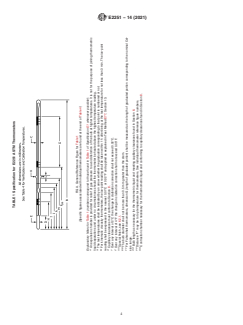
TABLE 1 Specification for E2251 ASTM Thermometers
FIG A. General Reference Figure for Table 1
(Specific figures associated with individual thermometers are found at the end of Table 4)
Explanatory Notes for Table 1 (numbers correspond to those found in Table 1 of Specification E1 whenever possible):
A
An expansion chamber is provided for relief of gas pressure to avoid distortion of the bulb at higher temperatures. It is not for the purpose of joining thermometric
liquid separations and under no circumstances should the thermometer be heated above the highest temperature reading.
G
The test temperatures shall be indicated by an arrow whether the graduation corresponding to that point is numbered or not.
M
For kinematic viscosity thermometers, the ice-point reading shall be taken within1hafterbeingatthetesttemperature for not less than 3 min. The ice-point
reading shall be expressed to the nearest 0.01°C or 0.02°F and applied as explained in Test Method E77, Section 13.
O
Capillary clearances must conform to Section 8.
Y
Over any interval of 2°C the change in claibration correction shall not exceed 0.02°C.
Z
Over any interval of 4°F the change in claibration correction shall not exceed 0.05°F.
AA
Special finish, see 6.2.1.
BB
The bulb diameter shall not be more than 0.5 mm greater than the stem.
FF
For Fahrenheit thermometers, dimension G (length of graduated portion) shall be measured as the length of graduated portion corresponding to the nominal Cel-
sius range.
OO
Bulb length as necessary for the thermometric liquid and meeting capillary clearances found in Section 8.
PP
Distance “F” may be to top temperature for thermometers. See individual thermometer reference figure numbers.
RR
Contraction chamber necessary for the thermometric liquid and conforming to capillary clearances found in Section 8.
E2251−14 (2021)
TABLE1 Continued
FF FF FF FF FF
ASTM No. S5C-11 S5F-11 S12C-03 S12F-03 S15C-11 S15F-11 S18C-11 S18F-11 S22C-11 S22F-11
IP No.
Name Cloud and Pour Density-Wide Range Low Softening Point Reid Vapor Point Oxidation Stability
Reference Fig. No. 5 2 2 6 6
Range –38 to 50°C –36 to 120°F −20 to 102°C −5 to 215°F –2 to +80°C 30 to +180°F 34 to +42°C 94 to +108°F 95 to 103°C 204 to 218°F
G G G
37.8°C 100°F 98.9 and 210°F
G
100°C
For test at
A Immersion, mm 108 TOTAL TOTAL TOTAL TOTAL
Graduations:
Subdivisions 1°C 2°F 0.2°C 0.5°F 0.2°C 0.5°F 0.1°C 0.2°F 0.1°C 0.2°F
Long lines at each 5°C 10°F 1°C 1°F 1°C 1°F 0.5°C 1°F 0.5°C 1°F
Numbers at each 10°C 20°F 2°C 5°F 2°C 5°F 1°C 2°F 1°C 2°F
Scale error, max 0.5°C 1°F 0.15°C 0.25°F 0.2°C 0.4°F 0.1°C 0.2°F 0.1°C 0.2°F
Special inscription ASTM ASTM ASTM ASTM ASTM
S5C-11 or S5F-11 S12C-03 or S12F-03 S15C-11 or S15F-11 S18C-11 or S18F-11 S22C-11 or S22F-11
108 MM IMM
Expansion chamber:
A A A A A A A A A A
Permit heating to 70°C 158°F 130°C 266°F 100°C 212°F 70°C 158°F 125°C 257°F
B Total length, mm 254 to 264 435 to 445 395 to 400 295 to 305 295 to 305
C StemOD,mm 6.0to7.0 6.0to8.0 6.0to7.0 6.0to7.0 6.0to7.0
OO OO OO OO OO
D Bulb length, mm
E Bulb OD, mm bulb size [ngt]stem size not > stem bulb size [ngt]stem size bulb size [ngt]stem size bulb size [ngt]stem size
Scale location:
Bottom of bulb to line at 50°C 120°F 102°C 215°F 80°C 180°F 42°C 108°F 103°C 218°F
F Distance, mm 195 to 205 370 to 385 328 to 343 210 to 222 210 to 222
O O O O O
G Length of graduated portion, mm 65 to 85 305 to 350 245 to 276 60 to 90 60 to 90
Ice-point scale:
Range
H Bottom of bulb to ice-point, mm
RR RR
Contraction chamber:
RR RR
I Distance to bottom, min, mm
J Distance to top, max, mm
Stem enlargement:
K OD, mm 8to9 8to9
L Length, mm 4to7 4to7
M Distance to bottom, mm 112to116 112to116
A
An expansion chamber is provided for relief of gas pressure to avoid distortion of the bulb at higher temperatures. It is not for the purpose of joining thermometric liquid separa-
tions and under no circumstances should the thermometer be heated above the highest temperature reading.
G
The test temperatures shall be indicated by an arrow whether the graduation corresponding to that point is numbered or not.
O
Capillary clearances shall conform to Section 8.
FF
For Fahrenheit thermometers, dimension G (length of graduated portion) shall be measured as the length of graduated portion corresponding to the nominal Celsius range.
OO
Bulb length as necessary for the thermometric liquid and meeting capillary clearances found in Section 8.
RR
Contraction chamber necessary for the thermometric liquid and conforming to capillary clearances found in Section 8.
E2251−14 (2021)
TABLE1 Continued
S63F-
FF FF FF FF
ASTM No. S56C-03 S56F-03 S58C-11 S58F-11 S59C-03 S59F-03 S62C-03 S62F-03 S63C-03
FF
IP No.
Name Bomb Calorimeter Tank Tank Precision Precision
AA AA
Reference Fig. No. 4 2 2 22
Range 19 to 35°C 66 to 95°F -34 to +49°C -30 to +120°F −18 to 82°C 0 to 180°F −38 to −36 to 35°F −8 to 32°C 18 to 89°F
+2°C
For test at
A Immersion, mm TOTAL TOTAL TOTAL TOTAL TOTAL
Graduations:
Subdivisions 0.02°C 0.05°F 0.5°C 1°F 0.5°C 1°F 0.1°C 0.2°F 0.1°C 0.2°F
Long lines at each 0.1°C 0.1 and 0.5°F 1°C 5°F 1°C 5°F 0.5°C 1°F 0.5°C 1°F
Numbers at each 0.2°C 1°F 5°C 10°F 5°C 10°F 1°C 2°F 1°C 2°F
Y Z
Scale error, max 0.10°C 0.20°F 0.3°C 0.5°F 0.3°C 0.5°F 0.1°C 0.2°F 0.1°C 0.2°F
Special inscription ASTM ASTM ASTM ASTM ASTM
S56C-03 or S56F-03 S58C-11 or S58F-11 S59C-03 or S59F-03 S62C-03 or S62F-03 S63C-03 or S63F-03
Expansion chamber:
A A A A A A A A A A
Permit heating to 45°C 113°F 100°C 212°F 100°C 212°F 55°C 131°F 55°C 131°F
B Total length, mm 610 to 622 300 to 305 300 to 305 401 to 411 401 to 411
C StemOD,mm 7.0to8.0 6.0to7.0 6.0to7.0 7.0to8.0 7.0to8.0
OO OO OO OO OO
D Bulb length, mm
BB
E Bulb OD, mm bulb size [ngt]stem size not > stem not > stem not > stem
Scale location:
Bottom of bulb to line 35°C 95°F 49°C 120°F 82°C 180°F 0°C 32°F 32°C 89°F
at
F Distance, mm 510 to 550 245 to 260 245 to 260 306 to 324 319 to 344
O O O O O
G Length of graduated 323 to 385 155 to 185 165 to 195 239 to 283 239 to 289
portion, mm
Ice-point scale:
Range
H Bottom of bulb to ice-
point, mm
Contraction chamber:
O
I Distance to bottom,
min, mm
J Distance to top, max, 110
mm
Stem enlargement:
K OD, mm
L Length, mm
M Distance to bottom,
mm
A
An expansion chamber is provided for relief of gas pressure to avoid distortion of the bulb at higher temperatures. It is not for the purpose of joining thermometric liquid separations and under no circum-
stances should the thermometer be heated above the highest temperature reading.
O
Capillary clearances shall conform to Section 8.
Y
Over any interval of 2°C the change in calibration correction shall not exceed 0.02°C.
Z
Over any interval of 4°F the change in calibration correction shall not exceed 0.05°F.
AA
Special finish, see 6.2.1.
BB
The bulb diameter shall not be more than 0.5 mm greater than the stem.
FF
For Fahrenheit thermometers, dimension G (length of graduated portion) shall be measured as the length of graduated portion corresponding to the nominal Celsius range.
OO
Bulb length as necessary for the thermometric liquid and meeting capillary clearances found in Section 8.
E2251−14 (2021)
TABLE1 Continued
FF FF FF FF
ASTM No. S64C-03 S64F-03 S65C-03 S65F-03 S66C-03 S66F-03 S67C-03 S67F-03
IP No.
Name Precision Precision Precision Precision
Reference Fig. No. 1 1 1 1
Range 25 to 55°C 77 to 131°F 50 to 80°C 122 to 176°F 75 to 105°C 167 to 221°F 95 to 155°C 203 to 311°F
For test at
A Immersion, mm TOTAL TOTAL TOTAL TOTAL
Graduations:
Subdivisions 0.1°C 0.2°F 0.1°C 0.2°F 0.1°C 0.2°F 0.2°C 0.5°F
Long lines at each 0.5°C 1°F 0.5°C 1°F 0.5°C 1°F 1°C 1°F
Numbers at each 1°C 2°F 1°C 2°F 1°C 2°F 2°C 5°F
Scale error, max 0.1°C 0.2°F 0.1°C 0.2°F 0.1°C 0.2°F 0.2°C 0.5°F
Special inscription ASTM ASTM ASTM ASTM
S64C-03 or S64F-03 S65C-03 or S65F-03 S66C-03 or S66F-03 S67C-03 or S67F-03
Expansion chamber:
A A A A A A A A
Permit heating to 75°C 167°F 100°C 212°F 125°C 257°F 180°C 355°F
B Total length, mm 401 to 411 401 to 411 401 to 411 401 to 411
C StemOD,mm 7.0to8.0 7.0to8.0 7.0to8.0 7.0to8.0
OO OO OO OO
D Bulb length, mm
E Bulb OD, mm not > stem Not > stem not > stem not > stem
Scale location:
Bottom of bulb to line at 25°C 77°F 50°C 122°F 75°C 167°F 95°C 203°F
F Distance, mm 115 to 135 115 to 135 115 to 135 115 to 135
O O O O
G Length of graduated 189 to 229 189 to 229 189 to 229 189 to 229
portion, mm
Ice-point scale:
O O O O O O O
Range −0.5 to 0.5°C 31 to 33°F −0.5to0.5°C 31 to 33°F −0.5 to 31 to 33°F −1 to +1°C 30 to 34°F
O
0.5°C
H Bottom of bulb to ice-
point, mm
Contraction chamber:
OO O O
I Distance to bottom, min,
mm
J Distance to top, max, mm 102 102 102 87
Stem enlargement:
K OD, mm
L Length, mm
M Distance to bottom, mm
A
An expansion chamber is provided for relief of gas pressure to avoid distortion of the bulb at higher temperatures. It is not for the purpose of joining thermometric liquid separations and under no cir-
cumstances should the thermometer be heated above the highest temperature reading.
O
Capillary clearances shall conform to Section 8.
FF
For Fahrenheit thermometers, dimension G (length of graduated portion) shall be measured as the length of graduated portion corresponding to the nominal Celsius range.
OO
Bulb length as necessary for the thermometric liquid and meeting capillary clearances found in Section 8.
E2251−14 (2021)
TABLE1 Continued
FF
ASTM No. S91C-03 S116C-03 S117C-03 S120C-03 S130C-10 S130F-10
IP No.
M
Name Solidification Point Bomb Calorimeter Bomb Calorimeter Kinematic Viscosity Tank
AA
Reference Fig. No. 3 4 and 5 4 and 5 1 2
Range 20 to 50°C 18.9 to 25.1°C 23.9 to 30.1°C 38.6 to 41.4°C -7 to +105°C 20 to +220°F
For test at 40°C
A Immersion, mm 76 MM TOTAL TOTAL TOTAL TOTAL
Graduations:
Subdivisions 0.1°C 0.01°C 0.01°C 0.05°C 0.5°C 1°F
Long lines at each 0.5°C 0.05°C 0.05°C 0.1 and 0.5°C 1°C 5°F
Numbers at each 1°C 0.1°C 0.1°C 1°C 5°C 10°F
JJ JJ
Scale error, max 0.1°C 0.1°C 0.1°C 0.1°C 0.5°C 1°F
Special inscription ASTM ASTM ASTM ASTM ASTM
S91C-03 S116C-03 S117C-03 S120-03 S130C-10 or S130F-10
76 MM IMM
Expansion chamber:
A A A A A A
Permit heating to 70°C 35°C 40°C 60°C 125°C 257°F
B Total length, mm 390 to 400 615 to 625 615 to 625 300 to 310 300 to 305
KK KK
C Stem OD, mm 6.0 to 7.0 7.0 to 8.2 7.0to8.2 6.0to8.0 6.0to7.0
OO OO, KK OO, KK OO OO
D Bulb length, mm
BB BB
E Bulb OD, mm not < 5.0 and not > stem bulb size [ngt]stem size
not > stem
Scale location:
Bottom of bulb to line 50°C 19°C 24°C 38.6°C 105°C 220°F
at
F Distance, mm 315 to 335 220 to 240 220 to 240 140 to 210 245 to 260
O O O O O
G Length of graduated 185 to 219 300 to 350 300 to 350 40 to 90 162 to 197
portion, mm
Ice-point scale:
O
Range −0.3 to +0.3°C
H Bottom of bulb to
ice-point, mm
Contraction chamber:
OO O
I Distance to bottom, 100
min, mm
J Distance to top, max, 63 110 110 130
mm
Stem enlargement:
K OD, mm
L Length, mm
M Distance to bottom,
mm
A
An expansion chamber is provided for relief of gas pressure to avoid distortion of the bulb at higher temperatures. It is not for the purpose of joining thermometric liquid separations and under
no circumstances should the thermometer be heated above the highest temperature reading.
M
For kinematic viscosity thermometers, the ice-point reading shall be taken within1hafterbeingatthetesttemperature for not less than 3 min. The ice-point reading shall be expressed to the
nearest 0.01°C or 0.02°F and applied as explained in Test Method E77, Section 13.
O
Capillary clearances shall conform to Section 8.
AA
Special finish, see 6.2.1.
BB
The bulb diameter shall not be more than 0.5 mm greater than the stem.
FF
For Fahrenheit thermometers, dimension G (length of graduated portion) shall be measured as the length of graduated portion corresponding to the nominal Celsius range.
JJ
Over any interval of 1°C the change in correction shall not exceed 0.01°C.
KK
The capillary bore shall be large enough in relation to the bulb to ensure that (without tapping) jumping of the meniscus does not exceed one-half of the smallest scale division, when the tem-
perature is rising at a uniform rate not exceeding 0.05°C/min.
OO
Bulb length as necessary for the thermometric liquid and meeting capillary clearances found in Section 8.
E2251−14 (2021)
TABLE 2 E2251 ASTM Thermometers Listed Alphabetically According to Application
NOTE 1—The specifications appear in numeric sequence in this standard.
Thermometer No. Thermometer No.
Thermometer Name Thermometer Name
°C °F °C °F
Bomb calorimeter S56C S56F Precision S63C S63F
Bomb calorimeter S116C Precision S64C S64F
Bomb calorimeter S117C Precision S65C S65F
Cloud and Pour S5C S5F Precision S67C S67F
Density-Wide Range S12C S12F Reid Vapor Pressure S18C S18F
Kinematic Viscosity S120C . Solidification point S91C .
Low Softening Point S15C S15F Tank S58C S58F
Oxidation Stability S22C S22F Tank S59C S59F
Precision S62C S62F Tank S130C S130F
TABLE 3 List of ASTM Low-Hazard Thermometers by Temperature Range
Scale ASTM Scale ASTM
Celsius Immersion, Fahrenheit Immersion,
Error, Thermometer Error, Thermometer
Range mm Range mm
max Number max Number
Graduated in 0.01°C
18.9 to 25.1°C total 0.1 S116C
23.9 to 30.1°C total 0.1 S117C
Graduated in 0.02°C Graduated in 0.05°F
19 to 35°C total 0.1 S56C 66 to 95°F total 0.2 S56F
Graduated in 0.05°C Graduated in 0.1°F
38.6 to 41.4°C total 0.1 S120C . . . .
Graduated in 0.1°C Graduated in 0.2°F
−38 to +2°C total 0.1 S62C −36 to +35°F total 0.2 S62F
−8 to +32°C total 0.1 S63C 18 to 89°F total 0.2 S63F
20 to 50°C 76 0.1 S91C . . . .
25 to 55°C total 0.1 S64C 77 to 131°F total 0.2 S64F
34 to 42°C total 0.1 S18C 94 108°F total 0.2 S18F
50 to 80°C total 0.1 S65C 122 to 176°F total 0.2 S65F
75 to 105°C total 0.1 S66C 167 to 221°F total 0.2 S66F
95 to 103°C total 0.1 S22C 204 to 218°F total 0.2 S22F
Graduated in 0.2°C Graduated in 0.5°F
−20 to 102°C total 0.15 S12C −5 to 215°F total 0.25 S12F
–2 to 80°C total 0.2 S15C 30 to 180°F total 0.4 S15F
95 to 155°C total 0.2 S67C 203 to 311°F total 0.5 S67F
Graduated in 0.5°C Graduated in 1°F
–34 to +49°C total 0.3 S58C –30 to120°F total 0.5 S58F
−18 to +82°C total 0.3 S59C 0 to 180°F total 0.5 S59F
–7 to +105°C total 0.5 S130C 20 to 220°F total 1 S130F
Graduated in 1°C Graduated in 2°F
—38 to 50°C 108 0.5 S5C –36 to120°F 108 1 S5F
E2251−14 (2021)
A
TABLE 4 Calibration and Verification Temperatures
Av Temp. Av Temp. Av Temp. Av Temp.
of Emergent of Emergent of Emergent of Emergent
Temperature Thermometric Temperature Thermometric Temperature Thermometric Temperature Thermometric
Liquid Liquid Liquid Liquid
Column Column Column Column
Thermometer S5C Thermometer S5F Thermometer S12C Thermometer S12F
−38 to 50°C −36 to 120°F −20 to 102°C −5 to 215°F
−38°C 21°C –30°F 70°F −20°C −5°F
0°C 21°C 32°F 70°F −10°C 15°F
50°C 21°C 120°F 70°F 0°C 32°F
10°C 60°F
20°C 85°F
30°C 110°F
40°C 135°F
50°C 160°F
60°C 185°F
70°C 210°F
80°C
90°C
100°C
Thermometer S15C Thermometer S15F Thermometer S18C Thermometer S18F
−2 to 80°C 30 to 180°F 34 to 42°C 94 to 108°F
0°C 32°F 38°C 100°F
20°C 70°F 41°C 107°F
40°C 100°F
60°C 140°F
80°C 180°F
Thermometer S22C Thermometer S22F Thermometer S56C Thermometer S56F
95 to 103°C 204 to 218°F 19 to 35°C 66 to 95°F
99°C 210°F every 2° from 19°C every 4° from 65°F and
102°C 212°F including 95°F
Thermometer S58C Thermometer S58F Thermometer S59C Thermometer S59F
-34 to +49°C -30 to +120°F −18 to +82°C 0 to 180°F
-30°C -20°F 0°C 32°F
0°C 32°F 25°C 80°F
25°C 80°F 55°C 130°F
45°C 120°F 80°C 180°F
Thermometer S62C Thermometer S62F Thermometer S63C Thermometer S63F
−38 to +2°C −36 to +35°F −8 to +32°C 18 to 89°F
−37°C −35°F −7°C 20°F
−30°C −15°F 0°C 32°F
−20°C 0°F 10°C 50°F
−10°C 15°F 20°C 70°F
0°C 32°F 30°C 88°F
Thermometer S64C Thermometer S64F Thermometer S65C Thermometer S65F
25 to 55°C 77 to 131°F 50 to 80°C 122 to 176°F
0°C 32°F 0°C 32°F
25°C 80°F 50°C 125°F
35°C 95°F 60°C 145°F
45°C 115°F 70°C 160°F
55°C 130°F 80°C 175°F
Thermometer S66C Thermometer S66F Thermometer S67C Thermometer S67F
75 to 105°C 167 to 221°F 95 to 155°C 203 to 311°F
0°C 32°F 0°C 32°F
75°C 168°F 100°C 205°F
85°C 185°F 110°C 240°F
95°C 200°F 130°C 275°F
105°C 220°F 150°C 310°F
Thermometer S91C Thermometer S116C Thermometer S117C Thermometer S120C
20 to 50°C 18.9 to 25.1°C 23.9 to 30.1°C 38.6 to 41.4°C
20°C 25°C every 1°C from 19°C every 1°C from 24°C 0°C
30°C 25°C 40°C
40°C 25°C 41°C
50°C 25°C
Thermometer S130C Thermometer S130F
-7 to +105°C 20 to +220°F
0°C 32°F
35°C 100°F
70°C 160°F
105°C 220°F
E2251−14 (2021)
A
For verification and calibra
...