

ASTM C1352/C1352M-21
(Test Method)Standard Test Method for Flexural Modulus of Elasticity of Dimension Stone
General Information
- Abstract
SIGNIFICANCE AND USE
4.1 This test method is useful for providing engineering values for stress and deflection analysis of stone panels. It is also useful in indicating the differences in flexural modulus of elasticity between various dimension stones and stones of the same type in different loading directions (parallel and perpendicular to rift or bedding planes).
SCOPE
1.1 This test method covers the procedure for determining the flexural modulus of elasticity of stone by using a simple beam with quarter-point loading.
1.2 Stone tests may be made with load applied perpendicular to the bedding plane or rift and with load applied parallel to the bedding plane or rift.
1.3 Stone tests may be made for wet and dry specimen conditions.
1.4 The specifier of the test shall determine which conditions shall be used.
1.5 The values stated in either SI units or inch-pound units are to be regarded separately as standard. The values stated in each system are not necessarily exact equivalents; therefore, to ensure conformance with the standard, each system shall be used independently of the other, and values from the two systems shall not be combined.
1.6 This standard does not purport to address all of the safety concerns, if any, associated with its use. It is the responsibility of the user of this standard to establish appropriate safety, health, and environmental practices and determine the applicability of regulatory limitations prior to use.
1.7 This international standard was developed in accordance with internationally recognized principles on standardization established in the Decision on Principles for the Development of International Standards, Guides and Recommendations issued by the World Trade Organization Technical Barriers to Trade (TBT) Committee.
- Status
- Published
- Publication Date
- 31-Aug-2021
- Technical Committee
- C18 - Dimension Stone
- Drafting Committee
- C18.01 - Test Methods
Buy Documents

ASTM C1352/C1352M-21 - Standard Test Method for Flexural Modulus of Elasticity of Dimension Stone
REDLINE ASTM C1352/C1352M-21 - Standard Test Method for Flexural Modulus of Elasticity of Dimension Stone
Overview
ASTM C1352/C1352M-21 is the internationally recognized standard developed by ASTM International for testing the flexural modulus of elasticity of dimension stone. This test method provides a reliable and uniform procedure to determine the engineering values needed for the stress and deflection analysis of stone elements, particularly in architectural and structural applications. The standard specifies a simple beam test using quarter-point loading, allowing for the assessment of both wet and dry specimen conditions, and for loading both perpendicular and parallel to the natural rift or bedding planes of the stone.
Key Topics
- Flexural Modulus of Elasticity: Measures the stone’s ability to resist deformation under load. Also known as Young’s Modulus, this value is critical for predicting how dimension stone panels will perform when subjected to bending forces.
- Testing Conditions: The method supports both wet and dry specimens as well as testing with loads applied in different orientations relative to the stone’s natural rift or bedding planes.
- Quarter-Point Loading: Uses a simple beam with quarter-point loading for uniform stress distribution during testing.
- Specimen Preparation: Guidance is provided on specimen size, thickness, and surface finishing to reflect the actual conditions of use in construction projects.
- Reporting: The standard outlines detailed reporting requirements, including specimen identification, conditioning procedures, dimensions, loading orientation, and all test results such as individual values, averages, and deviations.
Applications
The ASTM C1352/C1352M-21 standard has broad practical relevance in the dimension stone industry and construction sector, including:
- Engineering Analysis: Provides essential data for the stress and deflection analysis of stone panels used in buildings, facilitating safe and effective architectural designs.
- Quality Control and Material Selection: Enables comparison of modulus of elasticity between various types of dimension stone and between the same stone type loaded in different orientations.
- Specification Compliance: Assists architects, engineers, and contractors in verifying that stone materials meet project-specific mechanical performance requirements, especially when natural variability in stone is a concern.
- Performance Testing: Supports performance validation in both design (pre-construction) and quality assurance (post-installation) scenarios, especially where project-specific panel thicknesses or finishes are required.
- Research and Development: Used by laboratories and manufacturers for product development and research, contributing to improved stone products and innovative architectural solutions.
Related Standards
The ASTM C1352/C1352M-21 standard references and complements other key ASTM standards related to dimension stone and materials testing, such as:
- ASTM C119: Terminology Relating to Dimension Stone, providing essential definitions used across stone testing methods.
- ASTM C880: Standard Test Method for Flexural Strength of Dimension Stone, often referenced for determining ultimate strength values.
- ASTM C1799: Guide to Dimension Stone Test Specimen Sampling and Preparation, offering detailed procedures for specimen selection and handling.
- ASTM E4: Practices for Force Calibration and Verification of Testing Machines, ensuring accuracy and reliability of testing equipment.
Practical Value
By adhering to ASTM C1352/C1352M-21, stakeholders across the stone and construction industries ensure reliable measurement of flexural modulus of elasticity, improving the safety, performance, and longevity of dimension stone applications in building construction. The standard enables consistent assessments, supports compliance, and enhances confidence in the use of natural stone for both structural and aesthetic purposes.
Keywords: ASTM C1352, flexural modulus of elasticity, dimension stone, stone testing, Young’s modulus, stone panel analysis, quarter-point loading, construction materials standards, architectural stone, structural stone performance.
Relations
- Effective Date
- 01-May-2019
- Effective Date
- 01-May-2016
- Effective Date
- 01-Dec-2014
- Effective Date
- 01-Dec-2014
- Effective Date
- 01-Jun-2014
- Effective Date
- 15-Jun-2011
- Effective Date
- 01-Jun-2010
- Effective Date
- 01-Nov-2009
- Effective Date
- 01-Apr-2009
- Effective Date
- 01-Dec-2008
- Effective Date
- 01-Feb-2008
- Effective Date
- 01-Feb-2008
- Effective Date
- 01-Feb-2008
- Effective Date
- 01-Feb-2008
- Effective Date
- 01-Aug-2007
Buy Documents
ASTM C1352/C1352M-21 - Standard Test Method for Flexural Modulus of Elasticity of Dimension Stone
REDLINE ASTM C1352/C1352M-21 - Standard Test Method for Flexural Modulus of Elasticity of Dimension Stone
Get Certified
Connect with accredited certification bodies for this standard

DIBt (Deutsches Institut für Bautechnik)
German Institute for Building Technology.
DIN CERTCO
DIN Group product certification.

Aboma Certification B.V.
Specialized in construction, metal, and transport sectors.
Sponsored listings
Frequently Asked Questions
ASTM C1352/C1352M-21 is a standard published by ASTM International. Its full title is "Standard Test Method for Flexural Modulus of Elasticity of Dimension Stone". This standard covers: SIGNIFICANCE AND USE 4.1 This test method is useful for providing engineering values for stress and deflection analysis of stone panels. It is also useful in indicating the differences in flexural modulus of elasticity between various dimension stones and stones of the same type in different loading directions (parallel and perpendicular to rift or bedding planes). SCOPE 1.1 This test method covers the procedure for determining the flexural modulus of elasticity of stone by using a simple beam with quarter-point loading. 1.2 Stone tests may be made with load applied perpendicular to the bedding plane or rift and with load applied parallel to the bedding plane or rift. 1.3 Stone tests may be made for wet and dry specimen conditions. 1.4 The specifier of the test shall determine which conditions shall be used. 1.5 The values stated in either SI units or inch-pound units are to be regarded separately as standard. The values stated in each system are not necessarily exact equivalents; therefore, to ensure conformance with the standard, each system shall be used independently of the other, and values from the two systems shall not be combined. 1.6 This standard does not purport to address all of the safety concerns, if any, associated with its use. It is the responsibility of the user of this standard to establish appropriate safety, health, and environmental practices and determine the applicability of regulatory limitations prior to use. 1.7 This international standard was developed in accordance with internationally recognized principles on standardization established in the Decision on Principles for the Development of International Standards, Guides and Recommendations issued by the World Trade Organization Technical Barriers to Trade (TBT) Committee.
SIGNIFICANCE AND USE 4.1 This test method is useful for providing engineering values for stress and deflection analysis of stone panels. It is also useful in indicating the differences in flexural modulus of elasticity between various dimension stones and stones of the same type in different loading directions (parallel and perpendicular to rift or bedding planes). SCOPE 1.1 This test method covers the procedure for determining the flexural modulus of elasticity of stone by using a simple beam with quarter-point loading. 1.2 Stone tests may be made with load applied perpendicular to the bedding plane or rift and with load applied parallel to the bedding plane or rift. 1.3 Stone tests may be made for wet and dry specimen conditions. 1.4 The specifier of the test shall determine which conditions shall be used. 1.5 The values stated in either SI units or inch-pound units are to be regarded separately as standard. The values stated in each system are not necessarily exact equivalents; therefore, to ensure conformance with the standard, each system shall be used independently of the other, and values from the two systems shall not be combined. 1.6 This standard does not purport to address all of the safety concerns, if any, associated with its use. It is the responsibility of the user of this standard to establish appropriate safety, health, and environmental practices and determine the applicability of regulatory limitations prior to use. 1.7 This international standard was developed in accordance with internationally recognized principles on standardization established in the Decision on Principles for the Development of International Standards, Guides and Recommendations issued by the World Trade Organization Technical Barriers to Trade (TBT) Committee.
ASTM C1352/C1352M-21 is classified under the following ICS (International Classification for Standards) categories: 91.100.15 - Mineral materials and products. The ICS classification helps identify the subject area and facilitates finding related standards.
ASTM C1352/C1352M-21 has the following relationships with other standards: It is inter standard links to ASTM C119-19, ASTM C119-16, ASTM C119-14, ASTM C119-14e1, ASTM E4-14, ASTM C119-11, ASTM E4-10, ASTM E4-09a, ASTM E4-09, ASTM E4-08, ASTM C119-08e2, ASTM C119-08e3, ASTM C119-08, ASTM C119-08e1, ASTM C119-07a. Understanding these relationships helps ensure you are using the most current and applicable version of the standard.
ASTM C1352/C1352M-21 is available in PDF format for immediate download after purchase. The document can be added to your cart and obtained through the secure checkout process. Digital delivery ensures instant access to the complete standard document.
Standards Content (Sample)
This international standard was developed in accordance with internationally recognized principles on standardization established in the Decision on Principles for the
Development of International Standards, Guides and Recommendations issued by the World Trade Organization Technical Barriers to Trade (TBT) Committee.
Designation: C1352/C1352M − 21
Standard Test Method for
Flexural Modulus of Elasticity of Dimension Stone
This standard is issued under the fixed designation C1352/C1352M; the number immediately following the designation indicates the
year of original adoption or, in the case of revision, the year of last revision. A number in parentheses indicates the year of last
reapproval. A superscript epsilon (´) indicates an editorial change since the last revision or reapproval.
1. Scope C880 Test Method for Flexural Strength of Dimension Stone
C1799 Guide to Dimension Stone Test Specimen Sampling
1.1 This test method covers the procedure for determining
and Preparation
the flexural modulus of elasticity of stone by using a simple
E4 Practices for Force Calibration and Verification of Test-
beam with quarter-point loading.
ing Machines
1.2 Stone tests may be made with load applied perpendicu-
lar to the bedding plane or rift and with load applied parallel to
3. Terminology
the bedding plane or rift.
3.1 Definition—For definitions of terms used in this test
1.3 Stone tests may be made for wet and dry specimen
method, refer to Terminology C119.
conditions.
3.2 Definitions of Terms Specific to This Standard:
1.4 The specifier of the test shall determine which condi-
3.2.1 modulus of elasticity, n—stress per unit strain, also
tions shall be used.
known as Young’s Modulus.
1.5 The values stated in either SI units or inch-pound units
4. Significance and Use
are to be regarded separately as standard. The values stated in
4.1 This test method is useful for providing engineering
each system are not necessarily exact equivalents; therefore, to
values for stress and deflection analysis of stone panels. It is
ensure conformance with the standard, each system shall be
also useful in indicating the differences in flexural modulus of
used independently of the other, and values from the two
elasticity between various dimension stones and stones of the
systems shall not be combined.
same type in different loading directions (parallel and perpen-
1.6 This standard does not purport to address all of the
dicular to rift or bedding planes).
safety concerns, if any, associated with its use. It is the
responsibility of the user of this standard to establish appro-
5. Apparatus
priate safety, health, and environmental practices and deter-
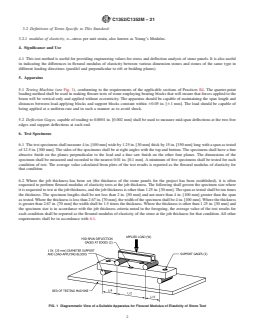
5.1 Testing Machine (see Fig. 1), conforming to the require-
mine the applicability of regulatory limitations prior to use.
ments of the applicable sections of Practices E4. The quarter-
1.7 This international standard was developed in accor-
point loading method shall be used in making flexure tests of
dance with internationally recognized principles on standard-
stone employing bearing blocks that will ensure that forces
ization established in the Decision on Principles for the
applied to the beam will be vertical only and applied without
Development of International Standards, Guides and Recom-
eccentricity. The apparatus should be capable of maintaining
mendations issued by the World Trade Organization Technical
the span length and distances between load-applying blocks
Barriers to Trade (TBT) Committee.
and support blocks constant within 60.05 in. [61 mm]. The
load should be capable of being applied at a uniform rate and
2. Referenced Documents
in such a manner as to avoid shock.
2.1 ASTM Standards:
5.2 Deflection Gages, capable of reading to 0.0001 in.
C119 Terminology Relating to Dimension Stone
[0.002 mm] shall be used to measure mid-span deflections at
the two free edges and support deflections at each end.
This test method is under the jurisdiction of ASTM Committee C18 on
6. Test Specimens
Dimension Stone and is the direct responsibility of Subcommittee C18.01 on Test
Methods.
6.1 The test specimens shall measure 4 in. [100 mm] wide
Current edition approved Sept. 1, 2021. Published October 2021. Originally
by 1.25 in. [30 mm] thick by 15 in. [350 mm] long with a span
approved in 1996. Last previous edition approved in 2015 as C1352/C1352M–15.
DOI: 10.1520/C1352_C1352M-21.
astestedof12.5in.[300mm].Thesidesofthespecimensshall
For referenced ASTM standards, visit the ASTM website, www.astm.org, or
be at right angles with the top and bottom.The specimens shall
contact ASTM Customer Service at service@astm.org. For Annual Book of ASTM
have a fine abrasive finish on the planes perpendicular to the
Standards volume information, refer to the standard’s Document Summary page on
the ASTM website. load and a fine saw finish on the other four planes. The
Copyright © ASTM International, 100 Barr Harbor Drive, PO Box C700, West Conshohocken, PA 19428-2959. United States
C1352/C1352M − 21
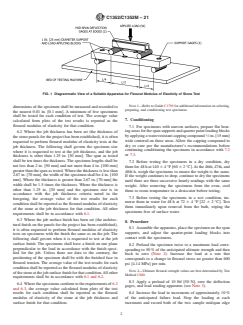
FIG. 1 Diagrammatic View of a Suitable Apparatus for Flexural Modulus of Elasticity of Stone Test
NOTE 1—Refer to Guide C1799 for additional information on selecting,
dimensions of the specimen shall be measured and recorded to
preparing, and conditioning test specimens.
the nearest 0.01 in. [0.1 mm]. A minimum of five specimens
shall be tested for each condition of test. The average value
7. Conditioning
calculated from plots of the test results is reported as the
flexural modulus of elasticity for that condition.
7.1 For specimens with uneven surfaces, prepare flat bear-
ingareasforthespansupportsandquarterpointloadingblocks
6.2 Where the job thickness has been set (the thickness of
byapplyingawaterresistantcappingcompound ⁄2in.[15mm]
the stone panels for the project has been established), it is often
wide centered on these areas. Allow the capping compound to
requested to perform flexural modulus of elasticity tests at the
dry or cure per the manufacturer’s recommendations before
job thickness. The following shall govern the specimen size
continuing conditioning the specimens in accordance with 7.2
where it is requested to test at the job thickness, and the job
or 7.3.
thickness is other than 1.25 in. [30 mm]. The span as tested
shall be ten times the thickness. The specimen lengths shall be
7.2 Before testing the specimens in a dry condition, dry
not less than 2 in. [50 mm] and not more than 4 in. [100 mm]
them for 48 h at 140 64°F[60 6 2 °C].At the 46th, 47th, and
greater than the span as tested.Where the thickness is less than
48th h, weigh the specimens to ensure the weight is the same.
2.67 in. [70 mm], the width of the specimen shall be 4 in. [100
If the weight continues to drop, continue to dry the specimens
mm]. Where the thickness is greater than 2.67 in. [70 mm] the
until there are three successive hourly readings with the same
width shall be 1.5 times the thickness. Where the thickness is
weight. After removing the specimens from the oven, cool
other than 1.25 in. [30 mm] and the specimen size is in
them to room temperature in a desiccator before testing.
accordance with the job thickness criteria noted in the
7.3 Before testing the specimens in a wet condition, im-
foregoing, the average value of the test results for each
merse them in water for 48 h at 72 64°F[22 6 2 °C]. Test
condition shall be reported as the flexural modulus of elasticity
them immediately upon removal from the bath, wiping the
of the stone at the job thickness
...
This document is not an ASTM standard and is intended only to provide the user of an ASTM standard an indication of what changes have been made to the previous version. Because
it may not be technically possible to adequately depict all changes accurately, ASTM recommends that users consult prior editions as appropriate. In all cases only the current version
of the standard as published by ASTM is to be considered the official document.
Designation: C1352/C1352M − 15 C1352/C1352M − 21
Standard Test Method for
Flexural Modulus of Elasticity of Dimension Stone
This standard is issued under the fixed designation C1352/C1352M; the number immediately following the designation indicates the
year of original adoption or, in the case of revision, the year of last revision. A number in parentheses indicates the year of last
reapproval. A superscript epsilon (´) indicates an editorial change since the last revision or reapproval.
1. Scope
1.1 This test method covers the procedure for determining the flexural modulus of elasticity of stone by using a simple beam with
quarter-point loading.
1.2 Stone tests may be made with load applied perpendicular to the bedding plane or rift and with load applied parallel to the
bedding plane or rift.
1.3 Stone tests may be made for wet and dry specimen conditions.
1.4 The specifier of the test shall determine which conditions shall be used.
1.5 The values stated in either SI units or inch-pound units are to be regarded separately as standard. The values stated in each
system mayare not benecessarily exact equivalents; therefore, to ensure conformance with the standard, each system shall be used
independently of the other. Combiningother, and values from the two systems may result in non-conformance with the
standard.shall not be combined.
1.6 This standard does not purport to address all of the safety concerns, if any, associated with its use. It is the responsibility
of the user of this standard to establish appropriate safety safety, health, and healthenvironmental practices and determine the
applicability of regulatory limitations prior to use.
1.7 This international standard was developed in accordance with internationally recognized principles on standardization
established in the Decision on Principles for the Development of International Standards, Guides and Recommendations issued
by the World Trade Organization Technical Barriers to Trade (TBT) Committee.
2. Referenced Documents
2.1 ASTM Standards:
C119 Terminology Relating to Dimension Stone
C880 Test Method for Flexural Strength of Dimension Stone
C1799 Guide to Dimension Stone Test Specimen Sampling and Preparation
E4 Practices for Force Calibration and Verification of Testing Machines
3. Terminology
3.1 Definition—For definitions of terms used in this test method, refer to Terminology C119.
This test method is under the jurisdiction of ASTM Committee C18 on Dimension Stone and is the direct responsibility of Subcommittee C18.01 on Test Methods.
Current edition approved May 1, 2015Sept. 1, 2021. Published July 2015October 2021. Originally approved in 1996. Last previous edition approved in 20092015 as
C1352C1352/C1352M–09.–15. DOI: 10.1520/C1352_C1352M-15.10.1520/C1352_C1352M-21.
For referenced ASTM standards, visit the ASTM website, www.astm.org, or contact ASTM Customer Service at service@astm.org. For Annual Book of ASTM Standards
volume information, refer to the standard’s Document Summary page on the ASTM website.
Copyright © ASTM International, 100 Barr Harbor Drive, PO Box C700, West Conshohocken, PA 19428-2959. United States
C1352/C1352M − 21
3.2 Definitions of Terms Specific to This Standard:
3.2.1 modulus of elasticity, n—stress per unit strain, also known as Young’s Modulus.
4. Significance and Use
4.1 This test method is useful for providing engineering values for stress and deflection analysis of stone panels. It is also useful
in indicating the differences in flexural modulus of elasticity between various dimension stones and stones of the same type in
different loading directions (parallel and perpendicular to rift or bedding planes).
5. Apparatus
5.1 Testing Machine (see Fig. 1), conforming to the requirements of the applicable sections of Practices E4. The quarter-point
loading method shall be used in making flexure tests of stone employing bearing blocks that will ensure that forces applied to the
beam will be vertical only and applied without eccentricity. The apparatus should be capable of maintaining the span length and
distances between load-applying blocks and support blocks constant within 60.05 in. [61 mm]. The load should be capable of
being applied at a uniform rate and in such a manner as to avoid shock.
5.2 Deflection Gages, capable of reading to 0.0001 in. [0.002 mm] shall be used to measure mid-span deflections at the two free
edges and support deflections at each end.
6. Test Specimens
6.1 The test specimens shall measure 4 in. [100 mm] wide by 1.25 in. [30 mm] thick by 15 in. [350 mm] long with a span as tested
of 12.5 in. [300 mm]. The sides of the specimens shall be at right angles with the top and bottom. The specimens shall have a fine
abrasive finish on the planes perpendicular to the load and a fine saw finish on the other four planes. The dimensions of the
specimen shall be measured and recorded to the nearest 0.01 in. [0.1 mm]. A minimum of five specimens shall be tested for each
condition of test. The average value calculated from plots of the test results is reported as the flexural modulus of elasticity for
that condition.
6.2 Where the job thickness has been set (the thickness of the stone panels for the project has been established), it is often
requested to perform flexural modulus of elasticity tests at the job thickness. The following shall govern the specimen size where
it is requested to test at the job thickness, and the job thickness is other than 1.25 in. [30 mm]. The span as tested shall be ten times
the thickness. The specimen lengths shall be not less than 2 in. [50 mm] and not more than 4 in. [100 mm] greater than the span
as tested. Where the thickness is less than 2.67 in. [70 mm], the width of the specimen shall be 4 in. [100 mm]. Where the thickness
is greater than 2.67 in. [70 mm] the width shall be 1.5 times the thickness. Where the thickness is other than 1.25 in. [30 mm] and
the specimen size is in accordance with the job thickness criteria noted in the foregoing, the average value of the test results for
each condition shall be reported as the flexural modulus of elasticity of the stone at the job thickness for that condition. All other
requirements shall be in accordance with 6.1.
FIG. 1 Diagrammatic View of a Suitable Apparatus for Flexural Modulus of Elasticity of Stone Test
C1352/C1352M − 21
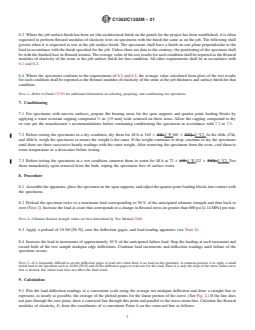
6.3 Where the job surface finish has been set (the architectural finish on the panels for the project has been established), it is often
requested to perform flexural modulus of elasticity tests on specimens with the finish the same as on the job. The following shall
govern when it is requested to test at the job surface finish. The specimens shall have a finish on one plane perpendicular to the
load in accordance with the finish specified for the job. Unless there are data to the contrary, the positioning of the specimen shall
be with the finished face in flexural tension. The average value of the test results for each condition shall be reported as the flexural
modulus of elasticity of the stone at the job surface finish for that condition. All other requirements shall be in accordance with
6.1 and 6.2.
6.4 Where the specimens conform to the requirements of 6.2 and 6.3, the average value calculated from plots of the test results
for each condition shall be reported as the flexural modulus of elasticity of the stone at the job thickness and surface finish for that
condition.
NOTE 1—Refer to Guide C1799 for additional infor
...