

ASTM D7658-17(2021)
(Test Method)Standard Test Method for Direct Microscopy of Fungal Structures from Tape
General Information
- Abstract
SIGNIFICANCE AND USE
5.1 The significance of this test method is to standardize the analysis of the detection of removable fungal structures lifted from a surface with tape to improve consistency between laboratories and analysts.
5.2 This test method is intended to ensure consistent data to the end user.
5.3 Fungal structures are identified and semi-quantified regardless of whether they would or would not grow in culture.
5.4 It must be emphasized that the detector in this test method is the analyst, and therefore results are subjective, depending on the experience, training, qualification, optical acuity, and mental fatigue of the analyst.
5.5 This test method can be used to assess the presence and characteristics of fungal material on a surface.
SCOPE
1.1 This test method uses optical microscopy for the detection, semi-quantification, and identification of fungal structures in tape lift preparations.
1.2 This test method describes the preparation techniques for tape-lift matrices, the procedure for confirming the presence of fungal structures, and the reporting of observed fungal structures
1.3 The values stated in SI units are to be regarded as standard. No other units of measurement are included in this standard.
1.4 This standard does not purport to address all of the safety concerns, if any, associated with its use. It is the responsibility of the user of this standard to establish appropriate safety, health, and environmental practices and determine the applicability of regulatory limitations prior to use.
1.5 This international standard was developed in accordance with internationally recognized principles on standardization established in the Decision on Principles for the Development of International Standards, Guides and Recommendations issued by the World Trade Organization Technical Barriers to Trade (TBT) Committee.
- Status
- Published
- Publication Date
- 31-Aug-2021
- Technical Committee
- D22 - Air Quality
- Drafting Committee
- D22.08 - Assessment, Sampling, and Analysis of Microorganisms
Overview
ASTM D7658-17(2021) is the internationally recognized standard test method for the direct microscopy of fungal structures collected by tape lift sampling. Developed by ASTM International, this standard provides procedures for the detection, semi-quantification, and identification of fungal material on surfaces. By standardizing the analysis using optical microscopy, ASTM D7658 aims to improve consistency and reliability of results across laboratories and among analysts, offering clarity and comparability in the field of surface fungal contamination analysis.
Key Topics
- Tape Lift Sampling: The standard establishes clear procedures for collecting samples from surfaces using transparent, single-sided adhesive tape or prepared adhesive slides.
- Microscopic Examination: It specifies best practices for preparing samples, including mounting techniques and optimal use of mounting media and stains, to enable effective observation under various magnification and resolution settings.
- Fungal Structure Identification: The method details the evaluation and reporting of fungal structures such as conidia, hyphae, spores, and conidiophores, regardless of the ability to culture these structures.
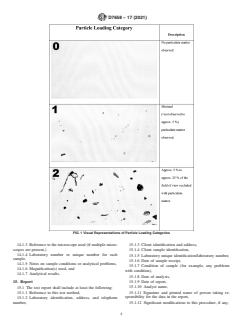
- Semi-Quantification: Provides categories for fungal and non-fungal loading to report the extent of contamination, supporting semi-quantitative assessment.
- Quality Assurance: Emphasizes the importance of analyst qualification, inter-laboratory comparisons, and documentation to enhance precision and minimize bias in fungal analysis.
- Reporting Requirements: Outlines essential elements to be included in test reports, fostering transparency and comparability for end users.
Applications
Indoor Environmental Quality
- Surface Fungal Assessment: Widely used in building science and environmental health investigations, ASTM D7658 is essential for identifying mold or other fungi on building surfaces, especially in suspected cases of water damage or poor indoor air quality.
- Remediation Verification: The method serves as a tool to verify the efficacy of cleaning and remediation efforts in mold-contaminated environments through consistent and standardized surface sampling.
Laboratory and Industrial Settings
- Research and Development: Laboratories use this standard to compare methods and results for studies of fungal prevalence, especially where the ability to culture is not required.
- Routine Monitoring: Facilities such as hospitals, schools, or food production sites employ tape lift microscopy for routine fungal monitoring to ensure compliance with hygiene and safety standards.
Occupational Health and Safety
- Worker Exposure Assessment: Occupational hygienists use this technique to evaluate potential surface exposure to fungal spores, supporting risk management in workplaces.
Related Standards
For a comprehensive approach to fungal detection and indoor air quality management, the following related ASTM standards and resources may be relevant:
- ASTM D1193 – Specification for Reagent Water
- ASTM D1356 – Terminology Relating to Sampling and Analysis of Atmospheres
- ASTM D7338 – Guide for Assessment of Fungal Growth in Buildings
- ASTM D7391 – Standard Test Method for Categorization and Quantification of Airborne Fungal Structures in Indoor Environments
Practical Value
ASTM D7658-17(2021) is a critical standard for professionals in environmental testing, mold inspection, indoor air quality, and occupational safety. It supports:
- Consistent results across laboratories and projects
- Reliable documentation for regulatory and legal compliance
- Semi-quantitative surface evaluation without the need for culture
- Informed decision-making in building remediation and public health
By following ASTM D7658, users benefit from a rigorous, repeatable method that enhances sampling reliability and contributes to healthier indoor environments.
Relations
- Effective Date
- 01-Sep-2020
- Effective Date
- 15-Mar-2020
- Effective Date
- 15-Oct-2015
- Effective Date
- 01-Jul-2015
- Effective Date
- 01-Dec-2014
- Effective Date
- 01-May-2014
- Effective Date
- 15-Jan-2014
- Effective Date
- 01-Apr-2010
- Effective Date
- 01-Mar-2006
- Effective Date
- 01-May-2005
- Effective Date
- 10-Nov-2000
- Effective Date
- 10-Feb-1999
- Effective Date
- 10-Feb-1999
Frequently Asked Questions
ASTM D7658-17(2021) is a standard published by ASTM International. Its full title is "Standard Test Method for Direct Microscopy of Fungal Structures from Tape". This standard covers: SIGNIFICANCE AND USE 5.1 The significance of this test method is to standardize the analysis of the detection of removable fungal structures lifted from a surface with tape to improve consistency between laboratories and analysts. 5.2 This test method is intended to ensure consistent data to the end user. 5.3 Fungal structures are identified and semi-quantified regardless of whether they would or would not grow in culture. 5.4 It must be emphasized that the detector in this test method is the analyst, and therefore results are subjective, depending on the experience, training, qualification, optical acuity, and mental fatigue of the analyst. 5.5 This test method can be used to assess the presence and characteristics of fungal material on a surface. SCOPE 1.1 This test method uses optical microscopy for the detection, semi-quantification, and identification of fungal structures in tape lift preparations. 1.2 This test method describes the preparation techniques for tape-lift matrices, the procedure for confirming the presence of fungal structures, and the reporting of observed fungal structures 1.3 The values stated in SI units are to be regarded as standard. No other units of measurement are included in this standard. 1.4 This standard does not purport to address all of the safety concerns, if any, associated with its use. It is the responsibility of the user of this standard to establish appropriate safety, health, and environmental practices and determine the applicability of regulatory limitations prior to use. 1.5 This international standard was developed in accordance with internationally recognized principles on standardization established in the Decision on Principles for the Development of International Standards, Guides and Recommendations issued by the World Trade Organization Technical Barriers to Trade (TBT) Committee.
SIGNIFICANCE AND USE 5.1 The significance of this test method is to standardize the analysis of the detection of removable fungal structures lifted from a surface with tape to improve consistency between laboratories and analysts. 5.2 This test method is intended to ensure consistent data to the end user. 5.3 Fungal structures are identified and semi-quantified regardless of whether they would or would not grow in culture. 5.4 It must be emphasized that the detector in this test method is the analyst, and therefore results are subjective, depending on the experience, training, qualification, optical acuity, and mental fatigue of the analyst. 5.5 This test method can be used to assess the presence and characteristics of fungal material on a surface. SCOPE 1.1 This test method uses optical microscopy for the detection, semi-quantification, and identification of fungal structures in tape lift preparations. 1.2 This test method describes the preparation techniques for tape-lift matrices, the procedure for confirming the presence of fungal structures, and the reporting of observed fungal structures 1.3 The values stated in SI units are to be regarded as standard. No other units of measurement are included in this standard. 1.4 This standard does not purport to address all of the safety concerns, if any, associated with its use. It is the responsibility of the user of this standard to establish appropriate safety, health, and environmental practices and determine the applicability of regulatory limitations prior to use. 1.5 This international standard was developed in accordance with internationally recognized principles on standardization established in the Decision on Principles for the Development of International Standards, Guides and Recommendations issued by the World Trade Organization Technical Barriers to Trade (TBT) Committee.
ASTM D7658-17(2021) is classified under the following ICS (International Classification for Standards) categories: 07.100.99 - Other standards related to microbiology. The ICS classification helps identify the subject area and facilitates finding related standards.
ASTM D7658-17(2021) has the following relationships with other standards: It is inter standard links to ASTM D1356-20a, ASTM D1356-20, ASTM D1356-15a, ASTM D1356-15, ASTM D1356-14b, ASTM D1356-14a, ASTM D1356-14, ASTM D1356-05(2010), ASTM D1193-06, ASTM D1356-05, ASTM D1356-00a, ASTM D1193-99e1, ASTM D1193-99. Understanding these relationships helps ensure you are using the most current and applicable version of the standard.
ASTM D7658-17(2021) is available in PDF format for immediate download after purchase. The document can be added to your cart and obtained through the secure checkout process. Digital delivery ensures instant access to the complete standard document.
Standards Content (Sample)
This international standard was developed in accordance with internationally recognized principles on standardization established in the Decision on Principles for the
Development of International Standards, Guides and Recommendations issued by the World Trade Organization Technical Barriers to Trade (TBT) Committee.
Designation: D7658 − 17 (Reapproved 2021)
Standard Test Method for
Direct Microscopy of Fungal Structures from Tape
This standard is issued under the fixed designation D7658; the number immediately following the designation indicates the year of
original adoption or, in the case of revision, the year of last revision.Anumber in parentheses indicates the year of last reapproval.A
superscript epsilon (´) indicates an editorial change since the last revision or reapproval.
1. Scope 3.2.1 fungal structure (sing.), n—a collective term for a
fragment-orgroupsoffragmentsfromfungi,includingbutnot
1.1 This test method uses optical microscopy for the
limited to conidia, conidiophores, hyphae, and spores.
detection, semi-quantification, and identification of fungal
3.2.2 magnification/resolution combination 1, n—
structures in tape lift preparations.
~100–400× total magnification and a point to point resolution
1.2 This test method describes the preparation techniques
of 0.7 µm or better.
for tape-lift matrices, the procedure for confirming the pres-
3.2.3 magnification/resolution combination 2, n— ~400× or
ence of fungal structures, and the reporting of observed fungal
greatertotalmagnificationandapointtopointresolutionof0.5
structures
µm or better.
1.3 The values stated in SI units are to be regarded as
3.2.4 mounting medium, n—a liquid, for example, lactic
standard. No other units of measurement are included in this
acid or prepared stain, used to immerse the sample particulate
standard.
matter and to attach a cover slip to the sample.
1.4 This standard does not purport to address all of the
3.2.5 tape lift sample, n—material lifted from a surface
safety concerns, if any, associated with its use. It is the
using clear, transparent, single sided, adhesive collection
responsibility of the user of this standard to establish appro-
medium, typically tape or commercially available prepared
priate safety, health, and environmental practices and deter-
slides.
mine the applicability of regulatory limitations prior to use.
1.5 This international standard was developed in accor-
4. Summary of Test Method
dance with internationally recognized principles on standard-
4.1 A tape lift sample is prepared.
ization established in the Decision on Principles for the
4.2 The prepared sample is examined on an optical micro-
Development of International Standards, Guides and Recom-
scope for the presence, type and semi-quantification of fungal
mendations issued by the World Trade Organization Technical
structures and reported.
Barriers to Trade (TBT) Committee.
5. Significance and Use
2. Referenced Documents
2 5.1 Thesignificanceofthistestmethodistostandardizethe
2.1 ASTM Standards:
analysis of the detection of removable fungal structures lifted
D1193Specification for Reagent Water
from a surface with tape to improve consistency between
D1356Terminology Relating to Sampling and Analysis of
laboratories and analysts.
Atmospheres
5.2 This test method is intended to ensure consistent data to
3. Terminology
the end user.
3.1 Definitions—For definitions of other terms used in this
5.3 Fungal structures are identified and semi-quantified
test method, refer to Terminology D1356.
regardlessofwhethertheywouldorwouldnotgrowinculture.
3.2 Definitions of Terms Specific to This Standard:
5.4 It must be emphasized that the detector in this test
method is the analyst, and therefore results are subjective,
depending on the experience, training, qualification, optical
This test method is under the jurisdiction of ASTM Committee D22 on Air
Quality and is the direct responsibility of Subcommittee D22.08 on Assessment,
acuity, and mental fatigue of the analyst.
Sampling, and Analysis of Microorganisms.
5.5 This test method can be used to assess the presence and
Current edition approved Sept. 1, 2021. Published September 2021. Originally
approved in 2017. Last previous edition approved in 2017 as D7658 – 17. DOI:
characteristics of fungal material on a surface.
10.1520/D7658-17R21.
For referenced ASTM standards, visit the ASTM website, www.astm.org, or 6. Interferences
contact ASTM Customer Service at service@astm.org. For Annual Book of ASTM
6.1 Look-alike Non-fungal Particles—Certain types of par-
Standards volume information, refer to the standard’s Document Summary page on
the ASTM website. ticles of non-fungal origin may resemble fungal structures.
Copyright © ASTM International, 100 Barr Harbor Drive, PO Box C700, West Conshohocken, PA 19428-2959. United States
D7658 − 17 (2021)
These particles and artifacts may include air or plant resin, thicknessaccordingtotherecommendationsofthemicroscope
bubbles, starch, talc or cosmetic particles, or combustion objective lens manufacturer.
products. Non-fungal reference slides (mounted similarly to
8.3 Microscope slides,glassslidestobeusedwhensamples
tape-liftsamples)shouldbeexaminedbylaboratoryanalyststo
are not taken on commercially available lift-samples.
know how to differentiate such particles. Examination of
8.4 Disinfectant, for cleaning of forceps or scalpel.
suspectparticlesusingopticalconditionsotherthanbrightfield
microscopy (for example, polarized light microscopy, phase
9. Hazards
contrast microscopy, differential interference contrast) may be
9.1 Components of re-hydrating liquids and stains may be
helpful whenever significant concentrations of look-alike par-
corrosive or hazardous. Consult the appropriate Safety Data
ticles are present. In some cases dust and debris can mimic the
Sheet for any reagents used.
morphology of particles of interest.
9.2 Sharpinstrumentsusedinsamplepreparationmaycause
6.2 Particle Overloading—High levels of non-fungal back-
injuryifnothandledwithcare.Thesesampleinstrumentsmay,
ground particulate may obscure or cover fungal structures.
at times, be contaminated with biological material capable of
6.3 Staining—Fungal structures of different fungal species
introducing organisms to the user.
absorb stains at different rates, under or over-staining makes
9.3 Samples shall be handled using good laboratory tech-
identification difficult. The problem can be minimized with
nique to minimize exposure.
careful control of stain concentrations.
10. Preparation of Apparatus
NOTE 1—Staining, while optional, may help the analyst differentiate
fungal structures from debris. Without staining, clear spores (especially
10.1 Microscope Alignment/Adjustments/Lens Cleaning—
small ones) may exhibit negative bias because the analyst has insufficient
Follow the manufacturer’s instructions.
contrast to detect them while scanning.
11. Calibration and Standardization
7. Apparatus
11.1 Graduation Spacing for Ocular Reticule:
7.1 Microscope or magnification system, having a precision
11.1.1 Measuring Gradations on the Ocular Reticule—For
x-ymechanicalstage.Themicroscopeormagnificationsystem
each magnification/resolution combination, verify the µm per
usedforanalysisshallbecapableofatleasttwomagnification/
graduation, using a stage micrometer, at the magnification(s)
resolution combinations as follows: magnification/resolution
used for counting at least once per year, and after any service
combination 1 shall be ~100–400× total magnification and a
or repair to the microscope. The graduations are used to
point to point resolution of 0.7 µm or better; magnification/
measure the size of spores as an aid to identification.
resolution combination 2 shall be ~400× or greater total
11.1.2 Resolution Check—Check the resolution of
magnification and a point to point resolution of 0.5 µm or
magnification/resolutioncombinations1and2atleastannually
better.Acceptableresolutionsforcombinations1and2shallbe
and after servicing, as in accordance with the manufacturer’s
checked using a resolution check slide.
instructions for the resolution check slide used.
NOTE 2—It is recommended that at least one microscope or magnifi-
cationsystembeavailablethatiscapableofmagnificationof~1000×total 12. Procedure
magnification and a point to point resolution of 0.3 µm or better.
12.1 Preparation of Tape Lift Samples:
7.2 Syringe or dropper, for dispensing liquid during sample
12.1.1 If the tape lift was not submitted on clear tape or
preparation.
prepared adhesive slide, then the sample may not be analyzed
using this test method.
7.3 Stage micrometer, traceable to the National Institute of
12.1.2 Remove the tape lift from its container.
Standards and Technology (NIST) or equivalent international
12.1.3 Mark each slide with a unique designation.
standard.
12.1.4 Mount sample in one of these three ways:
7.4 Forceps, for manipulating adhesive tape, cleaned to
12.1.4.1 For samples submitted affixed to a microscope
prevent cross contamination.
slide,gentlyliftoneendofthetapefromtheslidewithforceps
and place a drop of mounting medium under the sample area.
7.5 Scalpel, or other cutting tool, if needed for cutting tape,
Additional manipulation of the sample may be necessary to
cleaned to prevent cross contamination.
attain uniform contact with the glass slide. Return the lifted
portion of the tape to the slide taking care to minimize the
8. Reagents and Materials
amount of bubbles.
8.1 Mounting medium (with or without stain), for re-
12.1.4.2 For samples submitted on a prepared adhesive
hydrating spores, optimal resolution, and securing the cover
slide, place a drop of mounting medium to the center of the
slip to the sample. For example, lactic acid, lacto-cotton blue
sample.Acoverslipisappliedatsuchananglethatbubblesare
stain,lacto-phenol-cottonbluestain,lacto-fuchsinestain,glyc-
minimized.
erin jelly (see Appendix X2 for examples of stain prepara-
12.1.4.3 For all other submitted samples, cut a representa-
tions).
tive portion of a tape lift with scalpel and mount sample-side
8.2 Microscope cover slips, large enough to cover the tape up on a microscope slide with forceps.Anchor on each side if
preparation. For optimum performance, choose a cover slip needed.Adropofmountingmediumisappliedtothecenterof
D7658 − 17 (2021)
the sample, and a cover slip is placed at such an angle that Category5isassignedwhenthefungalmaterialloadingcovers
bubbles are minimized. This technique can be used regardless greater than approximately 90% of a representative field of
of whether the tape lift sample was submitted sample side up view. Refer to the visual representations of particle loading
or down, and regardless of what the tape was affixed to when categories (Fig. 1).
submitted. 12.2.10.2 Non-fungal Particle Loading Categories:
(1)The loading of non-fungal background debris is re-
12.2 Sample Evaluation:
ported by using a scale of Categories 0–5. Particle Category 0
12.2.1 Place prepared slide on the stage of the microscope.
is assigned when no background debris is observed. Particle
Center the sample deposit over the light source.
Category 1 is assigned when debris loading covers less than
12.2.2 Align/adjust microscope following the manufactur-
5% of a representative field of view. Particle Category 2 is
er’s instructions.
assigned when debris loading covers between approximately
12.2.3 Using magnification/resolution 1, examine entire
5% and 25% of a representative field of view. Particle
sample preparation to detect fungal matter.
Category 3 is assigned when debris loading covers between
12.2.4 If no fungal matter is detected at magnification/
approximately25%and75%ofarepresentativefieldofview.
resolution 1, switch to magnification/resolution 2. Examine a
Particle Category 4 is assigned when a debris loading covers
minimumof20fieldsofviewiffungalmaterialisnotdetected.
betweenapproximately75%and90%ofarepresentativefield
12.2.5 If no fungal structures were detected, record lack of
of view. Particle Category 5 is assigned when debris loading
detection.
covers greater than approximately 90% of a representative
12.2.6 If fungal matter is identified at low magnification,
field of view. Refer to the visual representations of particle
switch to magnification/resolution 2 and relocate the area for
loading categories (Fig. 1).
identification and determination of fungal loading.
12.2.7 Determine and record each fungal type as encoun-
13. Quality Assurance/Quality Control (QA/QC)
tered.
13.1 Establish and maintai
...