

ASTM D2265-22
(Test Method)Standard Test Method for Dropping Point of Lubricating Grease Over Wide Temperature Range
General Information
- Abstract
SIGNIFICANCE AND USE
5.1 The dropping point is useful to assist in identifying the grease as to type and for establishing and maintaining bench marks for quality control. The results are to be considered to have only limited significance with respect to service performance of conventional soap thickeners because dropping point is a static test. Above 200 °C, the dropping point has no correlation with the maximum upper operating temperature of the grease.
5.2 Historical cooperative testing4 on conventional soap-thickened greases indicated ( RR:D02-1164) that, in general, dropping points by Test Method D2265 and Test Method D566 were in agreement up to 200 °C. In cases where results differ, there is no known significance. However, agreement between the manufacturer and purchaser as to test method used is advisable.
SCOPE
1.1 This test method covers the determination of the dropping point of lubricating grease.
1.2 Warning—The dropping point as measured by this test is an artificially corrected number that does not have any bearing on the performance of the grease at elevated temperature. The dropping point as defined by this test method may not correlate with a value of the dropping point as determined by Test Method D566 (ISO 2176).
1.3 This test method uses mercury thermometers. WARNING—Mercury has been designated by many regulatory agencies as a hazardous substance that can cause serious medical issues. Mercury, or its vapor, has been demonstrated to be hazardous to health and corrosive to materials. Use caution when handling mercury and mercury-containing products. See the applicable product Safety Data Sheet (SDS) for additional information. The potential exists that selling mercury or mercury-containing products, or both, is prohibited by local or national law. Users must determine legality of sales in their location. The responsible subcommittee, D02.G0.03, continues to explore alternatives to eventually replace the mercury thermometers.
1.4 This standard does not purport to address all of the safety concerns, if any, associated with its use. It is the responsibility of the user of this standard to establish appropriate safety, health, and environmental practices and determine the applicability of regulatory limitations prior to use.
1.5 This international standard was developed in accordance with internationally recognized principles on standardization established in the Decision on Principles for the Development of International Standards, Guides and Recommendations issued by the World Trade Organization Technical Barriers to Trade (TBT) Committee.
- Status
- Published
- Publication Date
- 31-Mar-2022
- Technical Committee
- D02 - Petroleum Products, Liquid Fuels, and Lubricants
- Drafting Committee
- D02.G0.03 - Physical Tests
Buy Documents
ASTM D2265-22 - Standard Test Method for Dropping Point of Lubricating Grease Over Wide Temperature Range
REDLINE ASTM D2265-22 - Standard Test Method for Dropping Point of Lubricating Grease Over Wide Temperature Range
Overview
ASTM D2265-22: Standard Test Method for Dropping Point of Lubricating Grease Over Wide Temperature Range provides a reliable laboratory procedure for determining the dropping point of lubricating grease. Developed and maintained by ASTM International, this test method helps to identify the type of grease and is essential for establishing and maintaining quality control benchmarks. The dropping point, as determined by this method, is a corrected temperature value at which the first drop of material falls from the grease test cup during controlled heating. While widely used for characterization and comparison, this test does not measure the service performance of lubricant greases at elevated temperatures.
Keywords: lubricating grease, dropping point, ASTM D2265, grease testing, quality control, laboratory methods
Key Topics
- Purpose and Scope: ASTM D2265-22 outlines the laboratory procedure for determining the dropping point of lubricating greases across a wide temperature range.
- Significance: The dropping point is valuable for identifying grease type, maintaining quality benchmarks, and supporting production consistency. It is important for quality assurance processes in manufacturing and purchasing.
- Limitations: The dropping point is a static laboratory measurement. For conventional soap-thickened greases, there is no correlation between dropping point above 200°C and actual upper service temperature in use. This means users should not rely on dropping point alone to predict grease behavior at high temperatures.
- Safety Considerations: The method uses mercury thermometers, which are hazardous. Proper handling, disposal, and legal compliance are required. Users should always reference and adhere to relevant Safety Data Sheets (SDS) and local regulations.
- Precision: The standard includes repeatability and reproducibility guidelines for results obtained by different operators and laboratories, ensuring consistent and reliable data.
Applications
- Grease Quality Control: This test is routinely used in production environments to ensure lubricating greases conform to manufacturing specifications. It aids in establishing benchmarks for production batches.
- Type Identification: Helps laboratories and manufacturers distinguish between different grease types based on their thermal dropping characteristics.
- Specification Conformance: Used as a standard requirement in procurement or product development to verify material quality and compliance with technical agreements between manufacturers and purchasers.
- Comparative Testing: When comparing results from ASTM D2265 and other standards (for example, ASTM D566 or ISO 2176), agreement on the chosen method is critical for consistent data interpretation.
Related Standards
- ASTM D217 - Test Methods for Cone Penetration of Lubricating Grease: Measures the consistency of lubricating grease, another key quality indicator.
- ASTM D566 (ISO 2176) - Test Method for Dropping Point of Lubricating Grease: A similar dropping point test suitable for certain applications and comparison with D2265.
- ASTM D3244 - Practice for Utilization of Test Data to Determine Conformance with Specifications: Guidance on data analysis and compliance for test results.
- ASTM E1, ASTM E2251 - Specifications for Liquid-in-Glass Thermometers: Defines the thermometers used in this and related laboratory methods.
Summary:
ASTM D2265-22 plays a critical role in the lubrication industry by providing a standard approach to measuring the dropping point of lubricating greases. While the test result serves as a benchmark for identification and quality control, care must be taken not to equate dropping point with grease performance under operating conditions, especially at elevated temperatures. For best practice and compliance, always ensure alignment with related standards and conduct all testing in accordance with safety and legal requirements.
Relations
- Effective Date
- 01-Jul-2019
- Effective Date
- 01-May-2019
- Effective Date
- 01-Oct-2016
- Effective Date
- 01-May-2013
- Effective Date
- 01-May-2011
- Effective Date
- 01-Nov-2010
- Effective Date
- 01-May-2010
- Effective Date
- 15-Apr-2009
- Effective Date
- 01-Nov-2007
- Effective Date
- 01-Nov-2007
- Effective Date
- 01-Nov-2007
- Effective Date
- 01-Nov-2007
- Effective Date
- 01-Jul-2007
- Effective Date
- 01-Nov-2005
- Effective Date
- 01-Nov-2003
Buy Documents
ASTM D2265-22 - Standard Test Method for Dropping Point of Lubricating Grease Over Wide Temperature Range
REDLINE ASTM D2265-22 - Standard Test Method for Dropping Point of Lubricating Grease Over Wide Temperature Range
Get Certified
Connect with accredited certification bodies for this standard

Element Materials Technology
Materials testing and product certification.

ABS Group Brazil
ABS Group certification services in Brazil.

ABS Quality Evaluations Inc.
American Bureau of Shipping quality certification.
Sponsored listings
Frequently Asked Questions
ASTM D2265-22 is a standard published by ASTM International. Its full title is "Standard Test Method for Dropping Point of Lubricating Grease Over Wide Temperature Range". This standard covers: SIGNIFICANCE AND USE 5.1 The dropping point is useful to assist in identifying the grease as to type and for establishing and maintaining bench marks for quality control. The results are to be considered to have only limited significance with respect to service performance of conventional soap thickeners because dropping point is a static test. Above 200 °C, the dropping point has no correlation with the maximum upper operating temperature of the grease. 5.2 Historical cooperative testing4 on conventional soap-thickened greases indicated ( RR:D02-1164) that, in general, dropping points by Test Method D2265 and Test Method D566 were in agreement up to 200 °C. In cases where results differ, there is no known significance. However, agreement between the manufacturer and purchaser as to test method used is advisable. SCOPE 1.1 This test method covers the determination of the dropping point of lubricating grease. 1.2 Warning—The dropping point as measured by this test is an artificially corrected number that does not have any bearing on the performance of the grease at elevated temperature. The dropping point as defined by this test method may not correlate with a value of the dropping point as determined by Test Method D566 (ISO 2176). 1.3 This test method uses mercury thermometers. WARNING—Mercury has been designated by many regulatory agencies as a hazardous substance that can cause serious medical issues. Mercury, or its vapor, has been demonstrated to be hazardous to health and corrosive to materials. Use caution when handling mercury and mercury-containing products. See the applicable product Safety Data Sheet (SDS) for additional information. The potential exists that selling mercury or mercury-containing products, or both, is prohibited by local or national law. Users must determine legality of sales in their location. The responsible subcommittee, D02.G0.03, continues to explore alternatives to eventually replace the mercury thermometers. 1.4 This standard does not purport to address all of the safety concerns, if any, associated with its use. It is the responsibility of the user of this standard to establish appropriate safety, health, and environmental practices and determine the applicability of regulatory limitations prior to use. 1.5 This international standard was developed in accordance with internationally recognized principles on standardization established in the Decision on Principles for the Development of International Standards, Guides and Recommendations issued by the World Trade Organization Technical Barriers to Trade (TBT) Committee.
SIGNIFICANCE AND USE 5.1 The dropping point is useful to assist in identifying the grease as to type and for establishing and maintaining bench marks for quality control. The results are to be considered to have only limited significance with respect to service performance of conventional soap thickeners because dropping point is a static test. Above 200 °C, the dropping point has no correlation with the maximum upper operating temperature of the grease. 5.2 Historical cooperative testing4 on conventional soap-thickened greases indicated ( RR:D02-1164) that, in general, dropping points by Test Method D2265 and Test Method D566 were in agreement up to 200 °C. In cases where results differ, there is no known significance. However, agreement between the manufacturer and purchaser as to test method used is advisable. SCOPE 1.1 This test method covers the determination of the dropping point of lubricating grease. 1.2 Warning—The dropping point as measured by this test is an artificially corrected number that does not have any bearing on the performance of the grease at elevated temperature. The dropping point as defined by this test method may not correlate with a value of the dropping point as determined by Test Method D566 (ISO 2176). 1.3 This test method uses mercury thermometers. WARNING—Mercury has been designated by many regulatory agencies as a hazardous substance that can cause serious medical issues. Mercury, or its vapor, has been demonstrated to be hazardous to health and corrosive to materials. Use caution when handling mercury and mercury-containing products. See the applicable product Safety Data Sheet (SDS) for additional information. The potential exists that selling mercury or mercury-containing products, or both, is prohibited by local or national law. Users must determine legality of sales in their location. The responsible subcommittee, D02.G0.03, continues to explore alternatives to eventually replace the mercury thermometers. 1.4 This standard does not purport to address all of the safety concerns, if any, associated with its use. It is the responsibility of the user of this standard to establish appropriate safety, health, and environmental practices and determine the applicability of regulatory limitations prior to use. 1.5 This international standard was developed in accordance with internationally recognized principles on standardization established in the Decision on Principles for the Development of International Standards, Guides and Recommendations issued by the World Trade Organization Technical Barriers to Trade (TBT) Committee.
ASTM D2265-22 is classified under the following ICS (International Classification for Standards) categories: 75.100 - Lubricants, industrial oils and related products. The ICS classification helps identify the subject area and facilitates finding related standards.
ASTM D2265-22 has the following relationships with other standards: It is inter standard links to ASTM D217-19a, ASTM D217-19, ASTM D217-16, ASTM E1-13, ASTM E2251-11, ASTM E2251-10, ASTM D217-10, ASTM D566-02(2009), ASTM D3244-07a, ASTM E1-07, ASTM D217-02(2007), ASTM E2251-07, ASTM D3244-07, ASTM E1-05, ASTM E2251-03a. Understanding these relationships helps ensure you are using the most current and applicable version of the standard.
ASTM D2265-22 is available in PDF format for immediate download after purchase. The document can be added to your cart and obtained through the secure checkout process. Digital delivery ensures instant access to the complete standard document.
Standards Content (Sample)
This international standard was developed in accordance with internationally recognized principles on standardization established in the Decision on Principles for the
Development of International Standards, Guides and Recommendations issued by the World Trade Organization Technical Barriers to Trade (TBT) Committee.
Designation: D2265 − 22
Standard Test Method for
Dropping Point of Lubricating Grease Over Wide
Temperature Range
This standard is issued under the fixed designation D2265; the number immediately following the designation indicates the year of
original adoption or, in the case of revision, the year of last revision.Anumber in parentheses indicates the year of last reapproval.A
superscript epsilon (´) indicates an editorial change since the last revision or reapproval.
This standard has been approved for use by agencies of the U.S. Department of Defense.
1. Scope* 2. Referenced Documents
2.1 ASTM Standards:
1.1 This test method covers the determination of the drop-
D217Test Methods for Cone Penetration of Lubricating
ping point of lubricating grease.
Grease
1.2 Warning—The dropping point as measured by this test
D566TestMethodforDroppingPointofLubricatingGrease
is an artificially corrected number that does not have any
D3244Practice for Utilization of Test Data to Determine
bearing on the performance of the grease at elevated tempera-
Conformance with Specifications
ture.Thedroppingpointasdefinedbythistestmethodmaynot
E1Specification for ASTM Liquid-in-Glass Thermometers
correlate with a value of the dropping point as determined by
E2251Specification for Liquid-in-Glass ASTM Thermom-
Test Method D566 (ISO 2176).
eters with Low-Hazard Precision Liquids
1.3 This test method uses mercury thermometers.
2.2 ISO Standards:
WARNING—Mercury has been designated by many regula-
ISO 2176Petroleum products–Lubricating grease–Deter-
tory agencies as a hazardous substance that can cause serious
mination of dropping point
medical issues. Mercury, or its vapor, has been demonstrated to
be hazardous to health and corrosive to materials. Use caution
3. Terminology
when handling mercury and mercury-containing products. See
3.1 Definitions:
the applicable product Safety Data Sheet (SDS) for additional
3.1.1 lubricating grease, n—a semi-fluid to solid product of
information. The potential exists that selling mercury or
a thickener in a liquid lubricant.
mercury-containing products, or both, is prohibited by local or
3.1.1.1 Discussion—Thedispersionofthethickenerformsa
national law. Users must determine legality of sales in their
two-phase system and immobilizes the liquid lubricant by
location. The responsible subcommittee, D02.G0.03, continues
surfacetensionandotherphysicalforces.Otheringredientsare
to explore alternatives to eventually replace the mercury
commonly included to impart special properties. D217
thermometers.
3.1.2 thickener, n—in lubricating grease, a substance com-
1.4 This standard does not purport to address all of the
posed of finely-divided particles dispersed in a liquid to form
safety concerns, if any, associated with its use. It is the
the product’s structure.
responsibility of the user of this standard to establish appro-
3.1.2.1 Discussion—Thickeners can be fibers (such as vari-
priate safety, health, and environmental practices and deter-
ous metallic soaps) or plates or spheres (such as certain
mine the applicability of regulatory limitations prior to use.
non-soapthickeners),whichareinsolubleor,atmost,onlyvery
1.5 This international standard was developed in accor-
slightly soluble in the liquid lubricant. The general require-
dance with internationally recognized principles on standard-
mentsarethatthesolidparticlesbeextremelysmall,uniformly
ization established in the Decision on Principles for the
dispersed, and capable of forming a relatively stable, gel-like
Development of International Standards, Guides and Recom-
structure with the liquid lubricant. D217
mendations issued by the World Trade Organization Technical
3.2 Definitions of Terms Specific to This Standard:
Barriers to Trade (TBT) Committee.
For referenced ASTM standards, visit the ASTM website, www.astm.org, or
This test method is under the jurisdiction of ASTM Committee D02 on contact ASTM Customer Service at service@astm.org. For Annual Book of ASTM
Petroleum Products, Liquid Fuels, and Lubricants and is the direct responsibility of Standards volume information, refer to the standard’s Document Summary page on
Subcommittee D02.G0.03 on Physical Tests. the ASTM website.
Current edition approved April 1, 2022. Published April 2022. Originally Available from International Organization for Standardization (ISO), ISO
approved in 1964. Last previous edition approved in 2020 as D2265–20. DOI: Central Secretariat, BIBC II, Chemin de Blandonnet 8, CP 401, 1214 Vernier,
10.1520/D2265-22. Geneva, Switzerland, http://www.iso.org.
*A Summary of Changes section appears at the end of this standard
Copyright © ASTM International, 100 Barr Harbor Drive, PO Box C700, West Conshohocken, PA 19428-2959. United States
D2265 − 22
3.2.1 dropping point, n—a numerical value assigned to a 6.1.1 Grease Cup, chromium-plated brass cup conforming
grease composition representing the corrected temperature at to the dimensions shown in A, Fig. 1.
which the first drop of material falls from the test cup and
6.1.2 Test Tube, thin walled, soft glass test tube with rim,
reaches the bottom of the test tube. having dimensions shown in B, Fig. 1.
3.2.1.1 Discussion—In the normal and proper operation of
6.1.3 Cup Support, glass tubing as shown in C, Fig. 1.
this test method, the observed dropping point is corrected by
6.1.4 Thermometer, thermometer 3C as prescribed in Speci-
adding to it a value representing one third of the difference
fication E1 and shown in D, Fig. 1.
betweentheovenblocktemperatureandtheobserveddropping
6.1.5 Accessories, thermometer clamp as shown in E-1,
point temperature. This corrected value is recorded as the
bushings as shown in E-2 and E-3, bushing support ring as
droppingpointofthegrease.Thisisnotthesamedefinitionfor
shown in E-4, thermometer depth gage as shown in E-5, a
dropping point that is used in Test Method D566.
metal rod as shown in E-6, and cup gage as shown in E-7, all
of Fig. 1.
3.2.2 observed dropping point, n—the value noted on the
thermometer monitoring the internal temperature of the grease
6.2 Aluminum Block Oven, aluminum block oven of the
test cup when the first drop of material falls from the test cup
design and dimensions shown in Fig. 2. The block shall be
and reaches the bottom of the test tube.
equipped with an integral cartridge-type heater. Control of the
current to the heater shall be used to obtain and maintain the
4. Summary of Test Method
desired oven temperature.
4.1 A grease sample in a grease test cup is supported in a 6.2.1 Aluminum Block Oven Thermometer, conforming to
testtubeplacedinanaluminumblockovenatapresetconstant
thermometer with specified immersion line equal to depth of
temperature.Asamplethermometerisplacedinthetubeandso thermometer well in accordance with Specifications E1 or
positioned that it measures the temperature in the sample cup
E2251, such as thermometer 3C.
without coming in contact with the grease.
7. Sampling
4.2 As the temperature increases, at some point a drop of
material will fall from the cup to the bottom of the test tube.
7.1 The sample presented for analysis should be large
The reading on the sample thermometer is recorded to the
enough to make possible the selection of a representative
nearest degree as the observed dropping point. At the same
portion for testing. Examine for any indication of non-
time, the temperature of the aluminum block oven is also
homogeneity such as oil separation, phase changes, or gross
recorded to the nearest degree.
contamination. If any abnormal conditions are found, obtain a
new sample.
4.3 One third the difference between the two values is the
correction factor which is added to the observed value and
8. Preparation of Apparatus
recorded as the dropping point of the grease.
8.1 Thoroughly clean the cup, cup support, and test tube
5. Significance and Use
with mineral spirits. (Warning—Flammable. Vapor harmful.)
5.1 The dropping point is useful to assist in identifying the
8.2 Use only cups that are clean and free of any residue.
grease as to type and for establishing and maintaining bench
Whentheinteriorplatingofthecupshowsindicationsofwear,
marks for quality control. The results are to be considered to
discard.
have only limited significance with respect to service perfor-
8.3 When new cups are to be used, check their dimensions
mance of conventional soap thickeners because dropping point
byusingthecuppluggage(E-7ofFig.1).Tocheckthebottom
is a static test. Above 200°C, the dropping point has no
opening of the cup a 2.78mm rod should fit easily while a
correlation with the maximum upper operating temperature of
2.82mm rod should not. If the hole is undersize, ream to the
the grease.
correct size. If too large, discard. Cups of the proper dimen-
5.2 Historical cooperative testing on conventional soap-
sions need not be rechecked before each test run.
thickened greases indicated (RR:D02-1164) that, in general,
8.4 Test tubes shall be clean and free of residues and
droppingpointsbyTestMethodD2265andTestMethodD566
conformtothedimensionsshowninB,Fig.1.Inspectforchips
were in agreement up to 200°C. In cases where results differ,
or cracks and replace when necessary.
there is no known significance. However, ag
...
This document is not an ASTM standard and is intended only to provide the user of an ASTM standard an indication of what changes have been made to the previous version. Because
it may not be technically possible to adequately depict all changes accurately, ASTM recommends that users consult prior editions as appropriate. In all cases only the current version
of the standard as published by ASTM is to be considered the official document.
Designation: D2265 − 20 D2265 − 22
Standard Test Method for
Dropping Point of Lubricating Grease Over Wide
Temperature Range
This standard is issued under the fixed designation D2265; the number immediately following the designation indicates the year of
original adoption or, in the case of revision, the year of last revision. A number in parentheses indicates the year of last reapproval. A
superscript epsilon (´) indicates an editorial change since the last revision or reapproval.
This standard has been approved for use by agencies of the U.S. Department of Defense.
1. Scope*
1.1 This test method covers the determination of the dropping point of lubricating grease.
1.2 Warning—The dropping point as measured by this test is an artificially corrected number that does not have any bearing on
the performance of the grease at elevated temperature. The dropping point as defined by this test method may not correlate with
a value of the dropping point as determined by Test Method D566 (ISO 2176).
1.3 This test method uses mercury thermometers. WARNING—Mercury has been designated by many regulatory agencies as
a hazardous materialsubstance that can cause central nervous system, kidney and liver damage. serious medical issues. Mercury,
or its vapor, may has been demonstrated to be hazardous to health and corrosive to materials. Caution should be taken Use caution
when handling mercury and mercury containing mercury-containing products. See the applicable product Material Safety Data
Sheet (MSDS) for details and EPA’s website—http://www.epa.gov/mercury/faq.htm—for additional information. Users should be
aware (SDS) for additional information. The potential exists that selling mercury and/or mercury containing products into your
state or country may be prohibited by law. or mercury-containing products, or both, is prohibited by local or national law. Users
must determine legality of sales in their location. The responsible subcommittee, D02.G0.03, continues to explore alternatives to
eventually replace the mercury thermometers. This standard does not purport to address all of the safety concerns, if any,
associated with its use. It is the responsibility of the user of this standard to establish appropriate safety, health, and environmental
practices and determine the applicability of regulatory limitations prior to use.
1.4 This standard does not purport to address all of the safety concerns, if any, associated with its use. It is the responsibility
of the user of this standard to establish appropriate safety, health, and environmental practices and determine the applicability of
regulatory limitations prior to use.
1.5 This international standard was developed in accordance with internationally recognized principles on standardization
established in the Decision on Principles for the Development of International Standards, Guides and Recommendations issued
by the World Trade Organization Technical Barriers to Trade (TBT) Committee.
2. Referenced Documents
2.1 ASTM Standards:
D217 Test Methods for Cone Penetration of Lubricating Grease
D566 Test Method for Dropping Point of Lubricating Grease
This test method is under the jurisdiction of ASTM Committee D02 on Petroleum Products, Liquid Fuels, and Lubricants and is the direct responsibility of Subcommittee
D02.G0.03 on Physical Tests.
Current edition approved May 1, 2020April 1, 2022. Published June 2020April 2022. Originally approved in 1964. Last previous edition approved in 20192020 as
D2265 – 19.D2265 – 20. DOI: 10.1520/D2265-20.10.1520/D2265-22.
For referenced ASTM standards, visit the ASTM website, www.astm.org, or contact ASTM Customer Service at service@astm.org. For Annual Book of ASTM Standards
volume information, refer to the standard’s Document Summary page on the ASTM website.
*A Summary of Changes section appears at the end of this standard
Copyright © ASTM International, 100 Barr Harbor Drive, PO Box C700, West Conshohocken, PA 19428-2959. United States
D2265 − 22
D3244 Practice for Utilization of Test Data to Determine Conformance with Specifications
E1 Specification for ASTM Liquid-in-Glass Thermometers
E2251 Specification for Liquid-in-Glass ASTM Thermometers with Low-Hazard Precision Liquids
2.2 ISO Standards:
ISO 2176 Petroleum products – Lubricating grease – Determination of dropping point
3. Terminology
3.1 Definitions:
3.1.1 lubricating grease, n—a semi-fluid to solid product of a thickener in a liquid lubricant.
3.1.1.1 Discussion—
The dispersion of the thickener forms a two-phase system and immobilizes the liquid lubricant by surface tension and other
physical forces. Other ingredients are commonly included to impart special properties. D217
3.1.2 thickener, n—in lubricating grease, a substance composed of finely-divided particles dispersed in a liquid to form the
product’s structure.
3.1.2.1 Discussion—
Thickeners can be fibers (such as various metallic soaps) or plates or spheres (such as certain non-soap thickeners), which are
insoluble or, at most, only very slightly soluble in the liquid lubricant. The general requirements are that the solid particles be
extremely small, uniformly dispersed, and capable of forming a relatively stable, gel-like structure with the liquid lubricant. D217
3.2 Definitions of Terms Specific to This Standard:
3.2.1 dropping point, n—a numerical value assigned to a grease composition representing the corrected temperature at which the
first drop of material falls from the test cup and reaches the bottom of the test tube.
3.2.1.1 Discussion—
In the normal and proper operation of this test method, the observed dropping point is corrected by adding to it a value representing
one third of the difference between the oven block temperature and the observed dropping point temperature. This corrected value
is recorded as the dropping point of the grease. This is not the same definition for dropping point that is used in Test Method D566.
3.2.2 observed dropping point, n—the value noted on the thermometer monitoring the internal temperature of the grease test cup
when the first drop of material falls from the test cup and reaches the bottom of the test tube.
4. Summary of Test Method
4.1 A grease sample in a grease test cup is supported in a test tube placed in an aluminum block oven at a preset constant
temperature. A sample thermometer is placed in the tube and so positioned that it measures the temperature in the sample cup
without coming in contact with the grease.
4.2 As the temperature increases, at some point a drop of material will fall from the cup to the bottom of the test tube. The reading
on the sample thermometer is recorded to the nearest degree as the observed dropping point. At the same time, the temperature
of the aluminum block oven is also recorded to the nearest degree.
4.3 One third the difference between the two values is the correction factor which is added to the observed value and recorded
as the dropping point of the grease.
5. Significance and Use
5.1 The dropping point is useful to assist in identifying the grease as to type and for establishing and maintaining bench marks
for quality control. The results are to be considered to have only limited significance with respect to service performance of
conventional soap thickeners because dropping point is a static test. Above 200 °C, the dropping point has no correlation with the
maximum upper operating temperature of the grease.
Available from International Organization for Standardization (ISO), ISO Central Secretariat, BIBC II, Chemin de Blandonnet 8, CP 401, 1214 Vernier, Geneva,
Switzerland, http://www.iso.org.
D2265 − 22
(a) Dimensions in millimetres.
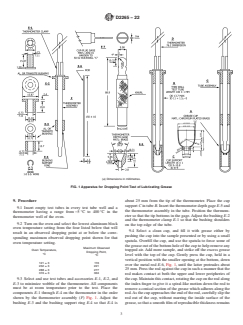
FIG. 1 Apparatus for Dropping Point Test of Lubricating Grease
5.2 Historical cooperative testing on conventional soap-thickened greases indicated (RR:D02-1164) that, in general, dropping
points by Test Method D2265 and Test Method D566 were in agreement up to 200 °C. In cases where results differ, there is no
known significance. However, agreement between the manufacturer and purchaser as to test method used is advisable.
6. Apparatus
6.1 Dropping Point Assembly (Fig. 1) consisting of the following:
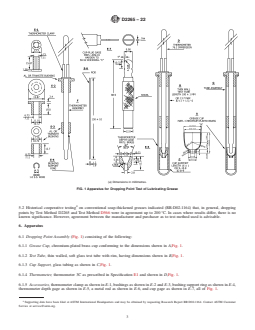
6.1.1 Grease Cup, chromium-plated brass cup conforming to the dimensions shown in A,Fig. 1.
6.1.2 Test Tube, thin walled, soft glass test tube with rim, having dimensions shown in B,Fig. 1.
6.1.3 Cup Support, glass tubing as shown in C,Fig. 1.
6.1.4 Thermometer, thermometer 3C as prescribed in Specification E1 and shown in D,Fig. 1.
6.1.5 Accessories, thermometer clamp as shown in E-1, bushings as shown in E-2 and E-3, bushing support ring as shown in E-4,
thermometer depth gage as shown in E-5, a metal rod as shown in E-6, and cup gage as shown in E-7, all of Fig. 1.
Supporting data have been filed at ASTM International Headquarters and may be obtained by requesting Research Report RR:D02-1164. Contact ASTM Customer
Service at service@astm.org.
D2265 − 22
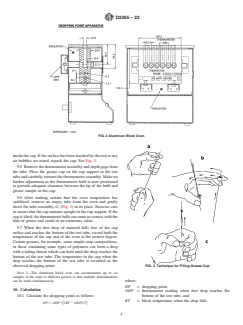
FIG. 2 Aluminum Block Oven
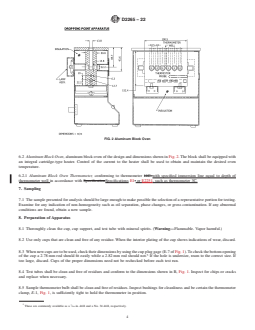
6.2 Aluminum Block Oven, aluminum block oven of the design and dimensions shown in Fig. 2. The block shall be equipped with
an integral cartridge-type heater. Control of the current to the heater shall be used to obtain and maintain the desired oven
temperature.
6.2.1 Aluminum Block Oven Thermometer, conforming to thermometer 11C with specified immersion line equal to depth of
thermometer well in accordance with SpecificationSpecifications E1. or E2251, such as thermometer 3C.
7. Sampling
7.1 The sample presented for analysis should be large enough to make possible the selection of a representative portion for testing.
Examine for any indication of non-homogeneity such as oil separation, phase changes, or gross contamination. If any abnormal
conditions are found, obtain a new sample.
8. Preparation of Apparatus
8.1 Thoroughly clean the cup, cup support, and test tube with miner
...