

ASTM D5195-21
(Test Method)Standard Test Method for Density of Soil and Rock In-Place at Depths Below Surface by Nuclear Methods
General Information
- Abstract
SIGNIFICANCE AND USE
5.1 This test method is useful as a rapid, nondestructive technique for the calculation of the in-place density of soil and rock at desired depths below the surface as opposed to surface measurements in accordance with Test Method D6938. Alternative destructive methods are likewise described in this test method.
5.2 This test method is useful for informational and research purposes, only to be used for quality control and acceptance testing when correlated to other accepted methods such as Test Method D2937.
5.3 The non-destructive nature of the test method allows repetitive measurements to be made at a single test location for statistical analysis and to monitor changes over time.
5.4 The fundamental assumptions inherent in this test method are that Compton scattering and photoelectric absorption are the dominant interactions of the gamma rays with the material under test.
5.5 The probe response, in counts, may be converted to wet density by comparing the detected rate of gamma radiation with previously established calibration data (see Annex A1).
5.6 The probe count response may also be utilized directly for unitless, relative comparison with other probe readings
5.6.1 For materials of densities higher than that of about the density of water, higher count rates within the same soil type relate to lower densities and, conversely, lower count rates within the same soil type relate to higher densities.
5.6.2 For materials of densities lower than the density of water, higher count rates within the same soil type relate to higher densities and, conversely, lower count rates within the same soil type relate to lower densities.
5.6.3 Because of the functional inflection of probe response for densities near the density of water, exercise great care when drawing conclusions from probe response in this density range.
Note 1: The quality of the result produced by this standard test method is dependent on the competence of the personnel performing it...
SCOPE
1.1 This test method covers the calculation of the wet density of soil and rock by the attenuation of gamma radiation, where the gamma source and the gamma detector are placed at the desired depth in a bored hole, typically lined by an access tube.
1.1.1 For limitations see Section 6, “Interference.”
1.2 The wet density, in mass per unit volume of the material under test, is calculated by comparing the detected rate of gamma radiation with previously established calibration data (see Annex A1).
1.3 Units—The values stated in either SI units or inch-pound units are to be regarded separately as standard. The values stated in each system are not necessarily exact equivalents; therefore, to ensure conformance with the standard, each system shall be used independently of the other, and values from the two systems shall not be combined. Within the text of this standard, SI units appear first followed by the inch-pound (or other non-SI) units in brackets.
1.3.1 Reporting the test results in units other than SI shall not be regarded as nonconformance with this standard.
1.4 All observed and calculated values shall conform to the guide for significant digits and rounding established in Practice D6026.
1.4.1 The procedures used to specify how data are collected, recorded, and calculated in this standard are regarded as the industry standard. In addition, they are representative of the significant digits that should generally be retained. The procedures used do not consider material variation, purpose for obtaining the data, special purpose studies, or any considerations for the user’s objectives; and it is common practice to increase or reduce significant digits of reported data to be commensurate with these considerations. It is beyond the scope of this standard to consider significant digits used in analysis methods for engineering design.
1.5 This standard does not purport to address all of the safety conce...
- Status
- Published
- Publication Date
- 31-Aug-2021
- Technical Committee
- D18 - Soil and Rock
- Drafting Committee
- D18.08 - Special and Construction Control Tests
Buy Documents
ASTM D5195-21 - Standard Test Method for Density of Soil and Rock In-Place at Depths Below Surface by Nuclear Methods
REDLINE ASTM D5195-21 - Standard Test Method for Density of Soil and Rock In-Place at Depths Below Surface by Nuclear Methods
Overview
ASTM D5195-21 is the Standard Test Method for Density of Soil and Rock In-Place at Depths Below Surface by Nuclear Methods. Developed by ASTM International, this standard outlines a rapid, nondestructive approach for determining the in-place wet density of soil and rock at depths below the ground surface, utilizing the attenuation of gamma radiation. Unlike surface nuclear testing methods (e.g., ASTM D6938), this standard addresses the unique challenges and technical requirements associated with subsurface measurements-making it valuable for site investigations where soil and rock characteristics at depth are critical.
Key Topics
- Nondestructive Testing: Uses nuclear methods with a gamma source and detector deployed at the required depth in a bored hole or access tube, permitting repeated and reliable measurements at a single location.
- Density Calculation: In-place density is computed by comparing the measured gamma radiation count against calibration data developed with known densities. The measured response can indicate either the wet density directly or can serve for relative comparisons between locations.
- Calibration and Standardization: Emphasizes the importance of regular calibration and daily standardization of the equipment to account for instrument drift, radioactive decay, and environmental influences.
- Correlation with Other Methods: While ideal for informational and research purposes, results from this test method are best used for quality control and acceptance only when correlated with other recognized tests like the drive-cylinder method (ASTM D2937).
- Statistical Measurement and Monitoring: The non-destructive nature enables ongoing monitoring at the same location to observe changes over time and to perform statistical analyses.
- Limitations & Interference: The method requires careful attention to chemical composition, sample heterogeneity, and probe placement. Voids around the probe or access tube, as well as the presence of heavy elements, can affect results and require corrective calibration or alternate approaches.
Applications
The ASTM D5195-21 standard is widely applied in:
- Geotechnical Site Investigations: Ensuring accurate soil and rock density profiles at depth for foundation studies, slope stability assessments, and subsurface characterization.
- Construction Quality Control: Monitoring backfill or embankment compaction where traditional surface tests cannot reach or repeated, undisturbed measurements are required.
- Research & Development: Providing a rapid and repeatable method for density monitoring during experimental studies of soil and rock behavior under various conditions.
- Infrastructure Projects: Suitable for tunnels, deep foundation, and pipeline installations where in situ density at specific depths informs design and safety assessments.
Related Standards
ASTM D5195-21 is closely linked with the following standards used in soil and rock testing:
- ASTM D653: Terminology relating to soil, rock, and contained fluids
- ASTM D6938: Nuclear methods for in-place density and water content (surface measurements)
- ASTM D2937: Drive-cylinder method for in-place soil density measurement
- ASTM D5220: Water mass per unit volume determination by neutron method
- ASTM D2216: Laboratory water (moisture) content determination
- ASTM D4428: Crosshole seismic testing
- ASTM D6026: Practice for significant digits and data records in geotechnical data
These related ASTM standards provide methodologies for sampling, calibration, and data reporting, helping ensure consistency and compatibility in geotechnical site data.
Keywords: in-place density, soil density, rock density, nuclear methods, gamma radiation, subsurface testing, ASTM D5195, nondestructive testing, geotechnical investigation, soil compaction, calibration, quality control.
Relations
- Effective Date
- 01-Nov-2023
- Effective Date
- 01-Jun-2020
- Effective Date
- 01-Oct-2019
- Effective Date
- 01-Mar-2019
- Effective Date
- 15-Feb-2018
- Effective Date
- 15-Feb-2018
- Effective Date
- 01-Mar-2017
- Refers
ASTM D2937-17e2 - Standard Test Method for Density of Soil in Place by the Drive-Cylinder Method - Effective Date
- 01-Feb-2017
- Refers
ASTM D2937-17e1 - Standard Test Method for Density of Soil in Place by the Drive-Cylinder Method - Effective Date
- 01-Feb-2017
- Refers
ASTM D2937-17 - Standard Test Method for Density of Soil in Place by the Drive-Cylinder Method - Effective Date
- 01-Feb-2017
- Effective Date
- 01-Nov-2016
- Effective Date
- 01-Jul-2016
- Effective Date
- 15-Nov-2015
- Effective Date
- 01-Aug-2015
- Effective Date
- 01-Aug-2014
Buy Documents
ASTM D5195-21 - Standard Test Method for Density of Soil and Rock In-Place at Depths Below Surface by Nuclear Methods
REDLINE ASTM D5195-21 - Standard Test Method for Density of Soil and Rock In-Place at Depths Below Surface by Nuclear Methods
Get Certified
Connect with accredited certification bodies for this standard

Zavod za gradbeništvo Slovenije (ZAG) - Inšpekcija
ZAG inspection body for construction products, structures, and materials.
Sponsored listings
Frequently Asked Questions
ASTM D5195-21 is a standard published by ASTM International. Its full title is "Standard Test Method for Density of Soil and Rock In-Place at Depths Below Surface by Nuclear Methods". This standard covers: SIGNIFICANCE AND USE 5.1 This test method is useful as a rapid, nondestructive technique for the calculation of the in-place density of soil and rock at desired depths below the surface as opposed to surface measurements in accordance with Test Method D6938. Alternative destructive methods are likewise described in this test method. 5.2 This test method is useful for informational and research purposes, only to be used for quality control and acceptance testing when correlated to other accepted methods such as Test Method D2937. 5.3 The non-destructive nature of the test method allows repetitive measurements to be made at a single test location for statistical analysis and to monitor changes over time. 5.4 The fundamental assumptions inherent in this test method are that Compton scattering and photoelectric absorption are the dominant interactions of the gamma rays with the material under test. 5.5 The probe response, in counts, may be converted to wet density by comparing the detected rate of gamma radiation with previously established calibration data (see Annex A1). 5.6 The probe count response may also be utilized directly for unitless, relative comparison with other probe readings 5.6.1 For materials of densities higher than that of about the density of water, higher count rates within the same soil type relate to lower densities and, conversely, lower count rates within the same soil type relate to higher densities. 5.6.2 For materials of densities lower than the density of water, higher count rates within the same soil type relate to higher densities and, conversely, lower count rates within the same soil type relate to lower densities. 5.6.3 Because of the functional inflection of probe response for densities near the density of water, exercise great care when drawing conclusions from probe response in this density range. Note 1: The quality of the result produced by this standard test method is dependent on the competence of the personnel performing it... SCOPE 1.1 This test method covers the calculation of the wet density of soil and rock by the attenuation of gamma radiation, where the gamma source and the gamma detector are placed at the desired depth in a bored hole, typically lined by an access tube. 1.1.1 For limitations see Section 6, “Interference.” 1.2 The wet density, in mass per unit volume of the material under test, is calculated by comparing the detected rate of gamma radiation with previously established calibration data (see Annex A1). 1.3 Units—The values stated in either SI units or inch-pound units are to be regarded separately as standard. The values stated in each system are not necessarily exact equivalents; therefore, to ensure conformance with the standard, each system shall be used independently of the other, and values from the two systems shall not be combined. Within the text of this standard, SI units appear first followed by the inch-pound (or other non-SI) units in brackets. 1.3.1 Reporting the test results in units other than SI shall not be regarded as nonconformance with this standard. 1.4 All observed and calculated values shall conform to the guide for significant digits and rounding established in Practice D6026. 1.4.1 The procedures used to specify how data are collected, recorded, and calculated in this standard are regarded as the industry standard. In addition, they are representative of the significant digits that should generally be retained. The procedures used do not consider material variation, purpose for obtaining the data, special purpose studies, or any considerations for the user’s objectives; and it is common practice to increase or reduce significant digits of reported data to be commensurate with these considerations. It is beyond the scope of this standard to consider significant digits used in analysis methods for engineering design. 1.5 This standard does not purport to address all of the safety conce...
SIGNIFICANCE AND USE 5.1 This test method is useful as a rapid, nondestructive technique for the calculation of the in-place density of soil and rock at desired depths below the surface as opposed to surface measurements in accordance with Test Method D6938. Alternative destructive methods are likewise described in this test method. 5.2 This test method is useful for informational and research purposes, only to be used for quality control and acceptance testing when correlated to other accepted methods such as Test Method D2937. 5.3 The non-destructive nature of the test method allows repetitive measurements to be made at a single test location for statistical analysis and to monitor changes over time. 5.4 The fundamental assumptions inherent in this test method are that Compton scattering and photoelectric absorption are the dominant interactions of the gamma rays with the material under test. 5.5 The probe response, in counts, may be converted to wet density by comparing the detected rate of gamma radiation with previously established calibration data (see Annex A1). 5.6 The probe count response may also be utilized directly for unitless, relative comparison with other probe readings 5.6.1 For materials of densities higher than that of about the density of water, higher count rates within the same soil type relate to lower densities and, conversely, lower count rates within the same soil type relate to higher densities. 5.6.2 For materials of densities lower than the density of water, higher count rates within the same soil type relate to higher densities and, conversely, lower count rates within the same soil type relate to lower densities. 5.6.3 Because of the functional inflection of probe response for densities near the density of water, exercise great care when drawing conclusions from probe response in this density range. Note 1: The quality of the result produced by this standard test method is dependent on the competence of the personnel performing it... SCOPE 1.1 This test method covers the calculation of the wet density of soil and rock by the attenuation of gamma radiation, where the gamma source and the gamma detector are placed at the desired depth in a bored hole, typically lined by an access tube. 1.1.1 For limitations see Section 6, “Interference.” 1.2 The wet density, in mass per unit volume of the material under test, is calculated by comparing the detected rate of gamma radiation with previously established calibration data (see Annex A1). 1.3 Units—The values stated in either SI units or inch-pound units are to be regarded separately as standard. The values stated in each system are not necessarily exact equivalents; therefore, to ensure conformance with the standard, each system shall be used independently of the other, and values from the two systems shall not be combined. Within the text of this standard, SI units appear first followed by the inch-pound (or other non-SI) units in brackets. 1.3.1 Reporting the test results in units other than SI shall not be regarded as nonconformance with this standard. 1.4 All observed and calculated values shall conform to the guide for significant digits and rounding established in Practice D6026. 1.4.1 The procedures used to specify how data are collected, recorded, and calculated in this standard are regarded as the industry standard. In addition, they are representative of the significant digits that should generally be retained. The procedures used do not consider material variation, purpose for obtaining the data, special purpose studies, or any considerations for the user’s objectives; and it is common practice to increase or reduce significant digits of reported data to be commensurate with these considerations. It is beyond the scope of this standard to consider significant digits used in analysis methods for engineering design. 1.5 This standard does not purport to address all of the safety conce...
ASTM D5195-21 is classified under the following ICS (International Classification for Standards) categories: 93.020 - Earthworks. Excavations. Foundation construction. Underground works. The ICS classification helps identify the subject area and facilitates finding related standards.
ASTM D5195-21 has the following relationships with other standards: It is inter standard links to ASTM D3740-23, ASTM D5778-20, ASTM D3740-19, ASTM D2216-19, ASTM D7263-09(2018)e1, ASTM D7263-09(2018), ASTM D6938-17, ASTM D2937-17e2, ASTM D2937-17e1, ASTM D2937-17, ASTM D1452/D1452M-16, ASTM D3441-16, ASTM D1587/D1587M-15, ASTM D6938-15, ASTM D653-14. Understanding these relationships helps ensure you are using the most current and applicable version of the standard.
ASTM D5195-21 is available in PDF format for immediate download after purchase. The document can be added to your cart and obtained through the secure checkout process. Digital delivery ensures instant access to the complete standard document.
Standards Content (Sample)
This international standard was developed in accordance with internationally recognized principles on standardization established in the Decision on Principles for the
Development of International Standards, Guides and Recommendations issued by the World Trade Organization Technical Barriers to Trade (TBT) Committee.
Designation: D5195 − 21
Standard Test Method for
Density of Soil and Rock In-Place at Depths Below Surface
by Nuclear Methods
This standard is issued under the fixed designation D5195; the number immediately following the designation indicates the year of
original adoption or, in the case of revision, the year of last revision. A number in parentheses indicates the year of last reapproval. A
superscript epsilon (´) indicates an editorial change since the last revision or reapproval.
1. Scope* 1.5 This standard does not purport to address all of the
safety concerns, if any, associated with its use. It is the
1.1 This test method covers the calculation of the wet
responsibility of the user of this standard to establish appro-
density of soil and rock by the attenuation of gamma radiation,
priate safety, health, and environmental practices and deter-
where the gamma source and the gamma detector are placed at
mine the applicability of regulatory limitations prior to use.
the desired depth in a bored hole, typically lined by an access
Specific precautionary statements are given in Section 8,
tube.
“Hazards.”
1.1.1 For limitations see Section 6, “Interference.”
1.6 This international standard was developed in accor-
1.2 The wet density, in mass per unit volume of the material
dance with internationally recognized principles on standard-
under test, is calculated by comparing the detected rate of
ization established in the Decision on Principles for the
gamma radiation with previously established calibration data
Development of International Standards, Guides and Recom-
(see Annex A1).
mendations issued by the World Trade Organization Technical
1.3 Units—The values stated in either SI units or inch- Barriers to Trade (TBT) Committee.
pound units are to be regarded separately as standard. The
values stated in each system are not necessarily exact equiva- 2. Referenced Documents
lents; therefore, to ensure conformance with the standard, each 2
2.1 ASTM Standards:
system shall be used independently of the other, and values
D653 Terminology Relating to Soil, Rock, and Contained
from the two systems shall not be combined.Within the text of
Fluids
this standard, SI units appear first followed by the inch-pound
D1452/D1452M Practice for Soil Exploration and Sampling
(or other non-SI) units in brackets. 3
by Auger Borings
1.3.1 Reporting the test results in units other than SI shall
D1587/D1587M Practice for Thin-Walled Tube Sampling of
not be regarded as nonconformance with this standard.
Fine-Grained Soils for Geotechnical Purposes
1.4 All observed and calculated values shall conform to the D2113 Practice for Rock Core Drilling and Sampling of
guide for significant digits and rounding established in Practice
Rock for Site Exploration
D6026. D2216 Test Methods for Laboratory Determination of Water
1.4.1 Theproceduresusedtospecifyhowdataarecollected,
(Moisture) Content of Soil and Rock by Mass
recorded, and calculated in this standard are regarded as the D2937 Test Method for Density of Soil in Place by the
industry standard. In addition, they are representative of the
Drive-Cylinder Method
significant digits that should generally be retained. The proce- D3441 Test Method for Mechanical Cone Penetration Test-
dures used do not consider material variation, purpose for
ing of Soils
obtaining the data, special purpose studies, or any consider- D3740 Practice for Minimum Requirements for Agencies
ations for the user’s objectives; and it is common practice to Engaged in Testing and/or Inspection of Soil and Rock as
increase or reduce significant digits of reported data to be Used in Engineering Design and Construction
commensuratewiththeseconsiderations.Itisbeyondthescope D4428/D4428M Test Methods for Crosshole Seismic Test-
of this standard to consider significant digits used in analysis ing
methods for engineering design. D5220/D5220M Test Method for Water Mass per Unit
ThistestmethodisunderthejurisdictionofASTMCommitteeD18onSoiland
Rock and is the direct responsibility of Subcommittee D18.08 on Special and For referenced ASTM standards, visit the ASTM website, www.astm.org, or
Construction Control Tests. contact ASTM Customer Service at service@astm.org. For Annual Book of ASTM
Current edition approved Sept. 1, 2021. Published October 2021. Originally Standards volume information, refer to the standard’s Document Summary page on
ɛ1
approved in 1991. Last previous edition approved in 2014 as D5195 – 14 . DOI: the ASTM website.
10.1520/D5195-21. Replace with continuous flight and hollowstream methods when available.
*A Summary of Changes section appears at the end of this standard
Copyright © ASTM International, 100 Barr Harbor Drive, PO Box C700, West Conshohocken, PA 19428-2959. United States
D5195 − 21
Volume of Soil and Rock In-Place by the Neutron Depth 5.6.2 For materials of densities lower than the density of
Probe Method water, higher count rates within the same soil type relate to
D5778 Test Method for Electronic Friction Cone and Piezo- higher densities and, conversely, lower count rates within the
cone Penetration Testing of Soils same soil type relate to lower densities.
D6026 Practice for Using Significant Digits and Data Re- 5.6.3 Because of the functional inflection of probe response
cords in Geotechnical Data fordensitiesnearthedensityofwater,exercisegreatcarewhen
D6938 TestMethodsforIn-PlaceDensityandWaterContent drawingconclusionsfromproberesponseinthis densityrange.
NOTE1—Thequalityoftheresultproducedbythisstandardtestmethod
of Soil and Soil-Aggregate by Nuclear Methods (Shallow
is dependent on the competence of the personnel performing it, and the
Depth)
suitability of the equipment and facilities used. Agencies that meet the
D7263 Test Methods for Laboratory Determination of Den-
criteria of Practice D3740 are generally considered capable of competent
sity and Unit Weight of Soil Specimens
and objective testing/sampling/inspection, and the like. Users of this test
method are cautioned that compliance with Practice D3740 does not in
3. Terminology
itself assure reliable results. Reliable results depend on many factors;
Practice D3740 provides a means of evaluating some of those factors.
3.1 Definitions—For definitions of common technical terms
in this standard, refer to Terminology D653.
6. Interferences
4. Summary of the Test Method
6.1 The chemical composition of the sample may affect the
measurement and adjustments may be necessary. Some ele-
4.1 The test method is as follows:
mentswithatomicnumbersgreaterthan20suchasiron(Fe)or
4.1.1 A vertical hole is bored or driven into the site where
other heavy metals may cause measurements higher than the
the test is to be performed. The depth of the hole shall be at
true density value.
least 300 mm [1 ft] lower than the bottom of the probe when
it is in its deepest measurement position.
6.2 The sample heterogeneity affects the measurements.
4.1.2 An access tube is typically installed in the hole, with
This test method also exhibits spatial bias in that it is more
any soil or rock falling back into the hole removed. Alternate
sensitive to material closest to the access tube.
methods of drilling the hole and placing the probe are
6.2.1 Voids around the access tube can affect the measure-
described in 10.2 and 10.3.
ment (see Annex A2).
4.1.3 The probe containing the source and detector are
3 3
6.3 The sample volume is approximately 0.028 m [0.8 ft ].
positioned at the desired measurement depth, and a measure-
The actual sample volume is indeterminate and varies with the
ment is taken.
apparatusandthedensityofthematerial.Ingeneral,thegreater
the density the smaller the volume.
5. Significance and Use
5.1 This test method is useful as a rapid, nondestructive
7. Apparatus (See Figs. 1-3)
technique for the calculation of the in-place density of soil and
7.1 The apparatus shall consist of a nuclear instrument
rock at desired depths below the surface as opposed to surface
capable of measuring density of materials at various depths
measurements in accordance with Test Method D6938. Alter-
below the surface and contain the following:
native destructive methods are likewise described in this test
7.1.1 Sealed Source of High Energy Gamma Radiation,
method.
such as cesium-137, cobalt-60, or radium-226.
5.2 Thistestmethodisusefulforinformationalandresearch
7.1.2 Gamma Detector—Any type of gamma detector such
purposes, only to be used for quality control and acceptance
as a Geiger-Mueller tube.
testing when correlated to other accepted methods such as Test
7.1.3 Suitable Timed Scaler and Power Source.
Method D2937.
7.2 Cylindrical Probe—The apparatus shall be equipped
5.3 The non-destructive nature of the test method allows
with a cylindrical probe, containing the gamma source and
repetitive measurements to be made at a single test location for
statistical analysis and to monitor changes over time.
5.4 The fundamental assumptions inherent in this test
method are that Compton scattering and photoelectric absorp-
tion are the dominant interactions of the gamma rays with the
material under test.
5.5 The probe response, in counts, may be converted to wet
density by comparing the detected rate of gamma radiation
with previously established calibration data (see Annex A1).
5.6 The probe count response may also be utilized directly
for unitless, relative comparison with other probe readings
5.6.1 For materials of densities higher than that of about the
density of water, higher count rates within the same soil type
relate to lower densities and, conversely, lower count rates
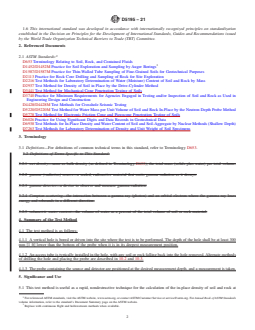
FIG. 1 Schematic Diagram: Depth Density by Nuclear Method,
within the same soil type relate to higher densities. Expanded View
D5195 − 21
forcheckingapparatusoperationandtoestablishconditionsfor
a reproducible reference count rate. It may also serve as a
radiation shield.
7.4 Apparatus Precision—See Annex A3 for the precision
of the apparatus.
7.5 Accessories:
7.5.1 Access Tubing—The access tubing (casing) is required
for all access holes in nonlithified materials (soils and poorly
consolidated rock) that cannot maintain constant borehole
diameter with repeated measurements. If access tubing is
required it shall be of a material such as aluminum, steel, or
polyvinyl chloride, having an interior diameter large enough to
permit probe access without binding, and an exterior diameter
as small as possible to provide close proximity of the material
under test.The same type of tubing shall be used in the field as
is used in calibration.
7.5.2 Hand Auger or Power Drilling Equipment, that can be
used to establish the access hole. Any drilling equipment that
provides a suitable clean open hole for installation of access
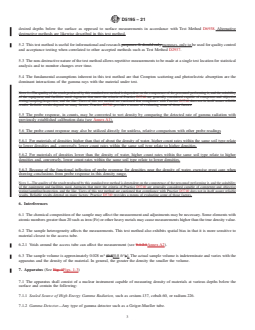
FIG. 2 Schematic Diagram: Depth Density by Nuclear Method,
tubing and insertion of the probe that ensures the measure-
Detail View, Voids Due to the Drilling Process Filled with Grout
(Not to Scale) ments are performed on intact soil and rock while maintaining
constant borehole diameter is acceptable. The type of equip-
ment and methods of advancing the access hole shall be
reported.
7.5.3 Cone Penetrometer Rig Drill, if the probe readings are
to be taken in conjunction with cone penetrometer soundings.
8. Hazards
8.1 These instruments utilize radioactive materials that may
be hazardous to the health of the users unless proper precau-
tions are taken. Users of these instruments shall become
familiar with applicable safety procedures and government
regulations.
8.2 Effective user instructions, together with routine safety
procedures and knowledge of and compliance with regulatory
requirements,areamandatorypartoftheoperationandstorage
of these instruments.
9. Calibration, Standardization, and Reference Check
9.1 Calibrate the instrument in accordance with Annex A1.
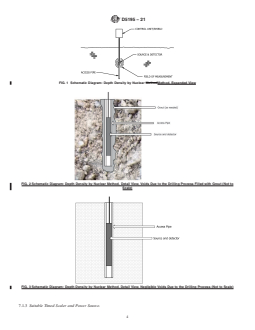
FIG. 3 Schematic Diagram: Depth Density by Nuclear Method, 9.2 Adjust the calibration in accordance with Annex A2 if
Detail View, Negligible Voids Due to the Drilling Process (Not to
adjustments are necessary.
Scale)
9.3 Perform and evaluate standardization and reference
check on a daily basis, prior to taking field measurements, in
accordance with Annex A4.
detector, connected by a cable of sufficient design and length,
10. Procedure
that is capable of being lowered down a cased hole to desired
10.1 Installation of Access Tubing (Casing) with a Drill
test depths.
Allowing Repeated, In-Place Readings:
7.2.1 The dimensions of the probe vary among manufactur-
10.1.1 Drill the access tube hole and install access tube in a
ers and models, but are generally between 25 mm [1 in.] and
manner dependent upon the material to be tested, the depth to
100 mm [4 in.] in diameter and 20 mm [8 in.] and 1 m [39 in.]
be tested, and the available drilling equipment.
in length. Probe diameters are generally designed by the
10.1.2 The access hole shall be clear enough to allow
manufacturer to be commensurate with the internal diameter of
installing the tube yet provide a snug fit. Voids along side the
commonly used access tubing, or drill hole sizes.
tube will cause erroneous readings.
7.3 Reference Standard—The apparatus shall be equipped 10.1.2.1 If voids are suspected to be caused by the drilling
with a reference standard, a fixed shape of dense material used process they can be grouted using the procedures in Test
D5195 − 21
Method D4428/D4428M. The only method to determine the 10.6 If the dry density is required determine the in-place
presence of voids is to perform field calibrations as described water content using either intact sample(s) and laboratory
in A1.3. determination of water content (see Method D2216), or the
10.1.3 Record and note the position of the ground water sameapparatusoradifferentapparatuswhichdetermineswater
table, perched water tables, and changes in strata as drilling mass per unit volume by the neutron probe method (Method
progresses. D5220/D5220M).The dry density is calculated by either of the
following equations:
10.1.3.1 If ground water is encountered or saturated condi-
tions are expected to develop, seal the tube using procedures
100 3ρ
ρ 5 (1)
given inTest Method D4428/D4428M at the bottom to prevent d
1001w
water seepage into the tube. This will prevent erroneous
or:
readings and possible damage to the probe.
10.1.4 The tube shall project above the ground and be
ρ 5 ρ 2 M
d m
capped to prevent foreign material from entering. The access
where:
tube shall not project above the ground so high as it might be
3 3
ρ = dry density in kg/m [lbm/ft ],
d
damaged by equipment passing over it.
3 3
ρ = wet density in kg/m [lbm/ft ],
10.1.4.1 Install all tubes at the same height above ground as
3 3
M = water mass per unit volume in kg/m [lbm/ft ] from
m
this enables marking the cable to indicate the measured depth
apparatus, and
to be used for all tubes.
w = water content as a percent of the dry density from lab.
10.2 Destructive Access Hole Drilling without Repeated,
NOTE 2—Some instruments have built-in provisions to compute and
In-Place Readings: display the ratio and corrected bulk or wet density per unit volume.
10.2.1 Insomefieldsituationsitmaybemoreappropriateto
11. Report: Test Data Sheet(s)/Form(s)
use a drilling technique involving alternating between a large
11.1 The methodology used to specify how data are re-
diameter hollow-stem auger, a split-spoon sampler, or thin-
corded on the test data sheet(s)/form(s) as given below is
walled volumetric sampler and access tubing.
covered in 1.4 and Practice D6026.
10.2.2 This technique is destructive and only one measure-
ment can be made at each depth per hole.
11.2 Record at a minimum the following general informa-
tion (data):
10.3 Probe Placement with Cone Penetrometer (CPT) Rig:
11.2.1 Make, model, and serial number of the apparatus,
10.3.1 Sufficiently robust probes can be placed with a CTP
11.2.2 Name of operator/technician
rig. Whether the probe is durable enough to withstand this
11.2.3 Date of calibration,
treatment shall be confirmed with the probe manufacturer.
11.2.4 Method of calibration, such as field, factory, etc.
10.3.2 Connect the probe to the top of the CPT probe.
11.2.5 Calibration adjustments,
10.3.3 With the probe mounted on the top of the CPTprobe,
11.2.6 Date of test,
proceed with the CPT soundings as described in either Method
11.2.7 Standard count for the day of the test,
D3441orMethodD5778,acquiringprobereadingsinconjunc-
11.2.8 Any adjustment data for the day of the test,
tion with the CPT soundings.
11.2.9 Test site identification including; tube location(s) and
10.3.4 If the probe is mounted to the top of a dummy CPT
tube number(s),
tip, push the probe into the soil with the CPT rig.
11.2.10 Tube type and tube installation methods (methods
10.4 Probe Placement (for Drilling Procedures Described
of drilling, installing and any initial gravimetric and count
in 10.1 and 10.2):
data),
10.4.1 When the drilling procedures described in 10.1 or
11.2.11 Geologic log of the borehole, and
10.2 are complete, lower a dummy probe down the access tube
11.2.12 Depth, measurement count data, and calculated
toverifyproperclearancebeforeloweringtheprobecontaining
density of each measurement.
the radioactive source.
12. Precision and Bias
10.4.2 Seat the apparatus firmly over the access tu
...
This document is not an ASTM standard and is intended only to provide the user of an ASTM standard an indication of what changes have been made to the previous version. Because
it may not be technically possible to adequately depict all changes accurately, ASTM recommends that users consult prior editions as appropriate. In all cases only the current version
of the standard as published by ASTM is to be considered the official document.
´1
Designation: D5195 − 14 D5195 − 21
Standard Test Method for
Density of Soil and Rock In-Place at Depths Below Surface
by Nuclear Methods
This standard is issued under the fixed designation D5195; the number immediately following the designation indicates the year of
original adoption or, in the case of revision, the year of last revision. A number in parentheses indicates the year of last reapproval. A
superscript epsilon (´) indicates an editorial change since the last revision or reapproval.
ε NOTE—Editorially corrected units of measurement statement in June 2021.
1. Scope*
1.1 This test method covers the calculation of the wet density of soil and rock by the attenuation of gamma radiation, where the
gamma source and the gamma detector are placed at the desired depth in a bored hole hole, typically lined by an access tube.
1.1.1 For limitations see Section 56 on Interference., “Interference.”
1.2 The wet density, in mass per unit volume of the material under test, is calculated by comparing the detected rate of gamma
radiation with previously established calibration data (see Annex A1).
1.3 A precision statement has not been developed for this standard at this time. Therefore, this standard should not be used for
acceptance or rejection of a material for purchasing purposes unless correlated to other accepted ASTM standards.
1.3 Units—The values stated in either SI units or inch-pound units are to be regarded separately as standard. The values
givenstated in parentheses are provided for information only and are not considered standard.each system are not necessarily exact
equivalents; therefore, to ensure conformance with the standard, each system shall be used independently of the other, and values
from the two systems shall not be combined. Within the text of this standard, SI units appear first followed by the inch-pound (or
other non-SI) units in brackets.
1.3.1 Reporting the test results in units other than SI shall not be regarded as nonconformance with this standard.
1.4 All observed and calculated values shall conform to the guide for significant digits and rounding established in Practice D6026.
1.4.1 The procedures used to specify how data are collected, recorded, and calculated in this standard are regarded as the industry
standard. In addition, they are representative of the significant digits that should generally be retained. The procedures used do not
consider material variation, purpose for obtaining the data, special purpose studies, or any considerations for the user’s objectives;
and it is common practice to increase or reduce significant digits of reported data to be commensurate with these considerations.
It is beyond the scope of this standard to consider significant digits used in analysis methods for engineering design.
1.5 This standard does not purport to address all of the safety concerns, if any, associated with its use. It is the responsibility
of the user of this standard to establish appropriate safety, health, and environmental practices and determine the applicability of
regulatory limitations prior to use. Specific precautionary statements are given in Section 78, “Hazards.”
This test method is under the jurisdiction of ASTM Committee D18 on Soil and Rock and is the direct responsibility of Subcommittee D18.08 on Special and Construction
Control Tests.
Current edition approved July 1, 2014Sept. 1, 2021. Published August 2014October 2021. Originally approved in 1991. Last previous edition approved in 20082014 as
ɛ1
D5195 – 08.D5195 – 14 . DOI: 10.1520/D5195-14E01.10.1520/D5195-21.
*A Summary of Changes section appears at the end of this standard
Copyright © ASTM International, 100 Barr Harbor Drive, PO Box C700, West Conshohocken, PA 19428-2959. United States
D5195 − 21
1.6 This international standard was developed in accordance with internationally recognized principles on standardization
established in the Decision on Principles for the Development of International Standards, Guides and Recommendations issued
by the World Trade Organization Technical Barriers to Trade (TBT) Committee.
2. Referenced Documents
2.1 ASTM Standards:
D653 Terminology Relating to Soil, Rock, and Contained Fluids
D1452/D1452M Practice for Soil Exploration and Sampling by Auger Borings
D1587/D1587M Practice for Thin-Walled Tube Sampling of Fine-Grained Soils for Geotechnical Purposes
D2113 Practice for Rock Core Drilling and Sampling of Rock for Site Exploration
D2216 Test Methods for Laboratory Determination of Water (Moisture) Content of Soil and Rock by Mass
D2937 Test Method for Density of Soil in Place by the Drive-Cylinder Method
D3441 Test Method for Mechanical Cone Penetration Testing of Soils
D3740 Practice for Minimum Requirements for Agencies Engaged in Testing and/or Inspection of Soil and Rock as Used in
Engineering Design and Construction
D4428/D4428M Test Methods for Crosshole Seismic Testing
D5220/D5220M Test Method for Water Mass per Unit Volume of Soil and Rock In-Place by the Neutron Depth Probe Method
D5778 Test Method for Electronic Friction Cone and Piezocone Penetration Testing of Soils
D6026 Practice for Using Significant Digits and Data Records in Geotechnical Data
D6938 Test Methods for In-Place Density and Water Content of Soil and Soil-Aggregate by Nuclear Methods (Shallow Depth)
D7263 Test Methods for Laboratory Determination of Density and Unit Weight of Soil Specimens
3. Terminology
3.1 Definitions—For definitions of common technical terms in this standard, refer to Terminology D653.
3.2 Definitions of Terms Specific to This Standard:
3.2.1 wet density—same as bulk density (as defined in Terminology D653); the total mass (solids plus water) per total volume.
3.2.2 gamma (radiation) source—a sealed, radioactive material that emits gamma radiation as it decays.
3.2.3 gamma detector—a device to observe and measure gamma radiation.
3.2.4 Compton scattering—the interaction between a gamma ray (photon) and an orbital electron where the gamma ray loses
energy and rebounds in a different direction.
3.2.5 volumetric water content—the volume of water as a percent of the total volume of soil or rock material.
4. Summary of the Test Method
4.1 The test method is as follows:
4.1.1 A vertical hole is bored or driven into the site where the test is to be performed. The depth of the hole shall be at least 300
mm [1 ft] lower than the bottom of the probe when it is in its deepest measurement position.
4.1.2 An access tube is typically installed in the hole, with any soil or rock falling back into the hole removed. Alternate methods
of drilling the hole and placing the probe are described in 10.2 and 10.3.
4.1.3 The probe containing the source and detector are positioned at the desired measurement depth, and a measurement is taken.
5. Significance and Use
5.1 This test method is useful as a rapid, nondestructive technique for the calculation of the in-place density of soil and rock at
For referenced ASTM standards, visit the ASTM website, www.astm.org, or contact ASTM Customer Service at service@astm.org. For Annual Book of ASTM Standards
volume information, refer to the standard’s Document Summary page on the ASTM website.
Replace with continuous flight and hollowstream methods when available.
D5195 − 21
desired depths below the surface as opposed to surface measurements in accordance with Test Method D6938. Alternative
destructive methods are likewise described in this test method.
5.2 This test method is useful for informational and research purposes. It should only purposes, only to be used for quality control
and acceptance testing when correlated to other accepted methods such as Test Method D2937.
5.3 The non-destructive nature of the test method allows repetitive measurements to be made at a single test location for statistical
analysis and to monitor changes over time.
5.4 The fundamental assumptions inherent in this test method are that Compton scattering and photoelectric absorption are the
dominant interactions of the gamma rays with the material under test.
NOTE 1—The quality of the result produced by this standard test method is dependent on the competence of the personnel performing it, and the suitability
of the equipment and facilities used. Agencies that meet the criteria of Practice D3740 are generally considered capable of competent and objective
testing/sampling/inspection, and the like. Users of this test method are cautioned that compliance with Practice D3740 does not in itself assure reliable
results. Reliable results depend on many factors; Practice D3740 provides a means of evaluating some of those factors.
5.5 The probe response, in counts, may be converted to wet density by comparing the detected rate of gamma radiation with
previously established calibration data (see Annex A1).
5.6 The probe count response may also be utilized directly for unitless, relative comparison with other probe readings
5.6.1 For materials of densities higher than that of about the density of water, higher count rates within the same soil type relate
to lower densities and, conversely, lower count rates within the same soil type relate to higher densities.
5.6.2 For materials of densities lower than the density of water, higher count rates within the same soil type relate to higher
densities and, conversely, lower count rates within the same soil type relate to lower densities.
5.6.3 Because of the functional inflection of probe response for densities near the density of water, exercise great care when
drawing conclusions from probe response in this density range.
NOTE 1—The quality of the result produced by this standard test method is dependent on the competence of the personnel performing it, and the suitability
of the equipment and facilities used. Agencies that meet the criteria of Practice D3740 are generally considered capable of competent and objective
testing/sampling/inspection, and the like. Users of this test method are cautioned that compliance with Practice D3740 does not in itself assure reliable
results. Reliable results depend on many factors; Practice D3740 provides a means of evaluating some of those factors.
6. Interferences
6.1 The chemical composition of the sample may affect the measurement and adjustments may be necessary. Some elements with
atomic numbers greater than 20 such as iron (Fe) or other heavy metals may cause measurements higher than the true density value.
6.2 The sample heterogeneity affects the measurements. This test method also exhibits spatial bias in that it is more sensitive to
material closest to the access tube.
6.2.1 Voids around the access tube can affect the measurement (see 9.1.2.1Annex A2).
3 3
6.3 The sample volume is approximately 0.028 m (0.8[0.8 ft ).]. The actual sample volume is indeterminate and varies with the
apparatus and the density of the material. In general, the greater the density the smaller the volume.
7. Apparatus (See Fig. 1Figs. 1-3)
7.1 The apparatus shall consist of a nuclear instrument capable of measuring density of materials at various depths below the
surface and contain the following:
7.1.1 Sealed Source of High Energy Gamma Radiation, such as cesium-137, cobalt-60, or radium-226.
7.1.2 Gamma Detector—Any type of gamma detector such as a Geiger-Mueller tube.
D5195 − 21
FIG. 1 Schematic Diagram: Depth Density by Nuclear MethodMethod, Expanded View
FIG. 2 Schematic Diagram: Depth Density by Nuclear Method, Detail View, Voids Due to the Drilling Process Filled with Grout (Not to
Scale)
FIG. 3 Schematic Diagram: Depth Density by Nuclear Method, Detail View, Negligible Voids Due to the Drilling Process (Not to Scale)
7.1.3 Suitable Timed Scaler and Power Source.
D5195 − 21
7.2 Cylindrical Probe—The apparatus shall be equipped with a cylindrical probe, containing the gamma source and detector,
connected by a cable of sufficient design and length, that is capable of being lowered down a cased hole to desired test depths.
7.2.1 The dimensions of the probe vary among manufacturers and models, but are generally between 25 mm [1 in.] and 100 mm
[4 in.] in diameter and 20 mm [8 in.] and 1 m [39 in.] in length. Probe diameters are generally designed by the manufacturer to
be commensurate with the internal diameter of commonly used access tubing, or drill hole sizes.
7.3 Reference Standard—The apparatus shall be equipped with a reference standard, a fixed shape of dense material used for
checking apparatus operation and to establish conditions for a reproducible reference count rate. It may also serve as a radiation
shield.
7.4 Apparatus Precision—See Annex A3 for the precision of the apparatus.
7.5 Accessories:
7.5.1 Access Tubing—The access tubing (casing) is required for all access holes in nonlithified materials (soils and poorly
consolidated rock) that cannot maintain constant borehole diameter with repeated measurements. If access tubing is required it
mustshall be of a material such as aluminum, steel, or polyvinyl chloride, having an interior diameter large enough to permit probe
access without binding, and an exterior diameter as small as possible to provide close proximity of the material under test. The
same type of tubing mustshall be used in the field as is used in calibration.
7.5.2 Hand Auger or Power Drilling Equipment, that can be used to establish the access hole. Any drilling equipment that provides
a suitable clean open hole for installation of access tubing and insertion of the probe that ensures the measurements are performed
on intact soil and rock while maintaining constant borehole diameter shall be is acceptable. The type of equipment and methods
of advancing the access hole shouldshall be reported.
7.5.3 Cone Penetrometer Rig Drill, if the probe readings are to be taken in conjunction with cone penetrometer soundings.
8. Hazards
8.1 These gaugesinstruments utilize radioactive materials that may be hazardous to the health of the users unless proper
precautions are taken. Users of these gauges mustinstruments shall become familiar with applicable safety procedures and
government regulations.
8.2 Effective user instructions, together with routine safety procedures and knowledge of and compliance with Regulatory
Requirements,regulatory requirements, are a mandatory part of the operation and storage of these gauges.instruments.
9. Calibration, Standardization, and Reference Check
9.1 Calibrate the instrument in accordance with Annex A1.
9.2 Adjust the calibration in accordance with Annex A2 if adjustments are necessary.
9.3 Standardization and Reference Check: Perform and evaluate standardization and reference check on a daily basis, prior to
taking field measurements, in accordance with Annex A4.
8.3.1 Nuclear density gauges are subject to long-term aging of the radioactive sources, which may change the relationship between
count rates and the material density. To correct for this aging effect, gauges are calibrated as a ratio of the measurement count rate
to a count rate made on a reference standard.
8.3.2 Standardization of the gauge shall be performed at the start of each day’s use, and a record of these data should be retained
for the amount of time required to ensure compliance with either 8.3.4 or 8.3.5, whichever is applicable. Perform the
standardization with the gauge far enough away from other apparatus containing radioactive sources to prevent interference due
to radiation from the other apparatus. In addition, perform the standardization far enough away from large masses or other items
which can affect the reference count rates due to reflections from these masses or items.
D5195 − 21
NOTE 2—Separation of nuclear gauges by a distance of 9 m (30 ft) from one another has typically proven sufficient in preventing radiation from one gauge
from being detected by another gauge and potentially causing an incorrect standardization count. This separation can be reduced by the proper use of
shielding. With regards to reflections from large masses or other items potentially causing incorrect standardization counts, a separation of 1 m (3 ft)
between the gauge and the mass or item in question has typically proven sufficient to prevent such reflections from influencing the standardization counts.
8.3.3 Turn on the gauge and allow for stabilization according to the manufacturer’s recommendations.
8.3.4 Using the reference standard, take at least four repetitive readings at the normal measurement period and obtain the mean.
If available on the gauge, one measurement at four or more times the normal measurement period is acceptable. This constitutes
one standardization check. Use the procedure recommended by the gauge manufacturer to establish the compliance of the standard
measurement to the accepted range. Without specific recommendations from the gauge manufacturer, use the procedure in 8.3.5.
8.3.5 If the value of the current standardization count is outside the limits set by Eq 1, repeat the standardization check. If the
second standardization check satisfies Eq 1, the gauge is considered in satisfactory operating condition.
~ ! ~ !
2ln 2 t 2ln 2 t
0.99~N !e T # N # 1.01~N !e T (1)
1/2 1/2
c 0 c
where:
T = the half-life of the isotope that is used for the density or moisture determination in the gauge. For example, Cs, the
1/2
isotope most commonly used for density determination in these gauges, T is 11 023 days,
1/2
N = the standardization count acquired at the time of the last calibration or verification,
c
N = the current standardization count,
t = the time that has elapsed between the current standardization test and the date of the last calibration or verification. The
units selected for t and T should be consistent, that is, if T is expressed in days, then t should also be expressed in
1/2 1/2
days,
ln( ) = the natural logarithm function, and
e = the positive real number for which the natural logarithm value is equal to one. e itself is equal to 2.71828182845904.
8.3.6 Example—A nuclear gauge containing a Cs source for density determination (half-life = 11 023 days) is calibrated on
March 1 of a specific year. At the time of calibration, the density standard count was 2800 counts per minute (prescaled). According
to Eq 1, what is the allowed range of standard counts for November 1 of the same year? For this example, a total of 245 days have
elapsed between the date of calibration or verification (March 1) and the date of the gauge standardization (November 1).
Therefore:
t = 245 days
T = 11 023 days
1/2
N = 2800 counts
c
According to Eq 1, therefore, the lower limit for the density standard count taken on November 1, denoted by N , is
~ ~ !! ~ ~ !!
2 ln 2 t 2 ln 2 ·245
20.01541
0.99 N e T 5 0.99 2800 e 11 023 5 2772e 5 2730 counts
~ ! ~ !
1/2
c
Likewise, the upper limit for the density standard count taken on November 1, denoted by N , is
~ ~ !! ~ ~ !!
2 ln 2 t 2 ln 2 ·245
20.01541
1.01~N !e T 5 1.01~2800!e 11 023 5 2828e 5 2785 counts
1/2
c
Therefore, the density standard count acquired on November 1 should lie somewhere between 2730 and 2785 counts, or 2730
≤ N ≤ 2785.
8.3.7 If for any reason the measured density becomes suspect during the day’s use, perform another standardization check.
10. Procedure
10.1 Installation of Access Tubing (Casing): (Casing) with a Drill Allowing Repeated, In-Place Readings:
10.1.1 Drill the access tube hole and install access tube in a manner dependent upon the material to be tested, the depth to be
tested, and the available drilling equipment.
10.1.2 The access hole mustshall be clear enough to allow installing the tube yet must provide a snug fit. Voids along side the tube
will cause erroneous readings.
D5195 − 21
10.1.2.1 If voids are suspected to be caused by the drilling process they can be grouted using the procedures in Test Method
D4428/D4428M. The only method to determine the presence of voids is to perform field calibrations provided as described in A1.3.
10.1.3 Record and note the position of the ground water table, perched water tables, and changes in strata as drilling progresses.
10.1.3.1 If ground water is encountered or saturated conditions are expected to develop, seal the tube using procedures given in
Test Method D4428/D4428M at the bottom to prevent water seepage into the tube. This will prevent erroneous readings and
possible damage to the probe.
10.1.4 The tube shouldshall project above the ground and be capped to prevent foreign material from entering. The access tube
shouldshall not project above the ground so high as it might be damaged by equipment passing over it.
10.1.4.1 Install all tubes at the same height above ground as this enables marking the cable to indicate the measured depth to be
used for all tubes.
10.2 Lower a dummy probe down the access tube to verify proper clearance before lowering the probe containing the radioactive
source.Destructive Access Hole Drilling without Repeated, In-Place Readings:
10.2.1 In some field situations it may be more appropriate to use a drilling technique involving alternating between a large
diameter hollow-stem auger, a split-spoon sampler, or thin-walled volumetric sampler and access tubing.
10.2.2 This technique is destructive and only one measurement can be made at each depth per hole.
10.3 Standardize the apparatus.Probe Placement with Cone Penetrometer (CPT) Rig:
10.3.1 Sufficiently robust probes can be placed with a CTP rig. Whether the probe is durable enough to withstand this treatment
shall be confirmed with the probe manufacturer.
10.3.2 Connect the probe to the top of the CPT probe.
10.3.3 With the probe mounted on the top of the CPT probe, proceed with the CPT soundings as described in either Method D3441
or Method D5778, acquiring probe readings in conjunction with the CPT soundings.
10.3.4 If the probe is mounted to the top of a dummy CPT tip, push the probe into the soil with the CPT rig.
10.4 Proceed with the test as follows:Probe Placement (for Drilling Procedures Described in 10.1 and 10.2):
10.4.1 When the drilling pr
...