

ASTM D3441-16
(Test Method)Standard Test Method for Mechanical Cone Penetration Testing of Soils
General Information
- Abstract
SIGNIFICANCE AND USE
4.1 Tests performed using this test method provide a detailed record of cone resistance that is useful for evaluation of site stratigraphy, homogeneity and depth to firm layers, voids or cavities, and other discontinuities. The use of a friction sleeve can provide an estimate of soil classification, and correlations with engineering properties of soils. When properly performed at suitable sites, the test provides a rapid means for determining subsurface conditions.
4.2 This test method provides data used for estimating engineering properties of soil intended to help with the design and construction of earthworks, the foundations for structures, and the behavior of soils under static and dynamic loads.
4.3 This method tests the soil in-situ and soil samples are not obtained. The interpretation of the results from this test method provides estimates of the types of soil penetrated. Engineers may obtain soil samples from parallel borings for correlation purposes, but prior information or experience may preclude the need for borings.
4.4 Electronic cone data (D5778) is generally more reliable and reproducible. Mechanical cone equipment may prove useful when penetrating strong or rocky soils that might damage electronic cone equipment. Mechanical cone equipment typically requires less operator expertise to operate and to properly maintain than electronic cone equipment. However, mechanical cone equipment is not recommended for liquefaction investigations or investigations where a high level of quality assurance must be obtained.
4.4.1 Cone test data from the mechanical cone (D3441) are generally comparable with the electronic cone (D5778) but there are differences because of the geometry of the cone and friction sleeve sections. Users of these test data are cautioned that engineering correlations from electronic cones should not be used for these mechanical cones. Users should verify that the application of empirical correlations such as those predicting soil...
SCOPE
1.1 This test method covers the procedure for determining the point resistance during penetration of a conical-shaped penetrometer as it is advanced into subsurface soils at a steady rate.
1.2 This test method may also used to determine the frictional resistance of a cylindrical sleeve located behind the conical point as it is advanced through subsurface soils at a steady rate.
1.3 This test method applies to mechanical-type penetrometers. Field tests using penetrometers of electronic type are covered elsewhere by Test Method D5778.
1.4 Cone penetration test data can be used to interpret subsurface stratigraphy, and through use of site specific correlations, they can provide data on engineering properties of soils intended for use in design and construction of earthworks and foundations for structures.
1.5 Mechanical penetrometers of the type described in this test method operate either continually (in which cone penetration resistance is measured while cone and push rods are moving continuously until stopped for the addition of a push rod) or discontinuously (in which cone penetration resistance and, optionally, sleeve friction are measured during a penetration stop of the push rods) using an inner rod system and a penetrometer tip (that must be telescoping in case of discontinuous operation).
1.6 The text of this standard references notes and footnotes which provide explanatory material. These notes and footnotes shall not be considered as requirements of the standard. The illustrations included in this standard are intended only for explanatory or advisory use.
1.7 Units—The values stated in SI units are to be regarded as standard. No other units of measurement are included in this standard. Reporting of test results in units other than SI shall not be regarded as nonconformance with this test method.
1.8 All observed and calculated values shall conform to the guidelines for significant digits and...
- Status
- Published
- Publication Date
- 30-Jun-2016
- Technical Committee
- D18 - Soil and Rock
- Drafting Committee
- D18.02 - Sampling and Related Field Testing for Soil Evaluations
Overview
ASTM D3441-16 is the international standard test method for Mechanical Cone Penetration Testing (CPT) of Soils, developed by ASTM International. This standard outlines procedures for using mechanical cone penetrometers to measure in-situ soil resistance and, optionally, friction sleeve resistance. CPT provides engineers, geotechnical professionals, and construction specialists with a rapid, detailed record of subsurface soil resistance, aiding in the identification of soil stratigraphy, homogeneity, and discontinuities such as firm layers, voids, or cavities.
Mechanical CPT is especially valuable for evaluating site conditions in locations where electronic equipment may be prone to damage, such as in strong or rocky soils, and situations where straightforward operation and maintenance are essential.
Key Topics
- Scope of Mechanical CPT: Describes procedures for advancing a conical penetrometer at a steady rate to measure point resistance. When a friction sleeve is included, sleeve resistance can also be determined.
- Site Stratigraphy and Subsurface Investigation: Mechanical cone data offers insight into soil layering, homogeneity, and variation in subsurface conditions without sample extraction.
- Design Applications: Results from this method support soil classification and estimation of important engineering properties used in the design and construction of earthworks, structural foundations, and for evaluating soil behavior under static or dynamic loads.
- Limitations and Suitability: Mechanical CPT is suited for strong or rocky soils but is not recommended for liquefaction assessment or projects with high requirements for quality assurance, where electronic cones may provide enhanced reliability and data reproducibility.
- Comparability with Electronic CPT: While mechanical and electronic CPT data are generally similar, differences in penetrometer geometry and sleeve design mean that empirical correlations should not be used interchangeably; users must apply correlations appropriate to the specific CPT equipment.
- Measurement and Data Reporting: All test results are reported in SI units, following ASTM guidelines for significant digits. The method covers both continuous and discontinuous mechanical penetrometer operations.
Applications
Mechanical cone penetration testing is widely applied in geotechnical engineering, construction, and site characterization:
- Pre-construction Site Evaluation: Mechanical CPT is used to rapidly assess subsurface conditions, providing essential data for the design of building foundations, embankments, and retaining structures.
- Soil Classification: Data on cone and sleeve resistance enable site-specific estimations of soil type and engineering properties, reducing the need for extensive sample recovery in many cases.
- Stratigraphy Mapping: Detailed profiling of soils assists in recognizing critical layers, voids, or weak zones-key for risk assessment in construction and infrastructure projects.
- Supplement to Borehole Investigations: CPT can reduce the number and depth of required boreholes, lowering project costs and timelines for soil exploration.
- Strong Soil and Mixed Conditions: Mechanical CPT is favored in sites where durable penetrometers are needed to withstand abrasive or coarse soil conditions.
Related Standards
Professionals using ASTM D3441-16 may also reference the following standards for complementary procedures and terminology:
- ASTM D5778: Standard Test Method for Electronic Friction Cone and Piezocone Penetration Testing of Soils
- ASTM D653: Standard Terminology Relating to Soil, Rock, and Contained Fluids
- ASTM D3740: Practice for Minimum Requirements for Agencies Engaged in Testing and/or Inspection of Soil and Rock as Used in Engineering Design and Construction
- ASTM D6026: Practice for Using Significant Digits in Geotechnical Data
These documents, together with ASTM D3441-16, form a comprehensive framework for in-situ soil testing, data reporting, and quality assurance in geotechnical site investigation projects.
Keywords: mechanical cone penetration testing, ASTM D3441, CPT, soil investigation, in-situ testing, subsurface stratigraphy, geotechnical engineering, sleeve resistance, cone resistance, foundation design, mechanical penetrometer.
Relations
- Replaces
ASTM D3441-05 - Standard Test Method for Mechanical Cone Penetration Tests of Soil (Withdrawn 2014) - Effective Date
- 01-Jul-2016
- Effective Date
- 01-Nov-2023
- Effective Date
- 01-Jun-2020
- Effective Date
- 01-Oct-2019
- Effective Date
- 01-Aug-2014
- Effective Date
- 01-May-2012
- Effective Date
- 01-Mar-2012
- Effective Date
- 01-Jan-2012
- Effective Date
- 01-Sep-2011
- Effective Date
- 01-Sep-2011
- Effective Date
- 01-Mar-2010
- Effective Date
- 01-Jan-2009
- Effective Date
- 01-Dec-2008
- Effective Date
- 01-Nov-2008
- Effective Date
- 01-Mar-2008
Get Certified
Connect with accredited certification bodies for this standard

Zavod za gradbeništvo Slovenije (ZAG) - Inšpekcija
ZAG inspection body for construction products, structures, and materials.
Sponsored listings
Frequently Asked Questions
ASTM D3441-16 is a standard published by ASTM International. Its full title is "Standard Test Method for Mechanical Cone Penetration Testing of Soils". This standard covers: SIGNIFICANCE AND USE 4.1 Tests performed using this test method provide a detailed record of cone resistance that is useful for evaluation of site stratigraphy, homogeneity and depth to firm layers, voids or cavities, and other discontinuities. The use of a friction sleeve can provide an estimate of soil classification, and correlations with engineering properties of soils. When properly performed at suitable sites, the test provides a rapid means for determining subsurface conditions. 4.2 This test method provides data used for estimating engineering properties of soil intended to help with the design and construction of earthworks, the foundations for structures, and the behavior of soils under static and dynamic loads. 4.3 This method tests the soil in-situ and soil samples are not obtained. The interpretation of the results from this test method provides estimates of the types of soil penetrated. Engineers may obtain soil samples from parallel borings for correlation purposes, but prior information or experience may preclude the need for borings. 4.4 Electronic cone data (D5778) is generally more reliable and reproducible. Mechanical cone equipment may prove useful when penetrating strong or rocky soils that might damage electronic cone equipment. Mechanical cone equipment typically requires less operator expertise to operate and to properly maintain than electronic cone equipment. However, mechanical cone equipment is not recommended for liquefaction investigations or investigations where a high level of quality assurance must be obtained. 4.4.1 Cone test data from the mechanical cone (D3441) are generally comparable with the electronic cone (D5778) but there are differences because of the geometry of the cone and friction sleeve sections. Users of these test data are cautioned that engineering correlations from electronic cones should not be used for these mechanical cones. Users should verify that the application of empirical correlations such as those predicting soil... SCOPE 1.1 This test method covers the procedure for determining the point resistance during penetration of a conical-shaped penetrometer as it is advanced into subsurface soils at a steady rate. 1.2 This test method may also used to determine the frictional resistance of a cylindrical sleeve located behind the conical point as it is advanced through subsurface soils at a steady rate. 1.3 This test method applies to mechanical-type penetrometers. Field tests using penetrometers of electronic type are covered elsewhere by Test Method D5778. 1.4 Cone penetration test data can be used to interpret subsurface stratigraphy, and through use of site specific correlations, they can provide data on engineering properties of soils intended for use in design and construction of earthworks and foundations for structures. 1.5 Mechanical penetrometers of the type described in this test method operate either continually (in which cone penetration resistance is measured while cone and push rods are moving continuously until stopped for the addition of a push rod) or discontinuously (in which cone penetration resistance and, optionally, sleeve friction are measured during a penetration stop of the push rods) using an inner rod system and a penetrometer tip (that must be telescoping in case of discontinuous operation). 1.6 The text of this standard references notes and footnotes which provide explanatory material. These notes and footnotes shall not be considered as requirements of the standard. The illustrations included in this standard are intended only for explanatory or advisory use. 1.7 Units—The values stated in SI units are to be regarded as standard. No other units of measurement are included in this standard. Reporting of test results in units other than SI shall not be regarded as nonconformance with this test method. 1.8 All observed and calculated values shall conform to the guidelines for significant digits and...
SIGNIFICANCE AND USE 4.1 Tests performed using this test method provide a detailed record of cone resistance that is useful for evaluation of site stratigraphy, homogeneity and depth to firm layers, voids or cavities, and other discontinuities. The use of a friction sleeve can provide an estimate of soil classification, and correlations with engineering properties of soils. When properly performed at suitable sites, the test provides a rapid means for determining subsurface conditions. 4.2 This test method provides data used for estimating engineering properties of soil intended to help with the design and construction of earthworks, the foundations for structures, and the behavior of soils under static and dynamic loads. 4.3 This method tests the soil in-situ and soil samples are not obtained. The interpretation of the results from this test method provides estimates of the types of soil penetrated. Engineers may obtain soil samples from parallel borings for correlation purposes, but prior information or experience may preclude the need for borings. 4.4 Electronic cone data (D5778) is generally more reliable and reproducible. Mechanical cone equipment may prove useful when penetrating strong or rocky soils that might damage electronic cone equipment. Mechanical cone equipment typically requires less operator expertise to operate and to properly maintain than electronic cone equipment. However, mechanical cone equipment is not recommended for liquefaction investigations or investigations where a high level of quality assurance must be obtained. 4.4.1 Cone test data from the mechanical cone (D3441) are generally comparable with the electronic cone (D5778) but there are differences because of the geometry of the cone and friction sleeve sections. Users of these test data are cautioned that engineering correlations from electronic cones should not be used for these mechanical cones. Users should verify that the application of empirical correlations such as those predicting soil... SCOPE 1.1 This test method covers the procedure for determining the point resistance during penetration of a conical-shaped penetrometer as it is advanced into subsurface soils at a steady rate. 1.2 This test method may also used to determine the frictional resistance of a cylindrical sleeve located behind the conical point as it is advanced through subsurface soils at a steady rate. 1.3 This test method applies to mechanical-type penetrometers. Field tests using penetrometers of electronic type are covered elsewhere by Test Method D5778. 1.4 Cone penetration test data can be used to interpret subsurface stratigraphy, and through use of site specific correlations, they can provide data on engineering properties of soils intended for use in design and construction of earthworks and foundations for structures. 1.5 Mechanical penetrometers of the type described in this test method operate either continually (in which cone penetration resistance is measured while cone and push rods are moving continuously until stopped for the addition of a push rod) or discontinuously (in which cone penetration resistance and, optionally, sleeve friction are measured during a penetration stop of the push rods) using an inner rod system and a penetrometer tip (that must be telescoping in case of discontinuous operation). 1.6 The text of this standard references notes and footnotes which provide explanatory material. These notes and footnotes shall not be considered as requirements of the standard. The illustrations included in this standard are intended only for explanatory or advisory use. 1.7 Units—The values stated in SI units are to be regarded as standard. No other units of measurement are included in this standard. Reporting of test results in units other than SI shall not be regarded as nonconformance with this test method. 1.8 All observed and calculated values shall conform to the guidelines for significant digits and...
ASTM D3441-16 is classified under the following ICS (International Classification for Standards) categories: 93.020 - Earthworks. Excavations. Foundation construction. Underground works. The ICS classification helps identify the subject area and facilitates finding related standards.
ASTM D3441-16 has the following relationships with other standards: It is inter standard links to ASTM D3441-05, ASTM D3740-23, ASTM D5778-20, ASTM D3740-19, ASTM D653-14, ASTM D3740-12a, ASTM D3740-12, ASTM D5778-12, ASTM D3740-11, ASTM D653-11, ASTM D3740-10, ASTM D653-09, ASTM D653-08a, ASTM D653-08, ASTM D3740-08. Understanding these relationships helps ensure you are using the most current and applicable version of the standard.
ASTM D3441-16 is available in PDF format for immediate download after purchase. The document can be added to your cart and obtained through the secure checkout process. Digital delivery ensures instant access to the complete standard document.
Standards Content (Sample)
This international standard was developed in accordance with internationally recognized principles on standardization established in the Decision on Principles for the
Development of International Standards, Guides and Recommendations issued by the World Trade Organization Technical Barriers to Trade (TBT) Committee.
Designation: D3441 − 16
Standard Test Method for
Mechanical Cone Penetration Testing of Soils
This standard is issued under the fixed designation D3441; the number immediately following the designation indicates the year of
original adoption or, in the case of revision, the year of last revision. A number in parentheses indicates the year of last reapproval. A
superscript epsilon (´) indicates an editorial change since the last revision or reapproval.
1. Scope* 1.8 All observed and calculated values shall conform to the
guidelines for significant digits and rounding established in
1.1 This test method covers the procedure for determining
Practice D6026 unless superseded by this standard.
the point resistance during penetration of a conical-shaped
1.8.1 Theproceduresusedtospecifyhowdataarecollected/
penetrometer as it is advanced into subsurface soils at a steady
recorded and calculated in this standard are regarded as the
rate.
industry standard. In addition, they are representative of the
1.2 This test method may also used to determine the
significant digits that should generally be retained. The proce-
frictional resistance of a cylindrical sleeve located behind the
dures used do not consider material variation, purpose for
conical point as it is advanced through subsurface soils at a
obtaining the data, special purpose studies, or any consider-
steady rate.
ations for the user’s objectives; and it is common practice to
1.3 This test method applies to mechanical-type penetrom- increase or reduce significant digits of reported data to com-
mensurate with these considerations. It is beyond the scope of
eters. Field tests using penetrometers of electronic type are
covered elsewhere by Test Method D5778. this standard to consider significant digits used in analysis
methods for engineering design.
1.4 Cone penetration test data can be used to interpret
1.9 This standard does not purport to address all of the
subsurface stratigraphy, and through use of site specific
safety concerns, if any, associated with its use. It is the
correlations,theycanprovidedataonengineeringpropertiesof
responsibility of the user of this standard to establish appro-
soils intended for use in design and construction of earthworks
priate safety, health, and environmental practices and deter-
and foundations for structures.
mine the applicability of regulatory limitations prior to use.
1.5 Mechanical penetrometers of the type described in this
1.10 This international standard was developed in accor-
test method operate either continually (in which cone penetra-
dance with internationally recognized principles on standard-
tion resistance is measured while cone and push rods are
ization established in the Decision on Principles for the
moving continuously until stopped for the addition of a push
Development of International Standards, Guides and Recom-
rod) or discontinuously (in which cone penetration resistance
mendations issued by the World Trade Organization Technical
and, optionally, sleeve friction are measured during a penetra-
Barriers to Trade (TBT) Committee.
tion stop of the push rods) using an inner rod system and a
penetrometer tip (that must be telescoping in case of discon-
2. Referenced Documents
tinuous operation). 2
2.1 ASTM Standards:
1.6 The text of this standard references notes and footnotes
D653 Terminology Relating to Soil, Rock, and Contained
which provide explanatory material. These notes and footnotes Fluids
shall not be considered as requirements of the standard. The
D3740 Practice for Minimum Requirements for Agencies
illustrations included in this standard are intended only for Engaged in Testing and/or Inspection of Soil and Rock as
explanatory or advisory use.
Used in Engineering Design and Construction
D5778 Test Method for Electronic Friction Cone and Piezo-
1.7 Units—The values stated in SI units are to be regarded
cone Penetration Testing of Soils
as standard. No other units of measurement are included in this
D6026 Practice for Using Significant Digits in Geotechnical
standard. Reporting of test results in units other than SI shall
Data
not be regarded as nonconformance with this test method.
3. Terminology
3.1 Definitions:
This test method is under the jurisdiction of Committee D18 on Soil and Rock
and is the direct responsibility of Subcommittee D18.02 on Sampling and Related
Field Testing for Soil Evaluations. For referenced ASTM standards, visit the ASTM website, www.astm.org, or
Current edition approved July 1, 2016. Published July 2016. Originally approved contact ASTM Customer Service at service@astm.org. For Annual Book of ASTM
in 1975. Last previous edition approved in 1998 as D3441 – 98, which was Standards volume information, refer to the standard’s Document Summary page on
withdrawn January 2014 and reinstated in July 2016. DOI: 10.1520/D3441-16. the ASTM website.
*A Summary of Changes section appears at the end of this standard
Copyright © ASTM International, 100 Barr Harbor Drive, PO Box C700, West Conshohocken, PA 19428-2959. United States
D3441 − 16
3.1.1 For definitions of common technical terms in this 3.2.13 penetrometer tip, n—the end section of the
standard, refer to Terminology D653. penetrometer, which comprises the cone tip, and in the case of
the friction-cone penetrometer, the friction sleeve.
3.2 Definitions of Terms Specific to This Standard:
3.2.14 push rods, n—the thick-walled tubes used to advance
3.2.1 cone tip, n—the conical point of a cone penetrometer
the penetrometer tip.
on which the end bearing component of penetration resistance
isdeveloped.Theconehasa60°apexangle,adiameterof35.7
4. Significance and Use
mm, and a corresponding projected (horizontal plane) surface
4.1 Tests performed using this test method provide a de-
area or cone base area of 1000 mm .
tailed record of cone resistance that is useful for evaluation of
3.2.2 cone penetrometer, n—a penetrometer in which the
site stratigraphy, homogeneity and depth to firm layers, voids
leading end of the penetrometer tip is a conical point designed
or cavities, and other discontinuities. The use of a friction
for penetrating soil and for measuring the end-bearing compo-
sleeve can provide an estimate of soil classification, and
nent of penetration resistance.
correlations with engineering properties of soils. When prop-
3.2.3 cone resistance, q,n—the measured end-bearing
c
erly performed at suitable sites, the test provides a rapid means
component of penetration resistance.
for determining subsurface conditions.
3.2.3.1 Discussion—The resistance to penetration devel-
4.2 This test method provides data used for estimating
oped on the cone is equal to the vertical force applied to the
engineering properties of soil intended to help with the design
cone divided by the cone base area. Cone resistance may vary
and construction of earthworks, the foundations for structures,
from cone resistance measured by the electronic cone test (Test
and the behavior of soils under static and dynamic loads.
Method D5778) (see 4.4.1).
4.3 This method tests the soil in-situ and soil samples are
3.2.4 cone penetration test (CPT), n—a series of penetration
not obtained. The interpretation of the results from this test
readings performed at one location over the entire vertical
method provides estimates of the types of soil penetrated.
depth when using a cone penetrometer. Also referred to as a
Engineers may obtain soil samples from parallel borings for
cone sounding.
correlation purposes, but prior information or experience may
3.2.5 friction cone penetrometer, n—conepenetrometerwith
preclude the need for borings.
the capability of measuring the friction component of penetra-
4.4 Electronic cone data (D5778) is generally more reliable
tion resistance.
and reproducible. Mechanical cone equipment may prove
3.2.6 friction ratio, R,n—the ratio of friction sleeve resis-
f
useful when penetrating strong or rocky soils that might
tance to cone resistance, f / q , expressed as a percentage.
s c
damage electronic cone equipment. Mechanical cone equip-
3.2.6.1 Discussion—The friction ratio for mechanical pen-
menttypicallyrequireslessoperatorexpertisetooperateandto
etrometers is not comparable to the friction ratio measured by
properly maintain than electronic cone equipment. However,
electronic or electrical penetrometer (Test Method D5778) (see
mechanical cone equipment is not recommended for liquefac-
4.4.1).
tion investigations or investigations where a high level of
3.2.7 friction sleeve resistance, f,n—the friction compo- quality assurance must be obtained.
s
nent of penetration resistance developed on a friction sleeve,
4.4.1 Cone test data from the mechanical cone (D3441) are
equaltotheshearforceappliedtothefrictionsleevedividedby generally comparable with the electronic cone (D5778) but
its surface area.
there are differences because of the geometry of the cone and
friction sleeve sections. Users of these test data are cautioned
3.2.8 friction sleeve, n—an isolated section on a penetrom-
that engineering correlations from electronic cones should not
eter tip upon which the friction component of penetration
be used for these mechanical cones. Users should verify that
resistance develops.
the application of empirical correlations such as those predict-
3.2.9 friction reducer, n—anarrowlocalprotuberanceonthe
ing soil types from R are for the correct penetrometer.
f
outside of the push rod surface, placed above the penetrometer
NOTE 1—The quality of the result produced by this standard is
tip, that is provided to reduce the total side friction on the push
dependent on the competence of the personnel performing it, and the
rods and allow for greater penetration depths for a given push suitability of the equipment and facilities used. Agencies that meet the
criteria of Practice D3740 are generally considered capable of competent
capacity.
and objective testing/sampling/inspection/etc. Users of this standard are
3.2.10 inner rods, n—rods that slide inside the push rods to
cautioned that compliance with Practice D3740 does not in itself assure
extend the telescoping penetrometer tip and friction sleeve reliable results. Reliable results depend on many factors; Practice D3740
provides means of evaluating some of these factors.
(when so equipped) of a mechanical penetrometer.
3.2.11 mechanical penetrometer, n—a penetrometer that
5. Interferences
uses a set of inner rods to operate a telescoping penetrometer
5.1 The use of penetrometer components that do not meet
tip and to transmit the component(s) of penetration resistance
required tolerances or show visible signs of non-symmetric
to the surface for measurement.
wear can result in erroneous penetration resistance data.
3.2.12 penetrometer, n—an apparatus consisting of a series
of cylindrical push rods with a terminal body (end section),
De Ruiter, J., “Electric Penetrometer for Site Investigations,” Journal of the
called the penetrometer tip, and measuring devices for deter-
Soil Mechanics and Foundation Division, Vol. 97, No. 2, February 1971, pp
mination of the components of penetration resistance. 457-472.
D3441 − 16
5.2 Push rods not meeting requirements of 6.3 may result in
excessivedirectionalpenetrometerdriftandpossiblyunreliable
penetration resistance values.
5.3 Soil particles and corrosion can increase the friction
between inner rods and push rods, possibly resulting in
significant errors in the measurement of the resistance compo-
nent(s). Clean and lubricate the inner rods.
5.4 If a mantle of reduced diameter is attached above the
cone(asdescribedin6.1.2)forthepurposeofreducingfriction
in the mantle above the cone tip, a small but unknown amount
of side friction may develop along this mantle and will be
included in the cone resistance.
5.5 If the proper rate of advance of the penetrometer is not
maintained for the entire stroke and through the measurement
intervals, penetration resistance data will be erroneous.
5.6 To avoid drilling disturbance effects, a cone sounding
shall not be performed any closer than 25 borehole diameters
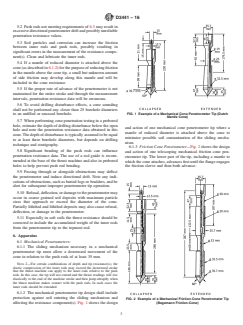
FIG. 1 Example of a Mechanical Cone Penetrometer Tip (Dutch
to an unfilled or uncased borehole.
Mantle Cone)
5.7 When performing cone penetration testing in a prebored
hole, estimate the depth of drilling disturbance below the open
and action of one mechanical cone penetrometer tip where a
hole and note the penetration resistance data obtained in this
mantle of reduced diameter is attached above the cone to
zone.Thedepthofdisturbanceistypicallyassumedtobeequal
minimize possible soil contamination of the sliding mecha-
to at least three borehole diameters, but depends on drilling
nism.
technique and stratigraphy.
6.1.3 Friction Cone Penetrometer—Fig. 2 shows the design
5.8 Significant bending of the push rods can influence
and action of one telescoping mechanical friction cone pen-
penetration resistance data. The use of a rod guide is recom-
etrometer tip. The lower part of the tip, including a mantle to
mended at the base of the thrust machine and also in prebored
which the cone attaches, advances first until the flange engages
holes to help prevent push rod bending.
the friction sleeve and then both advance.
5.9 Passing through or alongside obstructions may deflect
the penetrometer and induce directional drift. Note any indi-
cations of obstructions, such as buried logs or boulders, and be
alert for subsequent improper penetrometer tip operation.
5.10 Refusal,deflection,ordamagetothepenetrometermay
occur in coarse grained soil deposits with maximum particle
sizes that approach or exceed the diameter of the cone.
Partially lithified and lithified deposits may also cause refusal,
deflection, or damage to the penetrometer.
5.11 Especially in soft soils the thrust resistance should be
corrected to include the accumulated weight of the inner rods
from the penetrometer tip to the topmost rod.
6. Apparatus
6.1 Mechanical Penetrometers:
6.1.1 The sliding mechanism necessary in a mechanical
penetrometer tip must allow a downward movement of the
cone in relation to the push rods of at least 35 mm.
NOTE 2—For certain combinations of depth and tip resistance(s), the
elastic compression of the inner rods may exceed the downward stroke
that the thrust machine can apply to the inner rods relative to the push
rods. In this case, the tip will not extend and the thrust readings will rise
elastically to the end of the machine stroke and then jump abruptly when
the thrust machine makes contact with the push rods. In such cases the
inner rods should be extended.
6.1.2 The mechanical penetrometer tip design shall include
protection against soil entering the sliding mechanism and
FIG. 2 Example of a Mechanical Friction-Cone Penetrometer Tip
affecting the resistance component(s). Fig. 1 shows the design (Begemann Friction-Cone)
D3441 − 16
NOTE3—Theshoulderatthelowerendofthefrictionsleeveencounters
6.6 Thrust Measuring Equipment—The penetration resis-
end-bearing resistance. In sand, as much as two thirds of the sleeve
tanceshallbemeasuredatthesurfacebyasuitabledevicesuch
resistancemayconsistofbearingonthisshoulder.Ignorethiseffectinsoft
as a hydraulic or electric load cell or a proving ring. The thrust
to medium clays.
measurement equipment shall be calibrated to provide thrust
6.2 Cone tip and Friction Sleeve:
measurements in kN with an accuracy of 62.5 % or better and
6.2.1 Cone Tip—The cone tip shall have 60°(65°) point
a precision of 1 kN or less. Calibrate the thrust measurement
angle and a base diameter d between 35.3 and 36 mm,
equipment at regularly scheduled intervals as recommended by
c
resulting in a projected area of approximately 1,000 mm . The
the manufacturer, such as annually or after a specified amount
point of the cone tip shall have a radius less than or equal to 3
of accumulated testing. However, the equipment shall be
mm.
calibrated at least every two years and following any repair of
the equipment.
6.2.2 Friction Sleeve—The friction sleeve shall have a
diameter d between d and d + 0.35 mm, with d the base
f c c c
NOTE 4—Special, and preferably redundant, instrumentation may be
diameter of the cone tip. No other part of the penetrometer tip
required in the offshore environment to ensure this accuracy and the
shall project outside the sleeve diameter. The surface area of
proper operation of all the remote systems involved.
the sleeve shall be 15,000 mm 62%.
6.7 Thrust Machine and Reaction—Thethrustmachineshall
6.2.3 Theconetipandthefrictionsleeveshallbemadefrom
provide a continuous stroke, preferably over a distance greater
steel of a type and hardness suitable to resist wear due to
than 1 m. The thrust machine should be capable of adjusting
abrasion by soil. The friction sleeve shall have and maintain
push direction through the use of a leveling system such that
with use a roughness of 0.4 µm 6 0.25 µm measured in the
push initiates in a vertical orientation. The machine must
longitudinal direction.
advance the penetrometer tip and push rods at a smooth,
6.2.4 Wear of Tip—Penetration into abrasive soils eventu-
constant rate while the magnitude of thrust can fluctuate. The
ally wears down or scours the penetrometer tip. Cone tips that
thrust machine must be anchored or ballasted, or both, so that
have worn to the point that they no longer meet the dimen-
it provides the necessary reaction for the penetrometer and
sional requirements given in 6.2.1 or the roughness require-
does not move relative to the soil surface during thrust.
ments given in 6.2.3 shall be replaced.
NOTE 5—Cone penetration soundings usually require thrust capabilities
6.3 Push Rods—Made of suitable steel, these rods must ranging from 100 to 200 kN. The type of reaction provided may affect
penetrometer resistance(s) measured in near surface layers. If these
have a section adequate to sustain without buckling, the thrust
conditions are evident, they should be noted in reports.
required to advance the penetrometer tip. They must have an
outsidediameternotgreaterthanthediameterofthebaseofthe
6.8 Prevention of Rod Bending Above Surface—Use a tubu-
coneforalengthofatleast0.4mabovethebase,or,inthecase lar rod guide, at the base of the thrust machine, of sufficient
of the friction-cone penetrometer, at least 0.3 m above the top
length to
...