

ASTM D8067/D8067M-17
(Test Method)Standard Test Method for In-Plane Shear Properties of Sandwich Panels Using a Picture Frame Fixture
General Information
- Abstract
SIGNIFICANCE AND USE
5.1 In-plane shear loading tests on flat sandwich constructions may be conducted to determine the sandwich panel in-plane shear stiffness, the face sheets’ in-plane strength, the core shear instability strength, or panel buckling response.
5.2 This test method can be used to produce face sheet strength data for structural design allowables, material specifications, and research and development applications; it may also be used as a quality control test for bonded sandwich panels.
5.3 Factors that influence the panel strength and shall therefore be reported include the following: face sheet material, core material, adhesive material, methods of material fabrication, face sheet stacking sequence and overall thickness, core geometry (cell size), core shear and compressive strength, core shear and compressive stiffness, adhesive thickness, specimen geometry, specimen preparation, specimen conditioning, environment of testing, specimen alignment, loading procedure, speed of testing, face sheet void content, adhesive void content, and face sheet volume percent reinforcement. Further, face sheet strength may be different between precured/bonded and co-cured face sheets of the same material.
SCOPE
1.1 This test method covers determination of apparent in-plane shear strength and stiffness properties of flat sandwich constructions with composite face sheets. Permissible core material forms include those with continuous bonding surfaces (such as balsa wood and foams) as well as those with discontinuous bonding surfaces (such as honeycomb).
1.2 The square test specimen with corner notches is mechanically fastened to a pinned metal frame along each edge. The frame is loaded in uni-axial tension which produces tensile forces in the frame elements at a 45° angle to the applied tension. These tensile forces act along the edges of the specimen to cause a state of predominately shear stress to transfer the applied force through the specimen. Procedure A uses a specimen without edge doublers; Procedure B uses a specimen with four discrete edge doublers; Procedure C uses a specimen with a continuous edge doubler.
1.3 The values stated in either SI units or inch-pound units are to be regarded separately as standard. The values stated in each system may not be exact equivalents; therefore, each system shall be used independently of the other. Combining values from the two systems may result in non-conformance with the standard.
1.3.1 Within the text the inch-pound units are shown in brackets.
1.4 This standard does not purport to address all of the safety concerns, if any, associated with its use. It is the responsibility of the user of this standard to establish appropriate safety and health practices and determine the applicability of regulatory limitations prior to use. .
- Status
- Published
- Publication Date
- 31-Dec-2016
- Technical Committee
- D30 - Composite Materials
- Drafting Committee
- D30.09 - Sandwich Construction
Overview
ASTM D8067/D8067M-17 is an important standard developed by ASTM International, entitled Standard Test Method for In-Plane Shear Properties of Sandwich Panels Using a Picture Frame Fixture. This test method provides a consistent approach for determining the apparent in-plane shear strength and shear stiffness of flat sandwich constructions with composite face sheets, making it a valuable reference in structural design, materials engineering, and quality assurance of advanced sandwich panels.
Sandwich panels, commonly used in aerospace, automotive, marine, and construction industries, often feature composite face sheets with core materials such as balsa wood, foam, or honeycomb. The in-plane shear properties of these panels are critical for ensuring structural performance under operational loads. Using a standardized picture frame test fixture, this method establishes protocols for testing panel behavior under quasi-pure shear conditions, enabling accurate data for design allowables, material specifications, and research and development.
Key Topics
- In-Plane Shear Testing: The method applies tensile forces at a 45° angle using a picture-frame fixture, inducing predominantly in-plane shear stress in the panel.
- Core and Face Sheet Materials: Supports continuous (e.g., foam, balsa) and discontinuous (e.g., honeycomb) bonding surfaces for core materials, with composite face sheets of various layups and thicknesses.
- Test Procedures: Describes three procedures for specimens:
- Procedure A (no edge doublers)
- Procedure B (discrete edge doublers)
- Procedure C (continuous edge doubler)
- Measured Properties: Delivers values for shear strength, shear modulus, and identifies failure modes including face sheet fracture, wrinkling, dimpling, core instability, and more.
- Factors Influencing Strength: Emphasizes that results depend on factors such as face sheet and core material, adhesives, fabrication method, stacking sequence, core geometry, specimen prep, conditioning, and environmental test conditions.
- Specimen Preparation: Provides detailed guidance on specimen geometry, potting, doubler configuration, and accurate labeling and documentation.
- Data Reporting and Analysis: Requires reporting of specimen dimensions, failure modes, force-displacement and force-strain data, and statistical analysis of results.
Applications
- Structural Design: Generates design data for allowable in-plane shear properties in sandwich panels, which is essential for engineering safe, efficient structures in aerospace, automotive, marine, and civil industries.
- Material Specification: Assists in specifying material requirements and validating new composite and core material systems for high-performance applications.
- Quality Control: Used as a quality assurance tool to confirm the bonding, construction, and performance consistency of manufactured panels.
- Research and Development: Supports innovation in composite sandwich panel technologies by enabling rigorous, repeatable measurement of shear properties under a variety of test conditions.
- Failure Analysis: Helps establish detailed failure criteria and the effectiveness of manufacturing processes, varying materials, and adhesive systems.
Related Standards
For comprehensive sandwich panel testing and terminology, several ASTM standards are referenced within ASTM D8067/D8067M-17, including:
- ASTM D883 - Terminology Relating to Plastics
- ASTM D3878 - Terminology for Composite Materials
- ASTM D5229/D5229M - Moisture Absorption Properties and Equilibrium Conditioning of Polymer Matrix Composite Materials
- ASTM E4 - Practices for Force Verification of Testing Machines
- ASTM E6 - Terminology Relating to Methods of Mechanical Testing
- ASTM E177 - Practice for Use of the Terms Precision and Bias in ASTM Test Methods
- ASTM E251 - Test Methods for Performance Characteristics of Metallic Bonded Resistance Strain Gages
- ASTM E456 - Terminology Relating to Quality and Statistics
These related standards provide terminology, equipment calibration, test methods, and statistical analysis procedures to ensure robust, consistent test data.
Keywords: in-plane shear strength, sandwich panel test, picture frame fixture, composite face sheets, core shear stiffness, ASTM D8067, structural panel standards, quality control, sandwich construction testing, shear modulus
Relations
- Effective Date
- 01-Feb-2024
- Effective Date
- 01-Nov-2023
- Effective Date
- 01-Apr-2022
- Effective Date
- 01-Jun-2020
- Effective Date
- 01-May-2020
- Effective Date
- 01-Mar-2020
- Effective Date
- 01-Jan-2020
- Effective Date
- 15-Oct-2019
- Effective Date
- 01-Aug-2019
- Effective Date
- 15-Apr-2019
- Effective Date
- 15-Apr-2019
- Effective Date
- 01-Feb-2019
- Effective Date
- 01-Dec-2018
- Effective Date
- 01-Nov-2018
- Effective Date
- 01-Apr-2018
Get Certified
Connect with accredited certification bodies for this standard

DIN CERTCO
DIN Group product certification.

Smithers Quality Assessments
US management systems and product certification.
Sponsored listings
Frequently Asked Questions
ASTM D8067/D8067M-17 is a standard published by ASTM International. Its full title is "Standard Test Method for In-Plane Shear Properties of Sandwich Panels Using a Picture Frame Fixture". This standard covers: SIGNIFICANCE AND USE 5.1 In-plane shear loading tests on flat sandwich constructions may be conducted to determine the sandwich panel in-plane shear stiffness, the face sheets’ in-plane strength, the core shear instability strength, or panel buckling response. 5.2 This test method can be used to produce face sheet strength data for structural design allowables, material specifications, and research and development applications; it may also be used as a quality control test for bonded sandwich panels. 5.3 Factors that influence the panel strength and shall therefore be reported include the following: face sheet material, core material, adhesive material, methods of material fabrication, face sheet stacking sequence and overall thickness, core geometry (cell size), core shear and compressive strength, core shear and compressive stiffness, adhesive thickness, specimen geometry, specimen preparation, specimen conditioning, environment of testing, specimen alignment, loading procedure, speed of testing, face sheet void content, adhesive void content, and face sheet volume percent reinforcement. Further, face sheet strength may be different between precured/bonded and co-cured face sheets of the same material. SCOPE 1.1 This test method covers determination of apparent in-plane shear strength and stiffness properties of flat sandwich constructions with composite face sheets. Permissible core material forms include those with continuous bonding surfaces (such as balsa wood and foams) as well as those with discontinuous bonding surfaces (such as honeycomb). 1.2 The square test specimen with corner notches is mechanically fastened to a pinned metal frame along each edge. The frame is loaded in uni-axial tension which produces tensile forces in the frame elements at a 45° angle to the applied tension. These tensile forces act along the edges of the specimen to cause a state of predominately shear stress to transfer the applied force through the specimen. Procedure A uses a specimen without edge doublers; Procedure B uses a specimen with four discrete edge doublers; Procedure C uses a specimen with a continuous edge doubler. 1.3 The values stated in either SI units or inch-pound units are to be regarded separately as standard. The values stated in each system may not be exact equivalents; therefore, each system shall be used independently of the other. Combining values from the two systems may result in non-conformance with the standard. 1.3.1 Within the text the inch-pound units are shown in brackets. 1.4 This standard does not purport to address all of the safety concerns, if any, associated with its use. It is the responsibility of the user of this standard to establish appropriate safety and health practices and determine the applicability of regulatory limitations prior to use. .
SIGNIFICANCE AND USE 5.1 In-plane shear loading tests on flat sandwich constructions may be conducted to determine the sandwich panel in-plane shear stiffness, the face sheets’ in-plane strength, the core shear instability strength, or panel buckling response. 5.2 This test method can be used to produce face sheet strength data for structural design allowables, material specifications, and research and development applications; it may also be used as a quality control test for bonded sandwich panels. 5.3 Factors that influence the panel strength and shall therefore be reported include the following: face sheet material, core material, adhesive material, methods of material fabrication, face sheet stacking sequence and overall thickness, core geometry (cell size), core shear and compressive strength, core shear and compressive stiffness, adhesive thickness, specimen geometry, specimen preparation, specimen conditioning, environment of testing, specimen alignment, loading procedure, speed of testing, face sheet void content, adhesive void content, and face sheet volume percent reinforcement. Further, face sheet strength may be different between precured/bonded and co-cured face sheets of the same material. SCOPE 1.1 This test method covers determination of apparent in-plane shear strength and stiffness properties of flat sandwich constructions with composite face sheets. Permissible core material forms include those with continuous bonding surfaces (such as balsa wood and foams) as well as those with discontinuous bonding surfaces (such as honeycomb). 1.2 The square test specimen with corner notches is mechanically fastened to a pinned metal frame along each edge. The frame is loaded in uni-axial tension which produces tensile forces in the frame elements at a 45° angle to the applied tension. These tensile forces act along the edges of the specimen to cause a state of predominately shear stress to transfer the applied force through the specimen. Procedure A uses a specimen without edge doublers; Procedure B uses a specimen with four discrete edge doublers; Procedure C uses a specimen with a continuous edge doubler. 1.3 The values stated in either SI units or inch-pound units are to be regarded separately as standard. The values stated in each system may not be exact equivalents; therefore, each system shall be used independently of the other. Combining values from the two systems may result in non-conformance with the standard. 1.3.1 Within the text the inch-pound units are shown in brackets. 1.4 This standard does not purport to address all of the safety concerns, if any, associated with its use. It is the responsibility of the user of this standard to establish appropriate safety and health practices and determine the applicability of regulatory limitations prior to use. .
ASTM D8067/D8067M-17 is classified under the following ICS (International Classification for Standards) categories: 83.120 - Reinforced plastics. The ICS classification helps identify the subject area and facilitates finding related standards.
ASTM D8067/D8067M-17 has the following relationships with other standards: It is inter standard links to ASTM D883-24, ASTM D883-23, ASTM E456-13a(2022)e1, ASTM E251-20a, ASTM E251-20, ASTM D5229/D5229M-20, ASTM D883-20, ASTM D3878-19a, ASTM D883-19c, ASTM D3878-19, ASTM D883-19a, ASTM D883-19, ASTM D883-18a, ASTM D883-18, ASTM D3878-18. Understanding these relationships helps ensure you are using the most current and applicable version of the standard.
ASTM D8067/D8067M-17 is available in PDF format for immediate download after purchase. The document can be added to your cart and obtained through the secure checkout process. Digital delivery ensures instant access to the complete standard document.
Standards Content (Sample)
This international standard was developed in accordance with internationally recognized principles on standardization established in the Decision on Principles for the
Development of International Standards, Guides and Recommendations issued by the World Trade Organization Technical Barriers to Trade (TBT) Committee.
Designation: D8067/D8067M − 17
Standard Test Method for
In-Plane Shear Properties of Sandwich Panels Using a
Picture Frame Fixture
This standard is issued under the fixed designation D8067/D8067M; the number immediately following the designation indicates the
year of original adoption or, in the case of revision, the year of last revision. A number in parentheses indicates the year of last
reapproval. A superscript epsilon (´) indicates an editorial change since the last revision or reapproval.
1. Scope 2. Referenced Documents
1.1 This test method covers determination of apparent 2.1 ASTM Standards:
in-plane shear strength and stiffness properties of flat sandwich D883 Terminology Relating to Plastics
constructions with composite face sheets. Permissible core D3878 Terminology for Composite Materials
material forms include those with continuous bonding surfaces D5229/D5229M Test Method for MoistureAbsorption Prop-
(such as balsa wood and foams) as well as those with erties and Equilibrium Conditioning of Polymer Matrix
discontinuous bonding surfaces (such as honeycomb). Composite Materials
E4 Practices for Force Verification of Testing Machines
1.2 The square test specimen with corner notches is me-
E6 Terminology Relating to Methods of Mechanical Testing
chanically fastened to a pinned metal frame along each edge.
E177 Practice for Use of the Terms Precision and Bias in
Theframeisloadedinuni-axialtensionwhichproducestensile
ASTM Test Methods
forces in the frame elements at a 45° angle to the applied
E251 Test Methods for Performance Characteristics of Me-
tension. These tensile forces act along the edges of the
tallic Bonded Resistance Strain Gages
specimen to cause a state of predominately shear stress to
E456 Terminology Relating to Quality and Statistics
transfer the applied force through the specimen. Procedure A
uses a specimen without edge doublers; Procedure B uses a
3. Terminology
specimen with four discrete edge doublers; Procedure C uses a
3.1 Definitions—Terminology D3878 defines terms relating
specimen with a continuous edge doubler.
to high-modulus fibers and their composites, as well as terms
1.3 The values stated in either SI units or inch-pound units
relating to sandwich constructions. Terminology D883 defines
are to be regarded separately as standard. The values stated in
terms relating to plastics. Terminology E6 defines terms
each system may not be exact equivalents; therefore, each
relating to mechanical testing. Terminology E456 and Practice
system shall be used independently of the other. Combining
E177 define terms relating to statistics. In the event of a
values from the two systems may result in non-conformance
conflict between terms, Terminology D3878 shall have prece-
with the standard.
dence over the other terminologies.
1.3.1 Within the text the inch-pound units are shown in
3.2 Acronyms:
brackets.
3.2.1 CV—coefficient of variation statistic of a sample
1.4 This standard does not purport to address all of the
population for a given property (in percent)
safety concerns, if any, associated with its use. It is the
su
3.2.2 F —face sheet ultimate shear stress
responsibility of the user of this standard to establish appro-
priate safety, health, and environmental practices and deter-
3.2.3 G—effective face sheet chord shear modulus
f
mine the applicability of regulatory limitations prior to use. .
3.2.4 γ—measured engineering shear strain in face sheet
1.5 This international standard was developed in accor-
3.2.5 L—length of specimen between doubler edges
dance with internationally recognized principles on standard-
3.2.6 n—number of specimens
ization established in the Decision on Principles for the
Development of International Standards, Guides and Recom-
3.2.7 P—applied force
mendations issued by the World Trade Organization Technical
3.2.8 P —maximumforcecarriedbytestspecimenbefore
max
Barriers to Trade (TBT) Committee.
failure
This test method is under the jurisdiction of ASTM Committee D30 on
Composite Materials and is the direct responsibility of Subcommittee D30.09 on For referenced ASTM standards, visit the ASTM website, www.astm.org, or
Sandwich Construction. contact ASTM Customer Service at service@astm.org. For Annual Book of ASTM
Current edition approved Jan. 1, 2017. Published January 2017. DOI: 10.1520/ Standards volume information, refer to the standard’s Document Summary page on
D8067_D8067M–17. the ASTM website.
Copyright © ASTM International, 100 Barr Harbor Drive, PO Box C700, West Conshohocken, PA 19428-2959. United States
D8067/D8067M − 17
3.2.9 q—running shear force per unit width along specimen specifications, and research and development applications; it
edge may also be used as a quality control test for bonded sandwich
panels.
3.2.10 S —standard deviation statistic of a sample popu-
n-1
5.3 Factors that influence the panel strength and shall
lation for a given property
therefore be reported include the following: face sheet
3.2.11 τ—face sheet shear stress
material, core material, adhesive material, methods of material
3.2.12 t—face sheet thickness fabrication, face sheet stacking sequence and overall thickness,
core geometry (cell size), core shear and compressive strength,
3.2.13 x —test result for an individual specimen from the
core shear and compressive stiffness, adhesive thickness,
sample population for a given property
specimen geometry, specimen preparation, specimen
3.2.14 x¯—mean or average (estimate of mean) of a sample
conditioning, environment of testing, specimen alignment,
population for a given property
loading procedure, speed of testing, face sheet void content,
adhesive void content, and face sheet volume percent rein-
4. Summary of Test Method
forcement. Further, face sheet strength may be different be-
tween precured/bonded and co-cured face sheets of the same
4.1 This test method consists of subjecting a square panel of
material.
sandwich construction to a set of forces along the panel edges
such that the applied force is transferred through the panel via
6. Interferences
a state of predominately shear stresses. The tensile forces are
6.1 Fixture Geometry—The basic configuration with
applied using a picture-frame loading fixture. By placing two
through-pins and corner notches may exhibit large deviations
strain gage rosettes in the center of the specimen, the apparent
from uniform stress. For example, in a configuration relative
shear stress-strain response of the panel can be measured.
close in geometry to Method C, the shear stress at the center
Out-of-plane panel deflection can be measured to assist in
was predicted by finite element analysis (FEA) to be more than
detecting panel buckling. It is noted that engineering shear
25 % lower than the value obtained from Eq 2, while the shear
strain, as opposed to tensorial shear strain, is used throughout
stress increases near the edges and corners so that local
this standard.
buckling or material failure is likely to originate at the
NOTE1—Tensorialshearstrainmaybeusedinanalysisandreportingof
periphery of the gage area. Farley and Baker reported on the
results from tests using this standard, but requires the appropriate
strong influence of the location of the pivot pins on the stress
inclusion of the factor of 2, and clear documentation shall be made in the
distribution. Movingthepivotstothecornersofthegagearea,
test report.
while requiring a significantly more complicated test fixture,
4.2 Procedure A uses a specimen without edge doublers.
provides a greatly improved stress distribution. Furthermore it
Procedure B uses a specimen with four discrete edge doublers;
was reported that stiff edge doublers (e.g. steel rather than
the data analysis for this procedure assumes that the doublers
composite) increased the uniformity of the stresses.
do not carry significant shear force. Procedure C uses a
6.2 Material and Specimen Preparation—Poormaterialfab-
specimen with a continuous edge doubler; the data analysis for
rication practices and damage induced by improper specimen
this procedure assumes that the doublers carry some shear
machining are known causes of high data scatter in composites
force, and a correction is made to the applied force before
and sandwich structures in general. A specific material factor
calculating the shear stress in the panel.
that affects sandwich cores is variability in core density.
4.3 The acceptable failure modes are face sheet fracture,
Important aspects of sandwich core specimen preparation that
face sheet dimpling, face sheet wrinkling or core shear insta- contribute to data scatter include the existence of joints, voids
bility. Failure of the sandwich core-to-face sheet bond preced-
or other core discontinuities, out-of-plane curvature, and sur-
ingoneofthepreviouslistedmodesisnotanacceptablefailure face roughness.
mode. Failure originating at the panel corner notches is not an
6.3 Geometry—Specific geometric factors that affect sand-
acceptable failure mode. Buckling of the panel prior to face
wich face sheet strength include face sheet thickness, core cell
sheet or core failure is not an acceptable failure mode, unless
geometry, and face sheet surface flatness. This test has been
otherwise specified as an acceptable response by the test
mainly used on panels with relatively thin face sheets (0.5 mm
requestor. The test specimen face sheet thicknesses, core
[0.020 in.]). The reliability of testing panels with thicker face
thickness, core material and adhesive material must be selected
sheets is unknown.
to avoid the unacceptable failure modes.
6.4 Environment—Resultsareaffectedbytheenvironmental
conditions under which specimens are conditioned, as well as
5. Significance and Use
the conditions under which the tests are conducted. Specimens
5.1 In-plane shear loading tests on flat sandwich construc-
tested in various environments can exhibit significant differ-
tions may be conducted to determine the sandwich panel
ences in both strength behavior and failure mode. Critical
in-plane shear stiffness, the face sheets’ in-plane strength, the
environments must be assessed independently for each specific
core shear instability strength, or panel buckling response.
5.2 This test method can be used to produce face sheet
1. G.L. Farley and D.J. Baker, “In-Plane Shear Test of Thin Panels,”
strength data for structural design allowables, material Experimental Mechanics, Vol. 23, No. 1, 1983, pp. 81¯¯–87.
D8067/D8067M − 17
combination of core material, face sheet material, and core-to-
face sheet interfacial adhesive (if used) that is tested.
6.5 Elastic Modulus Measurement—Shear modulus calcula-
tions in this test method assume a uniform distribution of shear
stress and engineering shear strain in the center region of the
specimen. The actual uniformity is dependent on the material
orthotropy, the panel geometry, and doubler material and
thickness.
6.6 Potting—Edgepottingofopencellcores(fillingthecore
cells with resin type material) may be used in the areas under
the loading bars. The use of potting may be necessary to avoid
crushing the panel when the edge fasteners are installed.
6.7 Edge Doublers—These are used to increase the thick-
ness of the face sheets to avoid bearing failures in the face
sheets at the edge fastener holes.
6.8 Edge Doubler Adhesive—A suitable adhesive shall be
selected for the test environment. The cure temperature of the
adhesive should not exceed the face sheet material dry glass
transition temperature, Tg, to avoid changes to the face sheet
material. The limitation on cure temperature should also
consider any exothermic temperature increases in the adhesive
duringcure(exothermicreactionsarenotunusualforadhesives
used in secondary bonding).
7. Apparatus
7.1 Micrometers and Calipers—A micrometer witha4to
7 mm[0.16to0.28in.]nominaldiameterball-interfaceoraflat
anvil interface shall be used to measure the specimen thick-
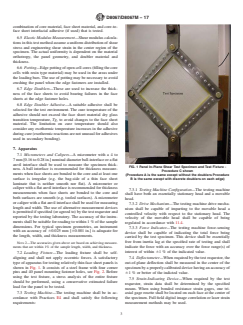
FIG. 1 Panel In-Plane Shear Test Specimen and Test Fixture -
ness. A ball interface is recommended for thickness measure-
Procedure C shown
ments when face sheets are bonded to the core and at least one
(Procedure A is the same except without the doublers Procedure
surface is irregular (e.g. the bag-side of a thin face sheet B is the same except with discrete doublers on each edge)
laminate that is neither smooth nor flat). A micrometer or
caliper with a flat anvil interface is recommended for thickness
7.3.1 Testing Machine Configuration—The testing machine
measurements when face sheets are bonded to the core and
shall have both an essentially stationary head and a movable
both surfaces are smooth (e.g. tooled surfaces). A micrometer
head.
or caliper with a flat anvil interface shall be used for measuring
7.3.2 Drive Mechanism—The testing machine drive mecha-
length and width. The use of alternative measurement devices
nism shall be capable of imparting to the movable head a
is permitted if specified (or agreed to) by the test requestor and
controlled velocity with respect to the stationary head. The
reported by the testing laboratory. The accuracy of the instru-
velocity of the movable head shall be capable of being
ments shall be suitable for reading to within1%ofthe sample
regulated in accordance with 11.4.
dimensions. For typical specimen geometries, an instrument
7.3.3 Force Indicator—The testing machine force-sensing
with an accuracy of 60.025 mm [60.001 in.] is adequate for
device shall be capable of indicating the total force being
the length, width, and thickness measurements.
carried by the test specimen. This device shall be essentially
free from inertia lag at the specified rate of testing and shall
NOTE 2—The accuracies given above are based on achieving measure-
ments that are within 1% of the sample length, width, and thickness. indicate the force with an accuracy over the force range(s) of
interest of within 61 % of the indicated value.
7.2 Loading Fixture—The loading fixture shall be self-
aligning and shall not apply eccentric forces. A satisfactory
7.4 Deflectometer—When required by the test requestor, the
type of apparatus for testing relatively thin face sheet panels is out-of-plane deflection shall be measured in the center of the
shown in Fig. 1. It consists of a steel frame with four corner
specimenbyaproperlycalibrateddevicehavinganaccuracyof
pins and 40 panel mounting fastener holes, see Fig. 2. Before 61 % or better of the indicted value.
using the test fixture, a stress analysis of the entire fixture
7.5 Strain-Indicating Device—When required by the test
should be performed, using a conservative estimated failure
requestor, strain data shall be determined by the specified
load for the panel to be tested.
means. When using bonded resistance strain gages, one tri-
7.3 Testing Machine—The testing machine shall be in ac- axial gage rosette shall be located on each face at the center of
cordance with Practices E4 and shall satisfy the following the specimen. Full field digital image correlation or laser strain
requirements: measurement methods may be used.
D8067/D8067M − 17
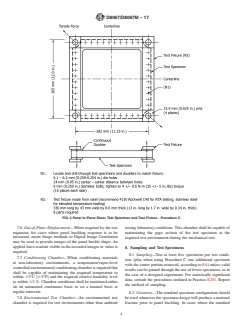
FIG. 2 Panel In-Plane Shear Test Specimen and Test Fixture - Procedure C
7.6 Out-of-Plane Displacement—When required by the test testing laboratory conditions. This chamber shall be capable of
requestor, for cases where panel buckling response is to be maintaining the gage section of the test specimen at the
measured, moire fringe methods or Digital Image Correlation
required test environment during the mechanical test.
may be used to provide images of the panel buckle shape. An
applied force readout visible in the recorded images or video is
8. Sampling and Test Specimens
required.
8.1 Sampling—Test at least five specimens per test condi-
7.7 Conditioning Chamber—When conditioning materials
tion (plus when using Procedure C one additional specimen
at non-laboratory environments, a temperature/vapor-level
with the center portion removed, according to 8.6) unless valid
controlledenvironmentalconditioningchamberisrequiredthat
results can be gained through the use of fewer specimens, as in
shall be capable of maintaining the required temperature to
the case of a designed experiment. For statistically significant
within 63°C [65°F] and the required relative humidity level
data, consult the procedures outlined in Practice E251. Report
to within 63 %. Chamber conditions shall be monitored either
the method of sampling.
on an automated continuous basis or on a manual basis at
regular intervals.
8.2 Geometry—The standard specimen configuration should
be used whenever the specimen design will produce a material
7.8 Environmental Test Chamber—An environmental test
chamber is required for test environments other than ambient fracture prior to panel buckling. In cases where the standard
D8067/D8067M − 17
specimen configuration may buckle prior to fracture, a non- configuration, face sheets consisting of a laminated composite
standard specimen may be designed. material shall be balanced and symmetric about the sandwich
8.2.1 Standard Configuration—The standard test specimen panel mid-plane.
shall be of constant thickness (face sheets and core), with a
8.3.3 Stiffness—For the standard specimen, the two face
width and a length of 305 mm [12.0 inch], as in Fig. 3. The
sheets shall be the same material, thickness, and layup. The
depth of the specimen (not including any doublers) shall be
calculations assume constant and equal face sheet stiffness
equal to the thickness of the sandwich construction.
properties. This assumption may not be applicable for certain
8.2.2 Non-Standard Configurations—Larger or smaller non-
face sheet materials which exhibit significant non-linear stress-
standard specimens using correspondingly sized test fixtures
strain behavior.
may be tested using the procedures of this method.
8.3.4 Face Sheet Thickness—Accurate measurement of face
8.3 Face Sheets sheet thickness is difficult after bonding or co-curing of the
8.3.1 Material—The face sheets may be any continuous, face sheets and core. The test requestor is responsible for
constant thickness composite laminate. specifying the face sheet thicknesses to be used for the
calculations in this test method. For precured composite face
8.3.2 Composite Layup—The apparent shear strength and
stiffness obtained from this method may be dependent upon the sheets that are secondarily bonded to the core, the face sheet
face sheet stacking sequence. For the standard test thickness should be measured prior to bonding. In these cases
FIG. 3 Standard Specimen Dimensions
D8067/D8067M − 17
the test requestor may specify that either or both measured and testpanelspecimenwithasuitableadhesive(atotalofeight(8)
nominal thicknesses be used in the calculations. For co-cured doublers are required). A room temperature curing adhesive
composite face sheets, the thicknesses are generally calculated shall be used unless otherwise specified by the test requestor.
using nominal per ply thickness values. 8.7.2 Doublers—Procedure C—Fiberglass doublers 305 6
1mmby40 6 1 mm wide (12.0 6 0.04 in. by 1.5 6 0.04 in.
8.4 Core—For test specimens using a honeycomb core
wide) (see Fig. 5) shall be bonded to each side of the test panel
material, the core ribbon direction shall be specified by the test
specimen with a suitable adhesive. See Fig. 6. A room
requestor on the specimen drawing. The ribbon direction is
temperature curing adhesive shall be used unless otherwise
typically oriented parallel to one of the specimen edges.
specified by the test requestor.
8.5 Potting—The use of potting in the areas under the
8.7.3 Machining—After the doubler adhesive has cured, the
loading bars may be necessary to avoid crushing the panel
test specimen shall be machined according to Fig. 6.
when the edge fasteners are installed. The potting may be
8.7.4 General Preparation—Specimen preparation is ex-
installedinthecorepriortobondingthefacesheetstothecore,
tremely important for this test method. Take preca
...