

SIST EN 301 025 V2.1.1:2016
(Main)VHF radiotelephone equipment for general communications and associated equipment for Class D Digital Selective Calling (DSC) - Harmonised Standard covering the essential requirements of articles 3.2 and 3.3(g) of the Directive 2014/53/EU
General Information
- Abstract
The present document covers the minimum requirements for general communication for shipborne fixed installations using
a VHF radiotelephone operating in certain frequency bands allocated to the maritime mobile service using either 25 kHz
or 25 kHz and 12,5 kHz channels and associated equipment for DSC - class D.
These requirements include the relevant provisions of the ITU Radio Regulations, appendix 18 [1], Recommendations
ITU-R M.493-13 [3] (where class D is defined), M.825-3 [i.4] and incorporate the relevant guidelines of the IMO as detailed
in IMO Circular MSC/Circ-803 [i.1].
The present document also specifies technical characteristics, methods of measurement and required test results.
The present document contains requirements to demonstrate that "... Radio equipment shall be so constructed that it both
effectively uses and supports the efficient use of radio spectrum in order to avoid harmful interference" [i.3] and that
"....radio equipment supports certain features ensuring access to emergency services" [i.3].
In addition to the present document, other ENs that specify technical requirements in respect of essential requirements
under other parts of article 3 of the Directive 2014/53/EU [i.3] may apply to equipment within the scope of the present
document.
- Status
- Published
- Publication Date
- 21-Jan-2016
- Technical Committee
- MOC - Mobile Communications
- Current Stage
- 6060 - National Implementation/Publication (Adopted Project)
- Start Date
- 11-Jan-2016
- Due Date
- 17-Mar-2016
- Completion Date
- 22-Jan-2016
Buy Documents
ETSI EN 301 025 V2.1.0 (2015-08) - VHF radiotelephone equipment for general communications and associated equipment for Class D Digital Selective Calling (DSC); Harmonised Standard covering the essential requirements of articles 3.2 and 3.3(g) of the Directive 2014/53/EU
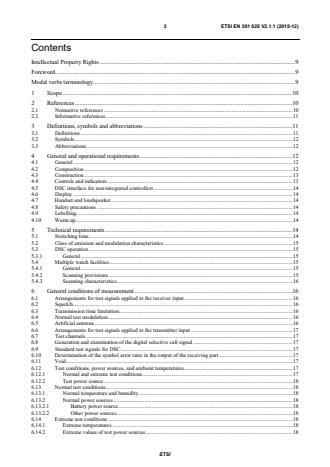
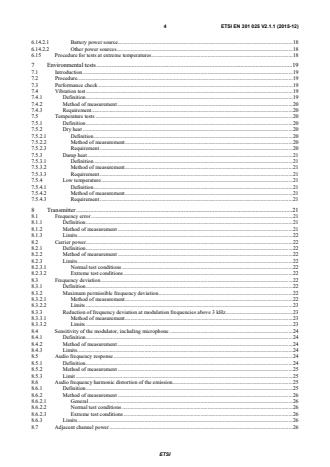
VHF radiotelephone equipment for general communications and associated equipment for Class - Digital Selective Calling (DSC); Harmonised Standard covering the essential requirements of articles 3.2 and 3.3(g) of the Directive 2014/53/EU

Overview
SIST EN 301 025 V2.1.1:2016 is a harmonised European standard for VHF radiotelephone equipment used for general maritime communications, including equipment for Class D Digital Selective Calling (DSC). Developed under the framework of Directive 2014/53/EU (Radio Equipment Directive), this standard specifies the essential technical requirements to ensure equipment effectiveness, safety, and efficient radio spectrum use aboard ships.
This standard establishes the minimum requirements for shipborne fixed VHF radios operating in maritime frequency bands, with channels spaced at 25 kHz and 12.5 kHz, and associated DSC functionality as defined in ITU-R Recommendation M.493 (Class D). Compliance with SIST EN 301 025 V2.1.1:2016 demonstrates that equipment meets the relevant provisions of international maritime and telecommunications regulations.
Key Topics
- Operational Requirements
- Defines minimum performance and construction characteristics for safe and reliable shipborne VHF radios.
- Specifies DSC interoperability to support distress and emergency communications.
- Essential Technical Requirements
- Ensures the equipment uses the radio spectrum efficiently and avoids harmful interference.
- Covers frequency accuracy, emission characteristics, receiver sensitivity, and spectrum emissions.
- Testing and Measurement Procedures
- Outlines methods for verifying compliance of transmitter and receiver parameters.
- Includes both normal and extreme environmental and operational conditions (temperature, humidity, vibration).
- Safety and Labelling
- Requirements for controls, indicators, displays, handsets, and loudspeaker arrangements.
- Mandates clear labelling and necessary safety instructions for end users.
- Regulatory Context
- Aligns with ITU Radio Regulations, IMO guidelines (including IMO Circular MSC/Circ-803), and referenced ETSI and ITU documents.
Applications
SIST EN 301 025 V2.1.1:2016 is fundamental for manufacturers, installers, and ship operators in the maritime sector that utilize VHF radiotelephone systems. The standard supports:
- Marine Communication Compliance
- Ensures VHF radio equipment aboard commercial and leisure vessels is compliant with EU regulations and international safety standards.
- Safety at Sea
- Enables reliable distress, safety, and general communications, supporting Global Maritime Distress and Safety System (GMDSS) objectives.
- Shipboard Equipment Certification
- Provides a harmonised path for equipment to obtain CE marking in accordance with the Radio Equipment Directive (RED 2014/53/EU).
- Efficient Spectrum Use
- Reduces the risk of interference between maritime radio installations and supports coexistence in busy VHF communication channels.
Related Standards
- ITU-R M.493 - Specification for DSC in the maritime mobile service, including definitions for Class D equipment.
- ITU Radio Regulations, Appendix 18 - Frequency arrangements for the maritime mobile service.
- ETSI EN 300 162 - Minimum requirements for GMDSS radio equipment operating in the VHF band.
- Directive 2014/53/EU (RED) - Legal framework for placing radio equipment on the market within the European Union.
- IMO Circular MSC/Circ-803 - Guidance on deployment and testing of Class D DSC VHF radios.
Keywords: VHF radiotelephone equipment, maritime communication, Class D DSC, shipborne radio, harmonised standard, ETSI, RED compliance, marine safety, spectrum efficiency, equipment certification.
By adhering to SIST EN 301 025 V2.1.1:2016, maritime stakeholders ensure both robust general communications and readiness for emergency situations at sea, underpinning safe and effective maritime operations.
Buy Documents
ETSI EN 301 025 V2.1.0 (2015-08) - VHF radiotelephone equipment for general communications and associated equipment for Class D Digital Selective Calling (DSC); Harmonised Standard covering the essential requirements of articles 3.2 and 3.3(g) of the Directive 2014/53/EU
VHF radiotelephone equipment for general communications and associated equipment for Class - Digital Selective Calling (DSC); Harmonised Standard covering the essential requirements of articles 3.2 and 3.3(g) of the Directive 2014/53/EU
Get Certified
Connect with accredited certification bodies for this standard

ANCE
Mexican certification and testing association.

Intertek Slovenia
Intertek testing, inspection, and certification services in Slovenia.

LNE (Laboratoire National de Métrologie et d'Essais)
French national laboratory for metrology and testing.
Sponsored listings
Frequently Asked Questions
SIST EN 301 025 V2.1.1:2016 is a standard published by the Slovenian Institute for Standardization (SIST). Its full title is "VHF radiotelephone equipment for general communications and associated equipment for Class D Digital Selective Calling (DSC) - Harmonised Standard covering the essential requirements of articles 3.2 and 3.3(g) of the Directive 2014/53/EU". This standard covers: The present document covers the minimum requirements for general communication for shipborne fixed installations using a VHF radiotelephone operating in certain frequency bands allocated to the maritime mobile service using either 25 kHz or 25 kHz and 12,5 kHz channels and associated equipment for DSC - class D. These requirements include the relevant provisions of the ITU Radio Regulations, appendix 18 [1], Recommendations ITU-R M.493-13 [3] (where class D is defined), M.825-3 [i.4] and incorporate the relevant guidelines of the IMO as detailed in IMO Circular MSC/Circ-803 [i.1]. The present document also specifies technical characteristics, methods of measurement and required test results. The present document contains requirements to demonstrate that "... Radio equipment shall be so constructed that it both effectively uses and supports the efficient use of radio spectrum in order to avoid harmful interference" [i.3] and that "....radio equipment supports certain features ensuring access to emergency services" [i.3]. In addition to the present document, other ENs that specify technical requirements in respect of essential requirements under other parts of article 3 of the Directive 2014/53/EU [i.3] may apply to equipment within the scope of the present document.
The present document covers the minimum requirements for general communication for shipborne fixed installations using a VHF radiotelephone operating in certain frequency bands allocated to the maritime mobile service using either 25 kHz or 25 kHz and 12,5 kHz channels and associated equipment for DSC - class D. These requirements include the relevant provisions of the ITU Radio Regulations, appendix 18 [1], Recommendations ITU-R M.493-13 [3] (where class D is defined), M.825-3 [i.4] and incorporate the relevant guidelines of the IMO as detailed in IMO Circular MSC/Circ-803 [i.1]. The present document also specifies technical characteristics, methods of measurement and required test results. The present document contains requirements to demonstrate that "... Radio equipment shall be so constructed that it both effectively uses and supports the efficient use of radio spectrum in order to avoid harmful interference" [i.3] and that "....radio equipment supports certain features ensuring access to emergency services" [i.3]. In addition to the present document, other ENs that specify technical requirements in respect of essential requirements under other parts of article 3 of the Directive 2014/53/EU [i.3] may apply to equipment within the scope of the present document.
SIST EN 301 025 V2.1.1:2016 is classified under the following ICS (International Classification for Standards) categories: 33.060.99 - Other equipment for radiocommunications. The ICS classification helps identify the subject area and facilitates finding related standards.
SIST EN 301 025 V2.1.1:2016 is associated with the following European legislation: EU Directives/Regulations: 1999/5/EC, 2014/53/EU. When a standard is cited in the Official Journal of the European Union, products manufactured in conformity with it benefit from a presumption of conformity with the essential requirements of the corresponding EU directive or regulation.
SIST EN 301 025 V2.1.1:2016 is available in PDF format for immediate download after purchase. The document can be added to your cart and obtained through the secure checkout process. Digital delivery ensures instant access to the complete standard document.
Standards Content (Sample)
Draft ETSI EN 301 025 V2.1.0 (2015-08)
HARMONISED EUROPEAN STANDARD
VHF radiotelephone equipment for general communications
and associated equipment for Class "D"
Digital Selective Calling (DSC);
Harmonised Standard covering the essential requirements
of articles 3.2 and 3.3(g) of the Directive 2014/53/EU
2 Draft ETSI EN 301 025 V2.1.0 (2015-08)
Reference
REN/ERM-TG26-137
Keywords
DSC, maritime, radio, traffic, VHF
ETSI
650 Route des Lucioles
F-06921 Sophia Antipolis Cedex - FRANCE
Tel.: +33 4 92 94 42 00 Fax: +33 4 93 65 47 16
Siret N° 348 623 562 00017 - NAF 742 C
Association à but non lucratif enregistrée à la
Sous-Préfecture de Grasse (06) N° 7803/88
Important notice
The present document can be downloaded from:
http://www.etsi.org/standards-search
The present document may be made available in electronic versions and/or in print. The content of any electronic and/or
print versions of the present document shall not be modified without the prior written authorization of ETSI. In case of any
existing or perceived difference in contents between such versions and/or in print, the only prevailing document is the
print of the Portable Document Format (PDF) version kept on a specific network drive within ETSI Secretariat.
Users of the present document should be aware that the document may be subject to revision or change of status.
Information on the current status of this and other ETSI documents is available at
http://portal.etsi.org/tb/status/status.asp
If you find errors in the present document, please send your comment to one of the following services:
https://portal.etsi.org/People/CommiteeSupportStaff.aspx
Copyright Notification
No part may be reproduced or utilized in any form or by any means, electronic or mechanical, including photocopying
and microfilm except as authorized by written permission of ETSI.
The content of the PDF version shall not be modified without the written authorization of ETSI.
The copyright and the foregoing restriction extend to reproduction in all media.
© European Telecommunications Standards Institute 2015.
All rights reserved.
TM TM TM
DECT , PLUGTESTS , UMTS and the ETSI logo are Trade Marks of ETSI registered for the benefit of its Members.
TM
3GPP and LTE™ are Trade Marks of ETSI registered for the benefit of its Members and
of the 3GPP Organizational Partners.
GSM® and the GSM logo are Trade Marks registered and owned by the GSM Association.
ETSI
3 Draft ETSI EN 301 025 V2.1.0 (2015-08)
Contents
Intellectual Property Rights . 9
Foreword . 9
Modal verbs terminology . 9
1 Scope . 10
2 References . 10
2.1 Normative references . 10
2.2 Informative references . 11
3 Definitions, symbols and abbreviations . 11
3.1 Definitions . 11
3.2 Symbols . 12
3.3 Abbreviations . 12
4 General and operational requirements . 12
4.1 General . 12
4.2 Composition . 12
4.3 Construction . 13
4.4 Controls and indicators . 13
4.5 DSC interface for non-integrated controllers . 14
4.6 Display . 14
4.7 Handset and loudspeaker . 14
4.8 Safety precautions . 14
4.9 Labelling. 14
4.10 Warm up . 14
5 Technical requirements . 14
5.1 Switching time . 14
5.2 Class of emission and modulation characteristics . 15
5.3 DSC operation . 15
5.3.1 General . 15
5.4 Multiple watch facilities . 15
5.4.1 General . 15
5.4.2 Scanning provisions . 15
5.4.3 Scanning characteristics . 16
6 General conditions of measurement . 16
6.1 Arrangements for test signals applied to the receiver input . 16
6.2 Squelch . 16
6.3 Transmission time limitation . 16
6.4 Normal test modulation . 16
6.5 Artificial antenna . 16
6.6 Arrangements for test signals applied to the transmitter input . 17
6.7 Test channels . 17
6.8 Generation and examination of the digital selective call signal . 17
6.9 Standard test signals for DSC . 17
6.10 Determination of the symbol error ratio in the output of the receiving part . 17
6.11 Void . 17
6.12 Test conditions, power sources, and ambient temperatures . 17
6.12.1 Normal and extreme test conditions. 17
6.12.2 Test power source . 18
6.13 Normal test conditions . 18
6.13.1 Normal temperature and humidity . 18
6.13.2 Normal power sources . 18
6.13.2.1 Battery power source. 18
6.13.2.2 Other power sources . 18
6.14 Extreme test conditions . 18
6.14.1 Extreme temperatures . 18
6.14.2 Extreme values of test power sources . 18
ETSI
4 Draft ETSI EN 301 025 V2.1.0 (2015-08)
6.14.2.1 Battery power source. 18
6.14.2.2 Other power sources . 18
6.15 Procedure for tests at extreme temperatures . 18
7 Environmental tests . 19
7.1 Introduction . 19
7.2 Procedure . 19
7.3 Performance check . 19
7.4 Vibration test . 19
7.4.1 Definition . 19
7.4.2 Method of measurement . 20
7.4.3 Requirement . 20
7.5 Temperature tests . 20
7.5.1 Definition . 20
7.5.2 Dry heat . 20
7.5.2.1 Definition . 20
7.5.2.2 Method of measurement . 20
7.5.2.3 Requirement . 20
7.5.3 Damp heat . 21
7.5.3.1 Definition . 21
7.5.3.2 Method of measurement . 21
7.5.3.3 Requirement . 21
7.5.4 Low temperature . 21
7.5.4.1 Definition . 21
7.5.4.2 Method of measurement . 21
7.5.4.3 Requirement . 21
8 Transmitter . 21
8.1 Frequency error . 21
8.1.1 Definition . 21
8.1.2 Method of measurement . 21
8.1.3 Limits . 22
8.2 Carrier power . 22
8.2.1 Definition . 22
8.2.2 Method of measurement . 22
8.2.3 Limits . 22
8.2.3.1 Normal test conditions . 22
8.2.3.2 Extreme test conditions . 22
8.3 Frequency deviation . 22
8.3.1 Definition . 22
8.3.2 Maximum permissible frequency deviation . 22
8.3.2.1 Method of measurement . 22
8.3.2.2 Limits . 23
8.3.3 Reduction of frequency deviation at modulation frequencies above 3 kHz . 23
8.3.3.1 Method of measurement . 23
8.3.3.2 Limits . 23
8.4 Sensitivity of the modulator, including microphone . 24
8.4.1 Definition . 24
8.4.2 Method of measurement . 24
8.4.3 Limits . 24
8.5 Audio frequency response . 24
8.5.1 Definition . 24
8.5.2 Method of measurement . 25
8.5.3 Limit . 25
8.6 Audio frequency harmonic distortion of the emission. 25
8.6.1 Definition . 25
8.6.2 Method of measurement . 26
8.6.2.1 General . 26
8.6.2.2 Normal test conditions . 26
8.6.2.3 Extreme test conditions . 26
8.6.3 Limits . 26
8.7 Adjacent channel power . 26
ETSI
5 Draft ETSI EN 301 025 V2.1.0 (2015-08)
8.7.1 Definition . 26
8.7.2 Method of measurement . 26
8.7.3 Limits . 27
8.8 Conducted spurious emissions conveyed to the antenna . 27
8.8.1 Definition . 27
8.8.2 Method of measurement . 27
8.8.3 Limit . 27
8.9 Cabinet radiation and conducted spurious emissions other than those conveyed to the antenna . 27
8.9.1 Definitions . 27
8.9.2 Method of measurement . 27
8.9.3 Limits . 28
8.10 Transient frequency behaviour of the transmitter . 28
8.10.1 Definitions . 28
8.10.2 Method of measurement . 29
8.10.3 Limits . 31
8.11 Residual modulation of the transmitter . 31
8.11.1 Definition . 31
8.11.2 Method of measurement . 31
8.11.3 Limit . 31
8.12 Frequency error (demodulated DSC signal) . 31
8.12.1 Definition . 31
8.12.2 Method of measurement . 31
8.12.3 Limits . 32
8.13 Modulation index for DSC . 32
8.13.1 Definition . 32
8.13.2 Method of measurement . 32
8.13.3 Limits . 32
8.14 Modulation rate for DSC . 32
8.14.1 Definition . 32
8.14.2 Method of measurement . 32
8.14.3 Limits . 32
8.15 Testing of free channel transmission on DSC channel 70 . 32
8.15.1 Definition . 32
8.15.2 Method of measurement . 32
8.15.3 Requirement . 33
9 Radiotelephone receiver . 33
9.1 Harmonic distortion and rated audio-frequency output power . 33
9.1.1 Definition . 33
9.1.2 Methods of measurement . 33
9.1.3 Limits . 33
9.2 Audio frequency response . 33
9.2.1 Definition . 33
9.2.2 Method of measurement . 33
9.2.3 Limits . 34
9.3 Maximum usable sensitivity . 34
9.3.1 Definition . 34
9.3.2 Method of measurement . 35
9.3.3 Limits . 35
9.4 Co-channel rejection. 35
9.4.1 Definition . 35
9.4.2 Method of measurement . 35
9.4.3 Limit . 35
9.5 Adjacent channel selectivity . 35
9.5.1 Definition . 35
9.5.2 Method of measurement . 36
9.5.3 Limits . 36
9.6 Spurious response rejection . 36
9.6.1 Definition . 36
9.6.2 Method of measurement . 36
9.6.3 Limit . 36
9.7 Intermodulation response . 37
ETSI
6 Draft ETSI EN 301 025 V2.1.0 (2015-08)
9.7.1 Definition . 37
9.7.2 Method of measurement . 37
9.7.3 Limit . 37
9.8 Blocking or desensitization . 37
9.8.1 Definition . 37
9.8.2 Method of measurement . 37
9.8.3 Limit . 38
9.9 Spurious emissions . 38
9.9.1 Definition . 38
9.9.2 Method of measuring the power level . 38
9.9.3 Limit . 38
9.10 Receiver radiated spurious emissions . 38
9.10.1 Definition . 38
9.10.2 Method of measurements . 38
9.10.3 Limit . 39
9.11 Receiver residual noise level . 39
9.11.1 Definition . 39
9.11.2 Method of measurement . 39
9.11.3 Limit . 39
9.12 Squelch operation . 39
9.12.1 Definition . 39
9.12.2 Method of measurement . 40
9.12.3 Limits . 40
9.13 Squelch hysteresis . 40
9.13.1 Definition . 40
9.13.2 Method of measurement . 40
9.13.3 Limit . 40
9.14 Multiple watch characteristic . 41
9.14.1 Definition . 41
9.14.2 Method of measurement . 41
9.14.3 Limits . 41
10 Receiver for DSC decoder . 41
10.1 Maximum usable sensitivity . 41
10.1.1 Definition . 41
10.1.2 Method of measurement . 41
10.1.3 Limits . 42
10.2 Co-channel rejection. 42
10.2.1 Definition . 42
10.2.2 Method of measurement . 42
10.2.3 Limits . 42
10.3 Adjacent channel selectivity . 42
10.3.1 Definition . 42
10.3.2 Method of measurement . 42
10.3.3 Limits . 42
10.4 Spurious response and blocking immunity . 43
10.4.1 Definition . 43
10.4.2 Method of measurement . 43
10.4.3 Limits . 43
10.5 Intermodulation response . 43
10.5.1 Definition . 43
10.5.2 Method of measurement . 43
10.5.3 Limits . 43
10.6 Dynamic range . 44
10.6.1 Definition . 44
10.6.2 Method of measurement . 44
10.6.3 Limit . 44
10.7 Spurious emissions . 44
10.7.1 Definition . 44
10.7.2 Method of measuring the power level . 44
10.7.3 Limit . 44
10.8 Simultaneous reception . 44
ETSI
7 Draft ETSI EN 301 025 V2.1.0 (2015-08)
10.8.1 Definition . 44
10.8.2 Method of measurement . 44
10.8.3 Limits . 45
10.9 DSC Signalling . 45
10.9.1 Display . 45
10.9.2 Watchkeeping receiver . 45
10.9.3 Individual DSC calls . 45
10.9.4 All ships calls . 45
10.9.5 DSC call functionality . 45
10.9.6 DSC message composition . 45
10.9.7 Prioritized wait . 45
10.9.8 Alarms . 45
10.9.9 Standby . 45
10.9.10 Sending distress automated requirements . 45
10.9.11 Display- sending distress . 45
10.9.12 Distress button sub procedure . 46
10.9.13 Transmission of the alert attempt . 46
10.9.14 Updating position . 46
10.9.15 Handling received DSC messages - sending distress . 46
10.9.16 Alarms - sending distress .
...
HARMONISED EUROPEAN STANDARD
VHF radiotelephone equipment for general communications
and associated equipment for Class "D"
Digital Selective Calling (DSC);
Harmonised Standard covering the essential requirements
of articles 3.2 and 3.3(g) of the Directive 2014/53/EU
2 ETSI EN 301 025 V2.1.1 (2015-12)
Reference
REN/ERM-TG26-137
Keywords
DSC, maritime, radio, traffic, VHF
ETSI
650 Route des Lucioles
F-06921 Sophia Antipolis Cedex - FRANCE
Tel.: +33 4 92 94 42 00 Fax: +33 4 93 65 47 16
Siret N° 348 623 562 00017 - NAF 742 C
Association à but non lucratif enregistrée à la
Sous-Préfecture de Grasse (06) N° 7803/88
Important notice
The present document can be downloaded from:
http://www.etsi.org/standards-search
The present document may be made available in electronic versions and/or in print. The content of any electronic and/or
print versions of the present document shall not be modified without the prior written authorization of ETSI. In case of any
existing or perceived difference in contents between such versions and/or in print, the only prevailing document is the
print of the Portable Document Format (PDF) version kept on a specific network drive within ETSI Secretariat.
Users of the present document should be aware that the document may be subject to revision or change of status.
Information on the current status of this and other ETSI documents is available at
http://portal.etsi.org/tb/status/status.asp
If you find errors in the present document, please send your comment to one of the following services:
https://portal.etsi.org/People/CommiteeSupportStaff.aspx
Copyright Notification
No part may be reproduced or utilized in any form or by any means, electronic or mechanical, including photocopying
and microfilm except as authorized by written permission of ETSI.
The content of the PDF version shall not be modified without the written authorization of ETSI.
The copyright and the foregoing restriction extend to reproduction in all media.
© European Telecommunications Standards Institute 2015.
All rights reserved.
TM TM TM
DECT , PLUGTESTS , UMTS and the ETSI logo are Trade Marks of ETSI registered for the benefit of its Members.
TM
3GPP and LTE™ are Trade Marks of ETSI registered for the benefit of its Members and
of the 3GPP Organizational Partners.
GSM® and the GSM logo are Trade Marks registered and owned by the GSM Association.
ETSI
3 ETSI EN 301 025 V2.1.1 (2015-12)
Contents
Intellectual Property Rights . 9
Foreword . 9
Modal verbs terminology . 9
1 Scope . 10
2 References . 10
2.1 Normative references . 10
2.2 Informative references . 11
3 Definitions, symbols and abbreviations . 11
3.1 Definitions . 11
3.2 Symbols . 12
3.3 Abbreviations . 12
4 General and operational requirements . 12
4.1 General . 12
4.2 Composition . 12
4.3 Construction . 13
4.4 Controls and indicators . 13
4.5 DSC interface for non-integrated controllers . 14
4.6 Display . 14
4.7 Handset and loudspeaker . 14
4.8 Safety precautions . 14
4.9 Labelling. 14
4.10 Warm up . 14
5 Technical requirements . 14
5.1 Switching time . 14
5.2 Class of emission and modulation characteristics . 15
5.3 DSC operation . 15
5.3.1 General . 15
5.4 Multiple watch facilities . 15
5.4.1 General . 15
5.4.2 Scanning provisions . 15
5.4.3 Scanning characteristics . 16
6 General conditions of measurement . 16
6.1 Arrangements for test signals applied to the receiver input . 16
6.2 Squelch . 16
6.3 Transmission time limitation . 16
6.4 Normal test modulation . 16
6.5 Artificial antenna . 16
6.6 Arrangements for test signals applied to the transmitter input . 17
6.7 Test channels . 17
6.8 Generation and examination of the digital selective call signal . 17
6.9 Standard test signals for DSC . 17
6.10 Determination of the symbol error ratio in the output of the receiving part . 17
6.11 Void . 17
6.12 Test conditions, power sources, and ambient temperatures . 17
6.12.1 Normal and extreme test conditions. 17
6.12.2 Test power source . 18
6.13 Normal test conditions . 18
6.13.1 Normal temperature and humidity . 18
6.13.2 Normal power sources . 18
6.13.2.1 Battery power source. 18
6.13.2.2 Other power sources . 18
6.14 Extreme test conditions . 18
6.14.1 Extreme temperatures . 18
6.14.2 Extreme values of test power sources . 18
ETSI
4 ETSI EN 301 025 V2.1.1 (2015-12)
6.14.2.1 Battery power source. 18
6.14.2.2 Other power sources . 18
6.15 Procedure for tests at extreme temperatures . 18
7 Environmental tests . 19
7.1 Introduction . 19
7.2 Procedure . 19
7.3 Performance check . 19
7.4 Vibration test . 19
7.4.1 Definition . 19
7.4.2 Method of measurement . 20
7.4.3 Requirement . 20
7.5 Temperature tests . 20
7.5.1 Definition . 20
7.5.2 Dry heat . 20
7.5.2.1 Definition . 20
7.5.2.2 Method of measurement . 20
7.5.2.3 Requirement . 20
7.5.3 Damp heat . 21
7.5.3.1 Definition . 21
7.5.3.2 Method of measurement . 21
7.5.3.3 Requirement . 21
7.5.4 Low temperature . 21
7.5.4.1 Definition . 21
7.5.4.2 Method of measurement . 21
7.5.4.3 Requirement . 21
8 Transmitter . 21
8.1 Frequency error . 21
8.1.1 Definition . 21
8.1.2 Method of measurement . 21
8.1.3 Limits . 22
8.2 Carrier power . 22
8.2.1 Definition . 22
8.2.2 Method of measurement . 22
8.2.3 Limits . 22
8.2.3.1 Normal test conditions . 22
8.2.3.2 Extreme test conditions . 22
8.3 Frequency deviation . 22
8.3.1 Definition . 22
8.3.2 Maximum permissible frequency deviation . 22
8.3.2.1 Method of measurement . 22
8.3.2.2 Limits . 23
8.3.3 Reduction of frequency deviation at modulation frequencies above 3 kHz . 23
8.3.3.1 Method of measurement . 23
8.3.3.2 Limits . 23
8.4 Sensitivity of the modulator, including microphone . 24
8.4.1 Definition . 24
8.4.2 Method of measurement . 24
8.4.3 Limits . 24
8.5 Audio frequency response . 24
8.5.1 Definition . 24
8.5.2 Method of measurement . 25
8.5.3 Limit . 25
8.6 Audio frequency harmonic distortion of the emission. 25
8.6.1 Definition . 25
8.6.2 Method of measurement . 26
8.6.2.1 General . 26
8.6.2.2 Normal test conditions . 26
8.6.2.3 Extreme test conditions . 26
8.6.3 Limits . 26
8.7 Adjacent channel power . 26
ETSI
5 ETSI EN 301 025 V2.1.1 (2015-12)
8.7.1 Definition . 26
8.7.2 Method of measurement . 26
8.7.3 Limits . 27
8.8 Conducted spurious emissions conveyed to the antenna . 27
8.8.1 Definition . 27
8.8.2 Method of measurement . 27
8.8.3 Limit . 27
8.9 Cabinet radiation and conducted spurious emissions other than those conveyed to the antenna . 27
8.9.1 Definitions . 27
8.9.2 Method of measurement . 27
8.9.3 Limits . 28
8.10 Transient frequency behaviour of the transmitter . 28
8.10.1 Definitions . 28
8.10.2 Method of measurement . 29
8.10.3 Limits . 31
8.11 Residual modulation of the transmitter . 31
8.11.1 Definition . 31
8.11.2 Method of measurement . 31
8.11.3 Limit . 31
8.12 Frequency error (demodulated DSC signal) . 31
8.12.1 Definition . 31
8.12.2 Method of measurement . 31
8.12.3 Limits . 32
8.13 Modulation index for DSC . 32
8.13.1 Definition . 32
8.13.2 Method of measurement . 32
8.13.3 Limits . 32
8.14 Modulation rate for DSC . 32
8.14.1 Definition . 32
8.14.2 Method of measurement . 32
8.14.3 Limits . 32
8.15 Testing of free channel transmission on DSC channel 70 . 32
8.15.1 Definition . 32
8.15.2 Method of measurement . 32
8.15.3 Requirement . 33
9 Radiotelephone receiver . 33
9.1 Harmonic distortion and rated audio-frequency output power . 33
9.1.1 Definition . 33
9.1.2 Methods of measurement . 33
9.1.3 Limits . 33
9.2 Audio frequency response . 33
9.2.1 Definition . 33
9.2.2 Method of measurement . 33
9.2.3 Limits . 34
9.3 Maximum usable sensitivity . 34
9.3.1 Definition . 34
9.3.2 Method of measurement . 35
9.3.3 Limits . 35
9.4 Co-channel rejection. 35
9.4.1 Definition . 35
9.4.2 Method of measurement . 35
9.4.3 Limit . 35
9.5 Adjacent channel selectivity . 35
9.5.1 Definition . 35
9.5.2 Method of measurement . 36
9.5.3 Limits . 36
9.6 Spurious response rejection . 36
9.6.1 Definition . 36
9.6.2 Method of measurement . 36
9.6.3 Limit . 36
9.7 Intermodulation response . 37
ETSI
6 ETSI EN 301 025 V2.1.1 (2015-12)
9.7.1 Definition . 37
9.7.2 Method of measurement . 37
9.7.3 Limit . 37
9.8 Blocking or desensitization . 37
9.8.1 Definition . 37
9.8.2 Method of measurement . 37
9.8.3 Limit . 38
9.9 Spurious emissions . 38
9.9.1 Definition . 38
9.9.2 Method of measuring the power level . 38
9.9.3 Limit . 38
9.10 Receiver radiated spurious emissions . 38
9.10.1 Definition . 38
9.10.2 Method of measurements . 38
9.10.3 Limit . 39
9.11 Receiver residual noise level . 39
9.11.1 Definition . 39
9.11.2 Method of measurement . 39
9.11.3 Limit . 39
9.12 Squelch operation . 39
9.12.1 Definition . 39
9.12.2 Method of measurement . 40
9.12.3 Limits . 40
9.13 Squelch hysteresis . 40
9.13.1 Definition . 40
9.13.2 Method of measurement . 40
9.13.3 Limit . 40
9.14 Multiple watch characteristic . 41
9.14.1 Definition . 41
9.14.2 Method of measurement . 41
9.14.3 Limits . 41
10 Receiver for DSC decoder . 41
10.1 Maximum usable sensitivity . 41
10.1.1 Definition . 41
10.1.2 Method of measurement . 41
10.1.3 Limits . 42
10.2 Co-channel rejection. 42
10.2.1 Definition . 42
10.2.2 Method of measurement . 42
10.2.3 Limits . 42
10.3 Adjacent channel selectivity . 42
10.3.1 Definition . 42
10.3.2 Method of measurement . 42
10.3.3 Limits . 42
10.4 Spurious response and blocking immunity . 43
10.4.1 Definition . 43
10.4.2 Method of measurement . 43
10.4.3 Limits . 43
10.5 Intermodulation response . 43
10.5.1 Definition . 43
10.5.2 Method of measurement . 43
10.5.3 Limits . 43
10.6 Dynamic range . 44
10.6.1 Definition . 44
10.6.2 Method of measurement . 44
10.6.3 Limit . 44
10.7 Spurious emissions . 44
10.7.1 Definition . 44
10.7.2 Method of measuring the power level . 44
10.7.3 Limit . 44
10.8 Simultaneous reception . 44
ETSI
7 ETSI EN 301 025 V2.1.1 (2015-12)
10.8.1 Definition . 44
10.8.2 Method of measurement . 44
10.8.3 Limits . 45
10.9 DSC Signalling . 45
10.9.1 Display . 45
10.9.2 Watchkeeping receiver . 45
10.9.3 Individual DSC calls . 45
10.9.4 All ships calls . 45
10.9.5 DSC call functionality . 45
10.9.6 DSC message composition . 45
10.9.7 Prioritized wait . 45
10.9.8 Alarms . 45
10.9.9 Standby . 45
10.9.10 Sending distress automated requirements . 45
10.9.11 Display- sending distress . 45
10.9.12 Distress button sub procedure . 46
10.9.13 Transmission of the alert attempt . 46
10.9.14 Updating position . 46
10.9.15 Handling received DSC messages - sending distress . 46
10.9.16 Alarms - sending distress . 46
10.9.17 Determining subseque
...
2003-01.Slovenski inštitut za standardizacijo. Razmnoževanje celote ali delov tega standarda ni dovoljeno.SULSDGDMRþDVHF radiotelephone equipment for general communications and associated equipment for Class D Digital Selective Calling (DSC) - Harmonised Standard covering the essential requirements of articles 3.2 and 3.3(g) of the Directive 2014/53/EU33.060.99Druga oprema za radijske komunikacijeOther equipment for radiocommunicationsICS:Ta slovenski standard je istoveten z:EN 301 025 V2.1.1SIST EN 301 025 V2.1.1:2016en01-marec-2016SIST EN 301 025 V2.1.1:2016SLOVENSKI
STANDARD
HARMONISED EUROPEAN STANDARD SIST EN 301 025 V2.1.1:2016
ETSI ETSI EN 301 025 V2.1.1 (2015-12) 2
Reference REN/ERM-TG26-137 Keywords DSC, maritime, radio, traffic, VHF ETSI 650 Route des Lucioles F-06921 Sophia Antipolis Cedex - FRANCE
Tel.: +33 4 92 94 42 00
Fax: +33 4 93 65 47 16
Siret N° 348 623 562 00017 - NAF 742 C Association à but non lucratif enregistrée à la Sous-Préfecture de Grasse (06) N° 7803/88
Important notice The present document can be downloaded from: http://www.etsi.org/standards-search The present document may be made available in electronic versions and/or in print. The content of any electronic and/or print versions of the present document shall not be modified without the prior written authorization of ETSI. In case of any existing or perceived difference in contents between such versions and/or in print, the only prevailing document is the print of the Portable Document Format (PDF) version kept on a specific network drive within ETSI Secretariat. Users of the present document should be aware that the document may be subject to revision or change of status. Information on the current status of this and other ETSI documents is available at http://portal.etsi.org/tb/status/status.asp If you find errors in the present document, please send your comment to one of the following services: https://portal.etsi.org/People/CommiteeSupportStaff.aspx Copyright Notification No part may be reproduced or utilized in any form or by any means, electronic or mechanical, including photocopying and microfilm except as authorized by written permission of ETSI. The content of the PDF version shall not be modified without the written authorization of ETSI. The copyright and the foregoing restriction extend to reproduction in all media.
© European Telecommunications Standards Institute 2015. All rights reserved.
DECTTM, PLUGTESTSTM, UMTSTM and the ETSI logo are Trade Marks of ETSI registered for the benefit of its Members. 3GPPTM and LTE™ are Trade Marks of ETSI registered for the benefit of its Members and of the 3GPP Organizational Partners. GSM® and the GSM logo are Trade Marks registered and owned by the GSM Association. SIST EN 301 025 V2.1.1:2016
ETSI ETSI EN 301 025 V2.1.1 (2015-12) 3 Contents Intellectual Property Rights . 9 Foreword . 9 Modal verbs terminology . 9 1 Scope . 10 2 References . 10 2.1 Normative references . 10 2.2 Informative references . 11 3 Definitions, symbols and abbreviations . 11 3.1 Definitions . 11 3.2 Symbols . 12 3.3 Abbreviations . 12 4 General and operational requirements . 12 4.1 General . 12 4.2 Composition . 12 4.3 Construction . 13 4.4 Controls and indicators . 13 4.5 DSC interface for non-integrated controllers . 14 4.6 Display . 14 4.7 Handset and loudspeaker . 14 4.8 Safety precautions . 14 4.9 Labelling. 14 4.10 Warm up . 14 5 Technical requirements . 14 5.1 Switching time . 14 5.2 Class of emission and modulation characteristics . 15 5.3 DSC operation . 15 5.3.1 General . 15 5.4 Multiple watch facilities . 15 5.4.1 General . 15 5.4.2 Scanning provisions . 15 5.4.3 Scanning characteristics . 16 6 General conditions of measurement . 16 6.1 Arrangements for test signals applied to the receiver input . 16 6.2 Squelch . 16 6.3 Transmission time limitation . 16 6.4 Normal test modulation . 16 6.5 Artificial antenna . 16 6.6 Arrangements for test signals applied to the transmitter input . 17 6.7 Test channels . 17 6.8 Generation and examination of the digital selective call signal . 17 6.9 Standard test signals for DSC . 17 6.10 Determination of the symbol error ratio in the output of the receiving part . 17 6.11 Void . 17 6.12 Test conditions, power sources, and ambient temperatures . 17 6.12.1 Normal and extreme test conditions. 17 6.12.2 Test power source . 18 6.13 Normal test conditions . 18 6.13.1 Normal temperature and humidity . 18 6.13.2 Normal power sources . 18 6.13.2.1 Battery power source. 18 6.13.2.2 Other power sources . 18 6.14 Extreme test conditions . 18 6.14.1 Extreme temperatures . 18 6.14.2 Extreme values of test power sources . 18 SIST EN 301 025 V2.1.1:2016
ETSI ETSI EN 301 025 V2.1.1 (2015-12) 4 6.14.2.1 Battery power source. 18 6.14.2.2 Other power sources . 18 6.15 Procedure for tests at extreme temperatures . 18 7 Environmental tests . 19 7.1 Introduction . 19 7.2 Procedure . 19 7.3 Performance check . 19 7.4 Vibration test . 19 7.4.1 Definition . 19 7.4.2 Method of measurement . 20 7.4.3 Requirement . 20 7.5 Temperature tests . 20 7.5.1 Definition . 20 7.5.2 Dry heat . 20 7.5.2.1 Definition . 20 7.5.2.2 Method of measurement . 20 7.5.2.3 Requirement . 20 7.5.3 Damp heat . 21 7.5.3.1 Definition . 21 7.5.3.2 Method of measurement . 21 7.5.3.3 Requirement . 21 7.5.4 Low temperature . 21 7.5.4.1 Definition . 21 7.5.4.2 Method of measurement . 21 7.5.4.3 Requirement . 21 8 Transmitter . 21 8.1 Frequency error . 21 8.1.1 Definition . 21 8.1.2 Method of measurement . 21 8.1.3 Limits . 22 8.2 Carrier power . 22 8.2.1 Definition . 22 8.2.2 Method of measurement . 22 8.2.3 Limits . 22 8.2.3.1 Normal test conditions . 22 8.2.3.2 Extreme test conditions . 22 8.3 Frequency deviation . 22 8.3.1 Definition . 22 8.3.2 Maximum permissible frequency deviation . 22 8.3.2.1 Method of measurement . 22 8.3.2.2 Limits . 23 8.3.3 Reduction of frequency deviation at modulation frequencies above 3 kHz . 23 8.3.3.1 Method of measurement . 23 8.3.3.2 Limits . 23 8.4 Sensitivity of the modulator, including microphone . 24 8.4.1 Definition . 24 8.4.2 Method of measurement . 24 8.4.3 Limits . 24 8.5 Audio frequency response . 24 8.5.1 Definition . 24 8.5.2 Method of measurement . 25 8.5.3 Limit . 25 8.6 Audio frequency harmonic distortion of the emission. 25 8.6.1 Definition . 25 8.6.2 Method of measurement . 26 8.6.2.1 General . 26 8.6.2.2 Normal test conditions . 26 8.6.2.3 Extreme test conditions . 26 8.6.3 Limits . 26 8.7 Adjacent channel power . 26 SIST EN 301 025 V2.1.1:2016
ETSI ETSI EN 301 025 V2.1.1 (2015-12) 5 8.7.1 Definition . 26 8.7.2 Method of measurement . 26 8.7.3 Limits . 27 8.8 Conducted spurious emissions conveyed to the antenna . 27 8.8.1 Definition . 27 8.8.2 Method of measurement . 27 8.8.3 Limit . 27 8.9 Cabinet radiation and conducted spurious emissions other than those conveyed to the antenna . 27 8.9.1 Definitions . 27 8.9.2 Method of measurement . 27 8.9.3 Limits . 28 8.10 Transient frequency behaviour of the transmitter . 28 8.10.1 Definitions . 28 8.10.2 Method of measurement . 29 8.10.3 Limits . 31 8.11 Residual modulation of the transmitter . 31 8.11.1 Definition . 31 8.11.2 Method of measurement . 31 8.11.3 Limit . 31 8.12 Frequency error (demodulated DSC signal) . 31 8.12.1 Definition . 31 8.12.2 Method of measurement . 31 8.12.3 Limits . 32 8.13 Modulation index for DSC . 32 8.13.1 Definition . 32 8.13.2 Method of measurement . 32 8.13.3 Limits . 32 8.14 Modulation rate for DSC . 32 8.14.1 Definition . 32 8.14.2 Method of measurement . 32 8.14.3 Limits . 32 8.15 Testing of free channel transmission on DSC channel 70 . 32 8.15.1 Definition . 32 8.15.2 Method of measurement . 32 8.15.3 Requirement . 33 9 Radiotelephone receiver . 33 9.1 Harmonic distortion and rated audio-frequency output power . 33 9.1.1 Definition . 33 9.1.2 Methods of measurement . 33 9.1.3 Limits . 33 9.2 Audio frequency response . 33 9.2.1 Definition . 33 9.2.2 Method of measurement . 33 9.2.3 Limits . 34 9.3 Maximum usable sensitivity . 34 9.3.1 Definition . 34 9.3.2 Method of measurement . 35 9.3.3 Limits . 35 9.4 Co-channel rejection. 35 9.4.1 Definition . 35 9.4.2 Method of measurement . 35 9.4.3 Limit . 35 9.5 Adjacent channel selectivity . 35 9.5.1 Definition . 35 9.5.2 Method of measurement . 36 9.5.3 Limits . 36 9.6 Spurious response rejection . 36 9.6.1 Definition . 36 9.6.2 Method of measurement . 36 9.6.3 Limit . 36 9.7 Intermodulation response . 37 SIST EN 301 025 V2.1.1:2016
ETSI ETSI EN 301 025 V2.1.1 (2015-12) 6 9.7.1 Definition . 37 9.7.2 Method of measurement . 37 9.7.3 Limit . 37 9.8 Blocking or desensitization . 37 9.8.1 Definition . 37 9.8.2 Method of measurement . 37 9.8.3 Limit . 38 9.9 Spurious emissions . 38 9.9.1 Definition . 38 9.9.2 Method of measuring the power level . 38 9.9.3 Limit . 38 9.10 Receiver radiated spurious emissions . 38 9.10.1 Definition . 38 9.10.2 Method of measurements . 38 9.10.3 Limit . 39 9.11 Receiver residual noise level . 39 9.11.1 Definition . 39 9.11.2 Method of measurement . 39 9.11.3 Limit . 39 9.12 Squelch operation . 39 9.12.1 Definition . 39 9.12.2 Method of measurement . 40 9.12.3 Limits . 40 9.13 Squelch hysteresis . 40 9.13.1 Definition . 40 9.13.2 Method of measurement . 40 9.13.3 Limit . 40 9.14 Multiple watch characteristic . 41 9.14.1 Definition . 41 9.14.2 Method of measurement . 41 9.14.3 Limits . 41 10 Receiver for DSC decoder . 41 10.1 Maximum usable sensitivity . 41 10.1.1 Definition . 41 10.1.2 Method of measurement . 41 10.1.3 Limits . 42 10.2 Co-channel rejection. 42 10.2.1 Definition . 42 10.2.2 Method of measurement . 42 10.2.3 Limits . 42 10.3 Adjacent channel selectivity . 42 10.3.1 Definition . 42 10.3.2 Method of measurement . 42 10.3.3 Limits . 42 10.4 Spurious response and blocking immunity . 43 10.4.1 Definition . 43 10.4.2 Method of measurement . 43 10.4.3 Limits . 43 10.5 Intermodulation response . 43 10.5.1 Definition . 43 10.5.2 Method of measurement . 43 10.5.3 Limits . 43 10.6 Dynamic range . 44 10.6.1 Definition . 44 10.6.2 Method of measurement . 44 10.6.3 Limit . 44 10.7 Spurious emissions . 44 10.7.1 Definition . 44 10.7.2 Method of measuring the power level . 44 10.7.3 Limit . 44 10.8 Simultaneous reception . 44 SIST EN 301 025 V2.1.1:2016
ETSI ETSI EN 301 025 V2.1.1 (2015-12) 7 10.8.1 Definition . 44 10.8.2 Method of measurement . 44 10.8.3 Limits . 45 10.9 DSC Signalling . 45 10.9.1 Display . 45 10.9.2 Watchkeeping receiver . 45 10.9.3 Individual DSC calls . 45 10.9.4 All ships calls . 45 10.9.5 DSC call functionality . 45 10.9.6 DSC message composition . 45 10.9.7 Prioritized wait . 45 10.9.8 Alarms . 45 10.9.9 Standby . 45 10.9.10 Sending distress automated requirements . 45 10.9.11 Display- sending distress . 45 10.9.12 Distress button sub procedure . 46 10.9.13 Transmission of the alert attempt . 46 10.9.14 Updating position . 46 10.9.15 Handling received DSC messages - sending distress . 46 10.9.16 Alarms - sending distress .
...