

EN 12294:1999
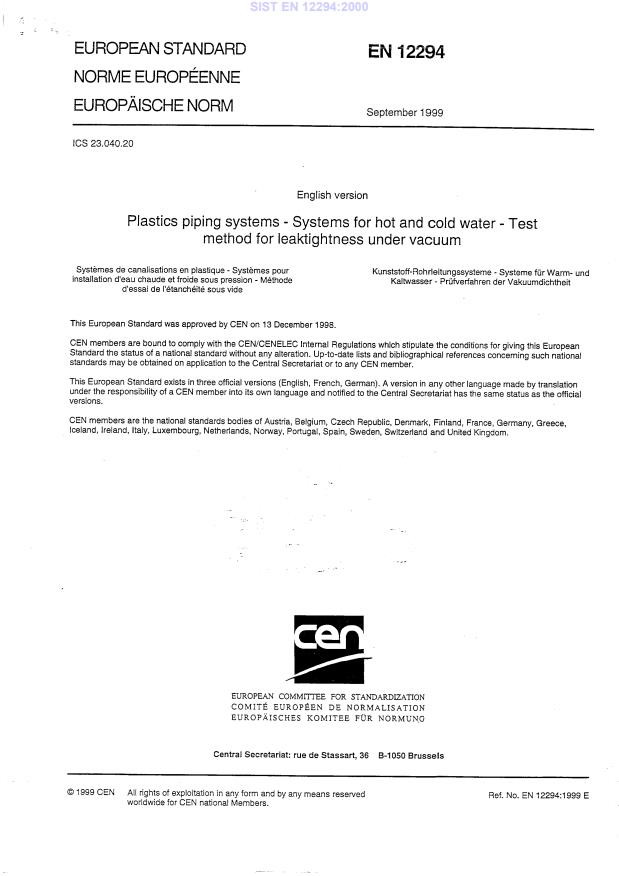
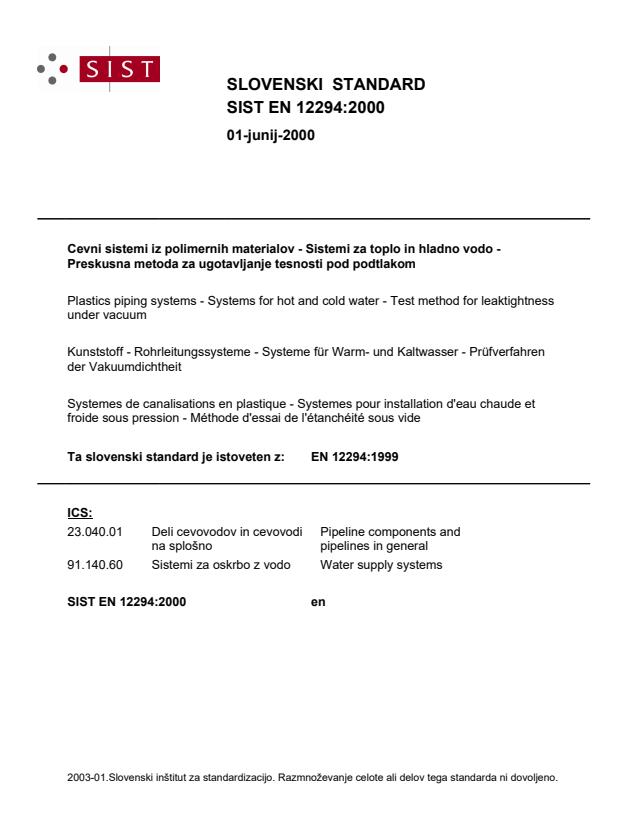
(Main)Plastics piping systems - Systems for hot and cold water - Test method for leaktightness under vacuum
- Abstract
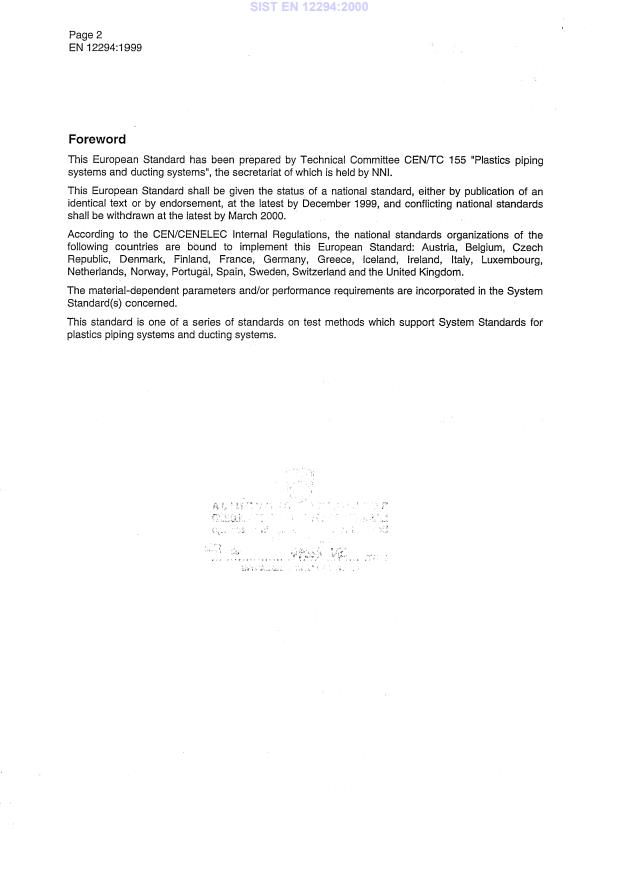
This standard specifies a method for testing the leaktightness under vacuum of joints for thermoplastics piping systems. It is applicable to piping systems based on thermoplastics pipes intended to be used in hot and cold water pressure applications.
- Status
- Withdrawn
- Publication Date
- 21-Sep-1999
- Withdrawal Date
- 29-Sep-2026
- Technical Committee
- CEN/TC 155 - Plastics piping systems and ducting systems
- Drafting Committee
- CEN/TC 155/WG 16 - Systems for hot and cold water applications
- Current Stage
- 9960 - Withdrawal effective - Withdrawal
- Start Date
- 26-Sep-2018
- Completion Date
- 07-Oct-2026

Relations
- Effective Date
- 03-Oct-2018
Get Certified
Connect with accredited certification bodies for this standard

Institut za varilstvo d.o.o. (Welding Institute)
Slovenia's leading welding institute since 1952. ISO 3834, EN 1090, pressure equipment certification, NDT personnel, welder qualification. Only IIW Au
Sponsored listings
Frequently Asked Questions
EN 12294:1999 is a standard published by the European Committee for Standardization (CEN). Its full title is "Plastics piping systems - Systems for hot and cold water - Test method for leaktightness under vacuum". This standard covers: This standard specifies a method for testing the leaktightness under vacuum of joints for thermoplastics piping systems. It is applicable to piping systems based on thermoplastics pipes intended to be used in hot and cold water pressure applications.
This standard specifies a method for testing the leaktightness under vacuum of joints for thermoplastics piping systems. It is applicable to piping systems based on thermoplastics pipes intended to be used in hot and cold water pressure applications.
EN 12294:1999 is classified under the following ICS (International Classification for Standards) categories: 23.040.20 - Plastics pipes. The ICS classification helps identify the subject area and facilitates finding related standards.
EN 12294:1999 has the following relationships with other standards: It is inter standard links to EN ISO 13056:2018. Understanding these relationships helps ensure you are using the most current and applicable version of the standard.
EN 12294:1999 is associated with the following European legislation: EU Directives/Regulations: 305/2011, 89/106/EEC. When a standard is cited in the Official Journal of the European Union, products manufactured in conformity with it benefit from a presumption of conformity with the essential requirements of the corresponding EU directive or regulation.
EN 12294:1999 is available in PDF format for immediate download after purchase. The document can be added to your cart and obtained through the secure checkout process. Digital delivery ensures instant access to the complete standard document.
Standards Content (Sample)
2003-01.Slovenski inštitut za standardizacijo. Razmnoževanje celote ali delov tega standarda ni dovoljeno.Cevni sistemi iz polimernih materialov - Sistemi za toplo in hladno vodo - Preskusna metoda za ugotavljanje tesnosti pod podtlakomKunststoff - Rohrleitungssysteme - Systeme für Warm- und Kaltwasser - Prüfverfahren der VakuumdichtheitSystemes de canalisations en plastique - Systemes pour installation d'eau chaude et froide sous pression - Méthode d'essai de l'étanchéité sou
...