

ASTM D7051-05(2020)
(Test Method)Standard Test Method for Cyclic Thermal Shock of SBS-Modified Bituminous Roofing Sheets with Factory-Applied Metal Surface
General Information
- Abstract
SIGNIFICANCE AND USE
4.1 This test method is used to determine the dimensional changes and physical stability of the product upon exposure to specified cyclic thermal conditions. It is also useful in determining the integrity of the bond between the metal foil and the SBS-modified bituminous compound.
SCOPE
1.1 This test method covers the measurement of movement due to cyclic thermal exposure of SBS (styrene-butadiene-styrene)-modified bituminous sheets with a factory-applied metal foil surface.
1.2 The values stated in SI units are to be regarded as standard. The values in parentheses are for information only.
1.3 This standard does not purport to address all of the safety concerns, if any, associated with its use. It is the responsibility of the user of this standard to establish appropriate safety, health, and environmental practices and determine the applicability of regulatory limitations prior to use.
1.4 This international standard was developed in accordance with internationally recognized principles on standardization established in the Decision on Principles for the Development of International Standards, Guides and Recommendations issued by the World Trade Organization Technical Barriers to Trade (TBT) Committee.
- Status
- Published
- Publication Date
- 30-Sep-2020
- Technical Committee
- D08 - Roofing and Waterproofing
- Drafting Committee
- D08.04 - Felts, Fabrics and Bituminous Sheet Materials
Overview
ASTM D7051-05(2020) is the international standard test method for evaluating the cyclic thermal shock performance of SBS-modified bituminous roofing sheets with a factory-applied metal surface. Developed by ASTM International, this standard outlines procedures to assess the dimensional changes and physical stability of these roofing products when subjected to repeated cycles of heating and cooling. Additionally, it evaluates the integrity of the bond between the metal foil and the SBS-modified bituminous compound, ensuring product reliability under severe temperature fluctuations.
Key Topics
- Cyclic Thermal Shock Testing: The standard specifies how to expose specimens of SBS-modified bituminous sheets with metal foil to controlled cycles of heating and cooling, simulating real-world temperature variations.
- Dimensional Stability Measurement: It defines the method to measure movement or dimensional change, providing insight into the product’s physical stability during thermal cycling.
- Bond Integrity: The procedure identifies possible failures, such as wrinkling, buckling, or delamination at the bond interface between the factory-applied metal surface and the SBS-modified bitumen.
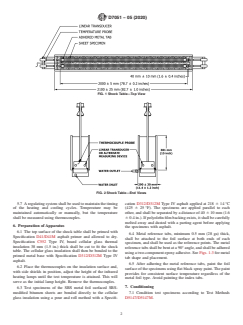
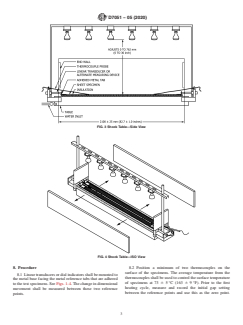
- Test Apparatus and Setup: Requirements for the shock table, heating lamps, temperature regulation, and measurement devices ensure consistency and accuracy.
- Result Reporting: Specifies the format for documenting percent dimensional change, charts of cycle progression, and observations on physical integrity.
Applications
- Quality Assurance in Roofing Materials: Manufacturers of SBS-modified bituminous roofing with metal foil surfacing use ASTM D7051 to validate product durability and dimensional stability under cyclic thermal loads.
- Product Development & Comparative Analysis: Research and development teams can use this standard to benchmark new or improved SBS-modified bituminous roofing products against industry performance norms.
- Specification for Construction Projects: Architects, consultants, and specifiers reference ASTM D7051 compliance when selecting suitable roofing materials for environments prone to wide temperature swings, ensuring long-term roof performance.
- Building Code Compliance: Regulatory agencies and inspectors may employ results from this test method to assess whether roofing installations meet building code requirements for physical stability and adhesion performance.
Related Standards
- ASTM D5147/D5147M: Standard test methods for sampling and testing modified bituminous sheet material, which includes conditioning procedures relevant to this thermal shock test.
- ASTM D41/D41M: Specification for asphalt primer used in roofing, dampproofing, and waterproofing, referenced in apparatus preparation.
- ASTM D312/D312M: Specification for asphalt used in roofing, including details for types used in specimen bonding.
- ASTM C552: Specification for cellular glass thermal insulation, which is incorporated into the testing setup for mounting specimens.
Practical Value
Adoption of ASTM D7051-05(2020) provides confidence in the long-term performance of SBS-modified bituminous roofing sheets with metal foil surfaces. By simulating real-world cyclic thermal exposure, this standard enables manufacturers and specifiers to:
- Minimize risk of premature roof failures due to material instability or loss of bond between layers.
- Demonstrate product compliance with internationally recognized quality benchmarks.
- Support warranty programs and reduce liability by verifying resilience to environmental stressors.
For additional technical requirements and referenced standards, consult the latest publication of ASTM D7051-05(2020) and related ASTM standards to ensure comprehensive, up-to-date compliance in all roofing applications.
Relations
- Effective Date
- 01-Jul-2018
- Effective Date
- 01-Oct-2017
- Effective Date
- 01-Sep-2016
- Effective Date
- 01-May-2016
- Effective Date
- 01-Mar-2016
- Effective Date
- 01-May-2015
- Effective Date
- 01-Feb-2015
- Effective Date
- 01-Sep-2014
- Effective Date
- 01-Jan-2014
- Effective Date
- 01-Sep-2013
- Effective Date
- 01-Oct-2012
- Effective Date
- 15-Sep-2012
- Effective Date
- 01-May-2012
- Effective Date
- 01-May-2011
- Effective Date
- 01-Jan-2011
Get Certified
Connect with accredited certification bodies for this standard

DIBt (Deutsches Institut für Bautechnik)
German Institute for Building Technology.
DIN CERTCO
DIN Group product certification.

Aboma Certification B.V.
Specialized in construction, metal, and transport sectors.
Sponsored listings
Frequently Asked Questions
ASTM D7051-05(2020) is a standard published by ASTM International. Its full title is "Standard Test Method for Cyclic Thermal Shock of SBS-Modified Bituminous Roofing Sheets with Factory-Applied Metal Surface". This standard covers: SIGNIFICANCE AND USE 4.1 This test method is used to determine the dimensional changes and physical stability of the product upon exposure to specified cyclic thermal conditions. It is also useful in determining the integrity of the bond between the metal foil and the SBS-modified bituminous compound. SCOPE 1.1 This test method covers the measurement of movement due to cyclic thermal exposure of SBS (styrene-butadiene-styrene)-modified bituminous sheets with a factory-applied metal foil surface. 1.2 The values stated in SI units are to be regarded as standard. The values in parentheses are for information only. 1.3 This standard does not purport to address all of the safety concerns, if any, associated with its use. It is the responsibility of the user of this standard to establish appropriate safety, health, and environmental practices and determine the applicability of regulatory limitations prior to use. 1.4 This international standard was developed in accordance with internationally recognized principles on standardization established in the Decision on Principles for the Development of International Standards, Guides and Recommendations issued by the World Trade Organization Technical Barriers to Trade (TBT) Committee.
SIGNIFICANCE AND USE 4.1 This test method is used to determine the dimensional changes and physical stability of the product upon exposure to specified cyclic thermal conditions. It is also useful in determining the integrity of the bond between the metal foil and the SBS-modified bituminous compound. SCOPE 1.1 This test method covers the measurement of movement due to cyclic thermal exposure of SBS (styrene-butadiene-styrene)-modified bituminous sheets with a factory-applied metal foil surface. 1.2 The values stated in SI units are to be regarded as standard. The values in parentheses are for information only. 1.3 This standard does not purport to address all of the safety concerns, if any, associated with its use. It is the responsibility of the user of this standard to establish appropriate safety, health, and environmental practices and determine the applicability of regulatory limitations prior to use. 1.4 This international standard was developed in accordance with internationally recognized principles on standardization established in the Decision on Principles for the Development of International Standards, Guides and Recommendations issued by the World Trade Organization Technical Barriers to Trade (TBT) Committee.
ASTM D7051-05(2020) is classified under the following ICS (International Classification for Standards) categories: 91.100.50 - Binders. Sealing materials. The ICS classification helps identify the subject area and facilitates finding related standards.
ASTM D7051-05(2020) has the following relationships with other standards: It is inter standard links to ASTM D5147/D5147M-18, ASTM C552-17, ASTM C552-16a, ASTM D312/D312M-16, ASTM C552-16, ASTM C552-15, ASTM D312/D312M-15, ASTM C552-14, ASTM D5147/D5147M-14, ASTM C552-13, ASTM C552-12b, ASTM C552-12a, ASTM C552-12, ASTM D5147/D5147M-11a, ASTM D5147/D5147M-11. Understanding these relationships helps ensure you are using the most current and applicable version of the standard.
ASTM D7051-05(2020) is available in PDF format for immediate download after purchase. The document can be added to your cart and obtained through the secure checkout process. Digital delivery ensures instant access to the complete standard document.
Standards Content (Sample)
This international standard was developed in accordance with internationally recognized principles on standardization established in the Decision on Principles for the
Development of International Standards, Guides and Recommendations issued by the World Trade Organization Technical Barriers to Trade (TBT) Committee.
Designation:D7051 −05 (Reapproved 2020)
Standard Test Method for
Cyclic Thermal Shock of SBS-Modified Bituminous Roofing
Sheets with Factory-Applied Metal Surface
This standard is issued under the fixed designation D7051; the number immediately following the designation indicates the year of
original adoption or, in the case of revision, the year of last revision. A number in parentheses indicates the year of last reapproval. A
superscript epsilon (´) indicates an editorial change since the last revision or reapproval.
1. Scope the specimen length dimension is measured in relation to the
numberofcyclesandtemperaturevariation.Thistestappliesto
1.1 This test method covers the measurement of movement
metal foil surfaced SBS-modified bitumen roofing sheets.
due to cyclic thermal exposure of SBS (styrene-butadiene-
styrene)-modified bituminous sheets with a factory-applied
4. Significance and Use
metal foil surface.
4.1 This test method is used to determine the dimensional
1.2 The values stated in SI units are to be regarded as
changes and physical stability of the product upon exposure to
standard. The values in parentheses are for information only.
specified cyclic thermal conditions. It is also useful in deter-
1.3 This standard does not purport to address all of the mining the integrity of the bond between the metal foil and the
safety concerns, if any, associated with its use. It is the SBS-modified bituminous compound.
responsibility of the user of this standard to establish appro-
5. Apparatus
priate safety, health, and environmental practices and deter-
mine the applicability of regulatory limitations prior to use. 5.1 The apparatus and test assembly as shown in Figs. 1-4
consist of the following components.
1.4 This international standard was developed in accor-
dance with internationally recognized principles on standard-
5.2 A hollow metal, rigid support or base on which the test
ization established in the Decision on Principles for the
sampleismounted,hereafterreferredtoastheshocktable.The
Development of International Standards, Guides and Recom-
base shall be 2110 6 25 mm long by 280 6 25 mm wide by
mendations issued by the World Trade Organization Technical
125 6 13 mm tall (83 6 1.0 in. long by 11 6 1.0 in. wide by
Barriers to Trade (TBT) Committee.
5 6 0.5 in. tall). The shock table shall have water inlet and
outlet attachments mounted such that the support is always full
2. Referenced Documents
of circulating water. This is done to avoid expansion or
2.1 ASTM Standards:
contraction of the shock table during the test.
C552 Specification for Cellular Glass Thermal Insulation NOTE 1—The support can be easily constructed by welding two pieces
of wide channel iron together with the addition of end plates.
D41/D41M Specification for Asphalt Primer Used in
Roofing, Dampproofing, and Waterproofing
5.3 Mounting brackets for the measuring devices shall be
D312/D312M Specification for Asphalt Used in Roofing
attached to the shock table such that the measuring device is
D5147/D5147M Test Methods for Sampling and Testing
level with and facing the metal reference tabs attached to the
Modified Bituminous Sheet Material
foil surface of the specimens (see 6.4).
5.4 Linear transducers, or dial indicators, accurate to 10 µm
3. Summary of Test Method
(0.4 mil) shall be used to measure the change in distance
3.1 This test consists of exposing two specimens of 2000 6
between the adhered metal reference tab and the mounted
5by90 6 5 mm (78.7 6 0.2 by 3.5 6 0.2 in.) to cycles of
indicator.
temperature produced by infrared radiation. The variation in
5.5 Six or more 250 W infrared heating lamps are mounted
above the support equally spaced across the 2000 mm (79 in.)
This test method is under the jurisdiction ofASTM Committee D08 on Roofing
test length.
andWaterproofingandisthedirectresponsibilityofSubcommitteeD08.04onFelts,
NOTE 2—The number of lamps is not critical as long as the temperature
Fabrics and Bituminous Sheet Materials.
is accurate and consistent.
Current edition approved Oct. 1, 2020. Published October 2020. Originally
5.6 Sheet metal panels, or other suitable protection, shall be
approved in 2005. Last previous edition approved in 2013 as D7051 – 05 (2013).
DOI: 10.1520/D7051-05R20.
mounted on the sides and ends of the hollow support to reduce
For referenced ASTM standards, visit the ASTM website, www.astm.org, or
drafts and temperature fluctuations during the test. The panels
contact ASTM Customer Service at service@astm.org. For Annual Book of ASTM
should be easily removed to allow for daily observations of the
Standards volume information, refer to the standard’s Document Summary page on
the ASTM website. test assembly.
Copyright © ASTM International, 100 Barr Harbor Drive, PO Box C700, West Conshohocken, PA 19428-2959. United States
D7051−05 (2020)
FIG. 1Shock Table—Top View
FIG. 2Shock Table—End Views
5.7 Aregulating system shall be used to maintain the timing cation D312/D312M Type IV asphalt applied at 218 6 14 °C
of the heating and cooling cycles. Temperature may be (425 6 25 °F). The specimens are applied parallel to each
maintained automatically or manually, but the temperature other, and shall be separated by a distance of 40 6 10 mm (1.6
shall be measured using thermocouples. 60.4in.).Ifpolyolefinfilmbackingexists,itshallbecarefully
melted away and dusted with a parting agent before applying
6. Preparation of Apparatus
the specimens with asphalt.
6.1 The top surface of the shock table shall be primed with
6.4 Metal reference tabs, minimum 0.5 mm (28 ga) thick,
Specification D41/D41M asphalt primer and allowed to dry.
shall be attached to the foil surface at both ends of eac
...