

ASTM D2668-07(2021)
(Test Method)Standard Test Method for 2,6-di-tert-Butyl- p-Cresol and 2,6-di-tert-Butyl Phenol in Electrical Insulating Oil by Infrared Absorption
General Information
- Abstract
SIGNIFICANCE AND USE
3.1 The quantitative determination of 2,6-ditertiary-butyl paracresol and 2,6-ditertiary-butyl phenol in a new electrical insulating oil measures the amount of this material that has been added to the oil as protection against oxidation. In a used oil it measures the amount remaining after oxidation has reduced its concentration. The test is also suitable for manufacturing control and specification acceptance.
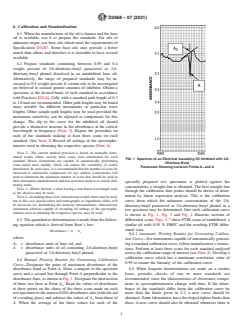
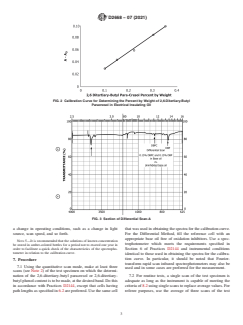
3.2 When an infrared spectrum is obtained of an electrical insulating oil inhibited with either of these compounds there is an increase in absorbance of the spectrum at several wavelengths (or wavenumbers). 2,6 ditertiary-butyl paracresol produces pronounced increases in absorbance at 2.72 μm (3650 cm−1), and 11.63 μm (860 cm−1 ). 2,6 ditertiary-butyl phenol produces pronounced increases in absorbance at 2.72 μm (3650 cm−1) and 13.42 μm (745 cm −1).
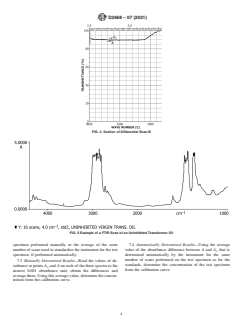
3.3 When making this test on other than a highly oxidized oil or when using a double-beam spectrophotometer, it has been found convenient to obtain the spectrum between 2.5 μm (4000 cm−1) and 2.9 μm (3450 cm−1) because the instrument is compensated for the presence of moisture and the band is not influenced by intermolecular forces (associations). However, when testing a highly oxidized oil or when using a single-beam instrument better results may be obtained if the scan is made between 10.90 μm (918 cm−1) and 14.00 μm (714 cm−1).
3.4 Increased absorption at 11.63 μm (860 cm −1) or 13.42 μm (745 cm−1) or both, will identify the inhibitor as 2,6-ditertiary-butyl paracresol or 2,6-ditertiary-butyl phenol respectively (Note 1).
Note 1: The absorbance at 745 cm−1 for 2,6-ditertiary-butyl phenol and at 860 cm−1 for 2,6-ditertiary-butyl paracresol for equal concentrations will be in the approximate ratio of 2.6 to 1.
SCOPE
1.1 This test method covers the determination of the weight percent of 2,6-ditertiary-butyl paracresol (DBPC) and 2,6-ditertiary-butyl phenol (DBP) in new or used electrical insulating oil in concentrations up to 0.5 % by measuring its absorbance at the specified wavelengths in the infrared spectrum.
1.2 The values stated in SI units are to be regarded as standard. No other units of measurement are included in this standard.
1.3 This standard does not purport to address all of the safety concerns, if any, associated with its use. It is the responsibility of the user of this standard to establish appropriate safety, health, and environmental practices and determine the applicability of regulatory limitations prior to use.
1.4 This international standard was developed in accordance with internationally recognized principles on standardization established in the Decision on Principles for the Development of International Standards, Guides and Recommendations issued by the World Trade Organization Technical Barriers to Trade (TBT) Committee.
- Status
- Published
- Publication Date
- 30-Nov-2021
- Technical Committee
- D27 - Electrical Insulating Liquids and Gases
- Drafting Committee
- D27.03 - Analytical Tests
Buy Documents
ASTM D2668-07(2021) - Standard Test Method for 2,6-<emph type="bold"><emph type="ital">di-tert</emph></emph >-Butyl-<emph type="bold"><emph type="ital"> p</emph></emph>-Cresol and 2,6-<emph type="bold"><emph type="ital">di-tert</emph></emph>-Butyl Phenol in Electrical Insulating Oil by Infrared Absorption
Overview
ASTM D2668-07(2021), Standard Test Method for 2,6-di-tert-Butyl-p-Cresol and 2,6-di-tert-Butyl Phenol in Electrical Insulating Oil by Infrared Absorption, is an internationally recognized test method developed by ASTM for quantifying antioxidant additives in electrical insulating oils. Specifically, this standard addresses the measurement of 2,6-di-tert-butyl paracresol (DBPC) and 2,6-di-tert-butyl phenol (DBP) concentrations-key compounds used as oxidation inhibitors-via infrared (IR) absorption spectrometry. The results are expressed as weight percent, covering concentrations up to 0.5%.
Key Topics
- Purpose and Significance
- Determines the amount of antioxidant inhibitors (DBPC and DBP) in both new and used electrical insulating oils.
- Ensures oils meet specification requirements and verifies the remaining antioxidant content after service-related oxidation.
- Testing Principle
- Uses IR spectrophotometry to detect characteristic absorption bands specific to DBPC and DBP.
- Absorption increases at select wavelengths are correlated with inhibitor concentration.
- Applicable Concentration Range
- Effective for measuring DBPC and DBP concentrations up to 0.5% by weight in insulating oils.
- Instrumentation
- Compatible with both double-beam and single-beam IR spectrophotometers, including FTIR systems, as referenced in ASTM D2144.
- Calibration and Quality Assurance
- Employs calibration curves based on standards prepared with known concentrations.
- Emphasizes repeatability, reproducibility, and ongoing calibration checks to ensure reliable data.
Applications
ASTM D2668 is widely used in the electrical utility and transformer manufacturing industries for:
- Quality Assurance of New Oils
- Verifying that fresh transformer and electrical insulating oils have the appropriate concentration of antioxidant additives for optimal performance and lifespan.
- Monitoring Service Oils
- Assessing the depletion of DBPC and DBP in oils taken from equipment, supporting predictive maintenance and mitigating the risk of oxidation-related failures.
- Manufacturing and Specification Compliance
- Supporting manufacturing process control and documentation during the production or blending of transformer oils.
- Ensuring product batches meet industrial and contractual specifications for oxidation stability.
- Regulatory and Safety Compliance
- Facilitating compliance with internal and external quality, safety, and environmental standards by enabling accurate documentation of antioxidant content.
Related Standards
Several additional ASTM standards and practices are associated with the analysis of electrical insulating oils and the application of IR spectrophotometry, including:
- ASTM D2144 - Practices for Examination of Electrical Insulating Oils by Infrared Absorption
- ASTM D923 - Practices for Sampling Electrical Insulating Liquids
- ASTM D3487 - Specification for Mineral Insulating Oil Used in Electrical Apparatus
These related standards provide broader guidance on sampling, preparation, and other analytical considerations integral to the effective implementation of ASTM D2668.
In summary, ASTM D2668-07(2021) is a critical test method for quantifying antioxidant inhibitors in electrical insulating oils, supporting both product quality and operational reliability in the power transmission and distribution sector. Utilizing IR absorption as a robust analytical tool, this standard underpins best practices in transformer oil quality control, equipment maintenance, and specification compliance.
Relations
- Effective Date
- 01-Dec-2023
- Refers
ASTM D3487-16e1 - Standard Specification for Mineral Insulating Oil Used in Electrical Apparatus - Effective Date
- 15-Jun-2016
- Refers
ASTM D3487-16 - Standard Specification for Mineral Insulating Oil Used in Electrical Apparatus - Effective Date
- 15-Jun-2016
- Effective Date
- 01-Oct-2015
- Refers
ASTM D3487-09 - Standard Specification for Mineral Insulating Oil Used in Electrical Apparatus - Effective Date
- 01-Dec-2009
- Refers
ASTM D3487-08 - Standard Specification for Mineral Insulating Oil Used in Electrical Apparatus - Effective Date
- 01-Nov-2008
- Effective Date
- 15-Jul-2007
- Refers
ASTM D3487-00(2006) - Standard Specification for Mineral Insulating Oil Used in Electrical Apparatus - Effective Date
- 01-Sep-2006
- Effective Date
- 10-Apr-2001
- Effective Date
- 10-Apr-2001
- Refers
ASTM D3487-00 - Standard Specification for Mineral Insulating Oil Used in Electrical Apparatus - Effective Date
- 10-Nov-2000
- Effective Date
- 10-Oct-1997
Buy Documents
ASTM D2668-07(2021) - Standard Test Method for 2,6-<emph type="bold"><emph type="ital">di-tert</emph></emph >-Butyl-<emph type="bold"><emph type="ital"> p</emph></emph>-Cresol and 2,6-<emph type="bold"><emph type="ital">di-tert</emph></emph>-Butyl Phenol in Electrical Insulating Oil by Infrared Absorption
Get Certified
Connect with accredited certification bodies for this standard

IMQ S.p.A. (Certification)
Italian electrical product certification.

SLG Prüf- und Zertifizierungs GmbH
German testing and certification body.

UL Solutions
Global safety science company with testing, inspection and certification.
Sponsored listings
Frequently Asked Questions
ASTM D2668-07(2021) is a standard published by ASTM International. Its full title is "Standard Test Method for 2,6-<emph type="bold"><emph type="ital">di-tert</emph></emph >-Butyl-<emph type="bold"><emph type="ital"> p</emph></emph>-Cresol and 2,6-<emph type="bold"><emph type="ital">di-tert</emph></emph>-Butyl Phenol in Electrical Insulating Oil by Infrared Absorption". This standard covers: SIGNIFICANCE AND USE 3.1 The quantitative determination of 2,6-ditertiary-butyl paracresol and 2,6-ditertiary-butyl phenol in a new electrical insulating oil measures the amount of this material that has been added to the oil as protection against oxidation. In a used oil it measures the amount remaining after oxidation has reduced its concentration. The test is also suitable for manufacturing control and specification acceptance. 3.2 When an infrared spectrum is obtained of an electrical insulating oil inhibited with either of these compounds there is an increase in absorbance of the spectrum at several wavelengths (or wavenumbers). 2,6 ditertiary-butyl paracresol produces pronounced increases in absorbance at 2.72 μm (3650 cm−1), and 11.63 μm (860 cm−1 ). 2,6 ditertiary-butyl phenol produces pronounced increases in absorbance at 2.72 μm (3650 cm−1) and 13.42 μm (745 cm −1). 3.3 When making this test on other than a highly oxidized oil or when using a double-beam spectrophotometer, it has been found convenient to obtain the spectrum between 2.5 μm (4000 cm−1) and 2.9 μm (3450 cm−1) because the instrument is compensated for the presence of moisture and the band is not influenced by intermolecular forces (associations). However, when testing a highly oxidized oil or when using a single-beam instrument better results may be obtained if the scan is made between 10.90 μm (918 cm−1) and 14.00 μm (714 cm−1). 3.4 Increased absorption at 11.63 μm (860 cm −1) or 13.42 μm (745 cm−1) or both, will identify the inhibitor as 2,6-ditertiary-butyl paracresol or 2,6-ditertiary-butyl phenol respectively (Note 1). Note 1: The absorbance at 745 cm−1 for 2,6-ditertiary-butyl phenol and at 860 cm−1 for 2,6-ditertiary-butyl paracresol for equal concentrations will be in the approximate ratio of 2.6 to 1. SCOPE 1.1 This test method covers the determination of the weight percent of 2,6-ditertiary-butyl paracresol (DBPC) and 2,6-ditertiary-butyl phenol (DBP) in new or used electrical insulating oil in concentrations up to 0.5 % by measuring its absorbance at the specified wavelengths in the infrared spectrum. 1.2 The values stated in SI units are to be regarded as standard. No other units of measurement are included in this standard. 1.3 This standard does not purport to address all of the safety concerns, if any, associated with its use. It is the responsibility of the user of this standard to establish appropriate safety, health, and environmental practices and determine the applicability of regulatory limitations prior to use. 1.4 This international standard was developed in accordance with internationally recognized principles on standardization established in the Decision on Principles for the Development of International Standards, Guides and Recommendations issued by the World Trade Organization Technical Barriers to Trade (TBT) Committee.
SIGNIFICANCE AND USE 3.1 The quantitative determination of 2,6-ditertiary-butyl paracresol and 2,6-ditertiary-butyl phenol in a new electrical insulating oil measures the amount of this material that has been added to the oil as protection against oxidation. In a used oil it measures the amount remaining after oxidation has reduced its concentration. The test is also suitable for manufacturing control and specification acceptance. 3.2 When an infrared spectrum is obtained of an electrical insulating oil inhibited with either of these compounds there is an increase in absorbance of the spectrum at several wavelengths (or wavenumbers). 2,6 ditertiary-butyl paracresol produces pronounced increases in absorbance at 2.72 μm (3650 cm−1), and 11.63 μm (860 cm−1 ). 2,6 ditertiary-butyl phenol produces pronounced increases in absorbance at 2.72 μm (3650 cm−1) and 13.42 μm (745 cm −1). 3.3 When making this test on other than a highly oxidized oil or when using a double-beam spectrophotometer, it has been found convenient to obtain the spectrum between 2.5 μm (4000 cm−1) and 2.9 μm (3450 cm−1) because the instrument is compensated for the presence of moisture and the band is not influenced by intermolecular forces (associations). However, when testing a highly oxidized oil or when using a single-beam instrument better results may be obtained if the scan is made between 10.90 μm (918 cm−1) and 14.00 μm (714 cm−1). 3.4 Increased absorption at 11.63 μm (860 cm −1) or 13.42 μm (745 cm−1) or both, will identify the inhibitor as 2,6-ditertiary-butyl paracresol or 2,6-ditertiary-butyl phenol respectively (Note 1). Note 1: The absorbance at 745 cm−1 for 2,6-ditertiary-butyl phenol and at 860 cm−1 for 2,6-ditertiary-butyl paracresol for equal concentrations will be in the approximate ratio of 2.6 to 1. SCOPE 1.1 This test method covers the determination of the weight percent of 2,6-ditertiary-butyl paracresol (DBPC) and 2,6-ditertiary-butyl phenol (DBP) in new or used electrical insulating oil in concentrations up to 0.5 % by measuring its absorbance at the specified wavelengths in the infrared spectrum. 1.2 The values stated in SI units are to be regarded as standard. No other units of measurement are included in this standard. 1.3 This standard does not purport to address all of the safety concerns, if any, associated with its use. It is the responsibility of the user of this standard to establish appropriate safety, health, and environmental practices and determine the applicability of regulatory limitations prior to use. 1.4 This international standard was developed in accordance with internationally recognized principles on standardization established in the Decision on Principles for the Development of International Standards, Guides and Recommendations issued by the World Trade Organization Technical Barriers to Trade (TBT) Committee.
ASTM D2668-07(2021) is classified under the following ICS (International Classification for Standards) categories: 29.040.10 - Insulating oils. The ICS classification helps identify the subject area and facilitates finding related standards.
ASTM D2668-07(2021) has the following relationships with other standards: It is inter standard links to ASTM D923-15(2023), ASTM D3487-16e1, ASTM D3487-16, ASTM D923-15, ASTM D3487-09, ASTM D3487-08, ASTM D923-07, ASTM D3487-00(2006), ASTM D2144-01, ASTM D2144-01e1, ASTM D3487-00, ASTM D923-97. Understanding these relationships helps ensure you are using the most current and applicable version of the standard.
ASTM D2668-07(2021) is available in PDF format for immediate download after purchase. The document can be added to your cart and obtained through the secure checkout process. Digital delivery ensures instant access to the complete standard document.
Standards Content (Sample)
This international standard was developed in accordance with internationally recognized principles on standardization established in the Decision on Principles for the
Development of International Standards, Guides and Recommendations issued by the World Trade Organization Technical Barriers to Trade (TBT) Committee.
Designation: D2668 − 07 (Reapproved 2021)
Standard Test Method for
2,6-di-tert-Butyl- p-Cresol and 2,6-di-tert-Butyl Phenol in
Electrical Insulating Oil by Infrared Absorption
This standard is issued under the fixed designation D2668; the number immediately following the designation indicates the year of
original adoption or, in the case of revision, the year of last revision.Anumber in parentheses indicates the year of last reapproval.A
superscript epsilon (´) indicates an editorial change since the last revision or reapproval.
1. Scope insulating oil measures the amount of this material that has
been added to the oil as protection against oxidation. In a used
1.1 This test method covers the determination of the weight
oil it measures the amount remaining after oxidation has
percent of 2,6-ditertiary-butyl paracresol (DBPC) and 2,6-
reduced its concentration. The test is also suitable for manu-
ditertiary-butyl phenol (DBP) in new or used electrical insu-
facturing control and specification acceptance.
lating oil in concentrations up to 0.5% by measuring its
absorbance at the specified wavelengths in the infrared spec-
3.2 When an infrared spectrum is obtained of an electrical
trum.
insulating oil inhibited with either of these compounds there is
1.2 The values stated in SI units are to be regarded as
an increase in absorbance of the spectrum at several wave-
standard. No other units of measurement are included in this
lengths (or wavenumbers). 2,6 ditertiary-butyl paracresol pro-
standard.
duces pronounced increases in absorbance at 2.72 µm (3650
−1 −1
cm ), and 11.63 µm (860 cm ). 2,6 ditertiary-butyl phenol
1.3 This standard does not purport to address all of the
safety concerns, if any, associated with its use. It is the producespronouncedincreasesinabsorbanceat2.72µm(3650
−1 −1
cm ) and 13.42 µm (745 cm ).
responsibility of the user of this standard to establish appro-
priate safety, health, and environmental practices and deter-
3.3 When making this test on other than a highly oxidized
mine the applicability of regulatory limitations prior to use.
oil or when using a double-beam spectrophotometer, it has
1.4 This international standard was developed in accor-
been found convenient to obtain the spectrum between 2.5 µm
dance with internationally recognized principles on standard-
−1 −1
(4000cm )and2.9µm(3450cm )becausetheinstrumentis
ization established in the Decision on Principles for the
compensated for the presence of moisture and the band is not
Development of International Standards, Guides and Recom-
influenced by intermolecular forces (associations). However,
mendations issued by the World Trade Organization Technical
whentestingahighlyoxidizedoilorwhenusingasingle-beam
Barriers to Trade (TBT) Committee.
instrument better results may be obtained if the scan is made
−1 −1
2. Referenced Documents
between 10.90 µm (918 cm ) and 14.00 µm (714 cm ).
2.1 ASTM Standards: −1
3.4 Increased absorption at 11.63 µm (860 cm ) or 13.42
D923Practices for Sampling Electrical Insulating Liquids
−1
µm (745 cm ) or both, will identify the inhibitor as 2,6-
D2144Practices for Examination of Electrical Insulating
ditertiary-butyl paracresol or 2,6-ditertiary-butyl phenol re-
Oils by Infrared Absorption
spectively (Note 1).
D3487Specification for Mineral Insulating Oil Used in
−1
Electrical Apparatus
NOTE 1—The absorbance at 745 cm for 2,6-ditertiary-butyl phenol
−1
and at 860 cm for 2,6-ditertiary-butyl paracresol for equal concentra-
3. Significance and Use
tions will be in the approximate ratio of 2.6 to 1.
3.1 The quantitative determination of 2,6-ditertiary-butyl
4. Apparatus
paracresol and 2,6-ditertiary-butyl phenol in a new electrical
4.1 Withequipmentdescriptionreferringtocompliance,the
This test method is under the jurisdiction of ASTM Committee D27 on
equipment shall be in accordance with Section 6 of Practices
Electrical Insulating Liquids and Gases and is the direct responsibility of Subcom-
D2144. Accordingly, the use of Fourier-transform rapid scan
mittee D27.03 on Analytical Tests.
Current edition approved Dec. 1, 2021. Published January 2022. Originally
infrared (FTIR) spectrophotometers is permitted by reference
approved in 1967. Last previous edition approved in 2013 as D2668–07(2013).
to that test method.
DOI: 10.1520/D2668-07R21.
For referenced ASTM standards, visit the ASTM website, www.astm.org, or
contact ASTM Customer Service at service@astm.org. For Annual Book of ASTM 5. Sampling
Standards volume information, refer to the standard’s Document Summary page on
the ASTM website. 5.1 Obtain the sample in accordance with Practices D923.
Copyright © ASTM International, 100 Barr Harbor Drive, PO Box C700, West Conshohocken, PA 19428-2959. United States
D2668 − 07 (2021)
6. Calibration and Standardization
6.1 When the manufacturer of the oil is known and the base
oil is available, use it to prepare the standards. For oils of
unknown origin, use base oils which meet the requirements of
Specification D3487. Some base oils may provide a better
match than others and therefore it is desirable to have several
available.
6.2 Prepare standards containing between 0.05 and 0.4
weight percent of 2,6-ditertiary-butyl paracresol or 2,6-
ditertiary-butyl phenol dissolved in an uninhibited base oil.
Alternatively, the range of prepared standards may be in-
creased to 0.5 weight percent if certain oils to be investigated
are believed to contain greater amounts of inhibitor. Obtain a
spectrum, at the desired band, of each standard in accordance
with Practices D2144. Cells with a standard path length of 0.3
to1.0mmarerecommended.Otherpathlengthsmaybefound
more suitable for different instruments or particular wave
lengths. Other sample path lengths may be used provided the
instrument sensitivity can be adjusted to compensate for this
change. The dip in the curve for the inhibited oil should
provide a distinctive increase in the absorbance at the critical
wavelength or frequency (Note 3). Repeat the procedure on
each of the standards making at least three scans on each
standard. (See Note 2) Record all settings of the spectropho-
tometer used in obtaining the respective spectra (Note 4).
NOTE 2—The current method precision is based on manually deter-
mined results where exactly three scans were determined for each
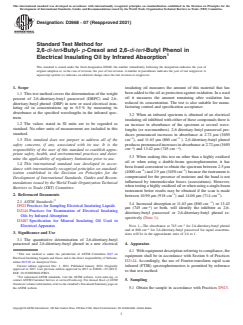
FIG. 1 Spectrum of an Electrical Insulating Oil Inhibited with 2,6-
standard. Newer instruments are capable of automatically performing
Ditertiary-Butyl
scans much more rapidly, which can reduce the variability of results
Paracresol Showing Location Points A and A
o
determined. In such cases, it is recommended that the number of scans be
increased to statistically compensate for any outliers. Laboratories will
need to determine the minimum number of scans that should be used in
theirinstrumentstandardizationandtestspecimenanalysestosatisfytheir
specially prepared test specimens is plotted against the
testing needs.
concentration, a straight line is obtained. The best straight line
NOTE 3—Where desired, a chart having a non-linear wavelength scale
through the calibration data points should be drawn or deter-
as the abscissa may be used.
mined by linear regression analysis. This is the calibration
NOTE4—Inmakingthesetests,transmission-scaledchartsmaybeused,
curve from which the unknown concentration of the 2,6-
but in this case special rulers and nomographs or logarithmic tables will
be necessary for determining the intensity measurements. Alternatively,
ditertiary-butyl paracresol or 2,6-ditertiary-butyl phenol in a
instrument software capab
...