

ASTM C1361-10(2019)
(Practice)Standard Practice for Constant-Amplitude, Axial, Tension-Tension Cyclic Fatigue of Advanced Ceramics at Ambient Temperatures
General Information
- Abstract
SIGNIFICANCE AND USE
4.1 This practice may be used for material development, material comparison, quality assurance, characterization, reliability assessment, and design data generation.
4.2 High-strength, monolithic advanced ceramic materials are generally characterized by small grain sizes (
4.3 Cyclic fatigue by its nature is a probabilistic phenomenon as discussed in STP 91A and STP 588 (1, 2).4 In addition, the strengths of advanced ceramics are probabilistic in nature. Therefore, a sufficient number of test specimens at each testing condition is required for statistical analysis and design, with guidelines for sufficient numbers provided in STP 91A (1), STP 588 (2), and Practice E739. The many different tensile specimen geometries available for cyclic fatigue testing may result in variations in the measured cyclic fatigue behavior of a particular material due to differences in the volume or surface area of material in the gage section of the test specimens.
4.4 Tensile cyclic fatigue tests provide information on the material response under fluctuating uniaxial tensile stresses. Uniform stress states are required to effectively evaluate any nonlinear stress-strain behavior which may develop as the result of cumulative damage processes (for example, microcracking, cyclic fatigue crack growth, etc.).
4.5 Cumulative damage processes due to cyclic fatigue may be influenced by testing mode, testing rate (related to frequency), differences between maximum and minimum force (R or Α), effects of processing or combinations of constituent materials, or environmental influences, or both. Other factors that influence cyclic fatigue behavior are: void or porosity content, methods of test specimen preparation or fabrication,test specimen conditioning, test environment, force or strain limits during cycling, wave shapes (that is, sinusoidal, trapezoidal, etc.), and failure mode. Some of these effects may be consequences of stress corrosion or sub-critical (slow) crack growth which can...
SCOPE
1.1 This practice covers the determination of constant-amplitude, axial, tension-tension cyclic fatigue behavior and performance of advanced ceramics at ambient temperatures to establish “baseline” cyclic fatigue performance. This practice builds on experience and existing standards in tensile testing advanced ceramics at ambient temperatures and addresses various suggested test specimen geometries, test specimen fabrication methods, testing modes (force, displacement, or strain control), testing rates and frequencies, allowable bending, and procedures for data collection and reporting. This practice does not apply to axial cyclic fatigue tests of components or parts (that is, machine elements with nonuniform or multiaxial stress states).
1.2 This practice applies primarily to advanced ceramics that macroscopically exhibit isotropic, homogeneous, continuous behavior. While this practice applies primarily to monolithic advanced ceramics, certain whisker- or particle-reinforced composite ceramics, as well as certain discontinuous fibre-reinforced composite ceramics, may also meet these macroscopic behavior assumptions. Generally, continuous fibre-reinforced ceramic composites (CFCCs) do not macroscopically exhibit isotropic, homogeneous, continuous behavior and application of this practice to these materials is not recommended.
1.3 The values stated in SI units are to be regarded as the standard and are in accordance with IEEE/ASTM SI 10.
1.4 This standard does not purport to address all of the safety concerns, if any, associated with its use. It is the responsibility of the user of this standard to establish appropriate safety, health, and environmental practices and determine the applicability of regulatory limitations prior to use. Refer to Section 7 for specific precautions.
1.5 This international standard was developed in accordance with internationally recognized principles on standardization established ...
- Status
- Published
- Publication Date
- 30-Jun-2019
- Technical Committee
- C28 - Advanced Ceramics
- Drafting Committee
- C28.01 - Mechanical Properties and Performance
Overview
ASTM C1361-10(2019): Standard Practice for Constant-Amplitude, Axial, Tension-Tension Cyclic Fatigue of Advanced Ceramics at Ambient Temperatures provides a comprehensive framework for determining the cyclic fatigue behavior and performance of advanced ceramics. Developed by ASTM Committee C28, this standard outlines best practices for consistent, reproducible fatigue testing under tension-tension cycles at constant amplitude, all performed at ambient temperatures. The resulting data serve as baseline fatigue profiles essential for material characterization, material comparisons, reliability assessments, and engineering design.
Key Topics
- Scope and Purpose: This practice is primarily applicable to high-strength, monolithic advanced ceramics that are isotropic, homogeneous, and exhibit continuous behavior. It addresses materials such as whisker- or particle-reinforced composites, but generally excludes continuous fiber-reinforced ceramic composites due to their anisotropic properties.
- Cyclic Fatigue Phenomenon: Cyclic fatigue in ceramics is inherently probabilistic. Both material strength and fatigue life require statistical analysis based on sufficient specimen numbers, as guided by related ASTM practices and standards.
- Specimen Geometry and Preparation: The standard discusses various suggested test specimen geometries and preparation methods, addressing the effects of surface flaws, machining, and other fabrication details on test outcomes.
- Testing Parameters: Covers test modes (force, displacement, or strain control), cyclic amplitude, frequencies, allowable bending, and data collection/reporting procedures.
- Cumulative Damage Mechanisms: Identifies that damage from cyclic fatigue (e.g., microcracking, crack growth) is influenced by test method, frequency, environmental exposure, and material-specific factors like porosity and processing history.
- Environmental Influences: Recognizes that ambient testing conditions, especially humidity and temperature, can significantly affect test results due to phenomena like stress corrosion or subcritical crack growth.
Applications
- Material Development and Comparison: Enables manufacturers and researchers to compare the fatigue durability of different ceramic formulations, supporting the selection of optimal materials for demanding applications.
- Quality Assurance and Characterization: Provides a reliable framework for routine quality checks of advanced ceramics used in structural or load-bearing settings.
- Reliability Assessment: Fatigue data underpin risk assessments and failure analyses, informing predictive maintenance schedules for ceramic components.
- Engineering Design Data: The uniform test procedures and statistical analysis inform the creation of robust design allowables for ceramics, crucial in high-stress, high-reliability applications (e.g., aerospace, energy, medical devices).
- Baseline Testing: Serves as a standardized "baseline" for comparing new ceramics to established materials and for evaluating changes introduced by different processing, fabrication, or conditioning methods.
Related Standards
- ASTM C1273: Test Method for Tensile Strength of Monolithic Advanced Ceramics at Ambient Temperatures - referenced for control tests and specimen fabrication.
- ASTM E739: Practice for Statistical Analysis of Linear or Linearized Stress-Life (S-N) and Strain-Life (ε-N) Fatigue Data - for statistical methods.
- ASTM E468: Practice for Presentation of Constant Amplitude Fatigue Test Results for Metallic Materials - for S-N data presentation.
- ASTM E83: Practice for Verification and Classification of Extensometer Systems - ensures reliable strain measurement.
- ASTM E1012: Practice for Verification of Testing Frame and Specimen Alignment Under Tensile and Compressive Axial Force Application.
- ASTM C1322 and MIL-HDBK-790**: Guidelines for fractography and fracture origin analysis in ceramics.
Practical Value
Implementing ASTM C1361-10(2019) ensures standardized assessment of the cyclic fatigue performance of advanced ceramics at ambient temperatures. This standard reduces variability in testing, enhances data comparability, and supports the advancement of ceramic technology in high-performance engineering environments. Regular referencing to related ASTM and international standards strengthens compliance and confidence in test results, making this practice indispensable for laboratories, manufacturers, and designers working with advanced ceramics.
Keywords: advanced ceramics, cyclic fatigue, ASTM C1361-10, tension-tension fatigue testing, ceramic material reliability, fatigue life, quality assurance, engineering design, probabilistic analysis, ambient temperature testing.
Relations
- Effective Date
- 01-Jul-2019
- Effective Date
- 15-Feb-2024
- Effective Date
- 01-Feb-2024
- Effective Date
- 01-Feb-2020
- Effective Date
- 01-Jul-2019
- Effective Date
- 01-Jul-2019
- Effective Date
- 01-Jul-2018
- Effective Date
- 01-Jul-2015
- Effective Date
- 01-Jul-2015
- Effective Date
- 01-Jun-2014
- Effective Date
- 01-Feb-2013
- Effective Date
- 01-Feb-2013
- Effective Date
- 15-Dec-2012
- Effective Date
- 15-Nov-2012
- Effective Date
- 01-Sep-2012
Frequently Asked Questions
ASTM C1361-10(2019) is a standard published by ASTM International. Its full title is "Standard Practice for Constant-Amplitude, Axial, Tension-Tension Cyclic Fatigue of Advanced Ceramics at Ambient Temperatures". This standard covers: SIGNIFICANCE AND USE 4.1 This practice may be used for material development, material comparison, quality assurance, characterization, reliability assessment, and design data generation. 4.2 High-strength, monolithic advanced ceramic materials are generally characterized by small grain sizes ( 4.3 Cyclic fatigue by its nature is a probabilistic phenomenon as discussed in STP 91A and STP 588 (1, 2).4 In addition, the strengths of advanced ceramics are probabilistic in nature. Therefore, a sufficient number of test specimens at each testing condition is required for statistical analysis and design, with guidelines for sufficient numbers provided in STP 91A (1), STP 588 (2), and Practice E739. The many different tensile specimen geometries available for cyclic fatigue testing may result in variations in the measured cyclic fatigue behavior of a particular material due to differences in the volume or surface area of material in the gage section of the test specimens. 4.4 Tensile cyclic fatigue tests provide information on the material response under fluctuating uniaxial tensile stresses. Uniform stress states are required to effectively evaluate any nonlinear stress-strain behavior which may develop as the result of cumulative damage processes (for example, microcracking, cyclic fatigue crack growth, etc.). 4.5 Cumulative damage processes due to cyclic fatigue may be influenced by testing mode, testing rate (related to frequency), differences between maximum and minimum force (R or Α), effects of processing or combinations of constituent materials, or environmental influences, or both. Other factors that influence cyclic fatigue behavior are: void or porosity content, methods of test specimen preparation or fabrication,test specimen conditioning, test environment, force or strain limits during cycling, wave shapes (that is, sinusoidal, trapezoidal, etc.), and failure mode. Some of these effects may be consequences of stress corrosion or sub-critical (slow) crack growth which can... SCOPE 1.1 This practice covers the determination of constant-amplitude, axial, tension-tension cyclic fatigue behavior and performance of advanced ceramics at ambient temperatures to establish “baseline” cyclic fatigue performance. This practice builds on experience and existing standards in tensile testing advanced ceramics at ambient temperatures and addresses various suggested test specimen geometries, test specimen fabrication methods, testing modes (force, displacement, or strain control), testing rates and frequencies, allowable bending, and procedures for data collection and reporting. This practice does not apply to axial cyclic fatigue tests of components or parts (that is, machine elements with nonuniform or multiaxial stress states). 1.2 This practice applies primarily to advanced ceramics that macroscopically exhibit isotropic, homogeneous, continuous behavior. While this practice applies primarily to monolithic advanced ceramics, certain whisker- or particle-reinforced composite ceramics, as well as certain discontinuous fibre-reinforced composite ceramics, may also meet these macroscopic behavior assumptions. Generally, continuous fibre-reinforced ceramic composites (CFCCs) do not macroscopically exhibit isotropic, homogeneous, continuous behavior and application of this practice to these materials is not recommended. 1.3 The values stated in SI units are to be regarded as the standard and are in accordance with IEEE/ASTM SI 10. 1.4 This standard does not purport to address all of the safety concerns, if any, associated with its use. It is the responsibility of the user of this standard to establish appropriate safety, health, and environmental practices and determine the applicability of regulatory limitations prior to use. Refer to Section 7 for specific precautions. 1.5 This international standard was developed in accordance with internationally recognized principles on standardization established ...
SIGNIFICANCE AND USE 4.1 This practice may be used for material development, material comparison, quality assurance, characterization, reliability assessment, and design data generation. 4.2 High-strength, monolithic advanced ceramic materials are generally characterized by small grain sizes ( 4.3 Cyclic fatigue by its nature is a probabilistic phenomenon as discussed in STP 91A and STP 588 (1, 2).4 In addition, the strengths of advanced ceramics are probabilistic in nature. Therefore, a sufficient number of test specimens at each testing condition is required for statistical analysis and design, with guidelines for sufficient numbers provided in STP 91A (1), STP 588 (2), and Practice E739. The many different tensile specimen geometries available for cyclic fatigue testing may result in variations in the measured cyclic fatigue behavior of a particular material due to differences in the volume or surface area of material in the gage section of the test specimens. 4.4 Tensile cyclic fatigue tests provide information on the material response under fluctuating uniaxial tensile stresses. Uniform stress states are required to effectively evaluate any nonlinear stress-strain behavior which may develop as the result of cumulative damage processes (for example, microcracking, cyclic fatigue crack growth, etc.). 4.5 Cumulative damage processes due to cyclic fatigue may be influenced by testing mode, testing rate (related to frequency), differences between maximum and minimum force (R or Α), effects of processing or combinations of constituent materials, or environmental influences, or both. Other factors that influence cyclic fatigue behavior are: void or porosity content, methods of test specimen preparation or fabrication,test specimen conditioning, test environment, force or strain limits during cycling, wave shapes (that is, sinusoidal, trapezoidal, etc.), and failure mode. Some of these effects may be consequences of stress corrosion or sub-critical (slow) crack growth which can... SCOPE 1.1 This practice covers the determination of constant-amplitude, axial, tension-tension cyclic fatigue behavior and performance of advanced ceramics at ambient temperatures to establish “baseline” cyclic fatigue performance. This practice builds on experience and existing standards in tensile testing advanced ceramics at ambient temperatures and addresses various suggested test specimen geometries, test specimen fabrication methods, testing modes (force, displacement, or strain control), testing rates and frequencies, allowable bending, and procedures for data collection and reporting. This practice does not apply to axial cyclic fatigue tests of components or parts (that is, machine elements with nonuniform or multiaxial stress states). 1.2 This practice applies primarily to advanced ceramics that macroscopically exhibit isotropic, homogeneous, continuous behavior. While this practice applies primarily to monolithic advanced ceramics, certain whisker- or particle-reinforced composite ceramics, as well as certain discontinuous fibre-reinforced composite ceramics, may also meet these macroscopic behavior assumptions. Generally, continuous fibre-reinforced ceramic composites (CFCCs) do not macroscopically exhibit isotropic, homogeneous, continuous behavior and application of this practice to these materials is not recommended. 1.3 The values stated in SI units are to be regarded as the standard and are in accordance with IEEE/ASTM SI 10. 1.4 This standard does not purport to address all of the safety concerns, if any, associated with its use. It is the responsibility of the user of this standard to establish appropriate safety, health, and environmental practices and determine the applicability of regulatory limitations prior to use. Refer to Section 7 for specific precautions. 1.5 This international standard was developed in accordance with internationally recognized principles on standardization established ...
ASTM C1361-10(2019) is classified under the following ICS (International Classification for Standards) categories: 81.060.30 - Advanced ceramics. The ICS classification helps identify the subject area and facilitates finding related standards.
ASTM C1361-10(2019) has the following relationships with other standards: It is inter standard links to ASTM C1361-10(2015), ASTM E1823-24a, ASTM E1823-24, ASTM E1823-20, ASTM C1322-15(2019), ASTM C1145-19, ASTM C1273-18, ASTM C1322-15, ASTM C1273-15, ASTM E4-14, ASTM C1145-06(2013)e1, ASTM C1145-06(2013), ASTM E1823-12e, ASTM E1823-12d, ASTM E1823-12c. Understanding these relationships helps ensure you are using the most current and applicable version of the standard.
ASTM C1361-10(2019) is available in PDF format for immediate download after purchase. The document can be added to your cart and obtained through the secure checkout process. Digital delivery ensures instant access to the complete standard document.
Standards Content (Sample)
This international standard was developed in accordance with internationally recognized principles on standardization established in the Decision on Principles for the
Development of International Standards, Guides and Recommendations issued by the World Trade Organization Technical Barriers to Trade (TBT) Committee.
Designation: C1361 − 10 (Reapproved 2019)
Standard Practice for
Constant-Amplitude, Axial, Tension-Tension Cyclic Fatigue
of Advanced Ceramics at Ambient Temperatures
This standard is issued under the fixed designation C1361; the number immediately following the designation indicates the year of
original adoption or, in the case of revision, the year of last revision. A number in parentheses indicates the year of last reapproval. A
superscript epsilon (´) indicates an editorial change since the last revision or reapproval.
1. Scope ization established in the Decision on Principles for the
Development of International Standards, Guides and Recom-
1.1 This practice covers the determination of constant-
mendations issued by the World Trade Organization Technical
amplitude, axial, tension-tension cyclic fatigue behavior and
Barriers to Trade (TBT) Committee.
performance of advanced ceramics at ambient temperatures to
establish “baseline” cyclic fatigue performance. This practice
2. Referenced Documents
builds on experience and existing standards in tensile testing
advanced ceramics at ambient temperatures and addresses 2
2.1 ASTM Standards:
various suggested test specimen geometries, test specimen
C1145 Terminology of Advanced Ceramics
fabrication methods, testing modes (force, displacement, or
C1273 Test Method for Tensile Strength of Monolithic
strain control), testing rates and frequencies, allowable
Advanced Ceramics at Ambient Temperatures
bending, and procedures for data collection and reporting.This
C1322 Practice for Fractography and Characterization of
practice does not apply to axial cyclic fatigue tests of compo-
Fracture Origins in Advanced Ceramics
nents or parts (that is, machine elements with nonuniform or
E4 Practices for Force Verification of Testing Machines
multiaxial stress states).
E6 Terminology Relating to Methods of Mechanical Testing
1.2 This practice applies primarily to advanced ceramics
E83 Practice for Verification and Classification of Exten-
that macroscopically exhibit isotropic, homogeneous, continu-
someter Systems
ous behavior. While this practice applies primarily to mono-
E337 Test Method for Measuring Humidity with a Psy-
lithic advanced ceramics, certain whisker- or particle-
chrometer (the Measurement of Wet- and Dry-Bulb Tem-
reinforced composite ceramics, as well as certain
peratures)
discontinuous fibre-reinforced composite ceramics, may also
E467 Practice for Verification of Constant Amplitude Dy-
meet these macroscopic behavior assumptions. Generally,
namic Forces in an Axial Fatigue Testing System
continuous fibre-reinforced ceramic composites (CFCCs) do
E468 Practice for Presentation of Constant Amplitude Fa-
not macroscopically exhibit isotropic, homogeneous, continu-
tigue Test Results for Metallic Materials
ous behavior and application of this practice to these materials
E739 PracticeforStatisticalAnalysisofLinearorLinearized
is not recommended.
Stress-Life (S-N) and Strain-Life (ε-N) Fatigue Data
1.3 The values stated in SI units are to be regarded as the
E1012 Practice for Verification of Testing Frame and Speci-
standard and are in accordance with IEEE/ASTM SI 10.
men Alignment Under Tensile and Compressive Axial
Force Application
1.4 This standard does not purport to address all of the
E1823 TerminologyRelatingtoFatigueandFractureTesting
safety concerns, if any, associated with its use. It is the
IEEE/ASTM SI 10 American National Standard for Metric
responsibility of the user of this standard to establish appro-
Practice
priate safety, health, and environmental practices and deter-
mine the applicability of regulatory limitations prior to use.
2.2 Military Handbook:
Refer to Section 7 for specific precautions.
MIL-HDBK-790 Fractography and Characterization of
1.5 This international standard was developed in accor-
Fracture Origins in Advanced Structural Ceramics
dance with internationally recognized principles on standard-
1 2
This practice is under the jurisdiction of ASTM Committee C28 on Advanced For referenced ASTM standards, visit the ASTM website, www.astm.org, or
Ceramics and is the direct responsibility of Subcommittee C28.01 on Mechanical contact ASTM Customer Service at service@astm.org. For Annual Book of ASTM
Properties and Performance. Standards volume information, refer to the standard’s Document Summary page on
Current edition approved July 1, 2019. Published July 2019. Originally approved the ASTM website.
in 1996. Last previous edition approved in 2015 as C1361 – 10 (2015). DOI: Available from Army Research Laboratory-Materials Directorate, Aberdeen
10.1520/C1361-10R19. Proving Ground, MD 21005.
Copyright © ASTM International, 100 Barr Harbor Drive, PO Box C700, West Conshohocken, PA 19428-2959. United States
C1361 − 10 (2019)
–2
3.2.7 cyclic fatigue limit, S, [FL ], n—thelimitingvalueof
f
the median cyclic fatigue strength as the cyclic fatigue life, N,
f
6 7
becomes very large (for example,N>10 -10 ). (See Termi-
nology E1823.)
3.2.7.1 Discussion—Certain materials and environments
preclude the attainment of a cyclic fatigue limit. Values
tabulated as cyclic fatigue limits in the literature are frequently
(but not always) values of S at 50 % survival at N cycles of
f f
stress in which the mean stress, S , equals zero.
m
–2
3.2.8 cyclic fatigue strength S , [FL ], n—the limiting
N
valueofthemediancyclicfatiguestrengthataparticularcyclic
fatigue life, N. (See Terminology E1823.)
f
3.2.9 gage length, [L], n—the original length of that portion
of the test specimen over which strain or change of length is
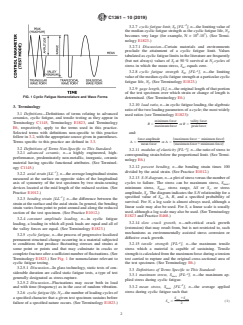
FIG. 1 Cyclic Fatigue Nomenclature and Wave Forms
determined. (See Terminology E6.)
3.2.10 load ratio, n—in cyclic fatigue loading, the algebraic
3. Terminology
ratio of the two loading parameters of a cycle; the most widely
3.1 Definitions—Definitions of terms relating to advanced
used ratios (see Terminology E1823):
ceramics, cyclic fatigue, and tensile testing as they appear in
minimum force valley force
Terminology C1145, Terminology E1823, and Terminology
R 5 or R 5
maximumforce peak force
E6, respectively, apply to the terms used in this practice.
Selected terms with definitions non-specific to this practice and:
follow in 3.2, with the appropriate source given in parentheses.
force amplitude maximum force 2 minimum force
~ !
Α 5 orΑ 5
Terms specific to this practice are defined in 3.3.
mean force maximum force1minimum force
~ !
3.2 Definitions of Terms Non-Specific to This Standard: –2
3.2.11 modulus of elasticity [FL ], n—the ratio of stress to
3.2.1 advanced ceramic, n—a highly engineered, high-
corresponding strain below the proportional limit. (See Termi-
performance, predominately non-metallic, inorganic, ceramic
nology E6.)
material having specific functional attributes. (See Terminol-
3.2.12 percent bending, n—the bending strain times 100
ogy C1145.)
divided by the axial strain. (See Practice E1012.)
–1
3.2.2 axial strain [LL ], n—theaveragelongitudinalstrains
measured at the surface on opposite sides of the longitudinal 3.2.13 S-Ndiagram,n—aplotofstressversusthenumberof
cycles to failure. The stress can be maximum stress, S ,
axis of symmetry of the test specimen by two strain-sensing
max
devices located at the mid length of the reduced section. (See minimum stress, S , stress range, ∆S or S , or stress
min r
amplitude, S . The diagram indicates the S-N relationship for a
Practice E1012.)
a
–1
specified value of S , Α, R, and a specified probability of
m
3.2.3 bending strain [LL ], n—the difference between the
survival. For N, a log scale is almost always used, although a
strainatthesurfaceandtheaxialstrain.Ingeneral,thebending
linear scale may also be used. For S, a linear scale is usually
strain varies from point to point around and along the reduced
used, although a log scale may also be used. (See Terminology
section of the test specimen. (See Practice E1012.)
E1823 and Practice E468.)
3.2.4 constant amplitude loading, n—in cyclic fatigue
3.2.14 slow crack growth, n—sub-critical crack growth
loading, a loading in which all peak loads are equal and all of
(extension) that may result from, but is not restricted to, such
the valley forces are equal. (See Terminology E1823.)
mechanisms as environmentally assisted stress corrosion or
3.2.5 cyclic fatigue, n—the process of progressive localized
diffusive crack growth.
permanent structural change occurring in a material subjected
–2
3.2.15 tensile strength [FL ], n—the maximum tensile
to conditions that produce fluctuating stresses and strains at
some point or points and that may culminate in cracks or stress which a material is capable of sustaining. Tensile
completefractureafterasufficientnumberoffluctuations.(See strengthiscalculatedfromthemaximumforceduringatension
Terminology E1823.) See Fig. 1 for nomenclature relevant to test carried to rupture and the original cross-sectional area of
cyclic fatigue testing. the test specimen. (See Terminology E6.)
3.2.5.1 Discussion—In glass technology, static tests of con-
3.3 Definitions of Terms Specific to This Standard:
siderable duration are called static fatigue tests, a type of test
–2
3.3.1 maximum stress, S [FL ], n—the maximum ap-
max
generally designated as stress-rupture.
plied stress during cyclic fatigue.
3.2.5.2 Discussion—Fluctuations may occur both in load
–2
3.3.2 mean stress, S [FL ], n—the average applied
and with time (frequency) as in the case of random vibration.
max
stress during cyclic fatigue such that
3.2.6 cyclic fatigue life, N—thenumberofloadingcyclesof
f
a specified character that a given test specimen sustains before S 1S
max min
S 5 (1)
m
failure of a specified nature occurs. (See Terminology E1823.) 2
C1361 − 10 (2019)
–2
3.3.3 minimum stress, S [FL ], n—the minimum applied test specimen conditioning, test environment, force or strain
min
stress during cyclic fatigue. limits during cycling, wave shapes (that is, sinusoidal,
–2
trapezoidal, etc.), and failure mode. Some of these effects may
3.3.4 stress amplitude, S [FL ], n—the difference between
a
beconsequencesofstresscorrosionorsub-critical(slow)crack
the mean stress and the maximum or minimum stress such that
growth which can be difficult to quantify. In addition, surface
S 2 S
max min
or near-surface flaws introduced by the test specimen fabrica-
S 5 5 S 2 S 5 S 2 S (2)
a max m m min
tion process (machining) may or may not be quantifiable by
–2
3.3.5 stress range, ∆SorS [FL ], n—the difference
r conventional measurements of surface texture. Therefore, sur-
between the maximum stress and the minimum stress such that
face effects (for example, as reflected in cyclic fatigue reduc-
∆S = S = S – S
r max min tion factors as classified by Marin (3)) must be inferred from
the results of numerous cyclic fatigue tests performed with test
3.3.6 time to cyclic fatigue failure, tf [t], n—total elapsed
timefromtestinitiationtotestterminationrequiredtoreachthe specimens having identical fabrication histories.
number of cycles to failure.
4.6 The results of cyclic fatigue tests of specimens fabri-
cated to standardized dimensions from a particular material or
4. Significance and Use
selected portions of a part, or both, may not totally represent
4.1 This practice may be used for material development,
thecyclicfatiguebehavioroftheentirefull-sizeendproductor
material comparison, quality assurance, characterization, reli-
its in-service behavior in different environments.
ability assessment, and design data generation.
4.7 However, for quality control purposes, results derived
4.2 High-strength, monolithic advanced ceramic materials
from standardized tensile test specimens may be considered
are generally characterized by small grain sizes (<50 µm) and
indicativeoftheresponseofthematerialfromwhichtheywere
bulk densities near the theoretical density. These materials are
taken for given primary processing conditions and post-
candidates for load-bearing structural applications requiring
processing heat treatments.
high degrees of wear and corrosion resistance, and high-
4.8 The cyclic fatigue behavior of an advanced ceramic is
temperature strength. Although flexural test methods are com-
dependent on its inherent resistance to fracture, the presence of
monly used to evaluate strength of advanced ceramics, the
flaws, or damage accumulation processes, or both. There can
nonuniform stress distribution in a flexure specimen limits the
be significant damage in the test specimen without any visual
volume of material subjected to the maximum applied stress at
evidence such as the occurrence of a macroscopic crack. This
fracture. Uniaxially loaded tensile strength tests may provide
can result in a specific loss of stiffness and retained strength.
information on strength-limiting flaws from a greater volume
Depending on the purpose for which the test is being
of uniformly stressed material.
conducted, rather than final fracture, a specific loss in stiffness
4.3 Cyclic fatigue by its nature is a probabilistic phenom-
or retained strength may constitute failure. In cases where
enon as discussed in STP91Aand STP588 (1, 2). In addition,
fracture occurs, analysis of fracture surfaces and fractography,
the strengths of advanced ceramics are probabilistic in nature.
though beyond the scope of this practice, are recommended.
Therefore, a sufficient number of test specimens at each testing
condition is required for statistical analysis and design, with
5. Interferences
guidelinesforsufficientnumbersprovidedinSTP91A (1),STP
5.1 Test environment (vacuum, inert gas, ambient air, etc.),
588 (2), and Practice E739. The many different tensile speci-
including moisture content (for example, relative humidity),
men geometries available for cyclic fatigue testing may result
mayhaveaninfluenceonthemeasuredcyclicfatiguebehavior.
in variations in the measured cyclic fatigue behavior of a
In particular, the behavior of materials susceptible to slow
particular material due to differences in the volume or surface
crack growth fracture will be strongly influenced by test
area of material in the gage section of the test specimens.
environment and testing rate. Conduct tests to evaluate the
4.4 Tensile cyclic fatigue tests provide information on the
mechanical cyclic fatigue behavior of a material in inert
material response under fluctuating uniaxial tensile stresses.
environments to minimize slow crack growth effects.
Uniform stress states are required to effectively evaluate any
Conversely, conduct tests in environments or at test modes and
nonlinear stress-strain behavior which may develop as the
rates representative of service conditions to evaluate material
result of cumulative damage processes (for example,
performance under use conditions, or both. Regardless of
microcracking, cyclic fatigue crack growth, etc.).
whether testing is conducted in uncontrolled ambient air or
controlled environments, monitor and report relative humidity
4.5 Cumulative damage processes due to cyclic fatigue may
andtemperatureataminimumatthebeginningandendofeach
be influenced by testing mode, testing rate (related to
frequency), differences between maximum and minimum force test, and hourly if the test duration is greater than 1 h. Testing
at humidity levels greater than 65 % relative humidity (RH) is
(R or Α), effects of processing or combinations of constituent
not recommended.
materials, or environmental influences, or both. Other factors
that influence cyclic fatigue behavior are: void or porosity
5.2 While cyclic fatigue in ceramics is sensitive to environ-
content, methods of test specimen preparation or fabrication,
ment at any stress level (4), environment has been shown to
have a greater influence on cyclic fatigue at higher forces (that
is, forces greater than the threshold for static fatigue (5)). In
The boldface numbers in parentheses refer to the list of references at the end of
this standard. this regime, the number of cycles to failure may be influenced
C1361 − 10 (2019)
by test frequency and wave form. Tests performed at low 5.6 Fractures that initiate outside the uniformly stressed
frequency with wave forms having plateaus may decrease the gage section of a test specimen may be due to factors such as
cycles to failure since the material is subject to maximum stress concentrations or geometrical transitions, extraneous
tensile stresses (that is, similar to static fatigue) for longer stresses introduced by gripping, or strength-limiting features in
the microstructure of the test specimen. Such non-gage section
periods of time during each cycle. Conversely, at lower stress
levels, the cycles to failure are usually not influenced by fractures may constitute invalid tests.
frequency or wave form, except as noted in 4.3.
6. Apparatus
5.3 In many materials, amplitude of the cyclic wave form is
6.1 Tensile Testing Machines—Machines used for determin-
a primary contributor to the cyclic fatigue behavior. However,
ing ultimate strength or other “static” material properties shall
in ceramics the maximum stress intensity factor may be the
conform to Practices E4. Machines used for cyclic fatigue
primarycontributorofthecyclicfatiguebehavior.Nonetheless,
testing may be either nonresonant mechanical, hydraulic, or
the choice of load ratio, R or Α, can have a pronounced effect
magnetic systems or resonant type using forced vibrations
on the cyclic fatigue behavior of the material. A force ratio of
excited by magnetic or centrifugal force and shall conform to
R = 1 (maximum equal to minimum) constitutes a constant
Practice E467.
force test with no fluctuation of force over time. A force ratio
6.2 Gripping Devices—Devices used to grip the tensile
of R = 0 (minimum equal to zero) constitutes the maximum
specimens may be of the types discussed in 6.2 ofTest Method
amplitude (amplitude equal to one half the maximum) for
C1273 as long as they meet the requirements of this practice
tension-tension cyclic fatigue.Aforce ratio of R = 0.1 is often
and Test Method C1273.
chosen for tension-tension cyclic fatigue so as to impose
maximum amplitudes while minimizing the possibility of a
6.3 Load Train Couplers—Devices used to align the load
“slack” (loose and non-tensioned) force train. The choice of R
train and to act as an interface between the gripping devices
or Α is dictated by the final use of the test result.
and the testing machine may be of the types discussed in 6.3 of
Test Method C1273 as long as they meet the requirements of
5.4 Surface preparation of test specimens can introduce
this practice and Test Method C1273.
fabrication flaws that may have pronounced effects on cyclic
6.4 Strain Measurement—Determine strain by means of
fatigue behavior (for example, cyclic fatigue limits, etc.).
either a suitable extensometer or strain gages as discussed in
Machining damage introduced during test specimen prepara-
Test Method C1273. Extensometers shall satisfy Practice E83,
tion can be either a random interfering factor in the determi-
Class B-1 requirements and are recommended instead of strain
nation of ultimate strength of pristine material (that is, more
gages for test specimens with gage lengths of ≥25 mm.
frequent occurrence of surface-initiated fractures compared to
Calibrate extensometers periodically in accordance with Prac-
volume initiated fractures), or an inherent part of the strength
tice E83.
characteristics to be measured. Surface preparation can also
lead to the introduction of residual stresses. Universal or
6.5 Allowable Bending—Analytical and empirical studies of
standardized methods for surface preparation do not exist.
theeffectofbendingonthecyclicfatiguebehaviorofadvanced
Final machining steps may or may not negate machining
ceramics do not exist. Until such information is forthcoming,
damage introduced during the initial machining. In addition,
this practice adopts the recommendations of Test Method
the nature of fabrication used for certain advanced ceramics
C1273. However, unless all test specimens are properly strain
(for example, pressureless sintering or hot pressing) may
gaged and percent bending monitored during testing, there will
require the testing of test specimens in the as-processed
be no record of percent bending for each test specimen.
condition (that is, it may not be allowable to machine the test
Therefore, verify the testing system using the procedure
specimen surfaces within the gage length). Thus, the surface
detailed in Practice E1012 and Test Method C1273 such that
condition produced by processing may dominate cyclic fatigue
percent bending does not exceed five at a mean strain equal to
behavior. Ideally, some quantitative measurement such as
either one half of the anticipated strain at fracture under
surface roughness is recommended as a way of characterizing
monotonic tensile strength testing conditions or a strain of
as-processed surfaces to facilitate interpretation of cyclic
0.0005 (that is, 500 micro strain), whichever is greater.
fatigue test results. Therefore, report the test specimen fabri-
Conduct this verification at a minimum at the beginning and
cation history since it may play an important role in the cyclic
end of each test series as recommended inTest Method C1273.
fatigue behavior.
An additional verification of alignment is recommended, al-
thoughnotrequired,atthemiddleofthetestseries.Inaddition,
5.5 Bending in uniaxial tensile tests can cause or promote
plot a curve of percent bending versus the test parameter
nonuniform stress distributions with maximum stresses occur-
(force, displacement, strain, etc.) to assist in understanding or
ring at the test specimen surface, leading to possible non-
determining the role of bending over the course of the wave
representative fractures originating at surfaces or near geo-
form from the minimum to the maximum.
metrical transitions (as opposed to fractures originated from
pre-existing or inherent flaws). In addition, if deformations or 6.6 Data Acquisition—If desired, obtain an autographic
strains are m
...