

ASTM D7328-23
(Test Method)Standard Test Method for Determination of Existent and Potential Inorganic Sulfate and Total Inorganic Chloride in Fuel Ethanol by Ion Chromatography Using Aqueous Sample Injection
General Information
- Abstract
SIGNIFICANCE AND USE
5.1 Sulfates and chlorides may be found in filter plugging deposits and fuel injector deposits. The acceptability for use of the fuel components and the finished fuels depends on the sulfate and chloride content.
5.2 Existent and potential inorganic sulfate and total chloride content, as measured by this test method, can be used as one measure of the acceptability of gasoline components for automotive spark-ignition engine fuel use.
SCOPE
1.1 This test method covers an ion chromatographic procedure for the determination of the existent inorganic and potential sulfate and total inorganic chloride content in hydrous and anhydrous denatured ethanol to be used in motor fuel applications. It is intended for the analysis of ethanol samples containing between 0.55 mg/kg and 20 mg/kg of existent inorganic sulfate, 4.0 mg/kg to 20 mg/kg of potential inorganic sulfate, and 0.75 mg/kg to 50 mg/kg of total inorganic chloride.
1.2 The values stated in SI units are to be regarded as standard. No other units of measurement are included in this standard.
1.3 This standard does not purport to address all of the safety concerns, if any, associated with its use. It is the responsibility of the user of this standard to establish appropriate safety, health, and environmental practices and determine the applicability of regulatory limitations prior to use. Material Safety Data Sheets are available for reagents and materials. Review them for hazards prior to usage
1.4 This international standard was developed in accordance with internationally recognized principles on standardization established in the Decision on Principles for the Development of International Standards, Guides and Recommendations issued by the World Trade Organization Technical Barriers to Trade (TBT) Committee.
- Status
- Published
- Publication Date
- 28-Feb-2023
- Technical Committee
- D02 - Petroleum Products, Liquid Fuels, and Lubricants
- Drafting Committee
- D02.03 - Elemental Analysis
Buy Documents
ASTM D7328-23 - Standard Test Method for Determination of Existent and Potential Inorganic Sulfate and Total Inorganic Chloride in Fuel Ethanol by Ion Chromatography Using Aqueous Sample Injection
REDLINE ASTM D7328-23 - Standard Test Method for Determination of Existent and Potential Inorganic Sulfate and Total Inorganic Chloride in Fuel Ethanol by Ion Chromatography Using Aqueous Sample Injection
Overview
ASTM D7328-23 is the standard test method developed by ASTM for the Determination of Existent and Potential Inorganic Sulfate and Total Inorganic Chloride in Fuel Ethanol by Ion Chromatography Using Aqueous Sample Injection. This method applies to both hydrous and anhydrous denatured ethanol intended for motor fuel applications. By quantifying inorganic sulfate and chloride content in fuel ethanol, stakeholders can assess and ensure the suitability and quality of ethanol for use in automotive spark-ignition engine fuels. Accurate determination of these contaminants is crucial, as elevated levels of sulfate and chloride can contribute to fuel system deposits, filter plugging, and injector fouling.
Key Topics
Scope and Applicability:
- Applicable to ethanol samples containing 0.55 to 20 mg/kg existent inorganic sulfate, 4.0 to 20 mg/kg potential inorganic sulfate, and 0.75 to 50 mg/kg total inorganic chloride.
- Focuses on evaluating both existent (present without oxidation) and potential (after oxidation) sulfate values.
- Designed for use with fuel ethanol in automotive applications.
Test Method Summary:
- Utilizes ion chromatography with aqueous sample injection.
- Analysis involves evaporating ethanol samples, reconstituting residues, and injecting them into an ion chromatograph equipped with suitable columns and detectors.
- Peak areas for chloride and sulfate are compared with calibrated standards to determine the concentration.
Quality Assurance and Control:
- Routine performance verification using quality check samples.
- Use of control charts and statistical process control (in line with ASTM D6299 and D6792) to monitor data stability and reliability.
Precision and Reporting:
- Clearly defined repeatability and reproducibility values across measurement ranges.
- Results are reported with specified precision according to the analyte concentration.
Applications
Fuel Ethanol Specification:
This test method is fundamental in certifying that fuel ethanol meets industry and regulatory standards for inorganic sulfate and chloride content. It ensures that ethanol does not contribute excessive deposits in engine fuel systems, which can impair vehicle performance and longevity.Quality Control in Fuel Production:
By integrating this method into routine laboratory analysis, ethanol producers, suppliers, and laboratories can maintain consistency and detect fluctuations in production quality. It supports compliance with product specifications before ethanol is blended with gasoline.Investigation of Fuel System Issues:
When filter plugging or fuel injector deposits are observed, this method can help identify high levels of inorganic sulfate or chloride as potential contributing factors.Regulatory Compliance:
As regulators and automotive manufacturers increasingly require low contaminant fuels, this method supports adherence to international and regional fuel quality mandates.
Related Standards
- ASTM D1193 - Specification for Reagent Water
- ASTM D4052 - Test Method for Density and API Gravity of Liquids
- ASTM D4057 - Practice for Manual Sampling of Petroleum Products
- ASTM D4175 - Terminology Relating to Petroleum Products
- ASTM D5827 - Analysis of Engine Coolant for Chloride and Other Anions by Ion Chromatography
- ASTM D7318 - Test Method for Existent Inorganic Sulfate in Ethanol by Potentiometric Titration
- ASTM D7319 - Determination of Existent and Potential Sulfate and Inorganic Chloride in Fuel Ethanol and Butanol
- ISO/CEN 15492 - Ethanol as a Blending Component for Petrol - Determination of Inorganic Chloride
Practical Value
The ASTM D7328-23 standard provides laboratories and ethanol producers with a robust, internationally recognized method for measuring key inorganic impurities in fuel ethanol, helping to ensure high-quality, reliable, and engine-compatible ethanol blends for the automotive sector. By following this test method, organizations can mitigate risks related to fuel system fouling, optimize product quality, and comply with evolving global fuel standards.
Keywords: ASTM D7328-23, fuel ethanol, ion chromatography, sulfate determination, chloride determination, aqueous injection, fuel quality, automotive fuels, inorganic contaminants, fuel system deposits, ethanol testing standards.
Relations
- Refers
ASTM D4175-23a - Standard Terminology Relating to Petroleum Products, Liquid Fuels, and Lubricants - Effective Date
- 15-Dec-2023
- Effective Date
- 01-Dec-2023
- Effective Date
- 01-Nov-2023
- Effective Date
- 01-Oct-2023
- Refers
ASTM D4175-23e1 - Standard Terminology Relating to Petroleum Products, Liquid Fuels, and Lubricants - Effective Date
- 01-Jul-2023
- Effective Date
- 15-Dec-2017
- Effective Date
- 15-Nov-2017
- Effective Date
- 01-Jan-2017
- Effective Date
- 01-Oct-2013
- Effective Date
- 15-Jun-2013
- Effective Date
- 01-May-2013
- Effective Date
- 01-Dec-2012
- Effective Date
- 01-Jul-2011
- Effective Date
- 01-Jul-2011
- Effective Date
- 01-Jul-2011
Buy Documents
ASTM D7328-23 - Standard Test Method for Determination of Existent and Potential Inorganic Sulfate and Total Inorganic Chloride in Fuel Ethanol by Ion Chromatography Using Aqueous Sample Injection
REDLINE ASTM D7328-23 - Standard Test Method for Determination of Existent and Potential Inorganic Sulfate and Total Inorganic Chloride in Fuel Ethanol by Ion Chromatography Using Aqueous Sample Injection
Get Certified
Connect with accredited certification bodies for this standard

Element Materials Technology
Materials testing and product certification.

ABS Group Brazil
ABS Group certification services in Brazil.

ABS Quality Evaluations Inc.
American Bureau of Shipping quality certification.
Sponsored listings
Frequently Asked Questions
ASTM D7328-23 is a standard published by ASTM International. Its full title is "Standard Test Method for Determination of Existent and Potential Inorganic Sulfate and Total Inorganic Chloride in Fuel Ethanol by Ion Chromatography Using Aqueous Sample Injection". This standard covers: SIGNIFICANCE AND USE 5.1 Sulfates and chlorides may be found in filter plugging deposits and fuel injector deposits. The acceptability for use of the fuel components and the finished fuels depends on the sulfate and chloride content. 5.2 Existent and potential inorganic sulfate and total chloride content, as measured by this test method, can be used as one measure of the acceptability of gasoline components for automotive spark-ignition engine fuel use. SCOPE 1.1 This test method covers an ion chromatographic procedure for the determination of the existent inorganic and potential sulfate and total inorganic chloride content in hydrous and anhydrous denatured ethanol to be used in motor fuel applications. It is intended for the analysis of ethanol samples containing between 0.55 mg/kg and 20 mg/kg of existent inorganic sulfate, 4.0 mg/kg to 20 mg/kg of potential inorganic sulfate, and 0.75 mg/kg to 50 mg/kg of total inorganic chloride. 1.2 The values stated in SI units are to be regarded as standard. No other units of measurement are included in this standard. 1.3 This standard does not purport to address all of the safety concerns, if any, associated with its use. It is the responsibility of the user of this standard to establish appropriate safety, health, and environmental practices and determine the applicability of regulatory limitations prior to use. Material Safety Data Sheets are available for reagents and materials. Review them for hazards prior to usage 1.4 This international standard was developed in accordance with internationally recognized principles on standardization established in the Decision on Principles for the Development of International Standards, Guides and Recommendations issued by the World Trade Organization Technical Barriers to Trade (TBT) Committee.
SIGNIFICANCE AND USE 5.1 Sulfates and chlorides may be found in filter plugging deposits and fuel injector deposits. The acceptability for use of the fuel components and the finished fuels depends on the sulfate and chloride content. 5.2 Existent and potential inorganic sulfate and total chloride content, as measured by this test method, can be used as one measure of the acceptability of gasoline components for automotive spark-ignition engine fuel use. SCOPE 1.1 This test method covers an ion chromatographic procedure for the determination of the existent inorganic and potential sulfate and total inorganic chloride content in hydrous and anhydrous denatured ethanol to be used in motor fuel applications. It is intended for the analysis of ethanol samples containing between 0.55 mg/kg and 20 mg/kg of existent inorganic sulfate, 4.0 mg/kg to 20 mg/kg of potential inorganic sulfate, and 0.75 mg/kg to 50 mg/kg of total inorganic chloride. 1.2 The values stated in SI units are to be regarded as standard. No other units of measurement are included in this standard. 1.3 This standard does not purport to address all of the safety concerns, if any, associated with its use. It is the responsibility of the user of this standard to establish appropriate safety, health, and environmental practices and determine the applicability of regulatory limitations prior to use. Material Safety Data Sheets are available for reagents and materials. Review them for hazards prior to usage 1.4 This international standard was developed in accordance with internationally recognized principles on standardization established in the Decision on Principles for the Development of International Standards, Guides and Recommendations issued by the World Trade Organization Technical Barriers to Trade (TBT) Committee.
ASTM D7328-23 is classified under the following ICS (International Classification for Standards) categories: 75.160.20 - Liquid fuels. The ICS classification helps identify the subject area and facilitates finding related standards.
ASTM D7328-23 has the following relationships with other standards: It is inter standard links to ASTM D4175-23a, ASTM D6299-23a, ASTM D6792-23c, ASTM D6792-23b, ASTM D4175-23e1, ASTM D6299-17b, ASTM D6299-17a, ASTM D6299-17, ASTM D6299-13e1, ASTM D7318-13, ASTM D7319-13, ASTM D7319-12, ASTM D7319-11e1, ASTM D7319-11, ASTM D7318-11. Understanding these relationships helps ensure you are using the most current and applicable version of the standard.
ASTM D7328-23 is available in PDF format for immediate download after purchase. The document can be added to your cart and obtained through the secure checkout process. Digital delivery ensures instant access to the complete standard document.
Standards Content (Sample)
This international standard was developed in accordance with internationally recognized principles on standardization established in the Decision on Principles for the
Development of International Standards, Guides and Recommendations issued by the World Trade Organization Technical Barriers to Trade (TBT) Committee.
Designation: D7328 − 23
Standard Test Method for
Determination of Existent and Potential Inorganic Sulfate
and Total Inorganic Chloride in Fuel Ethanol by Ion
Chromatography Using Aqueous Sample Injection
This standard is issued under the fixed designation D7328; the number immediately following the designation indicates the year of
original adoption or, in the case of revision, the year of last revision. A number in parentheses indicates the year of last reapproval. A
superscript epsilon (´) indicates an editorial change since the last revision or reapproval.
1. Scope* D4052 Test Method for Density, Relative Density, and API
Gravity of Liquids by Digital Density Meter
1.1 This test method covers an ion chromatographic proce-
D4057 Practice for Manual Sampling of Petroleum and
dure for the determination of the existent inorganic and
Petroleum Products
potential sulfate and total inorganic chloride content in hydrous
D4175 Terminology Relating to Petroleum Products, Liquid
and anhydrous denatured ethanol to be used in motor fuel
Fuels, and Lubricants
applications. It is intended for the analysis of ethanol samples
D4177 Practice for Automatic Sampling of Petroleum and
containing between 0.55 mg ⁄kg and 20 mg ⁄kg of existent
Petroleum Products
inorganic sulfate, 4.0 mg ⁄kg to 20 mg ⁄kg of potential inorganic
D5827 Test Method for Analysis of Engine Coolant for
sulfate, and 0.75 mg ⁄kg to 50 mg ⁄kg of total inorganic chlo-
Chloride and Other Anions by Ion Chromatography
ride.
D6299 Practice for Applying Statistical Quality Assurance
1.2 The values stated in SI units are to be regarded as
and Control Charting Techniques to Evaluate Analytical
standard. No other units of measurement are included in this
Measurement System Performance
standard.
D6792 Practice for Quality Management Systems in Petro-
1.3 This standard does not purport to address all of the
leum Products, Liquid Fuels, and Lubricants Testing
safety concerns, if any, associated with its use. It is the Laboratories
responsibility of the user of this standard to establish appro-
D7318 Test Method for Existent Inorganic Sulfate in Ethanol
priate safety, health, and environmental practices and deter- by Potentiometric Titration
mine the applicability of regulatory limitations prior to use.
D7319 Test Method for Determination of Existent and Po-
Material Safety Data Sheets are available for reagents and
tential Sulfate and Inorganic Chloride in Fuel Ethanol and
materials. Review them for hazards prior to usage Butanol by Direct Injection Suppressed Ion Chromatog-
1.4 This international standard was developed in accor-
raphy
dance with internationally recognized principles on standard-
2.2 Other Standard:
ization established in the Decision on Principles for the
ISO/CEN15492 Ethanol as a Blending Component for
Development of International Standards, Guides and Recom-
Petrol—Determination of Inorganic Chloride—Ion Chro-
mendations issued by the World Trade Organization Technical
matographic Method
Barriers to Trade (TBT) Committee.
3. Terminology
2. Referenced Documents
3.1 Definitions:
2.1 ASTM Standards:
3.1.1 For definitions of terms used in this test method, refer
D1193 Specification for Reagent Water
to Terminology D4175.
3.2 Definitions of Terms Specific to This Standard:
3.2.1 existent inorganic sulfate, n—inorganic sulfate species
This test method is under the jurisdiction of ASTM Committee D02 on actually present in the sample at the time of analysis with no
Petroleum Products, Liquid Fuels, and Lubricants and is the direct responsibility of
oxidation treatment.
Subcommittee D02.03 on Elemental Analysis.
3.2.2 inorganic chloride, n—chloride present as hydrochlo-
Current edition approved March 1, 2023. Published April 2023. Originally
approved in 2007. Last previous edition approved in 2022 as D7328 – 22. DOI:
ric acid, ionic salts of this acid, or mixtures of these.
10.1520/D7328- 23.
For referenced ASTM standards, visit the ASTM website, www.astm.org, or
contact ASTM Customer Service at service@astm.org. For Annual Book of ASTM
Standards volume information, refer to the standard’s Document Summary page on Available from International Organization for Standardization (ISO), 1 rue de
the ASTM website. Varembé, Case postale 56, CH-1211, Geneva 20, Switzerland, http://www.iso.ch.
*A Summary of Changes section appears at the end of this standard
Copyright © ASTM International, 100 Barr Harbor Drive, PO Box C700, West Conshohocken, PA 19428-2959. United States
D7328 − 23
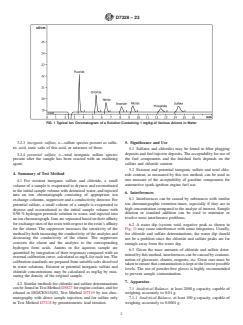
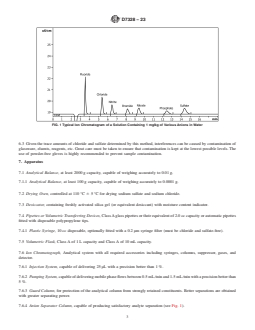
FIG. 1 Typical Ion Chromatogram of a Solution Containing 1 mg/kg of Various Anions in Water
3.2.3 inorganic sulfate, n—sulfate species present as sulfu- 5. Significance and Use
ric acid, ionic salts of this acid, or mixtures of these.
5.1 Sulfates and chlorides may be found in filter plugging
deposits and fuel injector deposits. The acceptability for use of
3.2.4 potential sulfate, n—total inorganic sulfate species
the fuel components and the finished fuels depends on the
present after the sample has been reacted with an oxidizing
sulfate and chloride content.
agent.
5.2 Existent and potential inorganic sulfate and total chlo-
4. Summary of Test Method
ride content, as measured by this test method, can be used as
one measure of the acceptability of gasoline components for
4.1 For existent inorganic sulfate and chloride, a small
automotive spark-ignition engine fuel use.
volume of a sample is evaporated to dryness and reconstituted
to the initial sample volume with deionized water, and injected
6. Interferences
into an ion chromatograph consisting of appropriate ion
6.1 Interferences can be caused by substances with similar
exchange columns, suppressor and a conductivity detector. For
ion chromatographic retention times, especially if they are in
potential sulfate, a small volume of a sample is evaporated to
high concentration compared to the analyte of interest. Sample
dryness and reconstituted to the initial sample volume with
dilution or standard addition can be used to minimize or
0.90 % hydrogen peroxide solution in water, and injected into
resolve most interference problems.
an ion chromatograph. Ions are separated based on their affinity
for exchange sites of the resin with respect to the resin’s affinity
6.2 A water dip (system void, negative peak as shown in
for the eluent. The suppressor increases the sensitivity of the
Fig. 1) may cause interference with some integrators. Usually,
method by both increasing the conductivity of the analytes and
for chloride and sulfate determinations, the water dip should
decreasing the conductivity of the eluent. The suppressor
not be a problem since the chloride and sulfate peaks are far
converts the eluent and the analytes to the corresponding
enough away from the water dip.
hydrogen form acids. Anions in the aqueous sample are
6.3 Given the trace amounts of chloride and sulfate deter-
quantified by integration of their responses compared with an
mined by this method, interferences can be caused by contami-
external calibration curve, calculated as mg/L for each ion. The
nation of glassware, eluents, reagents, etc. Great care must be
calibration standards are prepared from suitable salts dissolved
taken to ensure that contamination is kept at the lowest possible
in water solutions. Existent or potential inorganic sulfate and
levels. The use of powder-free gloves is highly recommended
chloride concentrations may be calculated as mg/kg by mea-
to prevent sample contamination.
suring the density of the original sample.
7. Apparatus
4.2 Similar methods for chloride and sulfate determinations
can be found in Test Method D5827 for engine coolant, and for 7.1 Analytical Balance, at least 2000 g capacity, capable of
ethanol in ISO/CEN15492, Test Method D7319 by ion chro- weighing accurately to 0.01 g.
matography with direct sample injection, and for sulfate only 7.1.1 Analytical Balance, at least 100 g capacity, capable of
in Test Method D7318 by potentiometric lead titration. weighing accurately to 0.0001 g.
D7328 − 23
7.2 Drying Oven, controlled at 110 °C 6 5 °C for drying ascertained that the reagent is of sufficiently high purity to
sodium sulfate and sodium chloride. permit its use without lessening the accuracy of the determi-
nation.
7.3 Desiccator, containing freshly activated silica gel (or
equivalent desiccant) with moisture content indicator. 8.2 Purity of Water—Unless otherwise indicated, reference
to water shall be understood to mean reagent water as defined
7.4 Pipettes or Volumetric Transferring Devices, Class A
by Type I in Specification D1193. For eluent preparation and
glass pipettes or their equivalent of 2.0 cc capacity or auto-
handling, comply with all ion chromatograph instrument and
matic pipettes fitted with disposable polypropylene tips.
column vendor requirements (for example, filtering, degassing,
7.4.1 Plastic Syringe, 10 cc disposable, optionally fitted
etc.).
with a 0.2 μm syringe filter (must be chloride and sulfate-free).
8.3 Eluent Buffer Solution—The eluent solution used de-
7.5 Volumetric Flask, Class A of 1 L capacity and Class A of
pends on the systems or analytical columns that are used
10 mL capacity.
(contact instrument and column vendors). For the chromato-
7.6 Ion Chromatograph, Analytical system with all required
grams in Fig. 1, the following eluent buffer was used: Sodium
accessories including syringes, columns, suppressor, gases, and
bicarbonate (NaHCO ) 1.7 mM and sodium carbonate
detector.
(Na CO ) 1.8 mM. Dissolve 2.8563 g 6 0.0005 g of NaHCO
2 3 3
7.6.1 Injection System, capable of delivering 25 μL with a
and 3.8157 g 6 0.0005 g of Na CO in reagent water in a 1 L
2 3
precision better than 1 %.
Type A volumetric flask and dilute to volume. Dilute 100 mL
7.6.2 Pumping System, capable of delivering mobile phase
of this concentrate to 2000 mL with reagent water for the final
flows between 0.5 mL ⁄min and 1.5 mL ⁄min with a precision
working eluent solution. Other volumes of stock solution may
better than 5 %.
be prepared using appropriate ratios of reagents. Follow the
7.6.3 Guard Column, for protection of the analytical column
specific guidelines for this solution from the vendor of the
from strongly retained constituents. Better separations are
column being used. Alternatively, this solution can be pur-
obtained with greater separating power.
chased from a qualified vendor.
7.6.4 Anion Separator Column, capable of producing satis-
8.4 Suppressor Solution for Membrane Suppressor, 0.025 N
factory analyte separation (see Fig. 1).
sulfuric acid. Carefully add 13.7 mL of reagent grade sulfuric
7.6.5 Anion Suppressor Device, micro membrane suppres-
acid (relative density 1.84) to approximately 500 mL reagent
sor or equivalent. A cation exchange column in the hydrogen
water in a 1 L volumetric flask. (Warning—This will generate
form has been used successfully, but it will periodically need to
a very hot solution. Allow it to cool before diluting to 1000 mL
be regenerated as required. This is indicated by a high
volume. Never add water to concentrated acid!) Dilute to
background conductivity and low analyte response.
1000 mL with reagent water, and label this solution as 0.50 N
7.6.6 Conductivity Detector, low volume (<2 μL) and flow,
sulfuric acid. Dilute 100 mL of this concentrate to 2000 mL
temperature compensated, capable of at least 0 μS ⁄cm to
with reagent water for the final working suppressor solution.
1000 μS ⁄cm on a linear scale.
Other volumes of stock solution may be prepared using
7.6.7 Integrator or Chromatography Data System Software,
appropriate ratios of reagents. Follow the specific guidelines
capable of measuring peak areas and retention times, and
for this solution from the vendor of the column being used.
correcting the data according to the baseline of the chromato-
gram. 8.5 Sodium Sulfate, anhydrous, reagent grade, 99 % mini-
mum purity. (Warning—Do not ingest; avoid unnecessary
7.7 Gloves, powder-free examination type.
exposure.)
7.8 Hot Block, aluminum, capable of being heated to 65 °C
8.6 Sodium Chloride, ACS reagent grade, 99 % minimum
with suitable holes to hold 15 mL glass vials, with a method of
purity.
flowing nitrogen over inserted samples.
8.7 Ethanol, denatured with methanol, formula 3A or his-
7.9 Glass Vials, 15 mL with screw top.
tological grade ethanol, anhydrous, denatured with ethyl
acetate, methylisobutyl ketone and hydrocarbon naphtha.
8. Reagents
(Warning—Flammable; toxic; may be harmful or fatal if
8.1 Purity of Reagents—Reagent grade or higher purity
ingested or inhaled; avoid skin contact.)
chemicals shall be used for the preparation of all samples,
standards, eluents, and regenerator solutions. Unless otherwise 8.8 Hydrogen Peroxide Solution, 30 %, commercially avail-
able 30 % hydrogen peroxide solution.
indicated, it is intended that all reagents conform to the
specifications of the Committee on Analytical Reagents of the
8.9 Nitrogen Gas, 99.99 mol % pure, free of hydrocarbons.
American Chemical Society, where such specifications are
available. Other grades may be used, provided it is first 9. Preparation of Standard Solutions
9.1 Stock Solutions:
9.1.1 Sulfate Stock Solution, approximately 2000 mg ⁄L—To
ACS Reagent Chemicals, Specifications and Procedures for Reagents and
Standard-Grade Reference Materials, American Chemical Society, Washington,
ensure dryness, place anhydrous sodium sulfate (5 g) in a
DC. For suggestions on the testing of reagents not listed by the American Chemical
drying oven at 110 °C for at least an hour, cool and store in a
Society, see Analar Standards for Laboratory Chemicals, BDH Ltd., Poole, Dorset,
desiccator. Accurately weigh 2.96 g anhydrous sodium sulfate
U.K., and the United States Pharmacopeia and National Formulary, U.S. Pharma-
copeial Convention, Inc. (USPC), Rockville, MD. to the nearest tenth of a milligram and transfer to a 1 L
D7328 − 23
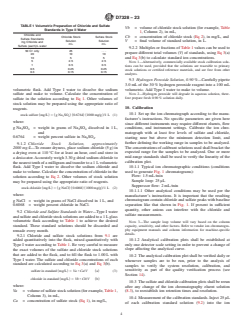
TABLE 1 Volumetric Preparation of Chloride and Sulfate
Vb = volume of chloride stock solution (for example, Table
Standards in Type II Water
1, Column 2), in mL,
Chloride and
Cb = concentration of chloride stock (Eq 2), in mg/L, and
Chloride Stock Sulfate Stock
Sulfate Standards
Solution Solution
V = final volume of standard solution, in L.
mg Chloride and
mL mL
Sulfate (each)/L water
9.2.2 Multiples or fractions of Table 1 values can be used to
-
50 Cl only 25 . . .
prepare different total volumes (V) of standards, using Eq 3(a)
20 10 10
and Eq 3(b) to calculate standard ion concentrations.
10 5 5
5 2.5 2.5
NOTE 1—Alternatively, commercially available stock calibration solu-
1 0.5 0.5
tions can be used, provided that the solutions are traceable to primary
0.5 0.25 0.25
stock solutions or certified reference materials, and are free from other
0.3 0.15 0.15
analytes.
9.3 Hydrogen Peroxide Solution, 0.90 %—Carefully pipette
3.0 mL of the 30 % hydrogen peroxide reagent into a 100 mL
volumetric flask. Add Type I water to dissolve the sodium volumetric. Add Type I water to make to volume.
sulfate and make to volume. Calculate the concentration of NOTE 2—Hydrogen peroxide will degrade in aqueous solution, there-
fore prepare fresh 0.90 % solution daily.
sulfate in the solution according to Eq 1. Other volumes of
stock solution may be prepared using the appropriate ratio of
10. Calibration
reagents.
10.1 Set up the ion chromatograph according to the manu-
stock sulfate ~mg/L! 5 ~g Na SO ! ~0.6764! ~1000 mg/g!/1 L (1)
2 4
facturer’s instructions. No specific parameters are given here
where:
since different instruments may require different eluents, flow
g Na SO = weight in grams of Na SO dissolved in 1 L,
conditions, and instrument settings. Calibrate the ion chro-
2 4 2 4
and
matograph with at least five levels of sulfate and chloride,
0.6764 = weight percent sulfate in Na SO .
2 4 starting near but above the minimum detection limit, and
further defining the working range in samples to be analyzed.
9.1.2 Chloride Stock Solution, approximately
The concentrations of calibrant solutions used shall bracket the
2000 mg ⁄L—To ensure dryness, place sodium chloride (5 g) in
expected range for the samples to be analyzed. One or more
a drying oven at 110 °C for at least an hour, cool and store in
mid-range standards shall be used to verify the linearity of the
a desiccator. Accurately weigh 3.30 g dried sodium chloride to
calibration plot.
the nearest tenth of a milligram and transfer to a 1 L volumetric
10.1.1 Typical ion chromatographic conditions (conditions
flask. Add Type I water to dissolve the sodium chloride and
used to generate Fig. 1 chromatograms):
make to volume. Calculate the concentration of chloride in the
Flow: 1.5 mL ⁄min
solution according to Eq 2. Other volumes of stock solution
Sample loop: 25 μL
may be prepared using the appropriate ratio of reagents.
Suppressor flow: 2 mL ⁄min
stock chloride mg/L 5 g NaCl 0.6068 1000 mg/g /1 L (2)
~ ! ~ ! ~ ! ~ !
10.1.1.1 Other analytical conditions may be used per the
where:
manufacturer’s instructions. It is important that the resulting
chromatogram contain chloride and sulfate peaks with baseline
g NaCl = weight in grams of NaCl dissolved in 1 L, and
0.6068 = weight percent chloride in NaCl. separation like that shown in Fig. 1. If present in sufficient
quantity, other anions can interfere with the chloride and
9.2 Chlo
...
This document is not an ASTM standard and is intended only to provide the user of an ASTM standard an indication of what changes have been made to the previous version. Because
it may not be technically possible to adequately depict all changes accurately, ASTM recommends that users consult prior editions as appropriate. In all cases only the current version
of the standard as published by ASTM is to be considered the official document.
Designation: D7328 − 22 D7328 − 23
Standard Test Method for
Determination of Existent and Potential Inorganic Sulfate
and Total Inorganic Chloride in Fuel Ethanol by Ion
Chromatography Using Aqueous Sample Injection
This standard is issued under the fixed designation D7328; the number immediately following the designation indicates the year of
original adoption or, in the case of revision, the year of last revision. A number in parentheses indicates the year of last reapproval. A
superscript epsilon (´) indicates an editorial change since the last revision or reapproval.
1. Scope*
1.1 This test method covers an ion chromatographic procedure for the determination of the existent inorganic and potential sulfate
and total inorganic chloride content in hydrous and anhydrous denatured ethanol to be used in motor fuel applications. It is intended
for the analysis of ethanol samples containing between 0.55 mg ⁄kg and 20 mg ⁄kg of existent inorganic sulfate, 4.0 mg ⁄kg to
20 mg ⁄kg of potential inorganic sulfate, and 0.75 mg ⁄kg to 50 mg ⁄kg of total inorganic chloride.
1.2 The values stated in SI units are to be regarded as standard. No other units of measurement are included in this standard.
1.3 This standard does not purport to address all of the safety concerns, if any, associated with its use. It is the responsibility
of the user of this standard to establish appropriate safety, health, and environmental practices and determine the applicability of
regulatory limitations prior to use. Material Safety Data Sheets are available for reagents and materials. Review them for hazards
prior to usage
1.4 This international standard was developed in accordance with internationally recognized principles on standardization
established in the Decision on Principles for the Development of International Standards, Guides and Recommendations issued
by the World Trade Organization Technical Barriers to Trade (TBT) Committee.
2. Referenced Documents
2.1 ASTM Standards:
D1193 Specification for Reagent Water
D4052 Test Method for Density, Relative Density, and API Gravity of Liquids by Digital Density Meter
D4057 Practice for Manual Sampling of Petroleum and Petroleum Products
D4175 Terminology Relating to Petroleum Products, Liquid Fuels, and Lubricants
D4177 Practice for Automatic Sampling of Petroleum and Petroleum Products
D5827 Test Method for Analysis of Engine Coolant for Chloride and Other Anions by Ion Chromatography
D6299 Practice for Applying Statistical Quality Assurance and Control Charting Techniques to Evaluate Analytical Measure-
ment System Performance
D6792 Practice for Quality Management Systems in Petroleum Products, Liquid Fuels, and Lubricants Testing Laboratories
D7318 Test Method for Existent Inorganic Sulfate in Ethanol by Potentiometric Titration
This test method is under the jurisdiction of ASTM Committee D02 on Petroleum Products, Liquid Fuels, and Lubricants and is the direct responsibility of Subcommittee
D02.03 on Elemental Analysis.
Current edition approved Oct. 1, 2022March 1, 2023. Published October 2022April 2023. Originally approved in 2007. Last previous edition approved in 20172022 as
D7328 – 17. DOI: 10.1520/D7328- 22.22. DOI: 10.1520/D7328- 23.
For referenced ASTM standards, visit the ASTM website, www.astm.org, or contact ASTM Customer Service at service@astm.org. For Annual Book of ASTM Standards
volume information, refer to the standard’s Document Summary page on the ASTM website.
*A Summary of Changes section appears at the end of this standard
Copyright © ASTM International, 100 Barr Harbor Drive, PO Box C700, West Conshohocken, PA 19428-2959. United States
D7328 − 23
D7319 Test Method for Determination of Existent and Potential Sulfate and Inorganic Chloride in Fuel Ethanol and Butanol by
Direct Injection Suppressed Ion Chromatography
2.2 Other Standard:
ISO/CEN15492 Ethanol as a Blending Component for Petrol—Determination of Inorganic Chloride—Ion Chromatographic
Method
3. Terminology
3.1 Definitions:
3.1.1 For definitions of terms used in this test method, refer to Terminology D4175.
3.2 Definitions of Terms Specific to This Standard:
3.2.1 existent inorganic sulfate, n—inorganic sulfate species actually present in the sample at the time of analysis with no oxidation
treatment.
3.2.2 inorganic chloride, n—chloride present as hydrochloric acid, ionic salts of this acid, or mixtures of these.
3.2.3 inorganic sulfate, n—sulfate species present as sulfuric acid, ionic salts of this acid, or mixtures of these.
3.2.4 potential sulfate, n—total inorganic sulfate species present after the sample has been reacted with an oxidizing agent.
4. Summary of Test Method
4.1 For existent inorganic sulfate and chloride, a small volume of a sample is evaporated to dryness and reconstituted to the initial
sample volume with deionized water, and injected into an ion chromatograph consisting of appropriate ion exchange columns,
suppressor and a conductivity detector. For potential sulfate, a small volume of a sample is evaporated to dryness and reconstituted
to the initial sample volume with 0.90 % hydrogen peroxide solution in water, and injected into an ion chromatograph. Ions are
separated based on their affinity for exchange sites of the resin with respect to the resin’s affinity for the eluent. The suppressor
increases the sensitivity of the method by both increasing the conductivity of the analytes and decreasing the conductivity of the
eluent. The suppressor converts the eluent and the analytes to the corresponding hydrogen form acids. Anions in the aqueous
sample are quantified by integration of their responses compared with an external calibration curve, calculated as mg/L for each
ion. The calibration standards are prepared from suitable salts dissolved in water solutions. Existent or potential inorganic sulfate
and chloride concentrations may be calculated as mg/kg by measuring the density of the original sample.
4.2 Similar methods for chloride and sulfate determinations can be found in Test Method D5827 for engine coolant, and for
ethanol in ISO/CEN15492, Test Method D7319 by ion chromatography with direct sample injection, and for sulfate only in Test
Method D7318 by potentiometric lead titration.
5. Significance and Use
5.1 Sulfates and chlorides may be found in filter plugging deposits and fuel injector deposits. The acceptability for use of the fuel
components and the finished fuels depends on the sulfate and chloride content.
5.2 Existent and potential inorganic sulfate and total chloride content, as measured by this test method, can be used as one measure
of the acceptability of gasoline components for automotive spark-ignition engine fuel use.
6. Interferences
6.1 Interferences can be caused by substances with similar ion chromatographic retention times, especially if they are in high
concentration compared to the analyte of interest. Sample dilution or standard addition can be used to minimize or resolve most
interference problems.
6.2 A water dip (system void, negative peak as shown in Fig. 1) may cause interference with some integrators. Usually, for
chloride and sulfate determinations, the water dip should not be a problem since the chloride and sulfate peaks are far enough away
from the water dip.
Available from International Organization for Standardization (ISO), 1 rue de Varembé, Case postale 56, CH-1211, Geneva 20, Switzerland, http://www.iso.ch.
D7328 − 23
FIG. 1 Typical Ion Chromatogram of a Solution Containing 1 mg/kg of Various Anions in Water
6.3 Given the trace amounts of chloride and sulfate determined by this method, interferences can be caused by contamination of
glassware, eluents, reagents, etc. Great care must be taken to ensure that contamination is kept at the lowest possible levels. The
use of powder-free gloves is highly recommended to prevent sample contamination.
7. Apparatus
7.1 Analytical Balance, at least 2000 g capacity, capable of weighing accurately to 0.01 g.
7.1.1 Analytical Balance, at least 100 g capacity, capable of weighing accurately to 0.0001 g.
7.2 Drying Oven, controlled at 110 °C 6 5 °C for drying sodium sulfate and sodium chloride.
7.3 Desiccator, containing freshly activated silica gel (or equivalent desiccant) with moisture content indicator.
7.4 Pipettes or Volumetric Transferring Devices, Class A glass pipettes or their equivalent of 2.0 cc capacity or automatic pipettes
fitted with disposable polypropylene tips.
7.4.1 Plastic Syringe, 10 cc disposable, optionally fitted with a 0.2 μm syringe filter (must be chloride and sulfate-free).
7.5 Volumetric Flask, Class A of 1 L capacity and Class A of 10 mL capacity.
7.6 Ion Chromatograph, Analytical system with all required accessories including syringes, columns, suppressor, gases, and
detector.
7.6.1 Injection System, capable of delivering 25 μL with a precision better than 1 %.
7.6.2 Pumping System, capable of delivering mobile phase flows between 0.5 mL ⁄min and 1.5 mL ⁄min with a precision better than
5 %.
7.6.3 Guard Column, for protection of the analytical column from strongly retained constituents. Better separations are obtained
with greater separating power.
7.6.4 Anion Separator Column, capable of producing satisfactory analyte separation (see Fig. 1).
D7328 − 23
7.6.5 Anion Suppressor Device, micro membrane suppressor or equivalent. A cation exchange column in the hydrogen form has
been used successfully, but it will periodically need to be regenerated as required. This is indicated by a high background
conductivity and low analyte response.
7.6.6 Conductivity Detector, low volume (<2 μL) and flow, temperature compensated, capable of at least 0 μS ⁄cm to 1000 μS ⁄cm
on a linear scale.
7.6.7 Integrator or Chromatography Data System Software, capable of measuring peak areas and retention times, and correcting
the data according to the baseline of the chromatogram.
7.7 Gloves, powder-free examination type.
7.8 Hot Block, aluminum, capable of being heated to 65 °C with suitable holes to hold 15 mL glass vials, with a method of flowing
nitrogen over inserted samples.
7.9 Glass Vials, 15 mL with screw top.
8. Reagents
8.1 Purity of Reagents—Reagent grade or higher purity chemicals shall be used for the preparation of all samples, standards,
eluents, and regenerator solutions. Unless otherwise indicated, it is intended that all reagents conform to the specifications of the
Committee on Analytical Reagents of the American Chemical Society, where such specifications are available. Other grades may
be used, provided it is first ascertained that the reagent is of sufficiently high purity to permit its use without lessening the accuracy
of the determination.
8.2 Purity of Water—Unless otherwise indicated, reference to water shall be understood to mean reagent water as defined by Type
I in Specification D1193. For eluent preparation and handling, comply with all ion chromatograph instrument and column vendor
requirements (for example, filtering, degassing, etc.).
8.3 Eluent Buffer Solution—The eluent solution used depends on the systems or analytical columns that are used (contact
instrument and column vendors). For the chromatograms in Fig. 1, the following eluent buffer was used: Sodium bicarbonate
(NaHCO ) 1.7 mM and sodium carbonate (Na CO ) 1.8 mM. Dissolve 2.8563 g 6 0.0005 g of NaHCO and 3.8157 g 6 0.0005 g
3 2 3 3
of Na CO in reagent water in a 1 L Type A volumetric flask and dilute to volume. Dilute 100 mL of this concentrate to 2000 mL
2 3
with reagent water for the final working eluent solution. Other volumes of stock solution may be prepared using appropriate ratios
of reagents. Follow the specific guidelines for this solution from the vendor of the column being used. Alternatively, this solution
can be purchased from a qualified vendor.
8.4 Suppressor Solution for Membrane Suppressor, 0.025 N sulfuric acid. Carefully add 13.7 mL of reagent grade sulfuric acid
(relative density 1.84) to approximately 500 mL reagent water in a 1 L volumetric flask. (Warning—This will generate a very hot
solution. Allow it to cool before diluting to 1000 mL volume. Never add water to concentrated acid!) Dilute to 1000 mL with
reagent water, and label this solution as 0.50 N sulfuric acid. Dilute 100 mL of this concentrate to 2000 mL with reagent water for
the final working suppressor solution. Other volumes of stock solution may be prepared using appropriate ratios of reagents.
Follow the specific guidelines for this solution from the vendor of the column being used.
8.5 Sodium Sulfate, anhydrous, reagent grade, 99 % minimum purity. (Warning—Do not ingest; avoid unnecessary exposure.)
8.6 Sodium Chloride, ACS reagent grade, 99 % minimum purity.
8.7 Ethanol, denatured with methanol, formula 3A or histological grade ethanol, anhydrous, denatured with ethyl acetate,
methylisobutyl ketone and hydrocarbon naphtha. (Warning—Flammable; toxic; may be harmful or fatal if ingested or inhaled;
avoid skin contact.)
ACS Reagent Chemicals, Specifications and Procedures for Reagents and Standard-Grade Reference Materials, American Chemical Society, Washington, DC. For
suggestions on the testing of reagents not listed by the American Chemical Society, see Analar Standards for Laboratory Chemicals, BDH Ltd., Poole, Dorset, U.K., and
the United States Pharmacopeia and National Formulary, U.S. Pharmacopeial Convention, Inc. (USPC), Rockville, MD.
D7328 − 23
TABLE 1 Volumetric Preparation of Chloride and Sulfate
Standards in Type II Water
Chloride and
Chloride Stock Sulfate Stock
Sulfate Standards
Solution Solution
mg Chloride and
mL mL
Sulfate (each)/L water
-
50 Cl only 25 . . .
20 10 10
10 5 5
5 2.5 2.5
1 0.5 0.5
0.5 0.25 0.25
0.3 0.15 0.15
8.8 Hydrogen Peroxide Solution, 30 %, commercially available 30 % hydrogen peroxide solution.
8.9 Nitrogen Gas, 99.99 mol % pure, free of hydrocarbons.
9. Preparation of Standard Solutions
9.1 Stock Solutions:
9.1.1 Sulfate Stock Solution, approximately 2000 mg ⁄L—To ensure dryness, place anhydrous sodium sulfate (5 g) in a drying oven
at 110 °C for at least an hour, cool and store in a desiccator. Accurately weigh 2.96 g anhydrous sodium sulfate to the nearest tenth
of a milligram and transfer to a 1 L volumetric flask. Add Type III water to dissolve the sodium sulfate and make to volume.
Calculate the concentration of sulfate in the solution according to Eq 1. Other volumes of stock solution may be prepared using
the appropriate ratio of reagents.
stock sulfate mg/L 5 g Na SO 0.6764 1000 mg/g /1 L (1)
~ ! ~ ! ~ ! ~ !
2 4
where:
g Na SO = weight in grams of Na SO dissolved in 1 L, and
2 4 2 4
0.6764 = weight percent sulfate in Na SO .
2 4
9.1.2 Chloride Stock Solution, approximately 2000 mg ⁄L—To ensure dryness, place sodium chloride (5 g) in a drying oven at
110 °C for at least an hour, cool and store in a desiccator. Accurately weigh 3.30 g dried sodium chloride to the nearest tenth of
a milligram and transfer to a 1 L volumetric flask. Add Type III water to dissolve the sodium chloride and make to volume.
Calculate the concentration of chloride in the solution according to Eq 2. Other volumes of stock solution may be prepared using
the appropriate ratio of reagents.
stock chloride mg/L 5 g NaCl 0.6068 1000 mg/g /1 L (2)
~ ! ~ ! ~ ! ~ !
where:
g NaCl = weight in grams of NaCl dissolved in 1 L, and
0.6068 = weight percent chloride in NaCl.
9.2 Chloride and Sulfate Standards in Water—Type III water and sulfate and chloride stock solutions are added to a 1 L glass
volumetric flask according to Table 1 to achieve the desired standard. These standard solutions should be discarded and remade
every month.
9.2.1 Chloride and sulfate stock solutions from 9.1 are added quantitatively into the flask, mixed quantitatively with Type III water
according to Table 1. Be very careful to measure the exact volumes of the sulfate and chloride stock solutions that are added to
the flask, and to fill the flask to 1.00 L with Type III water. The sulfate and chloride concentrations of each standard are calculated
according to Eq 3(a) and Eq 3(b).
sulfate in standard mg/L 5 Va ×Ca/V a (3)
~ ! ~ !
chloride in standard mg/L 5 Vb ×Cb/V b
~ ! ~ !
D7328 − 23
where:
Va = volume of sulfate stock solution (for example, Table 1, Column 3), in mL,
Ca = concentration of sulfate stock (Eq 1), in mg/L,
Vb = volume of chloride stock solution (for example, Table 1, Column 2), in mL,
Cb = concentration of chloride stock (Eq 2), in mg/L, and
V = final volume of standard solution, in L.
9.2.2 Multiples or fractions of Table 1 values can be used to prepare different total volumes (V) of standards, using Eq 3(a) and
Eq 3(b) to calculate standard ion concentrations.
NOTE 1—Alternatively, commercially available stock calibration solutions can be used, provided that the solutions are traceable to primary stock solutions
or certified reference materials, and are free from other analytes.
9.3 Hydrogen Peroxide Solution, 0.90 %—Carefully pipette 3.0 mL of the 30 % hydrogen peroxide reagent into a 100 mL
volumetric. Add Type III water to make to volume.
NOTE 2—Hydrogen peroxide will degrade in aqueous solution, therefore prepare fresh 0.90 % solution daily.
10. Calibration
10.1 Set up the ion chromatograph according to the manufacturer’s instructions. No specific parameters
...