

ASTM B690-22
(Specification)Standard Specification for Iron-Nickel-Chromium-Molybdenum Alloy Seamless Pipe and Tube
General Information
- Abstract
ABSTRACT
This specification covers iron-nickel-chromium-molybdenum alloys (UNS N08366 and UNS N08367) cold-finished annealed of hot-finished annealed seamless pipe and tube intended for use in special corrosive service and for heat-resisting applications. Pipe and tube shall be supplied in the solution heat treated and descaled condition. When bright annealing is used, descaling is not necessary. The tensile strength, yield strength, and elongation shall conform to the specified values. The pipe and tube shall be subject to a hydrostatic test.
SCOPE
1.1 This specification covers iron-nickel-chromium-molybdenum alloy (UNS N08367)2 cold-finished annealed or hot-finished annealed seamless pipe and tube intended for use in special corrosive service and for heat-resisting applications.
1.2 Pipe and tube shall be supplied in the solution heat treated and descaled condition. When bright annealing is used, descaling is not necessary.
1.3 The values stated in inch-pound units are to be regarded as standard. The values given in parentheses are mathematical conversions to SI units that are provided for information only and are not considered standard.
1.4 The following safety hazards caveat pertains only to the test method portion, Section 12, of this specification. This standard does not purport to address all of the safety concerns, if any, associated with its use. It is the responsibility of the user of this standard to become familiar with all hazards including those identified in the appropriate Safety Data Sheet (SDS) for this product/material as provided by the manufacturer, to establish appropriate safety, health, and environmental practices, and determine the applicability of regulatory limitations prior to use.
1.5 This international standard was developed in accordance with internationally recognized principles on standardization established in the Decision on Principles for the Development of International Standards, Guides and Recommendations issued by the World Trade Organization Technical Barriers to Trade (TBT) Committee.
- Status
- Published
- Publication Date
- 30-Sep-2022
- Technical Committee
- B02 - Nonferrous Metals and Alloys
- Drafting Committee
- B02.07 - Refined Nickel and Cobalt and Their Alloys
Buy Documents

ASTM B690-22 - Standard Specification for Iron-Nickel-Chromium-Molybdenum Alloy Seamless Pipe and Tube
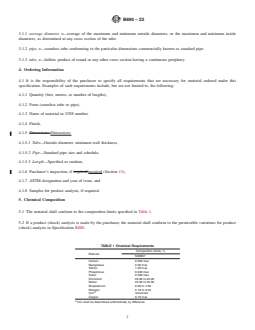
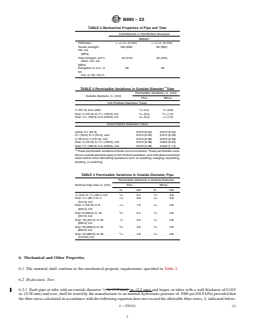
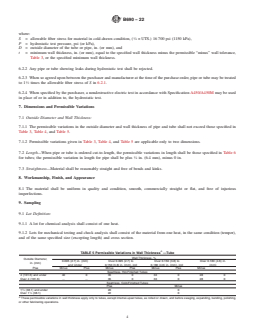
REDLINE ASTM B690-22 - Standard Specification for Iron-Nickel-Chromium-Molybdenum Alloy Seamless Pipe and Tube
Overview
ASTM B690-22 is the Standard Specification for Iron-Nickel-Chromium-Molybdenum Alloy (UNS N08367) Seamless Pipe and Tube. Developed by ASTM International, this specification provides detailed requirements for cold-finished annealed or hot-finished annealed seamless pipe and tube intended for special corrosive and heat-resisting applications. Products manufactured in accordance with this standard are supplied in the solution heat-treated and descaled condition, or, if bright annealed, descaling may not be required.
This standard applies to seamless pipe and tube used in environments where high corrosion resistance and strength are critical, such as chemical processing, petrochemical plants, and other demanding industrial settings.
Key Topics
- Material Requirements: Covers the use of iron-nickel-chromium-molybdenum alloy (UNS N08367), with strict chemical composition limits for key elements such as chromium, nickel, molybdenum, and others.
- Mechanical Properties: Specifies minimum values for tensile strength, yield strength, and elongation, ensuring robust performance for high-stress and corrosive applications.
- Condition and Finish: Pipes and tubes are delivered in a solution heat-treated, descaled, or bright annealed condition, ensuring optimal corrosion resistance and surface quality.
- Hydrostatic Testing: All pipes and tubes must pass a hydrostatic pressure test to verify integrity and leak tightness.
- Dimensional Tolerances: Clear limits on variations in diameter, wall thickness, and length, promoting consistency and fit during installation.
- Certification & Marking: Mandatory certification of compliance and test results from suppliers, alongside detailed product marking for traceability.
Applications
Iron-nickel-chromium-molybdenum alloy seamless pipes and tubes covered by ASTM B690-22 offer unique benefits for industries requiring high-performance, corrosion-resistant materials, including:
- Chemical Processing Equipment: Used for piping, heat exchangers, and reactors where resistance to acids and chlorides is critical.
- Petrochemical and Refining: Suitable for environments with aggressive chemicals, elevated pressures, and high temperatures.
- Power Generation: Applied in heat-resisting systems and boiler tubing, where structural strength and longevity are essential.
- Marine Applications: Valued for their resistance to seawater-induced corrosion and pitting.
- Food and Pharmaceutical Industries: Utilized where non-reactivity and cleanliness are essential for process piping.
Related Standards
ASTM B690-22 references and complements several important documents and industry standards, including:
- ASTM A450/A450M - General Requirements for Carbon and Low-Alloy Steel Tubes
- ASTM B880 - Chemical Check Analysis Limits for Nickel, Nickel Alloys, and Cobalt Alloys
- ASTM E8/E8M - Test Methods for Tension Testing of Metallic Materials
- ASTM E1473 - Chemical Analysis of Nickel, Cobalt, and High-Temperature Alloys
- ASTM E29 - Significant Digits in Test Data to Determine Conformance with Specifications
These referenced standards provide test methods, analysis techniques, and general requirements that help ensure seamless integration and global acceptance of materials produced under ASTM B690-22.
Keywords: ASTM B690-22, iron-nickel-chromium-molybdenum alloy, UNS N08367, seamless pipe, seamless tube, heat-resisting applications, corrosion-resistant alloy, chemical processing piping, hydrostatic testing, ASTM standards compliance.
Relations
- Effective Date
- 01-Jan-2024
- Effective Date
- 01-Nov-2023
- Effective Date
- 01-Sep-2018
- Effective Date
- 15-Jul-2016
- Effective Date
- 01-May-2015
- Effective Date
- 01-Feb-2015
- Effective Date
- 01-Jun-2013
- Effective Date
- 01-Dec-2011
- Effective Date
- 01-May-2010
- Effective Date
- 01-Oct-2009
- Effective Date
- 01-Oct-2008
- Effective Date
- 01-Mar-2008
- Effective Date
- 01-Nov-2007
- Effective Date
- 15-Nov-2006
- Effective Date
- 15-Sep-2006
Buy Documents
ASTM B690-22 - Standard Specification for Iron-Nickel-Chromium-Molybdenum Alloy Seamless Pipe and Tube
REDLINE ASTM B690-22 - Standard Specification for Iron-Nickel-Chromium-Molybdenum Alloy Seamless Pipe and Tube
Get Certified
Connect with accredited certification bodies for this standard

Institut za varilstvo d.o.o. (Welding Institute)
Slovenia's leading welding institute since 1952. ISO 3834, EN 1090, pressure equipment certification, NDT personnel, welder qualification. Only IIW Au
Sponsored listings
Frequently Asked Questions
ASTM B690-22 is a technical specification published by ASTM International. Its full title is "Standard Specification for Iron-Nickel-Chromium-Molybdenum Alloy Seamless Pipe and Tube". This standard covers: ABSTRACT This specification covers iron-nickel-chromium-molybdenum alloys (UNS N08366 and UNS N08367) cold-finished annealed of hot-finished annealed seamless pipe and tube intended for use in special corrosive service and for heat-resisting applications. Pipe and tube shall be supplied in the solution heat treated and descaled condition. When bright annealing is used, descaling is not necessary. The tensile strength, yield strength, and elongation shall conform to the specified values. The pipe and tube shall be subject to a hydrostatic test. SCOPE 1.1 This specification covers iron-nickel-chromium-molybdenum alloy (UNS N08367)2 cold-finished annealed or hot-finished annealed seamless pipe and tube intended for use in special corrosive service and for heat-resisting applications. 1.2 Pipe and tube shall be supplied in the solution heat treated and descaled condition. When bright annealing is used, descaling is not necessary. 1.3 The values stated in inch-pound units are to be regarded as standard. The values given in parentheses are mathematical conversions to SI units that are provided for information only and are not considered standard. 1.4 The following safety hazards caveat pertains only to the test method portion, Section 12, of this specification. This standard does not purport to address all of the safety concerns, if any, associated with its use. It is the responsibility of the user of this standard to become familiar with all hazards including those identified in the appropriate Safety Data Sheet (SDS) for this product/material as provided by the manufacturer, to establish appropriate safety, health, and environmental practices, and determine the applicability of regulatory limitations prior to use. 1.5 This international standard was developed in accordance with internationally recognized principles on standardization established in the Decision on Principles for the Development of International Standards, Guides and Recommendations issued by the World Trade Organization Technical Barriers to Trade (TBT) Committee.
ABSTRACT This specification covers iron-nickel-chromium-molybdenum alloys (UNS N08366 and UNS N08367) cold-finished annealed of hot-finished annealed seamless pipe and tube intended for use in special corrosive service and for heat-resisting applications. Pipe and tube shall be supplied in the solution heat treated and descaled condition. When bright annealing is used, descaling is not necessary. The tensile strength, yield strength, and elongation shall conform to the specified values. The pipe and tube shall be subject to a hydrostatic test. SCOPE 1.1 This specification covers iron-nickel-chromium-molybdenum alloy (UNS N08367)2 cold-finished annealed or hot-finished annealed seamless pipe and tube intended for use in special corrosive service and for heat-resisting applications. 1.2 Pipe and tube shall be supplied in the solution heat treated and descaled condition. When bright annealing is used, descaling is not necessary. 1.3 The values stated in inch-pound units are to be regarded as standard. The values given in parentheses are mathematical conversions to SI units that are provided for information only and are not considered standard. 1.4 The following safety hazards caveat pertains only to the test method portion, Section 12, of this specification. This standard does not purport to address all of the safety concerns, if any, associated with its use. It is the responsibility of the user of this standard to become familiar with all hazards including those identified in the appropriate Safety Data Sheet (SDS) for this product/material as provided by the manufacturer, to establish appropriate safety, health, and environmental practices, and determine the applicability of regulatory limitations prior to use. 1.5 This international standard was developed in accordance with internationally recognized principles on standardization established in the Decision on Principles for the Development of International Standards, Guides and Recommendations issued by the World Trade Organization Technical Barriers to Trade (TBT) Committee.
ASTM B690-22 is classified under the following ICS (International Classification for Standards) categories: 23.040.10 - Iron and steel pipes. The ICS classification helps identify the subject area and facilitates finding related standards.
ASTM B690-22 has the following relationships with other standards: It is inter standard links to ASTM E8/E8M-24, ASTM A450/A450M-23, ASTM A450/A450M-18, ASTM E8/E8M-16, ASTM A450/A450M-15, ASTM E8/E8M-15, ASTM E8/E8M-13, ASTM E8/E8M-11, ASTM A450/A450M-10, ASTM A450/A450M-09, ASTM E29-08, ASTM B880-03(2008), ASTM A450/A450M-07, ASTM E29-06b, ASTM E29-06a. Understanding these relationships helps ensure you are using the most current and applicable version of the standard.
ASTM B690-22 is available in PDF format for immediate download after purchase. The document can be added to your cart and obtained through the secure checkout process. Digital delivery ensures instant access to the complete standard document.
Standards Content (Sample)
This international standard was developed in accordance with internationally recognized principles on standardization established in the Decision on Principles for the
Development of International Standards, Guides and Recommendations issued by the World Trade Organization Technical Barriers to Trade (TBT) Committee.
Designation:B690 −22
Standard Specification for
Iron-Nickel-Chromium-Molybdenum Alloy Seamless Pipe
and Tube
This standard is issued under the fixed designation B690; the number immediately following the designation indicates the year of
original adoption or, in the case of revision, the year of last revision.Anumber in parentheses indicates the year of last reapproval.A
superscript epsilon (´) indicates an editorial change since the last revision or reapproval.
1. Scope* 2. Referenced Documents
2.1 ASTM Standards:
1.1 This specification covers iron-nickel-chromium-
A450/A450MSpecification for General Requirements for
molybdenum alloy (UNS N08367) cold-finished annealed or
Carbon and Low Alloy Steel Tubes
hot-finished annealed seamless pipe and tube intended for use
B880Specification for General Requirements for Chemical
in special corrosive service and for heat-resisting applications.
Check Analysis Limits for Nickel, Nickel Alloys and
1.2 Pipe and tube shall be supplied in the solution heat
Cobalt Alloys
treated and descaled condition. When bright annealing is used,
E8/E8MTest Methods for Tension Testing of Metallic Ma-
descaling is not necessary.
terials
1.3 The values stated in inch-pound units are to be regarded E29Practice for Using Significant Digits in Test Data to
as standard. The values given in parentheses are mathematical
Determine Conformance with Specifications
conversions to SI units that are provided for information only E1473Test Methods for Chemical Analysis of Nickel, Co-
and are not considered standard.
balt and High-Temperature Alloys
1.4 The following safety hazards caveat pertains only to the
3. Terminology
test method portion, Section 12, of this specification. This
3.1 Definitions of Terms Specific to This Standard:
standard does not purport to address all of the safety concerns,
3.1.1 average diameter, n—average of the maximum and
if any, associated with its use. It is the responsibility of the user
minimum outside diameters, or the maximum and minimum
of this standard to become familiar with all hazards including
insidediameters,asdeterminedatanycrosssectionofthetube.
those identified in the appropriate Safety Data Sheet (SDS) for
3.1.2 pipe, n—seamless tube conforming to the particular
this product/material as provided by the manufacturer, to
establish appropriate safety, health, and environmental dimensions commercially known as standard pipe.
practices, and determine the applicability of regulatory limi-
3.1.3 tube, n—hollow product of round or any other cross
tations prior to use.
section having a continuous periphery.
1.5 This international standard was developed in accor-
4. Ordering Information
dance with internationally recognized principles on standard-
ization established in the Decision on Principles for the
4.1 It is the responsibility of the purchaser to specify all
Development of International Standards, Guides and Recom-
requirements that are necessary for material ordered under this
mendations issued by the World Trade Organization Technical
specification. Examples of such requirements include, but are
Barriers to Trade (TBT) Committee.
not limited to, the following:
4.1.1 Quantity (feet, meters, or number of lengths),
4.1.2 Form (seamless tube or pipe),
4.1.3 Name of material or UNS number,
This specification is under the jurisdiction of ASTM Committee B02 on
Nonferrous Metals and Alloys and is the direct responsibility of Subcommittee 4.1.4 Finish,
B02.07 on Refined Nickel and Cobalt and Their Alloys.
Current edition approved Oct. 1, 2022. Published November 2022. Originally
approved in 1981. Last previous edition approved in 2018 as B690–18. DOI: For referenced ASTM standards, visit the ASTM website, www.astm.org, or
10.1520/B0690-22. contact ASTM Customer Service at service@astm.org. For Annual Book of ASTM
Designation established in accordance with ASTM E527 and SAE S1086, Standards volume information, refer to the standard’s Document Summary page on
Practice for Numbering Metals and Alloys (UNS). the ASTM website.
*A Summary of Changes section appears at the end of this standard
Copyright © ASTM International, 100 Barr Harbor Drive, PO Box C700, West Conshohocken, PA 19428-2959. United States
B690−22
TABLE 2 Mechanical Properties of Pipe and Tube
4.1.5 Dimensions:
4.1.5.1 Tube—Outside diameter, minimum wall thickness, Cold-Worked or Hot-Worked Annealed
4.1.5.2 Pipe—Standard pipe size and schedule, N08367
3 3
4.1.5.3 Length—Specified or random, Thickness # ⁄16 in. (5 mm) > ⁄16 in. (5 mm)
Tensile strength, 100 (690) 95 (655)
4.1.6 Purchaser’s inspection, if required (Section 13),
min, ksi
4.1.7 ASTM designation and year of issue, and
(MPa)
4.1.8 Samples for product analysis, if required. Yield strength, 0.2 % 45 (310) 45 (310)
offset, min, ksi
(MPa)
5. Chemical Composition
Elongation in 2 in. or 30 30
5.1 The material shall conform to the composition limits
mm, or 4D, min,%
specified in Table 1.
5.2 If a product (check) analysis is made by the purchaser,
A
the material shall conform to the permissible variations for TABLE 3 Permissible Variations in Outside Diameter Tube
product (check) analysis in Specification B880. Permissible Variations, in. (mm)
Outside Diameter, in. (mm)
Plus Minus
6. Mechanical and Other Properties
Hot-Finished Seamless Tubes
6.1 The material shall conform to the mechanical property
1 1
4 (101.6) and under ⁄64 0.4) ⁄32 (0.8)
requirements specified in Table 2. 1 1 3
Over 4 (101.6) to 7 ⁄2 (190.5) incl ⁄64 (0.4) ⁄64 (1.2)
1 1 1
Over 7 ⁄2 (190.5) to 9 (228.6) incl ⁄64 (0.4) ⁄16 (1.6)
6.2 Hydrostatic Test:
6.2.1 Each pipe or tube with an outside diameter ⁄8in. Cold-Finished Seamless Tubes
(3.2mm) and larger, or tubes with a wall thickness of 0.015 in.
Under 2 ⁄2 (63.5) 0.010 (0.25) 0.010 (0.25)
(0.38 mm) and over, shall be tested by the manufacturer to an
2 ⁄2 (63.5) to 3 (76.2), excl 0.012 (0.30) 0.012 (0.30)
internal hydrostatic pressure of 1000 psi (68.9 kPa) provided
3 (76.2) to 4 (101.6), incl 0.015 (0.38) 0.015 (0.38)
Over 4 (101.6) to 7 ⁄2 (190.5), incl 0.015 (0.38) 0.025 (0.64)
thatthefiberstresscalculatedinaccordancewiththefollowing
Over 7 ⁄2 (190.5) to 9 (228.6), incl 0.015 (0.38) 0.045 (1.14)
equationdoesnotexceedtheallowablefiberstress, S,indicated
A
These permissible variations include out-of-roundness.These permissible varia-
below:
tionsinoutsidediameterapplytohot-finishedseamless,andcold-drawnseamless
tubes before other fabricating operations such as upsetting, swaging, expanding,
S 5 ~PD/2t! (1)
bending, or polishing.
where:
S = allowable fiber stress for material in cold-drawn
TABLE 4 Permissible Variations in Outside Diameter, Pipe
condition, ( ⁄4×UTS.) 16700 psi (1150 kPa),
Permissible Variations in Outside Diameter
P = hydrostatic test pressure, psi (or kPa),
Nominal Pipe Size in. (mm) Plus Minus
D = outside diameter of the tube or pipe, in. (or mm), and
t = minimum wall thickness, in. (or mm), equal to the in. mm in. mm
1 1 1 1
specified wall thickness minus the permissible “minus” ⁄8 (3.2) to 1 ⁄2 (38.1) incl ⁄64 0.4 ⁄32 0.8
1 1 1
Over 1 ⁄2 (38.1) to 4 ⁄32 0.8 ⁄32 0.8
wall tolerance, Table 3, or the specified minimum wall
(101.6) incl
thickness.
1 1
Over 4 (101.6) to 8 ⁄16 1.6 ⁄32 0.8
(203.2) incl
6.2.2 Anypipeortubeshowingleaksduringhydrostatictest
3 1
Over 8 (203.2) to 18 ⁄32 2.4 ⁄32 0.8
shall be rejected.
(457.2) incl
1 1
Over 18 (457.2) to 26 ⁄8 3.2 ⁄32 0.8
6.2.3 When so agreed upon between the purchaser and
(660.4) incl
manufacturer at the time of the purchase order, pipe or tube
5 1
Over 26 (660.4) to 34 ⁄32 4.0 ⁄32 0.8
may be treated to 1 ⁄2 times the allowable fiber stress of S in (863.6) incl
3 1
Over 34 (863.6) to 48 ⁄16 4.8 ⁄32 0.8
6.2.1.
(1219.2) incl
TABLE 1 Chemical Requirements
Composition Limits, %
Element
N08367
6.2.4 When specified by the purchaser, a nondestructive
Carbon 0.030 max
electric test in accordance with Specification A450/A450M
Manganese 2.00 max
may be used in place of or in addition to, the hydrostatic test.
Silicon 1.00 max
Phosphorus 0.040 max
7. Dimensions and Permissible Variations
Sulfur 0.030 max
Chromium 20.00 to 22.00
7.1 Out
...
This document is not an ASTM standard and is intended only to provide the user of an ASTM standard an indication of what changes have been made to the previous version. Because
it may not be technically possible to adequately depict all changes accurately, ASTM recommends that users consult prior editions as appropriate. In all cases only the current version
of the standard as published by ASTM is to be considered the official document.
Designation: B690 − 18 B690 − 22
Standard Specification for
Iron-Nickel-Chromium-Molybdenum Alloy (UNS N08367)
Seamless Pipe and Tube
This standard is issued under the fixed designation B690; the number immediately following the designation indicates the year of
original adoption or, in the case of revision, the year of last revision. A number in parentheses indicates the year of last reapproval. A
superscript epsilon (´) indicates an editorial change since the last revision or reapproval.
1. Scope*
1.1 This specification covers iron-nickel-chromium-molybdenum alloy (UNS N08367) cold-finished annealed or hot-finished
annealed seamless pipe and tube intended for use in special corrosive service and for heat-resisting applications.
1.2 Pipe and tube shall be supplied in the solution heat treated and descaled condition. When bright annealing is used, descaling
is not necessary.
1.3 The values stated in inch-pound units are to be regarded as standard. The values given in parentheses are mathematical
conversions to SI units that are provided for information only and are not considered standard.
1.4 The following safety hazards caveat pertains only to the test method portion, Section 12, of this specification. This standard
does not purport to address all of the safety concerns, if any, associated with its use. It is the responsibility of the user of this
standard to become familiar with all hazards including those identified in the appropriate Safety Data Sheet (SDS) for this
product/material as provided by the manufacturer, to establish appropriate safety, health, and environmental practices, and
determine the applicability of regulatory limitations prior to use.
1.5 This international standard was developed in accordance with internationally recognized principles on standardization
established in the Decision on Principles for the Development of International Standards, Guides and Recommendations issued
by the World Trade Organization Technical Barriers to Trade (TBT) Committee.
2. Referenced Documents
2.1 ASTM Standards:
A450/A450M Specification for General Requirements for Carbon and Low Alloy Steel Tubes
B880 Specification for General Requirements for Chemical Check Analysis Limits for Nickel, Nickel Alloys and Cobalt Alloys
E8/E8M Test Methods for Tension Testing of Metallic Materials
E29 Practice for Using Significant Digits in Test Data to Determine Conformance with Specifications
E1473 Test Methods for Chemical Analysis of Nickel, Cobalt and High-Temperature Alloys
3. Terminology
3.1 Definitions of Terms Specific to This Standard:
This specification is under the jurisdiction of ASTM Committee B02 on Nonferrous Metals and Alloys and is the direct responsibility of Subcommittee B02.07 on Refined
Nickel and Cobalt and Their Alloys.
Current edition approved Nov. 1, 2018Oct. 1, 2022. Published January 2019November 2022. Originally approved in 1981. Last previous edition approved in 20132018
as B690 – 02 (2013).B690 – 18. DOI: 10.1520/B0690-18.10.1520/B0690-22.
Designation established in accordance with ASTM E527 and SAE S1086, Practice for Numbering Metals and Alloys (UNS).
For referenced ASTM standards, visit the ASTM website, www.astm.org, or contact ASTM Customer Service at service@astm.org. For Annual Book of ASTM Standards
volume information, refer to the standard’s Document Summary page on the ASTM website.
*A Summary of Changes section appears at the end of this standard
Copyright © ASTM International, 100 Barr Harbor Drive, PO Box C700, West Conshohocken, PA 19428-2959. United States
B690 − 22
3.1.1 average diameter, n—average of the maximum and minimum outside diameters, or the maximum and minimum inside
diameters, as determined at any cross section of the tube.
3.1.2 pipe, n—seamless tube conforming to the particular dimensions commercially known as standard pipe.
3.1.3 tube, n—hollow product of round or any other cross section having a continuous periphery.
4. Ordering Information
4.1 It is the responsibility of the purchaser to specify all requirements that are necessary for material ordered under this
specification. Examples of such requirements include, but are not limited to, the following:
4.1.1 Quantity (feet, meters, or number of lengths),
4.1.2 Form (seamless tube or pipe),
4.1.3 Name of material or UNS number,
4.1.4 Finish,
4.1.5 Dimensions:Dimensions:
4.1.5.1 Tube—Outside diameter, minimum wall thickness,
4.1.5.2 Pipe—Standard pipe size and schedule,
4.1.5.3 Length—Specified or random,
4.1.6 Purchaser’s inspection, if required,required (Section 13),
4.1.7 ASTM designation and year of issue, and
4.1.8 Samples for product analysis, if required.
5. Chemical Composition
5.1 The material shall conform to the composition limits specified in Table 1.
5.2 If a product (check) analysis is made by the purchaser, the material shall conform to the permissible variations for product
(check) analysis in Specification B880.
TABLE 1 Chemical Requirements
Composition Limits, %
Element
N08367
Carbon 0.030 max
Manganese 2.00 max
Silicon 1.00 max
Phosphorus 0.040 max
Sulfur 0.030 max
Chromium 20.00 to 22.00
Nickel 23.50 to 25.50
Molybdenum 6.00 to 7.00
Nitrogen 0.18 to 0.25
A
Iron remainder
Copper 0.75 max
A
Iron shall be determined arithmetically by difference.
B690 − 22
TABLE 2 Mechanical Properties of Pipe and Tube
Cold-Worked or Hot-Worked Annealed
N08367
3 3
Thickness # ⁄16 in. (5 mm) > ⁄16 in. (5 mm)
Tensile strength, 100 (690) 95 (655)
min, ksi
(MPa)
Yield strength, 0.2 % 45 (310) 45 (310)
offset, min, ksi
(MPa)
Elongation in 2 in. or 30 30
mm, or 4D, min,%
A
TABLE 3 Permissible Variations in Outside Diameter Tube
Permissible Variations, in. (mm)
Outside Diameter, in. (mm)
Plus Minus
Hot-Finished Seamless Tubes
1 1
4 (101.6) and under ⁄64 0.4) ⁄32 (0.8)
1 1 3
Over 4 (101.6) to 7 ⁄2 (190.5) incl ⁄64 (0.4) ⁄64 (1.2)
1 1 1
Over 7 ⁄2 (190.5) to 9 (228.6) incl ⁄64 (0.4) ⁄16 (1.6)
Cold-Finished Seamless Tubes
Under 2 ⁄2 (63.5) 0.010 (0.25) 0.010 (0.25)
2 ⁄2 (63.5) to 3 (76.2), excl 0.012 (0.30) 0.012 (0.30)
3 (76.2) to 4 (101.6), incl 0.015 (0.38) 0.015 (0.38)
Over 4 (101.6) to 7 ⁄2 (190.5), incl 0.015 (0.38) 0.025 (0.64)
Over 7 ⁄2 (190.5) to 9 (228.6), incl 0.015 (0.38) 0.045 (1.14)
A
These permissible variations include out-of-roundness. These permissible varia-
tions in outside diameter apply to hot-finished seamless, and cold-drawn seamless
tubes before other fabricating operations such as upsetting, swaging, expanding,
bending, or polishing.
TABLE 4 Permissible Variations in Outside Diameter, Pipe
Permissible Variations in Outside Diameter
Nominal Pipe Size in. (mm) Plus Minus
in. mm in. mm
1 1 1 1
⁄8 (3.2) to 1 ⁄2 (38.1) incl ⁄64 0.4 ⁄32 0.8
1 1 1
Over 1 ⁄2 (38.1) to 4 ⁄32 0.8 ⁄32 0.8
(101.6) incl
1 1
Over 4 (101.6) to 8 ⁄16 1.6 ⁄32 0.8
(203.2) incl
3 1
Over 8 (203.2) to 18 ⁄32 2.4 ⁄32 0.8
(457.2) incl
1 1
Over 18 (457.2) to 26 ⁄8 3.2 ⁄32 0.8
(660.4) incl
5 1
Over 26 (660.4) to 34 ⁄32 4.0 ⁄32 0.8
(863.6) incl
3 1
Over 34 (863.6) to 48 ⁄16 4.8 ⁄32 0.8
(1219.2) incl
6. Mechanical and Other Properties
6.1 The material shall conform to the mechanical property requirements specified in Table 2.
6.2 Hydrostatic Test:
6.2.1 Each pipe or tube with an outside diameter ⁄8 in. (3.2 mm) in. (3.2 mm) and larger, or tubes with a wall thickness of 0.015
in. (0.38 mm) and over, shall be tested by the manufacturer to an internal hydrostatic pressure of 1000 psi (68.9 kPa) provided that
the fiber stress calculated in accordance with the following equation does not exceed the allowable fiber stress, S, indicated below:
S 5 PD/2t (1)
~ !
B690 − 22
where:
S = allowable fiber stress for material in cold-drawn condition, ( ⁄4 × UTS.) 16 700 psi (1150 kPa),
P = hydrostatic test pressure, psi (or kPa),
D = outside diameter of the tube or pipe, in. (or mm), and
t = minimum wall thickness, in. (or mm), equal to the specified wall thickness minus the permissible “minus” wall tolerance,
Table 3, or the specified minimum wall thickness.
6.2.2 Any pipe or tube showing leaks during hydrostatic test shall be rejected.
6.2.3 When so agreed upon between the purchaser and manufacturer at the time of the purchase order, pipe or tube may be treated
to 1 ⁄2 times the allowable fiber stress of S in 6.2.1.
6.2.4 When specified b
...