

ASTM D1412/D1412M-20
(Test Method)Standard Test Method for Equilibrium Moisture of Coal at 96 to 97 Percent Relative Humidity and 30 °C
General Information
- Abstract
SIGNIFICANCE AND USE
3.1 This test method affords a means of estimating the inherent moisture of either coal that is wet and shows visible surface moisture or coal that may have lost some moisture. It may be used for estimating the surface, or extraneous moisture of wet coal, such moisture being the difference between the total moisture as determined by Test Method D3302 and the equilibrium moisture.
3.2 When samples are collected in conformity with Classification D388, the equilibrium moisture is considered to be equal to bed moisture with the exception of some low rank coals that yield equilibrium moisture values below bed moisture.
3.3 The results obtained by this test method are sensitive to many influences, and therefore, raw (uncorrected) equilibrium moisture data may be of limited value in and of themselves. When working with low rank coals, the results yielded by this test method require critical assessments. It is recommended that the procedure outlined in the Appendix X1 be applied, and the results corrected before use in situations where a more reliable estimation inherent or bed moisture for low rank coals is required. The Appendix also provides useful quality assurance information which is applicable to coals of all ranks.
SCOPE
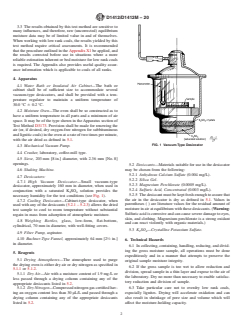
1.1 This test method covers determination of the equilibrium moisture of coal in an atmosphere over a saturated solution of potassium sulfate at 30 °C.
Note 1: For information concerning the experimental work on which this test method is based, see (1-5).2
1.2 Units—The values stated in either SI units or non-SI units are to be regarded separately as standard. The values stated in each system are not necessarily exact equivalents; therefore, to ensure conformance with the standard, each system shall be used independently of the other, and values from the two systems shall not be combined.
1.3 This standard does not purport to address all of the safety concerns, if any, associated with its use. It is the responsibility of the user of this standard to establish appropriate safety, health, and environmental practices and determine the applicability of regulatory limitations prior to use.
1.4 This international standard was developed in accordance with internationally recognized principles on standardization established in the Decision on Principles for the Development of International Standards, Guides and Recommendations issued by the World Trade Organization Technical Barriers to Trade (TBT) Committee.
- Status
- Published
- Publication Date
- 14-Sep-2020
- Technical Committee
- D05 - Coal and Coke
- Drafting Committee
- D05.21 - Methods of Analysis
Buy Documents
ASTM D1412/D1412M-20 - Standard Test Method for Equilibrium Moisture of Coal at 96 to 97 Percent Relative Humidity and 30 °C
REDLINE ASTM D1412/D1412M-20 - Standard Test Method for Equilibrium Moisture of Coal at 96 to 97 Percent Relative Humidity and 30 °C
Overview
ASTM D1412/D1412M-20, titled Standard Test Method for Equilibrium Moisture of Coal at 96 to 97 Percent Relative Humidity and 30 °C, provides a standardized method for determining the equilibrium moisture content of coal. This test is critical in evaluating the inherent, bed, and surface moisture found in coal samples, which can significantly impact handling, transport, combustion efficiency, and pricing in industrial and energy applications. The standard is developed and maintained by ASTM International, ensuring methodologies align with rigorous international quality and consistency requirements.
Key Topics
Purpose and Scope
The test method details procedures for determining equilibrium moisture in coal using a controlled atmosphere of 96-97% relative humidity at 30 °C, typically with a saturated potassium sulfate solution.Significance
- Inherent vs. Surface Moisture: Supports accurate estimation of inherent (bed) moisture, crucial for coal classification and quality evaluation.
- Surface Moisture Estimation: By comparing total moisture (per ASTM D3302) and equilibrium moisture, users can estimate extraneous or surface moisture in wet coal.
- Sample Sensitivity: Emphasizes careful handling, especially for low-rank coals (e.g., lignite), which can yield lower equilibrium moisture values than bed moisture due to sample properties and preparation effects.
Testing Procedure
- Preparation of representative coal samples in accordance with ASTM classification and sampling standards.
- Use of either wetted or unwetted preparation, based on coal rank and condition.
- Controlled equilibration within a desiccator at specified temperature and humidity for a set period.
- Recording mass changes to determine percent equilibrium moisture.
Precision and Bias
- Guidance on repeatability and reproducibility to ensure consistent test results across laboratories.
Quality Assurance
- Critical assessment of results, especially with low-rank coals, and recommended corrections using detailed guidance in the standard’s appendix.
Applications
Coal Quality Assessment
Used extensively in coal testing laboratories, the equilibrium moisture test enables accurate assessment of coal’s inherent moisture, which influences calorific value, combustion characteristics, and handling procedures.Regulatory and Commercial Compliance
Adhering to ASTM D1412/D1412M-20 supports compliance with industry regulations and contractual agreements related to coal shipments and processing.Process Optimization
Facilities can use equilibrium moisture data to optimize coal storage, blending, drying, and combustion systems, reducing operational inefficiencies caused by excessive or unknown moisture levels.Research and Development
The method provides reliable data for developing new combustion technologies, improving coal processing methods, and supporting classification studies.
Related Standards
For comprehensive coal analysis, this test method is often used in conjunction with the following ASTM and ISO standards:
- ASTM D3302: Test Method for Total Moisture in Coal
- ASTM D388: Classification of Coals by Rank
- ASTM D2013: Practice for Preparing Coal Samples for Analysis
- ASTM D3172: Practice for Proximate Analysis of Coal and Coke
- ASTM D4239: Test Method for Sulfur in Coal and Coke
- ASTM D5865: Test Method for Gross Calorific Value of Coal and Coke
- ISO 5725-4/6: Accuracy of Measurement Methods and Results - Parts 4 & 6
Practical Value
Implementing ASTM D1412/D1412M-20 ensures consistent, accurate determination of equilibrium moisture in coal, facilitating fair valuation, efficient processing, and compliance with trade and environmental standards. By providing reliable moisture data, the standard supports decision-making in coal mining, blending, and utilization, directly impacting operational performance and profit margins in the energy and manufacturing sectors.
Keywords: coal moisture analysis, equilibrium moisture, ASTM D1412/D1412M-20, coal classification, bed moisture, surface moisture, coal quality testing, coal handling, coal combustion, moisture determination standard.
Relations
- Effective Date
- 01-Mar-2024
- Effective Date
- 01-Dec-2019
- Effective Date
- 01-Jun-2019
- Effective Date
- 01-Nov-2018
- Effective Date
- 01-Sep-2018
- Effective Date
- 01-Feb-2018
- Effective Date
- 01-Nov-2017
- Effective Date
- 15-Oct-2017
- Effective Date
- 01-Jul-2017
- Effective Date
- 15-May-2017
- Effective Date
- 01-Mar-2016
- Effective Date
- 01-Sep-2015
- Effective Date
- 15-May-2015
- Effective Date
- 01-May-2014
- Effective Date
- 01-Mar-2014
Buy Documents
ASTM D1412/D1412M-20 - Standard Test Method for Equilibrium Moisture of Coal at 96 to 97 Percent Relative Humidity and 30 °C
REDLINE ASTM D1412/D1412M-20 - Standard Test Method for Equilibrium Moisture of Coal at 96 to 97 Percent Relative Humidity and 30 °C
Get Certified
Connect with accredited certification bodies for this standard

Bureau Veritas Chile
Bureau Veritas certification services in Chile.
Bureau Veritas Peru
Bureau Veritas certification services in Peru.
BVQI Peru
Bureau Veritas certification in Peru.
Sponsored listings
Frequently Asked Questions
ASTM D1412/D1412M-20 is a standard published by ASTM International. Its full title is "Standard Test Method for Equilibrium Moisture of Coal at 96 to 97 Percent Relative Humidity and 30 °C". This standard covers: SIGNIFICANCE AND USE 3.1 This test method affords a means of estimating the inherent moisture of either coal that is wet and shows visible surface moisture or coal that may have lost some moisture. It may be used for estimating the surface, or extraneous moisture of wet coal, such moisture being the difference between the total moisture as determined by Test Method D3302 and the equilibrium moisture. 3.2 When samples are collected in conformity with Classification D388, the equilibrium moisture is considered to be equal to bed moisture with the exception of some low rank coals that yield equilibrium moisture values below bed moisture. 3.3 The results obtained by this test method are sensitive to many influences, and therefore, raw (uncorrected) equilibrium moisture data may be of limited value in and of themselves. When working with low rank coals, the results yielded by this test method require critical assessments. It is recommended that the procedure outlined in the Appendix X1 be applied, and the results corrected before use in situations where a more reliable estimation inherent or bed moisture for low rank coals is required. The Appendix also provides useful quality assurance information which is applicable to coals of all ranks. SCOPE 1.1 This test method covers determination of the equilibrium moisture of coal in an atmosphere over a saturated solution of potassium sulfate at 30 °C. Note 1: For information concerning the experimental work on which this test method is based, see (1-5).2 1.2 Units—The values stated in either SI units or non-SI units are to be regarded separately as standard. The values stated in each system are not necessarily exact equivalents; therefore, to ensure conformance with the standard, each system shall be used independently of the other, and values from the two systems shall not be combined. 1.3 This standard does not purport to address all of the safety concerns, if any, associated with its use. It is the responsibility of the user of this standard to establish appropriate safety, health, and environmental practices and determine the applicability of regulatory limitations prior to use. 1.4 This international standard was developed in accordance with internationally recognized principles on standardization established in the Decision on Principles for the Development of International Standards, Guides and Recommendations issued by the World Trade Organization Technical Barriers to Trade (TBT) Committee.
SIGNIFICANCE AND USE 3.1 This test method affords a means of estimating the inherent moisture of either coal that is wet and shows visible surface moisture or coal that may have lost some moisture. It may be used for estimating the surface, or extraneous moisture of wet coal, such moisture being the difference between the total moisture as determined by Test Method D3302 and the equilibrium moisture. 3.2 When samples are collected in conformity with Classification D388, the equilibrium moisture is considered to be equal to bed moisture with the exception of some low rank coals that yield equilibrium moisture values below bed moisture. 3.3 The results obtained by this test method are sensitive to many influences, and therefore, raw (uncorrected) equilibrium moisture data may be of limited value in and of themselves. When working with low rank coals, the results yielded by this test method require critical assessments. It is recommended that the procedure outlined in the Appendix X1 be applied, and the results corrected before use in situations where a more reliable estimation inherent or bed moisture for low rank coals is required. The Appendix also provides useful quality assurance information which is applicable to coals of all ranks. SCOPE 1.1 This test method covers determination of the equilibrium moisture of coal in an atmosphere over a saturated solution of potassium sulfate at 30 °C. Note 1: For information concerning the experimental work on which this test method is based, see (1-5).2 1.2 Units—The values stated in either SI units or non-SI units are to be regarded separately as standard. The values stated in each system are not necessarily exact equivalents; therefore, to ensure conformance with the standard, each system shall be used independently of the other, and values from the two systems shall not be combined. 1.3 This standard does not purport to address all of the safety concerns, if any, associated with its use. It is the responsibility of the user of this standard to establish appropriate safety, health, and environmental practices and determine the applicability of regulatory limitations prior to use. 1.4 This international standard was developed in accordance with internationally recognized principles on standardization established in the Decision on Principles for the Development of International Standards, Guides and Recommendations issued by the World Trade Organization Technical Barriers to Trade (TBT) Committee.
ASTM D1412/D1412M-20 is classified under the following ICS (International Classification for Standards) categories: 73.040 - Coals. The ICS classification helps identify the subject area and facilitates finding related standards.
ASTM D1412/D1412M-20 has the following relationships with other standards: It is inter standard links to ASTM D121-15(2024), ASTM D2234/D2234M-19, ASTM D388-19, ASTM D388-18a, ASTM D4239-18, ASTM D388-18, ASTM D388-17a, ASTM D2234/D2234M-17, ASTM D388-17, ASTM D4239-17, ASTM D2234/D2234M-16, ASTM D121-15, ASTM D388-15, ASTM E177-14, ASTM D4239-14. Understanding these relationships helps ensure you are using the most current and applicable version of the standard.
ASTM D1412/D1412M-20 is available in PDF format for immediate download after purchase. The document can be added to your cart and obtained through the secure checkout process. Digital delivery ensures instant access to the complete standard document.
Standards Content (Sample)
This international standard was developed in accordance with internationally recognized principles on standardization established in the Decision on Principles for the
Development of International Standards, Guides and Recommendations issued by the World Trade Organization Technical Barriers to Trade (TBT) Committee.
Designation: D1412/D1412M − 20
Standard Test Method for
Equilibrium Moisture of Coal at 96 to 97 Percent Relative
Humidity and 30 °C
This standard is issued under the fixed designation D1412/D1412M; the number immediately following the designation indicates the
year of original adoption or, in the case of revision, the year of last revision. A number in parentheses indicates the year of last
reapproval. A superscript epsilon (´) indicates an editorial change since the last revision or reapproval.
1. Scope* D3172 Practice for Proximate Analysis of Coal and Coke
D3173 Test Method for Moisture in the Analysis Sample of
1.1 This test method covers determination of the equilib-
Coal and Coke
rium moisture of coal in an atmosphere over a saturated
D3302 Test Method for Total Moisture in Coal
solution of potassium sulfate at 30 °C.
D4239 Test Method for Sulfur in the Analysis Sample of
NOTE 1—For information concerning the experimental work on which
Coal and Coke Using High-Temperature Tube Furnace
this test method is based, see (1-5).
Combustion
1.2 Units—The values stated in either SI units or non-SI
D4596 Practice for Collection of Channel Samples of Coal
units are to be regarded separately as standard. The values
in a Mine
stated in each system are not necessarily exact equivalents;
D5865 Test Method for Gross Calorific Value of Coal and
therefore, to ensure conformance with the standard, each
Coke
system shall be used independently of the other, and values
E177 Practice for Use of the Terms Precision and Bias in
from the two systems shall not be combined.
ASTM Test Methods
E691 Practice for Conducting an Interlaboratory Study to
1.3 This standard does not purport to address all of the
Determine the Precision of a Test Method
safety concerns, if any, associated with its use. It is the
responsibility of the user of this standard to establish appro-
2.2 ISO Standards:
priate safety, health, and environmental practices and deter-
ISO 5725-4 Accuracy (Trueness and Precision) of Measure-
mine the applicability of regulatory limitations prior to use.
ment Methods and Results—Part 4: Basic Methodsforthe
1.4 This international standard was developed in accor-
DeterminationoftheTruenessofaStandardMeasurement
dance with internationally recognized principles on standard-
Method
ization established in the Decision on Principles for the
ISO 5725-6 Accuracy (Trueness and Precision) of Measure-
Development of International Standards, Guides and Recom-
ment Methods and Results—Part 6: Use in Practice of
mendations issued by the World Trade Organization Technical
Accuracy Values
Barriers to Trade (TBT) Committee.
3. Significance and Use
2. Referenced Documents
3 3.1 This test method affords a means of estimating the
2.1 ASTM Standards:
inherent moisture of either coal that is wet and shows visible
D121 Terminology of Coal and Coke
surface moisture or coal that may have lost some moisture. It
D388 Classification of Coals by Rank
may be used for estimating the surface, or extraneous moisture
D2013 Practice for Preparing Coal Samples for Analysis
of wet coal, such moisture being the difference between the
D2234/D2234M Practice for Collection of a Gross Sample
total moisture as determined by Test Method D3302 and the
of Coal
equilibrium moisture.
3.2 When samples are collected in conformity with Classi-
This test method is under the jurisdiction of ASTM Committee D05 on Coal
and Coke and is the direct responsibility of Subcommittee D05.21 on Methods of fication D388, the equilibrium moisture is considered to be
Analysis.
equal to bed moisture with the exception of some low rank
Current edition approved Sept. 15, 2020. Published September 2020. Originally
coals that yield equilibrium moisture values below bed mois-
approvedin1956.Lastpreviouseditionapprovedin2019asD1412/D1412M – 19b.
ture.
DOI: 10.1520/D1412_D1412M-20.
The boldface numbers in parentheses refer to the list of references at the end of
this standard.
For referenced ASTM standards, visit the ASTM website, www.astm.org, or
contact ASTM Customer Service at service@astm.org. For Annual Book of ASTM Available from International Organization for Standardization (ISO), ISO
Standards volume information, refer to the standard’s Document Summary page on Central Secretariat, BIBC II, Chemin de Blandonnet 8, CP 401, 1214 Vernier,
the ASTM website. Geneva, Switzerland, http://www.iso.org.
*A Summary of Changes section appears at the end of this standard
Copyright © ASTM International, 100 Barr Harbor Drive, PO Box C700, West Conshohocken, PA 19428-2959. United States
D1412/D1412M − 20
3.3 The results obtained by this test method are sensitive to
many influences, and therefore, raw (uncorrected) equilibrium
moisture data may be of limited value in and of themselves.
When working with low rank coals, the results yielded by this
test method require critical assessments. It is recommended
that the procedure outlined in the Appendix X1 be applied, and
the results corrected before use in situations where a more
reliable estimation inherent or bed moisture for low rank coals
is required. The Appendix also provides useful quality assur-
ance information which is applicable to coals of all ranks.
4. Apparatus
4.1 Water Bath or Insulated Air Cabinet—The bath or
cabinet shall be of sufficient size to accommodate several
vacuum-type desiccators, and shall be provided with a tem-
perature regulator to maintain a uniform temperature of
30.0 °C 6 0.2 °C.
4.2 Moisture Oven—The oven shall be so constructed as to
have a uniform temperature in all parts and a minimum of air
space. It may be of the type shown in theApparatus section of
Test Method D3173. Provision shall be made for renewing the
air (or, if desired, dry oxygen-free nitrogen for subbituminous
and lignitic coals) in the oven at a rate of two times per minute,
with the air dried as defined in 5.1.
FIG. 1 Vacuum-Type Desiccator
4.3 Mechanical Vacuum Pump.
4.4 Crusher, laboratory, coffee-mill type.
4.5 Sieve, 203 mm [8 in.] diameter, with 2.36 mm [No. 8]
openings.
5.2 Desiccants—Materials suitable for use in the desiccator
may be chosen from the following:
4.6 Shaking Machine.
5.2.1 Anhydrous Calcium Sulfate (0.004 mg/L).
4.7 Desiccators:
5.2.2 Silica Gel.
4.7.1 High Vacuum Desiccator—Small vacuum-type
5.2.3 Magnesium Perchlorate (0.0005 mg/L).
desiccator, approximately 160 mm in diameter, when used in
5.2.4 Sulfuric Acid, Concentrated (0.003 mg/L).
conjunction with a saturated K SO solution provides the
2 4
5.2.5 Thedesiccantmustbekeptfreshenoughtoassurethat
necessary humidity for the test conditions (see Fig. 1).
the air in the desiccator is dry as defined in 5.1. Values in
4.7.2 Cooling Desiccator—Cabinet-type desiccator, when
parentheses ( ) are literature values for the residual amount of
used with any of the desiccants (5.2.1 – 5.2.3) allows the dried
moistureinairatequilibriumwiththesedesiccants.(Warning:
test sample to cool to room temperature without substantial
Sulfuric acid is corrosive and can cause severe damage to eyes,
regain in mass from adsorption of atmospheric moisture.
skin, and clothing. Magnesium perchlorate is a strong oxidant
4.8 Weighing Bottles, glass, low-form, flat-bottom,
and can react violently with organic materials.)
cylindrical, 70 mm in diameter, with well-fitting covers.
5.3 K SO —Crystalline Potassium Sulfate.
2 4
4.9 Filter Pump, aspirator.
4.10 Buchner-Type Funnel, approximately 64 mm [2 ⁄2 in.]
6. Technical Hazards
in diameter.
6.1 In collecting, containing, handling, reducing, and divid-
ing the gross moisture sample, all operations must be done
5. Reagents
expeditiously and in a manner that attempts to preserve the
5.1 Drying Atmospheres—The atmosphere used to purge
original sample moisture integrity.
the drying oven is either dry air or dry nitrogen as specified in
6.2 If the gross sample is too wet to allow reduction and
5.1.1 or 5.1.2.
division, spread sample in a thin layer and expose to the air of
5.1.1 Dry Air—Air with a moisture content of 1.9 mg⁄L or
the laboratory. Dry no more than necessary to enable satisfac-
less passed through a drying column containing any of the
tory reduction and division of sample.
appropriate desiccants listed in 5.2.
5.1.2 DryNitrogen—Compressednitrogengascertifiedhav- 6.3 Take particular care not to overdry low rank coals,
ing an oxygen content less than 30 µL/L and passed through a especially lignites. Drying will accelerate oxidation and can
drying column containing any of the appropriate desiccants also result in shrinkage of pore size and volume which will
listed in 5.2. affect the moisture-holding capacity.
D1412/D1412M − 20
7. Collection of Gross Samples 5.0 g of the crushed gross sample coal in a uniform layer in a
weighing bottle of known mass. Proceed to 9.2.
7.1 Samples shall not be taken from outcrop, weathered, or
oxidized coal. NOTE 3—Moisture desorption and adsorption curves for coal are not
entirely reversible. The difference between the original and readsorbed
7.1.1 Mine Samples—Take mine samples in accordance
moisture at the maximum relative vapor pressure is due to a failure to
with Practice D4596.
close the hysteresis loop, and is often termed the “hysteresis effect.” The
7.1.2 Tipple or Shipment Samples—Collect a representative
effect increases with decreasing coal rank and is believed to be a result of
gross sample of coal in accordance with Practice D2234/ shrinkageduetodryingthatreducesthecoalporevolume, which,inturn,
decreases moisture holding capacity. Because of this effect, coal samples
D2234M. If only the equilibrium moisture is desired, use the
subjected to partial drying below their full complement of inherent
General Purpose Sampling Procedure. If the surface moisture
moisture, or samples of low rank coals (which have large pore sizes), may
of wet coal is to be determined, use the procedure for sampling
yield anomalously low equilibrium moisture values.
the special total moisture subsample described in Practice
9.2 Place the uncovered weighing bottle in the small
D2234/D2234M.
vacuum-type desiccator containing a saturated solution of
K SO for maintaining the relative humidity of 96 % to 97 %.
2 4
8. Preparation of Laboratory Samples
An excess of crystalline K SO shall extend above the solution
2 4
8.1 Crush the sample to a 2.36 mm [No. 8] sieve size in
level. Evacuate the desiccator to an absolute pressure equiva-
accordance with Practice D2013; however, it is important to
lent to about 4 kPa [30 mm Hg] by means of a mechanical
also observe the technical hazards stated in Section 6 of this
vacuum pump and then totally immerse in a constant-
test method.
temperature water bath or place in an insulated air cabinet
8.1.1 Divide out a 25 g equilibration moisture subsample in maintained at 30 °C 6 0.2 °C for 48 h for all coals higher in
accordance with Practice D2013 to be used for testing. rank than subbituminous C. Subbituminous C and lignite coal
will require 72 h to reach equilibrium for practical purposes.
9. Procedure
9.3 Afterequilibrationofthecoal,restorethepressureinthe
desiccator to atmospheric, with the desiccator still in the bath,
9.1 Two methods for preparing the sample for equilibration
by slowly admitting dry air or nitrogen for a period of not less
are provided. The wetted procedure has historically been the
than 15 min. Admit the gas to the inlet tube of the desiccator
primary method. However, mine samples and certain coals that
after passing it through a train consisting first of a bubbler
deterioratewhentreatedwithwater,particularlylowrankcoals
containing H SO (sp gr 1.84), then a capillary tube with one
(subbituminous C and lignite), may be equilibrated directly
2 4
end drawn out to a tip having a suitable bore for regulating the
without wetting, provided the samples are collected and
rate of gas flow, and finally a coiled copper tube placed in the
prepared with a minimum loss of moisture. Avoid low rank
constant-temperature bath. Using nitrogen obviates the need
coal samples that have less than their full complement of
for the bubbler containing concentrated H SO . Remove the
inherent moisture.
2 4
desiccator from the bath and open immediately. Quickly close
9.1.1 Wetted Procedure—Place the 25 g sub-split equilibra-
the weighing bottle and weigh to the nearest 0.1 mg. Uncover
tion sample coal into a 250 mL Erlenmeyer flask and add
the weighing bottle, place it in the moisture oven preheated to
approximately 100 mL of recently boiled, cooled, distilled
105 °C, through which passes a current of dry air or nitrogen
water (Note 2). Shake the flask mechanically for 30 min, and
per 5.1, and heat for 1 ⁄2 h. Then remove the weighing bottle
then place it in the constant-temperature bath for3hat30°C.
from the oven, cool for 30 min, over one of the desiccants
At the end of the wetting period, remove the excess water from
specified in 5.2, in a desiccator, and weigh.
the coal by filtering on a Büchner-type funnel approximately
64 mm [2 ⁄2 in.] in diameter, using suction supplied by a water
10. Calculation
filter pump. Use a minimum amount of water to transfer the
coaltothefilter.Aftertransferofthecoal,closethefunnelwith 10.1 Calculate the percent equilibrium moisture in the
a rubber stopper fitted with a glass tube through which air
analysis sample as expressed in Eq 1:
saturated with water vapor is passed to prevent drying of the
EQM 5 100 B 2 C ⁄ B 2 A (1)
~ ! ~ !
coal (Note 2). Cease filtration as soon as the wet sheen on
where:
particle surfaces begins to dull or coal particles first begin to
disaggregate(particlesstopclingingtogether).Thoroughlymix
EQM = equilibrium moisture, %,
the wet coal in the funnel with a spoon and place about 5.0 g A = mass of weighing bottle, g,
B = mass of weighing bottle and wet coal, g,
inauniformlayerinaweighingbottleofknownmass.Proceed
C = mass of weighing bottle and dried coal, g, and
to 9.2.
100 = conversion factor from g/g to %.
NOTE2—Overdryingthesampleduringthefiltrationprocesstoremove
excess moisture can result in anomalously low equilibrium moisture
values. Conversely, stopping the filtration prematurely may leave the
sample too wet. In the latter case, the sample may not reach equilibrium 5
Allardice, D. J., and Evans, D. G., "Moisture in coal," in C. Karr, Jr. (Ed.),
in the desiccator within the prescribed equilibration period.
Analytical Methods for Coal and Coal Products, Vol 1,Academic Press, NewYork,
1978, pp. 247–262.
9.1.2 Unwetted Procedure—The use of the unwetted proce-
Selvig, W.A., and Ode, W. H., Determination of Moisture-Holding Capacity
dure for coal samples that have sustained partial drying is not
(Bed Moisture) of Coal or Classification by Rank: US Bureau of Mines, RI-4968,
recommended due to the hysteresis effect (Note 3). Place about 1953, p. 10.
D1412/D1412M − 20
11. Report R 5 0.057 3EQM1 0.398 (3)
11.1 Report the equilibrium or bed moisture to the nearest
where:
0.1 % as the percentage loss in mass of the equilibrated coal.
r = Repeatability Limit, %,
R = Reproducibility Limit, %, and
12. Precision and Bias
EQM = Equilibrium Moisture, %.
12.1 The precision of this test method is based on an
12.1.2 Repeatability Limit (r)—The value below which the
interlaboratory study of ASTM D1412/D1412M, conducted in
absolute difference between two test results of separate and
2011. A total of 14 laboratories participated in this study,
consecutive test determinations, carried out on the same
testing nine coal samples (three each of bituminous,
sample, in the same laboratory, by the same operator, using the
subbituminous, and lignite ranks) and using either air or
same apparatus on samples taken at random from a single
nitrogen as the drying atmosphere. Each of the total 796 “test
quantity of homogeneous material, may be expected to occur
results” reported represents an individual determination and all
with a probability of approximately 95 %.
participants were asked to report duplicate test results. Except
12.1.3 Reproducibility Limit (R)—The value below which
forthoseanalyseswithfewerthansixlaboratoriesreportingfor
the absolute difference between two test results carried out in
a sample, ASTM Practices E691 and E177 were followed for
different laboratories, using samples taken at random from a
the design and analysis of the data; the details are given in
single quantity of material that is as homogeneous as possible,
ASTM Research Report No. D05-1049.
may be expected to occur with a probability of approximately
12.1.1 The precision of this test method for the determina-
95 %.
tion of Equilibrium Moisture in Coal is expressed as best-fit
12.2 Bias—Certified standards or absolute methods are not
regression trendlines in Eq 2 and Eq 3.
available for this test; therefore, bias of results cannot be
r 5 0.035 3EQM1 0.216 (2)
determined.
13. Keywords
Supporting data have been filed at ASTM International Headquarters and may
13.1 bed moisture; coal; equilibrium moisture; extraneous
beobtainedbyrequestingResearchReportRR:D05-1049.ContactASTMCustomer
Service at service@astm.org. moisture; surface moisture
APPENDIXES
(Nonmandatory Information)
X1. PRACTICE FOR COMPARING THE RELATIONSHIP BETWEEN INHERENT AND
EQUILIBRIUM MOISTURE
X1.1 The purpose of the equilibrium moisture test is to X1.3 The most critical step in evaluating this relationship is
provide an estimate of the inherent (bed) moisture. However, the collection of samples containing their full complement of
evidence has shown that equilibrium moisture results on many inherent moisture. Occasionally, it may be difficult to obtain a
channel sample that contains no surface moisture. Also, ob-
low rank coals, including most lignite coal, are often lower
taining a channel sample from thick coal seams, such as those
than inherent moisture. The procedure described in this appen-
in the Western United States, is generally impractical, espe-
dix can be used where there is a question about the applica-
cially from a safety standpoint. However, the collection of
bility of the equilibrium moisture result as an estimator of
fresh, unfractured pieces of coal from freshly-exposed seam
inherent moisture. The method is straightforward and has
faces or blasted coal piles without visible surface moisture is
proveneffectiveinmanysituationsforexaminingthismoisture
usually feasible. Such samples are considered to contain only
relationship.
inherent moisture (Terminology D121, Classification D388).
X1.2 Special coal samples, collected at their inherent mois- NOTE X1.1—The collection of coal at its inherent moisture levels
requires some degree of judgement, and the sampler should have the
ture level, are analyzed for both total (inherent) and equilib-
necessary experience. For increased confidence, multiple comparisons are
rium moisture. The results are then compared to see if
recommended to define the variability of the data.
differences exist between the two moisture parameters, and the
end user(s) can then determine whether such differences have
X1.4 Characteristics and Conditions of Sampling
any practical significance. This procedure does not directly
Locality—Samples should be obtained from freshly exposed,
yield inhere
...
This document is not an ASTM standard and is intended only to provide the user of an ASTM standard an indication of what changes have been made to the previous version. Because
it may not be technically possible to adequately depict all changes accurately, ASTM recommends that users consult prior editions as appropriate. In all cases only the current version
of the standard as published by ASTM is to be considered the official document.
Designation: D1412/D1412M − 19b D1412/D1412M − 20
Standard Test Method for
Equilibrium Moisture of Coal at 96 to 97 Percent Relative
Humidity and 30 °C
This standard is issued under the fixed designation D1412/D1412M; the number immediately following the designation indicates the
year of original adoption or, in the case of revision, the year of last revision. A number in parentheses indicates the year of last
reapproval. A superscript epsilon (´) indicates an editorial change since the last revision or reapproval.
1. Scope*
1.1 This test method covers determination of the equilibrium moisture of coal in an atmosphere over a saturated solution of
potassium sulfate at 30 °C.
NOTE 1—For information concerning the experimental work on which this test method is based, see (1-5).
1.2 Units—The values stated in either SI units or non-SI units are to be regarded separately as standard. The values stated in each
system are not necessarily exact equivalents; therefore, to ensure conformance with the standard, each system shall be used
independently of the other, and values from the two systems shall not be combined.
1.3 This standard does not purport to address all of the safety concerns, if any, associated with its use. It is the responsibility
of the user of this standard to establish appropriate safety, health, and environmental practices and determine the applicability of
regulatory limitations prior to use.
1.4 This international standard was developed in accordance with internationally recognized principles on standardization
established in the Decision on Principles for the Development of International Standards, Guides and Recommendations issued
by the World Trade Organization Technical Barriers to Trade (TBT) Committee.
2. Referenced Documents
2.1 ASTM Standards:
D121 Terminology of Coal and Coke
D388 Classification of Coals by Rank
D2013 Practice for Preparing Coal Samples for Analysis
D2234/D2234M Practice for Collection of a Gross Sample of Coal
D3172 Practice for Proximate Analysis of Coal and Coke
D3173 Test Method for Moisture in the Analysis Sample of Coal and Coke
D3302 Test Method for Total Moisture in Coal
D4239 Test Method for Sulfur in the Analysis Sample of Coal and Coke Using High-Temperature Tube Furnace Combustion
D4596 Practice for Collection of Channel Samples of Coal in a Mine
D5865 Test Method for Gross Calorific Value of Coal and Coke
E177 Practice for Use of the Terms Precision and Bias in ASTM Test Methods
This test method is under the jurisdiction of ASTM Committee D05 on Coal and Coke and is the direct responsibility of Subcommittee D05.21 on Methods of Analysis.
Current edition approved Nov. 1, 2019Sept. 15, 2020. Published November 2019September 2020. Originally approved in 1956. Last previous edition approved in 2019
as D1412/D1412M – 19a.D1412/D1412M – 19b. DOI: 10.1520/D1412_D1412M-19B.10.1520/D1412_D1412M-20.
The boldface numbers in parentheses refer to the list of references at the end of this standard.
For referenced ASTM standards, visit the ASTM website, www.astm.org, or contact ASTM Customer Service at service@astm.org. For Annual Book of ASTM Standards
volume information, refer to the standard’s Document Summary page on the ASTM website.
*A Summary of Changes section appears at the end of this standard
Copyright © ASTM International, 100 Barr Harbor Drive, PO Box C700, West Conshohocken, PA 19428-2959. United States
D1412/D1412M − 20
E691 Practice for Conducting an Interlaboratory Study to Determine the Precision of a Test Method
2.2 ISO Standards:
ISO 5725-4 Accuracy (Trueness and Precision) of Measurement Methods and Results—Part 4: Basic Methods for the
Determination of the Trueness of a Standard Measurement Method
ISO 5725-6 Accuracy (Trueness and Precision) of Measurement Methods and Results—Part 6: Use in Practice of Accuracy
Values
3. Significance and Use
3.1 This test method affords a means of estimating the inherent moisture of either coal that is wet and shows visible surface
moisture or coal that may have lost some moisture. It may be used for estimating the surface, or extraneous moisture of wet coal,
such moisture being the difference between the total moisture as determined by Test Method D3302 and the equilibrium moisture.
3.2 When samples are collected in conformity with Classification D388, the equilibrium moisture is considered to be equal to bed
moisture with the exception of some low rank coals that yield equilibrium moisture values below bed moisture.
3.3 The results obtained by this test method are sensitive to many influences, and therefore, raw (uncorrected) equilibrium
moisture data may be of limited value in and of themselves. When working with low rank coals, the results yielded by this test
method require critical assessments. It is recommended that the procedure outlined in the Appendix X1 be applied, and the results
corrected before use in situations where a more reliable estimation inherent or bed moisture for low rank coals is required. The
Appendix also provides useful quality assurance information which is applicable to coals of all ranks.
4. Apparatus
4.1 Water Bath or Insulated Air Cabinet—The bath or cabinet shall be of sufficient size to accommodate several vacuum-type
desiccators, and shall be provided with a temperature regulator to maintain a uniform temperature of 30.0 °C 6 0.2 °C.
4.2 Moisture Oven—The oven shall be so constructed as to have a uniform temperature in all parts and a minimum of air space.
It may be of the type shown in the Apparatus section of Test Method D3173. Provision shall be made for renewing the air (or, if
desired, dry oxygen-free nitrogen for subbituminous and lignitic coals) in the oven at a rate of two times per minute, with the air
dried as defined in 5.1.
4.3 Mechanical Vacuum Pump.
4.4 Crusher, laboratory, coffee-mill type.
4.5 Sieve, 203 mm [8 in.] diameter, with 2.36 mm [No. 8] openings.
4.6 Shaking Machine.
4.7 Desiccators:
4.7.1 High Vacuum Desiccator—Small vacuum-type desiccator, approximately 160 mm in diameter, when used in conjunction
with a saturated K SO solution provides the necessary humidity for the test conditions (see Fig. 1).
2 4
4.7.2 Cooling Desiccator—Cabinet-type desiccator, when used with any of the desiccants (5.2.1 – 5.2.3) allows the dried test
sample to cool to room temperature without substantial regain in mass from adsorption of atmospheric moisture.
4.8 Weighing Bottles, glass, low-form, flat-bottom, cylindrical, 70 mm in diameter, with well-fitting covers.
4.9 Filter Pump, aspirator.
Available from International Organization for Standardization (ISO), ISO Central Secretariat, BIBC II, Chemin de Blandonnet 8, CP 401, 1214 Vernier, Geneva,
Switzerland, http://www.iso.org.
D1412/D1412M − 20
FIG. 1 Vacuum-Type Desiccator
4.10 Buchner-Type Funnel, approximately 64 mm [2 ⁄2 in.] in diameter.
5. Reagents
5.1 Drying Atmospheres—The atmosphere used to purge the drying oven is either dry air or dry nitrogen as specified in 5.1.1 or
5.1.2.
5.1.1 Dry Air—Air with a moisture content of 1.9 mg ⁄L or less passed through a drying column containing any of the appropriate
desiccants listed in 5.2.
5.1.2 Dry Nitrogen—Compressed nitrogen gas certified having an oxygen content less than 30 μL/L and passed through a drying
column containing any of the appropriate desiccants listed in 5.2.
5.2 Desiccants—Materials suitable for use in the desiccator may be chosen from the following:
5.2.1 Anhydrous Calcium Sulfate (0.004 mg/L).
5.2.2 Silica Gel.
5.2.3 Magnesium Perchlorate (0.0005 mg/L).
5.2.4 Sulfuric Acid, Concentrated (0.003 mg/L).
5.2.5 The desiccant must be kept fresh enough to assure that the air in the desiccator is dry as defined in 5.1. Values in parentheses
( ) are literature values for the residual amount of moisture in air at equilibrium with these desiccants. (Warning: Sulfuric acid
is corrosive and can cause severe damage to eyes, skin, and clothing. Magnesium perchlorate is a strong oxidant and can react
violently with organic materials.)
5.3 K SO —Crystalline Potassium Sulfate.
2 4
D1412/D1412M − 20
6. Technical Hazards
6.1 In collecting, containing, handling, reducing, and dividing the gross moisture sample, all operations must be done
expeditiously and in a manner that attempts to preserve the original sample moisture integrity.
6.2 If the gross sample is too wet to allow reduction and division, spread sample in a thin layer and expose to the air of the
laboratory. Dry no more than necessary to enable satisfactory reduction and division of sample.
6.3 Take particular care not to overdry low rank coals, especially lignites. Drying will accelerate oxidation and can also result in
shrinkage of pore size and volume which will affect the moisture-holding capacity.
7. Collection of Gross Samples
7.1 Samples shall not be taken from outcrop, weathered, or oxidized coal.
7.1.1 Mine Samples—Take mine samples in accordance with Practice D4596.
7.1.2 Tipple or Shipment Samples—Collect a representative gross sample of coal in accordance with Practice D2234/D2234M. If
only the equilibrium moisture is desired, use the General Purpose Sampling Procedure. If the surface moisture of wet coal is to
be determined, use the procedure for sampling the special total moisture subsample described in Practice D2234/D2234M.
8. Preparation of Laboratory Samples
8.1 Crush the sample to a 2.36 mm [No. 8] sieve size in accordance with Practice D2013; however, it is important to also observe
the technical hazards stated in Section 6 of this test method.
8.1.1 Divide out a 25 g equilibration moisture subsample in accordance with Practice D2013 to be used for testing.
9. Procedure
9.1 Two methods for preparing the sample for equilibration are provided. The wetted procedure has historically been the primary
method. However, mine samples and certain coals that deteriorate when treated with water, particularly low rank coals
(subbituminous C and lignite), may be equilibrated directly without wetting, provided the samples are collected and prepared with
a minimum loss of moisture. Avoid low rank coal samples that have less than their full complement of inherent moisture.
9.1.1 Wetted Procedure—Place the 25 g sub-split equilibration sample coal into a 250 mL Erlenmeyer flask and add approximately
100 mL of recently boiled, cooled, distilled water (Note 2). Shake the flask mechanically for 30 min, and then place it in the
constant-temperature bath for 3 h at 30 °C. At the end of the wetting period, remove the excess water from the coal by filtering
on a Büchner-type funnel approximately 64 mm [2 ⁄2 in.] in diameter, using suction supplied by a water filter pump. Use a
minimum amount of water to transfer the coal to the filter. After transfer of the coal, close the funnel with a rubber stopper fitted
with a glass tube through which air saturated with water vapor is passed to prevent drying of the coal (Note 2). Cease filtration
as soon as the wet sheen on particle surfaces begins to dull or coal particles first begin to disaggregate (particles stop clinging
together). Thoroughly mix the wet coal in the funnel with a spoon and place about 5.0 g in a uniform layer in a weighing bottle
of known mass. Proceed to 9.2.
NOTE 2—Over drying the sample during the filtration process to remove excess moisture can result in anomalously low equilibrium moisture values.
Conversely, stopping the filtration prematurely may leave the sample too wet. In the latter case, the sample may not reach equilibrium in the desiccator
within the prescribed equilibration period.
9.1.2 Unwetted Procedure—The use of the unwetted procedure for coal samples that have sustained partial drying is not
recommended due to the hysteresis effect (Note 3). Place about 5.0 g of the crushed gross sample coal in a uniform layer in a
weighing bottle of known mass. Proceed to 9.2.
NOTE 3—Moisture desorption and adsorption curves for coal are not entirely reversible. The difference between the original and readsorbed moisture
Allardice, D. J., and Evans, D. G., "Moisture in coal," in C. Karr, Jr. (Ed.), Analytical Methods for Coal and Coal Products, Vol 1, Academic Press, New York, 1978,
pp. 247–262.
D1412/D1412M − 20
at the maximum relative vapor pressure is due to a failure to close the hysteresis loop, and is often termed the “hysteresis effect.” The effect increases
with decreasing coal rank and is believed to be a result of shrinkage due to drying that reduces the coal pore volume, which, in turn, decreases moisture
holding capacity. Because of this effect, coal samples subjected to partial drying below their full complement of inherent moisture, or samples of low
rank coals (which have large pore sizes)sizes), may yield anomalously low equilibrium moisture values.
9.2 Place the uncovered weighing bottle in the small vacuum-type desiccator containing a saturated solution of K SO for
2 4
maintaining the relative humidity of 96 % to 97 %. An excess of crystalline K SO shall extend above the solution level. Evacuate
2 4
the desiccator to an absolute pressure equivalent to about 4 kPa [30 mm Hg] by means of a mechanical vacuum pump and then
totally immerse in a constant-temperature water bath or place in an insulated air cabinet maintained at 30 °C 6 0.2 °C for 48 h
for all coals higher in rank than subbituminous C. Subbituminous C and lignite coal will require 72 h to reach equilibrium for
practical purposes.
9.3 After equilibration of the coal, restore the pressure in the desiccator to atmospheric, with the desiccator still in the bath, by
slowly admitting dry air or nitrogen for a period of not less than 15 min. Admit the gas to the inlet tube of the desiccator after
passing it through a train consisting first of a bubbler containing H SO (sp gr 1.84), then a capillary tube with one end drawn out
2 4
to a tip having a suitable bore for regulating the rate of gas flow, and finally a coiled copper tube placed in the constant-temperature
bath. Using nitrogen obviates the need for the bubbler containing concentrated H SO . Remove the desiccator from the bath and
2 4
open immediately. Quickly close the weighing bottle and weigh to the nearest 0.1 mg. Uncover the weighing bottle, place it in the
moisture oven preheated to 105 °C, through which passes a current of dry air or nitrogen per 5.1, and heat for 1 ⁄2 h. Then remove
the weighing bottle from the oven, cool for 30 min, over one of the desiccants specified in 5.2, in a desiccator, and weigh.
10. Calculation
10.1 Calculate the percent equilibrium moisture in the analysis sample as expressed in Eq 1:
EQM 5 100 B 2 C ⁄ B 2 A (1)
~ ! ~ !
where:
EQM = equilibrium moisture, %,
A = mass of weighing bottle, g,
B = mass of weighing bottle and wet coal, g,
C = mass of weighing bottle and dried coal, g, and
100 = conversion factor from g/g to %.
11. Report
11.1 Report the equilibrium or bed moisture to the nearest 0.1 % as the percentage loss in mass of the equilibrated coal.
12. Precision and Bias
12.1 The precision of this test method is based on an interlaboratory study of ASTM D1412/D1412M, conducted in 2011. A total
of 14 laboratories participated in this study, testing nine coal samples (three each of bituminous, subbituminous, and lignite ranks)
and using either air or nitrogen as the drying atmosphere. Each of the total 796 “test results” reported represents an individual
determination and all participants were asked to report duplicate test results. Except for those analyses with fewer than six
laboratories reporting for a sample, ASTM Practices E691 and E177 were followed for the design and analysis of the data; the
details are given in ASTM Research Report No. D05-1049.
12.1.1 The precision of this test method for the determination of Equilibrium Moisture in Coal is expressed as best-fit regression
trendlines in Eq 2 and Eq 3.
r 5 0.035 3EQM1 0.216 (2)
R 5 0.057 3EQM1 0.398 (3)
Selvig, W.A., and Ode, W. H., Determination of Moisture-Holding Capacity (Bed Moisture) of Coal or Classification by Rank: US Bureau of Mines, RI-4968, 1953, p.
10.
Supporting data have been filed at ASTM International Headquarters and may be obtained by requesting Research Report RR:D05-1049. Contact ASTM Customer
Service at service@astm.org.
D1412/D1412M − 20
where:
r = Repeatability Limit, %,
R = Reproducibility Limit, %, and
EQM = Equilibrium Moisture, %.
12.1.2 Repeatability Limit (r)—The value below which the absolute difference between two test results of separate and consecutive
test determinations, carried out on the same sample, in the same laboratory, by the same operator, using the same apparatus on
samples taken at random from a single quantity of homogeneous material, may be expected to occur with a probability of
approximately 95 %.
12.1.3 Reproducibility Limit (R)—The value below which the absolute difference between two test results carried out in different
laboratories, using samples taken at random from a single quantity of material that is as homogeneous as possible, may be expected
to occur with a probability of approximately 95 %.
12.2 Bias—Certified standards or absolute methods are not available for this test; therefore, bias of results cannot be determined.
13. Keywords
13.1 bed moisture; coal; equilibrium moisture; extraneous moisture; surface moisture
APPENDIXES
(Nonmandatory Information)
X1. PRACTICE FOR COMPARING THE RELATIONSHIP BETWEEN INHERENT AND
EQUILIBRIUM MOISTURE
X1.1 The purpose of the equilibrium moisture test is to provide an estimate of the inherent (bed) moisture. However, evidence has
shown that equilibrium moisture results on many low rank coals, including most lignite coal, are often lower than inherent
moisture. The procedure described in this appendix can be used where there is a question about the applicability of the equilibrium
moisture result as an estimator of inherent moisture. The method is straightforward and has proven effective in many situations
for examining this moisture relationship.
X1.2 Special coal samples, collected at their inherent moisture level, are analyzed for both total (inherent) and equilibrium
moisture. The results are then compared to see if differences exist between the two moisture parameters, and the end user(s) can
then determine whether such differences have any practical significance. This procedure does not directly yield inherent moisture
values for an entire coal seam or mine, because the samples are not necessarily representative of the full seam as would be the
case for face channel samples (Practice D4596). Nevertheless, the procedure does provide a tool for evaluating the relationship
between inherent and equilibrium moisture for a given area. See (6).
X1.3 The most critical step in evaluating this relationship is the collection of samples containing their full complement of inherent
moisture. Occasionally, it may be difficult to obtain a channel sample that contains no surface moisture. Also, obtaining a channel
sample from thick coal seams, such as those in the Western United States, is generally impractical, especially from a safety
standpoint. However, the collection of fresh, unfractured pieces of coal from freshly-exposed seam faces or blasted coal piles
without visible surface moisture is usually feasible. Such samples are considered to contain only inherent moisture (Terminology
D121, Classification D388).
NOTE X1.1—The collection of coal at its inherent moisture levels requires some degree of judgement, and t
...