

ASTM D7045-17
(Guide)Standard Guide for Optimization of Groundwater Monitoring Constituents for Detection Monitoring Programs for Waste Disposal Facilities
General Information
- Abstract
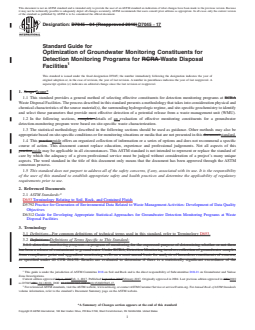
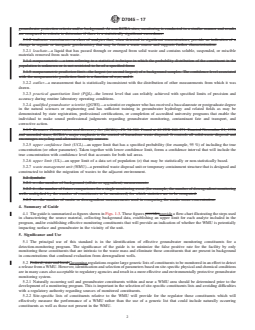
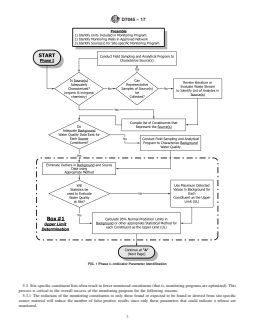
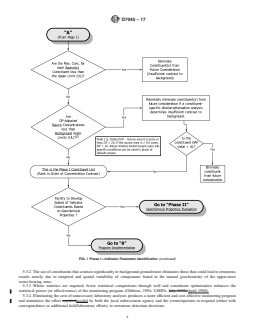
SIGNIFICANCE AND USE
5.1 The principal use of this standard is in the identification of effective groundwater monitoring constituents for a detection-monitoring program. The significance of the guide is to minimize the false positive rate for the facility by only monitoring those constituents that are intrinsic to the waste mass and eliminate those constituents that are present in background in concentrations that confound evaluation from downgradient wells.
5.2 Governing regulations require large generic lists of constituents to be monitored in an effort to detect a release from a WMU. However, identification and selection of parameters based on site-specific physical and chemical conditions are in many cases also acceptable to regulatory agencies and result in a more effective and environmentally protective groundwater monitoring system.
5.2.1 Naturally occurring soil and groundwater constituents within and near a WMU area should be determined prior to the development of a monitoring program. This is important in the selection of site-specific constituents lists and avoiding difficulties with a regulatory authority regarding sources of monitored constituents.
5.2.2 Site-specific lists of constituents relative to the WMU will provide for the regulator those constituents which will effectively measure the performance of a WMU rather than the use of a generic list that could include naturally occurring constituents as well as those not present in the WMU.
5.3 Site-specific constituent lists often result in fewer monitored constituents (that is, monitoring programs are optimized). This process is critical to the overall success of the monitoring program for the following reasons:
5.3.1 The reduction of the monitoring constituents to only those found or expected to be found or derived from site-specific source material will reduce the number of false-positive results since only those parameters that could indicate a release are monitored.
5.3.2 The use of constituents tha...
SCOPE
1.1 This standard provides a general method of selecting effective constituents for detection monitoring programs at Waste Disposal Facilities. The process described in this standard presents a methodology that takes into consideration physical and chemical characteristics of the source material(s), the surrounding hydrogeologic regime, and site-specific geochemistry to identify and select those parameters that provide most effective detection of a potential release from a waste management unit (WMU).
1.2 In the following sections, details of an evaluation of effective monitoring constituents for a groundwater detection-monitoring program were based on site-specific waste characterization.
1.3 The statistical methodology described in the following sections should be used as guidance. Other methods may also be appropriate based on site-specific conditions or for monitoring situations or media that are not presented in this standard.
1.4 This guide offers an organized collection of information or a series of options and does not recommend a specific course of action. This document cannot replace education, experience and professional judgements. Not all aspects of this guide may be applicable in all circumstances. This ASTM standard is not intended to represent or replace the standard of care by which the adequacy of a given professional service must be judged without consideration of a project's many unique aspects. The word standard in the title of this document only means that the document has been approved through the ASTM consensus process.
1.5 This standard does not purport to address all of the safety concerns, if any, associated with its use. It is the responsibility of the user of this standard to establish appropriate safety and health practices and determine the applicability of regulatory requirements prior to use.
- Status
- Published
- Publication Date
- 31-Jan-2017
- Technical Committee
- D18 - Soil and Rock
- Drafting Committee
- D18.21 - Groundwater and Vadose Zone Investigations
Buy Documents
ASTM D7045-17 - Standard Guide for Optimization of Groundwater Monitoring Constituents for Detection Monitoring Programs for Waste Disposal Facilities
REDLINE ASTM D7045-17 - Standard Guide for Optimization of Groundwater Monitoring Constituents for Detection Monitoring Programs for Waste Disposal Facilities
Overview
ASTM D7045-17: Standard Guide for Optimization of Groundwater Monitoring Constituents for Detection Monitoring Programs for Waste Disposal Facilities offers a structured methodology for selecting effective groundwater monitoring constituents at waste management units (WMUs) and waste disposal facilities. This guide supports development of detection monitoring programs that accurately identify potential releases from WMUs, minimize false positive results, and enhance regulatory compliance. The methodology addresses site-specific physical and chemical conditions, hydrogeology, and local geochemistry to create monitoring programs that are both environmentally protective and cost-effective.
Key Topics
- Constituent Selection: The standard emphasizes creating site-specific lists of monitoring constituents based on detailed waste characterization and an understanding of background groundwater chemistry. This optimizes monitoring by targeting parameters that are intrinsic to the waste while eliminating naturally occurring substances that might be present in background levels.
- Reduction of False Positives: By focusing only on constituents related to the waste mass and absent or minimal in the local background, the guide helps reduce the incidence of false-positive detections-a critical element for efficient facility operation and regulatory reporting.
- Statistical Guidance: The guide outlines both statistical and non-statistical methods for assessing background and leachate data. This ensures that detection programs can be tailored to the specific data quality and variability present at each site.
- Regulatory Alignment: The document encourages facilities to select constituents in line with federal, state, and local regulatory requirements, but allows for scientifically justified alternate monitoring programs when site-specific data support them.
- Waste and Leachate Characterization: Proper assessment of the types, quantities, and concentrations of waste and leachate within a WMU is essential. This data informs the identification of indicator parameters that most effectively signal a potential release to groundwater.
- Hydrogeological Considerations: Evaluation of background groundwater quality, variability, and flow regime is required to accurately determine constituent lists and upper limits for background concentrations.
- Program Adaptability: The guidance recognizes the need to update monitoring programs as site conditions, waste streams, or background groundwater characteristics change.
Applications
- Compliance Monitoring: Used by facility owners, operators, and environmental consultants to design and implement groundwater detection monitoring programs that meet Resource Conservation and Recovery Act (RCRA) and other regulatory requirements.
- Optimization of Sampling and Analysis: Reduces unnecessary laboratory analyses, lowers operational costs, and focuses resources on constituents most likely to indicate a WMU release.
- Environmental Risk Management: Enables early detection of potential groundwater contamination, allowing for timely corrective actions that protect public health and the environment.
- Support for Regulatory Decision-Making: Provides a scientific basis for requesting alternate constituent lists with regulatory authorities, streamlining the approval process for site-specific monitoring programs.
- Integration into Environmental Management Systems: Complements broader site assessment, monitoring, remediation, and reporting activities at waste disposal facilities.
Related Standards
- ASTM D653: Terminology Relating to Soil, Rock, and Contained Fluids
- ASTM D5792: Practice for Generation of Environmental Data Related to Waste Management Activities: Development of Data Quality Objectives
- ASTM D6312: Guide for Developing Appropriate Statistical Approaches for Groundwater Detection Monitoring Programs at Waste Disposal Facilities
- 40 CFR 258.54: US Federal regulations for alternate constituent list selection at solid waste facilities
- EPA Guidance Documents: Procedures for data review, quality objectives, and dilution/attenuation calculations for groundwater monitoring
Practical Value
By following ASTM D7045-17, waste disposal facilities can build detection monitoring programs tailored to their specific operational and geologic context, reducing the cost and complexity of ongoing compliance. This approach leads to more accurate detection of releases, supports efficient allocation of resources, and enhances facility credibility in regulatory engagements. For consultants, regulators, and facility operators, the standard provides a robust framework for environmental protection and sustained regulatory compliance through optimized groundwater monitoring.
Keywords: groundwater monitoring, constituent optimization, waste disposal facility, RCRA, detection monitoring, leachate, hydrogeology, site-specific, false positives, environmental compliance.
Relations
- Effective Date
- 01-Feb-2017
- Effective Date
- 01-Nov-2023
- Effective Date
- 01-Jan-2017
- Effective Date
- 01-Sep-2015
- Effective Date
- 01-Aug-2014
- Effective Date
- 15-Feb-2012
- Effective Date
- 01-Sep-2011
- Effective Date
- 01-Dec-2010
- Effective Date
- 01-Jan-2009
- Effective Date
- 01-Dec-2008
- Effective Date
- 01-Nov-2008
- Effective Date
- 15-Dec-2007
- Effective Date
- 01-Nov-2007
- Effective Date
- 01-Aug-2007
- Effective Date
- 01-Jul-2007
Buy Documents
ASTM D7045-17 - Standard Guide for Optimization of Groundwater Monitoring Constituents for Detection Monitoring Programs for Waste Disposal Facilities
REDLINE ASTM D7045-17 - Standard Guide for Optimization of Groundwater Monitoring Constituents for Detection Monitoring Programs for Waste Disposal Facilities
Get Certified
Connect with accredited certification bodies for this standard

CIS Institut d.o.o.
Personal Protective Equipment (PPE) certification body. Notified Body NB-2890 for EU Regulation 2016/425 PPE.

Kiwa BDA Testing
Building and construction product certification.
Kmetijski inštitut Slovenije
Agricultural Institute of Slovenia. Soil testing, plant health, agricultural product analysis.
Sponsored listings
Frequently Asked Questions
ASTM D7045-17 is a guide published by ASTM International. Its full title is "Standard Guide for Optimization of Groundwater Monitoring Constituents for Detection Monitoring Programs for Waste Disposal Facilities". This standard covers: SIGNIFICANCE AND USE 5.1 The principal use of this standard is in the identification of effective groundwater monitoring constituents for a detection-monitoring program. The significance of the guide is to minimize the false positive rate for the facility by only monitoring those constituents that are intrinsic to the waste mass and eliminate those constituents that are present in background in concentrations that confound evaluation from downgradient wells. 5.2 Governing regulations require large generic lists of constituents to be monitored in an effort to detect a release from a WMU. However, identification and selection of parameters based on site-specific physical and chemical conditions are in many cases also acceptable to regulatory agencies and result in a more effective and environmentally protective groundwater monitoring system. 5.2.1 Naturally occurring soil and groundwater constituents within and near a WMU area should be determined prior to the development of a monitoring program. This is important in the selection of site-specific constituents lists and avoiding difficulties with a regulatory authority regarding sources of monitored constituents. 5.2.2 Site-specific lists of constituents relative to the WMU will provide for the regulator those constituents which will effectively measure the performance of a WMU rather than the use of a generic list that could include naturally occurring constituents as well as those not present in the WMU. 5.3 Site-specific constituent lists often result in fewer monitored constituents (that is, monitoring programs are optimized). This process is critical to the overall success of the monitoring program for the following reasons: 5.3.1 The reduction of the monitoring constituents to only those found or expected to be found or derived from site-specific source material will reduce the number of false-positive results since only those parameters that could indicate a release are monitored. 5.3.2 The use of constituents tha... SCOPE 1.1 This standard provides a general method of selecting effective constituents for detection monitoring programs at Waste Disposal Facilities. The process described in this standard presents a methodology that takes into consideration physical and chemical characteristics of the source material(s), the surrounding hydrogeologic regime, and site-specific geochemistry to identify and select those parameters that provide most effective detection of a potential release from a waste management unit (WMU). 1.2 In the following sections, details of an evaluation of effective monitoring constituents for a groundwater detection-monitoring program were based on site-specific waste characterization. 1.3 The statistical methodology described in the following sections should be used as guidance. Other methods may also be appropriate based on site-specific conditions or for monitoring situations or media that are not presented in this standard. 1.4 This guide offers an organized collection of information or a series of options and does not recommend a specific course of action. This document cannot replace education, experience and professional judgements. Not all aspects of this guide may be applicable in all circumstances. This ASTM standard is not intended to represent or replace the standard of care by which the adequacy of a given professional service must be judged without consideration of a project's many unique aspects. The word standard in the title of this document only means that the document has been approved through the ASTM consensus process. 1.5 This standard does not purport to address all of the safety concerns, if any, associated with its use. It is the responsibility of the user of this standard to establish appropriate safety and health practices and determine the applicability of regulatory requirements prior to use.
SIGNIFICANCE AND USE 5.1 The principal use of this standard is in the identification of effective groundwater monitoring constituents for a detection-monitoring program. The significance of the guide is to minimize the false positive rate for the facility by only monitoring those constituents that are intrinsic to the waste mass and eliminate those constituents that are present in background in concentrations that confound evaluation from downgradient wells. 5.2 Governing regulations require large generic lists of constituents to be monitored in an effort to detect a release from a WMU. However, identification and selection of parameters based on site-specific physical and chemical conditions are in many cases also acceptable to regulatory agencies and result in a more effective and environmentally protective groundwater monitoring system. 5.2.1 Naturally occurring soil and groundwater constituents within and near a WMU area should be determined prior to the development of a monitoring program. This is important in the selection of site-specific constituents lists and avoiding difficulties with a regulatory authority regarding sources of monitored constituents. 5.2.2 Site-specific lists of constituents relative to the WMU will provide for the regulator those constituents which will effectively measure the performance of a WMU rather than the use of a generic list that could include naturally occurring constituents as well as those not present in the WMU. 5.3 Site-specific constituent lists often result in fewer monitored constituents (that is, monitoring programs are optimized). This process is critical to the overall success of the monitoring program for the following reasons: 5.3.1 The reduction of the monitoring constituents to only those found or expected to be found or derived from site-specific source material will reduce the number of false-positive results since only those parameters that could indicate a release are monitored. 5.3.2 The use of constituents tha... SCOPE 1.1 This standard provides a general method of selecting effective constituents for detection monitoring programs at Waste Disposal Facilities. The process described in this standard presents a methodology that takes into consideration physical and chemical characteristics of the source material(s), the surrounding hydrogeologic regime, and site-specific geochemistry to identify and select those parameters that provide most effective detection of a potential release from a waste management unit (WMU). 1.2 In the following sections, details of an evaluation of effective monitoring constituents for a groundwater detection-monitoring program were based on site-specific waste characterization. 1.3 The statistical methodology described in the following sections should be used as guidance. Other methods may also be appropriate based on site-specific conditions or for monitoring situations or media that are not presented in this standard. 1.4 This guide offers an organized collection of information or a series of options and does not recommend a specific course of action. This document cannot replace education, experience and professional judgements. Not all aspects of this guide may be applicable in all circumstances. This ASTM standard is not intended to represent or replace the standard of care by which the adequacy of a given professional service must be judged without consideration of a project's many unique aspects. The word standard in the title of this document only means that the document has been approved through the ASTM consensus process. 1.5 This standard does not purport to address all of the safety concerns, if any, associated with its use. It is the responsibility of the user of this standard to establish appropriate safety and health practices and determine the applicability of regulatory requirements prior to use.
ASTM D7045-17 is classified under the following ICS (International Classification for Standards) categories: 13.060.10 - Water of natural resources. The ICS classification helps identify the subject area and facilitates finding related standards.
ASTM D7045-17 has the following relationships with other standards: It is inter standard links to ASTM D7045-04(2010), ASTM D5792-10(2023), ASTM D6312-17, ASTM D5792-10(2015), ASTM D653-14, ASTM D6312-98(2012)e1, ASTM D653-11, ASTM D5792-10, ASTM D653-09, ASTM D653-08a, ASTM D653-08, ASTM D653-07f, ASTM D653-07e, ASTM D653-07d, ASTM D653-07c. Understanding these relationships helps ensure you are using the most current and applicable version of the standard.
ASTM D7045-17 is available in PDF format for immediate download after purchase. The document can be added to your cart and obtained through the secure checkout process. Digital delivery ensures instant access to the complete standard document.
Standards Content (Sample)
This international standard was developed in accordance with internationally recognized principles on standardization established in the Decision on Principles for the
Development of International Standards, Guides and Recommendations issued by the World Trade Organization Technical Barriers to Trade (TBT) Committee.
Designation: D7045 − 17
Standard Guide for
Optimization of Groundwater Monitoring Constituents for
Detection Monitoring Programs for Waste Disposal
Facilities
This standard is issued under the fixed designation D7045; the number immediately following the designation indicates the year of
original adoption or, in the case of revision, the year of last revision.Anumber in parentheses indicates the year of last reapproval.A
superscript epsilon (´) indicates an editorial change since the last revision or reapproval.
1. Scope* priate safety and health practices and determine the applica-
bility of regulatory requirements prior to use.
1.1 This standard provides a general method of selecting
effective constituents for detection monitoring programs at
2. Referenced Documents
Waste Disposal Facilities. The process described in this stan-
2.1 ASTM Standards:
dard presents a methodology that takes into consideration
D653Terminology Relating to Soil, Rock, and Contained
physical and chemical characteristics of the source material(s),
Fluids
the surrounding hydrogeologic regime, and site-specific geo-
D5792Practice for Generation of Environmental Data Re-
chemistry to identify and select those parameters that provide
lated to Waste Management Activities: Development of
most effective detection of a potential release from a waste
Data Quality Objectives
management unit (WMU).
D6312Guide for Developing Appropriate Statistical Ap-
1.2 In the following sections, details of an evaluation of
proaches for Groundwater Detection Monitoring Pro-
effective monitoring constituents for a groundwater detection-
grams at Waste Disposal Facilities
monitoring program were based on site-specific waste charac-
3. Terminology
terization.
3.1 Definitions—For common definitions of technical terms
1.3 The statistical methodology described in the following
used in this standard, refer to Terminology D653.
sections should be used as guidance. Other methods may also
be appropriate based on site-specific conditions or for moni-
3.2 Definitions of Terms Specific to This Standard:
toring situations or media that are not presented in this
3.2.1 leachate—a liquid that has passed through or emerged
standard.
from solid waste and contains soluble, suspended, or miscible
materials removed from such waste.
1.4 This guide offers an organized collection of information
oraseriesofoptionsanddoesnotrecommendaspecificcourse
3.2.2 outlier—a measurement that is statistically inconsis-
of action. This document cannot replace education, experience
tent with the distribution of other measurements from which it
and professional judgements. Not all aspects of this guide may
was drawn.
be applicable in all circumstances. ThisASTM standard is not
3.2.3 practical quantitation limit (PQL)—the lowest level
intended to represent or replace the standard of care by which
thatcanreliablyachievedwithspecifiedlimitsofprecisionand
the adequacy of a given professional service must be judged
accuracy during routine laboratory operating conditions.
without consideration of a project’s many unique aspects. The
3.2.4 qualified groundwater scientist (QGWS)—a scientist
word standard in the title of this document only means that the
or engineer who has received a baccalaureate or postgraduate
document has been approved through the ASTM consensus
degree in the natural sciences or engineering and has sufficient
process.
trainingingroundwaterhydrologyandrelatedfieldsasmaybe
1.5 This standard does not purport to address all of the
demonstrated by state registration, professional certifications,
safety concerns, if any, associated with its use. It is the
orcompletionofaccrediteduniversityprogramsthatenablethe
responsibility of the user of this standard to establish appro-
individual to make sound professional judgments regarding
groundwater monitoring, contaminant fate and transport, and
corrective action.
ThisguideisunderthejurisdictionofASTMCommitteeD18onSoilandRock
and is the direct responsibility of Subcommittee D18.21 on Groundwater and
Vadose Zone Investigations. For referenced ASTM standards, visit the ASTM website, www.astm.org, or
Current edition approved Feb. 1, 2017. Published February 2017. Originally contact ASTM Customer Service at service@astm.org. For Annual Book of ASTM
approved in 2004. Last previous edition approved in 2010 as D7045–04 (2010). Standards volume information, refer to the standard’s Document Summary page on
DOI: 10.1520/D7045-17. the ASTM website.
*A Summary of Changes section appears at the end of this standard
Copyright © ASTM International, 100 Barr Harbor Drive, PO Box C700, West Conshohocken, PA 19428-2959. United States
D7045 − 17
3.2.5 upper confidence limit (UCL)—an upper limit that has specific source material will reduce the number of false-
a specified probability (for example, 95%) of including the positive results since only those parameters that could indicate
true concentration (or other parameter). Taken together with a release are monitored.
lower confidence limit, forms a confidence interval that will 5.3.2 The use of constituents that contrast significantly to
include the true concentration with confidence level that background groundwater eliminates those that could lead to
accounts for both tail areas. erroneousresultsmerelyduetotemporalandspatialvariability
of components found in the natural geochemistry of the
3.2.6 upper limit (UL)—an upper limit of a data set of
upper-most water-bearing zone.
population (n) that may be statistically or non-statistically
5.3.3 Where statistics are required, fewer statistical com-
based.
parisons through well and constituent optimization enhances
3.2.7 waste management unit (WMU)—a permitted waste
the statistical power (or effectiveness) of the monitoring
disposal unit or temporary containment structure that is de-
program (Gibbons, 1994; USEPA, April 1998).
signedandconstructedtoinhibitthemigrationofwastestothe
5.3.4 Eliminating the cost of unnecessary laboratory analy-
adjacent environment.
ses produces a more efficient and cost-effective monitoring
program and minimizes the effort needed by both the local
4. Summary of Guide
enforcement agency and the owner/operator to respond (either
4.1 The guide is summarized as figures shown in Figs. 1-3.
with correspondence or additional field/laboratory efforts) to
Thesefiguresprovideaflow-chartillustratingthestepsusedin
erroneous detection decisions.
characterizing the source material, collecting background data,
5.4 This type of approach is acceptable to regulatory agen-
establishing an upper limit for each analyte included in the
cies arid applicable under most groundwater monitoring pro-
program, and/or establishing effective monitoring constituents
grams.
that will provide an indication of whether the WMU is
NOTE 1—For example, in the United States, determining the alternate
potentially impacting surface and groundwater in the vicinity
constituent list at Solid Waste Facilities, 40 CFR 258.54(a)(l) allows for
of the unit.
deletionof40CFR258AppendixIconstituentsifitcanbeshownthatthe
removedconstituentsarenotreasonablyexpectedtobeinorderivedfrom
5. Significance and Use
the waste contained in the unit. 40 CFR 258(a)(2) allows approved States
to establish an alternate list of inorganic parameters in lieu of all or some
5.1 The principal use of this standard is in the identification
of the heavy metals (constituents 1-14 in Appendix I to Part 258), if the
of effective groundwater monitoring constituents for a
alternative constituents provide a reliable indication of inorganic releases
detection-monitoring program.The significance of the guide is
from the unit to groundwater.
to minimize the false positive rate for the facility by only
5.5 The framework for this standard is generally based on
monitoring those constituents that are intrinsic to the waste
the guidelines established under 40 CFR 258.54(a)(l) to opti-
mass and eliminate those constituents that are present in
mizeagroundwater-monitoringnetworkinsuchamannerasto
background in concentrations that confound evaluation from
still provide an early warning system of a release from the
downgradient wells.
WMU. This guidance document is, however, applicable for
5.2 Governing regulations require large generic lists of
mostWMU,notjustthoseassociatedwithsolidwastedisposal
constituents to be monitored in an effort to detect a release facilities. In determining the alternative constituents, consider-
from aWMU. However, identification and selection of param-
ation must be made for: (1) the types, quantities, and concen-
eters based on site-specific physical and chemical conditions trations of constituents in wastes managed at the waste
are in many cases also acceptable to regulatory agencies and
management unit (or WMU); (2) the mobility, stability, and
result in a more effective and environmentally protective persistence of waste constituents in the unsaturated zone
groundwater monitoring system.
beneath the WMU; (3) the detectability of indicator
5.2.1 Naturally occurring soil and groundwater constituents
parameters, waste constituents, and reaction products in
withinandnearaWMUareashouldbedeterminedpriortothe groundwater; and (4) the concentration or contrast between
development of a monitoring program.This is important in the
monitoring constituents in leachate and in background ground-
selection of site-specific constituents lists and avoiding diffi- water.
culties with a regulatory authority regarding sources of moni-
5.6 An essential factor in this guide is the knowledge of the
tored constituents.
quality of the potential source material [for example, the types
5.2.2 Site-specific lists of constituents relative to the WMU
and concentrations of liquid or other leachable wastes (that is,
will provide for the regulator those constituents which will
leachate) within theWMU].The characterization of the source
effectivelymeasuretheperformanceofaWMUratherthanthe
material is critical in determining an optimum set of indicator
use of a generic list that could include naturally occurring
parameters that provide an early warning system of a release
constituents as well as those not present in the WMU.
from the unit. Details for the appropriate levels of effort to
5.3 Site-specific constituent lists often result in fewer moni- characterize the waste stream or source(s) in theWMU are not
toredconstituents(thatis,monitoringprogramsareoptimized). included within this guidance document. Waste stream and/or
This process is critical to the overall success of the monitoring source data collected by the owner/operator as well as liquid
program for the following reasons: data from key collection points (that is, sumps or natural
5.3.1 The reduction of the monitoring constituents to only gravitydraincollectionpoints)areanintegralpartofanywaste
those found or expected to be found or derived from site- characterization process.
D7045 − 17
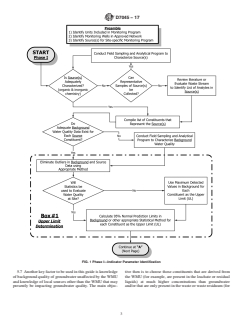
FIG. 1 Phase I—Indicator Parameter Identification
5.7 Anotherkeyfactortobeusedinthisguideisknowledge tive then is to choose those constituents that are derived from
ofbackground qualityofgroundwaterunaffectedbytheWMU the WMU (for example, are present in the leachate or residual
and knowledge of local sources other than the WMU that may liquids) at much higher concentrations than groundwater
presently be impacting groundwater quality. The main objec- and/orthatareonlypresentinthewasteorwasteresiduum(for
D7045 − 17
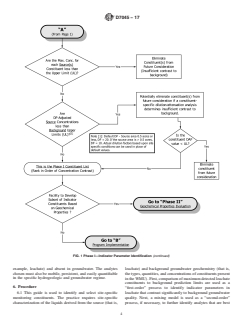
FIG. 1 Phase I—Indicator Parameter Identification (continued)
example, leachate) and absent in groundwater. The analytes leachate) and background groundwater geochemistry (that is,
chosen must also be mobile, persistent, and easily quantifiable thetypes,quantities,andconcentrationsofconstituentspresent
in the specific hydrogeologic and groundwater regime.
intheWMU).First,comparisonofmaximumdetectedleachate
constituents to background prediction limits are used as a
6. Procedure
“first-order” process to identify indicator parameters in
6.1 This guide is used to identify and select site-specific leachate that contrast significantly to background groundwater
quality. Next, a mixing model is used as a “second-order”
monitoring constituents. The practice requires site-specific
characterization of the liquids derived from the source (that is, process, if necessary, to further identify analytes that are best
D7045 − 17
FIG. 2 Phase II—Geochemical Properties Evaluation
suited for the detection-monitoring program based on site Once a suitable list of site specific constituents is identified, a
hydrogeology (that is, groundwater flow rates). Finally, other
QGWScanselectandproposeananalytelistforthedetection-
processes,primarilygeochemicalchemicalinteractions,canbe
monitoring program at the WMU. A sequential flow chart has
addressed as a “third order screening process” for those sites
beenincludedasAttachment1toprovideameanstofollowthe
that have adequately completed the first two processes and
constituent optimization program outlined in this standard.
desire a more representative subset of the source material.
D7045 − 17
FIG. 3 Monitoring Program Implementation
6.2 Source Characterization: nonionic, and bacteriological constituents in an aqueous me-
6.2.1 As a first-order screening process, the owner/operator dium. Leachate usually is more than 99% water.
needs to determine if sufficient source characterization data 6.2.2 Leachate characterization should include an assess-
exists to be able to define (that is, fingerprint) the liquid, or the ment and demonstration of the quantity and composition of
moremobile,wastestreamcontainedwithintheWMU.Forthe leachate contained within the WMU. Estimates of volumetric
purposes of this standard, we refer to liquids derived from the productionratesofleachateareimportantinevaluatingthefate
WMU as leachate. Leachate is a complex matrix containing a and transport of the constituents. Leachate production rates
variety of soluble, insoluble, organic, inorganic, ionic, depend on rainfall, run-on, run-off, evapo-transpiration, water
D7045 − 17
table elevation relative to the bottom of the WMU, in-place installed at locations not impacted from a WMU release. This
moisture or water content of the waste, and the volumetric requires an understanding of the upper-most groundwater flow
in-flow of free liquids into the WMU (if allowed by local regime in the vicinity of the WMU including, but not limited
permit). An often overlooked source of water is that derived to, horizontal and vertical flow components of the water-
from the compression (settlement) of the waste and/or natural
bearing strata, locations of sumps or areas with higher prob-
soils. abilities of leakage (that is, have the greatest potential for
buildup of head), and locations of local recharge or discharge
6.2.3 If leachate composition data that are representative of
points.
theWMU(orhistoricalwastecontainedwithintheunit)arenot
available, then leachate data with a similar expected composi-
6.3.2 In very simple hydrogeologic situations conceptual
tion should be compiled.
geologic models may not be necessary to define the target
monitoring zone or to define gradients adjacent to a facility.
NOTE2—EPA530-R-93-017providesonemeansofhowtocompilethe
However, using a hydrogeological flow model developed for
data.
the site can support the well placement and rationalize the
6.2.4 A review of existing literature for similar waste
locations selected for groundwater samples. Groundwater
management units, as well as a compilation of waste profiles
samples collected from hydraulically up gradient (or cross-
on file with the owner/operator that characterizes waste in-
gradient) locations, are often representative of natural ground-
flow, should be conducted. References for the chemical com-
water quality in the area of the WMU. Hydraulically down-
position of leachate at solid and/or hazardous waste sites
gradient wells should be utilized if the owner/operator can
include Cravy (1990), Plumb et al. (1991), Gibbons et al.
showthatthesewellshavenotbeenpreviouslyimpactedbythe
(1992), Gintautas (1993), and Christensen et al. (1994).
WMU. Background groundwater quality parameters analyzed
6.2.5 Determine if existing, analytical chemical data is
from these samples should include a list of regulatory required
available for site leachate.Analyticaldatamightincludeactual
parameters (for example, in the United States for permitted
data collected from WMU leachate or an analytical character-
Subtitle D solid waste disposal facilities, 40 CFR 258 Appen-
ization of the waste stream placed into the WMU (recom-
dix I trace metals and organics and/or state required
mended for mono-fills). For solid waste disposal facilities,
constituents),inorganicmacrocomponentsofgroundwater(an-
analytical data might include, but are not limited to, anthropo-
ions and cations), as well as an appropriate list of site-specific
genic(man-made)compoundssuchasVOCs,inorganicmacro-
indicator parameters and groundwater quality constituents that
components, and (at a minimum) heavy metals included in 40
are likely to represent the variety of wastes placed into the
CFR §258.54 or other applicable regulation.
WMU.Asufficientnumberofsamplesshouldbecollectedover
6.2.6 If analytical data are not available, then a determina-
time to account for temporal variability. The number of
tion should be made if leachate is present and can be sampled.
samples that are needed to support a defensible background
Representative samples of site leachate, as determined by a
population database will vary depending on the spatial vari-
QGWS, should be collected and analyzed for a suite of
ability evident in the local hydrologic unit(s) but is typically
analytical parameters capable of detecting a constituent in the
characterized by two or more sampling locations per geologic
wastebasedonareasonableassumptionbytheowner/operator
unit monitored at the site. Quantification of temporal variabil-
or available data. Examples of representative data include
ity is an important aspect of the characterization as natural
single or composite samples from multiple sumps or samples
geochemistry of groundwater can fluctuate over time based on
from a main leachate header line. Samples should be collected
conditions such as flood or drought. Therefore, a minimum
prior to treatment or to discharge into a storage tank or other
sampling period is one year with samples collected with a
storage device. Leachate samples should be collected at least
frequency to account for seasonal fluctuations, usually quar-
annually, throughout the monitoring program, to evaluate
terly. Background samples usually have to be collected for a
geochemical changes over time and to allow the facility to
periodlon
...
This document is not an ASTM standard and is intended only to provide the user of an ASTM standard an indication of what changes have been made to the previous version. Because
it may not be technically possible to adequately depict all changes accurately, ASTM recommends that users consult prior editions as appropriate. In all cases only the current version
of the standard as published by ASTM is to be considered the official document.
Designation: D7045 − 04 (Reapproved 2010) D7045 − 17
Standard Guide for
Optimization of Groundwater Monitoring Constituents for
Detection Monitoring Programs for RCRA Waste Disposal
Facilities
This standard is issued under the fixed designation D7045; the number immediately following the designation indicates the year of
original adoption or, in the case of revision, the year of last revision. A number in parentheses indicates the year of last reapproval. A
superscript epsilon (´) indicates an editorial change since the last revision or reapproval.
1. Scope Scope*
1.1 This standard provides a general method of selecting effective constituents for detection monitoring programs at RCRA
Waste Disposal Facilities. The process described in this standard presents a methodology that takes into consideration physical and
chemical characteristics of the source material(s), the surrounding hydrogeologic regime, and site-specific geochemistry to identify
and select those parameters that provide most effective detection of a potential release from a waste management unit (WMU).
1.2 In the following sections, complete details of an evaluation of effective monitoring constituents for a groundwater
detection-monitoring program were based on site-specific waste characterization.
1.3 The statistical methodology described in the following sections should be used as guidance. Other methods may also be
appropriate based on site-specific conditions or for monitoring situations or media that are not presented in this document.standard.
1.4 This practiceguide offers an organized collection of information or a series of options and does not recommend a specific
course of action. This document cannot replace education, experience and professional judgements. Not all aspects of this
practiceguide may be applicable in all circumstances. This ASTM standard is not intended to represent or replace the standard of
care by which the adequacy of a given professional service must be judged without consideration of a project’s many unique
aspects. The word standard in the title of this document only means that the document has been approved through the ASTM
consensus process.
1.5 This standard does not purport to address all of the safety concerns, if any, associated with its use. It is the responsibility
of the user of this standard to establish appropriate safety and health practices and determine the applicability of regulatory
requirements prior to use.
2. Referenced Documents
2.1 ASTM Standards:
D653 Terminology Relating to Soil, Rock, and Contained Fluids
D5792 Practice for Generation of Environmental Data Related to Waste Management Activities: Development of Data Quality
Objectives
D6312 Guide for Developing Appropriate Statistical Approaches for Groundwater Detection Monitoring Programs at Waste
Disposal Facilities
3. Terminology
3.1 Definitions—For common definitions of technical terms used in this standard, refer to Terminology D653.
3.2 Definitions:Definitions of Terms Specific to This Standard:
3.1.1 detection monitoring program—a program of monitoring for the expressed purpose of determining whether or not there
has been a release of contaminant to groundwater. Under RCRA, Detection Monitoring involves collection of groundwater samples
from compliance point and upgradient monitoring wells on a semi-annual basis for analysis of hazardous constituents of concern,
as specified under 40 CFR 264.98. Results are evaluated to determine if there is a statistically significant exceedance of the
This guide is under the jurisdiction of ASTM Committee D18 on Soil and Rock and is the direct responsibility of Subcommittee D18.21 on Groundwater and Vadose
Zone Investigations.
Current edition approved July 1, 2010Feb. 1, 2017. Published September 2010February 2017. Originally approved in 2004. Last previous edition approved in 20042010
as D7045–04. –04 (2010). DOI: 10.1520/D7045-04R10.10.1520/D7045-17.
For referenced ASTM standards, visit the ASTM website, www.astm.org, or contact ASTM Customer Service at service@astm.org. For Annual Book of ASTM Standards
volume information, refer to the standard’s Document Summary page on the ASTM website.
*A Summary of Changes section appears at the end of this standard
Copyright © ASTM International, 100 Barr Harbor Drive, PO Box C700, West Conshohocken, PA 19428-2959. United States
D7045 − 17
groundwater protection criteria and/or background. At non-RCRA sites, monitoring is conducted in a similar manner and results
are compared to criteria to determine if there is a statistically significant exceedance.
3.1.2 indicator constituents—a class of analytes that, when detected in significant concentrations, provide an indication of a
change in organic or inorganic geochemistry that may be from a waste source and supports further characterization.
3.2.1 leachate—a liquid that has passed through or emerged from solid waste and contains soluble, suspended, or miscible
materials removed from such waste.
3.1.4 nonparametric —a term referring to a statistical technique in which the probability distribution of the constituent in the
population is unknown or is not restricted to be of a specified form.
3.1.5 nonparametric prediction limit—the largest (or second largest) of n background samples. The confidence level associated
with the nonparametric prediction limit is a function of n,m, and k.
3.2.2 outlier—a measurement that is statistically inconsistent with the distribution of other measurements from which it was
drawn.
3.2.3 practical quantitation limit (PQL)—the lowest level that can reliably achieved with specified limits of precision and
accuracy during routine laboratory operating conditions.
3.2.4 qualified groundwater scientist (QGWS)—a scientist or engineer who has received a baccalaureate or postgraduate degree
in the natural sciences or engineering and has sufficient training in groundwater hydrology and related fields as may be
demonstrated by state registration, professional certifications, or completion of accredited university programs that enable the
individual to make sound professional judgments regarding groundwater monitoring, contaminant fate and transport, and
corrective action.
3.1.9 Resource Conservation and Recovery Act (RCRA)—PL 94-580. Found at 40 CFR 240-271. Enacted November 21, 1976
and amended since, RCRA’s major emphasis is the control of hazardous waste disposal. It controls all solid-waste disposal and
encourages recycling and alternative energy sources.
3.2.5 upper confidence limit (UCL)—an upper limit that has a specified probability (for example, 95 %) of including the true
concentration (or other parameter). Taken together with lower confidence limit, forms a confidence interval that will include the
true concentration with confidence level that accounts for both tail areas.
3.2.6 upper limit (UL)—an upper limit of a data set of population (n) that may be statistically or non-statistically based.
3.2.7 waste management unit (WMU)—a permitted waste disposal unit or temporary containment structure that is designed and
constructed to inhibit the migration of wastes to the adjacent environment.
3.2 Symbols:
3.2.1 n—the number of background (offsite or upgradient) measurements.
3.2.2 k—the number of future comparisons for a single monitoring event (for example, the number of downgradient monitoring
wells multiplied by the number of constituents to be monitored) for which statistics are to be computed.
3.2.3 m—the number of onsite or downgradient measurements used in computing the onsite mean concentration.
4. Summary of Guide
4.1 The guide is summarized as figures shown in Figs. 1-3. These figures providesprovide a flow-chart illustrating the steps used
in characterizing the source material, collecting background data, establishing an upper limit for each analyte included in the
program, and/or establishing effective monitoring constituents that will provide an indication of whether the WMU is potentially
impacting surface and groundwater in the vicinity of the unit.
5. Significance and Use
5.1 The principal use of this standard is in the identification of effective groundwater monitoring constituents for a
detection-monitoring program. The significance of the guide is to minimize the false positive rate for the facility by only
monitoring those constituents that are intrinsic to the waste mass and eliminate those constituents that are present in background
in concentrations that confound evaluation from downgradient wells.
5.2 Federal, state and local Governing regulations require large generic lists of constituents to be monitored in an effort to detect
a release from a WMU. However, identification and selection of parameters based on site-specific physical and chemical conditions
are in many cases also acceptable to regulatory agencies and result in a more effective and environmentally protective groundwater
monitoring system.
5.2.1 Naturally occurring soil and groundwater constituents within and near a WMU area should be determined prior to the
development of a monitoring program. This is important in the selection of site-specific constituents lists and avoiding difficulties
with a regulatory authority regarding sources of monitored constituents.
5.2.2 Site-specific lists of constituents relative to the WMU will provide for the regulator those constituents which will
effectively measure the performance of a WMU rather than the use of a generic list that could include naturally occurring
constituents as well as those not present in the WMU.
D7045 − 17
FIG. 1 Phase I—Indicator Parameter Identification
5.3 Site-specific constituent lists often result in fewer monitored constituents (that is, monitoring programs are optimized). This
process is critical to the overall success of the monitoring program for the following reasons:
5.3.1 The reduction of the monitoring constituents to only those found or expected to be found or derived from site-specific
source material will reduce the number of false-positive results since only those parameters that could indicate a release are
monitored.
D7045 − 17
FIG. 1 Phase I—Indicator Parameter Identification (continued)
5.3.2 The use of constituents that contrast significantly to background groundwater eliminates those that could lead to erroneous
results merely due to temporal and spatial variability of components found in the natural geochemistry of the upper-most
water-bearing zone.
5.3.3 Where statistics are required, fewer statistical comparisons through well and constituent optimization enhances the
statistical power (or effectiveness) of the monitoring program (Gibbons, 1994; USEPA, July 1992).April 1998).
5.3.4 Eliminating the cost of unnecessary laboratory analyses produces a more efficient and cost-effective monitoring program
and minimizes the effort requiredneeded by both the local enforcement agency and the owner/operator to respond (either with
correspondence or additional field/laboratory efforts) to erroneous detection decisions.
D7045 − 17
FIG. 2 Phase II—Geochemical Properties Evaluation
5.4 This type of approach is acceptable to regulatory agencies arid applicable under most groundwater monitoring programs
under RCRA regulations. For example, in determining the alternate constituent list at Solid Waste Facilities, 40 CFR 258.54(a)(l)
allows for deletion of 40 CFR 258 Appendix I constituents if it can be shown that the removed constituents are not reasonably
expected to be in or derived from the waste contained in the unit. 40 CFR 258(a)(2) allows approved States to establish an alternate
list of inorganic parameters in lieu of all or some of the heavy metals (constituents 1-14 in Appendix I to Part 258), if the alternative
constituents provide a reliable indication of inorganic releases from the unit to groundwater. programs.
NOTE 1—For example, in the United States, determining the alternate constituent list at Solid Waste Facilities, 40 CFR 258.54(a)(l) allows for deletion
of 40 CFR 258 Appendix I constituents if it can be shown that the removed constituents are not reasonably expected to be in or derived from the waste
D7045 − 17
FIG. 3 Monitoring Program Implementation
contained in the unit. 40 CFR 258(a)(2) allows approved States to establish an alternate list of inorganic parameters in lieu of all or some of the heavy
metals (constituents 1-14 in Appendix I to Part 258), if the alternative constituents provide a reliable indication of inorganic releases from the unit to
groundwater.
5.5 The framework for this standard is generally based on the guidelines established under 40 CFR 258.54(a)(l) to optimize a
groundwater-monitoring network in such a manner as to still provide an early warning system of a release from the WMU. This
guidance document is, however, applicable for allmost WMU, not just those associated with solid waste disposal facilities. In
determining the alternative constituents, consideration must be made for: (1) the types, quantities, and concentrations of
constituents in wastes managed at the waste management unit (or WMU); (2) the mobility, stability, and persistence of waste
constituents in the unsaturated zone beneath the WMU; (3) the detectability of indicator parameters, waste constituents, and
reaction products in groundwater; and (4) the concentration or contrast between monitoring constituents in leachate and in
background groundwater.
D7045 − 17
5.6 An essential factor in this guide is the knowledge of the quality of the potential source material [for example, the types and
concentrations of liquid or other leachable wastes (that is, leachate) within the WMU]. The characterization of the source material
is critical in determining an optimum set of indicator parameters that provide an early warning system of a release from the unit.
Details for the appropriate levels of effort required to characterize the waste stream or source(s) in the WMU are not included
within this guidance document. Waste stream and/or source data collected by the owner/operator as well as liquid data from key
collection points (that is, sumps or natural gravity drain collection points) are an integral part of any waste characterization process.
5.7 Another key factor to be used in this guide is knowledge of background quality of groundwater unaffected by the WMU
and knowledge of local sources other than the WMU that may presently be impacting groundwater quality. The main objective then
is to choose those constituents that are derived from the WMU (for example, are present in the leachate or residual liquids) at much
higher concentrations than groundwater and/or that are only present in the waste or waste residuum (for example, leachate) and
absent in groundwater. The analytes chosen must also be mobile, persistent, and easily quantifiable in the specific hydrogeologic
and groundwater regime.
6. Procedure
6.1 This practiceguide is used to identify and select site-specific monitoring constituents. The practice requires site-specific
characterization of the liquids derived from the source (that is, leachate) and background groundwater geochemistry (that is, the
types, quantities, and concentrations of constituents present in the WMU). First, comparison of maximum detected leachate
constituents to background prediction limits are used as a “first-order” process to identify indicator parameters in leachate that
contrast significantly to background groundwater quality. Next, a mixing model is used as a “second-order” process, if necessary,
to further identify analytes that are best suited for the detection-monitoring program based on site hydrogeology (that is,
groundwater flow rates). Finally, other processes, primarily geochemical chemical interactions, can be addressed as a “third order
screening process” for those sites that have adequately completed the first two processes and desire a more representative subset
of the source material. Once a suitable list of site specific constituents is identified, a QGWS can select and propose a final an
analyte list for the detection-monitoring program at the WMU. A sequential flow chart has been included as Attachment 1 to
provide a means to follow the constituent optimization program outlined in this standard.
6.2 Source Characterization:
6.2.1 As a first-order screening process, the owner/operator needs to determine if sufficient source characterization data exists
to be able to define (that is, fingerprint) the liquid, or the more mobile, waste stream contained within the WMU. For the purposes
of this standard, we refer to liquids derived from the WMU as leachate. Leachate is a complex matrix containing a variety of
soluble, insoluble, organic, inorganic, ionic, nonionic, and bacteriological constituents in an aqueous medium. Leachate usually is
more than 99 % water.
6.2.2 Leachate characterization should include an assessment and demonstration of the quantity and composition of leachate
contained within the WMU. Estimates of volumetric production rates of leachate are important in evaluating the fate and transport
of the constituents. Leachate production rates depend on rainfall, run-on, run-off, evapo-transpiration, water table elevation relative
to the bottom of the WMU, in-place moisture or water content of the waste, and the volumetric in-flow of free liquids into the
WMU (if allowed by local permit). An often overlooked source of water is that derived from the compression (settlement) of the
waste and/or natural soils.
6.2.3 If leachate composition data that are representative of the WMU (or historical waste contained within the unit) are not
available, then leachate data with a similar expected composition should be compiled.
NOTE 2—EPA530-R-93-017 provides one means of how to compile the data.
6.2.4 If leachate composition data that are representative of the WMU (or historical waste contained within the unit) are not
available, then leachate data with a similar expected composition should be compiled (EPA530-R-93-017). A review of existing
literature for similar waste management units, as well as a compilation of waste profiles on file with the owner/operator that
characterizes waste in-flow, should be conducted. References for the chemical composition of leachate at solid and/or hazardous
waste sites include Cravy (1990), Plumb et al. (1991), Gibbons et al. (1992), Gintautas (1993), and Christensen et al. (1994).
6.2.5 Determine if existing, analytical chemical data is available for site leachate. Analytical data might include actual data
collected from WMU leachate or an analytical characterization of the waste stream placed into the WMU (recommended for
mono-fills). For solid waste disposal facilities, analytical data might include, but are not limited to, anthropogenic (man-made)
compounds such as VOCs, inorganic macro-components, and (at a minimum) heavy metals included in 40 CFR §258.54 or other
applicable regulation (that is, State Regulation).regulation.
6.2.6 If analytical data are not available, then a determination should be made if leachate is present and can be sampled.
Representative samples of site leachate, as determined by a QGWS, should be collected and analyzed for a suite of analytical
parameters capable of detecting a constituent in the waste based on a reasonable assumption by the owner/operator or available
data. Examples of representative data include single or composite samples from multiple sumps or samples from a main leachate
header line. Samples should be collected prior to treatment or to discharge into a storage tank or other storage device. Leachate
samples should be collected at least annually, throughout the monitoring program, to evaluate geochemical changes over time and
to allow the facility to periodically review and, if necessary, update the groundwater-monitoring program based on any
geochemical changes.
D7045 − 17
6.2.7 If a sample of leachate is not attainable by way of standard sampling techniques (for example, there is no collection
system), then a generic list of typical leachate constituent concentrations should be used. If the facility is new, wait until leachate
appears in the collection sump [that is, it is advisable to wait for 6 months to a year to ensure make sure that the sample is more
representative of the liquids derived from the WMU and is not from rainwater infiltration or construction water].
6.3 Background Groundwater Quality:
6.3.1 Background groundwater quality should be determined as the first step toward the establishment of detection monitoring
programs. Background groundwater quality should be characterized from the upper-most water-bearing unit beneath the WMU
from properly constructed monitoring wells installed at locations not impacted from a WMU release. This requires an
understanding of the upper-most gro
...