

ASTM C922-21
(Specification)Standard Specification for Sintered Gadolinium Oxide-Uranium Dioxide Pellets for Light Water Reactors
General Information
- Abstract
ABSTRACT
This specification covers finished pellets composed of sintered gadolinium oxide-uranium dioxide of any concentration for use in light-water reactors. Materials shall adhere to specified chemical (impurity content, stoichiometry, moisture content, and gadolinium oxide concentration), nuclear (isotopic content), and physical (dimensions, density, homogeneity, integrity, axial and circumferential surface cracks, cylindrical surface chips, pellets ends, cleanliness and workmanship, identification, and irradiation stability) requirements.
SCOPE
1.1 This specification is for finished sintered (U,Gd)O2 pellets. It applies to (U,Gd)O2 pellets containing uranium (U) of any 235U concentration and any concentration of gadolinium oxide (Gd2O3) for use in nuclear reactors.
1.2 This specification recognizes the presence of reprocessed U in the fuel cycle and consequently defines isotopic limits for (U,Gd)O2 pellets made from commercial grade UO2. Such commercial grade UO2 is defined so that, regarding fuel design and manufacture, the product is essentially equivalent to that made from unirradiated U. UO2 falling outside these limits cannot necessarily be regarded as equivalent and may thus need special provisions at the fuel fabrication plant or in the fuel design.
1.3 This specification does not include (a) provisions for preventing criticality accidents, (b) requirements for health and safety, (c) avoidance of hazards, or (d) shipping precautions and controls. Observance of this specification does not relieve the user of the obligation to be aware of and conform to all applicable international, federal, state, and local regulations pertaining to possessing, shipping, processing, or using source or special nuclear material. Examples of U.S. Governmental documents are Code of Federal Regulations (Latest Edition), Title 10, Part 50, Title 10, Part 70, Title 10, Part 71, and Title 49, Part 173.
1.4 Units—The values stated in SI units are to be regarded as standard. No other units of measurement are included in this standard.
1.5 The following precautionary caveat pertains only to the technical requirements portion, Section 4, of this specification: This standard does not purport to address all of the safety concerns, if any, associated with its use. It is the responsibility of the user of this standard to establish appropriate safety, health, and environmental practices and determine the applicability of regulatory limitations prior to use.
1.6 This international standard was developed in accordance with internationally recognized principles on standardization established in the Decision on Principles for the Development of International Standards, Guides and Recommendations issued by the World Trade Organization Technical Barriers to Trade (TBT) Committee.
- Status
- Published
- Publication Date
- 31-Dec-2020
- Technical Committee
- C26 - Nuclear Fuel Cycle
- Drafting Committee
- C26.02 - Fuel and Fertile Material Specifications
Buy Documents

ASTM C922-21 - Standard Specification for Sintered Gadolinium Oxide-Uranium Dioxide Pellets for Light Water Reactors
REDLINE ASTM C922-21 - Standard Specification for Sintered Gadolinium Oxide-Uranium Dioxide Pellets for Light Water Reactors
Overview
ASTM C922-21: Standard Specification for Sintered Gadolinium Oxide-Uranium Dioxide Pellets for Light Water Reactors defines the requirements for the manufacture and quality control of sintered gadolinium oxide-uranium dioxide (Gd2O3-UO2) fuel pellets. These pellets are critical components in the fuel assemblies of light water nuclear reactors, where gadolinium oxide acts as a burnable neutron absorber to enhance reactor safety and fuel efficiency. The standard applies to pellets containing uranium of any U-235 concentration and any concentration of gadolinium oxide, whether derived from new or reprocessed uranium.
Key Topics
Material Requirements
- Specifies use of nuclear-grade uranium dioxide and gadolinium oxide powders
- Limits impurity content to ensure fuel performance and reactor safety
- Defines stoichiometry requirements (oxygen-to-metal ratio between 1.98 and 2.02)
- Gadolinium oxide concentration as per purchase agreement
Nuclear Properties
- Isotopic content requirements for uranium, referencing ASTM C996 for enriched uranium
- Allows for the use of reprocessed uranium, with clear isotopic limits and equivalency provisions
Physical Characteristics
- Pellet geometry, density, grain size, and homogeneity are defined by agreement between supplier and buyer
- Sets minimum standards for pellet integrity, including acceptable levels of surface cracks and chips
- Cleanliness and workmanship requirements ensure absence of foreign materials and defects
Quality Assurance and Testing
- Sampling and testing protocols to establish lot conformity
- Certification and documentation of compliance with all relevant requirements
- Provisions for third-party referee in case of disputes over analytical results
Packaging and Identification
- Sealed packaging to prevent contamination and moisture absorption
- Labeling requirements for batch traceability and regulatory compliance
Applications
Sintered Gd2O3-UO2 pellets produced according to ASTM C922-21 are primarily used in:
Light Water Reactors (LWRs):
- Serve as a burnable poison to manage reactivity and extend fuel life
- Improve reactor safety margins by regulating neutron flux within the fuel assembly
Nuclear Fuel Manufacturing:
- Provide a standardized approach for fuel vendors, utility companies, and reactor operators to specify and procure fuel pellets
- Facilitate the use of both new and reprocessed uranium, supporting sustainable practices within the nuclear fuel cycle
Regulatory Compliance:
- Ensure that fuel pellets meet the exacting requirements necessary for reactor licensing and operation under international and federal nuclear safety codes
Related Standards
ASTM C922-21 references and aligns with other pivotal standards to ensure comprehensive quality control and traceability of nuclear fuel materials:
- ASTM C753: Specification for Nuclear-Grade, Sinterable Uranium Dioxide Powder
- ASTM C888: Specification for Nuclear-Grade Gadolinium Oxide Powder
- ASTM C968: Test Methods for Analysis of Sintered Gadolinium Oxide-Uranium Dioxide Pellets
- ASTM C996: Specification for Uranium Hexafluoride Enriched to Less Than 5% U-235
- ANSI/ASME NQA-1: Quality Assurance Requirements for Nuclear Facility Applications
- Relevant U.S. Code of Federal Regulations: Title 10 and Title 49 parts concerning nuclear material licensing, transportation, and packaging
By adhering to ASTM C922-21, stakeholders in the nuclear industry ensure the safe, reliable, and efficient production and deployment of sintered gadolinium oxide-uranium dioxide fuel pellets, which are essential to modern light water reactor operations and optimal fuel management strategies.
Relations
- Effective Date
- 01-Jan-2024
- Effective Date
- 01-Mar-2020
- Effective Date
- 01-Sep-2019
- Effective Date
- 01-Jun-2018
- Effective Date
- 01-Feb-2016
- Effective Date
- 01-Jul-2015
- Effective Date
- 15-Jun-2014
- Effective Date
- 15-Jan-2014
- Effective Date
- 01-Jan-2014
- Effective Date
- 01-Jun-2013
- Effective Date
- 01-May-2013
- Effective Date
- 15-Nov-2012
- Effective Date
- 01-Jan-2012
- Effective Date
- 01-Nov-2010
- Effective Date
- 01-Nov-2010
Buy Documents
ASTM C922-21 - Standard Specification for Sintered Gadolinium Oxide-Uranium Dioxide Pellets for Light Water Reactors
REDLINE ASTM C922-21 - Standard Specification for Sintered Gadolinium Oxide-Uranium Dioxide Pellets for Light Water Reactors
Get Certified
Connect with accredited certification bodies for this standard

DNV
DNV is an independent assurance and risk management provider.

Lloyd's Register
Lloyd's Register is a global professional services organisation specialising in engineering and technology.
DNV Energy Systems
Energy and renewable energy certification.
Sponsored listings
Frequently Asked Questions
ASTM C922-21 is a technical specification published by ASTM International. Its full title is "Standard Specification for Sintered Gadolinium Oxide-Uranium Dioxide Pellets for Light Water Reactors". This standard covers: ABSTRACT This specification covers finished pellets composed of sintered gadolinium oxide-uranium dioxide of any concentration for use in light-water reactors. Materials shall adhere to specified chemical (impurity content, stoichiometry, moisture content, and gadolinium oxide concentration), nuclear (isotopic content), and physical (dimensions, density, homogeneity, integrity, axial and circumferential surface cracks, cylindrical surface chips, pellets ends, cleanliness and workmanship, identification, and irradiation stability) requirements. SCOPE 1.1 This specification is for finished sintered (U,Gd)O2 pellets. It applies to (U,Gd)O2 pellets containing uranium (U) of any 235U concentration and any concentration of gadolinium oxide (Gd2O3) for use in nuclear reactors. 1.2 This specification recognizes the presence of reprocessed U in the fuel cycle and consequently defines isotopic limits for (U,Gd)O2 pellets made from commercial grade UO2. Such commercial grade UO2 is defined so that, regarding fuel design and manufacture, the product is essentially equivalent to that made from unirradiated U. UO2 falling outside these limits cannot necessarily be regarded as equivalent and may thus need special provisions at the fuel fabrication plant or in the fuel design. 1.3 This specification does not include (a) provisions for preventing criticality accidents, (b) requirements for health and safety, (c) avoidance of hazards, or (d) shipping precautions and controls. Observance of this specification does not relieve the user of the obligation to be aware of and conform to all applicable international, federal, state, and local regulations pertaining to possessing, shipping, processing, or using source or special nuclear material. Examples of U.S. Governmental documents are Code of Federal Regulations (Latest Edition), Title 10, Part 50, Title 10, Part 70, Title 10, Part 71, and Title 49, Part 173. 1.4 Units—The values stated in SI units are to be regarded as standard. No other units of measurement are included in this standard. 1.5 The following precautionary caveat pertains only to the technical requirements portion, Section 4, of this specification: This standard does not purport to address all of the safety concerns, if any, associated with its use. It is the responsibility of the user of this standard to establish appropriate safety, health, and environmental practices and determine the applicability of regulatory limitations prior to use. 1.6 This international standard was developed in accordance with internationally recognized principles on standardization established in the Decision on Principles for the Development of International Standards, Guides and Recommendations issued by the World Trade Organization Technical Barriers to Trade (TBT) Committee.
ABSTRACT This specification covers finished pellets composed of sintered gadolinium oxide-uranium dioxide of any concentration for use in light-water reactors. Materials shall adhere to specified chemical (impurity content, stoichiometry, moisture content, and gadolinium oxide concentration), nuclear (isotopic content), and physical (dimensions, density, homogeneity, integrity, axial and circumferential surface cracks, cylindrical surface chips, pellets ends, cleanliness and workmanship, identification, and irradiation stability) requirements. SCOPE 1.1 This specification is for finished sintered (U,Gd)O2 pellets. It applies to (U,Gd)O2 pellets containing uranium (U) of any 235U concentration and any concentration of gadolinium oxide (Gd2O3) for use in nuclear reactors. 1.2 This specification recognizes the presence of reprocessed U in the fuel cycle and consequently defines isotopic limits for (U,Gd)O2 pellets made from commercial grade UO2. Such commercial grade UO2 is defined so that, regarding fuel design and manufacture, the product is essentially equivalent to that made from unirradiated U. UO2 falling outside these limits cannot necessarily be regarded as equivalent and may thus need special provisions at the fuel fabrication plant or in the fuel design. 1.3 This specification does not include (a) provisions for preventing criticality accidents, (b) requirements for health and safety, (c) avoidance of hazards, or (d) shipping precautions and controls. Observance of this specification does not relieve the user of the obligation to be aware of and conform to all applicable international, federal, state, and local regulations pertaining to possessing, shipping, processing, or using source or special nuclear material. Examples of U.S. Governmental documents are Code of Federal Regulations (Latest Edition), Title 10, Part 50, Title 10, Part 70, Title 10, Part 71, and Title 49, Part 173. 1.4 Units—The values stated in SI units are to be regarded as standard. No other units of measurement are included in this standard. 1.5 The following precautionary caveat pertains only to the technical requirements portion, Section 4, of this specification: This standard does not purport to address all of the safety concerns, if any, associated with its use. It is the responsibility of the user of this standard to establish appropriate safety, health, and environmental practices and determine the applicability of regulatory limitations prior to use. 1.6 This international standard was developed in accordance with internationally recognized principles on standardization established in the Decision on Principles for the Development of International Standards, Guides and Recommendations issued by the World Trade Organization Technical Barriers to Trade (TBT) Committee.
ASTM C922-21 is classified under the following ICS (International Classification for Standards) categories: 27.120.30 - Fissile materials and nuclear fuel technology. The ICS classification helps identify the subject area and facilitates finding related standards.
ASTM C922-21 has the following relationships with other standards: It is inter standard links to ASTM C859-24, ASTM C996-20, ASTM C968-19, ASTM C888-18, ASTM C753-16, ASTM C996-15, ASTM C859-14a, ASTM C859-14, ASTM C888-03(2014), ASTM C859-13a, ASTM C859-13, ASTM E112-12, ASTM C968-12, ASTM C859-10b, ASTM E112-10. Understanding these relationships helps ensure you are using the most current and applicable version of the standard.
ASTM C922-21 is available in PDF format for immediate download after purchase. The document can be added to your cart and obtained through the secure checkout process. Digital delivery ensures instant access to the complete standard document.
Standards Content (Sample)
This international standard was developed in accordance with internationally recognized principles on standardization established in the Decision on Principles for the
Development of International Standards, Guides and Recommendations issued by the World Trade Organization Technical Barriers to Trade (TBT) Committee.
Designation:C922 −21
Standard Specification for
Sintered Gadolinium Oxide-Uranium Dioxide Pellets for
Light Water Reactors
This standard is issued under the fixed designation C922; the number immediately following the designation indicates the year of
original adoption or, in the case of revision, the year of last revision.Anumber in parentheses indicates the year of last reapproval.A
superscript epsilon (´) indicates an editorial change since the last revision or reapproval.
INTRODUCTION
This specification is intended to provide the nuclear industry with a general specification for
gadolinium oxide-uranium dioxide (U,Gd)O pellets for light water reactor use. It recognizes the
diversity of manufacturing methods by which (U,Gd)O pellets are produced and the many special
requirements for chemical and physical characterization that may be imposed by the operating
conditions to which the pellets will be subjected in different light water reactors. Therefore, it is
anticipated that the purchaser may supplement this specification with additional requirements for
specific applications.
1. Scope 1.4 Units—The values stated in SI units are to be regarded
asstandard.Nootherunitsofmeasurementareincludedinthis
1.1 This specification is for finished sintered (U,Gd)O
standard.
pellets. It applies to (U,Gd)O pellets containing uranium (U)
1.5 The following precautionary caveat pertains only to the
ofany Uconcentrationandanyconcentrationofgadolinium
technical requirements portion, Section 4, of this specification:
oxide (Gd O ) for use in nuclear reactors.
2 3
This standard does not purport to address all of the safety
1.2 This specification recognizes the presence of repro-
concerns, if any, associated with its use. It is the responsibility
cessed U in the fuel cycle and consequently defines isotopic
of the user of this standard to establish appropriate safety,
limitsfor(U,Gd)O pelletsmadefromcommercialgradeUO .
2 2
health, and environmental practices and determine the appli-
Such commercial grade UO is defined so that, regarding fuel
cability of regulatory limitations prior to use.
designandmanufacture,theproductisessentiallyequivalentto
1.6 This international standard was developed in accor-
thatmadefromunirradiatedU.UO fallingoutsidetheselimits
dance with internationally recognized principles on standard-
cannot necessarily be regarded as equivalent and may thus
ization established in the Decision on Principles for the
need special provisions at the fuel fabrication plant or in the
Development of International Standards, Guides and Recom-
fuel design.
mendations issued by the World Trade Organization Technical
1.3 This specification does not include (a) provisions for
Barriers to Trade (TBT) Committee.
preventingcriticalityaccidents,(b)requirementsforhealthand
2. Referenced Documents
safety, (c) avoidance of hazards, or (d) shipping precautions
and controls. Observance of this specification does not relieve
2.1 ASTM Standards:
the user of the obligation to be aware of and conform to all
C753Specification for Nuclear-Grade, Sinterable Uranium
applicable international, federal, state, and local regulations
Dioxide Powder
pertaining to possessing, shipping, processing, or using source
C859Terminology Relating to Nuclear Materials
or special nuclear material. Examples of U.S. Governmental
C888Specification for Nuclear-Grade Gadolinium Oxide
documents are Code of Federal Regulations (Latest Edition),
(Gd O ) Powder
2 3
Title 10, Part 50, Title 10, Part 70, Title 10, Part 71, and Title
C968Test Methods for Analysis of Sintered Gadolinium
49, Part 173.
Oxide-Uranium Dioxide Pellets
C996Specification for Uranium Hexafluoride Enriched to
Less Than 5% U
This specification is under the jurisdiction of ASTM Committee C26 on
NuclearFuelCycleandisthedirectresponsibilityofSubcommitteeC26.02onFuel
and Fertile Material Specifications. For referenced ASTM standards, visit the ASTM website, www.astm.org, or
Current edition approved Jan. 1, 2021. Published February 2021. Originally contact ASTM Customer Service at service@astm.org. For Annual Book of ASTM
approved in 1983. Last previous edition approved in 2014 as C922–14. DOI: Standards volume information, refer to the standard’s Document Summary page on
10.1520/C0922-21. the ASTM website.
Copyright © ASTM International, 100 Barr Harbor Drive, PO Box C700, West Conshohocken, PA 19428-2959. United States
C922−21
E105Practice for Probability Sampling of Materials impurity elements listed in Table 1 shall not exceed 1500 µg/g
E112Test Methods for Determining Average Grain Size U. If an element analysis is reported as “less than” a given
2.2 ANSI Standard: concentration, this “less than” value shall be used in the
ANSI/ASME NQA-1Quality Assurance Requirements for determination of total impurities. The thorium measurements
Nuclear Facility Applications requiredbyTable1maybewaived,providedthatthesellercan
2.3 U.S. Government Documents: otherwise demonstrate compliance with this specification, for
Code of Federal Regulations, Title 10, Part 50Domestic instance, through the seller’s quality assurance records.
Licensing of Production and Utilization Facilities 4.2.2 Stoichiometry—The oxygen-to-metal ratio of sintered
Code of Federal RegulationsTitle 10, Part 70, Domestic fuel pellets shall be within the range from 1.98 to 2.02.
Licensing of Special Nuclear Material 4.2.3 Moisture Content—The moisture content limit is in-
Code of Federal RegulationsTitle 10, Part 71, Packaging cluded in the total hydrogen limit (see Table 1).
and Transportation of Radioactive Material 4.2.4 Gd O Concentration—The Gd O concentration
2 3 2 3
Code of Federal RegulationsTitle 49, Part 173, Shippers— shall be as specified in the purchase order.
General Requirements for Shipments and Packagings
4.3 Nuclear Requirements:
2.4 NRC Guide
4.3.1 Isotopic Content—For (U,Gd)O pellets with an iso-
Regulatory Guide 1.126An Acceptable Model and Related 235
topic content of U below 5%, the isotopic limits of
Statistical Methods for theAnalysis of Fuel Densification,
Specification C996 shall apply, unless otherwise agreed upon
current version 236
between the buyer and the seller. If the U content is greater
thanenrichedcommercialgradeUF requirements,theisotopic
3. Terminology
analysis requirements of Specification C996 shall apply. The
3.1 Definitions:
specificisotopicmeasurementsrequiredbySpecificationC996
3.1.1 For definitions of terms, refer to Terminology C859.
may be waived, provided that the seller can otherwise demon-
strate compliance with Specification C996, for instance,
TABLE 1 Impurity Elements and Maximum Concentration Limits
through the seller’s quality assurance records.
Maximum
4.4 Physical Characteristics:
Element Concentration
4.4.1 Dimensions—The dimensions of the pellet and their
Limit (µg/g U)
Aluminum (Al) 250 tolerances shall be as specified by the buyer. These shall
Carbon (C) 100
include diameter, length, perpendicularity, and, as agreed upon
Calcium (Ca) + magnesium (Mg) 200
between the buyer and seller, other parameters including
Chlorine (Cl) 25
Chromium (Cr) 250 end-face configuration and surface finish. The diameter can be
Fluorine (F) 15
determined by three (3) multiple-point measurements at a
Hydrogen (H, total from all sources) 1.3
minimum:middleandthetwoextremitiesofthepellet.Length
Iron (Fe) 500
measurements shall be made between the furthest extremities
Nickel (Ni) 250
Nitrogen (N) 75
of the pellet on the land area.
Silicon (Si) 500
4.4.2 Pellet Density—The density and tolerance of sintered
Thorium (Th) 10
pellets shall be as specified by the buyer. The theoretical
of natural isotopic content shall be considered
density for UO
to be 10.96 g/cm . The theoretical density for the (U,Gd)O
4. Technical Requirements
shall be determined as agreed upon between the buyer and the
4.1 Major Constituents—(U,Gd)O pellets shall be fabri-
seller(seeNote1).Densitymeasurementsshallbemadebythe
cated using major constituents that meet the requirements of
methodstatedinSpecificationC753forthegeometricmethod,
Specifications C753 and C888.
an immersion density technique, or by a demonstrated equiva-
4.2 Chemical Requirements—Allchemicalanalysesshallbe lent method as mutually agreed upon between the buyer and
performedonportionsoftherepresentativesamplepreparedin
the seller.
accordance with Section 6.Analytical chemistry methods used
NOTE 1—X-ray diffraction studies may be used to establish the
shall be as stated in Test Methods C968 (latest edition) or
theoretical density of (U,Gd)O . Instead of x-ray diffraction data, the
demonstrated equivalent as mutually agreed to between the
theoretical density of the (U,Gd)O pellets is often taken as the molar
seller and th
...
This document is not an ASTM standard and is intended only to provide the user of an ASTM standard an indication of what changes have been made to the previous version. Because
it may not be technically possible to adequately depict all changes accurately, ASTM recommends that users consult prior editions as appropriate. In all cases only the current version
of the standard as published by ASTM is to be considered the official document.
Designation: C922 − 14 C922 − 21
Standard Specification for
Sintered Gadolinium Oxide-Uranium Dioxide Pellets for
Light Water Reactors
This standard is issued under the fixed designation C922; the number immediately following the designation indicates the year of
original adoption or, in the case of revision, the year of last revision. A number in parentheses indicates the year of last reapproval. A
superscript epsilon (´) indicates an editorial change since the last revision or reapproval.
INTRODUCTION
This specification is intended to provide the nuclear industry with a general specification for
gadolinium oxide-uranium dioxide pellets.(U,Gd)O pellets for light water reactor use. It recognizes
the diversity of manufacturing methods by which gadolinium(U,Gd)O oxide-uranium dioxide pellets
are produced and the many special requirements for chemical and physical characterization that may
be imposed by the operating conditions to which the pellets will be subjected in specific reactor
systems. different light water reactors. Therefore, it is anticipated that the purchaser may supplement
this specification with additional requirements for specific applications.
1. Scope
1.1 This specification is for finished sintered gadolinium(U,Gd)O oxide-uranium dioxide pellets for use in light-water reactors.
pellets. It applies to gadolinium(U,Gd)O oxide-uranium dioxide pellets containing uranium (U) of any U concentration and any
concentration of gadolinium oxide.oxide (Gd O ) for use in nuclear reactors.
2 3
1.2 This specification recognizes the presence of reprocessed uraniumU in the fuel cycle and consequently defines isotopic limits
for gadolinium(U,Gd)O oxide-uranium dioxide pellets made from commercial grade UO . Such commercial grade UO is defined
2 2 2
so that, regarding fuel design and manufacture, the product is essentially equivalent to that made from unirradiated uranium.U.
UO falling outside these limits cannot necessarily be regarded as equivalent and may thus need special provisions at the fuel
fabrication plant or in the fuel design.
1.3 This specification does not include (1a) provisions for preventing criticality accidents or accidents, (2b) requirements for
health and safety. safety, (c) avoidance of hazards, or (d) shipping precautions and controls. Observance of this specification does
not relieve the user of the obligation to be aware of and conform to all applicable international, federal, state, and local regulations
pertaining to possessing, shipping, processing, or using source or special nuclear material. Examples of U.S. Governmental
documents are Code of Federal Regulations (Latest Edition), Title 10, Part 50, Title 10, Part 70, Title 10, Part 71, and Title 49,
Part 173.
1.4 Units—The values stated in SI units are to be regarded as standard. No other units of measurement are included in this
standard.
This specification is under the jurisdiction of ASTM Committee C26 on Nuclear Fuel Cycle and is the direct responsibility of Subcommittee C26.02 on Fuel and Fertile
Material Specifications.
Current edition approved Jan. 1, 2014Jan. 1, 2021. Published February 2014February 2021. Originally approved in 1983. Last previous edition approved in 20082014 as
C922 – 08.C922 – 14. DOI: 10.1520/C0922-14.10.1520/C0922-21.
Copyright © ASTM International, 100 Barr Harbor Drive, PO Box C700, West Conshohocken, PA 19428-2959. United States
C922 − 21
1.5 The following precautionary caveat pertains only to the technical requirements portion, Section 4, of this specification: This
standard does not purport to address all of the safety concerns, if any, associated with its use. It is the responsibility of the user
of this standard to establish appropriate safety safety, health, and healthenvironmental practices and determine the applicability
of regulatory limitations prior to use.
1.6 This international standard was developed in accordance with internationally recognized principles on standardization
established in the Decision on Principles for the Development of International Standards, Guides and Recommendations issued
by the World Trade Organization Technical Barriers to Trade (TBT) Committee.
2. Referenced Documents
2.1 ASTM Standards:
C753 Specification for Nuclear-Grade, Sinterable Uranium Dioxide Powder
C859 Terminology Relating to Nuclear Materials
C888 Specification for Nuclear-Grade Gadolinium Oxide (Gd O ) Powder
2 3
C968 Test Methods for Analysis of Sintered Gadolinium Oxide-Uranium Dioxide Pellets
C996 Specification for Uranium Hexafluoride Enriched to Less Than 5 % U
E105 Practice for Probability Sampling of Materials
E112 Test Methods for Determining Average Grain Size
2.2 ANSI Standard:
ANSI/ASME NQA-1 Quality Assurance Requirements for Nuclear Facility Applications
2.3 U.S. Government Documents:
Code of Federal Regulations (Latest Edition), Regulations, Title 10, Part 50,50 Domestic Licensing of Production and
Utilization Facilities
Code of Federal Regulations Title 10, Part 70, Domestic Licensing of Special Nuclear Material
Code of Federal Regulations,Regulations Title 10, Part 71, Packaging and Transportation of Radioactive Material
Code of Federal Regulations,Regulations Title 49, Part 173, Shippers—General Requirements for Shipments and Packagings
Regulatory Guide 1.126, An Acceptable Model and Related Statistical Methods for the Analysis of Fuel Densification, current
version
2.4 NRC Guide
Regulatory Guide 1.126 An Acceptable Model and Related Statistical Methods for the Analysis of Fuel Densification, current
version
3. Terminology
3.1 Definitions—For definitions of terms, refer to Terminology C859.
3.1 Definitions:
3.1.1 For definitions of terms, refer to Terminology C859.
4. Technical Requirements
4.1 Major Constituents—Gadolinium(U,Gd)O oxide-uranium dioxide pellets shall be fabricated using major constituents that
meet the requirements of Specifications C753 and C888.
4.2 Chemical Requirements—All chemical analyses shall be performed on portions of the representative sample prepared in
accordance with Section 6. Analytical chemistry methods used shall be as stated in Test Methods C968 (latest edition) or
demonstrated equivalent as mutually agreed to between the seller and the buyer.
4.2.1 Impurity Content—The impurity content shall not exceed the individual element limit specified in Table 1 on a uraniumU
weight basis. The summation of the contribution of each of the impurity elements listed in Table 1 shall not exceed 1500 μg/g U.
For referenced ASTM standards, visit the ASTM website, www.astm.org, or contact ASTM Customer Service at service@astm.org. For Annual Book of ASTM Standards
volume information, refer to the standard’s Document Summary page on the ASTM website.
Available from American National Standards Institute (ANSI), 25 W. 43rd St., 4th Floor, New York, NY 10036, http://www.ansi.org.
Available from U.S. Government Printing Office, Superintendent of Documents, 732 N. Capitol St., NW, Mail Stop: SDE, Washington, DC 20401, http://www.gpo.gov/
fdsys/browse/collectionCfr.action?collectionCode-CFR. 20401-0001, http://www.access.gpo.gov.
Available from U.S. Nuclear Regulatory Commission, Washington, DC 20555. Attention: Director, Division of Document Control, U. S. Nuclear Regulatory Commission
(NRC), 11555 Rockville Pk., Rockville, MD 20852, http://www.nrc.gov.
C922 − 21
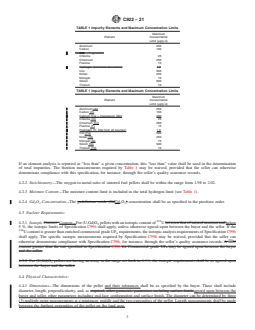
TABLE 1 Impurity Elements and Maximum Concentration Limits
Maximum
Element Concentration
Limit (μg/g U)
Aluminum 250
Carbon 100
Calcium200 + magnesium
Chlorine 25
Chromium 250
Fluorine 15
Hydrogen (total from all sources) 1.3
Iron 500
Nickel 250
Nitrogen 75
Silicon 500
Thorium 10
TABLE 1 Impurity Elements and Maximum Concentration Limits
Maximum
Element Concentration
Limit (μg/g U)
Aluminum (Al) 250
Carbon (C) 100
Calcium (Ca) + magnesium (Mg) 200
Chlorine (Cl) 25
Chromium (Cr) 250
Fluorine (F) 15
Hydrogen (H, total from all sources) 1.3
Iron (Fe) 500
Nickel (Ni) 250
Nitrogen (N) 75
Silicon (Si) 500
Thorium (Th) 10
If an element analysis is reported as “less than” a given concentration, this “less than” value shall be used in the determination
of total impurities. The thorium measurements required by Table 1 may be waived, provided that the seller can otherwise
demonstrate compliance with this specification, for instance, through the seller’s quality assurance records.
4.2.2 Stoichiometry—The oxygen-to-metal ratio of sintered fuel pellets shall be within the range from 1.98 to 2.02.
4.2.3 Moisture Content—The moisture content limit is included in the total hydrogen limit (see Table 1).
4.2.4 Gd O Concentration—The gadolinium oxide (GdGd O ) concentration shall be as specified in the purchase order.
2 3 2 3
4.3 Nuclear Requirements:
4.3.1 Isotopic Content: Content—For (U,Gd)O pellets with an isotopic content of U between that of natural uranium and below
5 %, the isotopic limits of Specification C996 shall apply, unless otherwise agreed upon between the buyer and the seller. If the
U content is greater than enriched commercial grade UF requirements, the isotopic analysis requirements of Specification C996
shall apply. The specific isotopic measurements required by Specification C996 may be waived, provided that the seller can
otherwise demonstrate compliance with Specification C996, for instance, through the seller’s quality assurance records. A U
content greater than the one specified in Specification C996 for Commercial grade UF may be agreed upon between the buyer
and the seller.
4.3.2 For (U,Gd)O pellets not having an assay in the range set forth in 4.3.1, the isotopic requirements shall be as agreed upon
between the buyer and the seller.
4.4 Physical Characteristics:
4.4.1 Dimensions—The dimensions of the pellet and their tolerances shall be as specified by the buyer. These shall include
diameter, length, perpendicularity, and, as required, other geometric parameters including surface finish.agreed upon between the
buyer and seller, other parameters including end-face configuration and surface finish. The diameter can be determined by three
(3) multiple-point measurements at a minimum: middle and the two extremities of the pellet. Length measurements shall be made
between the furthest extremities of the pellet on the land area.
C922 − 21
4.4.2 Pellet Density—The density and tolerance of sintered pellets shall be as specified by the buyer. The theoretical density for
UO of natural isotopic content shall be considered to be 10.96 g/cm . The theoretical density for the (U,Gd)O shall be determined
2 2
as agreed upon between the buyer and the seller.seller (see Note 1). Density measurements shall be made by th
...