

ASTM D6283-21
(Test Method)Standard Test Method for Tuft Element Length of Uncoated Pile Yarn Floor Coverings
General Information
- Abstract
SIGNIFICANCE AND USE
5.1 The determination of the tuft length of pile yarn floor covering is useful in quality and cost control during the manufacture of pile yarn floor covering. Both appearance and performance can be affected by changes in this characteristic.
5.2 In case there are disputable differences between reported test results for two or more laboratories, comparative tests should be performed to determine if there is a statistical bias between them, using competent statistical assistance. At a minimum, test samples should be used that are as homogeneous as possible, that are drawn from the material from which disputable test results were obtained, and that are assigned randomly in equal numbers to each laboratory for testing. The test results from the two laboratories should be compared using a statistical test for unpaired data, at a probability level chosen prior to the testing series. If a bias is found, either its cause must be found and corrected, or future test results must be adjusted in consideration of the known bias.
SCOPE
1.1 This test method covers the measurement of tuft length and pile yarn length of uncoated pile floor coverings.
1.2 Usually the tuft elements measured as directed in this test method will each be bound at only one binding site, but this test method also may be used for tuft elements bound at more than one binding site, provided that every tuft element measured is bound at the same number of binding sites.
1.3 The values stated in inch-pound units are to be regarded as standard. The values given in parentheses are mathematical conversions to SI units that are provided for information only and are not considered standard.
1.4 This standard does not purport to address all of the safety concerns, if any, associated with its use. It is the responsibility of the user of this standard to establish appropriate safety, health, and environmental practices and determine the applicability of regulatory limitations prior to use.
1.5 This international standard was developed in accordance with internationally recognized principles on standardization established in the Decision on Principles for the Development of International Standards, Guides and Recommendations issued by the World Trade Organization Technical Barriers to Trade (TBT) Committee.
- Status
- Published
- Publication Date
- 31-Dec-2020
- Technical Committee
- D13 - Textiles
- Drafting Committee
- D13.21 - Pile Floor Coverings
Buy Documents

ASTM D6283-21 - Standard Test Method for Tuft Element Length of Uncoated Pile Yarn Floor Coverings
REDLINE ASTM D6283-21 - Standard Test Method for Tuft Element Length of Uncoated Pile Yarn Floor Coverings
Overview
ASTM D6283-21 is the Standard Test Method for Tuft Element Length of Uncoated Pile Yarn Floor Coverings, developed by ASTM International. This method outlines the process for accurately measuring the length of tuft elements and pile yarn in uncoated textile floor coverings such as carpets and rugs. The standard is essential for quality and cost control during the manufacturing of pile yarn floor coverings, as both the appearance and performance of the final product can be greatly affected by variations in tuft length.
Key Topics
Scope of Measurement:
The standard applies to uncoated pile floor coverings, including both cut and loop pile yarn types, and can be used whether tuft elements are bound at one or more binding sites, provided consistency in sampling.Sampling Procedures:
Clear guidance is provided on how to select representative specimens from production rolls, addressing variability both within and between rolls through random sampling techniques.Apparatus and Equipment:
Mechanical requirements include a grooved specimen holder, a scale graduated in small increments, a magnifying glass, and sharp scissors. Tuft elements are placed in a grooved holder and measured precisely to ensure repeatability.Test Process:
The process involves careful removal and straightening of tuft elements, placement within the apparatus, and measuring the length using a graduated scale and magnification to reduce error.Statistical Validation:
In case of disputes between laboratories, statistical methods are recommended to compare results, identify bias, and ensure laboratory consistency for more reliable outcomes.Reporting Requirements:
Reports should state the sample type, tuft characteristics (cut or loop pile), sampling methods, and the average tuft element length for each group.Units of Measurement:
Inch-pound units are considered standard, with SI values provided for reference only.
Applications
ASTM D6283-21 is widely used in:
Carpet and Textile Manufacturing:
Controlling and monitoring tuft length during production helps meet product specifications and desired level of quality. This contributes to both the visual appeal and functional performance of carpeted floor coverings.Quality Assurance and Inspection:
Manufacturers and third-party laboratories use this standardized method to evaluate product consistency across multiple batches, improving customer satisfaction and meeting contractual and regulatory requirements.Cost Control:
Understanding and managing tuft length helps in raw material estimation, minimizing waste and optimizing production for economic efficiency.Comparative Testing:
Essential in resolving disputes in test results between different laboratories by establishing a repeatable framework for test design and statistical evaluation.
Related Standards
For users of ASTM D6283-21, the following related ASTM standards may also be relevant:
- ASTM D123 - Terminology Relating to Textiles
- ASTM D1776 - Practice for Conditioning and Testing Textiles
- ASTM D5684 - Terminology Relating to Pile Floor Coverings
These standards provide additional definitions, conditioning practices, and detailed terminology, supporting comprehensive testing and quality control in the textile industry.
Keywords: ASTM D6283-21, tuft element length, pile yarn floor covering, carpet testing, textile floor covering, quality control, laboratory testing, ASTM standards, tuft measurement, textile manufacturing
Relations
- Effective Date
- 01-Jul-2019
- Effective Date
- 15-May-2019
- Effective Date
- 01-Mar-2017
- Effective Date
- 15-Sep-2015
- Effective Date
- 01-Sep-2015
- Effective Date
- 01-Apr-2015
- Effective Date
- 15-Jun-2013
- Effective Date
- 15-Jun-2013
- Effective Date
- 15-May-2013
- Effective Date
- 01-Jul-2012
- Effective Date
- 01-Feb-2012
- Effective Date
- 01-Feb-2012
- Effective Date
- 01-Jun-2010
- Effective Date
- 15-Jan-2009
- Effective Date
- 15-Jan-2009
Buy Documents
ASTM D6283-21 - Standard Test Method for Tuft Element Length of Uncoated Pile Yarn Floor Coverings
REDLINE ASTM D6283-21 - Standard Test Method for Tuft Element Length of Uncoated Pile Yarn Floor Coverings
Frequently Asked Questions
ASTM D6283-21 is a standard published by ASTM International. Its full title is "Standard Test Method for Tuft Element Length of Uncoated Pile Yarn Floor Coverings". This standard covers: SIGNIFICANCE AND USE 5.1 The determination of the tuft length of pile yarn floor covering is useful in quality and cost control during the manufacture of pile yarn floor covering. Both appearance and performance can be affected by changes in this characteristic. 5.2 In case there are disputable differences between reported test results for two or more laboratories, comparative tests should be performed to determine if there is a statistical bias between them, using competent statistical assistance. At a minimum, test samples should be used that are as homogeneous as possible, that are drawn from the material from which disputable test results were obtained, and that are assigned randomly in equal numbers to each laboratory for testing. The test results from the two laboratories should be compared using a statistical test for unpaired data, at a probability level chosen prior to the testing series. If a bias is found, either its cause must be found and corrected, or future test results must be adjusted in consideration of the known bias. SCOPE 1.1 This test method covers the measurement of tuft length and pile yarn length of uncoated pile floor coverings. 1.2 Usually the tuft elements measured as directed in this test method will each be bound at only one binding site, but this test method also may be used for tuft elements bound at more than one binding site, provided that every tuft element measured is bound at the same number of binding sites. 1.3 The values stated in inch-pound units are to be regarded as standard. The values given in parentheses are mathematical conversions to SI units that are provided for information only and are not considered standard. 1.4 This standard does not purport to address all of the safety concerns, if any, associated with its use. It is the responsibility of the user of this standard to establish appropriate safety, health, and environmental practices and determine the applicability of regulatory limitations prior to use. 1.5 This international standard was developed in accordance with internationally recognized principles on standardization established in the Decision on Principles for the Development of International Standards, Guides and Recommendations issued by the World Trade Organization Technical Barriers to Trade (TBT) Committee.
SIGNIFICANCE AND USE 5.1 The determination of the tuft length of pile yarn floor covering is useful in quality and cost control during the manufacture of pile yarn floor covering. Both appearance and performance can be affected by changes in this characteristic. 5.2 In case there are disputable differences between reported test results for two or more laboratories, comparative tests should be performed to determine if there is a statistical bias between them, using competent statistical assistance. At a minimum, test samples should be used that are as homogeneous as possible, that are drawn from the material from which disputable test results were obtained, and that are assigned randomly in equal numbers to each laboratory for testing. The test results from the two laboratories should be compared using a statistical test for unpaired data, at a probability level chosen prior to the testing series. If a bias is found, either its cause must be found and corrected, or future test results must be adjusted in consideration of the known bias. SCOPE 1.1 This test method covers the measurement of tuft length and pile yarn length of uncoated pile floor coverings. 1.2 Usually the tuft elements measured as directed in this test method will each be bound at only one binding site, but this test method also may be used for tuft elements bound at more than one binding site, provided that every tuft element measured is bound at the same number of binding sites. 1.3 The values stated in inch-pound units are to be regarded as standard. The values given in parentheses are mathematical conversions to SI units that are provided for information only and are not considered standard. 1.4 This standard does not purport to address all of the safety concerns, if any, associated with its use. It is the responsibility of the user of this standard to establish appropriate safety, health, and environmental practices and determine the applicability of regulatory limitations prior to use. 1.5 This international standard was developed in accordance with internationally recognized principles on standardization established in the Decision on Principles for the Development of International Standards, Guides and Recommendations issued by the World Trade Organization Technical Barriers to Trade (TBT) Committee.
ASTM D6283-21 is classified under the following ICS (International Classification for Standards) categories: 97.150 - Floor coverings. The ICS classification helps identify the subject area and facilitates finding related standards.
ASTM D6283-21 has the following relationships with other standards: It is inter standard links to ASTM D5684-19a, ASTM D5684-19, ASTM D123-17, ASTM D123-15b, ASTM D123-15a, ASTM D123-15, ASTM D123-13ae1, ASTM D123-13a, ASTM D123-13, ASTM D5684-12, ASTM D123-12e1, ASTM D123-12, ASTM D5684-10, ASTM D123-09, ASTM D123-09e1. Understanding these relationships helps ensure you are using the most current and applicable version of the standard.
ASTM D6283-21 is available in PDF format for immediate download after purchase. The document can be added to your cart and obtained through the secure checkout process. Digital delivery ensures instant access to the complete standard document.
Standards Content (Sample)
This international standard was developed in accordance with internationally recognized principles on standardization established in the Decision on Principles for the
Development of International Standards, Guides and Recommendations issued by the World Trade Organization Technical Barriers to Trade (TBT) Committee.
Designation: D6283 − 21
Standard Test Method for
Tuft Element Length of Uncoated Pile Yarn Floor Coverings
This standard is issued under the fixed designation D6283; the number immediately following the designation indicates the year of
original adoption or, in the case of revision, the year of last revision.Anumber in parentheses indicates the year of last reapproval.A
superscript epsilon (´) indicates an editorial change since the last revision or reapproval.
1. Scope 3.1.1 The following terms are relevant to this standard:
carpet, cut pile yarn floor covering, finished, finished pile yarn
1.1 This test method covers the measurement of tuft length
floor covering, floor covering, loop pile yarn floor covering,
and pile yarn length of uncoated pile floor coverings.
pile, pile yarn floor covering, textile floor covering, tuft, tuft
1.2 Usually the tuft elements measured as directed in this
element, tuft leg, tuft length, tufted fabric.
test method will each be bound at only one binding site, but
3.2 For definitions of other terms related to textiles, refer to
this test method also may be used for tuft elements bound at
Terminology D123.
more than one binding site, provided that every tuft element
measured is bound at the same number of binding sites.
4. Summary of Test Method
1.3 The values stated in inch-pound units are to be regarded
4.1 The individual tuft elements of like character (cut or
as standard. The values given in parentheses are mathematical
loop,andheight)areremovedfromthetestsampleandplaced,
conversions to SI units that are provided for information only
one at a time, in a grooved holder that maintains the tuft fibers
and are not considered standard.
in a straight line while the length of the tuft element is
1.4 This standard does not purport to address all of the
measured with a graduated scale and a magnifying glass.
safety concerns, if any, associated with its use. It is the
4.2 In loop pile yarn floor covering, adjacent elements are
responsibility of the user of this standard to establish appro-
first separated by cutting the connecting loops at the midpoint
priate safety, health, and environmental practices and deter-
of the bend with sharp scissors before the tuft elements are
mine the applicability of regulatory limitations prior to use.
withdrawn from the backing fabric.
1.5 This international standard was developed in accor-
dance with internationally recognized principles on standard-
5. Significance and Use
ization established in the Decision on Principles for the
Development of International Standards, Guides and Recom-
5.1 The determination of the tuft length of pile yarn floor
mendations issued by the World Trade Organization Technical
covering is useful in quality and cost control during the
Barriers to Trade (TBT) Committee.
manufacture of pile yarn floor covering. Both appearance and
performance can be affected by changes in this characteristic.
2. Referenced Documents
5.2 Incasetherearedisputabledifferencesbetweenreported
2.1 ASTM Standards:
test results for two or more laboratories, comparative tests
D123Terminology Relating to Textiles
should be performed to determine if there is a statistical bias
D1776Practice for Conditioning and Testing Textiles
between them, using competent statistical assistance. At a
D5684Terminology Relating to Pile Floor Coverings
minimum, test samples should be used that are as homoge-
neousaspossible,thataredrawnfromthematerialfromwhich
3. Terminology
disputable test results were obtained, and that are assigned
3.1 FordefinitionsoftermsrelatingtoPileFloorCoverings, randomly in equal numbers to each laboratory for testing. The
D13.21, refer to Terminology D5684. testresultsfromthetwolaboratoriesshouldbecomparedusing
a statistical test for unpaired data, at a probability level chosen
prior to the testing series. If a bias is found, either its cause
must be found and corrected, or future test results must be
ThistestmethodisunderthejurisdictionofASTMCommitteeD13onTextiles
and is the direct responsibility of Subcommittee D13.21 on Pile Floor Coverings.
adjusted in consideration of the known bias.
Current edition approved Jan. 1, 2021. Published January 2021. Originally
approved in 1998. Last previous edition approved in 2012 as D6283–12. DOI:
6. Apparatus
10.1520/D6283-21.
For referenced ASTM standards, visit the ASTM website, www.astm.org, or
6.1 Grooved Specimen Holders—The holder shall be of a
contact ASTM Customer Service at service@astm.org. For Annual Book of ASTM
length at least 10% longer than the longest tuft element to be
Standards volume information, refer to the standard’s Document Summary page on
the ASTM website. measured.A4 in. (100 mm) length normally will be adequate.
Copyright © ASTM International, 100 Barr Harbor Drive, PO Box C700, West Conshohocken, PA 19428-2959. United States
D6283 − 21
7.4 Test SampleArea—Thetestsamplearea(s)isdesignated
on the laboratory sample as follows.
7.4.1 For laboratory samples 120 in. (3000 mm) wide or
wider, designate three test sample areas, one from each edge
portion, no nearer to the edge than 5% of the pile yarn floor
covering width and one from the center portion.
7.4.2 For laboratory samples less than 120 in. (3000 mm)
and at least 60 in. (1500 mm) wide, designate two test sample
areas, one from each edge portion no nearer to the edge than
5% of the pile yarn floor covering width.
7.4.3 For laboratory samples less than 60 in. (1500 mm)
wide, or when a full width is not available, designate one test
sample area that includes the entire piece except no nearer to
eitheredgethan5%ofthewidthofthepileyarnfloorcovering
FIG. 1 Cross-Section of Tufted Pile Yarn Floor Covering
width.
7.5 Test Specimens—For each like characteristic, cut pile,
6.1.1 The grooves shall be a V-shaped cross-section with a
loop pile, and each tuft height of interest randomly select ten
1.05 rad (60°) angle at the bottom. The depth of the grooves
test specimens from the laboratory sample as directed in
and width across the top of the grooves should accommodate a
Section 9. A test specimen is one tuft element.
variety of yarns according to the following example:
7.5.1 Atest result is the average of the measurements made
Yarns Groove Widths, in. (mm)
onasetoftentestspecimensforagivencharacteristic.Fortest
Coarse 0.18 (4.6)
Medium 0.13 (3.3)
sampleareasdescribedin7.4.1,threesetsoftenmeasurements
Fine 0.08 (2.0)
are averaged to represent the laboratory sample. For the test
6.1.2 Additional grooves of intermediate width also may be
sample area described in 7.4.2, two sets of ten measurements
used.
are averaged to represent the laboratory sample. For the test
sample area described in 7.4.3, one set of ten measurements is
6.2 Scale,atleast4in.(100mm)long,graduatedin0.10-in.
averaged to represent the laboratory sample.
(2 mm) divisions.
6.2.1 If the scale is not transparent, it shall be no thicker
8. Conditioning
than 0.04 in. (1 mm).
8.1 Condition the specimens or test samples in the standard
6.3 Cover Plate, clear plastic to be used when nontranspar-
atmosphere for testing textiles in accordance with Practice
ent scale is used.
D1776.
6.4 Magnifying Glass, 2× to 5×, mounted above the holder
topermitcenteringtheglassimmediatelyabovethecutendsof
9. Tuft Element Selection
the tuft to avoid parallax in reading the scale.
9.1 For each characteristic of interest, select at random ten
6.5 Scissors, with sharp points.
test specimens from each test sample area as described in 9.2
– 9.4.
7. Sampling
9.2 For laboratory samples having three sample test areas,
7.1 The basic sampling unit of uncoated pile yarn floor
selectatrandomfourtuftelementsfromthemiddletestsample
covering is a production roll
...
This document is not an ASTM standard and is intended only to provide the user of an ASTM standard an indication of what changes have been made to the previous version. Because
it may not be technically possible to adequately depict all changes accurately, ASTM recommends that users consult prior editions as appropriate. In all cases only the current version
of the standard as published by ASTM is to be considered the official document.
Designation: D6283 − 12 D6283 − 21
Standard Test Method for
Tuft Element Length of Uncoated Pile Yarn Floor Coverings
This standard is issued under the fixed designation D6283; the number immediately following the designation indicates the year of
original adoption or, in the case of revision, the year of last revision. A number in parentheses indicates the year of last reapproval. A
superscript epsilon (´) indicates an editorial change since the last revision or reapproval.
1. Scope
1.1 This test method covers the measurement of tuft length and pile yarn length of uncoated pile floor coverings.
1.2 Usually the tuft elements measured as directed in this test method will each be bound at only one binding site, but this test
method also may be used for tuft elements bound at more than one binding site, provided that every tuft element measured is bound
at the same number of binding sites.
1.3 The values stated in inch-pound units are to be regarded as standard. The values given in parentheses are mathematical
conversions to SI units that are provided for information only and are not considered standard.
1.4 This practicestandard does not purport to address all of the safety concerns, if any, associated with its use. It is the
responsibility of the user of this practicestandard to establish appropriate safety safety, health, and healthenvironmental practices
and determine the applicability of regulatory limitations prior to use.
1.5 This international standard was developed in accordance with internationally recognized principles on standardization
established in the Decision on Principles for the Development of International Standards, Guides and Recommendations issued
by the World Trade Organization Technical Barriers to Trade (TBT) Committee.
2. Referenced Documents
2.1 ASTM Standards:
D123 Terminology Relating to Textiles
D1776 Practice for Conditioning and Testing Textiles
D2904 Practice for Interlaboratory Testing of a Textile Test Method that Produces Normally Distributed Data (Withdrawn 2008)
D2906 Practice for Statements on Precision and Bias for Textiles (Withdrawn 2008)
D5684 Terminology Relating to Pile Floor Coverings
3. Terminology
3.1 For definitions of terms relating to Pile Floor Coverings, D13.21, refer to Terminology D5684.
3.1.1 The following terms are relevant to this standard: carpet, cut pile yarn floor covering, finished, finished pile yarn floor
covering, floor covering, loop pile yarn floor covering, pile, pile yarn floor covering, textile floor covering, tuft, tuft element, tuft
leg, tuft length, tufted fabric.
This test method is under the jurisdiction of ASTM Committee D13 on Textiles and is the direct responsibility of Subcommittee D13.21 on Pile Floor Coverings.
Current edition approved Feb. 1, 2012Jan. 1, 2021. Published March 2012January 2021. Originally approved in 1998. Last previous edition approved in 20052012 as
D6283–05.D6283–12. DOI: 10.1520/D6283-12.10.1520/D6283-21.
For referenced ASTM standards, visit the ASTM website, www.astm.org, or contact ASTM Customer Service at service@astm.org. For Annual Book of ASTM Standards
volume information, refer to the standard’s Document Summary page on the ASTM website.
Copyright © ASTM International, 100 Barr Harbor Drive, PO Box C700, West Conshohocken, PA 19428-2959. United States
D6283 − 21
3.2 For definitions of other terms related to textiles, refer to Terminology D123.
4. Summary of Test Method
4.1 The individual tuft elements of like character (cut or loop, and height) are removed from the test sample and placed, one at
a time, in a grooved holder that maintains the tuft fibers in a straight line while the length of the tuft element is measured with
a graduated scale and a magnifying glass.
4.2 In loop pile yarn floor covering, adjacent elements are first separated by cutting the connecting loops at the midpoint of the
bend with sharp scissors before the tuft elements are withdrawn from the backing fabric.
5. Significance and Use
5.1 The determination of the tuft length of pile yarn floor covering is useful in quality and cost control during the manufacture
of pile yarn floor covering. Both appearance and performance can be affected by changes in this characteristic.
5.2 In case there are disputable differences between reported test results for two or more laboratories, comparative tests should
be performed to determine if there is a statistical bias between them, using competent statistical assistance. At a minimum, test
samples should be used that are as homogeneous as possible, that are drawn from the material from which disputable test results
were obtained, and that are assigned randomly in equal numbers to each laboratory for testing. The test results from the two
laboratories should be compared using a statistical test for unpaired data, at a probability level chosen prior to the testing series.
If a bias is found, either its cause must be found and corrected, or future test results must be adjusted in consideration of the known
bias.
6. Apparatus
6.1 Grooved Specimen Holders—The holder shall be of a length at least 10 % longer than the longest tuft element to be measured.
A 4 in. (100 mm) length normally will be adequate.
6.1.1 The grooves shall be a V-shaped cross-section with a 1.05 rad (60°) angle at the bottom. The depth of the grooves and width
across the top of the grooves should accommodate a variety of yarns according to the following example:
Yarns Groove Widths, in. (mm)
Coarse 0.18 (4.6)
Medium 0.13 (3.3)
Fine 0.08 (2.0)
6.1.2 Additional grooves of intermediate width also may be used.
6.2 Scale, at least 4 in. (100 mm) long, graduated in 0.10-in. (2 mm) divisions.
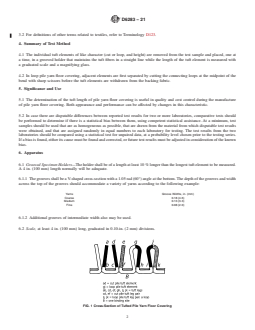
FIG. 1 Cross-Section of Tufted Pile Yarn Floor Covering
D6283 − 21
6.2.1 If the scale is not transparent, it shall be no thicker than 0.04 in. (1 mm).
6.3 Cover Plate, clear plastic to be used when nontransparent scale is used.
6.4 Magnifying Glass, 2× to 5×, mounted above the holder to permit centering the glass immediately above the cut ends of the
tuft to avoid parallax in reading the scale.
6.5 Scissors, with sharp points.
7. Sampling
7.1 The basic sampling unit of uncoated pile yarn floor covering is a production roll.
7.2 Lot Sample—As a lot sample for acceptance testing, take at random the number of rolls, or pieces, of pile yarn floor covering
as directed in an applicable material specification or other agreement between the purchaser and the supplier. Consider the rolls,
or pieces, of pile yarn floor covering to be the primary sampling units. In the absence of such agreement, take one roll or piece
from the lot to be tested.
NOTE 1—An agreement between the purchaser and supplier requires taking into account the variability between rolls or pieces of pile yarn floor covering
and between specimens from a roll or pieces of pile yarn floor covering to provide a sampling plan with a meaningful producer’s risk, consumer’s risk,
acceptable quality level, and limiting quality level.
7.3 Test Sample—The test sample shall consist of a full width section of pile yarn floor covering cut from one end of each roll
in the lot sample and shall be at least 4 in. (100 mm) longer than the specimens required for the tests being conducted. Do not
cut any laboratory sample from the seam end of the production roll.
7.4 Test Sample Area—The test sample area(s) is designated on the laboratory sample as follows.
7.4.1 For laboratory samples 120 in. (3000 mm) wide or wider, designate three test sample areas, one from each edge portion, no
nearer to the edge than 5 % of the pile yarn floor covering width and one from the center portion.
7.4.2 For laboratory samples less than 120 in. (3000 mm) and at least 60 in. (1500 mm) wide, designate two test sample areas,
one from each edge portion no nearer to the edge than 5 % of the pile yarn floor covering width.
7.4.3 For laboratory samples less than 60 in. (1500 mm) wide, or when a full width is not available, designate one test sample
area that includes the entire piece except no nearer to either edge than 5 % of the width of the pile yarn floor covering width.
7.5 Test Specimens—For each l
...