

ASTM D4337-89(2017)
(Test Method)Standard Test Methods for Analysis of Linear Detergent Alkylates
General Information
- Abstract
SIGNIFICANCE AND USE
3.1 These test methods are suitable for setting specifications on linear detergent alkylates and for quality control where these alkylates are manufactured or are used in a manufacturing process.
3.2 The gas chromatography test is useful in identifying linear detergent alkylates produced by the various manufacturing processes and for determining the applicability of a linear detergent alkylate to a particular end use. Test conditions have been optimized for resolution of the C-9 to C-15 linear detergent alkylates and the presence of higher or lower chain lengths will be readily apparent but may produce erroneous results. The tetralin structures have not been sufficiently identified to allow determination of tetralins, and small unidentified components are reported as tetralins and unidentifieds.
3.3 Some linear detergent alkylates use a manufacturing process with an organic chloride as a precursor. This test may be used to ensure that the chloride content of the alkylate is not excessive for a particular end use.
3.4 The platinum-cobalt color test is useful in determining that the color of the linear detergent alkylate will not contribute to the color of the end use product.
3.5 The refractive index and specific gravity tests are possible aids in the identification of linear detergent alkylates and in evaluating alkylates for gross contaminants.
3.6 The water test is suitable for determining that linear detergent alkylates do not contain amounts of water deleterious to further processing.
SCOPE
1.1 These test methods cover chemical and physical tests applicable to linear detergent alkylates, evaluating those properties which characterize linear detergent alkylates with respect to its suitability for desired uses.
Note 1: Linear detergent alkylates comprises linear alkylbenzenes prepared by varying processes of varying linear alkyl chain length. The alkylate is sulfonated for surfactant use, the largest application being in detergent products. Careful control of linear detergent alkylate characteristics is desired; during sulfonation, variations of the sulfonate can occur that may result in either desirable or undesirable end-use properties.
1.2 The test methods appear as follows:
Section
Composition by Gas Chromatography
7 – 15
Chlorides
16 – 27
Color
28 – 30
Refractive Index
31 – 33
Specific Gravity
34 – 36
Water
37 – 39
1.3 This standard does not purport to address all of the safety concerns, if any, associated with its use. It is the responsibility of the user of this standard to establish appropriate safety and health practices and determine the applicability of regulatory limitations prior to use. Material Safety Data Sheets are available for reagents and materials. Review them for hazards prior to usage. See also Note 1 and Section 21.
- Status
- Published
- Publication Date
- 31-Dec-2016
- Technical Committee
- D12 - Soaps and Other Detergents
Overview
ASTM D4337-89(2017): Standard Test Methods for Analysis of Linear Detergent Alkylates provides a comprehensive set of chemical and physical tests applicable to linear detergent alkylates, particularly linear alkylbenzenes. These detergent alkylates are essential as precursors for surfactant production, with the largest application in the manufacture of detergents. The standard is designed to ensure the suitability and quality of these materials both during and after the manufacturing process, helping producers and users maintain rigorous quality control and meet industry specifications.
Key Topics
The standard details several important test methods relevant to the analysis of linear detergent alkylates:
- Gas Chromatography: Used to determine the composition and chain length distribution (C-9 to C-15) of linear detergent alkylates, providing critical information for product identification and qualification.
- Chloride Content: Enables detection of organic chlorides, ensuring that the presence of chloride ions is within permissible limits, which is vital for product performance and end-use applications.
- Color (Platinum-Cobalt Scale): Establishes whether the color of the alkylate will impact the appearance of the final product, especially significant for applications where visual quality is important.
- Refractive Index and Specific Gravity: Aids in product identification and the detection of contamination, assisting manufacturers in verifying product consistency.
- Water Content: Determines the water content of the alkylates, which is important as excess moisture can adversely affect further chemical processing or product stability.
Applications
ASTM D4337-89(2017) is indispensable across the detergent manufacturing supply chain:
- Quality Control: Provides the analytical framework for batch testing of linear detergent alkylates, allowing manufacturers to monitor compliance with internal and customer specifications.
- Product Development: Assists R&D teams in evaluating new raw materials or formulations for suitability in different detergent applications.
- Process Optimization: Enables process engineers to track changes in key physical or chemical properties, helping optimize sulfonation and other downstream processes.
- Regulatory Compliance: Supports documentation and traceability necessary for meeting both domestic and international regulatory requirements regarding material composition and purity.
- End-Use Assurance: Empowers detergent producers and surfactant formulators to guarantee product performance, stability, and safety for consumers, especially regarding purity and composition.
Related Standards
Several related ASTM standards complement ASTM D4337-89(2017) by offering additional analytical techniques or specifications:
- ASTM D1209: Test Method for Color of Clear Liquids (Platinum-Cobalt Scale)
- ASTM D1218: Test Method for Refractive Index and Refractive Dispersion of Hydrocarbon Liquids
- ASTM D1364: Test Method for Water in Volatile Solvents (Karl Fischer Reagent Titration Method)
- ASTM D1122: Test Method for Density or Relative Density of Engine Coolant Concentrates
- ASTM D1193: Specification for Reagent Water (for laboratory use in analysis)
These standards together form a robust analytical toolkit for ensuring the integrity and suitability of linear detergent alkylates in various applications, especially as critical ingredients in effective and high-quality detergents.
By adhering to ASTM D4337-89(2017), manufacturers and users of linear detergent alkylates can ensure product quality, improve manufacturing consistency, and meet rigorous industry and regulatory requirements in detergent and surfactant production. This standard is a crucial reference for anyone involved in the analysis, production, or use of linear alkylbenzenes and related detergent alkylate compounds.
Relations
- Effective Date
- 01-Jan-2017
- Effective Date
- 01-Apr-2017
- Effective Date
- 01-Apr-2016
- Effective Date
- 01-May-2013
- Effective Date
- 01-Apr-2008
- Effective Date
- 01-Nov-2007
- Effective Date
- 01-Jun-2007
- Effective Date
- 01-Mar-2006
- Effective Date
- 15-May-2005
- Effective Date
- 15-May-2005
- Effective Date
- 10-Dec-2002
- Effective Date
- 10-Jun-2002
- Effective Date
- 10-May-2000
- Effective Date
- 10-Jun-1999
- Effective Date
- 10-Feb-1999
Get Certified
Connect with accredited certification bodies for this standard

ECOCERT
Organic and sustainability certification.

Eurofins Food Testing Global
Global leader in food, environment, and pharmaceutical product testing.

Intertek Bangladesh
Intertek certification and testing services in Bangladesh.
Sponsored listings
Frequently Asked Questions
ASTM D4337-89(2017) is a standard published by ASTM International. Its full title is "Standard Test Methods for Analysis of Linear Detergent Alkylates". This standard covers: SIGNIFICANCE AND USE 3.1 These test methods are suitable for setting specifications on linear detergent alkylates and for quality control where these alkylates are manufactured or are used in a manufacturing process. 3.2 The gas chromatography test is useful in identifying linear detergent alkylates produced by the various manufacturing processes and for determining the applicability of a linear detergent alkylate to a particular end use. Test conditions have been optimized for resolution of the C-9 to C-15 linear detergent alkylates and the presence of higher or lower chain lengths will be readily apparent but may produce erroneous results. The tetralin structures have not been sufficiently identified to allow determination of tetralins, and small unidentified components are reported as tetralins and unidentifieds. 3.3 Some linear detergent alkylates use a manufacturing process with an organic chloride as a precursor. This test may be used to ensure that the chloride content of the alkylate is not excessive for a particular end use. 3.4 The platinum-cobalt color test is useful in determining that the color of the linear detergent alkylate will not contribute to the color of the end use product. 3.5 The refractive index and specific gravity tests are possible aids in the identification of linear detergent alkylates and in evaluating alkylates for gross contaminants. 3.6 The water test is suitable for determining that linear detergent alkylates do not contain amounts of water deleterious to further processing. SCOPE 1.1 These test methods cover chemical and physical tests applicable to linear detergent alkylates, evaluating those properties which characterize linear detergent alkylates with respect to its suitability for desired uses. Note 1: Linear detergent alkylates comprises linear alkylbenzenes prepared by varying processes of varying linear alkyl chain length. The alkylate is sulfonated for surfactant use, the largest application being in detergent products. Careful control of linear detergent alkylate characteristics is desired; during sulfonation, variations of the sulfonate can occur that may result in either desirable or undesirable end-use properties. 1.2 The test methods appear as follows: Section Composition by Gas Chromatography 7 – 15 Chlorides 16 – 27 Color 28 – 30 Refractive Index 31 – 33 Specific Gravity 34 – 36 Water 37 – 39 1.3 This standard does not purport to address all of the safety concerns, if any, associated with its use. It is the responsibility of the user of this standard to establish appropriate safety and health practices and determine the applicability of regulatory limitations prior to use. Material Safety Data Sheets are available for reagents and materials. Review them for hazards prior to usage. See also Note 1 and Section 21.
SIGNIFICANCE AND USE 3.1 These test methods are suitable for setting specifications on linear detergent alkylates and for quality control where these alkylates are manufactured or are used in a manufacturing process. 3.2 The gas chromatography test is useful in identifying linear detergent alkylates produced by the various manufacturing processes and for determining the applicability of a linear detergent alkylate to a particular end use. Test conditions have been optimized for resolution of the C-9 to C-15 linear detergent alkylates and the presence of higher or lower chain lengths will be readily apparent but may produce erroneous results. The tetralin structures have not been sufficiently identified to allow determination of tetralins, and small unidentified components are reported as tetralins and unidentifieds. 3.3 Some linear detergent alkylates use a manufacturing process with an organic chloride as a precursor. This test may be used to ensure that the chloride content of the alkylate is not excessive for a particular end use. 3.4 The platinum-cobalt color test is useful in determining that the color of the linear detergent alkylate will not contribute to the color of the end use product. 3.5 The refractive index and specific gravity tests are possible aids in the identification of linear detergent alkylates and in evaluating alkylates for gross contaminants. 3.6 The water test is suitable for determining that linear detergent alkylates do not contain amounts of water deleterious to further processing. SCOPE 1.1 These test methods cover chemical and physical tests applicable to linear detergent alkylates, evaluating those properties which characterize linear detergent alkylates with respect to its suitability for desired uses. Note 1: Linear detergent alkylates comprises linear alkylbenzenes prepared by varying processes of varying linear alkyl chain length. The alkylate is sulfonated for surfactant use, the largest application being in detergent products. Careful control of linear detergent alkylate characteristics is desired; during sulfonation, variations of the sulfonate can occur that may result in either desirable or undesirable end-use properties. 1.2 The test methods appear as follows: Section Composition by Gas Chromatography 7 – 15 Chlorides 16 – 27 Color 28 – 30 Refractive Index 31 – 33 Specific Gravity 34 – 36 Water 37 – 39 1.3 This standard does not purport to address all of the safety concerns, if any, associated with its use. It is the responsibility of the user of this standard to establish appropriate safety and health practices and determine the applicability of regulatory limitations prior to use. Material Safety Data Sheets are available for reagents and materials. Review them for hazards prior to usage. See also Note 1 and Section 21.
ASTM D4337-89(2017) is classified under the following ICS (International Classification for Standards) categories: 71.100.40 - Surface active agents. The ICS classification helps identify the subject area and facilitates finding related standards.
ASTM D4337-89(2017) has the following relationships with other standards: It is inter standard links to ASTM D4337-89(2009), ASTM D1122-16(2017)e1, ASTM D1122-16, ASTM D1122-13, ASTM D1122-08, ASTM D1218-02(2007), ASTM D1364-02(2007), ASTM D1193-06, ASTM D1209-05, ASTM D1209-05e1, ASTM D1364-02, ASTM D1218-02, ASTM D1209-00, ASTM D1364-95(1999), ASTM D1193-99e1. Understanding these relationships helps ensure you are using the most current and applicable version of the standard.
ASTM D4337-89(2017) is available in PDF format for immediate download after purchase. The document can be added to your cart and obtained through the secure checkout process. Digital delivery ensures instant access to the complete standard document.
Standards Content (Sample)
This international standard was developed in accordance with internationally recognized principles on standardization established in the Decision on Principles for the
Development of International Standards, Guides and Recommendations issued by the World Trade Organization Technical Barriers to Trade (TBT) Committee.
Designation: D4337 − 89 (Reapproved 2017)
Standard Test Methods for
Analysis of Linear Detergent Alkylates
This standard is issued under the fixed designation D4337; the number immediately following the designation indicates the year of
original adoption or, in the case of revision, the year of last revision.Anumber in parentheses indicates the year of last reapproval.A
superscript epsilon (´) indicates an editorial change since the last revision or reapproval.
1. Scope EngineCoolantConcentratesandEngineCoolantsByThe
Hydrometer
1.1 These test methods cover chemical and physical tests
D1193Specification for Reagent Water
applicable to linear detergent alkylates, evaluating those prop-
D1209Test Method for Color of Clear Liquids (Platinum-
ertieswhichcharacterizelineardetergentalkylateswithrespect
Cobalt Scale)
to its suitability for desired uses.
D1218Test Method for Refractive Index and Refractive
NOTE 1—Linear detergent alkylates comprises linear alkylbenzenes
Dispersion of Hydrocarbon Liquids
prepared by varying processes of varying linear alkyl chain length. The
D1364Test Method for Water in Volatile Solvents (Karl
alkylate is sulfonated for surfactant use, the largest application being in
Fischer Reagent Titration Method)
detergent products. Careful control of linear detergent alkylate character-
istics is desired; during sulfonation, variations of the sulfonate can occur E180Practice for Determining the Precision of ASTM
that may result in either desirable or undesirable end-use properties.
Methods for Analysis and Testing of Industrial and Spe-
cialty Chemicals (Withdrawn 2009)
1.2 The test methods appear as follows:
Section
Composition by Gas Chromatography 7–15
3. Significance and Use
Chlorides 16–27
Color 28–30
3.1 Thesetestmethodsaresuitableforsettingspecifications
Refractive Index 31–33
on linear detergent alkylates and for quality control where
Specific Gravity 34–36
these alkylates are manufactured or are used in a manufactur-
Water 37–39
ing process.
1.3 This standard does not purport to address all of the
safety concerns, if any, associated with its use. It is the
3.2 The gas chromatography test is useful in identifying
responsibility of the user of this standard to establish appro-
linear detergent alkylates produced by the various manufactur-
priate safety and health practices and determine the applica-
ing processes and for determining the applicability of a linear
bility of regulatory limitations prior to use. Material Safety
detergent alkylate to a particular end use. Test conditions have
Data Sheets are available for reagents and materials. Review
been optimized for resolution of the C-9 to C-15 linear
them for hazards prior to usage. See also Note 1 and Section
detergent alkylates and the presence of higher or lower chain
21.
lengths will be readily apparent but may produce erroneous
results. The tetralin structures have not been sufficiently
2. Referenced Documents
identifiedtoallowdeterminationoftetralins,andsmalluniden-
2.1 ASTM Standards:
tified components are reported as tetralins and unidentifieds.
D270Methods of Sampling Petroleum and Petroleum Prod-
3.3 Some linear detergent alkylates use a manufacturing
ucts (Withdrawn 1984)
process with an organic chloride as a precursor. This test may
D1122Test Method for Density or Relative Density of
beusedtoensurethatthechloridecontentofthealkylateisnot
excessive for a particular end use.
These test methods are under the jurisdiction of ASTM Committee D12 on
3.4 The platinum-cobalt color test is useful in determining
Soaps and Other Detergents and are the direct responsibility of Subcommittee
thatthecolorofthelineardetergentalkylatewillnotcontribute
D12.12 on Analysis and Specifications of Soaps, Synthetics, Detergents and their
Components. to the color of the end use product.
Current edition approved Jan. 1, 2017. Published February 2017. Originally
approved in 1984. Last previous edition approved in 2009 as D4337–89(2009). 3.5 The refractive index and specific gravity tests are
DOI: 10.1520/D4337-89R17.
possible aids in the identification of linear detergent alkylates
For referenced ASTM standards, visit the ASTM website, www.astm.org, or
and in evaluating alkylates for gross contaminants.
contact ASTM Customer Service at service@astm.org. For Annual Book of ASTM
Standards volume information, refer to the standard’s Document Summary page on
3.6 The water test is suitable for determining that linear
the ASTM website.
detergentalkylatesdonotcontainamountsofwaterdeleterious
The last approved version of this historical standard is referenced on
www.astm.org. to further processing.
Copyright © ASTM International, 100 Barr Harbor Drive, PO Box C700, West Conshohocken, PA 19428-2959. United States
D4337 − 89 (2017)
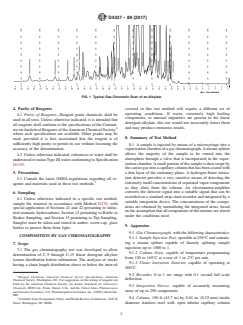
FIG. 1 Typical Gas Chromatic Scan of an Alkylate
4. Purity of Reagents covered in this test method will require a different set of
operating conditions. If water, extremely high boiling
4.1 Purity of Reagents—Reagent grade chemicals shall be
components, or unusual impurities are present in the linear
used in all tests. Unless otherwise indicated, it is intended that
detergent alkylate, this test would not necessarily detect them
all reagents shall conform to the specifications of the Commit-
4 and may produce erroneous results.
teeonAnalyticalReagentsoftheAmericanChemicalSociety,
where such specifications are available. Other grades may be
8. Summary of Test Method
used, provided it is first ascertained that the reagent is of
sufficiently high purity to permit its use without lessening the
8.1 Asample is injected by means of a microsyringe into a
accuracy of the determination.
vaporizationchamberofagaschromatograph.Astreamsplitter
allows the majority of the sample to be vented into the
4.2 Unless otherwise indicated, references to water shall be
atmosphere through a valve that is incorporated in the vapor-
understoodtomeanTypeIIIwaterconformingtoSpecification
izationchamber.Asmallportionofthesampleisthensweptby
D1193.
thecarriergasintoacapillarycolumnthathasbeencoatedwith
5. Precautions
a thin layer of the stationary phase. A hydrogen flame ioniza-
tion detector provides a very sensitive means of detecting the
5.1 Consult the latest OSHA regulations regarding all re-
extremelysmallconcentrationsofseparatedvaporcomponents
agents and materials used in these test methods.
as they elute from the column. An electrometer-amplifier
6. Sampling converts the detector signal into a suitable signal that can be
recorded on a standard strip-chart recorder and integrated by a
6.1 Unless otherwise indicated in a specific test method,
suitable integration device. The concentrations of the compo-
sample the material in accordance with Method D270, with
nents are obtained by normalizing the integrated areas, based
special application of Sections 41 and 42 pertaining to indus-
ontheassumptionthatallcomponentsofthemixtureareeluted
trial aromatic hydrocarbons, Section 12 pertaining to Bottle or
under the conditions used.
Beaker Sampling, and Section 15 pertaining to Tap Sampling.
Samples must be taken and stored in amber, screw-cap, glass
9. Apparatus
bottles to protect them from light.
9.1 Gas Chromatograph, with the following characteristics:
COMPOSITION BY GAS CHROMATOGRAPHY
9.1.1 Sample Injection Port,operableat250°Candcontain-
ing a stream splitter capable of linearly splitting sample
7. Scope
injections up to 1000 to 1.
7.1 The gas chromatography test was developed to allow
9.1.2 Column Oven, capable of temperature programming
determination of C-9 through C-15 linear detergent alkylate
from 120 to 165°C at a rate of 1 or 2°C per min.
isomer distribution before sulfonation. The analyses of stocks
9.1.3 Flame Ionization Detector, capable of operating at
having a chain length distribution above or below the interval
300°C.
9.2 Recorder, 0 to 1 mv range with 0.1 second full scale
Reagent Chemicals, American Chemical Society Specifications, American
deflection.
Chemical Society, Washington, DC. For suggestions on the testing of reagents not
listed by the American Chemical Society, see Analar Standards for Laboratory
9.3 Integration Device, capable of accurately measuring
Chemicals, BDH Ltd., Poole, Dorset, U.K., and the United States Pharmacopeia
areas of up to 250 components.
and National Formulary, U.S. Pharmacopeial Convention, Inc. (USPC), Rockville,
MD.
9.4 Column, 150 ft (45.7 m) by 0.01 in. (0.25 mm) inside
Available from Occupational Safety and Health Review Commission, 1825 K
Street, Washington, DC 20006. diameter stainless steel wall; open tubular capillary column
D4337 − 89 (2017)
coated with phenyl methyl silicone DC-550 or other column 1 min after the injection of the sample, but it must always be
that will perform required separation as indicated in Fig. 1. closed at exactly the same time after injection.
9.5 Syringe, 10-µL capacity with fixed 2-in. (5.1 cm) 12.5 Compare the sample chromatogram with the standard
needle. chromatogram (Fig. 1) and from the retention times of the
components identify all straight chain alkyl benzene isomers.
10. Reagents
Label all peaks whose identity has been established. Many
unidentified minor peaks will appear as minor constituents of
10.1 Carrier Gas, high-purity nitrogen.
the sample and may be attributed to tetralin structures. Include
10.2 Hydrogen, 99.996 mol% pure.
these peaks in the calculations and report in a pooled percent-
10.3 Compressed Air.
age as tetralins and unknowns.
11. Calibration
13. Calculations
11.1 Nocalibrationorcorrectionfactorsarenecessaryasthe
13.1 Calculate the percentage for each component by divid-
responseoftheflameionizationdetectorisessentiallyconstant
ing the area of each component by the total area of all
for aromatic hydrocarbons. The individual peak area percent-
components and multiplying by 100.
ages may be regarded as the actual weight percent in the
13.2 Calculate the total 2-phenyl isomer by summing to-
sample.
gether the 2-phenyl isomers for all chain lengths.
12. Procedure
13.3 Calculate the chain length distribution by summing
together all percentages for the identified linear alkyl benzene
12.1 Adjust the chromatograph to the following conditions:
isomers of each chain length.
Column temperature, °C (Note 2) 120 programmed to 160 at 1 to 2°C
per min
13.4 Calculate lights (components eluting before C alkyl
Injection port temperature, °C 250
benzene) by summing together the percentages of all the
Detector temperature, °C 300
Carrier gas pressure, lbf 60 components eluting before 5-phenyldecane.
Sample size (Note 3), µL 0.5to1
13.5 Calculate heavies (components eluting after C alkyl
Chart speed, cm/min 1
Hydrogen flow (Note 4), mL/min 30
benzene) by summing together all the percentages of the
Air flow (Note 4), mL/min 240
components eluting after 2-phenyltetradecane.
Range X1
Attenuator setting X4
13.6 Calculatetetralinsandunknownsbysummingtogether
Splitter (Note 3) 1000/1
the percentages of all unidentified peaks eluting between the
NOTE 2—These conditions should give adequate separation. It may be
5-phenyldecane peak and the 2-phenyltetradecane peak.
necessarytoadjustconditionsslightlytomeettheseparationcriteriaofthe
13.7 Determine the average molecular weight by assuming
sample chromatogram (Fig. 1), depending upon the performance of the
capillary column.
the tetralins and unknowns to have a molecular weight of 244.
NOTE 3—Sample size and splitter ratio should be adjusted to obtain a
Theaveragemolecularweightiscalculatedtothethirddecimal
peak height of 10 to 15 mV for the largest components.
place using the following equation:
NOTE 4—Hydrogen and air flows should be adjusted to give maximum
detector sensitivity. See instructions in instrument instruction manual.
Averagemolecularweight 5 100 2 lights (1)
@ ~
12.2 When a new column is installed, leak-test the plumb-
1heavies!/@~ C isomers/218!
( 10
ing connections by applying the operating carrier gas pressure.
The air and hydrogen connections to the detector should be
1~ C isomers/232!1~ C isomers/246!
( 11 ( 12
leak tested periodically. In particular, the hydrogen supply
should be leak-tested at the cylinder each time the cylinder is
1~ C isomers/260!1~ C isomers/274!
13 14
( (
changed, due to the hazardous nature of hydrogen gas.
1 ~ tetralins1unknowns/244!#
12.3 Wet and rinse the syringe with the sample and draw an
(
excessofliquidintothesyringebarrel.Exercisecautionthatall
14. Report
air bubbles are excluded from the liquid in the syringe.
Carefully depress the plunger until the exact amount of liquid
14.1 Report the components and average molecular weight
desired is contained in the syringe.
as specified in Table 1. Duplicate runs that agree within the
checking limits shown in Table 1 are acceptable for averaging
12.4 Open the split valve and quickly pierce the septum,
(95% confidence level).
thrusting the needle of the syringe completely into the inlet. In
the same motion quickly and completely depress the plunger.
15. Precision and Bias
Immediately withdraw the syringe and start the column oven
temperature program sequence. The split valve may be closed 15.1 The following criteria should be used for judging the
acceptability of results:
15.1.1 Repeatability (Single Analyst)— The standard devia-
Capillary column, Part 009-0354, available from Perkin-Elmer Corporation,
tionofresults(eachtheaverageofduplicates),obtainedbythe
Norwalk, CT, has been found satisfactory.
same analyst on different days, has been estimated to be the
Microsyringe No. 701, available from Hamilton Co., P. O. Box 307, Whittier,
CA, has been found satisfactory. value shown in Table 1 with the indicated degrees of freedom.
D4337 − 89 (2017)
TABLE 1 Composition by Gas Chromatography Precision Values
Repeatability Reproducibility
Level, Report To, Checking
95 % Confi- 95 % Confi-
Component
Standard Degrees of Standard Degrees of
Area % Area % Limits
dence dence
Deviation Freedom Deviation Freedom
Interval Interval
Lights 0–1 0.01 0.14 0.053 46 0.15 0.099 7 0.33
Total C-10 Isomers 0–1 0.01 0.08 0.021 13 0.06 0.138 6 0.44
5–30 0.1 0.8 0.27 26 0.8 0.37 6 1.3
Total C-11 Isomers 0–3 0.1 0.3 0.07 13 0.2 0.26 6 0.9
20–40 0.1 1.9 0.65 27 1.9 1.05 6 3.6
Total C-12 Isomers 10–45 0.1 1.3 0.34 40 1.0 0.84 6 2.9
Total C-13 Isomers 0–15 0.1 1.1 0.26 26 0.8 0.72 6 2.5
40–60 0.1 2.3 0.40 14 1.2 1.60 6 5.5
Total C-14 Isomers 0–2 0.1 0.2 0.06 19 0.2 0.38 5 1.4
4–7 0.1 0.5 0.20 6 0.7 0.50 5 1.8
20–35 0.1 1.1 0.21 12 0.6 0.76 5 2.7
Eluting After C-14 0–3 0.01 0.44 0.16 34 0.46 0.52 5 1.88
Total 2-Phenyl Isomer 10–30 0.1 1.2 0.35 47 1.0 0.54 7 1.8
A A A A A A A
Average Molecular Weight 230–265 0.1 0.9 0.25 38 0.7 0.45 51.6
A
Units are molecular weight units, not area percent.
Two such results should be considered suspect (95% confi- 18. Interferences
dence level) if they differ by more than the values in Table 1.
18.1 Sulfur in excess of 1 000 times the chlorine content.
15.1.2 Reproducibility (Multilaboratory)— The standard
18.2 Nitrogen in excess of 6.5×10 times the chlorine
deviation of results (each the average of duplicates), obtained
content.
by analysts in different laboratories, has
...