

ASTM A322-13(2018)e1
(Specification)Standard Specification for Steel Bars, Alloy, Standard Grades
General Information
- Abstract
ABSTRACT
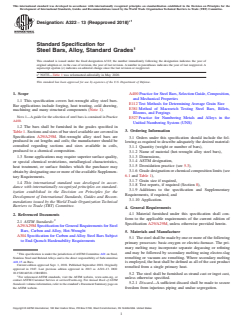
This specification covers hot-wrought alloy steel bars. The steel shall be made by one or more of the following primary processes: open-hearth, basic-oxygen, or electric-furnace. The primary melting may incorporate separate degassing or refining and may be followed by secondary melting using electro-slag remelting or vacuum arc remelting. Where secondary remelting is employed, the heat shall be defined as all of the cast product remelted from a single primary heat. The steel shall be furnished as strand cast or ingot cast. Immediately after hot forming, the bars shall be allowed to cool to a temperature below the critical range under suitable conditions to prevent imperfections caused by too rapid cooling. The bars shall be free of pipe, cracks, and flakes. Within the limits of good manufacturing and inspection practices, the bars shall be free of injurious seams, laps, segregation, or other imperfections which are due to their nature, degree, or extent, will interfere with the use of the material in machining or fabrication of suitable parts.
SCOPE
1.1 This specification covers hot-wrought alloy steel bars. Bar applications include forging, heat treating, cold drawing, machining and many structural components (Note 1).
Note 1: A guide for the selection of steel bars is contained in Practice A400.
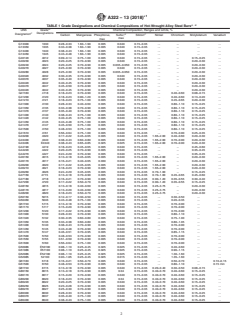
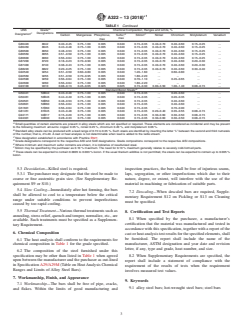
1.2 The bars shall be furnished in the grades specified in Table 1. Sections and sizes of bar steel available are covered in Specification A29/A29M. Hot-wrought alloy steel bars are produced in cut lengths and coils; the manufacturer should be consulted regarding sections and sizes available in coils, produced to a chemical composition.
1.3 Some applications may require superior surface quality, or special chemical restrictions, metallurgical characteristics, heat treatment, or surface finishes which the purchaser may obtain by designating one or more of the available Supplementary Requirements.
1.4 This international standard was developed in accordance with internationally recognized principles on standardization established in the Decision on Principles for the Development of International Standards, Guides and Recommendations issued by the World Trade Organization Technical Barriers to Trade (TBT) Committee.
- Status
- Published
- Publication Date
- 31-Aug-2018
- Technical Committee
- A01 - Steel, Stainless Steel and Related Alloys
- Drafting Committee
- A01.15 - Bars

Overview
ASTM A322-13(2018)e1 is an international standard published by ASTM International, detailing the specifications for hot-wrought alloy steel bars of standard grades. This standard ensures that steel bars produced under its guidelines meet critical requirements for quality, composition, and suitability for a variety of engineering applications. Its scope includes specification of manufacturing processes, chemical composition, and supplementary quality provisions tailored to demanding industries such as automotive, aerospace, and heavy machinery.
Key Topics
- Material Scope: The standard covers hot-wrought alloy steel bars, made by processes including open-hearth, basic-oxygen, or electric-furnace methods. It also allows for advanced melting and refining techniques.
- Product Forms: Steel bars are supplied in cut lengths or coils, in both strand-cast and ingot-cast forms, based on manufacturer and purchaser agreements.
- Grades and Composition: A wide range of standard alloy steel grades are included, as defined by chemical composition requirements. Selection of grades aligns with ASTM A29/A29M for dimensional availability and UNS system for grade designation.
- Manufacturing Requirements: Strict deoxidation (killed steel), slow cooling after hot forming, and prevention of imperfections like cracks, flakes, and seams are required. Provisions exist for additional thermal treatments and surface finishes as needed.
- Supplementary Requirements: Purchasers may require qualities like specific grain size, special surface finishing (such as pickling or blasting), straightness, coatings, and enhanced inspection protocols for applications needing superior performance.
- Inspection and Certification: Manufacturers provide certification and test reports on request, documenting compliance with chemical, physical, and supplementary specifications.
Applications
ASTM A322 alloy steel bars are pivotal in industries requiring reliable material properties and customizable quality criteria. Key application areas include:
- Forging and Heat Treating: Used as stock material for forged components requiring controlled strength and ductility.
- Machining and Fabrication: Selected for parts where consistent machinability and dimensions are crucial.
- Structural Components: Employed in automotive axles, suspension arms, gears, shafts, and other critical mechanical elements.
- Aerospace and Defense: Utilized where stringent quality, cleanliness, and surface integrity are essential.
- Bearings and Cold-Formed Parts: Certain grades tailored for anti-friction bearings or severe cold working operations.
Purchasers benefit from the flexibility to specify supplementary requirements to match part performance, from grain size to surface finish, enabling highly tailored solutions for specialized engineering challenges.
Related Standards
Reference to other ASTM standards helps ensure compatibility and proper selection:
- ASTM A29/A29M: General requirements for hot-wrought carbon and alloy steel bars, specifies available sizes, sections, and tolerances.
- ASTM A304: Alloy steel bars for end-quench hardenability requirements.
- ASTM A400: Selection guide for steel bars, including composition and mechanical properties.
- ASTM E112: Test methods for determining average grain size.
- ASTM E381: Method for macroetch testing of steel bars.
- ASTM E527: Practice for numbering metals and alloys in the Unified Numbering System (UNS).
Practical Value
ASTM A322 provides a comprehensive framework for ordering, manufacturing, and inspecting hot-wrought alloy steel bars with confidence in their chemical and mechanical reliability. By referencing ASTM A322, engineers and procurement specialists ensure consistency, quality, and international compatibility for alloy steel components used in critical applications. This standard is foundational for businesses seeking compliance and quality assurance in alloy steel procurement and downstream fabrication.
Relations
- Effective Date
- 01-Sep-2018
- Effective Date
- 01-Nov-2023
- Effective Date
- 01-Nov-2017
- Effective Date
- 01-Dec-2016
- Effective Date
- 01-Nov-2015
- Effective Date
- 15-Nov-2012
- Effective Date
- 01-May-2012
- Effective Date
- 01-May-2012
- Effective Date
- 01-Mar-2012
- Effective Date
- 01-Oct-2011
- Effective Date
- 01-Oct-2011
- Effective Date
- 01-Apr-2011
- Effective Date
- 01-Apr-2011
- Effective Date
- 01-Nov-2010
- Effective Date
- 23-Oct-2006
Get Certified
Connect with accredited certification bodies for this standard

Element Materials Technology
Materials testing and product certification.

Inštitut za kovinske materiale in tehnologije
Institute of Metals and Technology. Materials testing, metallurgical analysis, NDT.
Sponsored listings
Frequently Asked Questions
ASTM A322-13(2018)e1 is a technical specification published by ASTM International. Its full title is "Standard Specification for Steel Bars, Alloy, Standard Grades". This standard covers: ABSTRACT This specification covers hot-wrought alloy steel bars. The steel shall be made by one or more of the following primary processes: open-hearth, basic-oxygen, or electric-furnace. The primary melting may incorporate separate degassing or refining and may be followed by secondary melting using electro-slag remelting or vacuum arc remelting. Where secondary remelting is employed, the heat shall be defined as all of the cast product remelted from a single primary heat. The steel shall be furnished as strand cast or ingot cast. Immediately after hot forming, the bars shall be allowed to cool to a temperature below the critical range under suitable conditions to prevent imperfections caused by too rapid cooling. The bars shall be free of pipe, cracks, and flakes. Within the limits of good manufacturing and inspection practices, the bars shall be free of injurious seams, laps, segregation, or other imperfections which are due to their nature, degree, or extent, will interfere with the use of the material in machining or fabrication of suitable parts. SCOPE 1.1 This specification covers hot-wrought alloy steel bars. Bar applications include forging, heat treating, cold drawing, machining and many structural components (Note 1). Note 1: A guide for the selection of steel bars is contained in Practice A400. 1.2 The bars shall be furnished in the grades specified in Table 1. Sections and sizes of bar steel available are covered in Specification A29/A29M. Hot-wrought alloy steel bars are produced in cut lengths and coils; the manufacturer should be consulted regarding sections and sizes available in coils, produced to a chemical composition. 1.3 Some applications may require superior surface quality, or special chemical restrictions, metallurgical characteristics, heat treatment, or surface finishes which the purchaser may obtain by designating one or more of the available Supplementary Requirements. 1.4 This international standard was developed in accordance with internationally recognized principles on standardization established in the Decision on Principles for the Development of International Standards, Guides and Recommendations issued by the World Trade Organization Technical Barriers to Trade (TBT) Committee.
ABSTRACT This specification covers hot-wrought alloy steel bars. The steel shall be made by one or more of the following primary processes: open-hearth, basic-oxygen, or electric-furnace. The primary melting may incorporate separate degassing or refining and may be followed by secondary melting using electro-slag remelting or vacuum arc remelting. Where secondary remelting is employed, the heat shall be defined as all of the cast product remelted from a single primary heat. The steel shall be furnished as strand cast or ingot cast. Immediately after hot forming, the bars shall be allowed to cool to a temperature below the critical range under suitable conditions to prevent imperfections caused by too rapid cooling. The bars shall be free of pipe, cracks, and flakes. Within the limits of good manufacturing and inspection practices, the bars shall be free of injurious seams, laps, segregation, or other imperfections which are due to their nature, degree, or extent, will interfere with the use of the material in machining or fabrication of suitable parts. SCOPE 1.1 This specification covers hot-wrought alloy steel bars. Bar applications include forging, heat treating, cold drawing, machining and many structural components (Note 1). Note 1: A guide for the selection of steel bars is contained in Practice A400. 1.2 The bars shall be furnished in the grades specified in Table 1. Sections and sizes of bar steel available are covered in Specification A29/A29M. Hot-wrought alloy steel bars are produced in cut lengths and coils; the manufacturer should be consulted regarding sections and sizes available in coils, produced to a chemical composition. 1.3 Some applications may require superior surface quality, or special chemical restrictions, metallurgical characteristics, heat treatment, or surface finishes which the purchaser may obtain by designating one or more of the available Supplementary Requirements. 1.4 This international standard was developed in accordance with internationally recognized principles on standardization established in the Decision on Principles for the Development of International Standards, Guides and Recommendations issued by the World Trade Organization Technical Barriers to Trade (TBT) Committee.
ASTM A322-13(2018)e1 is classified under the following ICS (International Classification for Standards) categories: 77.140.60 - Steel bars and rods. The ICS classification helps identify the subject area and facilitates finding related standards.
ASTM A322-13(2018)e1 has the following relationships with other standards: It is inter standard links to ASTM A322-13(2018), ASTM A400-23, ASTM A400-17, ASTM A304-16, ASTM A29/A29M-15, ASTM E112-12, ASTM A29/A29M-12, ASTM A29/A29M-12e1, ASTM A400-69(2012), ASTM A304-11, ASTM A29/A29M-11a, ASTM A304-05(2011), ASTM A29/A29M-11, ASTM E112-10, ASTM E112-96(2004)e2. Understanding these relationships helps ensure you are using the most current and applicable version of the standard.
ASTM A322-13(2018)e1 is available in PDF format for immediate download after purchase. The document can be added to your cart and obtained through the secure checkout process. Digital delivery ensures instant access to the complete standard document.
Standards Content (Sample)
This international standard was developed in accordance with internationally recognized principles on standardization established in the Decision on Principles for the
Development of International Standards, Guides and Recommendations issued by the World Trade Organization Technical Barriers to Trade (TBT) Committee.
´1
Designation:A322 −13 (Reapproved 2018)
Standard Specification for
Steel Bars, Alloy, Standard Grades
This standard is issued under the fixed designation A322; the number immediately following the designation indicates the year of
original adoption or, in the case of revision, the year of last revision. A number in parentheses indicates the year of last reapproval. A
superscript epsilon (´) indicates an editorial change since the last revision or reapproval.
ε NOTE—Table 1 was reformatted editorially in May 2020.
This standard has been approved for use by agencies of the U.S. Department of Defense.
1. Scope A400 Practice for Steel Bars, Selection Guide, Composition,
and Mechanical Properties
1.1 This specification covers hot-wrought alloy steel bars.
E112 Test Methods for Determining Average Grain Size
Bar applications include forging, heat treating, cold drawing,
E381 Method of Macroetch Testing Steel Bars, Billets,
machining and many structural components (Note 1).
Blooms, and Forgings
NOTE 1—Aguide for the selection of steel bars is contained in Practice
E527 Practice for Numbering Metals and Alloys in the
A400.
Unified Numbering System (UNS)
1.2 The bars shall be furnished in the grades specified in
3. Ordering Information
Table 1. Sections and sizes of bar steel available are covered in
Specification A29/A29M. Hot-wrought alloy steel bars are
3.1 Orders under this specification should include the fol-
produced in cut lengths and coils; the manufacturer should be
lowing as required to describe adequately the desired material:
consulted regarding sections and sizes available in coils,
3.1.1 Quantity (weight or number of bars),
produced to a chemical composition.
3.1.2 Name of material (hot-wrought alloy steel bars),
3.1.3 Dimensions,
1.3 Some applications may require superior surface quality,
3.1.4 ASTM designation,
or special chemical restrictions, metallurgical characteristics,
3.1.5 Deoxidation practice (see 5.3),
heat treatment, or surface finishes which the purchaser may
3.1.6 Gradedesignationorchemicalcompositionlimits(see
obtain by designating one or more of the available Supplemen-
6.1 and Table 1),
tary Requirements.
3.1.7 Grain size if required,
1.4 This international standard was developed in accor-
3.1.8 Test reports, if required (Section 8),
dance with internationally recognized principles on standard-
3.1.9 Additions to the specification and Supplementary
ization established in the Decision on Principles for the
Requirements, if required, and
Development of International Standards, Guides and Recom-
3.1.10 Application.
mendations issued by the World Trade Organization Technical
Barriers to Trade (TBT) Committee.
4. General Requirements
4.1 Material furnished under this specification shall con-
2. Referenced Documents
form to the applicable requirements of the current edition of
2.1 ASTM Standards:
Specification A29/A29M, unless otherwise provided herein.
A29/A29M SpecificationforGeneralRequirementsforSteel
Bars, Carbon and Alloy, Hot-Wrought
5. Materials and Manufacture
A304 Specification for Carbon andAlloy Steel Bars Subject
5.1 The steel shall be made by one or more of the following
to End-Quench Hardenability Requirements
primary processes: basic-oxygen or electric-furnace. The pri-
mary melting may incorporate separate degassing or refining
and may be followed by secondary melting using electro-slag
This specification is under the jurisdiction ofASTM Committee A01 on Steel,
remelting or vacuum arc remelting. Where secondary melting
Stainless Steel and Related Alloys and is the direct responsibility of Subcommittee
A01.15 on Bars.
is employed, the heat shall be defined as all of the cast product
Current edition approved Sept. 1, 2018. Published September 2018. Originally
remelted from a single primary heat.
approved in 1947. Last previous edition approved in 2013 as A322–13. DOI:
10.1520/A0322-13R18E01.
5.2 The steel shall be furnished as strand cast or ingot cast,
For referenced ASTM standards, visit the ASTM website, www.astm.org, or
unless otherwise specified.
contact ASTM Customer Service at service@astm.org. For Annual Book of ASTM
5.2.1 Discard—A sufficient discard shall be made to secure
Standards volume information, refer to the standard’s Document Summary page on
the ASTM website. freedom from injurious piping and undue segregation.
Copyright © ASTM International, 100 Barr Harbor Drive, PO Box C700, West Conshohocken, PA 19428-2959. United States
´1
A322−13 (2018)
A, B
TABLE 1 Grade Designations and Chemical Compositions of Hot-Wrought Alloy Steel Bars
D
UNS Grade Chemical Composition, Ranges and Limits, %
C
Designations
Designation E F
Carbon Manganese Phosphorus, Sulfur, Silicon Nickel Chromium Molybdenum Vanadium
max
max
G13300 1330 0.28–0.33 1.60–1.90 0.035 0.040 0.15–0.35 . . . .
G13350 1335 0.33–0.38 1.60–1.90 0.035 0.040 0.15–0.35 . . . .
G13400 1340 0.38–0.43 1.60–1.90 0.035 0.040 0.15–0.35 . . . .
G13450 1345 0.43–0.48 1.60–1.90 0.035 0.040 0.15–0.35 . . . .
G40120 4012 0.09–0.14 0.75–1.00 0.035 0.040 0.15–0.35 . . 0.15–0.25 .
G40230 4023 0.20–0.25 0.70–0.90 0.035 0.040 0.15–0.35 . . 0.20–0.30 .
G40240 4024 0.20–0.25 0.70–0.90 0.035 0.035–0.050 0.15–0.35 . . 0.20–0.30 .
G40270 4027 0.25–0.30 0.70–0.90 0.035 0.040 0.15–0.35 . . 0.20–0.30 .
G40280 4028 0.25–0.30 0.70–0.90 0.035 0.035–0.050 0.15–0.35 . . 0.20–0.30 .
G40320 4032 0.30–0.35 0.70–0.90 0.035 0.040 0.15–0.35 . . 0.20–0.30 .
G40370 4037 0.35–0.40 0.70–0.90 0.035 0.040 0.15–0.35 . . 0.20–0.30 .
G40420 4042 0.40–0.45 0.70–0.90 0.035 0.040 0.15–0.35 . . 0.20–0.30 .
G40470 4047 0.45–0.50 0.70–0.90 0.035 0.040 0.15–0.35 . . 0.20–0.30 .
G40420 4042 0.40–0.45 0.70–0.90 0.035 0.040 0.15–0.35 . . 0.20–0.30 .
G41180 4118 0.18–0.23 0.70–0.90 0.035 0.040 0.15–0.35 . 0.40–0.60 0.08–0.15 .
G41200 4120 0.18–0.23 0.90–1.20 0.035 0.040 0.15–0.35 . 0.40–0.60 0.13–0.20 .
G41210 4121 0.18–0.23 0.75–1.00 0.035 0.040 0.15–0.35 . 0.45–0.65 0.20–0.30 .
G41300 4130 0.28–0.33 0.40–0.60 0.035 0.040 0.15–0.35 . 0.80–1.10 0.15–0.25 .
G41350 4135 0.33–0.38 0.70–0.90 0.035 0.040 0.15–0.35 . 0.80–1.10 0.15–0.25 .
G41370 4137 0.35–0.40 0.70–0.90 0.035 0.040 0.15–0.35 . 0.80–1.10 0.15–0.25 .
G41400 4140 0.38–0.43 0.75–1.00 0.035 0.040 0.15–0.35 . 0.80–1.10 0.15–0.25 .
G41420 4142 0.40–0.45 0.75–1.00 0.035 0.040 0.15–0.35 . 0.80–1.10 0.15–0.25 .
G41450 4145 0.43–0.48 0.75–1.00 0.035 0.040 0.15–0.35 . 0.80–1.10 0.15–0.25 .
G41470 4147 0.45–0.50 0.75–1.00 0.035 0.040 0.15–0.35 . 0.80–1.10 0.15–0.25 .
G41500 4150 0.48–0.53 0.75–1.00 0.035 0.040 0.15–0.35 . 0.80–1.10 0.15–0.25 .
G41610 4161 0.56–0.64 0.75–1.00 0.035 0.040 0.15–0.35 . 0.70–0.90 0.25–0.35 .
G43200 4320 0.17–0.22 0.45–0.65 0.035 0.040 0.15–0.35 1.65–2.00 0.40–0.60 0.20–0.30 .
G43400 4340 0.38–0.43 0.60–0.80 0.035 0.040 0.15–0.35 1.65–2.00 0.70–0.90 0.20–0.30 .
G43406 E4340 0.38–0.43 0.65–0.85 0.025 0.025 0.15–0.35 1.65–2.00 0.70–0.90 0.20–0.30 .
G44190 4419 0.18–0.23 0.45–0.65 0.035 0.040 0.15–0.35 . . 0.45–0.60 .
G44220 4422 0.20–0.25 0.70–0.90 0.035 0.040 0.15–0.35 . . 0.35–0.45 .
G44270 4427 0.24–0.29 0.70–0.90 0.035 0.040 0.15–0.35 . . 0.35–0.45 .
G46150 4615 0.13–0.18 0.45–0.65 0.035 0.040 0.15–0.35 1.65–2.00 . 0.20–0.30 .
G46170 4617 0.16–0.21 0.40–0.65 0.030 0.040 0.15–0.35 1.65–2.00 . 0.20–0.30 .
G46200 4620 0.17–0.22 0.45–0.65 0.035 0.040 0.15–0.35 1.65–2.00 . 0.20–0.30 .
G46210 4621 0.18–0.23 0.70–0.90 0.035 0.040 0.15–0.35 1.65–2.00 . 0.20–0.30 .
G46260 4626 0.24–0.29 0.45–0.65 0.035 0.040 0.15–0.35 0.70–1.00 . 0.15–0.25 .
G47150 4715 0.13–0.18 0.70–0.90 0.035 0.040 0.15–0.35 0.70–1.00 0.45–0.65 0.45–0.60 .
G47180 4718 0.16–0.21 0.70–0.90 0.035 0.040 0.15–0.35 0.90–1.20 0.35–0.55 0.30–0.40 .
G47200 4720 0.17–0.22 0.50–0.70 0.035 0.040 0.15–0.35 0.90–1.20 0.35–0.55 0.15–0.25 .
G48150 4815 0.13–0.18 0.40–0.60 0.035 0.040 0.15–0.35 3.25–3.75 . 0.20–0.30 .
G48170 4817 0.13–0.20 0.40–0.60 0.035 0.040 0.15–0.35 3.25–3.75 . 0.20–0.30 .
G48200 4820 0.18–0.23 0.50–0.70 0.035 0.040 0.15–0.35 3.25–3.75 . 0.20–0.30 .
G50150 5015 0.12–0.17 0.30–0.50 0.035 0.040 0.15–0.35 . 0.30–0.50 . .
G50460 5046 0.43–0.48 0.75–1.00 0.035 0.040 0.15–0.35 . 0.20–0.35 . .
G51150 5115 0.13–0.18 0.70–0.90 0.035 0.040 0.15–0.35 . 0.70–0.90 . .
G51170 5117 0.15–0.20 0.70–0.90 0.035 0.040 0.15–0.35 . 0.70–0.90 . .
G51200 5120 0.17–0.22 0.70–0.90 0.035 0.040 0.15–0.35 . 0.70–0.90 . .
G51300 5130 0.28–0.33 0.70–0.90 0.035 0.040 0.15–0.35 . 0.80–1.10 . .
G51320 5132 0.30–0.35 0.60–0.80 0.035 0.040 0.15–0.35 . 0.75–1.00 . .
G51350 5135 0.33–0.38 0.60–0.80 0.035 0.040 0.15–0.35 . 0.80–1.05 . .
G51400 5140 0.38–0.43 0.70–0.90 0.035 0.040 0.15–0.35 . 0.70–0.90 . .
G51450 5145 0.43–0.48 0.70–0.90 0.035 0.040 0.15–0.35 . 0.70–0.90 . .
G51470 5147 0.46–0.51 0.70–0.95 0.035 0.040 0.15–0.35 . 0.85–1.15 . .
G51500 5150 0.48–0.53 0.70–0.90 0.035 0.040 0.15–0.35 . 0.70–0.90 . .
G51550 5155 0.51–0.59 0.70–0.90 0.035 0.040 0.15–0.35 . 0.70–0.90 . .
G51600 5160 0.56–0.64 0.75–1.00 0.035 0.040 0.15–0.35 . 0.70–0.90 . .
G50986 E50100 0.98–1.10 0.25–0.45 0.025 0.025 0.15–0.35 . 0.40–0.60 . .
G51986 E51100 0.98–1.10 0.25–0.45 0.025 0.025 0.15–0.35 . 0.90–1.15 . .
G52986 E52100 0.98–1.10 0.25–0.45 0.025 0.025 0.15–0.35 . 1.30–1.60 . .
G52985 52100 0.93–1.05 0.25–0.45 0.025 0.015 0.15–0.35 . 1.35–1.60 . .
G61180 6118 0.16–0.21 0.50–0.70 0.035 0.040 0.15–0.35 . 0.50–0.70 . 0.10–0.15
G61500 6150 0.48–0.53 0.70–0.90 0.035 0.040 0.15–0.35 . 0.80–1.10 . 0.15 min
G81150 8115 0.13–0.18 0.70–0.90 0.035 0.040 0.15–0.35 0.20–0.40 0.30–0.50 0.08–0.15 .
G86150 8615 0.13–0.18 0.70–0.90 0.035 0.04 0.15–0.35 0.40–0.70 0.40–0.60 0.15–0.25 .
G86170 8617 0.15–0.20 0.70–0.90 0.035 0.040 0.15–0.35 0.40–0.70 0.40–0.60 0.15–0.25 .
G86200 8620 0.18–0.23 0.70–0.90 0.035 0.04 0.15–0.35 0.40–0.70 0.40–0.60 0.15–0.25 .
G86220 8622 0.20–0.25 0.70–0.90 0.035 0.040 0.15–0.35 0.40–0.70 0.40–0.60 0.15–0.25 .
G86250 8625 0.23–0.28 0.70–0.90 0.035 0.040 0.15–0.35 0.40–0.70 0.40–0.60 0.15–0.25 .
G86270 8627 0.25–0.30 0.70–0.90 0.035 0
...