

ASTM F2724-21
(Test Method)Standard Test Method for Evaluating Mobile Bearing Knee Dislocation
General Information
- Abstract
SIGNIFICANCE AND USE
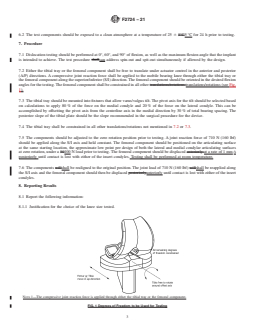
4.1 This test method is designed to provide a standardized method to determine the constraint of mobile bearing knee designs with regard to spin-out and spit-out of the mobile bearing.
4.2 Similar to constraint testing of total knees (see Test Method F1223), it is important to note that the test method does not simulate the soft tissues and laxity of the knee joint, which may be key factors related to the occurrence of spin-out or spit-out.3 For instance, a patient with good soft tissue restraints will perhaps require a lower spin-out/spit-out resistance, whereas a patient with major bone loss or destroyed ligamentous structures will likely require an implant with a higher spin-out/spit-out resistance. Therefore, the results from the test should be taken into account along with the condition of the patient’s soft tissues to determine the relative safety for the device.
SCOPE
1.1 This test method is designed to provide a standardized method to determine the dislocation resistance of mobile bearing knee designs with regard to femoral component disassociation and spin-out/spit-out of the mobile bearing insert.
1.2 Although the methodology described does not replicate all physiological loading conditions, it is a means of in-vitro comparison of mobile bearing knee designs and their ability to resist dislocation of the mobile bearing from the femoral or tibial components under stated test conditions.
1.3 The test method applies only to mobile bearing total knee designs.
1.4 The values stated in SI units are regarded as standard. The values given in parentheses are mathematical conversions to inch-pound units that are provided for information only and are not considered standard.
1.5 This standard does not purport to address all of the safety concerns, if any, associated with its use. It is the responsibility of the user of this standard to establish appropriate safety, health, and environmental practices and determine the applicability of regulatory limitations prior to use.
1.6 This international standard was developed in accordance with internationally recognized principles on standardization established in the Decision on Principles for the Development of International Standards, Guides and Recommendations issued by the World Trade Organization Technical Barriers to Trade (TBT) Committee.
- Status
- Published
- Publication Date
- 28-Feb-2021
- Technical Committee
- F04 - Medical and Surgical Materials and Devices
- Drafting Committee
- F04.22 - Arthroplasty



Overview
ASTM F2724-21 is the internationally recognized standard test method for evaluating dislocation resistance in mobile bearing total knee replacements. Developed by ASTM International, this standard provides a consistent, in-vitro approach for assessing the ability of mobile bearing knee designs to withstand disassociation incidents, notably spin-out and spit-out of the mobile bearing insert. This standard is essential for device manufacturers, testing laboratories, and regulatory bodies involved in the assessment and quality assurance of knee prostheses.
Key Topics
Dislocation Resistance Evaluation
- The standard defines procedures to test the resistance of mobile bearing knee components against dislocation, specifically femoral component disassociation and movement (spin-out and spit-out) of the insert.
- The methodology employs a two-axis orthogonal load frame, simulating clinically relevant loading directions and distributions.
Focus on Mobile Bearing Knees
- Applies exclusively to mobile bearing total knee designs, differentiating it from methods for fixed-bearing knees.
- The test does not simulate the knee's soft tissues or joint laxity, factors that are critical in real-world performance. The results should therefore be considered alongside clinical factors such as patient ligament integrity and bone condition.
Measurement and Reporting
- Requires reporting of femoral displacement relative to the tibial tray, the maximum load applied, and the specific failure mode (spin-out or spit-out) for each individual trial.
- Allows for comparative testing among different knee implant designs under standardized conditions.
Worst-Case Scenario Testing
- Recommends testing the knee design size most likely to represent a worst-case for dislocation.
- Load distribution of 80% medial and 20% lateral is used as a stringent benchmark to assess device reliability.
Applications
Design Validation and Regulatory Compliance
- Manufacturers use ASTM F2724-21 to validate knee implant designs, supporting product approvals and regulatory submissions.
- Helps demonstrate that implants meet recognized standards for spin-out and spit-out resistance.
Comparative Device Assessment
- Enables in-vitro comparison of alternative mobile bearing knee prostheses, supporting evidence-based selection and design improvements.
- Facilitates better risk assessment by understanding the potential for femoral-tibial component disassociation.
Quality Control in Production
- Assists in routine verification of batch-to-batch consistency and performance of mobile bearing knee designs.
Research and Development
- Guides R&D teams in assessing modifications to implant geometry or materials and understanding their effect on dislocation resistance.
Related Standards
- ASTM F1223 - Standard Test Method for Determination of Total Knee Replacement Constraint; a related standard focusing on total knee joint constraint but not specific to mobile bearing systems.
- ISO and Other ASTM Orthopedic Standards - Such as ISO standards for joint replacement performance and safety, providing broader context for knee implant testing and evaluation.
Practical Value
Adherence to ASTM F2724-21 is critical for orthopedic device manufacturers seeking reliable, reproducible testing of mobile bearing knee prosthesis dislocation resistance. The standard’s consistent methodology underpins product safety, regulatory acceptance, and clinical confidence by addressing the specific risks of spin-out and spit-out in mobile bearing knee designs. For any organization involved in the design, manufacture, or assessment of mobile bearing knee implants, this standard is a cornerstone document for quality assurance, performance verification, and post-market evaluation.
Relations
- Effective Date
- 15-Jun-2020
- Effective Date
- 15-May-2014
- Refers
ASTM F1223-08(2012) - Standard Test Method for Determination of Total Knee Replacement Constraint - Effective Date
- 01-Dec-2012
- Effective Date
- 01-Jun-2008
- Effective Date
- 01-Apr-2005
- Effective Date
- 01-Oct-2004
- Effective Date
- 10-Apr-2003
- Effective Date
- 10-Oct-2001
- Effective Date
- 10-Oct-2001
Get Certified
Connect with accredited certification bodies for this standard

BSI Group
BSI (British Standards Institution) is the business standards company that helps organizations make excellence a habit.

TÜV Rheinland
TÜV Rheinland is a leading international provider of technical services.

TÜV SÜD
TÜV SÜD is a trusted partner of choice for safety, security and sustainability solutions.
Sponsored listings
Frequently Asked Questions
ASTM F2724-21 is a standard published by ASTM International. Its full title is "Standard Test Method for Evaluating Mobile Bearing Knee Dislocation". This standard covers: SIGNIFICANCE AND USE 4.1 This test method is designed to provide a standardized method to determine the constraint of mobile bearing knee designs with regard to spin-out and spit-out of the mobile bearing. 4.2 Similar to constraint testing of total knees (see Test Method F1223), it is important to note that the test method does not simulate the soft tissues and laxity of the knee joint, which may be key factors related to the occurrence of spin-out or spit-out.3 For instance, a patient with good soft tissue restraints will perhaps require a lower spin-out/spit-out resistance, whereas a patient with major bone loss or destroyed ligamentous structures will likely require an implant with a higher spin-out/spit-out resistance. Therefore, the results from the test should be taken into account along with the condition of the patient’s soft tissues to determine the relative safety for the device. SCOPE 1.1 This test method is designed to provide a standardized method to determine the dislocation resistance of mobile bearing knee designs with regard to femoral component disassociation and spin-out/spit-out of the mobile bearing insert. 1.2 Although the methodology described does not replicate all physiological loading conditions, it is a means of in-vitro comparison of mobile bearing knee designs and their ability to resist dislocation of the mobile bearing from the femoral or tibial components under stated test conditions. 1.3 The test method applies only to mobile bearing total knee designs. 1.4 The values stated in SI units are regarded as standard. The values given in parentheses are mathematical conversions to inch-pound units that are provided for information only and are not considered standard. 1.5 This standard does not purport to address all of the safety concerns, if any, associated with its use. It is the responsibility of the user of this standard to establish appropriate safety, health, and environmental practices and determine the applicability of regulatory limitations prior to use. 1.6 This international standard was developed in accordance with internationally recognized principles on standardization established in the Decision on Principles for the Development of International Standards, Guides and Recommendations issued by the World Trade Organization Technical Barriers to Trade (TBT) Committee.
SIGNIFICANCE AND USE 4.1 This test method is designed to provide a standardized method to determine the constraint of mobile bearing knee designs with regard to spin-out and spit-out of the mobile bearing. 4.2 Similar to constraint testing of total knees (see Test Method F1223), it is important to note that the test method does not simulate the soft tissues and laxity of the knee joint, which may be key factors related to the occurrence of spin-out or spit-out.3 For instance, a patient with good soft tissue restraints will perhaps require a lower spin-out/spit-out resistance, whereas a patient with major bone loss or destroyed ligamentous structures will likely require an implant with a higher spin-out/spit-out resistance. Therefore, the results from the test should be taken into account along with the condition of the patient’s soft tissues to determine the relative safety for the device. SCOPE 1.1 This test method is designed to provide a standardized method to determine the dislocation resistance of mobile bearing knee designs with regard to femoral component disassociation and spin-out/spit-out of the mobile bearing insert. 1.2 Although the methodology described does not replicate all physiological loading conditions, it is a means of in-vitro comparison of mobile bearing knee designs and their ability to resist dislocation of the mobile bearing from the femoral or tibial components under stated test conditions. 1.3 The test method applies only to mobile bearing total knee designs. 1.4 The values stated in SI units are regarded as standard. The values given in parentheses are mathematical conversions to inch-pound units that are provided for information only and are not considered standard. 1.5 This standard does not purport to address all of the safety concerns, if any, associated with its use. It is the responsibility of the user of this standard to establish appropriate safety, health, and environmental practices and determine the applicability of regulatory limitations prior to use. 1.6 This international standard was developed in accordance with internationally recognized principles on standardization established in the Decision on Principles for the Development of International Standards, Guides and Recommendations issued by the World Trade Organization Technical Barriers to Trade (TBT) Committee.
ASTM F2724-21 is classified under the following ICS (International Classification for Standards) categories: 11.040.40 - Implants for surgery, prosthetics and orthotics. The ICS classification helps identify the subject area and facilitates finding related standards.
ASTM F2724-21 has the following relationships with other standards: It is inter standard links to ASTM F1223-20, ASTM F1223-14, ASTM F1223-08(2012), ASTM F1223-08, ASTM F1223-05, ASTM F1223-04a, ASTM F1223-04, ASTM F1223-01, ASTM F1223-96. Understanding these relationships helps ensure you are using the most current and applicable version of the standard.
ASTM F2724-21 is available in PDF format for immediate download after purchase. The document can be added to your cart and obtained through the secure checkout process. Digital delivery ensures instant access to the complete standard document.
Standards Content (Sample)
This international standard was developed in accordance with internationally recognized principles on standardization established in the Decision on Principles for the
Development of International Standards, Guides and Recommendations issued by the World Trade Organization Technical Barriers to Trade (TBT) Committee.
Designation: F2724 − 21
Standard Test Method for
Evaluating Mobile Bearing Knee Dislocation
This standard is issued under the fixed designation F2724; the number immediately following the designation indicates the year of
original adoption or, in the case of revision, the year of last revision. A number in parentheses indicates the year of last reapproval. A
superscript epsilon (´) indicates an editorial change since the last revision or reapproval.
1. Scope 3. Terminology
1.1 This test method is designed to provide a standardized 3.1 Definitions:
method to determine the dislocation resistance of mobile 3.1.1 bearing axis, n—the line connecting the lowest points
bearing knee designs with regard to femoral component on both the lateral and medial condyles of the superior surface
disassociation and spin-out/spit-out of the mobile bearing of the mobile bearing.
insert.
3.1.2 centerline axis, n—a line through the neutral point
perpendicular to the bearing axis and in a plane parallel to the
1.2 Although the methodology described does not replicate
plane of the flat portion of the inferior articulating surface of
all physiological loading conditions, it is a means of in-vitro
the mobile bearing at 0° posterior tibial slope.
comparison of mobile bearing knee designs and their ability to
resist dislocation of the mobile bearing from the femoral or
3.1.3 mobile bearing (insert), n—the component between
tibial components under stated test conditions.
fixed femoral and tibial knee components with an articulating
surface on both the inferior and superior sides.
1.3 The test method applies only to mobile bearing total
knee designs.
3.1.4 neutral point, n—midpoint of the bearing axis.
1.4 The values stated in SI units are regarded as standard. 3.1.5 spin-out, n—excessive rotation of the bearing compo-
The values given in parentheses are mathematical conversions nent in a rotating platform knee or multi-directional platform
to inch-pound units that are provided for information only and knee such that there is dislocation between the femoral or tibial
are not considered standard. components and the mobile bearing.
1.5 This standard does not purport to address all of the 3.1.6 spit-out, n—escape of the bearing component from
safety concerns, if any, associated with its use. It is the beneath the femoral component either anteriorly or posteriorly.
responsibility of the user of this standard to establish appro-
3.1.7 total bearing spacing, n—distancebetweenthecontact
priate safety, health, and environmental practices and deter-
points as given by Test Method F1223.
mine the applicability of regulatory limitations prior to use.
3.1.8 two-axis orthogonal load frame, n—a test machine
1.6 This international standard was developed in accor-
capable of applying forces and displacements that act at 90° to
dance with internationally recognized principles on standard-
each other.
ization established in the Decision on Principles for the
Development of International Standards, Guides and Recom-
4. Significance and Use
mendations issued by the World Trade Organization Technical
4.1 This test method is designed to provide a standardized
Barriers to Trade (TBT) Committee.
method to determine the constraint of mobile bearing knee
2. Referenced Documents designs with regard to spin-out and spit-out of the mobile
bearing.
2.1 ASTM Standards:
F1223 Test Method for Determination of Total Knee Re- 4.2 Similar to constraint testing of total knees (see Test
placement Constraint
Method F1223), it is important to note that the test method
does not simulate the soft tissues and laxity of the knee joint,
which may be key factors related to the occurrence of spin-out
This test method is under the jurisdiction ofASTM Committee F04 on Medical
or spit-out. For instance, a patient with good soft tissue
and Surgical Materials and Devices and is the direct responsibility of Subcommittee
restraints will perhaps require a lower spin-out/spit-out
F04.22 on Arthroplasty.
Current edition approved March 1, 2021. Published March 2021. Originally
resistance, whereas a patient with major bone loss or destroyed
approved in 2008. Last previous edition approved in 2014 as F2724 – 08 (2014).
DOI: 10.1520/F2724-21.
For referenced ASTM standards, visit the ASTM website, www.astm.org, or
contact ASTM Customer Service at service@astm.org. For Annual Book of ASTM Weale, A. E., et al., “In Vitro Evaluation of the Resistance to Dislocation of a
Standards volume information, refer to the standard’s Document Summary page on Meniscal-Bearing Total Knee Prosthesis Between 30° and 90° of Knee Flexion,” J.
the ASTM website. Arthroplasty, Vol 17, No. 4, 2002, pp. 475–483.
Copyright © ASTM International, 100 Barr Harbor Drive, PO Box C700, West Conshohocken, PA 19428-2959. United States
F2724 − 21
ligamentous structures will likely require an implant with a
higher spin-out/spit-out resistance. Therefore, the results from
the test should be taken into account along with the condition
of the patient’s soft tissues to determine the relative safety for
the device.
5. Apparatus and Materials
5.1 An engineering analysis should be performed on all
sizes of a knee design to justify a “worst case” size for this test.
At least five mobile bearing inserts of that size should be
tested. The tibial tray and knee femoral component may be
reused for multiple trials as long as they are not damaged
during testing.
5.2 The mobile bearing surfaces shall be lightly coated with
water (for example, reverse osmosis (RO) water, deionized
(DI) water, or distilled water) to reduce friction effects during
testing.
NOTE 1—The compressive joint reaction force is applied through either
the tibial tray or the femoral component.
5.3 Atwo-axis orthogonal load frame with feedback control
shall be used for dislocation testing. The machine must be able
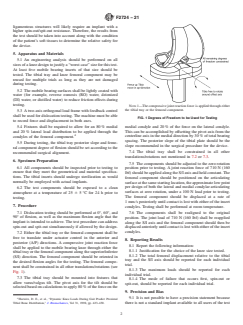
FIG. 1 Degrees of Freedom to be Used for Testing
to record force and displacement in both axes.
medial condyle and 20 % of the force on the lateral condyle.
5.4 Fixtures shall be required to allow for an 80 % medial
This can be accomplished by offsetting the pivot axis from t
...
This document is not an ASTM standard and is intended only to provide the user of an ASTM standard an indication of what changes have been made to the previous version. Because
it may not be technically possible to adequately depict all changes accurately, ASTM recommends that users consult prior editions as appropriate. In all cases only the current version
of the standard as published by ASTM is to be considered the official document.
Designation: F2724 − 08 (Reapproved 2014) F2724 − 21
Standard Test Method for
Evaluating Mobile Bearing Knee Dislocation
This standard is issued under the fixed designation F2724; the number immediately following the designation indicates the year of
original adoption or, in the case of revision, the year of last revision. A number in parentheses indicates the year of last reapproval. A
superscript epsilon (´) indicates an editorial change since the last revision or reapproval.
1. Scope
1.1 This test method is designed to provide a standardized method to determine the dislocation resistance of mobile-bearing
mobile bearing knee designs with regard to femoral component disassociation and spin-out/spit-out of the mobile bearing insert.
1.2 Although the methodology described does not replicate all physiological loading conditions, it is a means of in-vitro
comparison of mobile bearing knee designs and their ability to resist dislocation of the mobile bearing from the femoral or tibial
components under stated test conditions.
1.3 The test method applies only to mobile bearing total knee designs.
1.4 The values stated in SI units are regarded as standard. The values given in parentheses are mathematical conversions to
inch-pound units that are provided for information only and are not considered standard.
1.5 This standard does not purport to address all of the safety concerns, if any, associated with its use. It is the responsibility
of the user of this standard to establish appropriate safety safety, health, and healthenvironmental practices and determine the
applicability of regulatory limitations prior to use.
1.6 This international standard was developed in accordance with internationally recognized principles on standardization
established in the Decision on Principles for the Development of International Standards, Guides and Recommendations issued
by the World Trade Organization Technical Barriers to Trade (TBT) Committee.
2. Referenced Documents
2.1 ASTM Standards:
F1223 Test Method for Determination of Total Knee Replacement Constraint
3. Terminology
3.1 Definitions:
3.1.1 bearing axis, n—the line connecting the lowest points on both the lateral and medial condyles of the superior surface of the
mobile bearing.
3.1.2 centerline axis, n—a line through the neutral point perpendicular to the bearing axis and in a plane parallel to the plane of
the flat portion of the inferior articulating surface of the mobile bearing at 0° posterior tibial slope.
This test method is under the jurisdiction of ASTM Committee F04 on Medical and Surgical Materials and Devices and is the direct responsibility of Subcommittee
F04.22 on Arthroplasty.
Current edition approved March 15, 2014March 1, 2021. Published April 2014March 2021. Originally approved in 2008. Last previous edition approved in 20082014 as
F2724 – 08. 08 (2014). DOI: 10.1520/F2724-08R14.10.1520/F2724-21.
For referenced ASTM standards, visit the ASTM website, www.astm.org, or contact ASTM Customer Service at service@astm.org. For Annual Book of ASTM Standards
volume information, refer to the standard’s Document Summary page on the ASTM website.
Copyright © ASTM International, 100 Barr Harbor Drive, PO Box C700, West Conshohocken, PA 19428-2959. United States
F2724 − 21
3.1.3 mobile bearing (insert), n—the component between fixed femoral and tibial knee components with an articulating surface
on both the inferior and superior sides.
3.1.4 neutral point, n—midpoint of the bearing axis.
3.1.5 spin-out, n—excessive rotation of the bearing component in a rotating platform knee or multi-directional platform knee such
that there is dislocation between the femoral or tibial components and the mobile bearing.
3.1.6 spit-out, n—escape of the bearing component from beneath the femoral component either anteriorly or posteriorly.
3.1.7 total bearing spacing, n—distance between the contact points as given by Test Method F1223.
3.1.8 2-axistwo-axis orthogonal load frame, n—a test machine capable of applying forces and displacements that act at 90° to each
other.
4. Significance and Use
4.1 This test method is designed to provide a standardized method to determine the constraint of mobile-bearing mobile bearing
knee designs with regardsregard to spin-out and spit-out of the mobile bearing.
4.2 Similar to constraint testing of total knees (see Test Method F1223), it is important to note that the test method does not
simulate the soft tissues and laxity of the knee joint, which may be key factors related to the occurrence of spin-out or spit-out.
For instance, a patient with good soft tissue restraints will perhaps require a lower spin-out/spit-out resistance, whereas a patient
with major bone loss or destroyed ligamentous structures will likely require an implant with a higher spin-out/spit-out resistance.
Therefore, the results from the test should be taken into account along with the condition of the patient’s soft tissues to determine
the relative safety for the device.
5. Apparatus and Materials
5.1 AAn engineering analysis should be performed on all sizes of a knee design to justify a “worst case” size for this test. At least
five mobile bearing inserts of that size should be tested. The tibial tray and knee femoral component may be reused for multiple
trials as long as they are not damaged during testing.
5.2 The mobile bearing surfaces shall be lightly coated with bovine serum, olive oil, mineral oil, or deionized waterwater (for
example, reverse osmosis (RO) water, deionized (DI) water, or distilled water) to reduce friction effects during testing.
5.3 A 2-axistwo-axis orthogonal load frame with feedback control shall be used for dislocation testing. The machine must be able
to record force and displacement in both axes.
5.4 Fixtures shall be required to allow for an 80 % medial and 20 % lateral load distribution to be applied through the condyles
of the femoral component.
5.5 During testing, the tibial tray posterior slope and femoral component degree of flexion should be set according to the
recommended surgical alignment.
6. Specimen Preparation
6.1 All components should be inspected prior to testing to ensure that they meet the geometrical and material specifications. The
tibial inserts should
...