

ASTM D5170-98(2021)
(Test Method)Standard Test Method for Peel Strength (“T” Method) of Hook and Loop Touch Fasteners
General Information
- Abstract
SIGNIFICANCE AND USE
3.1 This test method gives a measure of a key property of hook and loop touch fasteners which is of interest to users of such devices. This is a means of determining the resistance to separation when forces are applied normal to the line of separation of the fastener.
3.2 The force registered in a peel test is irregular, and as a consequence, empirical methods have had to be developed to obtain usable values related to peel strength. In spite of the empirical nature of the reported values, it is believed they reflect comparative performance of similar touch fasteners tested and measured in the same way.
3.3 Two optional methods of calculation are provided: integrator average and average of five highest peaks. These test methods are not equivalent. Generally, the integrator average will be lower than the average of the five highest peaks.
3.4 The highest peaks which reflect the force required to separate a hook and loop closure bear no simple relationship to the average force (integrator average). The average of the five highest peaks better reflect performance but the integrator results may be used to characterize a closure and for quality control purposes. The integrator average is relatively easy to calculate given the proper equipment.
3.5 In the case of a dispute arising from differences in reported test results when using this test method for acceptance testing of commercial shipments, the purchaser and the supplier should conduct comparative tests to determine if there is a statistical bias between their laboratories. Competent statistical assistance is recommended for the investigation of bias. As a minimum, the two parties should take a group of test specimens which are as homogenous as possible and which are from a lot of hook and loop of the type in question. The test specimens should then be randomly assigned in equal numbers to each laboratory for testing. The average results from the two laboratories should be compared using Student’s t-test...
SCOPE
1.1 This test method covers the measurement of the peel strength of hook and loop touch fasteners using a recording constant-rate-of-extension tensile testing machine (CRE).
1.2 The values stated in inch-pound units are to be regarded as standard. The values given in parentheses are mathematical conversions to SI units that are provided for information only and are not considered standard.
1.3 This standard does not purport to address all of the safety problems, if any, associated with its use. It is the responsibility of the user of this standard to establish appropriate safety, health, and environmental practices and determine the applicability of regulatory limitations prior to use.
1.4 This international standard was developed in accordance with internationally recognized principles on standardization established in the Decision on Principles for the Development of International Standards, Guides and Recommendations issued by the World Trade Organization Technical Barriers to Trade (TBT) Committee.
- Status
- Published
- Publication Date
- 30-Jun-2021
- Technical Committee
- D13 - Textiles
- Drafting Committee
- D13.54 - Subassemblies

Overview
ASTM D5170-98(2021) is a globally recognized standard test method issued by ASTM International for determining the peel strength of hook and loop touch fasteners, such as Velcro®. Using the "T" method, this standard defines how to measure the resistance of these fasteners to separation forces with a recording constant-rate-of-extension tensile testing machine (CRE). The standard provides stakeholders with a reliable, empirical procedure to evaluate the comparative performance of hook and loop closures, which play a critical role in various industries due to their convenience and reusability.
Key Topics
- Peel Strength Measurement: The standard outlines the procedure for assessing the resistance of hook and loop fasteners to separation under controlled test conditions. Peel strength is a key property for users who rely on the durability and reliability of these closures.
- Testing Equipment: Specifies the use of a CRE tensile tester and detailed requirements for specimen preparation, including sample width and test configuration.
- Calculation Methods: Provides two independent calculation options-integrator average and the average of the five highest peaks. These methods capture the irregular and empirical nature of peel force during testing.
- Integrator average: Generally produces lower results and is easier to calculate.
- Average of five highest peaks: Offers better reflection of peak performance.
- Sampling and Conditioning: Recommends sampling from homogenous lots and conditioning specimens at specified temperature and humidity to ensure reproducibility.
- Reporting and Dispute Resolution: Details reporting requirements and recommends procedures, such as comparative statistical testing, for resolving discrepancies between laboratories.
Applications
ASTM D5170-98(2021) is applied in multiple industries where hook and loop fasteners are an integral component, including:
- Textile Manufacturing: Assists manufacturers in quality control and comparative analysis of fastener strength to ensure product reliability.
- Medical Devices: Used in evaluating fasteners for braces, supports, and other medical products that demand consistent closing and opening cycles.
- Apparel and Footwear: Helps designers and producers choose the right fasteners for clothing, footwear, and accessories.
- Automotive and Aerospace: Ensures performance standards for fasteners used in vehicle interiors, seating systems, and equipment retention.
- Consumer Goods: Relevant for products such as sports equipment, luggage, and children's toys that use touch fasteners.
By following this standardized test method, organizations can verify that their hook and loop fasteners meet performance specifications, facilitate acceptance testing of shipments, and resolve disputes objectively using industry-accepted practices.
Related Standards
Several related ASTM and international standards complement or are referenced by ASTM D5170-98(2021):
- ASTM D618: Practice for Conditioning Plastics for Testing-ensures specimens are at equilibrium before testing.
- Other ASTM Fastener Standards: May apply if additional types of closures or testing configurations are required.
- ISO and International Standards: ASTM D5170 is developed according to internationally recognized WTO principles, enabling its harmonization with global standards on fastener performance and testing procedures.
Practical Value
Adopting ASTM D5170-98(2021) assures users and manufacturers of hook and loop fasteners that peel strength is measured with integrity, repeatability, and relevance for real-world applications. By adhering to this test method, organizations can:
- Enhance product consistency and end-user satisfaction
- Streamline supplier quality assurance processes
- Resolve test result disputes with clear statistical methodologies
Keywords: peel strength, hook and loop fastener, ASTM D5170, touch fastener, Velcro, standard test method, CRE tensile tester, textile testing, product quality, empirical testing, international standard
Relations
- Effective Date
- 01-Nov-2008
- Effective Date
- 01-Nov-2005
- Effective Date
- 10-Nov-2000
Frequently Asked Questions
ASTM D5170-98(2021) is a standard published by ASTM International. Its full title is "Standard Test Method for Peel Strength (“T” Method) of Hook and Loop Touch Fasteners". This standard covers: SIGNIFICANCE AND USE 3.1 This test method gives a measure of a key property of hook and loop touch fasteners which is of interest to users of such devices. This is a means of determining the resistance to separation when forces are applied normal to the line of separation of the fastener. 3.2 The force registered in a peel test is irregular, and as a consequence, empirical methods have had to be developed to obtain usable values related to peel strength. In spite of the empirical nature of the reported values, it is believed they reflect comparative performance of similar touch fasteners tested and measured in the same way. 3.3 Two optional methods of calculation are provided: integrator average and average of five highest peaks. These test methods are not equivalent. Generally, the integrator average will be lower than the average of the five highest peaks. 3.4 The highest peaks which reflect the force required to separate a hook and loop closure bear no simple relationship to the average force (integrator average). The average of the five highest peaks better reflect performance but the integrator results may be used to characterize a closure and for quality control purposes. The integrator average is relatively easy to calculate given the proper equipment. 3.5 In the case of a dispute arising from differences in reported test results when using this test method for acceptance testing of commercial shipments, the purchaser and the supplier should conduct comparative tests to determine if there is a statistical bias between their laboratories. Competent statistical assistance is recommended for the investigation of bias. As a minimum, the two parties should take a group of test specimens which are as homogenous as possible and which are from a lot of hook and loop of the type in question. The test specimens should then be randomly assigned in equal numbers to each laboratory for testing. The average results from the two laboratories should be compared using Student’s t-test... SCOPE 1.1 This test method covers the measurement of the peel strength of hook and loop touch fasteners using a recording constant-rate-of-extension tensile testing machine (CRE). 1.2 The values stated in inch-pound units are to be regarded as standard. The values given in parentheses are mathematical conversions to SI units that are provided for information only and are not considered standard. 1.3 This standard does not purport to address all of the safety problems, if any, associated with its use. It is the responsibility of the user of this standard to establish appropriate safety, health, and environmental practices and determine the applicability of regulatory limitations prior to use. 1.4 This international standard was developed in accordance with internationally recognized principles on standardization established in the Decision on Principles for the Development of International Standards, Guides and Recommendations issued by the World Trade Organization Technical Barriers to Trade (TBT) Committee.
SIGNIFICANCE AND USE 3.1 This test method gives a measure of a key property of hook and loop touch fasteners which is of interest to users of such devices. This is a means of determining the resistance to separation when forces are applied normal to the line of separation of the fastener. 3.2 The force registered in a peel test is irregular, and as a consequence, empirical methods have had to be developed to obtain usable values related to peel strength. In spite of the empirical nature of the reported values, it is believed they reflect comparative performance of similar touch fasteners tested and measured in the same way. 3.3 Two optional methods of calculation are provided: integrator average and average of five highest peaks. These test methods are not equivalent. Generally, the integrator average will be lower than the average of the five highest peaks. 3.4 The highest peaks which reflect the force required to separate a hook and loop closure bear no simple relationship to the average force (integrator average). The average of the five highest peaks better reflect performance but the integrator results may be used to characterize a closure and for quality control purposes. The integrator average is relatively easy to calculate given the proper equipment. 3.5 In the case of a dispute arising from differences in reported test results when using this test method for acceptance testing of commercial shipments, the purchaser and the supplier should conduct comparative tests to determine if there is a statistical bias between their laboratories. Competent statistical assistance is recommended for the investigation of bias. As a minimum, the two parties should take a group of test specimens which are as homogenous as possible and which are from a lot of hook and loop of the type in question. The test specimens should then be randomly assigned in equal numbers to each laboratory for testing. The average results from the two laboratories should be compared using Student’s t-test... SCOPE 1.1 This test method covers the measurement of the peel strength of hook and loop touch fasteners using a recording constant-rate-of-extension tensile testing machine (CRE). 1.2 The values stated in inch-pound units are to be regarded as standard. The values given in parentheses are mathematical conversions to SI units that are provided for information only and are not considered standard. 1.3 This standard does not purport to address all of the safety problems, if any, associated with its use. It is the responsibility of the user of this standard to establish appropriate safety, health, and environmental practices and determine the applicability of regulatory limitations prior to use. 1.4 This international standard was developed in accordance with internationally recognized principles on standardization established in the Decision on Principles for the Development of International Standards, Guides and Recommendations issued by the World Trade Organization Technical Barriers to Trade (TBT) Committee.
ASTM D5170-98(2021) is classified under the following ICS (International Classification for Standards) categories: 61.040 - Headgear. Clothing accessories. Fastening of clothing. The ICS classification helps identify the subject area and facilitates finding related standards.
ASTM D5170-98(2021) has the following relationships with other standards: It is inter standard links to ASTM D618-08, ASTM D618-05, ASTM D618-00. Understanding these relationships helps ensure you are using the most current and applicable version of the standard.
ASTM D5170-98(2021) is available in PDF format for immediate download after purchase. The document can be added to your cart and obtained through the secure checkout process. Digital delivery ensures instant access to the complete standard document.
Standards Content (Sample)
This international standard was developed in accordance with internationally recognized principles on standardization established in the Decision on Principles for the
Development of International Standards, Guides and Recommendations issued by the World Trade Organization Technical Barriers to Trade (TBT) Committee.
Designation: D5170 − 98 (Reapproved 2021)
Standard Test Method for
Peel Strength (“T” Method) of Hook and Loop Touch
Fasteners
This standard is issued under the fixed designation D5170; the number immediately following the designation indicates the year of
original adoption or, in the case of revision, the year of last revision. A number in parentheses indicates the year of last reapproval. A
superscript epsilon (´) indicates an editorial change since the last revision or reapproval.
1. Scope obtain usable values related to peel strength. In spite of the
empirical nature of the reported values, it is believed they
1.1 This test method covers the measurement of the peel
reflect comparative performance of similar touch fasteners
strength of hook and loop touch fasteners using a recording
tested and measured in the same way.
constant-rate-of-extension tensile testing machine (CRE).
3.3 Two optional methods of calculation are provided:
1.2 The values stated in inch-pound units are to be regarded
integrator average and average of five highest peaks.These test
as standard. The values given in parentheses are mathematical
methods are not equivalent. Generally, the integrator average
conversions to SI units that are provided for information only
will be lower than the average of the five highest peaks.
and are not considered standard.
1.3 This standard does not purport to address all of the 3.4 The highest peaks which reflect the force required to
safety problems, if any, associated with its use. It is the separate a hook and loop closure bear no simple relationship to
responsibility of the user of this standard to establish appro- the average force (integrator average). The average of the five
priate safety, health, and environmental practices and deter- highest peaks better reflect performance but the integrator
results may be used to characterize a closure and for quality
mine the applicability of regulatory limitations prior to use.
1.4 This international standard was developed in accor- control purposes. The integrator average is relatively easy to
calculate given the proper equipment.
dance with internationally recognized principles on standard-
ization established in the Decision on Principles for the
3.5 In the case of a dispute arising from differences in
Development of International Standards, Guides and Recom-
reported test results when using this test method for acceptance
mendations issued by the World Trade Organization Technical
testing of commercial shipments, the purchaser and the sup-
Barriers to Trade (TBT) Committee.
plier should conduct comparative tests to determine if there is
a statistical bias between their laboratories. Competent statis-
2. Referenced Documents
tical assistance is recommended for the investigation of bias.
2.1 ASTM Standards:
As a minimum, the two parties should take a group of test
D618 Practice for Conditioning Plastics for Testing
specimens which are as homogenous as possible and which are
from a lot of hook and loop of the type in question. The test
3. Significance and Use
specimens should then be randomly assigned in equal numbers
3.1 This test method gives a measure of a key property of to each laboratory for testing.The average results from the two
hook and loop touch fasteners which is of interest to users of
laboratories should be compared using Student’s t-test and an
such devices. This is a means of determining the resistance to acceptable probability level chosen by the two parties before
separation when forces are applied normal to the line of
the testing began. If a bias is found, either its cause must be
separation of the fastener. found and corrected or the purchaser and the supplier must
agree to interpret future test results in the light of the known
3.2 The force registered in a peel test is irregular, and as a
bias.
consequence, empirical methods have had to be developed to
4. Apparatus
This test method is under the jurisdiction ofASTM Committee D13 on Textiles
4.1 Roller—consisting of a smooth steel surface, approxi-
and is the direct responsibility of Subcommittee D13.54 on Subassemblies.
3 1
mately 4 ⁄4 in. (121 mm) in diameter, 2 ⁄4 in. (57 mm) wide,
Current edition approved July 1, 2021. Published July 2021. Originally approved
and equipped with a handle, length 4 ⁄8 in. (105 mm), for
in 1991. Last previous edition approved in 2015 as D5170 – 98(2015). DOI:
10.1520/D5170-98R21.
propelling the roller back and forth without adding additional
For referenced ASTM standards, visit the ASTM website, www.astm.org, or
weight to the specimen being rolled (see Fig. 1). The weight of
contact ASTM Customer Service at service@astm.org. For Annual Book of ASTM
the roller (including the handle) is 11 lb 6 ⁄4 lb
Standards volume information, refer to the standard’s Document Summary page on
the ASTM website. (4994 g 6 114 g).
Copyright © ASTM International, 100 Barr Harbor Drive, PO Box C700, West Conshohocken, PA 19428-2959. United States
D5170 − 98 (2021)
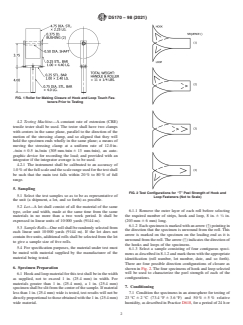
FIG. 1 Roller for Making Closure of Hook and Loop Touch Fas-
teners Prior to Testing
4.2 Testing Machine—A constant rate of extension (CRE)
tensile tester shall be used. The tester shall have two clamps
with centers in the same plane, parallel to the direction of the
motion of the stressing clamp, and so aligned that they will
hold the specimen ends wholly in the same plane; a means of
moving the stressing clamp at a uniform rate of 12.0 in-
.⁄min 6 0.5 in./min (305 mm⁄min 6 13 mm⁄min), an auto-
graphic device for recording the load; and provided with an
integrator if the integrator average is to be used.
4.2.1 The instrument shall be calibrated to an accuracy of
1.0 % of the full scale and the scale range used for the test shall
be such that the main test falls within 20 % to 80 % of full
range.
5. Sampling
FIG. 2 Test Configurations for “T” Peel Strength of Hook and
5.1 Select the test samples so as to be as representative of
Loop Fasteners (Not to Scale)
the unit (a shipment, a lot, and so forth) as possible.
5.2 Lot—A lot shall consist of all the material of the same
6.1.1 Remove the outer layer of each roll before selecting
type, color and width, made at the same time from the same
the required number of strips, hook and loop, 8 in. 6 ⁄4 in.
materials in no more than a two week period. It shall be
(203 mm 6 6 mm) long.
expressed in linear units of 10 000 yards (9144 m).
6.1.2 Eachspecimenismarkedwithanarrow(↑)pointingin
5.3 SampleRolls—Onerollshallberandomlyselectedfrom
the direction that the specimen is unwound from the roll. This
each linear unit 10 000 yards (9144 m). If the lot does not
arrow is marked on the specimen on the leading end as it is
contain five units, additional rolls shall be selected from the lot
unwound from the roll.The arrow (↑) indicates the direction of
to give a sample size of five rolls.
the hooks and loops of the specimens.
5.4 For specification purposes, the material under test must
6.1.3 Select a sample consisting of four contiguous speci-
be mated with material supplied by the manufacturer of the
mens as described in 8.1.2 and mark them with the appropriate
material being tested.
identification (roll number, lot number, date, and so forth).
There are four possible direction configurations of closure as
6. Specimen Preparation
shown in Fig. 2. The four specimens of hook and loop selected
will be used to characterize the peel strength of each of the
6.1 Hook and loop material for this test shall be in the width
configurations.
as supplied, not to exceed 1 in. (25.4 mm) in width. For
materials greater than 1 in. (25.4 mm), a 1 in. (25.4 mm)
7. Conditioning
specimen shall be slit from the center of the sample. If material
less than 1 in. (25.4 mm) wide is tested
...