

ASTM D4751-21a
(Test Method)Standard Test Methods for Determining Apparent Opening Size of a Geotextile
General Information
- Abstract
SIGNIFICANCE AND USE
5.1 Using a geotextile as a medium to retain soil particles necessitates compatibility between it and the adjacent soil. This test method is used to indicate the apparent opening size in a geotextile, which reflects the approximate largest opening dimension available for soil to pass through.
5.2 Test Methods D4751 for the determination of opening size of geotextiles is acceptable for testing of commercial shipments of geotextiles. Current estimates of precision, between laboratories, have been established.
5.3 Apparent opening test results obtained using Method A may differ from test results obtained with Method B. It is the intent of this test method to confirm the equivalency of the Method B results before permitting the use of this alternative. Laboratories electing the use of Method B must first determine any bias that exists between the two methods and document a reliable correlation in accordance with this test method.
5.3.1 The correlation between the Method B results and the Method A results must be established and meet the requirements of this test method for every different geotextile product type tested with Method B. Geotextiles from different manufacturers or with different nominal unit weights are considered different products. A minimum of three test results must be compared with all three satisfying the established correlation.
Note 1: The correlation should be confirmed for a particular product by comparing a minimum of three test results when there are changes in the manufacturing of a specific pre-qualified geotextile.
5.4 In case of a dispute arising from differences in reported test results when using Test Methods D4751 for acceptance testing of commercial shipments, the purchaser and the supplier should conduct comparative tests to determine if there is a statistical bias between their laboratories. Competent statistical assistance is recommended for the investigation of bias. As a minimum, the two parties should take a group of ...
SCOPE
1.1 These test methods cover the determination of the apparent opening size (AOS) of a geotextile either by dry-sieving glass beads through a geotextile (Methods A1 and A2) or by using a capillary porometer (Method B).
1.2 Method B will not be used in lieu of Method A unless the pre-qualification procedure specified in this standard is followed.
1.3 These test methods show the values in both SI units and inch-pound units. SI units is the technically correct name for the system of metric units known as the International System of Units. Inch-pound units is the technically correct name for the customary units used in the United States. The values in inch-pound units are provided for information only.
1.4 This standard does not purport to address all of the safety concerns, if any, associated with its use. It is the responsibility of the user of this standard to establish appropriate safety, health, and environmental practices and determine the applicability of regulatory limitations prior to use.
1.5 This international standard was developed in accordance with internationally recognized principles on standardization established in the Decision on Principles for the Development of International Standards, Guides and Recommendations issued by the World Trade Organization Technical Barriers to Trade (TBT) Committee.
- Status
- Published
- Publication Date
- 31-Aug-2021
- Technical Committee
- D35 - Geosynthetics
- Drafting Committee
- D35.03 - Permeability and Filtration
Overview
ASTM D4751-21a - Standard Test Methods for Determining Apparent Opening Size of a Geotextile is a widely recognized standard developed by ASTM International. This standard provides precise test procedures to determine the apparent opening size (AOS) of geotextiles, enabling engineers and manufacturers to select suitable materials for soil retention and filtration applications. The AOS is a key property that indicates the approximate largest particle that can pass through a geotextile, ensuring compatibility between geotextiles and adjacent soils, and thereby supporting the durability and effectiveness of civil and environmental engineering projects.
Key Topics
- Apparent Opening Size (AOS): The standard focuses on measuring the AOS of geotextiles, which is critical for retaining soil particles while allowing water flow.
- Test Methods:
- Method A (A1 and A2): Dry-sieving glass beads through the geotextile to determine AOS. Method A1 is a quantitative method, while Method A2 is a pass/fail test for quality control.
- Method B: Utilizes a capillary porometer, measuring air flow and pressure to calculate opening sizes, subject to correlation with Method A.
- Correlation Requirement: Method B results must be reliably correlated to Method A for each specific geotextile product type before use. At least three sets of comparative test results are required for validation.
- Units of Measurement: Results are provided in both SI (metric) and inch-pound units, with SI units regarded as the technically correct version.
- Precision and Bias: The standard outlines processes to investigate and correct biases in laboratory results, emphasizing the importance of consistency and statistical validation.
- Sampling Procedures: Detailed guidelines for sampling planar and circular-knitted sock geotextiles, ensuring representative and consistent specimen preparation for testing.
Applications
ASTM D4751-21a plays a pivotal role in a variety of engineering and construction contexts by ensuring geotextile effectiveness. Typical applications include:
- Soil Retention and Filtration: Ensures compatibility between geotextiles and surrounding soils in drainage systems, preventing soil migration while maintaining fluid transmission.
- Roadways and Railways: Used in subgrade stabilization, separation, and reinforcement layers.
- Erosion Control: Employed in retaining walls, slopes, and embankments to maintain soil stability and prevent washouts.
- Environmental Protection: Applied in landfill liners or covers and other containment scenarios, where controlled permeability is critical.
- Commercial Shipments and Quality Control: Enables manufacturers and purchasers to verify product conformance with specified opening size requirements during acceptance testing and shipment evaluations.
These testing methods help safeguard infrastructure longevity and ensure regulatory compliance in geosynthetics applications.
Related Standards
ASTM D4751-21a references and aligns with several other ASTM standards and practices for comprehensive geotextile characterization:
- ASTM D1331: Surface and Interfacial Tension of Solutions
- ASTM D1776/D1776M: Conditioning and Testing Textiles
- ASTM D4354: Sampling of Geosynthetics and Erosion Control Products
- ASTM D4439: Geosynthetics Terminology
- ASTM D6767: Pore Size Characteristics by Capillary Flow Test
- ASTM E11: Specification for Test Sieve Cloth and Sieves
- ASTM E691: Conducting Interlaboratory Studies
Organizations working with geotextiles for civil engineering, environmental protection, and infrastructure development are encouraged to familiarize themselves with ASTM D4751 and related standards to ensure accurate testing and material selection.
Keywords: ASTM D4751-21a, apparent opening size, geotextile, capillary porometer, glass beads, geosynthetics testing, filtration, soil retention, quality control, ASTM standards
Relations
- Effective Date
- 01-Feb-2024
- Effective Date
- 01-May-2020
- Effective Date
- 01-Feb-2020
- Effective Date
- 15-Apr-2018
- Effective Date
- 01-Aug-2017
- Effective Date
- 01-Sep-2016
- Effective Date
- 01-Jan-2016
- Effective Date
- 01-Sep-2015
- Effective Date
- 01-Jul-2015
- Effective Date
- 01-Feb-2015
- Effective Date
- 01-Jul-2014
- Effective Date
- 01-Mar-2014
- Effective Date
- 01-Oct-2013
- Effective Date
- 01-May-2013
- Effective Date
- 01-Jul-2012
Get Certified
Connect with accredited certification bodies for this standard

Control Union Certifications
Global certification for agriculture and sustainability.

Hohenstein Institut
Textile testing and certification.

Bureau Veritas Bangladesh
Bureau Veritas certification services in Bangladesh.
Sponsored listings
Frequently Asked Questions
ASTM D4751-21a is a standard published by ASTM International. Its full title is "Standard Test Methods for Determining Apparent Opening Size of a Geotextile". This standard covers: SIGNIFICANCE AND USE 5.1 Using a geotextile as a medium to retain soil particles necessitates compatibility between it and the adjacent soil. This test method is used to indicate the apparent opening size in a geotextile, which reflects the approximate largest opening dimension available for soil to pass through. 5.2 Test Methods D4751 for the determination of opening size of geotextiles is acceptable for testing of commercial shipments of geotextiles. Current estimates of precision, between laboratories, have been established. 5.3 Apparent opening test results obtained using Method A may differ from test results obtained with Method B. It is the intent of this test method to confirm the equivalency of the Method B results before permitting the use of this alternative. Laboratories electing the use of Method B must first determine any bias that exists between the two methods and document a reliable correlation in accordance with this test method. 5.3.1 The correlation between the Method B results and the Method A results must be established and meet the requirements of this test method for every different geotextile product type tested with Method B. Geotextiles from different manufacturers or with different nominal unit weights are considered different products. A minimum of three test results must be compared with all three satisfying the established correlation. Note 1: The correlation should be confirmed for a particular product by comparing a minimum of three test results when there are changes in the manufacturing of a specific pre-qualified geotextile. 5.4 In case of a dispute arising from differences in reported test results when using Test Methods D4751 for acceptance testing of commercial shipments, the purchaser and the supplier should conduct comparative tests to determine if there is a statistical bias between their laboratories. Competent statistical assistance is recommended for the investigation of bias. As a minimum, the two parties should take a group of ... SCOPE 1.1 These test methods cover the determination of the apparent opening size (AOS) of a geotextile either by dry-sieving glass beads through a geotextile (Methods A1 and A2) or by using a capillary porometer (Method B). 1.2 Method B will not be used in lieu of Method A unless the pre-qualification procedure specified in this standard is followed. 1.3 These test methods show the values in both SI units and inch-pound units. SI units is the technically correct name for the system of metric units known as the International System of Units. Inch-pound units is the technically correct name for the customary units used in the United States. The values in inch-pound units are provided for information only. 1.4 This standard does not purport to address all of the safety concerns, if any, associated with its use. It is the responsibility of the user of this standard to establish appropriate safety, health, and environmental practices and determine the applicability of regulatory limitations prior to use. 1.5 This international standard was developed in accordance with internationally recognized principles on standardization established in the Decision on Principles for the Development of International Standards, Guides and Recommendations issued by the World Trade Organization Technical Barriers to Trade (TBT) Committee.
SIGNIFICANCE AND USE 5.1 Using a geotextile as a medium to retain soil particles necessitates compatibility between it and the adjacent soil. This test method is used to indicate the apparent opening size in a geotextile, which reflects the approximate largest opening dimension available for soil to pass through. 5.2 Test Methods D4751 for the determination of opening size of geotextiles is acceptable for testing of commercial shipments of geotextiles. Current estimates of precision, between laboratories, have been established. 5.3 Apparent opening test results obtained using Method A may differ from test results obtained with Method B. It is the intent of this test method to confirm the equivalency of the Method B results before permitting the use of this alternative. Laboratories electing the use of Method B must first determine any bias that exists between the two methods and document a reliable correlation in accordance with this test method. 5.3.1 The correlation between the Method B results and the Method A results must be established and meet the requirements of this test method for every different geotextile product type tested with Method B. Geotextiles from different manufacturers or with different nominal unit weights are considered different products. A minimum of three test results must be compared with all three satisfying the established correlation. Note 1: The correlation should be confirmed for a particular product by comparing a minimum of three test results when there are changes in the manufacturing of a specific pre-qualified geotextile. 5.4 In case of a dispute arising from differences in reported test results when using Test Methods D4751 for acceptance testing of commercial shipments, the purchaser and the supplier should conduct comparative tests to determine if there is a statistical bias between their laboratories. Competent statistical assistance is recommended for the investigation of bias. As a minimum, the two parties should take a group of ... SCOPE 1.1 These test methods cover the determination of the apparent opening size (AOS) of a geotextile either by dry-sieving glass beads through a geotextile (Methods A1 and A2) or by using a capillary porometer (Method B). 1.2 Method B will not be used in lieu of Method A unless the pre-qualification procedure specified in this standard is followed. 1.3 These test methods show the values in both SI units and inch-pound units. SI units is the technically correct name for the system of metric units known as the International System of Units. Inch-pound units is the technically correct name for the customary units used in the United States. The values in inch-pound units are provided for information only. 1.4 This standard does not purport to address all of the safety concerns, if any, associated with its use. It is the responsibility of the user of this standard to establish appropriate safety, health, and environmental practices and determine the applicability of regulatory limitations prior to use. 1.5 This international standard was developed in accordance with internationally recognized principles on standardization established in the Decision on Principles for the Development of International Standards, Guides and Recommendations issued by the World Trade Organization Technical Barriers to Trade (TBT) Committee.
ASTM D4751-21a is classified under the following ICS (International Classification for Standards) categories: 59.080.70 - Geotextiles. The ICS classification helps identify the subject area and facilitates finding related standards.
ASTM D4751-21a has the following relationships with other standards: It is inter standard links to ASTM D4439-24, ASTM D4354-12(2020), ASTM D1776/D1776M-20, ASTM D4439-18, ASTM D4439-17, ASTM D6767-16, ASTM D1776/D1776M-16, ASTM D4439-15a, ASTM D4439-15, ASTM D1776/D1776M-15, ASTM D6767-14, ASTM D4439-14, ASTM E11-13, ASTM E691-13, ASTM D4354-12. Understanding these relationships helps ensure you are using the most current and applicable version of the standard.
ASTM D4751-21a is available in PDF format for immediate download after purchase. The document can be added to your cart and obtained through the secure checkout process. Digital delivery ensures instant access to the complete standard document.
Standards Content (Sample)
This international standard was developed in accordance with internationally recognized principles on standardization established in the Decision on Principles for the
Development of International Standards, Guides and Recommendations issued by the World Trade Organization Technical Barriers to Trade (TBT) Committee.
Designation: D4751 − 21a
Standard Test Methods for
Determining Apparent Opening Size of a Geotextile
This standard is issued under the fixed designation D4751; the number immediately following the designation indicates the year of
original adoption or, in the case of revision, the year of last revision. A number in parentheses indicates the year of last reapproval. A
superscript epsilon (´) indicates an editorial change since the last revision or reapproval.
This standard has been approved for use by agencies of the U.S. Department of Defense.
1. Scope D1776/D1776M Practice for Conditioning and Testing Tex-
tiles
1.1 These test methods cover the determination of the
D4354 Practice for Sampling of Geosynthetics and Rolled
apparent opening size (AOS) of a geotextile either by dry-
Erosion Control Products (RECPs) for Testing
sieving glass beads through a geotextile (MethodsA1 andA2)
D4439 Terminology for Geosynthetics
or by using a capillary porometer (Method B).
D6767 Test Method for Pore Size Characteristics of Geotex-
1.2 Method B will not be used in lieu of Method A unless
tiles by Capillary Flow Test
the pre-qualification procedure specified in this standard is
E11 Specification for Woven Wire Test Sieve Cloth and Test
followed.
Sieves
E691 Practice for Conducting an Interlaboratory Study to
1.3 These test methods show the values in both SI units and
inch-pound units. SI units is the technically correct name for Determine the Precision of a Test Method
thesystemofmetricunitsknownastheInternationalSystemof
3. Terminology
Units. Inch-pound units is the technically correct name for the
3.1 Definitions—For general geosynthetics terms used in
customary units used in the United States. The values in
this standard, refer to Terminology D4439.
inch-pound units are provided for information only.
3.2 Definitions:
1.4 This standard does not purport to address all of the
safety concerns, if any, associated with its use. It is the 3.2.1 apparent opening size(AOS),O , n—for a geotextile,
a property that indicates the approximate largest particle that
responsibility of the user of this standard to establish appro-
would effectively pass through the geotextile.
priate safety, health, and environmental practices and deter-
mine the applicability of regulatory limitations prior to use.
3.2.1.1 Discussion—While the same “O95” symbol is used
1.5 This international standard was developed in accor-
in Test MethodsA1 and B for defining theAOS of a geotextile
dance with internationally recognized principles on standard-
as well as in Test Method D6767 for determining the pore size
ization established in the Decision on Principles for the
of geotextiles by capillary flow, they are not necessarily
Development of International Standards, Guides and Recom-
equivalent. The O95 values are defined in terms of their
mendations issued by the World Trade Organization Technical
respectivetestmethods.Therefore,theAOSversionoftheO95
Barriers to Trade (TBT) Committee.
value that is determined with Method B may not be identical to
the O95 value determined per Test Method D6767.
2. Referenced Documents
2 4. Summary of Test Methods
2.1 ASTM Standards:
D1331 Test Methods for Surface and Interfacial Tension of
4.1 Glass Bead Dry-Sieving, Method A1—A geotextile
Solutions of Paints, Solvents, Solutions of Surface-Active specimen is placed in a sieve frame, and sized glass beads are
Agents, and Related Materials
placed on the geotextile surface. The geotextile and frame are
shakenlaterallysothatthejarringmotionwillinducethebeads
topassthroughthetestspecimen.Theprocedureisrepeatedon
the same specimen with various size glass beads until a bead
These test methods are under the jurisdiction of ASTM Committee D35 on
size with more than 5 % passing and a bead size with less than
Geosynthetics and are the direct responsibility of Subcommittee D35.03 on
Permeability and Filtration.
5 % passing are tested and its apparent opening size has been
Current edition approved Sept. 1, 2021. Published September 2021. Originally
determined. This method is considered the referee method in
approved in 1993. Last previous edition approved in 2021 as D4751 – 21. DOI:
the case of inter-laboratory disputes involving both Methods
10.1520/D4751-21A.
For referenced ASTM standards, visit the ASTM website, www.astm.org, or A2 and B.
contact ASTM Customer Service at service@astm.org. For Annual Book of ASTM
4.2 Method A2—This procedure is strictly intended as a
Standards volume information, refer to the standard’s Document Summary page on
the ASTM website. “Pass/Fail” test for manufacturing QC testing. The test is
Copyright © ASTM International, 100 Barr Harbor Drive, PO Box C700, West Conshohocken, PA 19428-2959. United States
D4751 − 21a
performed identically to that of Method A1, except it is from a lot of material of the type in question. The test
performed using only one bead size which has been designated specimens should then be randomly assigned in equal numbers
by an associated purchaser’s specification. If all five test to each laboratory for testing.The average results from the two
specimens pass less than 5 % of the bead size, the test result is laboratories should be compared using Student’s t-test for
the bead size used in millimeters, or, if requested, the corre- unpaireddataandanacceptableprobabilitylevelchosenbythe
sponding U.S. Sieve Number. However, if one of the five two parties before the testing is begun. If a bias is found, either
specimens passes more than 5 % of the bead size, Method A1 its cause must be found and corrected or the purchaser and the
must be followed on all five specimens to complete the test on supplier must agree to interpret future test results in the light of
the sample and determine the sample’s disposition. the known bias.
5.4.1 In the event that the dispute involves test results
4.3 Capillary Porometer, Method B—Ageotextile specimen
produced with the capillary porometer, Method A1 is consid-
is subjected first to an air flow test, where the air flow rate and
ered the referee method for Test Methods D4751.
pressure are measured. Then the same specimen is wetted with
mineral oil and subjected to an increasing air pressure while
6. Sampling
measuring the resulting flow rate. The opening sizes are
calculated from this data using standard capillary theory and
6.1 Sampling of Planar Geotextiles:
the specific algorithm defined in these test methods.
6.1.1 LotSample—Forroutinequalitycontroltesting,divide
4.3.1 The apparent opening size of a geotextile is defined in
the product into lots and take the lot sample as directed in
terms of the dry-sieving test method. This method includes a
Practice D4354, Section 7, Procedure B—Sampling for Manu-
procedure for correlating the porometer test data to the Method
facturer’s QualityAssurance Testing. For specification confor-
A results so that Method B is qualified to generate values
mancetesting,sampleasdirectedinPracticeD4354,Section8,
equivalent to the glass bead dry-sieving Method A.
Procedure C—Sampling for Purchaser’s Specification Confor-
mance Testing.
5. Significance and Use
6.1.2 Laboratory Sample—As a laboratory sample for ac-
ceptance testing, take a full-width swatch 1 m (1 yd) long from
5.1 Using a geotextile as a medium to retain soil particles
the end of each roll of fabric in the lot sample, after first
necessitatescompatibilitybetweenitandtheadjacentsoil.This
discarding a minimum of1m(1yd)of fabric from the very
test method is used to indicate the apparent opening size in a
outside of the roll.
geotextile, which reflects the approximate largest opening
6.1.3 Test Specimens—Cutfivespecimensfromeachswatch
dimension available for soil to pass through.
in the laboratory sample, with each specimen being cut to fit
5.2 Test Methods D4751 for the determination of opening
theappropriatespecimenholderforMethodAortheporometer
size of geotextiles is acceptable for testing of commercial
sample holder for Method B. Cut the specimens from a single
shipments of geotextiles. Current estimates of precision, be-
swatch spaced along a diagonal line on the swatch.
tween laboratories, have been established.
6.2 Sampling of Circular-Knitted Sock Geotextiles:
5.3 Apparent opening test results obtained using Method A
6.2.1 For a lot sample for manufacturer’s quality control
may differ from test results obtained with Method B. It is the
(MQC) testing, divide rolls of circular-knitted sock geotextile
intent of this test method to confirm the equivalency of the
fabric into lots and take the lot sample as directed in Practice
Method B results before permitting the use of this alternative.
D4354, Section 7, Procedure B—Sampling for Manufacturer’s
Laboratories electing the use of Method B must first determine
Quality Assurance Testing. For a lot sample for specification
any bias that exists between the two methods and document a
conformance testing, sample as directed in Practice D4354,
reliable correlation in accordance with this test method.
Section 8, Procedure C—Sampling for Purchaser’s Specifica-
5.3.1 The correlation between the Method B results and the
tion Conformance Testing.
Method A results must be established and meet the require-
6.2.2 Laboratory Sample—To obtain a laboratory sample
ments of this test method for every different geotextile product
for MQC testing of the circular-knitted sock geotextile, follow
type tested with Method B. Geotextiles from different manu-
the procedure below:
facturers or with different nominal unit weights are considered
6.2.2.1 Apply the knitted sock geotextile sample over the
different products. A minimum of three test results must be
outside of the corresponding diameter of a 406-mm (16-in.)
compared with all three satisfying the established correlation.
length of perforated tubing or reasonable facsimile having the
NOTE 1—The correlation should be confirmed for a particular product
same diameter as the pipe material for which the sock is
by comparing a minimum of three test results when there are changes in
intended.
the manufacturing of a specific pre-qualified geotextile.
6.2.2.2 Tie a knot in each end of the fabric so as to fully
5.4 In case of a dispute arising from differences in reported
encase the pipe in the fabric.
test results when using Test Methods D4751 for acceptance
6.2.2.3 Using the knot from one end of the fabric, suspend
testing of commercial shipments, the purchaser and the sup-
the geotextile-encased pipe vertically. Gently suspend a
plier should conduct comparative tests to determine if there is
1.13-kg (2.5-lb) weight from the bottom to ensure intimate
a statistical bias between their laboratories. Competent statis-
contact with the perforated pipe. See Fig. 1a. Allow the
tical assistance is recommended for the investigation of bias.
suspended pipe with weight to hang for 2 min.
As a minimum, the two parties should take a group of test
specimens that are as homogeneous as possible and that are NOTE 2—Pipes with diameters larger than 75 to 150 mm (3 to 6 in.)
D4751 − 21a
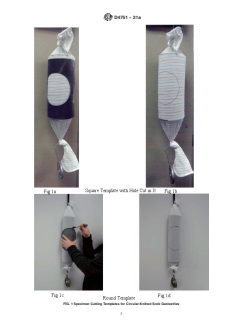
FIG. 1 Specimen Cutting Templates for Circular-Knitted Sock Geotextiles
D4751 − 21a
may require heavier weights to ensure intimate contact between the pipe
6.3.3.2 When securing specimens by wedging between two
and sock material.
sieveframes,cutthelaboratorysampleinacrosswisedirection
to create five specimens, taking care not to make these cuts
6.2.2.4 For Method A, using a flexible 203-mm (8-in.)
closer than 75 mm (3 in.) from the outside of the circle.
diameterroundtemplateasaguide,traceacircleonthesurface
Continue to prepare the specimens by cutting the fabric in a
of the fabric using an indelible marker. See Fig. 1c. Remove
lengthwise direction at a position opposing the circle. Care
the fabric from the pipe section by untying or cutting off the
must be taken not to cut through the circle. The result will be
knots at one or both ends in the fabric. Cut the fabric tube in a
the creation of five planar fabric specimens of more or less a
lengthwise direction at a position opposing the drawn circle,
rectangular shape with a circle drawn at its center.
taking care to not cut the fabric within the circle. If so desired,
the length of the specimen may be shortened by cutting the
fabric in a crosswise direction, taking care not to cut the fabric
METHOD A—DRY-SIEVING WITH GLASS BEADS
closer than 75 mm (3 in.) from the outside of the circle. The
result will be a planar specimen of more or less rectangular 7. Specimen Preparation
shape with a circle drawn approximately in its center.
7.1 Weigh the Method A test specimens and then submerge
6.2.2.5 For Method B test specimens, affix an adhesive-
them in distilled water for1hatthe standard atmosphere for
backed foil to the fabric which has a 25-mm (1-in.) or 50-mm
testing. Bring the specimens to moisture equilibrium in the
(2-in.) diameter hole die cut from the center, and a sufficient
atmosphere for testing geosynthetics. Equilibrium is consid-
outside diameter to exceed the outside diameter of the porom-
ered to have been reached when the change in the mass of the
eter sample holder. This foil must be rigid enough to preserve
specimeninsuccessiveweightmeasurementsmadeatintervals
the geometry of the material produced by this technique. The
of not less than 2 h does not exceed 0.1 g.
five foil-taped porometer specimens are then cut with the
7.2 The drying process may be accelerated with the use of a
porometer specimen die, positioning the 25-mm (1-in.) or
fan.Thespecimensshallnotbedriedinanovenorbyexposing
50-mm (2-in.) opening in the center.
them to elevated temperatures above the standard laboratory
6.3 Lot Sample for Specification Conformance Testing— atmosphere for geosynthetic testing.
Sample as directed in Practice D4354, Section 8, Procedure
NOTE 3—It is recognized that in practice, geosynthetic materials are
C—Sampling for Purchaser’s Specification ConformanceTest-
frequently not weighed to determine when moisture equilibrium has been
ing.
reached. While such a method cannot be accepted in cases of dispute, it
may be sufficient in routine testing to expose the material to the standard
6.3.1 Laboratory Sample—To obtain a laboratory sample of
atmosphere for testing geosynthetics for a reasonable period of time
the circular-knitted geotextile fabric for acceptance testing of
before the specimens are tested. A time of at least 24 h has been found
each lot of pipe, follow this procedure:
acceptable in most cases. However, certain fibers may contain more
moisture upon receipt than after conditioning. When this is known, a
6.3.1.1 Select a 3-m (10-ft) section on each lot of the
preconditioning cycle as described in Practice D1776/D1776M may be
sock-covered pipe to be tested.
agreed upon by the contractual parties.
6.3.2 Using a length of string, twine, or cord, secure the
fabric to the pipe at each end of the 3-m (10-ft) pipe section 8. Apparatus
that was chosen in 6.3.1.1 in order to prevent the sock fabric
8.1 Mechanical Sieve Shaker—A mechanical sieve shaker,
from contracting lengthwise when the sock-covered pipe
which imparts lateral and vertical motion to the sieve, causing
sample is removed from the roll or pipe section. Remove the
the particles thereon to bounce and turn so as to present
3-m (10-ft) sock-covered pipe section from the roll or pipe
different orientations to the sieving surface, should be used.
section by cutting the pipe at each end of the 3-m (10-ft)
The sieve shaker should be a constant frequency device
sample, outside of the ties.
utilizing a tapping arm to impart the proper motion to the glass
6.3.3 Test Specimens—With the fabric still secured to the
beads.
pipe sample, using a flexible 203-mm (8-in.) diameter round
NOTE 4—Care should be given to the cork or rubber contact point on
template for Method A, draw five 203-mm (8-in.) diameter
shakers when the vertical motion comes from an arm striking the cork or
circles at various locations around the circumference of each
rubber. Excessive wear on the cork or rubber could affect the motion
laboratory sample, equally spaced along its length, and not
imparted to the glass beads and, therefore, the test result.
closer than 100 mm (4 in.) from either end of the pipe sample.
8.2 Pan, Cover, and 200-mm (8-in.) Diameter Sieves.
For Method B, affix adhesive-backed foil to the fabric which
8.3 Spherical Glass Beads in size fractions in accordance
has a 25-mm (1-in.) or 50-mm (2-in.) diameter hole die cut
with Table 1. It is only necessary to have on hand the bead size
from the center, and a sufficient outside diameter to exceed the
fractions necessary for the range of geotextiles for which
outside diameter of the porometer sample holder. This foil
testing is anticipated. The sizing of all beads shall be verified
must be rigid enough to preserve the geometry of the material
prior to each use by sieving on the pairs of sieves shown in
produced by this technique. The five foil-taped porometer
specimens are then cut with the porometer specimen die,
positioning the 25-mm (1-in.) or 50-mm (2-in.) opening in the The sole source of supply of the apparatus known to the committee at this time
is W.S. Tyler, Inc., 8200 Tyler Blvd., Mentor, OH 44060. If you are aware of
center.
alternative suppliers, please provide this information to ASTM International
6.3.3.1 Remove the ties from the laboratory sample and
Headquarters.Your comments will receive careful consideration at a meeting of the
remove the fabric from the pipe. responsible technical committee, which you may attend.
D4751 − 21a
TABLE 1 Glass Bead Sizes to the sieve frame properly.
Bead Size Range
A 9.3 Prior to use, sieve the glass beads in the laboratory to
Bead Size Designation
Passing Retained
verify size of beads.
Sieve Sieve Sieve
mm mm mm
B B
Number Number Number
NOTE 6—All size glass beads are sieved through a single specimen of
geotextile unless the geotextile has an average thickness equal to or
2.0 101.70 121.7 12
greater than 2.3 mm (0.091 in.). A geotextile of this thickness or greater
1.4 14 1.18 16 1.18 16
1.00 18 0.850 20 0.850 20
(especially nonwovens) may trap beads within the layers of the fabric,
0.710 25 0.600 30 0.600 30
which may pass through the specimen when testing with a different bead
0.500 35 0.425 40 0.425 40
size, thus creating an error in the test results. In the case of the thicker
0.355 45 0.300 50 0.300 50
geotextiles,adifferentspecimenmaybeusedforeachbeadsize;however,
0.250 60 0.212 70 0.212 70
it should be noted in the report that different specimens were used.
0.180 80 0.150 100 0.150 100
0.125 120 0.106 140 0.106 140
9.4 For Method A1, start with the smallest diameter glass
0.090 170 0.075 200 0.075 200
beads that will be tested. Place 50 g of one size glass beads on
A
The designated bead size is the “retained on” size of the sieve pair used to size
the center of the geotextile.
the beads. For example, beads designated No. 40 are beads that pass the No. 35
sieve and are retained on the No. 40 sieve. These beads are typically sold as 9.4.1 For Method A2, use the glass bead size that is
35-40 beads.
designated by the purchaser’s specification. For example, if the
B
See Specification E11.
specification is “No. 100 U.S. Sieve minimum,” or conversely,
“0.150 mm maximum,” use the No. 100 beads.
9.5 Place cover and pan on sie
...
This document is not an ASTM standard and is intended only to provide the user of an ASTM standard an indication of what changes have been made to the previous version. Because
it may not be technically possible to adequately depict all changes accurately, ASTM recommends that users consult prior editions as appropriate. In all cases only the current version
of the standard as published by ASTM is to be considered the official document.
Designation: D4751 − 21 D4751 − 21a
Standard Test Methods for
Determining Apparent Opening Size of a Geotextile
This standard is issued under the fixed designation D4751; the number immediately following the designation indicates the year of
original adoption or, in the case of revision, the year of last revision. A number in parentheses indicates the year of last reapproval. A
superscript epsilon (´) indicates an editorial change since the last revision or reapproval.
This standard has been approved for use by agencies of the U.S. Department of Defense.
1. Scope
1.1 These test methods cover the determination of the apparent opening size (AOS) of a geotextile either by dry-sieving glass
beads through a geotextile (Method A) (Methods A1 and A2) or by using a capillary porometer (Method B).
1.2 Method B will not be used in lieu of Method A unless the pre-qualification procedure specified in this standard is followed.
1.3 These test methods show the values in both SI units and inch-pound units. SI units is the technically correct name for the
system of metric units known as the International System of Units. Inch-pound units is the technically correct name for the
customary units used in the United States. The values in inch-pound units are provided for information only.
1.4 This standard does not purport to address all of the safety concerns, if any, associated with its use. It is the responsibility
of the user of this standard to establish appropriate safety, health, and environmental practices and determine the applicability of
regulatory limitations prior to use.
1.5 This international standard was developed in accordance with internationally recognized principles on standardization
established in the Decision on Principles for the Development of International Standards, Guides and Recommendations issued
by the World Trade Organization Technical Barriers to Trade (TBT) Committee.
2. Referenced Documents
2.1 ASTM Standards:
D1331 Test Methods for Surface and Interfacial Tension of Solutions of Paints, Solvents, Solutions of Surface-Active Agents,
and Related Materials
D1776/D1776M Practice for Conditioning and Testing Textiles
D4354 Practice for Sampling of Geosynthetics and Rolled Erosion Control Products (RECPs) for Testing
D4439 Terminology for Geosynthetics
D6767 Test Method for Pore Size Characteristics of Geotextiles by Capillary Flow Test
E11 Specification for Woven Wire Test Sieve Cloth and Test Sieves
E691 Practice for Conducting an Interlaboratory Study to Determine the Precision of a Test Method
3. Terminology
3.1 Definitions—For general geosynthetics terms used in this standard, refer to Terminology D4439.
These test methods are under the jurisdiction of ASTM Committee D35 on Geosynthetics and are the direct responsibility of Subcommittee D35.03 on Permeability and
Filtration.
Current edition approved July 1, 2021Sept. 1, 2021. Published July 2021September 2021. Originally approved in 1993. Last previous versionedition approved in 20202021
as D4751 – 20b.D4751 – 21. DOI: 10.1520/D4751-21.10.1520/D4751-21A.
For referenced ASTM standards, visit the ASTM website, www.astm.org, or contact ASTM Customer Service at service@astm.org. For Annual Book of ASTM Standards
volume information, refer to the standard’s Document Summary page on the ASTM website.
Copyright © ASTM International, 100 Barr Harbor Drive, PO Box C700, West Conshohocken, PA 19428-2959. United States
D4751 − 21a
3.2 Definitions:
3.2.1 apparent opening size (AOS),O , n—for a geotextile, a property that indicates the approximate largest particle that would
effectively pass through the geotextile.
3.2.1.1 Discussion—
While the same “O95” symbol is used both in these test methods in Test Methods A1 and B for defining the AOS of a geotextile
as well as in Test Method D6767 for determining the pore size of geotextiles by capillary flow, they are not necessarily equivalent.
The O95 values are defined in terms of their respective test methods. Therefore, the AOS version of the O95 value that is
determined with Method B may not be identical to the O95 value determined per Test Method D6767.
4. Summary of Test Methods
4.1 Glass Bead Dry-Sieving, Method A—A1—A geotextile specimen is placed in a sieve frame, and sized glass beads are placed
on the geotextile surface. The geotextile and frame are shaken laterally so that the jarring motion will induce the beads to pass
through the test specimen. The procedure is repeated on the same specimen with various size glass beads until a bead size with
more than 5 % passing and a bead size with less than 5 % passing are tested and its apparent opening size has been determined.
This method is considered the referee method in the case of inter-laboratory disputes involving Method both Methods A2 and B.
4.2 Method A2—This procedure is strictly intended as a “Pass/Fail” test for manufacturing QC testing. The test is performed
identically to that of Method A1, except it is performed using only one bead size which has been designated by an associated
purchaser’s specification. If all five test specimens pass less than 5 % of the bead size, the test result is the bead size used in
millimeters, or, if requested, the corresponding U.S. Sieve Number. However, if one of the five specimens passes more than 5 %
of the bead size, Method A1 must be followed on all five specimens to complete the test on the sample and determine the sample’s
disposition.
4.3 Capillary Porometer, Method B—A geotextile specimen is subjected first to an air flow test, where the air flow rate and
pressure are measured. Then the same specimen is wetted with mineral oil and subjected to an increasing air pressure while
measuring the resulting flow rate. The opening sizes are calculated from this data using standard capillary theory and the specific
algorithm defined in these test methods.
4.3.1 The apparent opening size of a geotextile is defined in terms of the dry-sieving test method. This method includes a
procedure for correlating the porometer test data to the Method A results so that Method B is qualified to generate values equivalent
to the glass bead dry-sieving Method A.
5. Significance and Use
5.1 Using a geotextile as a medium to retain soil particles necessitates compatibility between it and the adjacent soil. This test
method is used to indicate the apparent opening size in a geotextile, which reflects the approximate largest opening dimension
available for soil to pass through.
5.2 Test Methods D4751 for the determination of opening size of geotextiles is acceptable for testing of commercial shipments
of geotextiles. Current estimates of precision, between laboratories, have been established.
5.3 Apparent opening test results obtained using Method A may differ from test results obtained with Method B. It is the intent
of this test method to confirm the equivalency of the Method B results before permitting the use of this alternative. Laboratories
electing the use of Method B must first determine any bias that exists between the two methods and document a reliable correlation
in accordance with this test method.
5.3.1 The correlation between the Method B results and the Method A results must be established and meet the requirements of
this test method for every different geotextile product type tested with Method B. Geotextiles from different manufacturers or with
different nominal unit weights are considered different products. A minimum of three test results must be compared with all three
satisfying the established correlation.
NOTE 1—The correlation should be confirmed for a particular product by comparing a minimum of three test results when there are changes in the
manufacturing of a specific pre-qualified geotextile.
D4751 − 21a
5.4 In case of a dispute arising from differences in reported test results when using Test Methods D4751 for acceptance testing
of commercial shipments, the purchaser and the supplier should conduct comparative tests to determine if there is a statistical bias
between their laboratories. Competent statistical assistance is recommended for the investigation of bias. As a minimum, the two
parties should take a group of test specimens that are as homogeneous as possible and that are from a lot of material of the type
in question. The test specimens should then be randomly assigned in equal numbers to each laboratory for testing. The average
results from the two laboratories should be compared using Student’s t-test for unpaired data and an acceptable probability level
chosen by the two parties before the testing is begun. If a bias is found, either its cause must be found and corrected or the purchaser
and the supplier must agree to interpret future test results in the light of the known bias.
5.4.1 In the event that the dispute involves test results produced with the capillary porometer, Method AA1 is considered the
referee method for Test Methods D4751.
6. Sampling
6.1 Sampling of Planar Geotextiles:
6.1.1 Lot Sample—For routine quality control testing, divide the product into lots and take the lot sample as directed in Practice
D4354, Section 7, Procedure B—Sampling for Manufacturer’s Quality Assurance Testing. For specification conformance testing,
sample as directed in Practice D4354, Section 8, Procedure C—Sampling for Purchaser’s Specification Conformance Testing.
6.1.2 Laboratory Sample—As a laboratory sample for acceptance testing, take a full-width swatch 1 m (1 yd) long from the end
of each roll of fabric in the lot sample, after first discarding a minimum of 1 m (1 yd) of fabric from the very outside of the roll.
6.1.3 Test Specimens—Cut five specimens from each swatch in the laboratory sample, with each specimen being cut to fit the
appropriate specimen holder for Method A or the porometer sample holder for Method B. Cut the specimens from a single swatch
spaced along a diagonal line on the swatch.
6.2 Sampling of Circular-Knitted Sock Geotextiles:
6.2.1 For a lot sample for manufacturer’s quality control (MQC) testing, divide rolls of circular-knitted sock geotextile fabric into
lots and take the lot sample as directed in Practice D4354, Section 7, Procedure B—Sampling for Manufacturer’s Quality
Assurance Testing. For a lot sample for specification conformance testing, sample as directed in Practice D4354, Section 8,
Procedure C—Sampling for Purchaser’s Specification Conformance Testing.
6.2.2 Laboratory Sample—To obtain a laboratory sample for MQC testing of the circular-knitted sock geotextile, follow the
procedure below:
6.2.2.1 Apply the knitted sock geotextile sample over the outside of the corresponding diameter of a 406-mm (16-in.) length of
perforated tubing or reasonable facsimile having the same diameter as the pipe material for which the sock is intended.
6.2.2.2 Tie a knot in each end of the fabric so as to fully encase the pipe in the fabric.
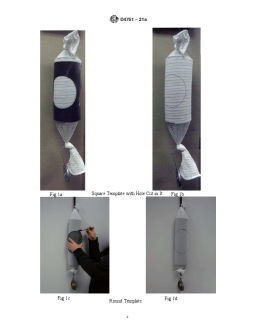
6.2.2.3 Using the knot from one end of the fabric, suspend the geotextile-encased pipe vertically. Gently suspend a 1.13-kg (2.5-lb)
weight from the bottom to ensure intimate contact with the perforated pipe. See Fig. 1a. Allow the suspended pipe with weight
to hang for 2 min.
NOTE 2—Pipes with diameters larger than 75 to 150 mm (3 to 6 in.) may require heavier weights to ensure intimate contact between the pipe and sock
material.
6.2.2.4 For Method A, using a flexible 203-mm (8-in.) diameter round template as a guide, trace a circle on the surface of the fabric
using an indelible marker. See Fig. 1c. Remove the fabric from the pipe section by untying or cutting off the knots at one or both
ends in the fabric. Cut the fabric tube in a lengthwise direction at a position opposing the drawn circle, taking care to not cut the
fabric within the circle. If so desired, the length of the specimen may be shortened by cutting the fabric in a crosswise direction,
taking care not to cut the fabric closer than 75 mm (3 in.) from the outside of the circle. The result will be a planar specimen of
more or less rectangular shape with a circle drawn approximately in its center.
D4751 − 21a
D4751 − 21a
FIG. 1 Specimen Cutting Templates for Circular-Knitted Sock Geotextiles
6.2.2.5 For Method B test specimens, affix an adhesive-backed foil to the fabric which has a 25-mm (1-in.) or 50-mm (2-in.)
diameter hole die cut from the center, and a sufficient outside diameter to exceed the outside diameter of the porometer sample
holder. This foil must be rigid enough to preserve the geometry of the material produced by this technique. The five foil-taped
porometer specimens are then cut with the porometer specimen die, positioning the 25-mm (1-in.) or 50-mm (2-in.) opening in the
center.
6.3 Lot Sample for Specification Conformance Testing—Sample as directed in Practice D4354, Section 8, Procedure C—Sampling
for Purchaser’s Specification Conformance Testing.
6.3.1 Laboratory Sample—To obtain a laboratory sample of the circular-knitted geotextile fabric for acceptance testing of each lot
of pipe, follow this procedure:
6.3.1.1 Select a 3-m (10-ft) section on each lot of the sock-covered pipe to be tested.
6.3.2 Using a length of string, twine, or cord, secure the fabric to the pipe at each end of the 3-m (10-ft) pipe section that was
chosen in 6.3.1.1 in order to prevent the sock fabric from contracting lengthwise when the sock-covered pipe sample is removed
from the roll or pipe section. Remove the 3-m (10-ft) sock-covered pipe section from the roll or pipe section by cutting the pipe
at each end of the 3-m (10-ft) sample, outside of the ties.
6.3.3 Test Specimens—With the fabric still secured to the pipe sample, using a flexible 203-mm (8-in.) diameter round template
for Method A, draw five 203-mm (8-in.) diameter circles at various locations around the circumference of each laboratory sample,
equally spaced along its length, and not closer than 100 mm (4 in.) from either end of the pipe sample. For Method B, affix
adhesive-backed foil to the fabric which has a 25-mm (1-in.) or 50-mm (2-in.) diameter hole die cut from the center, and a sufficient
outside diameter to exceed the outside diameter of the porometer sample holder. This foil must be rigid enough to preserve the
geometry of the material produced by this technique. The five foil-taped porometer specimens are then cut with the porometer
specimen die, positioning the 25-mm (1-in.) or 50-mm (2-in.) opening in the center.
6.3.3.1 Remove the ties from the laboratory sample and remove the fabric from the pipe.
6.3.3.2 When securing specimens by wedging between two sieve frames, cut the laboratory sample in a crosswise direction to
create five specimens, taking care not to make these cuts closer than 75 mm (3 in.) from the outside of the circle. Continue to
prepare the specimens by cutting the fabric in a lengthwise direction at a position opposing the circle. Care must be taken not to
cut through the circle. The result will be the creation of five planar fabric specimens of more or less a rectangular shape with a
circle drawn at its center.
METHOD A—DRY-SIEVING WITH GLASS BEADS
7. Specimen Preparation
7.1 Weigh the Method A test specimens and then submerge them in distilled water for 1 h at the standard atmosphere for testing.
Bring the specimens to moisture equilibrium in the atmosphere for testing geosynthetics. Equilibrium is considered to have been
reached when the change in the mass of the specimen in successive weight measurements made at intervals of not less than 2 h
does not exceed 0.1 g.
7.2 The drying process may be accelerated with the use of a fan. The specimens shall not be dried in an oven or by exposing them
to elevated temperatures above the standard laboratory atmosphere for geosynthetic testing.
NOTE 3—It is recognized that in practice, geosynthetic materials are frequently not weighed to determine when moisture equilibrium has been reached.
While such a method cannot be accepted in cases of dispute, it may be sufficient in routine testing to expose the material to the standard atmosphere for
testing geosynthetics for a reasonable period of time before the specimens are tested. A time of at least 24 h has been found acceptable in most cases.
However, certain fibers may contain more moisture upon receipt than after conditioning. When this is known, a preconditioning cycle as described in
Practice D1776/D1776M may be agreed upon by the contractual parties.
D4751 − 21a
8. Apparatus
8.1 Mechanical Sieve Shaker—A mechanical sieve shaker, which imparts lateral and vertical motion to the sieve, causing the
particles thereon to bounce and turn so as to present different orientations to the sieving surface, should be used. The sieve shaker
should be a constant frequency device utilizing a tapping arm to impart the proper motion to the glass beads.
NOTE 4—Care should be given to the cork or rubber contact point on shakers when the vertical motion comes from an arm striking the cork or rubber.
Excessive wear on the cork or rubber could affect the motion imparted to the glass beads and, therefore, the test result.
8.2 Pan, Cover, and 200-mm (8-in.) Diameter Sieves.
8.3 Spherical Glass Beads in size fractions in accordance with Table 1. It is only necessary to have on hand the bead size fractions
necessary for the range of geotextiles for which testing is anticipated. The sizing of all beads shall be verified prior to each use
by sieving on the pairs of sieves shown in Table 1. Prepare at least 50 g of each size fraction to be used prior to beginning the
test. Bead sizes to be used in this test method are shown in Table 1.
8.4 Balance, having a capacity adequate for the mass of samples anticipated and accurate to 60.05 g.
8.5 Static Elimination, to prevent the accumulation of static electricity when the beads are shaken on the surface of the geotextile.
Commercially available devices or anti-static sprays are acceptable.
8.6 Pan, for collecting sieved beads.
8.7 Flexible Rubber Template, either a square-shaped, flexible rubber template with a 203-mm (8-in.) diameter hole cut in it, or
a 203-mm (8-in.) diameter template, constructed from a durable, yet flexible material such as rubber or neoprene. This template
is used to trace the 203-mm (8-in.) diameter circles on the geotextile fabric for mounting into the sieves described in 8.2. (See Fig.
1.)
9. Procedure
9.1 Run the test at the atmosphere for testing geotextiles in such a manner that static electricity is prevented from affecting test
results. If standard atmosphere cannot be maintained and static electricity is noticed, two methods are available that will prevent
static electricity:
TABLE 1 Glass Bead Sizes
Bead Size Range
A
Bead Size Designation
Passing Retained
Sieve Sieve Sieve
mm mm mm
B B
Number Number Number
2.0 10 1.70 12 1.7 12
1.4 14 1.18 16 1.18 16
1.00 18 0.850 20 0.850 20
0.710 25 0.600 30 0.600 30
0.500 35 0.425 40 0.425 40
0.355 45 0.300 50 0.300 50
0.250 60 0.212 70 0.212 70
0.180 80 0.150 100 0.150 100
0.125 120 0.106 140 0.106 140
0.090 170 0.075 200 0.075 200
A
The designated bead size is the “retained on” size of the sieve pair used to size
the beads. For example, beads designated No. 40 are beads that pass the No. 35
sieve and are retained on the No. 40 sieve. These beads are typically sold as
35-40 beads.
B
See Specification E11.
The sole source of supply of the apparatus known to the committee at this time is W.S. Tyler, Inc., 8200 Tyler Blvd., Mentor, OH 44060. If you are aware of alternative
suppliers, please provide this information to ASTM International Headquarters. Your comments will receive careful consideration at a meeting of the responsible technical
committee, which you may attend.
------------
...