

ASTM A814/A814M-15(2019)
(Specification)Standard Specification for Cold-Worked Welded Austenitic Stainless Steel Pipe
General Information
- Abstract
ABSTRACT
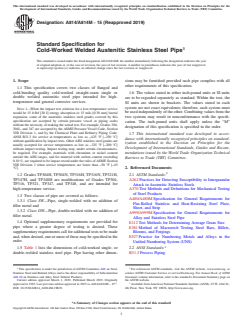
This specification covers two classes of flanged and cold-bending quality cold-worked straight-beam single or double welded austenitic steel pipe intended for high-temperature and general corrosive services. Pipes of Class SW shall be single-welded with no addition of filler metal and Class DW pipes shall be double-welded with no addition of filler metal. The pipes shall be made by machine-welding or an automatic-welding process, welding from one or both sides and producing full penetration welds with no addition of filler metal in the welding operation. Prior to final heat treatment, the weld bead must be cold-worked by methods such as forging, planishing, drawing, swaging or bead rolling so as to obtain a flush condition on the inside and outside of the pipe. All specimens shall be subjected to transverse or longitudinal tension test, flattening test, and hydrostatic test.
SCOPE
1.1 This specification covers two classes of flanged and cold-bending quality cold-worked straight-seam single or double welded austenitic steel pipe intended for high-temperature and general corrosive services.
Note 1: When the impact test criterion for a low-temperature service would be 15 ft·lbf [20 J] energy absorption or 15 mils [0.38 mm] lateral expansion, some of the austenitic stainless steel grades covered by this specification are accepted by certain pressure vessel or piping codes without the necessity of making the actual test. For example, Grades 304, 304L, and 347 are accepted by the ASME Pressure Vessel Code, Section VIII Division 1, and by the Chemical Plant and Refinery Piping Code, ANSI B31.3 for service at temperatures as low as −425 °F [−250 °C] without qualification by impact tests. Other AISI stainless steel grades are usually accepted for service temperatures as low as −325 °F [−200 °C] without impact testing. Impact testing may, under certain circumstances, be required. For example, materials with chromium or nickel content outside the AISI ranges, and for material with carbon content exceeding 0.10 %, are required to be impact tested under the rules of ASME Section VIII Division 1 when service temperatures are lower than −50 °F [−45 °C].
1.2 Grades TP304H, TP304N, TP316H, TP316N, TP321H, TP347H, and TP348H are modifications of Grades TP304, TP316, TP321, TP347, and TP348, and are intended for high-temperature service.
1.3 Two classes of pipe are covered as follows:
1.3.1 Class SW—Pipe, single-welded with no addition of filler metal and
1.3.2 Class DW—Pipe, double-welded with no addition of filler metal.
1.4 Optional supplementary requirements are provided for pipe where a greater degree of testing is desired. These supplementary requirements call for additional tests to be made and, when desired, one or more of these may be specified in the order.
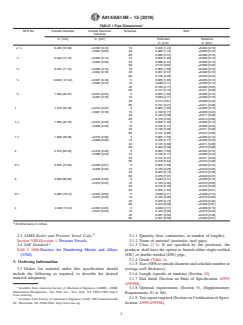
1.5 Table 1 lists the dimensions of cold-worked single- or double-welded stainless steel pipe. Pipe having other dimensions may be furnished provided such pipe complies with all other requirements of this specification.
1.6 The values stated in either inch-pound units or SI units are to be regarded separately as standard. Within the text, the SI units are shown in brackets. The values stated in each system are not exact equivalents; therefore, each system must be used independently of the other. Combining values from the two systems may result in nonconformance with the specification. The inch-pound units shall apply unless the “M” designation of this specification is specified in the order.
1.7 This international standard was developed in accordance with internationally recognized principles on standardization established in the Decision on Principles for the Development of International Standards, Guides and Recommendations issued by the World Trade Organization Technical Barriers to Trade (TBT) Committee.
- Status
- Published
- Publication Date
- 28-Feb-2019
- Technical Committee
- A01 - Steel, Stainless Steel and Related Alloys
- Drafting Committee
- A01.10 - Stainless and Alloy Steel Tubular Products
Overview
ASTM A814/A814M-15(2019) is the internationally recognized standard specification developed by ASTM for cold-worked welded austenitic stainless steel pipe. This standard outlines the requirements for two classes of straight-seam flanged and cold-bending quality pipes-single-welded (SW) and double-welded (DW)-intended for use in high-temperature and general corrosive environments. The specification ensures reliable mechanical properties and corrosion resistance, making it essential for industries handling aggressive substances and demanding temperature ranges.
Key Topics
Scope and Grades
- Covers two primary pipe classes:
- Class SW: Single-welded with no filler metal addition
- Class DW: Double-welded with no filler metal addition
- Suitable for high-temperature services and general corrosive applications
- Includes grades such as TP304, TP304L, TP316, TP347, and their high-temperature variants (H grades)
- Covers two primary pipe classes:
Manufacturing and Quality Control
- Pipes are manufactured using machine or automatic welding from one or both sides, ensuring full penetration welds
- The weld bead must be cold-worked before final heat treatment for a flush internal and external finish
- Pipes are provided in a heat-treated condition for optimal mechanical properties
Testing and Inspection
- Mandatory mechanical tests include:
- Tension test (transverse or longitudinal)
- Flattening test
- Hydrostatic test for each pipe length
- Double-welded pipes require visual examination for complete weld fusion
- Optional supplementary tests (such as eddy current, ultrasonic, additional corrosion, and flange tests) are available based on purchaser requirements
- Mandatory mechanical tests include:
Dimensional and Chemical Requirements
- Specifies wall thickness, outside diameter, and tolerances
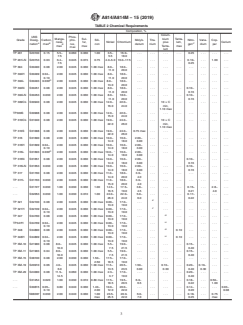
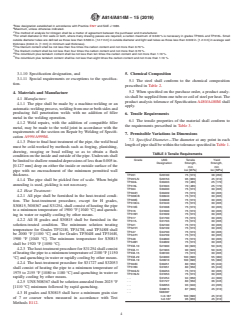
- Chemical composition conforms to stringent grades per Table 2 in the standard
Marking and Documentation
- Pipes are marked with grade, class, manufacturer's identification, and heat-treatment information to ensure traceability
Applications
The ASTM A814/A814M standard is vital for industries requiring cold-worked welded austenitic stainless steel pipes with high corrosion and temperature resistance. Key applications include:
- Petrochemical and Chemical Processing: Used in process piping, refinery operations, and chemical transport lines prone to corrosive attack and demanding thermal cycles.
- Power Generation: Ideal for superheater, reheater, and heat exchanger piping in both fossil and nuclear plants.
- Pressure Vessel Construction: Accepted by ASME Pressure Vessel and Piping Codes for service at extremely low to high temperatures, often without the need for additional impact testing on specific grades.
- Food and Pharmaceutical Industries: Ensures purity and resistance to cleaning chemicals.
- General Industrial Use: Suitable for any environment where mechanical strength and corrosion resistance are critical.
Related Standards
ASTM A814/A814M aligns with several key international and national standards to ensure compatibility across applications and regulatory compliance, including:
- ASTM A999/A999M: General requirements for alloy and stainless steel pipes
- ASTM A262: Practices for detecting susceptibility to intergranular attack in austenitic stainless steels
- ASTM A370: Mechanical testing of steel products
- ASTM E112: Determining average grain size
- ASME Boiler and Pressure Vessel Code, Section VIII, Division 1: Requirements for pressure vessel construction
- ANSI B31.3: Process piping code
For those manufacturing or procuring welded austenitic stainless steel pipes, ASTM A814/A814M provides the comprehensive guidelines needed for ensuring safety, reliability, and regulatory conformance in critical piping systems. Incorporation of this standard supports best practices in material selection, fabrication, and quality assurance for corrosion-resistant pipe applications.
Relations
- Replaces
ASTM A814/A814M-15e1 - Standard Specification for Cold-Worked Welded Austenitic Stainless Steel Pipe - Effective Date
- 01-Mar-2019
- Effective Date
- 01-Mar-2024
- Effective Date
- 01-Nov-2023
- Effective Date
- 01-Sep-2019
- Effective Date
- 01-Jul-2019
- Effective Date
- 01-Sep-2018
- Refers
ASTM A370-17a - Standard Test Methods and Definitions for Mechanical Testing of Steel Products - Effective Date
- 15-Nov-2017
- Effective Date
- 01-Nov-2017
- Effective Date
- 01-Sep-2017
- Effective Date
- 01-Jan-2017
- Effective Date
- 01-Dec-2016
- Effective Date
- 01-Sep-2016
- Effective Date
- 15-Apr-2016
- Effective Date
- 01-Feb-2016
- Effective Date
- 01-Dec-2015
Get Certified
Connect with accredited certification bodies for this standard

Institut za varilstvo d.o.o. (Welding Institute)
Slovenia's leading welding institute since 1952. ISO 3834, EN 1090, pressure equipment certification, NDT personnel, welder qualification. Only IIW Au
Sponsored listings
Frequently Asked Questions
ASTM A814/A814M-15(2019) is a technical specification published by ASTM International. Its full title is "Standard Specification for Cold-Worked Welded Austenitic Stainless Steel Pipe". This standard covers: ABSTRACT This specification covers two classes of flanged and cold-bending quality cold-worked straight-beam single or double welded austenitic steel pipe intended for high-temperature and general corrosive services. Pipes of Class SW shall be single-welded with no addition of filler metal and Class DW pipes shall be double-welded with no addition of filler metal. The pipes shall be made by machine-welding or an automatic-welding process, welding from one or both sides and producing full penetration welds with no addition of filler metal in the welding operation. Prior to final heat treatment, the weld bead must be cold-worked by methods such as forging, planishing, drawing, swaging or bead rolling so as to obtain a flush condition on the inside and outside of the pipe. All specimens shall be subjected to transverse or longitudinal tension test, flattening test, and hydrostatic test. SCOPE 1.1 This specification covers two classes of flanged and cold-bending quality cold-worked straight-seam single or double welded austenitic steel pipe intended for high-temperature and general corrosive services. Note 1: When the impact test criterion for a low-temperature service would be 15 ft·lbf [20 J] energy absorption or 15 mils [0.38 mm] lateral expansion, some of the austenitic stainless steel grades covered by this specification are accepted by certain pressure vessel or piping codes without the necessity of making the actual test. For example, Grades 304, 304L, and 347 are accepted by the ASME Pressure Vessel Code, Section VIII Division 1, and by the Chemical Plant and Refinery Piping Code, ANSI B31.3 for service at temperatures as low as −425 °F [−250 °C] without qualification by impact tests. Other AISI stainless steel grades are usually accepted for service temperatures as low as −325 °F [−200 °C] without impact testing. Impact testing may, under certain circumstances, be required. For example, materials with chromium or nickel content outside the AISI ranges, and for material with carbon content exceeding 0.10 %, are required to be impact tested under the rules of ASME Section VIII Division 1 when service temperatures are lower than −50 °F [−45 °C]. 1.2 Grades TP304H, TP304N, TP316H, TP316N, TP321H, TP347H, and TP348H are modifications of Grades TP304, TP316, TP321, TP347, and TP348, and are intended for high-temperature service. 1.3 Two classes of pipe are covered as follows: 1.3.1 Class SW—Pipe, single-welded with no addition of filler metal and 1.3.2 Class DW—Pipe, double-welded with no addition of filler metal. 1.4 Optional supplementary requirements are provided for pipe where a greater degree of testing is desired. These supplementary requirements call for additional tests to be made and, when desired, one or more of these may be specified in the order. 1.5 Table 1 lists the dimensions of cold-worked single- or double-welded stainless steel pipe. Pipe having other dimensions may be furnished provided such pipe complies with all other requirements of this specification. 1.6 The values stated in either inch-pound units or SI units are to be regarded separately as standard. Within the text, the SI units are shown in brackets. The values stated in each system are not exact equivalents; therefore, each system must be used independently of the other. Combining values from the two systems may result in nonconformance with the specification. The inch-pound units shall apply unless the “M” designation of this specification is specified in the order. 1.7 This international standard was developed in accordance with internationally recognized principles on standardization established in the Decision on Principles for the Development of International Standards, Guides and Recommendations issued by the World Trade Organization Technical Barriers to Trade (TBT) Committee.
ABSTRACT This specification covers two classes of flanged and cold-bending quality cold-worked straight-beam single or double welded austenitic steel pipe intended for high-temperature and general corrosive services. Pipes of Class SW shall be single-welded with no addition of filler metal and Class DW pipes shall be double-welded with no addition of filler metal. The pipes shall be made by machine-welding or an automatic-welding process, welding from one or both sides and producing full penetration welds with no addition of filler metal in the welding operation. Prior to final heat treatment, the weld bead must be cold-worked by methods such as forging, planishing, drawing, swaging or bead rolling so as to obtain a flush condition on the inside and outside of the pipe. All specimens shall be subjected to transverse or longitudinal tension test, flattening test, and hydrostatic test. SCOPE 1.1 This specification covers two classes of flanged and cold-bending quality cold-worked straight-seam single or double welded austenitic steel pipe intended for high-temperature and general corrosive services. Note 1: When the impact test criterion for a low-temperature service would be 15 ft·lbf [20 J] energy absorption or 15 mils [0.38 mm] lateral expansion, some of the austenitic stainless steel grades covered by this specification are accepted by certain pressure vessel or piping codes without the necessity of making the actual test. For example, Grades 304, 304L, and 347 are accepted by the ASME Pressure Vessel Code, Section VIII Division 1, and by the Chemical Plant and Refinery Piping Code, ANSI B31.3 for service at temperatures as low as −425 °F [−250 °C] without qualification by impact tests. Other AISI stainless steel grades are usually accepted for service temperatures as low as −325 °F [−200 °C] without impact testing. Impact testing may, under certain circumstances, be required. For example, materials with chromium or nickel content outside the AISI ranges, and for material with carbon content exceeding 0.10 %, are required to be impact tested under the rules of ASME Section VIII Division 1 when service temperatures are lower than −50 °F [−45 °C]. 1.2 Grades TP304H, TP304N, TP316H, TP316N, TP321H, TP347H, and TP348H are modifications of Grades TP304, TP316, TP321, TP347, and TP348, and are intended for high-temperature service. 1.3 Two classes of pipe are covered as follows: 1.3.1 Class SW—Pipe, single-welded with no addition of filler metal and 1.3.2 Class DW—Pipe, double-welded with no addition of filler metal. 1.4 Optional supplementary requirements are provided for pipe where a greater degree of testing is desired. These supplementary requirements call for additional tests to be made and, when desired, one or more of these may be specified in the order. 1.5 Table 1 lists the dimensions of cold-worked single- or double-welded stainless steel pipe. Pipe having other dimensions may be furnished provided such pipe complies with all other requirements of this specification. 1.6 The values stated in either inch-pound units or SI units are to be regarded separately as standard. Within the text, the SI units are shown in brackets. The values stated in each system are not exact equivalents; therefore, each system must be used independently of the other. Combining values from the two systems may result in nonconformance with the specification. The inch-pound units shall apply unless the “M” designation of this specification is specified in the order. 1.7 This international standard was developed in accordance with internationally recognized principles on standardization established in the Decision on Principles for the Development of International Standards, Guides and Recommendations issued by the World Trade Organization Technical Barriers to Trade (TBT) Committee.
ASTM A814/A814M-15(2019) is classified under the following ICS (International Classification for Standards) categories: 23.040.10 - Iron and steel pipes. The ICS classification helps identify the subject area and facilitates finding related standards.
ASTM A814/A814M-15(2019) has the following relationships with other standards: It is inter standard links to ASTM A814/A814M-15e1, ASTM A370-24, ASTM A480/A480M-23b, ASTM A480/A480M-19, ASTM A370-19, ASTM A480/A480M-18, ASTM A370-17a, ASTM A480/A480M-17, ASTM A999/A999M-17, ASTM A370-17, ASTM A480/A480M-16b, ASTM A999/A999M-16, ASTM A480/A480M-16a, ASTM A480/A480M-16, ASTM A999/A999M-15. Understanding these relationships helps ensure you are using the most current and applicable version of the standard.
ASTM A814/A814M-15(2019) is available in PDF format for immediate download after purchase. The document can be added to your cart and obtained through the secure checkout process. Digital delivery ensures instant access to the complete standard document.
Standards Content (Sample)
This international standard was developed in accordance with internationally recognized principles on standardization established in the Decision on Principles for the
Development of International Standards, Guides and Recommendations issued by the World Trade Organization Technical Barriers to Trade (TBT) Committee.
Designation:A814/A814M −15 (Reapproved 2019)
Standard Specification for
Cold-Worked Welded Austenitic Stainless Steel Pipe
This standard is issued under the fixed designationA814/A814M; the number immediately following the designation indicates the year
of original adoption or, in the case of revision, the year of last revision.Anumber in parentheses indicates the year of last reapproval.
A superscript epsilon (´) indicates an editorial change since the last revision or reapproval.
1. Scope sions may be furnished provided such pipe complies with all
other requirements of this specification.
1.1 This specification covers two classes of flanged and
cold-bending quality cold-worked straight-seam single or
1.6 The values stated in either inch-pound units or SI units
double welded austenitic steel pipe intended for high-
are to be regarded separately as standard. Within the text, the
temperature and general corrosive services.
SI units are shown in brackets. The values stated in each
system are not exact equivalents; therefore, each system must
NOTE 1—When the impact test criterion for a low-temperature service
beusedindependentlyoftheother.Combiningvaluesfromthe
would be 15 ft·lbf [20 J] energy absorption or 15 mils [0.38 mm] lateral
expansion, some of the austenitic stainless steel grades covered by this two systems may result in nonconformance with the specifi-
specification are accepted by certain pressure vessel or piping codes
cation. The inch-pound units shall apply unless the “M”
without the necessity of making the actual test. For example, Grades 304,
designation of this specification is specified in the order.
304L, and 347 are accepted by theASME Pressure Vessel Code, Section
VIII Division 1, and by the Chemical Plant and Refinery Piping Code,
1.7 This international standard was developed in accor-
ANSI B31.3 for service at temperatures as low as −425 °F [−250 °C]
dance with internationally recognized principles on standard-
without qualification by impact tests. OtherAISI stainless steel grades are
ization established in the Decision on Principles for the
usually accepted for service temperatures as low as −325 °F [−200 °C]
Development of International Standards, Guides and Recom-
without impact testing. Impact testing may, under certain circumstances,
be required. For example, materials with chromium or nickel content
mendations issued by the World Trade Organization Technical
outside the AISI ranges, and for material with carbon content exceeding
Barriers to Trade (TBT) Committee.
0.10%, are required to be impact tested under the rules ofASME Section
VIII Division 1 when service temperatures are lower than −50 °F [−45
2. Referenced Documents
°C].
1.2 Grades TP304H, TP304N, TP316H, TP316N, TP321H,
2.1 ASTM Standards:
TP347H, and TP348H are modifications of Grades TP304, A262Practices for Detecting Susceptibility to Intergranular
TP316, TP321, TP347, and TP348, and are intended for
Attack in Austenitic Stainless Steels
high-temperature service. A370Test Methods and Definitions for Mechanical Testing
of Steel Products
1.3 Two classes of pipe are covered as follows:
A480/A480MSpecification for General Requirements for
1.3.1 Class SW—Pipe, single-welded with no addition of
Flat-Rolled Stainless and Heat-Resisting Steel Plate,
filler metal and
Sheet, and Strip
1.3.2 Class DW—Pipe, double-welded with no addition of
A999/A999MSpecification for General Requirements for
filler metal.
Alloy and Stainless Steel Pipe
1.4 Optional supplementary requirements are provided for
E112Test Methods for Determining Average Grain Size
pipe where a greater degree of testing is desired. These
E381Method of Macroetch Testing Steel Bars, Billets,
supplementaryrequirementscallforadditionalteststobemade
Blooms, and Forgings
and,whendesired,oneormoreofthesemaybespecifiedinthe
E527Practice for Numbering Metals and Alloys in the
order.
Unified Numbering System (UNS)
1.5 Table 1 lists the dimensions of cold-worked single- or 2.2 ANSI Standards:
double-welded stainless steel pipe. Pipe having other dimen- B31.3Process Piping
1 2
This specification is under the jurisdiction ofASTM Committee A01 on Steel, For referenced ASTM standards, visit the ASTM website, www.astm.org, or
Stainless Steel and RelatedAlloys and is the direct responsibility of Subcommittee contact ASTM Customer Service at service@astm.org. For Annual Book of ASTM
A01.10 on Stainless and Alloy Steel Tubular Products. Standards volume information, refer to the standard’s Document Summary page on
Current edition approved March 1, 2019. Published March 2019. Originally the ASTM website.
ɛ1 3
approved in 1983. Last previous edition approved in 2015 as A814/A814M–15 . Available fromAmerican National Standards Institute (ANSI), 25 W. 43rd St.,
DOI: 10.1520/A0814_A0814M-15R19. 4th Floor, New York, NY 10036, http://www.ansi.org.
*A Summary of Changes section appears at the end of this standard
Copyright © ASTM International, 100 Barr Harbor Drive, PO Box C700, West Conshohocken, PA 19428-2959. United States
A814/A814M−15 (2019)
A
TABLE 1 Pipe Dimensions
NPS No. Outside Diameter Outside Diameter Schedule Wall
Tolerance
in. [mm] in. [mm] Thickness Tolerance
in. [mm] in. [mm]
e ⁄8 0.405 [10.29] +0.004 [0.10] 10 0.049 [1.24] ±0.004 [0.10]
−0.002 [0.05] 40 0.068 [1.72] ±0.005 [0.12]
80 0.095 [2.41] ±0.006 [0.15]
⁄4 0.540 [13.72] +0.005 [0.12] 10 0.065 [1.65] ±0.005 [0.12]
−0.003 [0.08] 40 0.088 [2.24] ±0.006 [0.15]
80 0.119 [3.02] ±0.009 [0.23]
⁄8 0.675 [17.15] +0.006 [0.15] 10 0.065 [1.65] ±0.005 [0.12]
−0.004 [0.10] 40 0.091 [2.31] ±0.006 [0.15]
80 0.126 [3.20] ±0.010 [0.25]
⁄2 0.840 [ 21.34] +0.007 [0.18] 5 0.065 [1.65] ±0.005 [0.12]
−0.005 [0.12] 10 0.083 [2.11] ±0.006 [0.15]
40 0.109 [2.77] ±0.009 [0.23]
80 0.147 [3.73] ±0.011 [0.28]
⁄4 1.050 [26.67] +0.010 [0.25] 5 0.065 [1.65] ±0.005 [0.12]
−0.007 [0.18] 10 0.083 [2.11] ±0.006 [0.15]
40 0.113 [2.87] ±0.009 [0.23]
80 0.154 [3.91] ±0.011 [0.28]
1 1.315 [33.40] +0.010 [0.25] 5 0.065 [1.65] ±0.005 [0.12]
−0.007 [0.18] 10 0.109 [2.77] ±0.009 [0.23]
40 0.133 [3.38] ±0.011 [0.28]
80 0.179 [4.55] ±0.014 [0.36]
1 ⁄4 1.660 [42.16] +0.012 [0.30] 5 0.065 [1.65] ±0.005 [0.12]
−0.008 [0.20] 10 0.109 [2.77] ±0.009 [0.23]
40 0.140 [3.56] ±0.011 [0.28]
80 0.191 [4.85] ±0.014 [0.36]
1 ⁄2 1.900 [48.26] +0.015 [0.38] 5 0.065 [1.65] ±0.005 [0.12]
−0.008 [0.20] 10 0.109 [2.77] ±0.009 [0.23]
40 0.145 [3.68] ±0.011 [0.28]
80 0.200 [5.08] ±0.015 [0.38]
2 2.375 [60.33] +0.018 [0.46] 5 0.065 [1.65] ±0.005 [0.12]
−0.008 [0.20] 10 0.109 [2.77] ±0.009 [0.23]
40 0.154 [3.91] ±0.011 [0.28]
80 0.218 [5.54] ±0.015 [0.38]
2 ⁄2 2.875 [73.03] +0.020 [0.51] 5 0.065 [1.65] ±0.005 [0.12]
−0.009 [0.23] 10 0.120 [3.05] ±0.010 [0.25]
40 0.203 [5.16] ±0.015 [0.38]
80 0.276 [7.01] ±0.020 [0.51]
3 3.500 [88.90] +0.025 [0.63] 5 0.083 [2.11] ±0.006 [0.15]
−0.010 [0.25] 10 0.120 [3.05] ±0.010 [0.25]
40 0.216 [5.49] ±0.015 [0.38]
80 0.300 [7.62] ±0.020 [0.51]
3 ⁄2 4.000 [101.6] +0.025 [0.63] 5 0.083 [2.11] ±0.006 [0.15]
−0.010 [0.25] 10 0.120 [3.05] ±0.010 [0.25]
40 0.226 [5.74] ±0.018 [0.46]
80 0.318 [8.08] ±0.020 [0.51]
4 4.500 [114.3] +0.025 [0.63] 5 0.083 [2.11] ±0.006 [0.15]
−0.010 [0.25] 10 0.120 [3.05] ±0.010 [0.25]
40 0.237 [6.02] ±0.019 [0.48]
80 0.337 [8.56] ±0.020 [0.51]
A
All dimensions in inches.
2.3 ASME Boiler and Pressure Vessel Code: 3.1.1 Quantity (feet, centimetres, or number of lengths),
Section VIII Division 1,Pressure Vessels 3.1.2 Name of material (austenitic steel pipe),
2.4 SAE Standard: 3.1.3 Class (1.3). If not specified by the purchaser, the
SAE J 1086Practice for Numbering Metals and Alloys producer shall have the option to furnish either single-welded
(UNS) (SW) or double-welded (DW) pipe,
3.1.4 Grade (Table 2),
3. Ordering Information
3.1.5 Size(NPSoroutsidediameterandschedulenumberor
3.1 Orders for material under this specification should
average wall thickness),
include the following as required, to describe the desired
3.1.6 Length (specific or random) (Section 10),
material adequately:
3.1.7 End finish (Section on Ends of Specification A999/
A999M),
Available from American Society of Mechanical Engineers (ASME), ASME
3.1.8 Optional requirements (Section 9), (Supplementary
International Headquarters, Two Park Ave., New York, NY 10016-5990, http://
Requirements S1 to S8),
www.asme.org.
3.1.9 Testreportrequired(SectiononCertificationofSpeci-
Available from Society of Automotive Engineers (SAE), 400 Commonwealth
Dr., Warrendale, PA 15096-0001, http://www.sae.org. fication A999/A999M),
A814/A814M−15 (2019)
TABLE 2 Chemical Requirements
Composition, %
Colum-
UNS Phos-
Manga- Sul- bium Tanta-
Grade Desig- Carbon, pho- Sili- Molyb- Tita- Nitro- Vana- Cop-
nese, fur, Nickel Chromium plus lum, Cerium
A B C
nation max rus, con denum nium gen dium per
B
max max Tanta- max
max
lum
TP 201 S20100 0.15 5.5– 0.060 0.030 1.00 3.5– 16.0– . . . . 0.25 . . .
7.5 5.5 18.0
TP 201LN S20153 0.03 6.4– 0.045 0.015 0.75 4.0–5.0 16.0–17.5 . . . . . . . . . . . . 0.10– . 1.00 .
7.5 0.25
TP 304 S30400 0.08 2.00 0.045 0.030 1.00 max 8.0– 18.0– . . . . . . . .
11.0 20.0
TP 304H S30409 0.04– 2.00 0.045 0.030 1.00 max 8.0– 18.0– . . . . . . . .
0.10 11.0 20.0
D
TP 304L S30403 0.030 2.00 0.045 0.030 1.00 max 8.0– 18.0– . . . . . . . .
13.0 20.0
TP 304N S30451 0.08 2.00 0.045 0.030 1.00 max 8.0– 18.0– . . . . 0.10– . . .
11.0 20.0 0.16
TP 304LN S30453 0.030 2.00 0.045 0.030 1.00 max 8.0– 18.0– . . . . 0.10– . . .
11.0 20.0 0.16
TP 309Cb S30940 0.08 2.00 0.045 0.030 1.00 max 12.0– 22.0– . . 10×C . . . . .
16.0 24.0 min,
1.10 max
TP309S S30908 0.08 2.00 0.045 0.030 1.00 max 12.0– 22.0– . . . . . . . .
15.0 24.0
TP 310Cb S31040 0.08 2.00 0.045 0.030 1.00 max 19.0– 24.0– . . 10×C . . . . .
22.0 26.0 min,
1.10 max
TP 310S S31008 0.08 2.00 0.045 0.030 1.00 max 19.0– 24.0– 0.75max . . . . . . .
22.0 26.0
TP 316 S31600 0.08 2.00 0.045 0.030 1.00 max 10.0– 16.0– 2.00– . . . . . . .
14.0 18.0 3.00
TP 316H S31609 0.04– 2.00 0.045 0.030 1.00 max 10.0– 16.0– 2.00– . . . . . . .
0.10 14.0 18.0 3.00
D
TP 316L S31603 0.030 2.00 0.045 0.030 1.00 max 10.0– ¯ 16.0– 2.00– . . . . . . .
14.0 18.0 3.00
TP 316N S31651 0.08 2.00 0.045 0.030 1.00 max 10.0– 16.0– 2.00– 0.10– . . .
14.0 18.0 3.00 0.16
TP 316LN S31653 0.030 2.00 0.045 0.030 1.00 max 10.0– 16.0– 2.00– . . . 0.10– . . .
14.0 18.0 3.00 0.16
TP 317 S31700 0.08 2.00 0.045 0.030 1.00 max 11.0– 18.0– 3.0– . . . . . . .
14.0 20.0 4.0
TP 317L S31703 0.030 2.00 0.045 0.030 1.00 max 11.0– 18.0– 3.0– . . . . . . .
15.0 20.0 4.0
. . . S31727 0.030 1.00 0.030 0.030 1.00 14.5– 17.5– 3.8– . . . 0.15– . . . 2.8– .
16.5 19.0 4.5 0.21 4.0
. . . S32053 0.030 1.00 0.030 0.010 1.00 24.0– 22.0– 5.0– . . . 0.17– . . .
26.0 24.0 6.0 0.22
E
TP 321 S32100 0.08 2.00 0.045 0.030 1.00 max 9.00– 17.0– . . . . . . .
13.0 19.0
F
TP 321H S32109 0.04– 2.00 0.045 0.030 1.00 max 9.00– 17.0– . . . . . . .
0.10 13.0 19.0
G
TP 347 S34700 0.08 2.00 0.045 0.030 1.00 max 9.00– 17.0– . . . . . . .
13.0 19.0
H
TP347H S34709 0.04– 2.00 0.045 0.030 1.00 max 9.00– 17.0– . . . . . . .
0.10 13.0 19.0
G
TP 348 S34800 0.08 2.00 0.045 0.030 1.00 max 9.00– 17.0– . . 0.10 . . .
13.0 19.0
H
TP 348H S34809 0.04– 2.00 0.045 0.030 1.00 max 9.00– 17.0– . . 0.10 . . . .
0.10 13.0 19.0
TP XM-10 S21900 0.08 8.0– 0.045 0.030 1.00 max 5.5– 19.0– . . . . 0.15– . . .
10.0 7.5 21.5 0.40
TP XM-11 S21903 0.04 8.0– 0.045 0.030 1.00 max 5.5– 19.0– . . . . 0.15– . . .
10.0 7.5 21.5 0.40
TP XM-15 S38100 0.08 2.00 0.030 0.030 1.50– 17.5– 17.0– . . . . . . . .
2.50 18.5 19.0
TP XM-19 S20910 0.06 4.0– 0.045 0.030 1.00 max 11.5– 20.5– 1.50– . . . 0.10– . . . 0.20– 0.10– . .
6.0 13.5 23.5 3.00 0.30 0.40 0.30
TP XM-29 S24000 0.08 11.5– 0.060 0.030 1.00 max 2.3– 17.0– . . . . 0.20– . . .
14.5 3.7 19.0 0.40
. . . S31254 0.020 1.00 0.030 0.010 0.80 max 17.5– 19.5– 6.0– . . . 0.18– . . . 0.50– .
18.5 20.5 6.5 0.22 1.00
. . . S30815 0.05– 0.80 0.040 0.030 1.40– 10.0– 20.0– . . . . 0.14– . . 0.03–
0.10 2.00 12.0 22.0 0.20 0.08
N08367 0.030 2.00 0.040 0.030 1.00 23.5- 20.0- 6.0- . . . 0.18- . . . 0.75 .
max 25.5 22.0 7.0 0.25 max
A814/A814M−15 (2019)
A
New designation established in accordance with Practice E527 and SAE J 1086.
B
Maximum, unless otherwise indicated.
C
The method of analysis for nitrogen shall be a matter of agreement between the purchaser and manufacturer.
D
For small diameter or thin walls or both, where many drawing passes are required, a carbon maximum of 0.040 % is necessary in grades TP304L and TP316L. Small
outside diameter tubes are defined as those less than 0.500 in. [12.7 mm] in outside diameter and light wall tubes as those less than 0.049 in. [1.2 mm] in average wall
thickness (0.044 in. [1 mm] in minimum wall thickness).
E
The titanium content shall be not less than five times the carbon content and not more than 0.70 %.
F
The titanium content shall be not less than four times the carbon content and not more than 0.70 %.
G
The columbium plus tantalum content shall be not less than ten times the carbon content and not more than 1.10 %.
H
The columbium plus tantalum content shall be not less than eight times the carbon content and not more than 1.10 %.
3.1.10 Specification designation, and 5. Chemical Composition
3.1.11 Special requirements or exceptions to the specifica-
5.1 The steel shall conform to the chemical composition
tion.
prescribed in Table 2.
5.2 When specified on the purchase order, a product analy-
4. Materials and Manufacture
sisshallbesuppliedfromonetubeorcoilofsteelperheat.The
4.1 Manufacture:
product analysi
...