

ASTM F2731-18
(Test Method)Standard Test Method for Measuring the Transmitted and Stored Energy of Firefighter Protective Clothing Systems
General Information
- Abstract
SIGNIFICANCE AND USE
5.1 Firefighters are routinely exposed to radiant heat in the course of their fireground activities. In some cases, firefighters have reported burn injuries under clothing where there is no evidence of damage to the exterior or interior layers of the firefighter protective clothing.5 Low levels of transmitted radiant energy alone, or a combination of the transmitted radiant energy and stored energy released through compression, can be sufficient to cause these types of injuries. This test method was designed to measure both the transmitted and stored energy in firefighter protective clothing material systems under a specific set of laboratory exposure conditions.
5.2 The intensity of radiant heat exposure used in this test method was chosen to be an approximate midpoint representative of ordinary fireground conditions as defined for structural firefighting (1, 2).6 The specific radiant heat exposure was selected at 8.5 ± 0.5 kW/m2 (0.20 ± 0.012 cal/cm2-s), since this level of radiant heat can be maintained by the test equipment and produces little or no damage to most NFPA 1971-compliant protective clothing systems.
5.2.1 Utech (2) defined ordinary fireground conditions as having air temperatures ranging from 60 to 300 °C and having heat flux values ranging from 2.1 to 21.0 kW/m2 (0.05 to 0.5 cal/cm2-s).
5.3 Protective clothing systems include the materials used in the composite structure. These include the outer shell, moisture barrier, and thermal barrier. It is possible that they will also include other materials used on firefighter protective clothing such as reinforcement layers, seams, pockets, flaps, hook and loop, straps, or reflective trim.
5.4 The transmission and storage of heat energy in firefighter protective clothing is affected by several factors. These include the effects of wear and use conditions of the protective clothing system. In this test method, conditioning procedures are provided for the laundering of composite samples prior to ...
SCOPE
1.1 This test method uses one of two procedures to measure: (1) heat energy, which can be directly transmitted through the multilayer structure without compressive force, that can result in predicted burn injury, or (2) heat energy directly transmitted through the multilayer structure, followed by applying a compressive force, which rapidly releases stored heat energy in the multilayer structure that can result in a predicted burn injury.
1.1.1 This test method is applicable only to protective clothing systems that are suitable for exposure to heat and flames.
1.1.2 Flame resistance of the material system shall be determined prior to testing according to the applicable performance or specification standard, or both, for the material’s end use.
1.2 This test method establishes procedures for moisture preconditioning of firefighter protective clothing material systems.
1.3 The second-degree burn injury prediction used in this standard is based on a limited number of experiments on forearms of human subjects.
1.3.1 The length of exposures needed to generate a second-degree burn injury in this test method exceeds the exposure times found in the limited number of experiments on human forearms.
1.4 The values stated in SI units are to be regarded as the standard. The values given in parentheses are mathematical conversions to English units or other units commonly used for thermal testing.
1.5 This standard is used to measure and describe the properties of materials, products, or assemblies in response to radiant heat under controlled laboratory conditions but does not by itself incorporate all factors required for fire hazard or fire risk assessment of the materials, products, or assemblies under actual fire conditions.
1.6 This standard does not purport to address all of the safety concerns, if any, associated with its use. It is the responsibility of the user of this standard to establish appropriate ...
- Status
- Published
- Publication Date
- 31-May-2018
- Technical Committee
- F23 - Personal Protective Clothing and Equipment
- Drafting Committee
- F23.80 - Flame and Thermal
Buy Documents
ASTM F2731-18 - Standard Test Method for Measuring the Transmitted and Stored Energy of Firefighter Protective Clothing Systems
REDLINE ASTM F2731-18 - Standard Test Method for Measuring the Transmitted and Stored Energy of Firefighter Protective Clothing Systems
Overview
ASTM F2731-18 is the Standard Test Method for Measuring the Transmitted and Stored Energy of Firefighter Protective Clothing Systems. Issued by ASTM International, this standard outlines laboratory procedures for evaluating how much radiant heat energy passes through and is temporarily stored in multilayer firefighter gear under conditions that simulate ordinary fireground exposures. The main goal is to assess the risk of second-degree burns for firefighters, including scenarios where localized burns can occur beneath clothing with no visible material damage.
By measuring both transmitted and stored thermal energy, this standard provides critical insight into the performance of firefighter protective clothing systems and their ability to protect wearers from hazardous radiant heat exposure.
Key Topics
Transmitted and Stored Energy: The test method measures two types of heat energy through firefighter gear: direct transmission during exposure and stored energy released rapidly during compression (such as when a firefighter kneels, sits, or presses against objects).
Simulated Fireground Conditions: Testing is conducted using radiant heat exposure set at a level (8.5 ± 0.5 kW/m²) considered typical for structural firefighting environments per established references.
Multi-Layer Assemblies: The standard covers complete protective clothing assemblies, which typically include an outer shell, a moisture barrier, a thermal barrier, and may also evaluate components like reinforcement layers, trim, and closures.
Prediction of Burn Injuries: Using specialized sensors and calculation procedures, the method predicts whether a second-degree burn would result from the tested exposure through a skin model, rather than relying on physical injury to human subjects.
Preconditioning and Wear Simulation: Specimens are conditioned using specified laundering and moisture protocols to mimic use and worst-case moisture conditions, recognizing the impact of real-world wear on thermal performance.
Reproducibility: The standard specifies repeated trials on multiple specimens to ensure accurate and reliable results.
Applications
This test method is vital for:
Firefighter PPE Manufacturers: To evaluate, compare, and improve the thermal protective performance of new or existing gear and materials, ensuring compliance with safety requirements and boosting product claims.
Certification Bodies: Supporting product certification to standards like NFPA 1971 for firefighter protective ensembles by providing detailed, quantifiable heat transfer data.
Fire Departments and Procurement: Assisting in the selection of protective clothing systems that offer higher levels of protection based on standardized, comparative data.
Material Developers: Allowing fabric and component suppliers to optimize fire-resistant textiles and assemblies for improved heat management and burn prevention.
Testing Laboratories: Providing a repeatable, validated procedure for evaluating and reporting on the thermal performance of firefighter gear in line with international best practices.
Related Standards
NFPA 1971: Standard on Protective Ensembles for Structural Fire Fighting and Proximity Fire Fighting; referenced for performance requirements.
ASTM F1930-17: Test Method for Evaluation of Flame-Resistant Clothing for Protection Against Fire Simulations using an Instrumented Manikin.
ASTM D1777: Test Method for Thickness of Textile Materials.
ASTM D3776/D3776M: Test Methods for Mass Per Unit Area (Weight) of Fabric.
AATCC 70: Test Method for Water Repellency: Tumble Jar Dynamic Absorption Test.
AATCC 135: Dimensional Changes in Automatic Home Laundering of Durable Press Fabrics.
ASTM F1494: Terminology Relating to Protective Clothing.
Conclusion
ASTM F2731-18 plays a crucial role in fire safety and firefighter health by providing a robust, laboratory-based method to measure and interpret the thermal protective qualities of firefighter clothing systems. This ensures that new developments and existing products can be rigorously evaluated for their ability to prevent serious burn injuries during real-life fireground operations, supporting improved safety gear and more reliable product performance claims.
Keywords: ASTM F2731-18, firefighter protective clothing, transmitted energy, stored energy, radiant heat, PPE testing, thermal protection, burn injury prediction, fire safety standard, NFPA 1971.
Relations
- Effective Date
- 01-Jun-2018
- Effective Date
- 01-Jul-2019
- Effective Date
- 15-Jul-2017
- Effective Date
- 01-Mar-2017
- Effective Date
- 15-Sep-2015
- Effective Date
- 01-Sep-2015
- Effective Date
- 01-Jul-2015
- Effective Date
- 01-Apr-2015
- Effective Date
- 01-Jul-2013
- Effective Date
- 01-Jul-2013
- Effective Date
- 15-Jun-2013
- Effective Date
- 15-Jun-2013
- Effective Date
- 15-May-2013
- Effective Date
- 01-May-2013
- Effective Date
- 01-Feb-2012
Buy Documents
ASTM F2731-18 - Standard Test Method for Measuring the Transmitted and Stored Energy of Firefighter Protective Clothing Systems
REDLINE ASTM F2731-18 - Standard Test Method for Measuring the Transmitted and Stored Energy of Firefighter Protective Clothing Systems
Get Certified
Connect with accredited certification bodies for this standard

CIS Institut d.o.o.
Personal Protective Equipment (PPE) certification body. Notified Body NB-2890 for EU Regulation 2016/425 PPE.

Kiwa BDA Testing
Building and construction product certification.
Kmetijski inštitut Slovenije
Agricultural Institute of Slovenia. Soil testing, plant health, agricultural product analysis.
Sponsored listings
Frequently Asked Questions
ASTM F2731-18 is a standard published by ASTM International. Its full title is "Standard Test Method for Measuring the Transmitted and Stored Energy of Firefighter Protective Clothing Systems". This standard covers: SIGNIFICANCE AND USE 5.1 Firefighters are routinely exposed to radiant heat in the course of their fireground activities. In some cases, firefighters have reported burn injuries under clothing where there is no evidence of damage to the exterior or interior layers of the firefighter protective clothing.5 Low levels of transmitted radiant energy alone, or a combination of the transmitted radiant energy and stored energy released through compression, can be sufficient to cause these types of injuries. This test method was designed to measure both the transmitted and stored energy in firefighter protective clothing material systems under a specific set of laboratory exposure conditions. 5.2 The intensity of radiant heat exposure used in this test method was chosen to be an approximate midpoint representative of ordinary fireground conditions as defined for structural firefighting (1, 2).6 The specific radiant heat exposure was selected at 8.5 ± 0.5 kW/m2 (0.20 ± 0.012 cal/cm2-s), since this level of radiant heat can be maintained by the test equipment and produces little or no damage to most NFPA 1971-compliant protective clothing systems. 5.2.1 Utech (2) defined ordinary fireground conditions as having air temperatures ranging from 60 to 300 °C and having heat flux values ranging from 2.1 to 21.0 kW/m2 (0.05 to 0.5 cal/cm2-s). 5.3 Protective clothing systems include the materials used in the composite structure. These include the outer shell, moisture barrier, and thermal barrier. It is possible that they will also include other materials used on firefighter protective clothing such as reinforcement layers, seams, pockets, flaps, hook and loop, straps, or reflective trim. 5.4 The transmission and storage of heat energy in firefighter protective clothing is affected by several factors. These include the effects of wear and use conditions of the protective clothing system. In this test method, conditioning procedures are provided for the laundering of composite samples prior to ... SCOPE 1.1 This test method uses one of two procedures to measure: (1) heat energy, which can be directly transmitted through the multilayer structure without compressive force, that can result in predicted burn injury, or (2) heat energy directly transmitted through the multilayer structure, followed by applying a compressive force, which rapidly releases stored heat energy in the multilayer structure that can result in a predicted burn injury. 1.1.1 This test method is applicable only to protective clothing systems that are suitable for exposure to heat and flames. 1.1.2 Flame resistance of the material system shall be determined prior to testing according to the applicable performance or specification standard, or both, for the material’s end use. 1.2 This test method establishes procedures for moisture preconditioning of firefighter protective clothing material systems. 1.3 The second-degree burn injury prediction used in this standard is based on a limited number of experiments on forearms of human subjects. 1.3.1 The length of exposures needed to generate a second-degree burn injury in this test method exceeds the exposure times found in the limited number of experiments on human forearms. 1.4 The values stated in SI units are to be regarded as the standard. The values given in parentheses are mathematical conversions to English units or other units commonly used for thermal testing. 1.5 This standard is used to measure and describe the properties of materials, products, or assemblies in response to radiant heat under controlled laboratory conditions but does not by itself incorporate all factors required for fire hazard or fire risk assessment of the materials, products, or assemblies under actual fire conditions. 1.6 This standard does not purport to address all of the safety concerns, if any, associated with its use. It is the responsibility of the user of this standard to establish appropriate ...
SIGNIFICANCE AND USE 5.1 Firefighters are routinely exposed to radiant heat in the course of their fireground activities. In some cases, firefighters have reported burn injuries under clothing where there is no evidence of damage to the exterior or interior layers of the firefighter protective clothing.5 Low levels of transmitted radiant energy alone, or a combination of the transmitted radiant energy and stored energy released through compression, can be sufficient to cause these types of injuries. This test method was designed to measure both the transmitted and stored energy in firefighter protective clothing material systems under a specific set of laboratory exposure conditions. 5.2 The intensity of radiant heat exposure used in this test method was chosen to be an approximate midpoint representative of ordinary fireground conditions as defined for structural firefighting (1, 2).6 The specific radiant heat exposure was selected at 8.5 ± 0.5 kW/m2 (0.20 ± 0.012 cal/cm2-s), since this level of radiant heat can be maintained by the test equipment and produces little or no damage to most NFPA 1971-compliant protective clothing systems. 5.2.1 Utech (2) defined ordinary fireground conditions as having air temperatures ranging from 60 to 300 °C and having heat flux values ranging from 2.1 to 21.0 kW/m2 (0.05 to 0.5 cal/cm2-s). 5.3 Protective clothing systems include the materials used in the composite structure. These include the outer shell, moisture barrier, and thermal barrier. It is possible that they will also include other materials used on firefighter protective clothing such as reinforcement layers, seams, pockets, flaps, hook and loop, straps, or reflective trim. 5.4 The transmission and storage of heat energy in firefighter protective clothing is affected by several factors. These include the effects of wear and use conditions of the protective clothing system. In this test method, conditioning procedures are provided for the laundering of composite samples prior to ... SCOPE 1.1 This test method uses one of two procedures to measure: (1) heat energy, which can be directly transmitted through the multilayer structure without compressive force, that can result in predicted burn injury, or (2) heat energy directly transmitted through the multilayer structure, followed by applying a compressive force, which rapidly releases stored heat energy in the multilayer structure that can result in a predicted burn injury. 1.1.1 This test method is applicable only to protective clothing systems that are suitable for exposure to heat and flames. 1.1.2 Flame resistance of the material system shall be determined prior to testing according to the applicable performance or specification standard, or both, for the material’s end use. 1.2 This test method establishes procedures for moisture preconditioning of firefighter protective clothing material systems. 1.3 The second-degree burn injury prediction used in this standard is based on a limited number of experiments on forearms of human subjects. 1.3.1 The length of exposures needed to generate a second-degree burn injury in this test method exceeds the exposure times found in the limited number of experiments on human forearms. 1.4 The values stated in SI units are to be regarded as the standard. The values given in parentheses are mathematical conversions to English units or other units commonly used for thermal testing. 1.5 This standard is used to measure and describe the properties of materials, products, or assemblies in response to radiant heat under controlled laboratory conditions but does not by itself incorporate all factors required for fire hazard or fire risk assessment of the materials, products, or assemblies under actual fire conditions. 1.6 This standard does not purport to address all of the safety concerns, if any, associated with its use. It is the responsibility of the user of this standard to establish appropriate ...
ASTM F2731-18 is classified under the following ICS (International Classification for Standards) categories: 13.340.10 - Protective clothing. The ICS classification helps identify the subject area and facilitates finding related standards.
ASTM F2731-18 has the following relationships with other standards: It is inter standard links to ASTM F2731-11, ASTM D1777-96(2019), ASTM D3776/D3776M-09a(2017), ASTM D123-17, ASTM D123-15b, ASTM D123-15a, ASTM D1777-96(2015), ASTM D123-15, ASTM F1494-13, ASTM D3776/D3776M-09a(2013), ASTM D123-13ae1, ASTM D123-13a, ASTM D123-13, ASTM E691-13, ASTM D123-12e1. Understanding these relationships helps ensure you are using the most current and applicable version of the standard.
ASTM F2731-18 is available in PDF format for immediate download after purchase. The document can be added to your cart and obtained through the secure checkout process. Digital delivery ensures instant access to the complete standard document.
Standards Content (Sample)
This international standard was developed in accordance with internationally recognized principles on standardization established in the Decision on Principles for the
Development of International Standards, Guides and Recommendations issued by the World Trade Organization Technical Barriers to Trade (TBT) Committee.
Designation:F2731 −18
Standard Test Method for
Measuring the Transmitted and Stored Energy of Firefighter
Protective Clothing Systems
This standard is issued under the fixed designation F2731; the number immediately following the designation indicates the year of
original adoption or, in the case of revision, the year of last revision. A number in parentheses indicates the year of last reapproval. A
superscript epsilon (´) indicates an editorial change since the last revision or reapproval.
1. Scope not by itself incorporate all factors required for fire hazard or
fire risk assessment of the materials, products, or assemblies
1.1 Thistestmethodusesoneoftwoprocedurestomeasure:
under actual fire conditions.
(1) heat energy, which can be directly transmitted through the
1.6 This standard does not purport to address all of the
multilayer structure without compressive force, that can result
safety concerns, if any, associated with its use. It is the
in predicted burn injury, or (2) heat energy directly transmitted
responsibility of the user of this standard to establish appro-
through the multilayer structure, followed by applying a
priate safety, health, and environmental practices and deter-
compressiveforce,whichrapidlyreleasesstoredheatenergyin
mine the applicability of regulatory limitations prior to use.
the multilayer structure that can result in a predicted burn
Specific precautionary information is found in Section 7.
injury.
1.7 This international standard was developed in accor-
1.1.1 This test method is applicable only to protective
dance with internationally recognized principles on standard-
clothing systems that are suitable for exposure to heat and
ization established in the Decision on Principles for the
flames.
Development of International Standards, Guides and Recom-
1.1.2 Flame resistance of the material system shall be
mendations issued by the World Trade Organization Technical
determined prior to testing according to the applicable perfor-
Barriers to Trade (TBT) Committee.
mance or specification standard, or both, for the material’s end
use.
2. Referenced Documents
1.2 This test method establishes procedures for moisture
2.1 ASTM Standards:
preconditioning of firefighter protective clothing material sys-
D123 Terminology Relating to Textiles
tems.
D1777 Test Method for Thickness of Textile Materials
1.3 The second-degree burn injury prediction used in this
D3776/D3776M Test Methods for Mass Per Unit Area
standard is based on a limited number of experiments on
(Weight) of Fabric
forearms of human subjects.
E691 Practice for Conducting an Interlaboratory Study to
1.3.1 The length of exposures needed to generate a second-
Determine the Precision of a Test Method
degree burn injury in this test method exceeds the exposure
F1494 Terminology Relating to Protective Clothing
times found in the limited number of experiments on human
F1930–17 Test Method for Evaluation of Flame-Resistant
forearms.
Clothing for ProtectionAgainst Fire Simulations Using an
1.4 The values stated in SI units are to be regarded as the
Instrumented Manikin
standard. The values given in parentheses are mathematical
2.2 AATCC Test Methods:
conversions to English units or other units commonly used for
AATCC 70 Test Method for Water Repellency: Tumble Jar
thermal testing.
Dynamic Absorption Test
AATCC 135 Dimensional Changes in Automatic Home
1.5 This standard is used to measure and describe the
Laundering of Durable Press Woven or Knit Fabrics
properties of materials, products, or assemblies in response to
radiant heat under controlled laboratory conditions but does
For referenced ASTM standards, visit the ASTM website, www.astm.org, or
ThistestmethodisunderthejurisdictionofASTMCommitteeF23onPersonal contact ASTM Customer Service at service@astm.org. For Annual Book of ASTM
Protective Clothing and Equipment and is the direct responsibility of Subcommittee Standards volume information, refer to the standard’s Document Summary page on
F23.80 on Flame and Thermal. the ASTM website.
Current edition approved June 1, 2018. Published June 2018. Originally Available from American Association of Textile Chemists and Colorists
approved in 2010. Last previous edition approved in 2011 as F2731 – 11. DOI: (AATCC), P.O. Box 12215, Research Triangle Park, NC 27709, http://
10.1520/F2731-18. www.aatcc.org.
Copyright © ASTM International, 100 Barr Harbor Drive, PO Box C700, West Conshohocken, PA 19428-2959. United States
F2731−18
2.3 NFPA Standard: 3.1.13 thermal protective clothing system, n—any combina-
NFPA 1971 Standard on Protective Ensembles for Structural tion of materials which, when used as a composite, can limit
Fire Fighting and Proximity Fire Fighting the rate of heat transfer to or from the wearer of the clothing.
3.1.13.1 Discussion—The rate at which this heat transfer
3. Terminology
occurs can vary depending on the materials.
3.1 Definitions:
3.2 For definitions of other terms used in this test method,
3.1.1 break-open, n—intestingthermalprotectivematerials,
refer to Terminologies D123 and F1494.
a material response evidenced by the formation of a hole in the
test specimen.
4. Summary of Test Method
3.1.1.1 Discussion—The specimen is considered to exhibit
4.1 A vertically positioned test specimen, representative of
break-open when a hole is produced as a result of the thermal
2 2
the lay-up in firefighter protective clothing, is exposed to a
exposure that is at least 3.2 cm (0.25 in. ) in area or at least
relativelylowlevelofradiantheatfluxat8.5 60.5kW/m (0.2
2.5 cm (1.0 in.) in any dimension. Single threads across the
6 0.012 cal/cm -s) for a fixed period of time.
opening or hole do not reduce the size of the hole for purposes
of this test method.
4.2 During the time of radiant heat exposure, a data collec-
3.1.2 charring, n—the formation a carbonaceous residue as tionsensor,positioned6.4 60.1mm(0.25 60.004in.)behind
the result of pyrolysis or incomplete combustion. and parallel to the innermost surface of the test specimen,
measures the heat energy transmitted through the test speci-
3.1.3 dripping, n—amaterialresponseevidencedbyflowing
men.
of the polymer.
4.3 Using the same test apparatus, the test specimen is
3.1.4 embrittlement, n—the formation of brittle residue as a
permittedtobecompressedagainstthedatacollectionsensorat
result of pyrolysis or incomplete combustion.
a pressure of 13.8 6 0.7 kPa (2.0 psi 6 0.1 psi) for a fixed
3.1.5 heat flux, n—the thermal intensity indicated by the
period of time.
amount of energy transmitted per unit area and per unit time;
2 2 4.3.1 This compressive force is intended to simulate a
kW/m (cal/cm -s).
firefighter leaning against a wall, squatting, or sitting down in
3.1.6 ignition, n—the initiation of combustion.
a manner that expels the insulating air layers from the
3.1.7 melting, n—in testing thermal protective materials, a
compositewhiledrawingtheclothingmaterialstautagainstthe
response evidenced by softening of the polymer.
skin, and then causes the transfer of the heat energy from the
garment layers to the skin.
3.1.8 response to heat exposure, n—in testing for the trans-
mitted and stored energy of thermal protective materials, the
4.4 During the time of compression against the data collec-
observable response of the textile to the energy exposure, as
tion sensor, the data collection sensor continues to measure the
indicated by break-open, melting, dripping, charring,
heat energy transferred from the test specimen for a fixed
embrittlement, shrinkage, sticking, and ignition.
duration of time.
3.1.8.1 Discussion—For the purposes of this test method,
4.5 The total energy transmitted and stored by the test
response to heat exposure also includes any non-textile rein-
specimen is used to predict whether a second-degree burn
forcement material used as part of the protective clothing
injury can be predicted. If a second-degree burn injury is
material system that is tested.
predicted, the time to a second-degree burn injury is reported.
3.1.9 second-degree burn injury, n—reversible burn damage
4.6 This method uses two distinct procedures.
in the epidermis and upper layers of the dermis, resulting in
4.6.1 Procedure A uses a low-level radiant heat exposure,
blistering, severe pain, reddening, and swelling.
without compression, to predict the time to second-degree
3.1.10 shrinkage, n—a decrease in one or more dimensions
burn.
of an object or material.
4.6.2 Procedure B uses a low-level radiant heat exposure
3.1.11 sticking, n—a response evidenced by softening and
and a 60-s compression period to predict the time to second-
adherence of the material to other material.
degree burn.
3.1.11.1 Discussion—For the purpose of this test method,
4.6.3 The report indicates the predicted time to second-
the observation of sticking applies to any material layer in the
degree burn.
protective clothing material system.
4.6.3.1 If a second-degree burn injury is not predicted, the
3.1.12 stored energy, n—in testing thermal protective
result is indicated as “no predicted burn.”
materials, thermal energy that remains in a fabric/composite
4.7 TestMethodF1930–17containsageneraldescriptionof
after the heating source is removed.
human burn injury, its calculation, and historical notes.
3.1.12.1 Discussion—The stored energy measured by this
standard only accounts for the energy released to the sensor
5. Significance and Use
after compressing. Stored energy is also lost to the compressor
block and the surrounding environment. 5.1 Firefighters are routinely exposed to radiant heat in the
course of their fireground activities. In some cases, firefighters
have reported burn injuries under clothing where there is no
Available from National Fire Protection Association (NFPA), 1 Batterymarch
Park, Quincy, MA 02169-7471, http://www.nfpa.org. evidence of damage to the exterior or interior layers of the
F2731−18
firefighter protective clothing. Low levels of transmitted 5.5 Two different procedures for conducting the test are
radiant energy alone, or a combination of the transmitted provided in this test method. Procedure A measures only the
radiant energy and stored energy released through transmitted energy that passes through the composite, without
compression, can be sufficient to cause these types of injuries. compression, during the exposure time. In this approach, the
This test method was designed to measure both the transmitted length of the radiant exposure is likely to be sufficient in the
and stored energy in firefighter protective clothing material prediction of a second-degree burn injury. Procedure B in-
systems under a specific set of laboratory exposure conditions. volves using a fixed radiant heat exposure time to determine if
a second-degree burn injury will or will not be predicted. If a
5.2 The intensity of radiant heat exposure used in this test
second-degree burn injury is predicted, the time to a second-
method was chosen to be an approximate midpoint represen-
degree burn injury is reported. If a second-degree burn injury
tative of ordinary fireground conditions as defined for struc-
6 is not predicted, the result is indicated as “no predicted burn.”
tural firefighting (1, 2). The specific radiant heat exposure was
2 2
This procedure includes recommended fixed radiant exposure
selected at 8.5 6 0.5 kW/m (0.20 6 0.012 cal/cm -s), since
times.
this level of radiant heat can be maintained by the test
equipment and produces little or no damage to most
6. Apparatus and Materials
NFPA 1971-compliant protective clothing systems.
6.1 General Arrangement—The transmitted and stored en-
5.2.1 Utech (2) defined ordinary fireground conditions as
ergy testing apparatus shall consist of a specimen holder,
having air temperatures ranging from 60 to 300 °C and having
sensor assembly, transfer tray, data collection sensor, compres-
heat flux values ranging from 2.1 to 21.0 kW/m (0.05 to
sor assembly, heating source, and a data acquisition/controls/
0.5 cal⁄cm -s).
burn damage analysis system. An overhead view of these
5.3 Protectiveclothingsystemsincludethematerialsusedin
components, minus the data acquisition/controls/burn damage
thecompositestructure.Theseincludetheoutershell,moisture
analysis system, is illustrated in Fig. 1.
barrier, and thermal barrier. It is possible that they will also
6.2 Specimen Holder—The specimen holder shall consist of
include other materials used on firefighter protective clothing
upper and lower mounting plates made of stainless steel. Each
such as reinforcement layers, seams, pockets, flaps, hook and
plate shall be 170 by 170 6 1 mm (6.6 by 6.6 6 0.04 in.) and
loop, straps, or reflective trim.
the thickness shall be 6.4 6 0.1 mm (0.25 6 0.004 in.), with
5.4 The transmission and storage of heat energy in fire-
a centered 100 by 100 6 1-mm (3.9 by 3.9 6 0.04-in.) hole.
fighter protective clothing is affected by several factors. These
The lower plate shall have an attached handle that is at least
include the effects of wear and use conditions of the protective
75 mm (3 in.) in length. The lower specimen mounting plate
clothing system. In this test method, conditioning procedures
shall have a minimum of two alignment posts attached perpen-
are provided for the laundering of composite samples prior to
dicularly to the plane of the plate. The upper sample mounting
testing, and also composite sample moisture preconditioning.
plate shall have corresponding holes on each side so that the
The amount of moisture added during preconditioning typi-
upper specimen mounting plate fits over the lower specimen
cally falls into a worst-case amount in terms of predicted heat
mountingplate.Thespecimenholdercomponentsareshownin
transfer, as suggested by Barker (3).
Fig. 2.
6.2.1 The handle of the sample holder shall be made of or
surrounded by a material with a low thermal conductivity.
6.2.2 The alignment posts shall be positioned such that they
“Development of a Test Method for Measuring Transmitted Heat and Stored
do not interfere with the test specimen.
Thermal Energy in Firefighter Turnouts,” final report presented to National Institute
for Occupational Safety and Health (NIOSH) National Personal Protective Tech-
6.3 Sensor Assembly—The sensor assembly shall be com-
nology Laboratory (NPPTL) under Contract No. 200-2005-12411, April 29, 2008.
posed of a water-cooled plate and a sensor holder.
The boldface numbers in parentheses refer to a list of references at the end of
this standard.
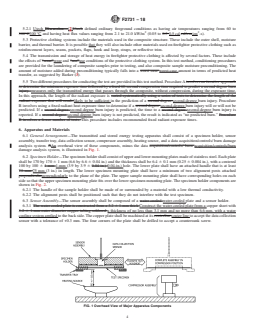
FIG. 1Overhead View of Major Apparatus Components
F2731−18
FIG. 2Specimen Holder
6.3.1 Construct the water-cooled plate from a copper sheet 6.3.2 The exposed surface of the water-cooled plate shall be
with a thickness of no less than 3.1 mm and no more than painted with a thin coating of flat, black, high-temperature
6.6 mm, with a water cooling system applied to the back side. spray paint with an emissivity of 0.9 or greater. The painted
The copper plate shall be machined at its center line to accept water-cooled plate shall be dried before use and shall present a
the data collection sensor with a tolerance of +0.3 mm. The uniformly applied coating (no visual thick spots or surface
fourcornersoftheplateshallbedrilledtoacceptacountersunk irregularities).
screw.
6.3.2.1 For information about paints that can meet the
6.3.1.1 Construct the water-cooled plate assembly such that
emissivity requirement, please refer to 6.5.2.
water flows through it and provides a uniform temperature
6.3.3 Thesensorholdershallbea166by166 62-mm(6.54
across the surface of the copper plate.
by 6.54 6 0.8-in.) aluminum block. The thickness of the block
6.3.1.2 Water shall flow through the copper tubing at a rate
shall be no less that 25.4 mm (1 in.). The four corners of the
of no less than 100 mL/min, and the water shall have a
block shall be drilled and tapped such that they align with the
temperature of 32.5 6 1 °C.
holes found in the water-cooled plate. After the sensor holder
and water-cooled plate are attached with the flathead counter-
NOTE 1—The 32.5 °C temperature was set based on the average surface
temperature of the forearms of volunteers as measured by Pennes (4). sunk screws, the sensor holder shall be machined at its
FIG. 3Specification for Sensor Assembly
F2731−18
centerline to accept the data collection sensor with a tolerance collection sensor with a pressure of 13.8 6 0.7 kPa (2.0 6
of +0.3 mm and –0.00 mm such that the sensor face is flush 0.1 psi), based on the top surface area of the compressor block.
with the bottom face of the water-cooled plate. Specifications Specifications for the compressor assembly are provided in
for the sensor assembly are provided in Fig. 3. Fig. 4.
6.3.3.1 When attaching the water-cooled plate to the sensor 6.6.1 ThecompressorblockshallbeconstructedofMarinite
holder, the flathead countersunk screws shall be below the or other material(s) with an equivalent thermal conductivity
surface of the water-cooled plate. (0.12 W/m K) and shall have a diameter of 57 6 0.5 mm
(2.25 in.) and a thickness of 25.4 6 0.5 mm (1 6 0.02 in.).
6.4 Transfer Tray—The transfer tray shall be designed to
transfer the combined specimen holder and sensor assembly 6.7 Heating Source—The heating source shall consist of a
between the heating source and the compressor, and shall blackceramicthermalfluxsource. Theheatingsourceshallbe
complete this transfer in 5.0 6 0.5 s. This assembly shall be 120 by 120 mm 6 5 mm (4.7 by 4.7 6 0.2 in.) and shall be set
made to securely hold both the specimen holder and sensor 95 6 10 mm (3.75 6 0.4 in.) away from the specimen holder.
assembly together. 6.7.1 Equip the heating source with a thermocouple at-
6.4.1 When the specimen holder and the sensor assembly tachedtotheuppersurface.Thethermocoupleshallbenomore
are held together, an air gap of 6.4 mm (0.25 in.) is formed than 2 mm thick and shall be well bonded, both mechanically
between the skin side of the specimen and the data collection
andthermally,totheheatingsource.Temperaturedatafromthe
sensor. thermocouple are fed to a temperature controller used to
maintain a constant heat flux.
6.5 Data Collection Sensor—The data collection sensor
shall be a water-cooled Schmidt-Boelter thermopile-type sen- 6.8 Data Acquisition/Controls/Burn Damage Analysis
sor with a diameter of 25.4 mm (1 in.). The heat flux range
System—This system includes all software and hardware
2 2
shall be from 0 to 11.4 kW/m (0 to 0.267 cal/cm -s or 0 to needed for data acquisition and storage, control of the experi-
1 Btu⁄ft /s).
ment and burn damage calculations.
6.5.1 Water shall flow through the data collection sensor at 6.8.1 Data Acquisition—The system shall be capable of
a rate of no less than 100 mL/min, and the water shall have a
measuring the maximum output from the sensor with sufficient
temperature of 32.5 6 1 °C. sensitivity. The system shall also collect data at a rate no less
6.5.2 Theexposedsurfaceofthedatacollectionsensorshall
than ten times per second and record the data with an
be painted with a thin coating of flat, black, high-temperature appropriate time stamp.
spray paint with an emissivity of 0.9 or greater. The painted
6.8.2 Controls—The system shall be able to send analog or
sensor shall have a uniformly applied coating and must be digital signals to the testing apparatus.
...
This document is not an ASTM standard and is intended only to provide the user of an ASTM standard an indication of what changes have been made to the previous version. Because
it may not be technically possible to adequately depict all changes accurately, ASTM recommends that users consult prior editions as appropriate. In all cases only the current version
of the standard as published by ASTM is to be considered the official document.
Designation: F2731 − 11 F2731 − 18
Standard Test Method for
Measuring the Transmitted and Stored Energy of Firefighter
Protective Clothing Systems
This standard is issued under the fixed designation F2731; the number immediately following the designation indicates the year of
original adoption or, in the case of revision, the year of last revision. A number in parentheses indicates the year of last reapproval. A
superscript epsilon (´) indicates an editorial change since the last revision or reapproval.
1. Scope
1.1 This test method provides procedures for measuring uses one of two procedures to measure: (1the combination of ) heat
energy, which can be directly transmitted through the multilayer structure without compressive force, that can result in predicted
burn injury, or (2transmitted and stored energy that occurs in firefighter protective clothing material systems as the result of
exposure to prolonged, relatively low levels of radiant heat.) heat energy directly transmitted through the multilayer structure,
followed by applying a compressive force, which rapidly releases stored heat energy in the multilayer structure that can result in
a predicted burn injury.
1.1.1 This test method applies a predetermined compressive load to a preheated specimen to simulate conductive heat transfer.
1.1.1 This test method is not applicable only to protective clothing systems that are not flame resistant.suitable for exposure to
heat and flames.
1.1.2 Discussion—Flame resistance of the material system shall be determined prior to testing according to the applicable
performance and/or specification standard or specification standard, or both, for the material’s end-use.end use.
1.2 This test method establishes procedures for moisture preconditioning of firefighter protective clothing material systems.
1.3 The second-degree burn injury prediction used in this standard is based on a limited number of experiments on forearms
of human subjects.
1.3.1 Discussion—The length of exposures needed to generate a second-degree burn injury in this test method exceeds the
exposuresexposure times found in the limited number of experiments on human forearms.
1.4 The values stated in SI units are to be regarded as the standard. The values given in parentheses are mathematical
conversions to English units or other units commonly used for thermal testing.
1.5 This standard is used to measure and describe the properties of materials, products, or assemblies in response to radiant
heat under controlled laboratory conditions but does not by itself incorporate all factors required for fire-hazard or fire-risk fire
hazard or fire risk assessment of the materials, products, or assemblies under actual fire conditions.
1.6 This standard does not purport to address all of the safety concerns, if any, associated with its use. It is the responsibility
of the user of this standard to establish appropriate safety safety, health, and healthenvironmental practices and determine the
applicability of regulatory limitations prior to use. Specific precautionary information is found in Section 7.
1.7 This international standard was developed in accordance with internationally recognized principles on standardization
established in the Decision on Principles for the Development of International Standards, Guides and Recommendations issued
by the World Trade Organization Technical Barriers to Trade (TBT) Committee.
2. Referenced Documents
2.1 ASTM Standards:
D123 Terminology Relating to Textiles
D1777 Test Method for Thickness of Textile Materials
D3776D3776/D3776M Test Methods for Mass Per Unit Area (Weight) of Fabric
E691 Practice for Conducting an Interlaboratory Study to Determine the Precision of a Test Method
This test method is under the jurisdiction of ASTM Committee F23 on Personal Protective Clothing and Equipment and is the direct responsibility of Subcommittee
F23.80 on Flame and Thermal.
Current edition approved July 1, 2011June 1, 2018. Published July 2011June 2018. Originally approved in 2010. Last previous edition approved in 20102011 as
F2731 - 10.F2731 – 11. DOI: 10.1520/F2731-11.10.1520/F2731-18.
For referenced ASTM standards, visit the ASTM website, www.astm.org, or contact ASTM Customer Service at service@astm.org. For Annual Book of ASTM Standards
volume information, refer to the standard’s Document Summary page on the ASTM website.
Copyright © ASTM International, 100 Barr Harbor Drive, PO Box C700, West Conshohocken, PA 19428-2959. United States
F2731 − 18
F1494 Terminology Relating to Protective Clothing
F1930F1930–17 Test Method for Evaluation of Flame-Resistant Clothing for Protection Against Fire Simulations Using an
Instrumented Manikin
2.2 AATCC Test Methods:
AATCC 70 Test Method for Water Repellency: Tumble Jar Dynamic Absorption Test
AATCC 135 Dimensional Changes in Automatic Home Laundering of Durable Press Woven or Knit Fabrics
2.3 NFPA Standard:
NFPA 1971 Standard on Protective Ensembles for Structural Fire Fighting and Proximity Fire Fighting
3. Terminology
3.1 Definitions:
3.1.1 break-open, n—in testing thermal protective materials, a material response evidenceevidenced by the formation of a hole
in the test specimen.
3.1.1.1 Discussion—
The specimen is considered to exhibit break-open when a hole is produced as a result of the thermal exposure that is at least 3.2
2 2
cm (0.25 in. ) in area or at least 2.5 cm 2.5 cm (1.0 in.) in any dimension. Single threads across the opening or hole do not reduce
the size of the hole for purposes of this test method.
3.1.2 charring, n—the formation a carbonaceous residue as the result of pyrolysis or incomplete combustion.
3.1.3 dripping, n—a material response evidenced by flowing of the polymer.
3.1.4 embrittlement, n—the formation of brittle residue as a result of pyrolysis or incomplete combustion.
3.1.5 heat flux, n—the thermal intensity indicated by the amount of energy transmitted per unit area and per unit time; kW/m
(cal/cm -s).
3.1.6 ignition, n—the initiation of combustion.
3.1.7 melting, n—in testing thermal protective materials, a response evidenced by softening of the polymer.
3.1.8 response to heat exposure, n—in testing for the transmitted and stored energy of thermal protective materials, the
observable response of the textile to the energy exposure, as indicated by break-open, melting, dripping, charring, embrittlement,
shrinkage, sticking, and ignition.
3.1.8.1 Discussion—
For the purposes of this test method, response to heat exposure also includes any non-textile reinforcement material used as part
of the protective clothing material system that is tested.
3.1.9 second-degree burn injury, n—reversible burn damage in the epidermis and upper layers of the dermis, resulting in
blistering, severe pain, reddening, and swelling.
3.1.10 shrinkage, n—a decrease in one or more dimensions of an object or material.
3.1.11 sticking, n—a response evidenced by softening and adherence of the material to other material.
3.1.11.1 Discussion—
For the purpose of this test method, the observation of sticking applies to any material layer in the protective clothing material
system.
3.1.12 stored energy, n—in testing thermal protective materials, thermal energy that remains in a fabric/composite after the
heating source is removed.
3.1.12.1 Discussion—
The stored energy measured by this standard only accounts for the energy released to the sensor after compressing. Stored energy
is also lost to the compressor block and the surrounding environment.
Available from American Association of Textile Chemists and Colorists (AATCC), P.O. Box 12215, Research Triangle Park, NC 27709, http://www.aatcc.org.
Available from National Fire Protection Association (NFPA), 1 Batterymarch Park, Quincy, MA 02169-7471, http://www.nfpa.org.
F2731 − 18
3.1.13 thermal protective clothing system, n—any combination of materials which, when used as a composite, can limit the rate
of heat transfer to or from the wearer of the clothing.
3.1.13.1 Discussion—
The rate at which this heat transfer occurs can vary depending on the materials.
3.2 For definitions of other terms used in this test method, refer to TerminologyTerminologies D123 and Terminology F1494.
4. Summary of Test Method
4.1 A vertically positioned test specimen, representative of the lay-up in firefighter protective clothing, is exposed to a relatively
2 2
low level of radiant heat flux at 8.5 6 0.5 kW/m (0.2 6 0.012 cal/cm -s) for a fixed period of time.
4.2 During the time of radiant heat exposure, a data collection sensor, positioned 6.4 6 0.1 mm (0.25 6 0.004 in.) behind and
parallel to the innermost surface of the test specimen, measures the heat energy transmitted through the test specimen.
4.3 InUsing the same test apparatus, the test specimen is permitted to be compressed against the data collection sensor at a
pressure of 13.8 6 0.7 kPa (2.0 psi 6 0.1 psi) for a fixed period of time. This load could possibly simulate a firefighter leaning
against a wall, squatting or sitting down. This compression step occurs after the fixed radiant heat exposure time and after the
specimen is moved away from the heating source.
4.3.1 This compressive force is intended to simulate a firefighter leaning against a wall, squatting, or sitting down in a manner
that expels the insulating air layers from the composite while drawing the clothing materials taut against the skin, and then causes
the transfer of the heat energy from the garment layers to the skin.
4.4 During the time of compression against the data collection sensor, the data collection sensor continues to measure the heat
energy transferred from the test specimen for a fixed duration of time.
4.5 The total energy transmitted and stored by the test specimen is used to predict whether a second degree second-degree burn
injury can be predicted. If a second-degree burn injury is predicted, the time to a second degree second-degree burn injury is
reported.
4.6 Two different sets of procedures are provided. In Procedure A, an iterative method is used to determine the minimum length
of the radiant heat exposure followed by a 60 second compression that will result in the prediction of a second degree burn injury.
In Procedure B, testing is conducted at fixed radiant heat exposure and a 60-second compression period. The report for Procedure
B includes if a second degree burn injury has been predicted and if predicted, the time for a second degree burn injury.
4.6 If a second degree burn injury is not predicted, the result is indicated as “no predicted burn.”This method uses two distinct
procedures.
4.6.1 Procedure A uses a low-level radiant heat exposure, without compression, to predict the time to second-degree burn.
4.6.2 Procedure B uses a low-level radiant heat exposure and a 60-s compression period to predict the time to second-degree
burn.
4.6.3 The report indicates the predicted time to second-degree burn.
4.6.3.1 If a second-degree burn injury is not predicted, the result is indicated as “no predicted burn.”
4.7 Appendix X1Test Method F1930–17 contains a general description of human burn injury, its calculation, and historical
notes.
5. Significance and Use
5.1 Firefighters are routinely exposed to radiant heat in the course of their fireground activities. In some cases, firefighters have
reported burn injuries under clothing where there is no evidence of damage to the exterior or interior layers of the firefighter
protective clothing. Low levels of transmitted radiant energy alone, or a combination of the transmitted radiant energy and stored
energy released through compression, can be sufficient to cause these types of injuries. This test method was designed to measure
both the transmitted and stored energy in firefighter protective clothing material systems under a specific set of laboratory exposure
conditions.
5.2 The intensity of radiant heat exposure used in this test method was chosen to be an approximate midpoint representative
of ordinary fireground conditions as defined for structural firefighting (1),, (2)). . The specific radiant heat exposure was selected
2 2
at 8.5 6 0.5 kW/m (0.20 6 0.012 cal/cm -s)-s), since this level of radiant heat can be maintained by the test equipment and
produces little or no damage to most NFPA 1971 compliant NFPA 1971-compliant protective clothing systems.
Development“Development of a Test Method for Measuring Transmitted Heat and Stored Thermal Energy in Firefighter Turnouts,Turnouts,” final report presented to
National Institute for Occupational Safety and Health (NIOSH) National Personal Protective Technology Laboratory (NPPTL) under Contract No. 200-2005-12411, April 29,
2008.
The boldface numbers in parentheses refer to a list of references at the end of this standard.
F2731 − 18
5.2.1 Utech Discussion—(2)Utech defined ordinary fireground conditions as having air temperatures ranging from 60 to
2 2
300°C300 °C and having heat flux values ranging from 2.1 to 21.0 kW/m (0.05 to 0.5 0.5 cal cal/cm⁄cm -s).
5.3 Protective clothing systems include the materials used in the composite structure. These include the outer shell, moisture
barrier, and thermal barrier. It is possible that they will also include other materials used on firefighter protective clothing such as
reinforcement layers, seams, pockets, flaps, hook and loop, straps, or reflective trim.
5.4 The transmission and storage of heat energy in firefighter protective clothing is affected by several factors. These include
the effects of “wear”wear and “use”use conditions of the protective clothing system. In this test method, conditioning procedures
are provided for the laundering of composite samples prior to testing, and also composite sample moisture preconditioning. The
amount of moisture added during preconditioning typically falls into a worst case worst-case amount in terms of predicted heat
transfer, as suggested by Barker (3).
5.5 Two different procedures for conducting the test are provided in this test method. Procedure A involves an iterative approach
to determine the minimum exposure time followed by a fixed 60-second compression time required to predict a second degree burn
injury. measures only the transmitted energy that passes through the composite, without compression, during the exposure time.
In this approach, the length of the radiant exposure is varied systematically using a series of tests to determine the length of the
radiant exposure that will result likely to be sufficient in the prediction of a second degree second-degree burn injury. Procedure
B involves using a fixed radiant heat exposure time to determine if a second degree second-degree burn injury will or will not be
predicted. If a second degree second-degree burn injury is predicted, the time to a second degree second-degree burn injury is
reported. If a second degree second-degree burn injury is not predicted, the result is indicated as “no predicted burn.” Procedure
B involves a fewer number of tests. This procedure includes recommended fixed radiant exposure times.
6. Apparatus and Materials
6.1 General Arrangement—The transmitted and stored energy testing apparatus shall consist of a specimen holder, sensor
assembly, transfer tray, data collection sensor, compressor assembly, heating source, and a data acquisition/controls/ burn damage
analysis system. AAn overhead view of these components, minus the data acquisition/controls/ burn acquisition/controls/burn
damage analysis system, is illustrated in Fig. 1.
6.2 Specimen Holder—The specimen holder shall consist of upper and lower mounting plates made of stainless steel. Each plate
shall be 170 by 170 6 1 mm (6.6 by 6.6 6 0.04 in.) and the thickness shall be 6.4 6 0.1 mm (0.25 6 0.004 in.), with a centered
100 by 100 6 1 mm 1-mm (3.9 by 3.9 6 0.04 in.) 0.04-in.) hole. The lower plate shall have an attached handle that is at least
75 mm 75 mm (3 in.) in length. The lower specimen mounting plate shall have a minimum of two alignment posts attached
perpendicularperpendicularly to the plane of the plate. The upper sample mounting plate shall have corresponding holes on each
side so that the upper specimen mounting plate fits over the lower specimen mounting plate. The specimen holder components are
shown in Fig. 2.
6.2.1 The handle of the sample holder shall be made of or surrounded by a material with a low thermal conductivity.
6.2.2 The alignment posts shall be positioned such that they do not interfere with the test specimen.
6.3 Sensor Assembly—The sensor assembly shall be composed of a water cooled water-cooled plate and a sensor holder.
6.3.1 The water cooled plate is constructed from a 3.2 6 1-mm thick Construct the water-cooled plate from a copper sheet with
3.2 6 1-mm outer diameter copper tubing soldered a thickness of no less than 3.1 mm and no more than 6.6 mm, with a water
cooling system applied to the back side. The copper plate shall be machined at its centerline center line to accept the data collection
sensor with a tolerance of +0.3 mm. The four corners of the plate shall be drilled to accept a countersunk screw.
FIG. 1 Overhead View of Major Apparatus Components
F2731 − 18
FIG. 2 Specimen Holder
6.3.1.1 The copper tubing shall be looped back and forth across the back side of the copper plate to provide Construct the
water-cooled plate assembly such that water flows through it and provides a uniform temperature across the surface of the copper
plate.
6.3.1.2 Water shall flow through the copper tubing at a rate of no less than 100 mL/minmL/min, and the water shall have a
temperature be 32.5 6 1°C.of 32.5 6 1 °C.
NOTE 1—The 32.5 °C temperature was set based on the average surface temperature of the forearms of volunteers as measured by Pennes (4).
6.3.2 Discussion—The 32.5°C temperature was set based on the average surface temperature of the forearms of volunteers as
measured by Pennesexposed surface of the water-cooled plate shall be painted with a thin coating of flat, black, high-temperature
spray paint (with4). an emissivity of 0.9 or greater. The painted water-cooled plate shall be dried before use and shall present a
uniformly applied coating (no visual thick spots or surface irregularities).
6.3.2.1 The exposed surface of water cooled plate shall be painted with a thin coating of flat black high temperature spray paint
with an emissivity of 0.9 or greater.For information about paints that can meet the emissivity requirement, please refer to 6.5.2The
painted water-cooled plate shall be dried before use and shall present a uniformly applied coating (no visual thick spots or surface
irregularities).
(1) Information about paints that can meet the emissivity requirement please refer to 6.5.2.
6.3.3 The sensor holder shall be a 166 by 166 6 2 mm 2-mm (6.54 by 6.54 6 0.8 in.) 0.8-in.) aluminum block. The thickness
of the block shall be no less that 25.4 mm (1 in.). The four corners of the block shall be drilled and tapped such that they align
with the holes found in the water cooled water-cooled plate. After the sensor holder and water cooled water-cooled plate are
attached with the flat head flathead countersunk screws, the sensor holder shall be machined at its centerline to accept the data
collection sensor with a tolerance of +0.3 mm and -0.00–0.00 mm such that the sensor face is flush with the bottom face of the
water cooled water-cooled plate. Specifications for the sensor assembly are provided in Fig. 3.
6.3.3.1 When attaching the water cooled water-cooled plate to the sensor holder, the flat head flathead countersunk screws shall
be below the surface of the water cooled water-cooled plate.
6.4 Transfer Tray—The transfer tray shall be designed to transfer the combined specimen holder and sensor assembly between
the heating source and the compressor, and shall complete this transfer in 5.0 6 0.5 second.s. This assembly shall be made to
securely hold both the specimen holder and sensor assembly together.
6.4.1 When the specimen holder and the sensor assembly are held together, an air gap of 6.4 mm (0.25 in.) is formed between
the skin side of the specimen and the data collection sensor.
6.5 Data Collection Sensor—The data collection sensor shall be a water cooled Schmidt-Boelter thermopile type water-cooled
Schmidt-Boelter thermopile-type sensor with a diameter of 25.4 mm (1 in.). The heat flux range shall be from 0 to 11.4 kW/m
2 2
(0 to 0.267 cal/cm -s or 0 to 1 1 Btu Btu/ft⁄ft /s).
6.5.1 Water shall flow through the data collection sensor at a rate of no less than 100 mL/minmL/min, and the water shall have
a temperature be 32.5 6 1°C.of 32.5 6 1 °C.
F2731 − 18
FIG. 3 Specification for Sensor Assembly
6.5.2 The exposed surface of the data collection sensor shall be painted with a thin coating of flat black high temperature flat,
black, high-temperature spray paint with an emissivity of 0.9 or greater. The painted sensor shall have a uniformly-applied
uniformly applied coating and must be calibrated against a NIST-traceable sensor or heating source before use.
NOTE 2—Emissivity of painted calorimeters is discussed in the ASTM Report,Report “ASTM Research Program on Electric Arc Test Method
Development to Evaluate Protective Clothing Fabric; ASTM F18.65.01 Testing Group Report on Arc Testing Analysis of the F1959 Standard Test
Method—Phase 1.”
6.5.3 The data collection sensor must be held rigidly in the sensor assembly.
6.6 Compressor Assembly—The compressor assembly shall consist of a compressor block, air cylinder, air regulator, and a
framework that rigidly holds the system in place. When activated, the regulated air shall activate the piston and force the circular
heat resistant heat-resistant block against the sample and data collection sensor with a pressure of 13.8 6 0.7 kPa (2.0 6 0.1 psi)
0.1 psi), based on the top surface area of the compressor block. Specifications for the compressor assembly are provided in Fig.
4.
6.6.1 The compressor block shall be constructed of Marinite or other material(s) with an equivalent thermal conductivity (0.12
W/m K) and shall have a diameter of 57 6 0.5 mm (2.25 in.) (2.25 in.) and a thickness of 25.4 6 0.5 mm (1 6 0.02 in.).
6.7 Heating Source—The heating source shall consist of a black ceramic thermal flux source. The heating source shall be 120
by 120 mm 6 5 mm (4.7 by 4.7 6 0.2 in.) and shall be set 95 6 10 mm (3.75 6 0.4 in.) away from the specimen holder.
6.7.1 Equip the heating source with a thermocouple attached to the upper surface. The thermocouple shall be no more than
2-mm 2 mm thick and shall be well bonded, both mechanically and thermally, to the heating source. Temperature data from the
thermocouple are fed to a temperature controller used to maintain a constant heat flux.
6.8 Data Acquisition/Controls/Burn Damage Analysis System—This system includes all software and hardware needed for data
acquisition and storage, control of the experiment and burn damage calculations.
6.8.1 Data Acquisition—The system shall be capable of measuring the maximum output from the sensor with sufficient
sensitivity. The system shall also collect data at a rate no less than ten times per second and record the data with an appropriate
time stamp.
FIG. 4 Compressor Assembly
The sole source of supply of the apparatus known to the committee at this time is Ogden Manufacturing Company, 64 W. Seegers Rd, Arlington Heights, IL 60005, Part
number EL-3-650. If you are aware of alternative suppliers, please provide this information to ASTM International Headquarters. Your comments will receive careful
consideration at a meeting of the responsible technical committee, which you may attend.
F2731 − 18
6.8.2 Controls—The system shall be able to send analog or digital signals to the testing apparatus. These signals will be used
to move the transfer tray and to activate and deactivate the compressor.
6.8.3 Burn Damage Analysis System—The calculated heat flux history shall be recorded and applied to a skin model using
software that calculates the temperature history at the base of epidermis and dermis, using the skin model prescribed in Section
1112 of Test Method F1930–17.
NOTE 2—These calculations will predict either no predicted burn or a time to second-degree burn.
6.8.3.1 These calculations will predict either no predicted burn or a time to second-degree burn.
6.9 Analytical Balance—Capable of measuring weight to a precision of at least 0.01 g.
6.10 Thickness Gauge—Meeting requirements of Test Method D1777D 1777.
6.11 Plastic Bags—Resealable plastic bags that are sufficiently large to accommodate a single 152 by 152 by 6.4-mm (6.0 by
6.0 by 0.25-in.) specimen.
NOTE 3—A quart size quart-size resealable plastic bag has been found to be suitable.
7. Hazards
7.1 Perform all testing and calibration in a hood or ventilated area to carry away byproducts, smoke, or fumes due to the heating
process. Procedures for testing and calibration shall be performed using the same hood and ventilation conditions.
7.2 Exercise care in handling the specimen holder and sensor assembly, as specimens become heated during prolonged testing.
Use heat-protective gloves when handling these hot objects.
7.3 Caution must be used around the testing device, as it has moving parts which can create pinch-points.pinch points.
8. Specimens
8.1 Test a minimum of five specimens per firefighter protective clothing system to be evaluated.
8.2 Cut specimens to measure 152 by 152 6 5 mm (6.0 by 6.0 6 0.2 in.). Specimens shall consist of all layers representative
of the clothing system to be tested, including reinforcement layers, reflective trim, or other layers as applicable.
8.3 Measure the weight of each individual layer and of the assembled protective clothing material system in accordance with
Test MethodMethods D3776D3776/D3776M. Measure the thickness of each layer and of the assembled protective clothing
material system in accordance with Test Method D1777.
8.3.1 Specimens shall not be stitched to hold individual layers together during testing.
8.3.2 When tested with reflective trim or outer reinforcement material that has a dimension less than 152 mm (6 in.), the trim
or reinforcement specimen shall be sewn to the center of outer shell of the composite so that it will be directly positioned over
the thermal sensor of the test apparatus.
8.3.3 Reinforcement materials that are less than 60 mm in one dimension shall not be tested. These materials are likely not to
cover the entire surface of the compressor block and would alter the applied pressure.
9. Conditioning
9.1 When specified, launder sample materials representative of the protective clothing material system for five wash and drying
cycles in accordance with AATCC 135, Machine Cycle 1, Wash Temperature IV, Drying Condition Ai.
9.2 For tests to be conducted under dry conditions, condition specimens at 21 6 3°C21 6 3 °C and 65 6 10 % relative
humidity for a minimum of 24 hours.h.
9.3 For tests to be conducted under wet conditions, the following preconditioning procedure shall be used for each specimen:
9.3.1 Condition the specimen in a room environment at 21 6 3°C3 °C and 65 610 % relative humidity for a minimum of 24
hours.24 h.
9.3.2 Weigh the specimen using an analytical balance, described in 6.9section 6.9, , and record the weight.
9.3.3 Immerse two pieces of standard 152 by 152-mm (6 by 6-in.) AATCC blotter paper in distilled water for 10 6 2
seconds.2 s.
9.3.4 Place one blotter paper on top of the other and run them through a wringer,wringer that meets the requirements of 10.2
of AATCC 70, Test Method for Water Repellency: Tumble Jar Dynamic Absorption Test, with a 30 lb 30-lb load on the rolls.
9.3.5 Place the innermost separable layer of the protective clothing material system between the two wrung blotter papers.
NOTE 4—For firefighter protective clothing material systems, the normal innermost separable layer is typically the thermal barrier.
9.3.6 Place the remaining layers of the protective clothing system on the uppermost wrung blotter paper. Place each layer as
they would be found in the protective clothing ensemble minus the wrung blotter paper.
9.3.7 Place both the blotter papers and the specimen in a plastic bag, then place a 152 by 152 6 5-mm (6.0 by 6.0 6 0.2-in.)
block weighing 275 6 5 g in the center and on top of the bag,bag to remove the air, and seal it. Remove the weight and allow
F2731 − 18
the bagged specimen to equilibrate in an environmentally controlled room (21 6 3°C3 °C and 65 6 10 % relative humidity) for
a period of at least twelve hours, 12 h, but not more than 24 hours.24 h.
9.3.7.1 Place only one specimen in each plastic bag.
9.3.7.2 Ensure that bagged samples are not stacked.
9.3.8 Remove the specimen from the plastic bag.
9.3.9 Remove the blotter paper from between the specimen layers.
9.3.10 Weigh the samples after blotter paper removal and record the moisture add-on.
9.3.10.1 Moisture add-on is the difference between the final weight and the initial weight.
9.3.11 Perform testing within three minutes 3 min from the time the specimen is removed from the sealed plastic bag.
10. Procedures
10.1 Calibration Procedure:
10.1.1 Allow the heating source to heat up for a minimum of 30 minutes 30 min after being turned on.
10.1.2 Prepare water bath to deliver 32.5 6 1°C32.5 6 1 °C to sensor and sensor assembly at a rate of no less than 100 mL/min.
10.1.3 Reduce or turn off the hood airflow to minimize forced convective air currents from disturbing the heat flux sensor
response.
2 2
10.1.4 Calibrate the apparatus to deliver an average thermal flux of 8.5 6 0.5 kW/m (0.20 6 0.012 cal/cm -s)-s), as measured
with the data collection sensor and data acquisition system.
2 2
10.1.4.1 Use the data collection sensor as the only heat sensor in setting the total 8.5 kW/m (0.20 cal/cm -s) exposure
condition.
10.1.4.2 Measure the total heat flux directly and only from the voltage output of the data collection sensor.
10.1.4.3 Do not use other heat sensing devices to reference or adjust the total heat flux read by the data collection sensor.
10.1.5 Without a mounted specimen, place the sensor assembly minus the upper mounting plate of the specimen holder on top
of the specimen holder with the sensor surface facing towards the heating source, and then expose the sensor assembly directly
to the radiant heat source.
2 2
10.1.6 Adjust the temperature of the heating source until the total heat flux is 8.5 6 0.5 kW/m (0.20 6 0.012 cal/cm -s)-s),
using the data collection sensor as specified in 6.56.5.
2 2
10.1.7 Once an initial setting of 8.5 6 0.5 kW/m (0.20 6 0.012 cal/cm -s) has been made, record the operating parameters
for test purposes.
10.1.8 Record the response of the data collection sensor for 60 seconds.60 s.
10.1.9 Calculate the average of the last 50 seconds 50 s and use the calculated average to determine the heat flux level.
10.2 Test Procedure A—A – Radiant Heat Exposure Time to Predict Second-Degree Burn Injury: Radiant Heat Exposure Time
to Predict Second Degree Burn Injury.
10.2.1 With the specimen holder in the non-exposure position, mount the specimen in the test apparatus by placing the outside
of the garment face down on the lower mounting plate of the specimen holder. The subsequent layers shall be placed on top in
the order used in the garment, with the surface worn toward the skin facing up. Then place the upper mounting plate of the
specimen holder above the specimen.
10.2.2 Position the sensor assembly on top of the specimen holder and test specimen.
10.2.3 Place the sensor assembly and specimen holder in the transfer tray.
10.2.4 Select an initialexposure time for the period of radiant heat exposure.
NOTE 5—For 3-layerthree-layer firefighter protective clothing material systems, an initial radiant exposure time of 90120 s is recommended.
10.2.5 Move the transfer tray over the heating source and begin collecting data with the data acquisition system as soon as the
tray starts to move.
NOTE 6—It is required to automate the process of moving the transfer tray over the heating source and beginning data collection; the automation is
required to be further extended to the controlling the exposure period and the overall data collection period of each test for parameters set by the test
operator.
10.2.5.1 It is required to automate the process of moving the transfer tray over the heating source and beginning data collection;
the automation is required to be further extended to the controlling the exposure period and the overall data collection period of
each test for parameters set by the test operator.
10.2.6 Continue the radiant exposure for the selected period of time.time or until a second-degree burn is predicted.
10.2.7 At the end of the selected exposure period, move the transfer tray away from the heating source and over the compressor
while the data acquisition system continues to collect data.source.
NOTE 7—The end of the radiant exposure is when the transfer tray starts to move away from the heating source.
10.2.7.1 The end of the radiant exposure is when the transfer tray starts to move away from the heating source.
F2731 − 18
10.2.8 The compression period shall begin 5 6 0.5 s after the end of the radiant exposure. Compress the specimen against the
data collection sensor at an applied pressure of 13.8 kPa (2.0 psi). Continue to compress the specimen and collect data for 60 s
after the compression is started.
10.2.9 Stop the data acquisition following the end of the compression period.
10.2.8 Using calculation procedures found in Section 11 determine if a12 of Test Method F1930–17second degree burn injury
is predicted for the selected radiant exposure time., determine predicted time to a second-degree burn injury.
10.2.10.1 If a second degree burn injury is not predicted, determine a new radiant exposure time that is higher than the initially
selected radiant exposure time. For successive trials where a second degree burn injury is not predicted, choose a radiant exposure
time that is halfway between the completed test and the highest previous radiant exposure time that resulted in burn injury.
NOTE 8—For three-layer firefighter protective clothing material systems, it is recommended to initially increase the radiant exposure time by 30
seconds.
10.2.10.2 If a second degree burn injury is predicted, determine a new radiant exposure time that is lower than the initial
selected. For successive trials where a second degree burn injury is predicted, choose a radiant exposure time that is halfway
between the completed test and the lower previous radiant exposure time that resulted in burn injury.
NOTE 9—For three-layer firefighter protective clothing material systems, it is recommended to initially decrease the radiant exposure time by 30
seconds.
10.2.10.3 If the difference between the current test radiant exposure time and the previous test radiant exposure time is ≤10 s,
then the time to a predicted second degree burn injury is the current radiant exposure time.
10.2.9 Observe and record the condition of the specimens following the testing.
10.2.12 Verify the test result with at least four additional test specimens.
10.3 Test Procedure B—Fixed B – Fixed Exposure Period and Compression for Predicting Second Degree Second-Degree Burn
Injury.Injury:
10.3.1 With the specimen holder in the non-exposure position, mount the specimen in the test apparatus by placing the outside
of the garment face down on the lower mounting plate of the specimen holder. The subsequent layers shall be placed on top in
the order used in the garment, with the surface worn toward the skin facing up. Then place the upper mounting plate of the
specimen holder above the specimen.
10.3.2 Position the sensor assembly above the specimen holder and the test specimen.
10.3.3 Place the sensor assembly and the specimen holder in the transfer tray.
10.3.4 Move the transfer tray over the heating source and begin collecting data with the data acquisition system.
10.3.5 Continue the exposure for either 60, 90, or 120 seconds.s.
NOTE 6—Recommended fixed radiant exposure times are 60, 90, or 120 s 120 s, based on prior experience in the testing of unreinforced and reinforced
firefighter protective clothing material systems.
10.3.6 At the end of the selected exposure period, move the transfer tray away from the heating source and over the compressor
while the data acquisition system continues to collect data.
NOTE 11—The end of the radiant exposure is when the transfer tray starts to move away from the heating source.
10.3.6.1 The end of the radiant exposure is when the transfer tray starts to move away from the heating source.
10.3.7 The compression period shall begin 5 6 0.5 s after the end of the radiant exposure. Compress the specimen against the
data collection sensor at an applied pressure of 13.8 kPa (2.0 psi). Continue to compress the specimen and collect data for 60 s
after the compression is started.
10.3.8 Stop the data acquisition following the end of the compression period.
10.3.9 Using calculation procedures found in Section 1112 of Test Method F1930–17, determine if a second degree
second-degree burn injury is predicted for the selected radiant exposure time. If no burn is predicted record “no predicted burn.”
10.3.10 Observe the condition of the specimen following the testing.
10.3.11 Repeat 10.3.210.3.2 – 10.3.10 through 10.3.10to test four additional specimens.
10.4 Post Test Post-Test Sensor Care Procedure:
10.4.1 Check the sensor surface immediately after each run. If a deposit collects and appears to be thicker than a thin layer of
paint, or is irregular, recondition the sensor surface.
10.4.1.1 Carefully clean the cooled sensor with acetone or petroleum solvent, making certain there is no ignition source nearby.
10.4.1.2 If copper is showing or the deposits cannot be removed from the data collection sensor, the sensor must be repainted
and recalibrated as specified in 6.5.2. The heating source will also need to be recalibrated after repainting and recalibration of a
sensor.
10.4.1.3 At least one calibration run shall be performed comparing the calibration of the data collection sensor.
11. Calculation of Results
11.1 Determination of the predicted skin and subcutaneous fat (adipose) internal temperature field.
F2731 − 18
11.1.1 Assume the thermal exposure is represented as a transient one dimensional heat diffusion problem in which the
temperature within the skin and subcutaneous layers (adipose) varies with both position (depth) and time, and is described by the
linear parabolic differential equation (Fourier’s Field Equation).
ρC~x!]@T ~x,t!#/]t 5]@k~x!]@T ~x,t!#/]x#/]x (1)
where:
3 3
ρCp x 5 Volumetric heat capacity, J/m •K cal/s•cm •K
~ ! ~ !
t 5 Time, s
x 5 Depth from skin surface, m @cm#
T~x,t! 5 Temperature at depth x, time t, K
k~x! 5 Thermal Conductivity, W/m•K ~cal/s•cm•K!
11.1.2 Discussion—Use of absolute temperatures is recommended when solving Eq 1because Eq 2, which is used for the
calculation of Ω, the burn injury parameter, requires absolute temperatures.
11.1.3 Solve Eq 1 numerically using a three-layer skin model that takes into account the depth dependency of the thermal
conductivity and volumetric heat capacity values as identified in Table 1. Each of the three layers shall be constant thickness, lying
parallel to the surface.
11.1.4 Discussion—The property values stated in Table 1 are representative of in vivo (living) values for the forearms of the test
subjects who participated in the experiments by Stoll and Greene (5). They are average values. The thermal conductivity of each
of the layers is known to vary with temperature due to the generalized thermo-physical characteristics of the layer components
(simplified composition: water, protein and fat). Laboratories accounting for this report an improved correlation to the reference
dataset presented in Table 2. This is done by modeling the temperature dependence of the thermal conductivity of each layer after
that of water. See Appendix X1.13.
11.1.4.1 The discretization methods to solve Eq 1 that have been found effective are: the finite differences method (following
the “combined method” central differences representation where truncation errors are expected to be second order in both Δt and
Δx), finite elements method (for example the Galerkin method), and the finite volume method (sometimes called the control
volume method).
11.1.5 Use the following boundary and initial conditions:
11.1.5.1 The initial temperature within the three layers shall have a linear increase with depth from 305.65 K (32.5°C) at the
surface to 306.65 K (33.5°C) at the back of the subcutaneous layer (adipose). The deep temperature shall be constant for all time
at 306.65 K (33.5°C).
11.1.6 Discussion—Pennes (4) measured the temperature distributions in the forearms of volunteers. For the overall thickness
of the skin and subcutaneous layers listed in Table 1, the measured rise was 1 K (1°C). The skin surface temperature of the
volunteers in the experiments by Stoll and Greene (5) was kept very near to 305.65 K (32.5°C).
11.1.6.1 The incident heat flux is applied only at the skin surface. The energy incident upon the surface of the skin is assumed
to be absorbed at the surface and heat conduction is the only mode of heat transfer in the skin and subcutaneous layers (adipose).
11.1.7 Discussion—Assuming heat conduction only within the skin and deeper layers ignores enhanced heat transfer due to
changing blood flow in the dermis and subcutaneous layers (adipose). The in vivo (living) values listed in Table 1 are back
calculated from the experimental results of Stoll and Greene (5) and numerical extensions by Weaver and Stoll (6). The values
account to a large degree for the blood flow in the test subjects.
11.1.7.1 The incident heat flux at the skin surface at time t = 0 (start of the exposure) is zero.
11.1.7.2 The incident heat flux values at the skin surface at all times t > 0 are the time dependent heat flux values collected
during testing. No corrections are made for radiant heat losses or emissivity/absorptivity differences between the sensors and the
skin surface used in the model.
11.1.8 Calculate an associated internal temperature field for the skin model at each sensor sampling time interval for the entire
sampling time by applying each of the sensor’s time-dependent heat flux values to individual skin modeled surfaces (a skin model
is evaluated for each measurement sensor). These internal temperature fields shall include, as a minimum, the calculation of
-6
temperature values at the surface (depth = 0.0 m), at a depth of 75 × 10 m (the skin model epidermis/dermis interface used to
-6
predict second-degree burn injury), and at a depth of 1200 × 10 m (the skin model dermis/subcutaneous interface used to predict
a third-degree burn injury).
11.1.9 Discussion—Equally spaced depth intervals (Δx), denoted as “nodes” or “meshes”, are the recommended for highest
-6
accuracy in all numerical models. A value for Δx of 15 × 10 m has been found effective. Sparse or unstructured meshes are not
recommended for use in the finite difference method.
11.2 Determination of the predicted skin burn injury.
11.2.1 The Damage Integral Model of Henriques (7),Eq 2, is used to predict skin burn injury based on skin temperature values
-6 -6
at each measurement time interval at skin model depths of 75 × 10 m (second-degree burn injury prediction) and 1200 × 10 m
(third-degree burn injury prediction).
F2731 − 18
2ΔE/RT
Ω5 Pe dt (2)
*
where:
Ω 5 Burn Injury Parameter; Value,$1 indicates predicted burn injury
t 5 time of exposure and data collection period, s
P 5 Pre-exponential term, dependent on depth and temperature, 1/s
ΔE 5 Activation energy, dependent on depth and temperature, J/kmol
R 5 Universal gas constant, 8314.472, J/kmol K
T 5 Temperature at specified depth ~in kelvin!, K
11.2.2 The calculation method used shall meet the validation requirements identified in Table 2.
11.2.2.1 When validating the skin burn injury model, use the layer
...