

ASTM E2928/E2928M-23
(Practice)Standard Practice for Examination of Drillstring Threads Using the Alternating Current Field Measurement Technique
General Information
- Abstract
SIGNIFICANCE AND USE
5.1 The purpose of the alternating current field measurement method is to evaluate threads for surface breaking discontinuities such as fatigue cracks running along the thread root. The examination results may then be used to determine the fate of the test piece. This may involve re-examination by an alternative technique, immediate scrapping of the test piece, or reworking to remove discontinuities (beyond the scope of this practice). This practice is not intended for the examination of threads for non-surface breaking discontinuities.
SCOPE
1.1 This practice describes procedures to be followed during alternating current field measurement examination of drillstring threads on tubulars used for oil and gas exploration and production for detection and, if required, sizing of service-induced surface breaking discontinuities transverse to the pipe.
1.2 This practice is intended for use on threads in any metallic material.
1.3 This practice does not establish acceptance criteria. Typical industry practice is to reject these connections on detection of a confirmed crack.
1.4 While the alternating current field measurement technique is capable of detecting discontinuities in these connections, supplemental surface NDT methods such as magnetic particle testing for ferrous metals and penetrant testing for non-ferrous metals may detect additional discontinuities.
1.5 Units—The values stated in either inch-pound units or SI units are to be regarded separately as standard. The values stated in each system might not be exact equivalents; therefore, each system shall be used independently of the other. Combining values from both systems may result in nonconformance with the standard.
1.6 This standard does not purport to address all of the safety concerns, if any, associated with its use. It is the responsibility of the user of this standard to establish appropriate safety, health, and environmental practices and determine the applicability of regulatory limitations prior to use.
1.7 This international standard was developed in accordance with internationally recognized principles on standardization established in the Decision on Principles for the Development of International Standards, Guides and Recommendations issued by the World Trade Organization Technical Barriers to Trade (TBT) Committee.
- Status
- Published
- Publication Date
- 31-Jan-2023
- Technical Committee
- E07 - Nondestructive Testing
- Drafting Committee
- E07.07 - Electromagnetic Method
Buy Documents
ASTM E2928/E2928M-23 - Standard Practice for Examination of Drillstring Threads Using the Alternating Current Field Measurement Technique
REDLINE ASTM E2928/E2928M-23 - Standard Practice for Examination of Drillstring Threads Using the Alternating Current Field Measurement Technique
Overview
ASTM E2928/E2928M-23 is the Standard Practice for Examination of Drillstring Threads Using the Alternating Current Field Measurement Technique. Developed by ASTM International, this standard outlines procedures to detect and, if necessary, size surface-breaking discontinuities such as fatigue cracks on the threads of drillstring tubulars. These components are vital to oil and gas exploration and production, where equipment integrity is critical for safe and reliable operations.
The alternating current field measurement (ACFM) technique is a non-destructive testing (NDT) method focused on identifying surface-breaking flaws transverse to the pipe axis. This practice is applicable to threads in any metallic material but does not address non-surface-breaking discontinuities. While primarily targeted at the oil and gas industry, the technique has broader relevance for ensuring the safety of threaded connections in other heavy industries.
Key Topics
- Purpose: To detect service-induced surface-breaking discontinuities, especially fatigue cracks, in drillstring threads.
- Applicability: Covers all metallic materials used for drillstring threads in oil and gas operations.
- Procedure: Describes step-by-step methods for cleaning threads, selecting and calibrating probes, conducting ACFM examinations, and interpreting results.
- Detection Limits: Focuses on detecting cracks and other discontinuities that open to the surface; non-surface-breaking flaws fall outside the scope.
- Alternative Methods: Recommends supplemental NDT methods-such as magnetic particle testing for ferrous metals and penetrant testing for non-ferrous metals-for broader discontinuity detection.
- Reporting: Outlines requirements for thorough documentation, including component identification, results archiving, and summary reports.
- Personnel Qualification: Advises that qualifications should align with recognized NDT standards (e.g., ANSI/ASNT-CP-189, SNT-TC-1A, ISO 9712).
Applications
The practical value of ASTM E2928/E2928M-23 lies in its contribution to routine and preventative maintenance for critical drilling equipment. Key applications include:
- Inspection of drillstring connections in oil and gas rigs to prevent in-service failures caused by undetected cracks.
- Assessment of thread integrity after exposure to harsh drilling conditions or before reusing tubulars.
- Quality control during manufacturing or refurbishment of threaded components, ensuring products meet safety requirements.
- Supporting asset management by providing reliable data for maintenance scheduling, component retirement, or reworking decisions.
The ACFM technique allows for rapid, reliable detection of surface-breaking cracks without requiring extensive surface preparation or removal of protective coatings. Its accurate sizing functionality further assists operators in determining suitable corrective actions, helping minimize unnecessary downtime or scrapping.
Related Standards
Several standards are referenced within ASTM E2928/E2928M-23, reflecting best practices in nondestructive testing:
- ASTM E543 - Specification for Agencies Performing Nondestructive Testing, establishing agency competence in NDT.
- ASTM E1316 - Standard Terminology for Nondestructive Examinations.
- ASTM E2261 - Practice for Examination of Welds Using the Alternating Current Field Measurement Technique.
- ASNT SNT-TC-1A - Personnel Qualification and Certification in Nondestructive Testing.
- ANSI/ASNT-CP-189 - Standard for Qualification and Certification of Nondestructive Testing Personnel.
- ISO 9712 - Non-Destructive Testing: Qualification and Certification of NDT Personnel.
These related standards ensure consistency across NDT applications, personnel qualifications, and agency competencies, supporting the robust application of the ACFM method in the oil and gas sector and beyond.
Keywords: ASTM E2928/E2928M-23, drillstring thread inspection, alternating current field measurement, ACFM, nondestructive testing, oil and gas, surface-breaking discontinuities, fatigue cracks, thread integrity, NDT standards.
Relations
- Effective Date
- 01-Feb-2024
- Effective Date
- 01-Dec-2019
- Effective Date
- 01-Mar-2019
- Effective Date
- 01-Jan-2018
- Effective Date
- 15-Jun-2017
- Effective Date
- 01-Feb-2017
- Effective Date
- 01-Aug-2016
- Effective Date
- 01-Feb-2016
- Effective Date
- 01-Dec-2015
- Effective Date
- 01-Sep-2015
- Effective Date
- 01-Jun-2014
- Effective Date
- 01-Jun-2014
- Effective Date
- 01-Dec-2013
- Effective Date
- 15-Jun-2013
- Effective Date
- 01-Jun-2013
Buy Documents
ASTM E2928/E2928M-23 - Standard Practice for Examination of Drillstring Threads Using the Alternating Current Field Measurement Technique
REDLINE ASTM E2928/E2928M-23 - Standard Practice for Examination of Drillstring Threads Using the Alternating Current Field Measurement Technique
Get Certified
Connect with accredited certification bodies for this standard

Element Materials Technology
Materials testing and product certification.

ABS Group Brazil
ABS Group certification services in Brazil.

ABS Quality Evaluations Inc.
American Bureau of Shipping quality certification.
Sponsored listings
Frequently Asked Questions
ASTM E2928/E2928M-23 is a standard published by ASTM International. Its full title is "Standard Practice for Examination of Drillstring Threads Using the Alternating Current Field Measurement Technique". This standard covers: SIGNIFICANCE AND USE 5.1 The purpose of the alternating current field measurement method is to evaluate threads for surface breaking discontinuities such as fatigue cracks running along the thread root. The examination results may then be used to determine the fate of the test piece. This may involve re-examination by an alternative technique, immediate scrapping of the test piece, or reworking to remove discontinuities (beyond the scope of this practice). This practice is not intended for the examination of threads for non-surface breaking discontinuities. SCOPE 1.1 This practice describes procedures to be followed during alternating current field measurement examination of drillstring threads on tubulars used for oil and gas exploration and production for detection and, if required, sizing of service-induced surface breaking discontinuities transverse to the pipe. 1.2 This practice is intended for use on threads in any metallic material. 1.3 This practice does not establish acceptance criteria. Typical industry practice is to reject these connections on detection of a confirmed crack. 1.4 While the alternating current field measurement technique is capable of detecting discontinuities in these connections, supplemental surface NDT methods such as magnetic particle testing for ferrous metals and penetrant testing for non-ferrous metals may detect additional discontinuities. 1.5 Units—The values stated in either inch-pound units or SI units are to be regarded separately as standard. The values stated in each system might not be exact equivalents; therefore, each system shall be used independently of the other. Combining values from both systems may result in nonconformance with the standard. 1.6 This standard does not purport to address all of the safety concerns, if any, associated with its use. It is the responsibility of the user of this standard to establish appropriate safety, health, and environmental practices and determine the applicability of regulatory limitations prior to use. 1.7 This international standard was developed in accordance with internationally recognized principles on standardization established in the Decision on Principles for the Development of International Standards, Guides and Recommendations issued by the World Trade Organization Technical Barriers to Trade (TBT) Committee.
SIGNIFICANCE AND USE 5.1 The purpose of the alternating current field measurement method is to evaluate threads for surface breaking discontinuities such as fatigue cracks running along the thread root. The examination results may then be used to determine the fate of the test piece. This may involve re-examination by an alternative technique, immediate scrapping of the test piece, or reworking to remove discontinuities (beyond the scope of this practice). This practice is not intended for the examination of threads for non-surface breaking discontinuities. SCOPE 1.1 This practice describes procedures to be followed during alternating current field measurement examination of drillstring threads on tubulars used for oil and gas exploration and production for detection and, if required, sizing of service-induced surface breaking discontinuities transverse to the pipe. 1.2 This practice is intended for use on threads in any metallic material. 1.3 This practice does not establish acceptance criteria. Typical industry practice is to reject these connections on detection of a confirmed crack. 1.4 While the alternating current field measurement technique is capable of detecting discontinuities in these connections, supplemental surface NDT methods such as magnetic particle testing for ferrous metals and penetrant testing for non-ferrous metals may detect additional discontinuities. 1.5 Units—The values stated in either inch-pound units or SI units are to be regarded separately as standard. The values stated in each system might not be exact equivalents; therefore, each system shall be used independently of the other. Combining values from both systems may result in nonconformance with the standard. 1.6 This standard does not purport to address all of the safety concerns, if any, associated with its use. It is the responsibility of the user of this standard to establish appropriate safety, health, and environmental practices and determine the applicability of regulatory limitations prior to use. 1.7 This international standard was developed in accordance with internationally recognized principles on standardization established in the Decision on Principles for the Development of International Standards, Guides and Recommendations issued by the World Trade Organization Technical Barriers to Trade (TBT) Committee.
ASTM E2928/E2928M-23 is classified under the following ICS (International Classification for Standards) categories: 75.180.10 - Exploratory, drilling and extraction equipment. The ICS classification helps identify the subject area and facilitates finding related standards.
ASTM E2928/E2928M-23 has the following relationships with other standards: It is inter standard links to ASTM E1316-24, ASTM E1316-19b, ASTM E1316-19, ASTM E1316-18, ASTM E1316-17a, ASTM E1316-17, ASTM E1316-16a, ASTM E1316-16, ASTM E1316-15a, ASTM E1316-15, ASTM E1316-14e1, ASTM E1316-14, ASTM E1316-13d, ASTM E1316-13c, ASTM E1316-13b. Understanding these relationships helps ensure you are using the most current and applicable version of the standard.
ASTM E2928/E2928M-23 is available in PDF format for immediate download after purchase. The document can be added to your cart and obtained through the secure checkout process. Digital delivery ensures instant access to the complete standard document.
Standards Content (Sample)
This international standard was developed in accordance with internationally recognized principles on standardization established in the Decision on Principles for the
Development of International Standards, Guides and Recommendations issued by the World Trade Organization Technical Barriers to Trade (TBT) Committee.
Designation: E2928/E2928M − 23
Standard Practice for
Examination of Drillstring Threads Using the Alternating
Current Field Measurement Technique
This standard is issued under the fixed designation E2928/E2928M; the number immediately following the designation indicates the year
of original adoption or, in the case of revision, the year of last revision. A number in parentheses indicates the year of last reapproval.
A superscript epsilon (´) indicates an editorial change since the last revision or reapproval.
1. Scope* 2. Referenced Documents
1.1 This practice describes procedures to be followed during 2.1 ASTM Standards:
alternating current field measurement examination of drill- E543 Specification for Agencies Performing Nondestructive
string threads on tubulars used for oil and gas exploration and Testing
production for detection and, if required, sizing of service- E1316 Terminology for Nondestructive Examinations
induced surface breaking discontinuities transverse to the pipe. E2261 Practice for Examination of Welds Using the Alter-
nating Current Field Measurement Technique
1.2 This practice is intended for use on threads in any
metallic material.
3. Terminology
1.3 This practice does not establish acceptance criteria.
3.1 For definitions of terms relating to this practice refer to
Typical industry practice is to reject these connections on
Terminology E1316, Section A, Common NDT terms, and
detection of a confirmed crack.
Section C, Electromagnetic testing. The following definitions
1.4 While the alternating current field measurement tech-
are specific to the alternating current field measurement tech-
nique is capable of detecting discontinuities in these
nique:
connections, supplemental surface NDT methods such as
3.2 Definitions:
magnetic particle testing for ferrous metals and penetrant
3.2.1 detector, n—one or more coils or elements used to
testing for non-ferrous metals may detect additional disconti-
sense or measure a magnetic field; also known as a receiver.
nuities.
3.2.2 exciter, n—a device that generates a time varying
1.5 Units—The values stated in either inch-pound units or
electromagnetic field, usually a coil energized with alternating
SI units are to be regarded separately as standard. The values
current (AC); also known as a transmitter.
stated in each system might not be exact equivalents; therefore,
3.2.3 uniform field, n—as applied to nondestructive testing
each system shall be used independently of the other. Combin-
with magnetic fields, the area of uniform magnetic field over
ing values from both systems may result in nonconformance
the surface of the material under examination produced by a
with the standard.
parallel induced alternating current, which has been passed
1.6 This standard does not purport to address all of the
through the test piece and is observable beyond the direct
safety concerns, if any, associated with its use. It is the
coupling of the exciting coil.
responsibility of the user of this standard to establish appro-
3.3 Definitions of Terms Specific to This Standard:
priate safety, health, and environmental practices and deter-
3.3.1 alternating current field measurement system, n—the
mine the applicability of regulatory limitations prior to use.
electronic instrumentation, software, probes, and all associated
1.7 This international standard was developed in accor-
components and cables required for performing an examination
dance with internationally recognized principles on standard-
using the alternating current field measurement technique.
ization established in the Decision on Principles for the
Development of International Standards, Guides and Recom-
3.3.2 box, n—the female thread in a drillstring connection.
mendations issued by the World Trade Organization Technical
3.3.3 Bx, n—the x component of the magnetic field, parallel
Barriers to Trade (TBT) Committee.
to the thread root, the magnitude of which is proportional to the
current density set up by the electric field.
This practice is under the jurisdiction of ASTM Committee E07 on Nonde-
structive Testing and is the direct responsibility of Subcommittee E07.07 on
Electromagnetic Method. For referenced ASTM standards, visit the ASTM website, www.astm.org, or
Current edition approved Feb. 1, 2023. Published March 2023. Originally contact ASTM Customer Service at service@astm.org. For Annual Book of ASTM
approved in 2013. Last previous edition approved in 2017 as E2928/E2928M – 17. Standards volume information, refer to the standard’s Document Summary page on
DOI: 10.1520/E2928_E2928M-23. the ASTM website.
*A Summary of Changes section appears at the end of this standard
Copyright © ASTM International, 100 Barr Harbor Drive, PO Box C700, West Conshohocken, PA 19428-2959. United States
E2928/E2928M − 23
3.3.4 Bz, n—the z component of the magnetic field normal
to the examined pipe surface, the magnitude of which is
proportional to the lateral deflection of the induced currents in
the plane of that surface.
3.3.5 configuration data, n—standardization data and instru-
mentation settings for a particular probe stored in a computer
file or device memory.
3.3.6 data sample rate, n—the rate at which data is digitized
for display and recording, in data points per second.
3.3.7 longitudinal, adj—following from the above
definition, a longitudinal discontinuity is parallel to the pipe
axis and therefore perpendicular to the scan direction.
3.3.8 operational standardization block, n—a reference
standard with specified artificial notches, used to confirm the
operation of the system.
3.3.9 pin, n—the male thread in a drillstring connection.
3.3.10 satellite signals, n—Bx and Bz signals observed when
the probe passes a discontinuity in an adjacent thread root.
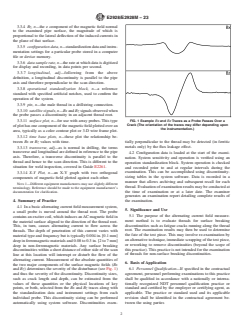
FIG. 1 Example Bx and Bz Traces as a Probe Passes Over a
3.3.11 surface plot, n—for use with array probes. This type
Crack (The orientation of the traces may differ depending upon
of plot has one component of the magnetic field plotted over an
the instrumentation.)
area, typically as a color contour plot or 3-D wire frame plot.
3.3.12 time base plots, n—these plot the relationship be-
tween Bx or Bz values with time.
tially perpendicular to the thread may be detected (in ferritic
metals only) by the flux leakage effect.
3.3.13 transverse, adj—as is normal in drilling, the terms
transverse and longitudinal are defined in reference to the pipe
4.2 Configuration data is loaded at the start of the exami-
axis. Therefore, a transverse discontinuity is parallel to the
nation. System sensitivity and operation is verified using an
thread and hence to the scan direction. This is different to the
operation standardization block. System operation is checked
situation for weld inspection, covered in Guide E2261.
and recorded prior to and at regular intervals during the
examination. This can be accomplished using discontinuity-
3.3.14 X-Y Plot, n—an X-Y graph with two orthogonal
sizing tables in the system software. Data is recorded in a
components of magnetic field plotted against each other.
manner that allows archiving and subsequent recall for each
NOTE 1—Different equipment manufacturers may use slightly different
thread. Evaluation of examination results may be conducted at
terminology. Reference should be made to the equipment manufacturer’s
the time of examination or at a later date. The examiner
documentation for clarification.
generates an examination report detailing complete results of
4. Summary of Practice
the examination.
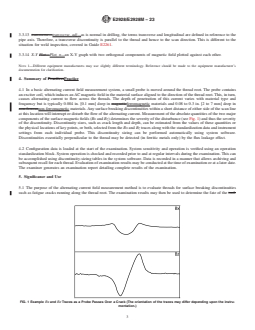
4.1 In a basic alternating current field measurement system,
5. Significance and Use
a small probe is moved around the thread root. The probe
5.1 The purpose of the alternating current field measure-
contains an exciter coil, which induces an AC magnetic field in
ment method is to evaluate threads for surface breaking
the material surface aligned to the direction of the thread root.
discontinuities such as fatigue cracks running along the thread
This, in turn, causes alternating current to flow across the
root. The examination results may then be used to determine
threads. The depth of penetration of this current varies with
the fate of the test piece. This may involve re-examination by
material type and frequency but is typically 0.004 in. [0.1 mm]
an alternative technique, immediate scrapping of the test piece,
deep in ferromagnetic materials and 0.08 to 0.3 in. [2 to 7 mm]
or reworking to remove discontinuities (beyond the scope of
deep in non-ferromagnetic materials. Any surface breaking
this practice). This practice is not intended for the examination
discontinuities within a short distance of either side of the scan
of threads for non-surface breaking discontinuities.
line at this location will interrupt or disturb the flow of the
alternating current. Measurement of the absolute quantities of
6. Basis of Application
the two major components of the surface magnetic fields (Bx
and Bz) determines the severity of the disturbance (see Fig. 1) 6.1 Personnel Qualification—If specified in the contractual
and thus the severity of the discontinuity. Discontinuity sizes, agreement, personnel performing examinations to this practice
such as crack length and depth, can be estimated from the shall be qualified in accordance with a nationally or interna-
values of these quantities or the physical locations of key tionally recognized NDT personnel qualification practice or
points, or both, selected from the Bx and Bz traces along with standard and certified by the employer or certifying agent, as
the standardization data and instrument settings from each applicable. The practice or standard used and its applicable
individual probe. This discontinuity sizing can be performed revision shall be identified in the contractual agreement be-
automatically using system software. Discontinuities essen- tween the using parties
E2928/E2928M − 23
6.2 Qualification of Nondestructive Evaluation Agencies—if amplitude two or more threads away along the pipe axis then
specified in the contractual agreement, NDT agencies shall be the indication is likely due to the permeability changes in the
qualified and evaluated as described in Specification E543, component.
with reference to sections on electromagnetic examination. The
8.3 Magnetic State:
applicable edition of Specification E543 shall be specified in
8.3.1 Demagnetization—It must be ensured that the surface
the contractual agreement.
being examined is in a low magnetization state, or that any
magnetization is uniform over the surface. Therefore the
7. Job Scope and Requirements
procedure followed with any previous magnetic technique
deployed must include demagnetization of the surface, or
7.1 The following items may require agreement by the
ensuring that connections are magnetically saturated. This is
examining party and their client and should be specified in the
because areas of remnant magnetization, particularly where the
purchase document or elsewhere:
leg of a magnetic particle examination yoke was sited, can
7.1.1 Location and type of threaded component to be
produce loops in the X-Y plot, which may sometimes be
examined, design specifications, degradation history, previous
confused with a discontinuity indication.
nondestructive examination results, maintenance history, pro-
cess conditions, and specific types of discontinuities that are
8.4 Thread Geometry:
required to be detected, if known.
8.4.1 When a probe scans away from the shoulder of a pin
7.1.2 The maximum recommended probe scan speed is to connection, the Bx indication value will decrease with little
be stated by the manufacturer. However, detection of smaller change in the Bz value. In the representative plot of Fig. 2, this
discontinuities requires a slower probe scan speed or cleaning appears as a drop in the X-Y plot. The Bx indication value will
of surface, or both. also decrease as a probe approaches the open end of a thread
(pin or box).
7.1.3 Size, material grade and type, and configuration of
threads to be examined.
8.5 Crack Geometry Effects:
7.1.4 A thread numbering or identification system.
8.5.1 Since the effect of a discontinuity on the signals can be
7.1.5 Extent of examination, for example: complete or detected some distance away, “satellite” signals are observed
partial coverage, which threads and to what extent.
as the probe passes one thread (or two threads) away from a
sufficiently-large discontinuity. The satellite signals will be
7.1.6 Type of alternating current field measurement instru-
ment and probe; and description of operations standardization smaller than the main discontinuity signal, and symmetrically
spaced one thread revolution either side. Care should be taken
block used, including such details as dimensions and material.
not to classify these signals in adjacent threads as discontinui-
7.1.7 Required thread cleanliness.
ties.
7.1.8 Environmental conditions, equipment and prepara-
tions that are the responsibility of the client; common sources
of noise that may interfere with the examination, such as motor
drive for rotary table.
7.1.9 Complementary methods or techniques may be used
to obtain additional information.
7.1.10 Acceptance criteria to be used in evaluating discon-
tinuities.
7.1.11 Disposition of examination records and reference
standards.
7.1.12 Format and outline contents of the examination
report.
8. Interferences
8.1 This section describes items and conditions, which may
compromise the alternating current field measurement tech-
nique.
8.2 Material Properties:
8.2.1 Although there are unlikely to be permeability differ-
ences in a ferromagnetic material between different parts of a
thread, if a probe is scanned across a permeability change such
as an area of residual magnetism, this may produce indications
which could be similar to those from a discontinuity. Differ-
entiation between a discontinuity signal and a permeability
change signal can be achieved by comparing scans from
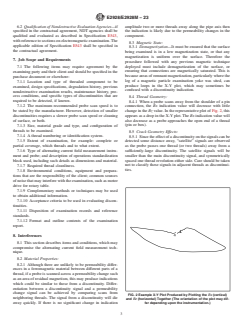
FIG. 2 Example X-Y Plot Produced by Plotting the Bx (vertical)
neighboring threads. The signal from a discontinuity will die
and Bz (horizontal) Together (The orientation of the plot may dif-
away quickly. If there is no significant change in indication fer depending upon the instrumentation.)
E2928/E2928M − 23
8.5.2 A large discontinuity may jump across a thread crown current field measurement software, which will be suitable for
from one root to the neighboring one. This causes a sudden rise the instrument and probes in use and the examination require-
in Bx signal where the discontinuity leaves the root, and a ments. The software provides control of the instrumentation
sudden decrease in Bx signal at the same place in the including set-up, data acquisition, data display, data analysis
neighboring thread where the discontinuity enters the root. and data storage. The software provides algorithms for sizing
8.5.3 Line Contact—when contacts occur across a disconti- the discontinuities (see Section 14). The software runs on the
nuity then minor loops occur within the main X-Y plot loop processor and, on start up, all communications between the
produced by the discontinuity. This can be differentiated from processor and the instrument are automatically checked. When
adjacent multiple discontinuities when there will be a number the software starts up, it automatically sets up the instrument
of separate loops, each returning to the background level. connected in the correct mode for alternating current field
8.5.4 Longitudinal Discontinuities—In the unlikely event measurement examination. Configuration data for each probe
that a discontinuity exists parallel to the pipe axis of the is stored either on the processor or on the probe and is
ferromagnetic test piece then the Bx may rise instead of fall and transmitted to the instrument whenever a probe is selected or
the Bz signal will remain the same as for a short transverse changed. This configuration data may include different settings
discontinuity. The X-Y plot will then go upwards instead of dependent on the thread type and size being examined. For
non-magnetic materials, if configuration data is not available
down in the representative plot of Fig. 2. The extent of this flux
leakage signal above the surface is related to the opening of the from the equipment manufacturer, a standardization may be
performed on reference blocks prior to the material examina-
discontinuity, so it may not be seen for tightly closed discon-
tinuities. tion. Equipment operation is also checked by scanning over a
standardization block (see 11.2.2). Once the instrumentation is
8.6 Instrumentation:
set up for a particular probe, the software can be used to start
8.6.1 The operator should be aware of indicators of noise,
and stop data acquisition. During data acquisition at least two
saturation or signal distortion particular to the instrument being
presentations of the data are presented on the display screen in
used. Special consideration should be given to the following
real time (see 4.1). Data from the probe is displayed against
concerns:
time (with Fig. 1 as an example) and also as an X-Y plot (with
8.6.1.1 The excitation frequency of operation should be
Fig. 2 as an example). The data from the probe can also be
chosen to maximize discontinuity sensitivity while maintaining
displayed against position (see Fig. 1) if an encoder is used
acceptable noise levels.
with the probe. Depending upon equipment type, manual or
8.6.1.2 Saturation of electronic components is a potential
automatic position markers may be incorporated with the data.
problem in alternating current field measurement because
Once collected the data can be further analyzed offline using
signal amplitude can increase rapidly as a probe is scanned into
the software to allow, for example, discontinuity sizing (see
tight angle geometry, such as a shoulder on a pin. This could
Section 14) or annotation for transfer to examination reports.
cause the Bx indication to rise above the top of the range of the
The software also provides facilities for all data collected to be
A/D converter in the instrument. Data acquired under satura-
electronically stored for subsequent review or reanalysis,
tion conditions are not acceptable and appear as a flattening of
printing or archiving.
the Bx response in the representative plots of Fig. 1 at the
9.2 Driving Mechanicsm:
maximum possible signal value. If saturation conditions are
observed, the equipment gain should be reduced until the Bx 9.2.1 Ideally, the pipe is placed on a rotary rig such that the
value no longer appears to saturate and the examination pipe can be rotated about its own axis, allowing the probe to
repeated. After adjusting the equipment gain, an equipment move down the axis. In this way, the complete thread can be
operation check as described in 11.2 is recommended, except examined without having to move the probe around the pipe,
that the loop size will be smaller. Note that this gain adjustment thus avoiding twisting of the probe cable. Alternatively, if the
does not affect the discontinuity sizing capability. pipe cannot be rotated, an array probe can be used to examine
8.6.2 Instrument Induced Phase-Offset—The measurements the complete thread in one turn of the probe.
of magnetic field are at a chosen and fixed phase so that unlike
9.3 Probes:
during conventional eddy current examination the phase angle
9.3.1 The probes selected should be appropriate for the form
does not need to be considered. The phase is selected at
of examination to be carried out dependent on thread size,
manufacture of the probes and is stored in the probe file and is
geometry, size of detectable discontinuity and component
automatically configured by the instrument.
material.
9.3.1.1 Universal Thread Probe—used with interchangeable
9. Alternating Current Field Measurement System
shoes that are each designed to fit a particular thread size and
type. It is important to select the correct shoe for the thread to
9.1 Instrumentation
9.1.1 The electronic instrumentation shall be capable of be examined to avoid excessive lift-off or probe rock, and
probe wear.
energizing the exciter at one or more frequencies appropriate to
the thread material. The apparatus shall be capable of measur- 9.3.1.2 Array Probe—made up of a number of elements;
ing the Bx and Bz magnetic field amplitudes at each frequency. each element is sensitive to a discrete section of the thread
The instrument will be supplied with a processor, either (typically a single root, but may be part of a root for large
internally, or in the form of a portable personal computer (PC) threads). The array probe is generally used for scanning a
that has sufficient system capabilities to support the alternating complete thread in one full rotation. The probe may have
E2928/E2928M − 23
interchangeable scrapers to fit a particular thread size. In this
case, it is important to select the correct scrapers for the thread
to be examined to avoid excessive lift-off or probe rock, and
probe wear.
9.4 Data Displays:
9.4.1 The data display should include Bx and Bz indications
as well as an X-Y plot.
9.4.2 When multi-element array probes are being used, the
facility to produce color contour maps or 3-D wire frame plots
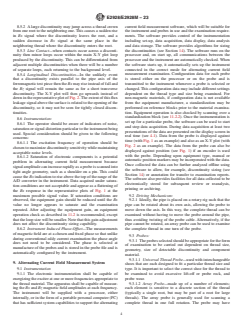
FIG. 4 Flat Plate Sample Serial Number XXX Showing Size and
representing peaks and troughs should be available.
Location of Reference Notch (Plan View and Side View. Not to
9.5 Excitation Mechanism:
Scale)
9.5.1 The degree of uniformity of the magnetic field applied
to the material under examination is
...
This document is not an ASTM standard and is intended only to provide the user of an ASTM standard an indication of what changes have been made to the previous version. Because
it may not be technically possible to adequately depict all changes accurately, ASTM recommends that users consult prior editions as appropriate. In all cases only the current version
of the standard as published by ASTM is to be considered the official document.
Designation: E2928/E2928M − 17 E2928/E2928M − 23
Standard Practice for
Examination of Drillstring Threads Using the Alternating
Current Field Measurement Technique
This standard is issued under the fixed designation E2928/E2928M; the number immediately following the designation indicates the year
of original adoption or, in the case of revision, the year of last revision. A number in parentheses indicates the year of last reapproval.
A superscript epsilon (´) indicates an editorial change since the last revision or reapproval.
1. Scope Scope*
1.1 This practice describes procedures to be followed during alternating current field measurement examination of drillstring
threads on tubulars used for oil and gas exploration and production for detection and, if required, sizing of service-induced surface
breaking discontinuities transverse to the pipe.
1.2 This practice is intended for use on threads in any metallic material.
1.3 This practice does not establish acceptance criteria. Typical industry practice is to reject these connections on detection of a
confirmed crack.
1.4 While the alternating current field measurement technique is capable of detecting discontinuities in these connections,
supplemental surface NDT methods such as magnetic particle testing for ferrous metals and penetrant testing for non-ferrous
metals may detect moreadditional discontinuities.
1.5 Units—The values stated in either inch-pound units or SI units are to be regarded separately as standard. The values stated in
each system might not be exact equivalents; therefore, each system shall be used independently of the other. Combining values
from the two both systems may result in nonconformance with the standard.
1.6 This standard does not purport to address all of the safety concerns, if any, associated with its use. It is the responsibility
of the user of this standard to establish appropriate safety and healthsafety, health, and environmental practices and determine
the applicability of regulatory limitations prior to use.
1.7 This international standard was developed in accordance with internationally recognized principles on standardization
established in the Decision on Principles for the Development of International Standards, Guides and Recommendations issued
by the World Trade Organization Technical Barriers to Trade (TBT) Committee.
2. Referenced Documents
2.1 ASTM Standards:
E543 Specification for Agencies Performing Nondestructive Testing
E1316 Terminology for Nondestructive Examinations
E2261 Practice for Examination of Welds Using the Alternating Current Field Measurement Technique
This practice is under the jurisdiction of ASTM Committee E07 on Nondestructive Testing and is the direct responsibility of Subcommittee E07.07 on Electromagnetic
Method.
Current edition approved June 1, 2017Feb. 1, 2023. Published June 2017March 2023. Originally approved in 2013. Last previous edition approved in 20132017 as
D2928/D2928ME2928/E2928M – 17.–13. DOI: 10.1520/E2928_E2928M–17.10.1520/E2928_E2928M-23.
For referenced ASTM standards, visit the ASTM website, www.astm.org, or contact ASTM Customer Service at service@astm.org. For Annual Book of ASTM Standards
volume information, refer to the standard’s Document Summary page on the ASTM website.
*A Summary of Changes section appears at the end of this standard
Copyright © ASTM International, 100 Barr Harbor Drive, PO Box C700, West Conshohocken, PA 19428-2959. United States
E2928/E2928M − 23
2.2 ASNT Standards
SNT-TC-1A Personnel Qualification and Certification in Nondestructive Testing
ANSI/ASNT-CP-189 Standard for Qualification and Certification of Nondestructive Testing Personnel
2.3 ISO Standard:
ISO 9712 Non-Destructive Testing: Qualification and Certification of NDT Personnel
3. Terminology
3.1 For definitions of terms relating to this practice refer to Terminology E1316, Section A, Common NDT terms, and Section C,
Electromagnetic testing. The following definitions are specific to the alternating current field measurement technique:
3.2 Definitions:
3.2.1 detector—detector, n—one or more coils or elements used to sense or measure a magnetic field; also known as a receiver.
3.2.2 exciter—exciter, n—a device that generates a time varying electromagnetic field, usually a coil energized with alternating
current (AC); also known as a transmitter.
3.2.3 uniform field—field, n—as applied to nondestructive testing with magnetic fields, the area of uniform magnetic field over the
surface of the material under examination produced by a parallel induced alternating current, which has been passed through the
testpiece test piece and is observable beyond the direct coupling of the exciting coil.
3.3 Definitions of Terms Specific to This Standard:
3.3.1 alternating current field measurement system—system, n—the electronic instrumentation, software, probes, and all
associated components and cables required for performing an examination using the alternating current field measurement
technique.
3.3.2 box—box, n—the female thread in a drillstring connection.
3.3.3 Bx—Bx, n—the x component of the magnetic field, parallel to the thread root, the magnitude of which is proportional to the
current density set up by the electric field.
3.3.4 Bz—Bz, n—the z component of the magnetic field normal to the examined pipe surface, the magnitude of which is
proportional to the lateral deflection of the induced currents in the plane of that surface.
3.3.5 configuration data—data, n—standardization data and instrumentation settings for a particular probe stored in a computer
file.file or device memory.
3.3.6 data sample rate—rate, n—the rate at which data is digitized for display and recording, in data points per second.
3.3.7 longitudinal—longitudinal, adj—following from the above definition, a longitudinal discontinuity is parallel to the pipe axis
and therefore perpendicular to the scan direction.
3.3.8 operational standardization block—block, n—a reference standard with specified artificial notches, used to confirm the
operation of the system.
3.3.9 pin—pin, n—the male thread in a drillstring connection.
3.3.10 satellite signals—signals, n—Bx and Bz signals observed when the probe passes a discontinuity in an adjacent thread root.
3.3.11 surface plot—plot, n—for use with array probes. This type of plot has one component of the magnetic field plotted over
an area, typically as a color contour plot or 3-D wire frame plot.
3.3.12 time base plots—plots, n—these plot the relationship between Bx or Bz values with time.
E2928/E2928M − 23
3.3.13 transverse—transverse, adj—as is normal in drilling, the terms transverse and longitudinal are defined in reference to the
pipe axis. Therefore, a transverse discontinuity is parallel to the thread and hence to the scan direction. This is different to the
situation for weld inspection, covered in Guide E2261.
3.3.14 X-Y Plot—Plot, n—an X-Y graph with two orthogonal components of magnetic field plotted against each other.
NOTE 1—Different equipment manufacturers may use slightly different terminology. Reference should be made to the equipment manufacturer’s
documentation for clarification.
4. Summary of PracticesPractice
4.1 In a basic alternating current field measurement system, a small probe is moved around the thread root. The probe contains
an exciter coil, which induces an AC magnetic field in the material surface aligned to the direction of the thread root. This, in turn,
causes alternating current to flow across the threads. The depth of penetration of this current varies with material type and
frequency but is typically 0.004 in. [0.1 mm] deep in magneticferromagnetic materials and 0.08 to 0.3 in. [2 to 7 mm] deep in
non-ferrousnon-ferromagnetic materials. Any surface breaking discontinuities within a short distance of either side of the scan line
at this location will interrupt or disturb the flow of the alternating current. Measurement of the absolute quantities of the two major
components of the surface magnetic fields (Bx and Bz) determines the severity of the disturbance (see Fig. 1) and thus the severity
of the discontinuity. Discontinuity sizes, such as crack length and depth, can be estimated from the values of these quantities or
the physical locations of key points, or both, selected from the Bx and Bz traces along with the standardization data and instrument
settings from each individual probe. This discontinuity sizing can be performed automatically using system software.
Discontinuities essentially perpendicular to the thread may be detected (in ferritic metals only) by the flux leakage effect.
4.2 Configuration data is loaded at the start of the examination. System sensitivity and operation is verified using an operation
standardization block. System operation is checked and recorded prior to and at regular intervals during the examination. This can
be accomplished using discontinuity-sizing tables in the system software. Data is recorded in a manner that allows archiving and
subsequent recall for each thread. Evaluation of examination results may be conducted at the time of examination or at a later date.
The examiner generates an examination report detailing complete results of the examination.
5. Significance and Use
5.1 The purpose of the alternating current field measurement method is to evaluate threads for surface breaking discontinuities
such as fatigue cracks running along the thread root. The examination results may then be used to determine the fate of the tool.
FIG. 1 Example Bx and Bz Traces as a Probe Passes Over a Crack (The orientation of the traces may differ depending upon the instru-
mentation.)
E2928/E2928M − 23
test piece. This may involve re-examination by an alternative technique, immediate scrapping of the tool, test piece, or reworking
to remove discontinuities (beyond the scope of this practice). This practice is not intended for the examination of threads for
non-surface breaking discontinuities.
6. Basis of Application
6.1 Personnel Qualification—ifIf specified in the contractual agreement, personnel performing examinations to this practice shall
be qualified in accordance with a nationally or internationally recognized NDT personnel qualification practice or standard such
as ANSI/ASNT-CP-189, SNT-TC-1A, ISO 9712, or a similar document and certified by the employer or certifying agent, as
applicable. The practice or standard used and its applicable revision shall be identified in the contractual agreement between the
using parties
6.2 Qualification of Nondestructive Evaluation Agencies—if specified in the contractual agreement, NDT agencies shall be
qualified and evaluated as described in Specification E543, with reference to sections on electromagnetic examination. The
applicable edition of Specification E543 shall be specified in the contractual agreement.
7. Job Scope and Requirements
7.1 The following items may require agreement by the examining party and their client and should be specified in the purchase
document or elsewhere:
7.1.1 Location and type of threaded component to be examined, design specifications, degradation history, previous nondestructive
examination results, maintenance history, process conditions, and specific types of discontinuities that are required to be detected,
if known.
7.1.2 The maximum recommended probe scan speed is to be stated by the manufacturer. However, detection of smaller
discontinuities requires a slower probe scan speed or cleaning of surface, or both.
7.1.3 Size, material grade and type, and configuration of threads to be examined.
7.1.4 A thread numbering or identification system.
7.1.5 Extent of examination, for example: complete or partial coverage, which threads and to what extent.
7.1.6 Type of alternating current field measurement instrument and probe; and description of operations standardization block
used, including such details as dimensions and material.
7.1.7 Required thread cleanliness.
7.1.8 Environmental conditions, equipment and preparations that are the responsibility of the client; common sources of noise that
may interfere with the examination, such as motor drive for rotary table.
7.1.9 Complementary methods or techniques may be used to obtain additional information.
7.1.10 Acceptance criteria to be used in evaluating discontinuities.
7.1.11 Disposition of examination records and reference standards.
7.1.12 Format and outline contents of the examination report.
8. Interferences
8.1 This section describes items and conditions, which may compromise the alternating current field measurement technique.
8.2 Material Properties:
8.2.1 Although there are unlikely to be permeability differences in a ferromagnetic material between different parts of a thread,
if a probe is scanned across a permeability change such as an area of residual magnetism, this may produce indications which could
E2928/E2928M − 23
be similar to those from a discontinuity. Differentiation between a discontinuity signal and a permeability change signal can be
achieved by comparing scans from neighboring threads. The signal from a discontinuity will die away quickly. If there is no
significant change in indication amplitude two or more threads away along the pipe axis then the indication is likely due to the
permeability changes in the component.
8.3 Magnetic State:
8.3.1 Demagnetization—It must be ensured that the surface being examined is in a low magnetization state, or that any
magnetization is uniform over the surface. Therefore the procedure followed with any previous magnetic technique deployed must
include demagnetization of the surface, or ensuring that connections are magnetically saturated. This is because areas of remnant
magnetization, particularly where the leg of a magnetic particle examination yoke was sited, can produce loops in the X-Y plot,
which may sometimes be confused with a discontinuity indication.
8.4 Thread Geometry:
8.4.1 When a probe scans away from the shoulder of a pin connection, the Bx indication value will decrease with little change
in the Bz value. In the representative plot of Fig. 2, this appears as a drop in the X-Y plot. The Bx indication value will also decrease
as a probe approaches the open end of a thread (pin or box).
8.5 Crack Geometry Effects:
8.5.1 Since the effect of a discontinuity on the signals can be detected some distance away, “satellite” signals are observed as the
probe passes one thread (or two threads) away from a sufficiently-large discontinuity. The satellite signals will be smaller than the
main discontinuity signal, and symmetrically spaced one thread revolution either side. Care should be taken not to classify these
signals as additional in adjacent threads as discontinuities.
8.5.2 A large discontinuity may jump across a thread crown from one root to the neighboring one. This causes a sudden rise in
Bx signal where the discontinuity leaves the root, and a sudden decrease in Bx signal at the same place in the neighboring thread
where the discontinuity enters the root.
8.5.3 Line Contact—when contacts occur across a discontinuity then minor loops occur within the main X-Y plot loop produced
FIG. 2 Example X-Y Plot Produced by Plotting the Bx (vertical) and Bz (horizontal) Together (The orientation of the plot may differ de-
pending upon the instrumentation.)
E2928/E2928M − 23
by the discontinuity. This can be differentiated from adjacent multiple discontinuities when there will be a number of separate
loops, each returning to the background level.
8.5.4 Longitudinal Discontinuities—inIn the unlikely event that a discontinuity exists parallel to the pipe axis of the ferromagnetic
test piece then the Bx may rise instead of fall and the Bz signal will remain the same as for a short transverse discontinuity. The
X-Y plot will then go upwards instead of down in the representative plot of Fig. 2. The extent of this flux leakage signal above
the surface is related to the opening of the discontinuity, so it may not be seen for tightly closed discontinuities.
8.6 Instrumentation:
8.6.1 The operator should be aware of indicators of noise, saturation or signal distortion particular to the instrument being used.
Special consideration should be given to the following concerns:
8.6.1.1 The excitation frequency of operation should be chosen to maximize discontinuity sensitivity whilstwhile maintaining
acceptable noise levels.
8.6.1.2 Saturation of electronic components is a potential problem in alternating current field measurement because signal
amplitude can increase rapidly as a probe is scanned into tight angle geometry, such as a shoulder on a pin. This could cause the
Bx indication to rise above the top of the range of the A/D converter in the instrument. Data acquired under saturation conditions
are not acceptable and appear as a flattening of the Bx response in the representative plots of Fig. 1 at the maximum possible signal
value. If saturation conditions are observed, the equipment gain should be reduced until the Bx value no longer appears to saturate
and the examination repeated. After adjusting the equipment gain, an equipment operation check as described in 11.2 is
recommended, except that the loop size will be smaller. Note that this gain adjustment does not affect the discontinuity sizing
capability.
8.6.2 Instrument Induced Phase-Offset—The measurements of magnetic field are at a chosen and fixed phase so that unlike during
conventional eddy current examination the phase angle does not need to be considered. The phase is selected at manufacture of
the probes and is stored in the probe file and is automatically configured by the instrument.
9. Alternating Current Field Measurement System
9.1 Instrumentation
9.1.1 The electronic instrumentation shall be capable of energizing the exciter at one or more frequencies appropriate to the thread
material. The apparatus shall be capable of measuring the Bx and Bz magnetic field amplitudes at each frequency. The instrument
will be supplied with a processor, either internally, or in the form of a portable personal computer (PC) that has sufficient system
capabilities to support the alternating current field measurement software, which will be suitable for the instrument and probes in
use and the examination requirements. The software provides control of the instrumentation including set-up, data acquisition, data
display, data analysis and data storage. The software provides algorithms for sizing the discontinuities (see Section 14). The
software runs on the processor and, on start up, all communications between the processor and the instrument are automatically
checked. When the software starts up, it automatically sets up the instrument connected in the correct mode for alternating current
field measurement examination. Configuration data for each probe is stored either on the processor or on the probe and is
transmitted to the instrument whenever a probe is selected or changed. This configuration data may include different settings
dependent on the thread type and size being examined. For non-magnetic materials, if configuration data is not available from the
equipment manufacturer, a standardization may be performed on reference blocks prior to the material examination. Equipment
operation is also checked by scanning over a standardization block (see 11.2.2). Once the instrumentation is set up for a particular
probe, the software can be used to start and stop data acquisition. During data acquisition at least two presentations of the data are
presented on the display screen in real time (see 4.1). Data from the probe is displayed against time (with Fig. 1 as an example)
and also as an X-Y plot (with Fig. 2 as an example). The data from the probe can also be displayed against position (see Fig. 1)
if an encoder is used with the probe. Depending upon equipment type, manual or automatic position markers may be incorporated
with the data. Once collected the data can be further analyzed offline using the software to allow, for example, discontinuity sizing
(see Section 14) or annotation for transfer to examination reports. The software also provides facilities for all data collected to be
electronically stored for subsequent review or reanalysis, printing or archiving.
9.2 Driving Mechanicsm:
9.2.1 Ideally, the pipe is placed on a rotary rig such that the pipe can be rotated about its own axis, allowing the probe to move
E2928/E2928M − 23
down the axis. In this way, the complete thread can be examined without having to move the probe around the pipe, thus avoiding
twisting of the probe cable. Alternatively, if the pipe cannot be rotated, an array probe can be used to examine the complete thread
in one turn of the probe.
9.3 Probes:
9.3.1 The probes selected should be appropriate for the form of examination to be carried out dependent on thread size, geometry,
size of detectable discontinuity and component material.
9.3.1.1 Universal Thread Probe—used with interchangeable shoes that are each designed to fit a particular thread size and type.
It is important to select the correct shoe for the thread to be examined to avoid excessive lift-off or probe rock, and probe wear.
9.3.1.2 Array Probe—made up of a number of elements; each element is sensitive to a discrete section of the thread (typically a
single root, but may be part of a root for large threads). The array probe is generally used for scanning a complete thread in one
full rotation. The probe may have interchangeable scrapers to fit a particular thread size. In this case, it is important to select the
correct scrapers for the thread to be examined to avoid excessive lift-off or probe rock, and probe wear.
9.4 Data Displays:
9.4.1 The data display should include Bx and Bz indications as well as an X-Y plot.
9.4.2 When multi-element array probes are being used, the facility to produce color contour maps or 3-D wire frame plots
representing peaks and troughs should be available.
9.5 Excitation Mechanism:
9.5.1 The degree of uniformity of the magnetic field applied to the material under examination is determined by the equipment
manufacturer. The geometry of the notches used in the opera
...