

ASTM F2606-08(2021)
(Guide)Standard Guide for Three-Point Bending of Balloon-Expandable Vascular Stents and Stent Systems
General Information
- Abstract
SIGNIFICANCE AND USE
3.1 This guide can be used to obtain force versus deflection or midspan bending moment versus midspan curvature curves for stents and stent systems subjected to three-point bending conditions. Bending flexibility of a stent system may be a factor in its ability to track through the vascular anatomy, and may be a factor in vascular trauma along the delivery pathway distal to the guide catheter. Bending flexibility of a deployed stent may be one measure of its ability to flex with a vessel, or to conform to the natural curvature of a vessel. Bending flexibility of a delivery system may also be of interest if it is desired to assess the separate contributions of the delivery system and the mounted stent to the overall flexibility of the stent system.
3.2 This guide is not intended to determine material properties, stent system trackability (ability of a stent system to follow a guide wire and/or guide catheter through vascular tortuosity), or stent system deliverability (ability of a stent system to deliver a stent to the implantation site(s) or through particular level(s) of vascular tortuosity). While this guide does not determine stent system trackability or deliverability, it can provide quantitative insight into how stent system bending flexibility affects trackability and deliverability. Similarly, while this guide does not determine conformability of a deployed stent, it can provide quantitative insight into how stent and/or stent system bending flexibility affects deployed stent conformability. Since this guide quantifies bending flexibility, it may be useful in determining the magnitude of bending flexibility effects on bending-related performance differences between the test article and control devices.
3.3 The three-point bending procedures provided in this guide are intended to be used to characterize balloon-expandable stent and stent system flexibility during product development. They may not necessarily satisfy any particular requirements of nation...
SCOPE
1.1 This guide provides guidelines for quantitatively characterizing balloon-expandable stent and stent system flexibility using three-point bending procedures. Guidelines are provided for characterizing deployed stent flexibility, and for characterizing pre-deployment stent system flexibility in the region of the stent and balloon.
1.2 This guide is not recommended for test articles that cannot be appropriately evaluated using a span length to stent outer diameter (as tested) ratio of at least 4:1. Test articles that do not meet this requirement are likely to exhibit appreciable deformation by modes other than bending.
1.3 This guide does not provide procedures for characterizing the bending flexibility of self-expanding stents, self-expanding stent systems, endoprostheses (stent-grafts), or endoprostheses systems. However, some aspects of this guide may be useful for developing appropriate three-point bending characterization procedures for these devices. While this guide was developed with vascular stents and stent systems in mind, it may be useful for characterizing the bending flexibility of balloon-expandable stents and stent systems used in non-vascular applications.
1.4 The values stated in SI units are to be regarded as the standard. The values given in parentheses are mathematical conversions to inch-pound units that are provided for information only and are not considered standard.
1.5 This international standard was developed in accordance with internationally recognized principles on standardization established in the Decision on Principles for the Development of International Standards, Guides and Recommendations issued by the World Trade Organization Technical Barriers to Trade (TBT) Committee.
- Status
- Published
- Publication Date
- 31-Jul-2021
- Technical Committee
- F04 - Medical and Surgical Materials and Devices
- Drafting Committee
- F04.30 - Cardiovascular Standards
Overview
ASTM F2606-08(2021), Standard Guide for Three-Point Bending of Balloon-Expandable Vascular Stents and Stent Systems, provides a comprehensive framework for quantitatively characterizing the flexibility of balloon-expandable vascular stents and stent systems. This guide, developed by ASTM International, outlines three-point bending procedures that assess both deployed stent flexibility and pre-deployment flexibility of stent systems, focusing on the region of the stent and balloon. Its primary value lies in supporting product development for advanced medical devices by delivering reliable, repeatable measurements of bending properties, essential for performance evaluation and comparison.
Key Topics
- Three-Point Bending Test: Step-by-step guidance for applying and measuring loads to stents or stent systems mounted in a dedicated bending fixture. The method produces force vs. deflection and midspan bending moment vs. curvature curves.
- Bending Flexibility Assessment: The standard enables quantitative analysis of a stent’s ability to conform to anatomical curves or flex with vessel movement, which is crucial to minimizing vascular trauma during delivery and ensuring vessel patency post-implant.
- Distinction from Trackability and Deliverability: While the guide does not directly measure stent system trackability or deliverability, results from three-point bending tests provide insights into how bending flexibility might affect these clinical performance factors.
- Applicability Criteria: The standard is recommended for test articles with a span length to outer diameter ratio of at least 4:1 to avoid non-bending deformation such as kinking or buckling.
- Data Interpretation: Provides detailed recommendations for data correction, plotting, and analysis (e.g., force vs. deflection, bending moment vs. curvature), ensuring clear, objective comparison between devices under test.
- Sample Preparation and Reporting: Specifies minimum sample numbers, preparation methods, and a robust reporting protocol that improves test reproducibility and data transparency.
Applications
ASTM F2606-08(2021) is widely used in the field of medical device engineering, particularly for:
- Product Development: Supporting design iterations and verifying mechanical flexibility requirements during the development of balloon-expandable stents and their delivery systems.
- Design Optimization: Comparing alternate stent geometries or materials for improved bending flexibility, directly impacting stent conformability and clinical outcomes.
- Quality Assurance: Providing a standardized testing approach for verifying batch consistency and benchmarking against control devices.
- Regulatory Submissions: Supplying reproducible, quantitative data that can be used to elucidate the bending behavior of stents, aiding in pre-market submissions when required by notified bodies or regulatory agencies.
- Research & Innovation: Informing novel stent designs or evaluating the extension of balloon-expandable stent technologies into non-vascular applications where flexibility remains critical.
Related Standards
To ensure thorough characterization and compliance in the context of vascular stent and stent system evaluation, consider referencing the following related ASTM standards:
- ASTM F2079 – Standard Test Method for Measuring Intrinsic Elastic Recoil of Balloon-Expandable Stents
- ASTM F2477 – Standard Guide for in vitro Pulsatile Durability Testing of Vascular Stents
- ASTM F2516 – Standard Test Method for Tension Testing of Nickel-Titanium Superelastic Materials
- ISO 25539-2 – Cardiovascular implants - Endovascular devices - Part 2: Vascular stents
Keywords: ASTM F2606, balloon-expandable stents, stent systems, three-point bending, bending flexibility, vascular stent testing, medical device standards, stent conformability, stent performance evaluation, product development.
Get Certified
Connect with accredited certification bodies for this standard

BSI Group
BSI (British Standards Institution) is the business standards company that helps organizations make excellence a habit.

TÜV Rheinland
TÜV Rheinland is a leading international provider of technical services.

TÜV SÜD
TÜV SÜD is a trusted partner of choice for safety, security and sustainability solutions.
Sponsored listings
Frequently Asked Questions
ASTM F2606-08(2021) is a guide published by ASTM International. Its full title is "Standard Guide for Three-Point Bending of Balloon-Expandable Vascular Stents and Stent Systems". This standard covers: SIGNIFICANCE AND USE 3.1 This guide can be used to obtain force versus deflection or midspan bending moment versus midspan curvature curves for stents and stent systems subjected to three-point bending conditions. Bending flexibility of a stent system may be a factor in its ability to track through the vascular anatomy, and may be a factor in vascular trauma along the delivery pathway distal to the guide catheter. Bending flexibility of a deployed stent may be one measure of its ability to flex with a vessel, or to conform to the natural curvature of a vessel. Bending flexibility of a delivery system may also be of interest if it is desired to assess the separate contributions of the delivery system and the mounted stent to the overall flexibility of the stent system. 3.2 This guide is not intended to determine material properties, stent system trackability (ability of a stent system to follow a guide wire and/or guide catheter through vascular tortuosity), or stent system deliverability (ability of a stent system to deliver a stent to the implantation site(s) or through particular level(s) of vascular tortuosity). While this guide does not determine stent system trackability or deliverability, it can provide quantitative insight into how stent system bending flexibility affects trackability and deliverability. Similarly, while this guide does not determine conformability of a deployed stent, it can provide quantitative insight into how stent and/or stent system bending flexibility affects deployed stent conformability. Since this guide quantifies bending flexibility, it may be useful in determining the magnitude of bending flexibility effects on bending-related performance differences between the test article and control devices. 3.3 The three-point bending procedures provided in this guide are intended to be used to characterize balloon-expandable stent and stent system flexibility during product development. They may not necessarily satisfy any particular requirements of nation... SCOPE 1.1 This guide provides guidelines for quantitatively characterizing balloon-expandable stent and stent system flexibility using three-point bending procedures. Guidelines are provided for characterizing deployed stent flexibility, and for characterizing pre-deployment stent system flexibility in the region of the stent and balloon. 1.2 This guide is not recommended for test articles that cannot be appropriately evaluated using a span length to stent outer diameter (as tested) ratio of at least 4:1. Test articles that do not meet this requirement are likely to exhibit appreciable deformation by modes other than bending. 1.3 This guide does not provide procedures for characterizing the bending flexibility of self-expanding stents, self-expanding stent systems, endoprostheses (stent-grafts), or endoprostheses systems. However, some aspects of this guide may be useful for developing appropriate three-point bending characterization procedures for these devices. While this guide was developed with vascular stents and stent systems in mind, it may be useful for characterizing the bending flexibility of balloon-expandable stents and stent systems used in non-vascular applications. 1.4 The values stated in SI units are to be regarded as the standard. The values given in parentheses are mathematical conversions to inch-pound units that are provided for information only and are not considered standard. 1.5 This international standard was developed in accordance with internationally recognized principles on standardization established in the Decision on Principles for the Development of International Standards, Guides and Recommendations issued by the World Trade Organization Technical Barriers to Trade (TBT) Committee.
SIGNIFICANCE AND USE 3.1 This guide can be used to obtain force versus deflection or midspan bending moment versus midspan curvature curves for stents and stent systems subjected to three-point bending conditions. Bending flexibility of a stent system may be a factor in its ability to track through the vascular anatomy, and may be a factor in vascular trauma along the delivery pathway distal to the guide catheter. Bending flexibility of a deployed stent may be one measure of its ability to flex with a vessel, or to conform to the natural curvature of a vessel. Bending flexibility of a delivery system may also be of interest if it is desired to assess the separate contributions of the delivery system and the mounted stent to the overall flexibility of the stent system. 3.2 This guide is not intended to determine material properties, stent system trackability (ability of a stent system to follow a guide wire and/or guide catheter through vascular tortuosity), or stent system deliverability (ability of a stent system to deliver a stent to the implantation site(s) or through particular level(s) of vascular tortuosity). While this guide does not determine stent system trackability or deliverability, it can provide quantitative insight into how stent system bending flexibility affects trackability and deliverability. Similarly, while this guide does not determine conformability of a deployed stent, it can provide quantitative insight into how stent and/or stent system bending flexibility affects deployed stent conformability. Since this guide quantifies bending flexibility, it may be useful in determining the magnitude of bending flexibility effects on bending-related performance differences between the test article and control devices. 3.3 The three-point bending procedures provided in this guide are intended to be used to characterize balloon-expandable stent and stent system flexibility during product development. They may not necessarily satisfy any particular requirements of nation... SCOPE 1.1 This guide provides guidelines for quantitatively characterizing balloon-expandable stent and stent system flexibility using three-point bending procedures. Guidelines are provided for characterizing deployed stent flexibility, and for characterizing pre-deployment stent system flexibility in the region of the stent and balloon. 1.2 This guide is not recommended for test articles that cannot be appropriately evaluated using a span length to stent outer diameter (as tested) ratio of at least 4:1. Test articles that do not meet this requirement are likely to exhibit appreciable deformation by modes other than bending. 1.3 This guide does not provide procedures for characterizing the bending flexibility of self-expanding stents, self-expanding stent systems, endoprostheses (stent-grafts), or endoprostheses systems. However, some aspects of this guide may be useful for developing appropriate three-point bending characterization procedures for these devices. While this guide was developed with vascular stents and stent systems in mind, it may be useful for characterizing the bending flexibility of balloon-expandable stents and stent systems used in non-vascular applications. 1.4 The values stated in SI units are to be regarded as the standard. The values given in parentheses are mathematical conversions to inch-pound units that are provided for information only and are not considered standard. 1.5 This international standard was developed in accordance with internationally recognized principles on standardization established in the Decision on Principles for the Development of International Standards, Guides and Recommendations issued by the World Trade Organization Technical Barriers to Trade (TBT) Committee.
ASTM F2606-08(2021) is classified under the following ICS (International Classification for Standards) categories: 11.040.40 - Implants for surgery, prosthetics and orthotics. The ICS classification helps identify the subject area and facilitates finding related standards.
ASTM F2606-08(2021) is available in PDF format for immediate download after purchase. The document can be added to your cart and obtained through the secure checkout process. Digital delivery ensures instant access to the complete standard document.
Standards Content (Sample)
This international standard was developed in accordance with internationally recognized principles on standardization established in the Decision on Principles for the
Development of International Standards, Guides and Recommendations issued by the World Trade Organization Technical Barriers to Trade (TBT) Committee.
Designation: F2606 − 08 (Reapproved 2021)
Standard Guide for
Three-Point Bending of Balloon-Expandable Vascular Stents
and Stent Systems
This standard is issued under the fixed designation F2606; the number immediately following the designation indicates the year of
original adoption or, in the case of revision, the year of last revision.Anumber in parentheses indicates the year of last reapproval.A
superscript epsilon (´) indicates an editorial change since the last revision or reapproval.
1. Scope 2.1.1 bending flexibility, n—ameasureoftheabilityofatest
specimen to bend.
1.1 This guide provides guidelines for quantitatively char-
acterizingballoon-expandablestentandstentsystemflexibility 2.1.2 bending stiffness, n—a measure of the ability of a test
using three-point bending procedures. Guidelines are provided
specimen to resist bending.
for characterizing deployed stent flexibility, and for character-
2.1.3 conformability, n—the degree to which a stent or stent
izing pre-deployment stent system flexibility in the region of
system matches the native curvature of the vasculature.
the stent and balloon.
2.1.4 deflection, n—displacement of the dynamic support
1.2 This guide is not recommended for test articles that
(loading anvil) at any point in the test.
cannot be appropriately evaluated using a span length to stent
2.1.5 delivery system, n—catheter that is used to deliver and
outer diameter (as tested) ratio of at least 4:1. Test articles that
deploy a stent at the target site. A delivery system for
do not meet this requirement are likely to exhibit appreciable
balloon-expandable stents may be similar to a balloon-
deformation by modes other than bending.
dilatation (angioplasty) catheter.
1.3 This guide does not provide procedures for characteriz-
2.1.6 midspan bending moment, n—a linear estimate of the
ing the bending flexibility of self-expanding stents, self-
bending moment at the center of the span. See 8.5.
expanding stent systems, endoprostheses (stent-grafts), or en-
doprostheses systems. However, some aspects of this guide
2.1.7 midspan curvature, n—a linear estimate of the curva-
may be useful for developing appropriate three-point bending
ture of the center of the span. See 8.5.
characterization procedures for these devices.While this guide
2.1.8 span length, n—distance between the centers of the
was developed with vascular stents and stent systems in mind,
supports.
it may be useful for characterizing the bending flexibility of
balloon-expandable stents and stent systems used in non- 2.1.9 stent system, n—delivery system with a pre-mounted
vascular applications. stent.
1.4 The values stated in SI units are to be regarded as the
2.1.10 stent, vascular, n—synthetic structure that is perma-
standard. The values given in parentheses are mathematical nentlyimplantedinthenativeorgraftedvasculatureandthatis
conversions to inch-pound units that are provided for informa-
intended to provide mechanical radial support to enhance
tion only and are not considered standard. vessel patency.
1.5 This international standard was developed in accor-
3. Significance and Use
dance with internationally recognized principles on standard-
ization established in the Decision on Principles for the
3.1 This guide can be used to obtain force versus deflection
Development of International Standards, Guides and Recom-
or midspan bending moment versus midspan curvature curves
mendations issued by the World Trade Organization Technical
for stents and stent systems subjected to three-point bending
Barriers to Trade (TBT) Committee.
conditions. Bending flexibility of a stent system may be a
factor in its ability to track through the vascular anatomy, and
2. Terminology
may be a factor in vascular trauma along the delivery pathway
2.1 Definitions:
distal to the guide catheter. Bending flexibility of a deployed
stent may be one measure of its ability to flex with a vessel, or
to conform to the natural curvature of a vessel. Bending
This guide is under the jurisdiction ofASTM Committee F04 on Medical and
Surgical Materials and Devices and is the direct responsibility of Subcommittee
flexibility of a delivery system may also be of interest if it is
F04.30 on Cardiovascular Standards.
desired to assess the separate contributions of the delivery
Current edition approved Aug. 1, 2021. Published August 2021. Originally
system and the mounted stent to the overall flexibility of the
approved in 2008. Last previous edition approved in 2014 as F2606 – 08 (2014).
DOI: 10.1520/F2606-08R21. stent system.
Copyright © ASTM International, 100 Barr Harbor Drive, PO Box C700, West Conshohocken, PA 19428-2959. United States
F2606 − 08 (2021)
3.2 This guide is not intended to determine material In the variable span length method, test article curvature may
properties,stentsystemtrackability(abilityofastentsystemto also be varied by changing the span length.
follow a guide wire and/or guide catheter through vascular
5. Apparatus
tortuosity), or stent system deliverability (ability of a stent
system to deliver a stent to the implantation site(s) or through
5.1 The three-point bend test apparatus consists of a means
particularlevel(s)ofvasculartortuosity).Whilethisguidedoes
of applying and accurately measuring various loads and
not determine stent system trackability or deliverability, it can
deflections to a specimen mounted in a three-point bending
provide quantitative insight into how stent system bending
fixture. Stents can be tested in the deployed state and stent
flexibility affects trackability and deliverability. Similarly,
systems can be tested prior to stent deployment. The three-
while this guide does not determine conformability of a
point loading fixture consists of two lower static supports and
deployed stent, it can provide quantitative insight into how
one upper load applicator as shown in Fig. 1. As the stent is
stent and/or stent system bending flexibility affects deployed
deflected,theforceanddeflectionvaluesarerecorded.Thetest
stent conformability. Since this guide quantifies bending
system should include a computerized data acquisition system.
flexibility, it may be useful in determining the magnitude of
5.1.1 The two lower static supports should be parallel
bending flexibility effects on bending-related performance
cylinders with a diameter of 6.35 mm ( ⁄4 in.), unless another
differences between the test article and control devices.
geometric shape and/or diameter is more appropriate for the
span and/or to minimize adverse stent/support interaction, for
3.3 The three-point bending procedures provided in this
example, to minimize resistance to stent movement over the
guide are intended to be used to characterize balloon-
support during loading. The static supports may contain
expandable stent and stent system flexibility during product
circumferential grooves or shoulders to keep the test article
development. They may not necessarily satisfy any particular
axis perpendicular to the supports during testing. Alternative
requirements of national or international regulatory bodies.
lower supports should be designed to ensure that the applied
loads result in bending, not kinking, buckling or crushing, of
4. Summary of Guide
thetestarticle.Itisrecommendedthatthelowerstaticsupports
4.1 The specimen is loaded onto a three-point bend fixture.
be designed to minimize friction by using materials such as
The specimen is supported from below by two static supports
polytetrafluoroethylene (for example, Teflon), acetal poly-
separated by a known span and bent by a force applied on the
oxymethylene (for example, Delrin) or other low-friction
top and midway between the lower supports. The bending
material, or by allowing support rotation with bearings. The
flexibility of the stent is obtained from force-versus-deflection
height of the static supports needs to be sufficient to provide
plots and/or midspan bending moment versus midspan curva-
adequate distance for deflection.
ture plots. Bending flexibility evaluations may be made on
5.1.2 The upper dynamic load applicator should also be a
balloon-expandablestentsystems,and/orondeployedballoon-
cylinder with a 6.35 mm ( ⁄4 in.) diameter, unless another
expandablestents.Bendingflexibilityofadeliverysystemmay
geometric shape and/or diameter is more appropriate for the
also be evaluated if it is desired to assess the separate
span and/or minimization of adverse stent/support interactions
contributions of the delivery system and the mounted stent to
(for example, to minimize the potential local deformation
the overall flexibility of the stent system.
(kinking or crushing), to minimize the resistance to movement
of the specimen over the lower supports during specimen
4.2 Bending flexibility assessments may be made using a
bending, to minimize the potential for the upper support to
fixed span between the lower supports or by using a span that
increases with the specimen length.
4.2.1 The fixed span length method permits force versus
deflection comparisons that are independent of stent length.
This method may be useful when comparing the flexibility of
stentswithdifferentdiametersorstructuraldesigns,anditmay
permit bending flexibility to be evaluated at multiple longitu-
dinal positions along longer test articles.
4.2.2 The variable span length method allows the bending
momentarmlengthtobemaximizedforanygivenstentlength
inordertominimizethepotentialfornon-bendingdeformation
at a given applied load and/or deflection. Bending flexibility
comparisons may be made at different span lengths by com-
paring midspan bending moments at given midspan bending
curvatures. The variable span length approach also permits the
study of bending load variation with span length, but the
bendingloadsarenotsolelydependentontheinherentbending
stiffness of the test article.
4.2.3 Both the fixed and variable span length methods
permit the study of bending load variation with test article
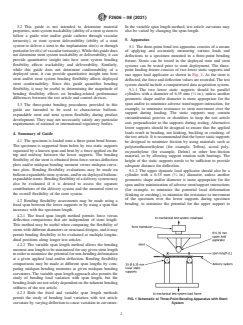
FIG. 1 Schematic of Three-Point Bending Apparatus with Stent
curvature by varying deflection to cause variation in curvature. System
F2606 − 08 (2021)
resist specimen bending, and so forth). The upper load appli- 5.4 Means to hydrate and maintain the hydration of the test
cator should be parallel to, and horizontally centered between, article, if appropriate.
thelowerstaticsupports.Alternativedesignsfortheupperload
applicator should ensure that the applied loads result in 6. Test Specimens
bending, not kinking, buckling or crushing, of the test article.
6.1 Aminimum of three like specimens (same labeled stent
5.1.3 The bending fixture’s lower (static) support diameters
diameter and length) should be tested for each test condition
and upper (dynamic) load applicator diameter should be
(span length, rotational orientation, and so forth) in order to
appropriateforthespanlengthandtestarticlediameter(thatis,
provide some indication of bending stiffness variation for a
spanlength>lowersupportdiameter+uppersupportdiameter
given device and test condition. More samples may be needed,
+ 2 × (test article diameter)).
depending on the claims to be made based on the test results.
5.1.4 Table 1 provides span length and maximum deflection
6.2 If using the variable span method, the shortest stent of a
recommendations for the variable span length method. The
given diameter may be used to determine the maximum
deflection listed in Table 1 is a maximum deflection recom-
bending load associated with a given deflection or curvature.
mendation. Actual test deflections should be lower, especially
Conversely, the longest stent of a given diameter may be used
if it is desired to avoid plastic deformation. Alternative span
to determine the minimum bending load for a given deflection
lengths and deflections for deployed stent flexibility character-
or curvature.
izations may be based on stented vessel flexure conditions
6.2.1 If using the fixed span method, the variation of
anticipated for the intended implant location(s) or other appro-
bending load with stent length at a given deflection cannot be
priate considerations. Alternative span lengths and deflections
determined. However, the variation in bending load with
for stent system flexibility characterizations may be based on
curvature may be determined by varying deflection to cause
vessel curvature conditions anticipated along the intended
variation in curvature.
delivery pathway(s) or other appropriate considerations.
5.1.5 Thespanlengthusedforthefixedspanmethodshould
6.3 If bending stiffness may be sensitive to the rotational
be small enough to permit evaluation of the minimum stent
orientation of the test article about its longitudinal axis, the
lengthtobetestedusingtheselectedmaximumdeflection.Itis
maximum and minimum bending stiffness orientations should
recommended that span length be at least 4 mm smaller than
be evaluated.
the minimum stent length to be evaluated.
5.1.6 The apparatus should have adequate displacement
7. Procedure
(deflection) rate control and the displacement rate should be
7.1 Ifdeformationofthestentand/ordeliverysystemoccurs
sufficientlyslowtoavoidexcessiveloadsduetoinertialeffects.
during a test, the sample should not be re-teste
...