

ASTM E1124-10(2016)
(Test Method)Standard Test Method for Field Measurement of Sound Power Level by the Two-Surface Method
General Information
- Abstract
SIGNIFICANCE AND USE
5.1 The function and operation of equipment in the field often preclude the measurement of the free-field sound pressure levels of a single piece of equipment in the absence of interfering sound from other equipment operating at the same time. The two-surface method will provide, in most cases, a reliable estimate of the normal sound power levels of a specimen operating in an adverse environment.
5.2 This test method is intended for use in the field in the presence of what is normally regarded as interfering background noise. This test method is based upon the work of Hubner 5,6 and Diehl,7 but differs from all other current sound power measurement procedures by requiring simultaneous measurement at both conformal surfaces and by resolving time-averaged sound pressure levels at both surfaces to within 0.1 dB. These two features, simultaneous recording and 0.1dB resolution, enable source sound power to be calculated when the direct sound field of the source is actually lower in level than the ambient noise.
5.3 The use of this test method is expected to be primarily for the relative assessment of the sound power from similar sources or for the prediction of sound levels in a plant based upon measurements of similar sources in another plant. This test method is believed to be capable of yielding a reasonably good estimate of absolute power level with proper care of application and full conformance to the provisions of this procedure.
5.4 The two-surface method is applicable only when the two measurement surfaces can be physically selected to produce positive values of the difference in average sound pressure level. That is, the inner surface sound pressure level minus the outer surface sound pressure level must be at least +0.1 dB. This limitation applies to each frequency band and each constituent surface area investigated. Only the frequency band in which a zero or negative difference occurs is it considered invalid and usually adjacent bands will be valid....
SCOPE
1.1 This test method covers the field, or in situ measurement of sound power level by the two-surface method. The test method is designed to minimize the effects of reverberant conditions, directivity of the noise source under consideration, and the effects of ambient noise from other nearby equipment operating at the same time.
1.2 This standard does not purport to address all of the safety concerns, if any, associated with its use. It is the responsibility of the user of this standard to establish appropriate safety and health practices and determine the applicability of regulatory limitations prior to use.
- Status
- Published
- Publication Date
- 30-Sep-2016
- Technical Committee
- E33 - Building and Environmental Acoustics
- Drafting Committee
- E33.08 - Mechanical and Electrical System Noise
Overview
ASTM E1124-10(2016) - Standard Test Method for Field Measurement of Sound Power Level by the Two-Surface Method defines a reliable field procedure for measuring the sound power level of equipment in situ, even when interfering background noise is present. Developed by ASTM Committee E33 on Building and Environmental Acoustics, the standard is especially valuable for industrial environments where machinery operates in proximity and free-field conditions are not attainable. This method provides a practical way to assess equipment noise emission for compliance, diagnostics, and engineering control.
Key Topics
- Two-Surface Measurement: Utilizes two conformal surfaces placed at different distances around the equipment for simultaneous sound pressure measurement.
- Interference Minimization: Minimizes effects of interfering background noise and reverberant conditions.
- Simultaneous Recording and High Resolution: Requires time-averaged sound pressure levels to be resolved to within 0.1 dB at both surfaces, allowing sound power estimation even when source levels are below ambient noise.
- Relative and Absolute Assessments: Supports both comparison of similar equipment and estimation of absolute sound power when fully applied according to the standard.
- Applicability: Designed for field measurements, especially in industrial facilities, where traditional free-field test setups are not feasible.
- Limitations: Only applicable when the difference between inner and outer average surface sound pressure levels is positive (at least +0.1 dB).
Applications
- Machinery & Equipment Diagnostics: Provides a practical method for on-site sound power measurement of operating industrial machinery, such as pumps, fans, compressors, and pulverizers.
- Factory Noise Mapping: Facilitates the prediction and comparison of plant noise levels based on sound power data from similar equipment in different plants.
- Equipment Comparison: Useful for manufacturers and engineers to compare the noise emissions of equipment types or models, supporting equipment selection or replacement decisions.
- Compliance Testing: Provides a basis for noise compliance assessments in environments where other equipment is operating and background noise cannot be eliminated.
- Noise Control Engineering: Enables more targeted design of noise control measures, informed by accurate sound power data collected under realistic operating conditions.
Related Standards
- ASTM C634: Terminology Relating to Building and Environmental Acoustics - reference for definitions used in ASTM E1124.
- ANSI S1.4: Specification for Sound Level Meters - referenced for instrumentation requirements.
- ISO 3740 Series: Acoustics - Determination of sound power levels of noise sources using sound pressure - relevant for laboratory and field methods.
- ASTM E2235: Standard Test Method for Determination of Decay Rates for Use in Sound Insulation Test Methods - related to acoustical measurements.
Keywords: field sound power, industrial noise measurement, two-surface method, ASTM E1124, machinery noise, in situ sound measurement, plant noise assessment, sound power level testing.
By applying ASTM E1124-10(2016), professionals across industries can achieve dependable field sound power measurements, enabling better control of industrial noise and informed engineering decisions. This test method bridges the gap between laboratory and real-world conditions, ensuring that machinery sound emission data is both practical and accurate for modern industrial environments.
Relations
- Effective Date
- 01-Oct-2016
- Effective Date
- 01-Sep-2013
- Effective Date
- 01-Dec-2011
- Effective Date
- 01-Sep-2010
- Effective Date
- 01-Jun-2010
- Effective Date
- 01-Apr-2009
- Effective Date
- 01-Sep-2008
- Effective Date
- 15-Mar-2008
- Effective Date
- 10-Apr-2002
- Effective Date
- 10-Apr-2002
- Effective Date
- 10-Jun-2001
- Effective Date
- 10-Jun-2001
- Effective Date
- 01-Oct-2016
Get Certified
Connect with accredited certification bodies for this standard

BSMI (Bureau of Standards, Metrology and Inspection)
Taiwan's standards and inspection authority.
Sponsored listings
Frequently Asked Questions
ASTM E1124-10(2016) is a standard published by ASTM International. Its full title is "Standard Test Method for Field Measurement of Sound Power Level by the Two-Surface Method". This standard covers: SIGNIFICANCE AND USE 5.1 The function and operation of equipment in the field often preclude the measurement of the free-field sound pressure levels of a single piece of equipment in the absence of interfering sound from other equipment operating at the same time. The two-surface method will provide, in most cases, a reliable estimate of the normal sound power levels of a specimen operating in an adverse environment. 5.2 This test method is intended for use in the field in the presence of what is normally regarded as interfering background noise. This test method is based upon the work of Hubner 5,6 and Diehl,7 but differs from all other current sound power measurement procedures by requiring simultaneous measurement at both conformal surfaces and by resolving time-averaged sound pressure levels at both surfaces to within 0.1 dB. These two features, simultaneous recording and 0.1dB resolution, enable source sound power to be calculated when the direct sound field of the source is actually lower in level than the ambient noise. 5.3 The use of this test method is expected to be primarily for the relative assessment of the sound power from similar sources or for the prediction of sound levels in a plant based upon measurements of similar sources in another plant. This test method is believed to be capable of yielding a reasonably good estimate of absolute power level with proper care of application and full conformance to the provisions of this procedure. 5.4 The two-surface method is applicable only when the two measurement surfaces can be physically selected to produce positive values of the difference in average sound pressure level. That is, the inner surface sound pressure level minus the outer surface sound pressure level must be at least +0.1 dB. This limitation applies to each frequency band and each constituent surface area investigated. Only the frequency band in which a zero or negative difference occurs is it considered invalid and usually adjacent bands will be valid.... SCOPE 1.1 This test method covers the field, or in situ measurement of sound power level by the two-surface method. The test method is designed to minimize the effects of reverberant conditions, directivity of the noise source under consideration, and the effects of ambient noise from other nearby equipment operating at the same time. 1.2 This standard does not purport to address all of the safety concerns, if any, associated with its use. It is the responsibility of the user of this standard to establish appropriate safety and health practices and determine the applicability of regulatory limitations prior to use.
SIGNIFICANCE AND USE 5.1 The function and operation of equipment in the field often preclude the measurement of the free-field sound pressure levels of a single piece of equipment in the absence of interfering sound from other equipment operating at the same time. The two-surface method will provide, in most cases, a reliable estimate of the normal sound power levels of a specimen operating in an adverse environment. 5.2 This test method is intended for use in the field in the presence of what is normally regarded as interfering background noise. This test method is based upon the work of Hubner 5,6 and Diehl,7 but differs from all other current sound power measurement procedures by requiring simultaneous measurement at both conformal surfaces and by resolving time-averaged sound pressure levels at both surfaces to within 0.1 dB. These two features, simultaneous recording and 0.1dB resolution, enable source sound power to be calculated when the direct sound field of the source is actually lower in level than the ambient noise. 5.3 The use of this test method is expected to be primarily for the relative assessment of the sound power from similar sources or for the prediction of sound levels in a plant based upon measurements of similar sources in another plant. This test method is believed to be capable of yielding a reasonably good estimate of absolute power level with proper care of application and full conformance to the provisions of this procedure. 5.4 The two-surface method is applicable only when the two measurement surfaces can be physically selected to produce positive values of the difference in average sound pressure level. That is, the inner surface sound pressure level minus the outer surface sound pressure level must be at least +0.1 dB. This limitation applies to each frequency band and each constituent surface area investigated. Only the frequency band in which a zero or negative difference occurs is it considered invalid and usually adjacent bands will be valid.... SCOPE 1.1 This test method covers the field, or in situ measurement of sound power level by the two-surface method. The test method is designed to minimize the effects of reverberant conditions, directivity of the noise source under consideration, and the effects of ambient noise from other nearby equipment operating at the same time. 1.2 This standard does not purport to address all of the safety concerns, if any, associated with its use. It is the responsibility of the user of this standard to establish appropriate safety and health practices and determine the applicability of regulatory limitations prior to use.
ASTM E1124-10(2016) is classified under the following ICS (International Classification for Standards) categories: 17.140.01 - Acoustic measurements and noise abatement in general. The ICS classification helps identify the subject area and facilitates finding related standards.
ASTM E1124-10(2016) has the following relationships with other standards: It is inter standard links to ASTM E1124-10, ASTM C634-13, ASTM C634-11, ASTM C634-10a, ASTM C634-10, ASTM C634-09, ASTM C634-08a, ASTM C634-08, ASTM C634-02, ASTM C634-02e1, ASTM C634-00, ASTM C634-01, ASTM C634-22. Understanding these relationships helps ensure you are using the most current and applicable version of the standard.
ASTM E1124-10(2016) is available in PDF format for immediate download after purchase. The document can be added to your cart and obtained through the secure checkout process. Digital delivery ensures instant access to the complete standard document.
Standards Content (Sample)
This international standard was developed in accordance with internationally recognized principles on standardization established in the Decision on Principles for the
Development of International Standards, Guides and Recommendations issued by the World Trade Organization Technical Barriers to Trade (TBT) Committee.
Designation: E1124 −10 (Reapproved 2016)
Standard Test Method for
Field Measurement of Sound Power Level by the Two-
Surface Method
This standard is issued under the fixed designation E1124; the number immediately following the designation indicates the year of
original adoption or, in the case of revision, the year of last revision.Anumber in parentheses indicates the year of last reapproval.A
superscript epsilon (´) indicates an editorial change since the last revision or reapproval.
1. Scope method. These are surfaces over which the measuring micro-
phones are swept. They are located at two different distances
1.1 Thistestmethodcoversthefield,or in situmeasurement
from the equipment. Fig. 1 shows a typical arrangement of
of sound power level by the two-surface method. The test
these surfaces for a generalized piece of equipment.
method is designed to minimize the effects of reverberant
3.2.2 constituent surface area—a portion of the conformal
conditions, directivity of the noise source under consideration,
surface.
and the effects of ambient noise from other nearby equipment
operating at the same time.
4. Summary of Test Method
1.2 This standard does not purport to address all of the
4.1 The average one-third or full octave band sound pres-
safety concerns, if any, associated with its use. It is the
sure levels are measured over two different conformal surfaces
responsibility of the user of this standard to establish appro-
which envelop the equipment. These conformal surfaces
priate safety and health practices and determine the applica-
should be selected to consist of rectangular, cylindrical, and
bility of regulatory limitations prior to use.
hemispherical constituent surfaces so that the surface areas
may be easily calculated. From the difference between the two
2. Referenced Documents
2 average sound pressure levels taken at each surface and from
2.1 ASTM Standards:
the areas of the surfaces, the sound power level may be
C634Terminology Relating to Building and Environmental
calculated. The calculation accounts for both the effect of the
Acoustics
reverberant field and the noise of other equipment. It is
2.2 ANSI Standard:
permissible to define conformal surfaces that completely en-
S1.4Specification for Sound Level Meters
velope the source, yet only measure over a portion of the
conformalsurfaceduetorestrictionsfromprocessconnections
3. Terminology
or accessibility.
3.1 Definitions—For definitions of terms used in this test
method, refer to Terminology C634. 5. Significance and Use
3.2 Definitions of Terms Specific to This Standard: 5.1 The function and operation of equipment in the field
3.2.1 conformal surface—the locus of points which lie at a often preclude the measurement of the free-field sound pres-
fixed distance from the reference surface of a piece of sure levels of a single piece of equipment in the absence of
equipment. Two conformal surfaces are used in this test interfering sound from other equipment operating at the same
time. The two-surface method will provide, in most cases, a
reliable estimate of the normal sound power levels of a
ThistestmethodisunderthejurisdictionofASTMCommitteeE33onBuilding
specimen operating in an adverse environment.
and Environmental Acoustics and is the direct responsibility of Subcommittee
E33.08 on Mechanical and Electrical System Noise.
5.2 This test method is intended for use in the field in the
Current edition approved Oct. 1, 2016. Published October 2016. Originally
presence of what is normally regarded as interfering back-
approved in 1986. Last previous edition approved in 2010 as E1124–10. DOI:
ground noise. This test method is based upon the work of
10.1520/E1124-10R16.
5,6 7
Hubner and Diehl, but differs from all other current sound
For referenced ASTM standards, visit the ASTM website, www.astm.org, or
contact ASTM Customer Service at service@astm.org. For Annual Book of ASTM
Standards volume information, refer to the standard’s Document Summary page on
the ASTM website. Hubner,G.,“AnalysisofErrorsinMeasuringMachineNoiseUnderFreeField
Available fromAmerican National Standards Institute (ANSI), 25 W. 43rd St., Conditions,” Journal of the Acoustical Society of America,Vol 54, No. 4, 1973, pp.
4th Floor, New York, NY 10036.Available from American National Standards 967–977.
Institute (ANSI), 25 W. 43rd St., 4th Floor, New York, NY 10036, http:// Hubner, G., “Qualification Procedures for Free Field Conditions for Sound
www.ansi.org. Power Determination of Sound Sources and Methods for the Determination of the
TerminologyC634–85wastheeditionusedduringthedevelopmentofthistest Appropriate Environmental Correction,” Journal of the Acoustical Society of
method. America, Vol 61, No. 2, 1977, pp. 456–464.
Copyright © ASTM International, 100 Barr Harbor Drive, PO Box C700, West Conshohocken, PA 19428-2959. United States
E1124 − 10 (2016)
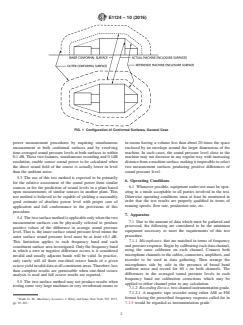
FIG. 1 Configuration of Conformal Surfaces, General Case
power measurement procedures by requiring simultaneous in rooms having a volume less than about 20 times the space
measurement at both conformal surfaces and by resolving enclosed by an envelope around the larger dimensions of the
time-averaged sound pressure levels at both surfaces to within machine. In such cases, the sound pressure level close to the
0.1 dB. These two features, simultaneous recording and 0.1dB machine may not decrease in any regular way with increasing
resolution, enable source sound power to be calculated when distancefromamachinesurface,makingitimpossibletoselect
the direct sound field of the source is actually lower in level two measurement surfaces producing positive differences of
than the ambient noise. sound pressure level.
5.3 The use of this test method is expected to be primarily
6. Operating Conditions
for the relative assessment of the sound power from similar
6.1 Whenever possible, equipment under test must be oper-
sources or for the prediction of sound levels in a plant based
ating in a mode acceptable to all parties involved in the test.
upon measurements of similar sources in another plant. This
Otherwise operating conditions must at least be monitored in
test method is believed to be capable of yielding a reasonably
order that the test results are properly qualified in terms of
good estimate of absolute power level with proper care of
running speeds, flow rate, production rate, etc.
application and full conformance to the provisions of this
procedure.
7. Apparatus
5.4 Thetwo-surfacemethodisapplicableonlywhenthetwo
7.1 Due to the amount of data which must be gathered and
measurement surfaces can be physically selected to produce
processed, the following are considered to be the minimum
positive values of the difference in average sound pressure
equipment necessary to meet the requirements of this test
level.That is, the inner surface sound pressure level minus the
procedure.
outer surface sound pressure level must be at least+0.1 dB.
7.1.1 Microphones, that are matched in terms of frequency
This limitation applies to each frequency band and each
and pressure response. Begin by calibrating each data channel,
constituent surface area investigated. Only the frequency band
using the same calibrator on each channel. Connect both
in which a zero or negative difference occurs is it considered
microphone channels to the cables, connectors, amplifiers, and
invalid and usually adjacent bands will be valid. In practice,
recorder to be used in data gathering. Then arrange the
only rarely will all three one-third octave bands of a given
microphones side by side in the presence of broad band
octaveyieldinvaliddataatallconstituentareas.Therefore,less
ambient noise and record for 60 s on both channels. The
than complete results are permissible when one-third octave
differences in the averaged sound pressure levels in each
analysis is used and full octave results are reported.
frequency band are calibration corrections which may be
5.5 The two-surface method may not produce results when
applied to either channel prior to any calculation.
testing some very large machines in very reverberant rooms or
7.1.2 Recording Device,two-channelinstrumentationgrade.
7.1.2.1 A magnetic tape recorder using either AM or FM
format having the prescribed frequency response called for in
Diehl, G. M., Machinery Acoustics, J. Wiley and Sons, New York, NY, 1973,
pp. 97–103. 7.1.5 would be regarded as instrumentation grade.
E1124 − 10 (2016)
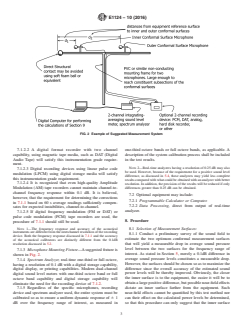
FIG. 2 Example of Suggested Measurement System
7.1.2.2 A digital format recorder with two channel one-third octave bands or full octave bands, as applicable. A
capability, using magnetic tape media, such as DAT (Digital
description of the system calibration process shall be included
Audio Tape) will satisfy this instrumentation grade require- in the test results.
ment.
NOTE 2—Real-time analyzers having a resolution of 0.25 dB may also
7.1.2.3 Digital recording devices using linear pulse code
be used. However, because of the requirement for a positive sound level
modulation (LPCM) using digital storage media will satisfy
difference, as discussed in 5.4, these analyzers may yield less complete
this instrumentation grade requirement.
resultscomparedwithwhatcouldbeobtainedwithananalyzerwithbetter
7.1.2.4 It is recognized that even high-quality Amplitude
resolution. In addition, the precision of the results will be reduced if only
differences greater than 0.25 dB can be obtained.
Modulation (AM) tape recorders cannot maintain channel-to-
channel frequency response within 0.1 dB. It is believed,
7.2 Optional equipment may include:
however, that the requirement for determining the corrections
7.2.1 Programmable Calculator or Computer.
in 7.1.1 based on 60 s average readings sufficiently compen-
7.2.2 Data Processing, direct from output of real-time
sates for expected instabilities, channel-to-channel.
analyzer.
7.1.2.5 If digital frequency modulation (FM or DAT) or
pulse code modulation (PCM) tape recorders are used, the
8. Procedure
procedure of 7.1.1 should still be used.
NOTE 1—The frequency response and accuracy of the acoustical
8.1 Selection of Measurement Surfaces:
instruments are different from the interchannel resolution of the recording
8.1.1 Conduct a preliminary survey of the sound field to
device. Both the frequency response discussed in 7.1.1 and the accuracy
estimate the two optimum conformal measurement surfaces
of the acoustical calibrators are distinctly different from the 0.1dB
resolution discussed in 5.2. that will yield a measurable drop in average sound pressure
level between the two surfaces for the frequency range of
7.1.3 Microphone Mounting Fixture—Asuggested fixture is
interest. As stated in Section 5, merely a 0.1dB difference in
shown in Fig. 2.
average sound pressure levels constitutes a measurable drop.
7.1.4 Spectrum Analyzer, real-time one-third or full octave,
However, the surfaces should be chosen so as to maximize the
having a resolution of 0.1 dB with a digital storage capability,
difference since the overall accuracy of the estimated sound
digital display, or printing capabilities. Modern dual-channel
power levels will be thereby improved. Obviously, the closer
digital sound level meters with one-third octave band or full
the inner surface is to the equipment, the easier it will be to
octave band capability and digital storage capability will
obtainalargepositivedifference,butpossiblenear-fieldeffects
eliminate the need for the recording device of 7.1.2.
dictate an inner surface farther from the equipment. Such
7.1.5 Regardless of the specific microphones, recording
device and spectrum analyzer used, the entire system must be near-field effects cannot be quantified by this test method nor
can their effect on the calculated power levels be determined,
calibrated so as to ensure a uniform dynamic response of 6 1
dB over the frequency range of interest, as measured in so that this procedure can only suggest that the inner surface
E1124 − 10 (2016)
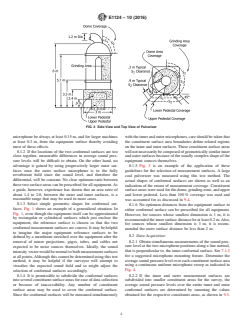
FIG. 3 Side View and Top View of Pulverizer
microphone be always at least 0.15 m, and for larger machines withtheinnerandoutermicrophones,careshouldbetakenthat
at least 0.3 m, from the equipment surface thereby avoiding the constituent surface area boundaries define related regions
most of these effects. ontheinnerandoutersurfaces.Theseconstituentsurfaceareas
8.1.2 If the locations of the two conformal surfaces are too willnotnecessarilybecomposedofgeometricallysimilarinner
close together, measurable differences in average sound pres- andoutersurfacesbecauseoftheusuallycomplexshapeofthe
sure levels will be difficult to obtain. On the other hand, no equipment sources themselves.
advantage is gained by using progressively larger outer sur-
8.1.5 Fig. 3 is an example of the application of these
faces once the outer surface micropho
...