


Wood technology Standards Summary – September 2025 Overview
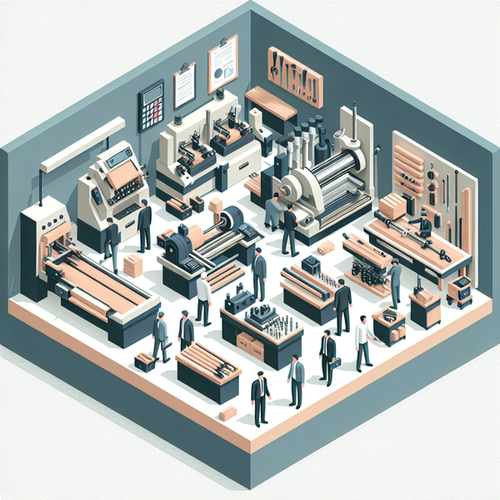
Looking back at September 2025, the Wood Technology sector experienced a significant moment in standardization, marked by the publication of three critical standards. This month’s activity centered on reinforcing confidence in structural design with wood-based panels and advancing the safety of woodworking machinery. For industry professionals, quality managers, engineers, and procurement specialists, understanding the impact and scope of these standards is indispensable for compliance, competitive edge, and informed project delivery. This comprehensive overview will synthesize key themes, analyze the latest requirements, and identify the evolving regulatory landscape for September 2025.
Monthly Overview: September 2025
September 2025 was a noteworthy period for the Wood Technology domain, with the release of two harmonized standards for structural wood-based panels (EN 12369-1:2025 and EN 12369-2:2025) under CEN and a major international safety standard for woodworking machines (ISO 19085-13:2025). The simultaneous update of core standards for OSB, particleboards, fibreboards, and plywood signifies a coordinated effort to streamline structural design practices in alignment with Eurocode 5 (EN 1995-1-1). Furthermore, the release of a focused machinery safety standard underscores the sector's continuous commitment to risk reduction and operator safety as production technology grows more sophisticated.
In comparison to previous periods, this month’s concentration on updating both material property values and machinery safety guidance indicates an industry emphasis on both product reliability and workplace safety—a trend reflecting increased regulatory scrutiny, digitalization in manufacturing, and greener construction practices. The September 2025 publications collectively signal that industry requirements for performance and safety are converging to address contemporary challenges such as climate resilience, productivity, and cross-border project harmonization.
Standards Published This Month
EN 12369-1:2025 – Characteristic Values for OSB, Particleboards, and Fibreboards
Wood-based panels – Characteristic values for structural design – Part 1: OSB, particleboards and fibreboards
This revision of EN 12369-1 delivers essential data for structural designers, engineers, and suppliers working with oriented strand board (OSB), particleboards, and fibreboards across the construction and furniture industries. The standard defines the characteristic values—such as strength, stiffness, and density—used for structural dimensioning of OSB (types 2, 3, 4 per EN 300), particleboards (P4, P5, P6, P7 per EN 312), and several fibreboard grades (including hardboard, medium and MDF variants complying with EN 622 series).
Key updates in the 2025 version include the addition of MDF.RWH (for roofing and wall sheathing applications), expanded mechanical property tables, and clarifications to terminology in harmony with Eurocode 5 (EN 1995-1-1). The document specifies minimum characteristic values, service class designations (1, 2, 3), and load duration factors crucial for safe and optimal structural design. It is intended to be used hand-in-hand with EN 1058 and EN 789 for testing and property determination where product-specific values are required.
Primary audiences include structural designers, timber engineers, quality managers in manufacturing, and building code authorities. This document is crucial for ensuring structural adequacy, product certification, and regulatory compliance throughout Europe.
Key highlights:
- Expands scope to include MDF.RWH and its characteristic values for the first time
- Harmonizes definitions and characteristic values with Eurocode 5’s requirements
- Specifies robust procedures for determination and presentation of strength and stiffness properties
Access the full standard:View EN 12369-1:2025 on iTeh Standards
EN 12369-2:2025 – Characteristic Values for Plywood
Wood-based panels – Characteristic values for structural design – Part 2: Plywood
The 2025 revision of EN 12369-2 provides authoritative requirements for the structural design of plywood in engineering and construction contexts. The standard supplies characteristic values for the mechanical properties of plywood panels—bending, tension, compression, panel shear, and planar shear—complying with EN 636, and directly references EN 1995-1-1 to ensure Eurocode-aligned safety and performance.
Among significant changes, this edition closes previous property data gaps by supplying additional material properties needed for comprehensive structural calculations. The standard refines the link between panel classification (including new interpolated classes F35 and E35) and performance values, introduces enhanced procedures for deriving characteristic values through combined testing (per EN 789 and EN 1058), and establishes clear service class definitions for moisture content. The document’s scope is limited to plywood panels with at least 5 layers, thicker than 6 mm, and densities within the prescribed 350–750 kg/m³ window.
This standard is vital for architects, structural engineers, quality managers, and procurement specialists working on wood construction projects. It supports consistent, reliable panel selection and enables compliance with the most recent design code expectations.
Key highlights:
- Fills gaps in required material property data for Eurocode-compliant design
- Introduces new performance classes by interpolation and updates methods for property determination
- Reinforces clear service class and load duration class definitions for broader application
Access the full standard:View EN 12369-2:2025 on iTeh Standards
ISO 19085-13:2025 – Safety for Multi-Blade Rip Sawing Machines
Woodworking machines – Safety – Part 13: Multi-blade rip sawing machines with manual loading and/or unloading
The latest edition of ISO 19085-13 marks a pivotal advancement in safety for woodworking machinery, particularly for multi-blade rip saws in continuous production settings. Applicable to machines designed for manual loading and/or unloading of solid wood and wood-like materials, this standard addresses every phase of the machinery lifecycle—from transport and assembly to operation, maintenance, and decommissioning.
Key safety requirements include provisions for control system reliability, operator interface safeguards, start/stop logic, emergency stops, braking and guard systems, and risk reduction against ejection, crushing, and ergonomic hazards. The 2025 version incorporates a revised scope clarifying applicability only to machines for continuous use and integrates updates in hazard identification, noise emission measurement, and anti-splinter protection.
This international standard is indispensable for machinery manufacturers, workshop managers, health and safety officers, and anyone involved in the procurement or operation of industrial woodworking equipment. Adhering to ISO 19085-13 is central to both regulatory conformance and ensuring best-in-class workplace safety.
Key highlights:
- Comprehensive safety measures for all phases: assembly, operation, maintenance, and scrapping
- Expanded and clarified requirements on guarding, emergency stops, and anti-ejection systems
- Fully aligns with ISO 19085-1:2021 and brings noise control guidance up to latest best practice
Access the full standard:View ISO 19085-13:2025 on iTeh Standards
Common Themes and Industry Trends
A retrospective analysis of September 2025’s standards shows two interconnected themes: deepening alignment with European and international frameworks, and growing prioritization of safety and sustainability. The concurrent update of characteristic design value standards for both softwood and engineered wood panels signals industry-wide intent to modernize calculations in line with Eurocode 5 and harmonized test methods, fostering easier cross-border trade and streamlined regulatory approval.
Similarly, the upgrade of machinery safety standards reflects both advances in equipment technology (such as automation, continuous feed, and integrated controls) and societal expectations for health and wellbeing within wood manufacturing environments. Harmonization of safety requirements across the ISO 19085 series and with EU Machinery Directive expectations will drive both compliance and innovation in machine design.
The attention to clear service class definitions (i.e., climate-resilient design) and robust machine lifecycle safety reflects evolving priorities: resilient material selection, risk-managed operations, and a commitment to sustainable, durable timber structures. Together, these trends position the sector for future demands around circular economy, digital manufacturing, and lifecycle-based compliance.
Compliance and Implementation Considerations
For organizations governed by these standards, the following practical steps are recommended:
Review and Integrate Updated Characteristic Values: Designers and structural engineers should reverify calculation tools, design sheets, and specifications against new minimum characteristic values in EN 12369-1:2025 and EN 12369-2:2025. This is essential for Eurocode 5 compliance and may affect project approvals, tenders, and third-party certifications.
Align Service Class and Load Duration Factors: Ensure that project documentation and procurement align with clarified service class and load duration definitions. Consider potential implications for projects in varied climates or subject to dynamic loading.
Audit Machinery Safety Compliance: Facilities utilizing multi-blade rip sawing machinery should assess current controls, guarding, and operator protocols against the updated ISO 19085-13:2025. Immediate attention should be paid to emergency stops, access safety, and anti-ejection features.
Training and Documentation Updates: Update staff training materials, maintenance schedules, and documentation to reflect standard changes. For machine operators, clear communication of enhanced safety measures is vital.
Timeline: While European standards typically allow a transition period before older versions are withdrawn, best practice is to transition as soon as feasible, particularly where notified bodies or regulators are involved.
Resources for Implementation:
- Access standards directly via iTeh Standards for official content and supporting documents
- Use harmonized Eurocode and Machinery Directive guides to crossreference procedures
- Engage with professional networks or standardization bodies to discuss sector-wide impacts
Conclusion: Key Takeaways from September 2025
September 2025 brought a focused suite of standards that will fundamentally inform both structural and safety practices across the Wood Technology sector. The new editions of EN 12369-1 and EN 12369-2 solidify the foundation for resilient, Eurocode-compliant timber construction, while ISO 19085-13:2025 takes machinery risk mitigation to a new level for automated and operator-loaded equipment.
For professionals in design, quality assurance, procurement, and operations, the key recommendations arising from this month’s publications are:
- Immediately review and update structural calculation tools and safety protocols to the latest standards.
- Prioritize cross-departmental training and awareness to align with updated terminology and technical criteria.
- Consult the full texts for detailed requirements—including unique provisions for specific panel types and machine configurations.
Staying current with these standards is more than a compliance requirement; it is a catalyst for competitive strength, reputational trust, and resilience in a transforming construction and manufacturing ecosystem. For comprehensive access and ongoing updates, visit iTeh Standards.
Categories
- Latest News
- New Arrivals
- Generalities
- Services and Management
- Natural Sciences
- Health Care
- Environment
- Metrology and Measurement
- Testing
- Mechanical Systems
- Fluid Systems
- Manufacturing
- Energy and Heat
- Electrical Engineering
- Electronics
- Telecommunications
- Information Technology
- Image Technology
- Precision Mechanics
- Road Vehicles
- Railway Engineering
- Shipbuilding
- Aircraft and Space
- Materials Handling
- Packaging
- Textile and Leather
- Clothing
- Agriculture
- Food technology
- Chemical Technology
- Mining and Minerals
- Petroleum
- Metallurgy
- Wood technology
- Glass and Ceramics
- Rubber and Plastics
- Paper Technology
- Paint Industries
- Construction
- Civil Engineering
- Military Engineering
- Entertainment