


A Practical Guide to Electrical Installation Vocabulary Standards for Testing and Safety
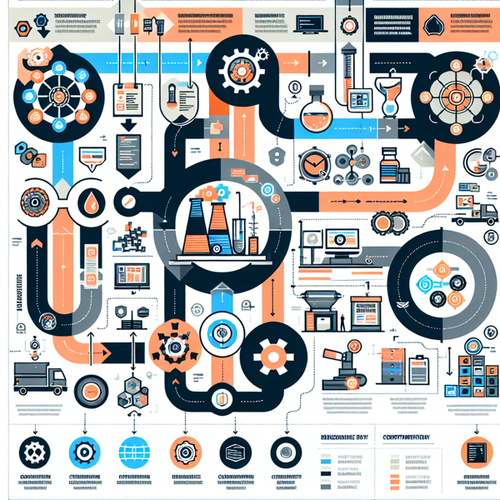
Electrical safety and efficient power utilization are at the heart of every successful business operation today. With technology ever evolving, organizations can no longer afford ambiguity or inconsistency when it comes to designing, installing, or maintaining electrical systems. This is where rigorous, internationally-harmonized standards, such as SIST IEC 60050-826:2023, become fundamental. Covering the critical terminology for electrical installations in residential, industrial, and commercial settings, this standard establishes a unified language that boosts productivity, streamlines scaling efforts, and vastly improves electrical safety. In this guide, we explore how this key standard underpins best practice in installation testing and is simply a must-have for anyone involved with electrical systems.
Overview / Introduction
The world of electrical installations is complex, spanning everything from a small shop's wiring to massive industrial automation plants. As modern infrastructures blend energy efficiency, smart grid technologies, and stringent safety requirements, clear communication is non-negotiable. Yet, terminology has often been a weak link: misinterpretation of a simple term can lead to costly mistakes, system inefficiencies, or, worse, hazardous situations.
That’s why the SIST IEC 60050-826:2023 standard, part of the respected International Electrotechnical Vocabulary (IEV), is so important. Designed as a foundational reference for everyone—engineers, managers, compliance officers, and the general public—it collects, defines, and standardizes the critical language used in electrical installations. This clarity supports everything from regulatory compliance to smarter scaling of electrical systems.
By adopting and implementing international terminology standards, businesses can:
- Prevent misunderstandings that lead to system failures or unsafe installations
- Achieve faster onboarding and smoother collaboration across teams and geographies
- Enhance compliance and readiness for inspections
- Leverage high-level productivity and security benefits inherent to standardized approaches
In this article, you'll discover the full scope of this essential standard and why understanding and using proper terminology is a cornerstone for quality, safety, and future-readiness in electrical system testing and operations.
Detailed Standards Coverage
SIST IEC 60050-826:2023 – International Electrotechnical Vocabulary for Electrical Installations
International Electrotechnical Vocabulary (IEV) - Part 826: Electrical installations
This standard is the definitive glossary for electrical installations in residential, industrial, and commercial premises. It collects and systematizes essential terms, definitions, symbols, and concepts—forming the linguistic backbone for electrical system design, installation, testing, and maintenance. Critically, it does not address the public energy distribution or high-voltage transmission domains, focusing instead on end-user and building-related installations.
Scope:
- Provides comprehensive terminology for all aspects of electrical installations (excluding public distribution/power generation)
- Aligns with updated safety requirements (notably IEC 61140:2016)
- Incorporates current terms from related standards (IEC 60364-8-1:2014, IEC 60364-8-2:2018)
- Acts as a "horizontal publication"—serving as a reference for all technical committees preparing IEC publications
Key requirements and specifications:
- Systematic classification of terms across vital sections: characteristics, voltages, currents, protection, earthing, wiring, equipment, switching and more
- Each term is accompanied by a clear definition and, where applicable, symbols and translated synonyms in multiple languages
- Inclusion of practical clauses for real-world situations (e.g., protection for safety services, wiring systems, energy efficiency)
Who needs to comply:
- Electrical engineers (design, installation, and maintenance)
- Facility and plant managers
- Technical training and compliance professionals
- Manufacturers and suppliers of electrical equipment/systems
- Standards developers and technical committees
Practical implications for implementation:
- Ensures all documentation and testing procedures use consistent, internationally accepted terms
- Supports onboarding and training, reducing ramp-up times for new staff or partners
- Lays the foundation for robust compliance with safety and testing regulations (critical during audits or certification processes)
Notable features or requirements:
- Multilingual format for global accessibility—terms provided in English, French, Arabic, German, Spanish, Japanese, Polish, Swedish, and Chinese
- Conformance with the latest horizontal publication principles, ensuring coherence among all related IEC standards
- Organization using a hierarchical scheme for quick navigation (part/section/concept)
- Cross-referencing with authoritative terminologies like IEC Guide 108, and compliance drivers from IEC 61140
Key highlights:
- Harmonizes over 22,000 electrotechnical terms for universal clarity
- Covers critical topics: protection against electric shock, voltages & currents, wiring systems, earthing, energy efficiency, and smart grid concepts
- Directly supports electrical installation testing, safety inspections, and quality assurance
Access the full standard:View SIST IEC 60050-826:2023 on iTeh Standards
Industry Impact & Compliance
The adoption of standardized vocabulary for electrical installations impacts every aspect of the industry:
How These Standards Affect Businesses
- Boost Communication: Everyone uses the same language, avoiding costly misinterpretations and facilitating global collaboration.
- Compliance & Legal Security: Familiarity with the terms is critical for passing regulatory inspections, insurance audits, and import/export documentation.
- Process Efficiency: Testing, commissioning, and maintenance become more streamlined, thanks to precise instructions and reporting.
- Safety Enhancement: Clear understanding of protection and grounding terms directly reduces the risk of electric shock, equipment failure, and downtime.
Compliance Considerations
- International, national, and local regulations often require adherence to IEC standards or their national adoptions (e.g., SIST, EN, DIN).
- Loss of certification, legal penalties, or insurance claim denials can result from using outdated or inconsistent terminology.
Benefits of Adopting These Standards
- Accelerates business scaling by providing a common foundation for expansion, merger, or international collaboration
- Reduces training costs—standardized definitions enable modular, reusable training materials
- Lowers risk exposure by aligning all stakeholders around clear safety requirements
- Enhances customer trust by demonstrating professionalism and adherence to international best practices
Risks of Non-Compliance
- Increased likelihood of workplace accidents or system failures due to misunderstanding
- Regulatory fines or refusal of operation permits
- Loss of competitive edge, especially for firms operating across borders or seeking major contracts
Implementation Guidance
Implementing terminology standards like SIST IEC 60050-826:2023 is more than an academic exercise—it drives real operational improvements. Here’s how organizations can best approach adoption:
Common Implementation Approaches
- Integrate Standard Vocabulary into All Documentation
- Update forms, procedures, test reports, product manuals, and training materials to match official terminology
- Staff Training and Onboarding
- Educate current and new employees on standardized terms and their practical meanings
- Use the standard itself as a textbook or reference for professional development
- Digital Systems Update
- Ensure your facility management software, testing tools, and control systems use the standardized phrases and units
- Audits and Continuous Improvement
- Schedule regular reviews to keep documentation up to date with the latest editions and definitions
Best Practices for Adopting These Standards
- Assign responsibility to a Standards Champion—an individual or team tasked with maintaining compliance and updates
- Use translation resources wisely if operating in a multilingual environment
- Include terminology conformity checks in quality assurance and safety audits
- Encourage participation in technical committees to stay ahead of terminology changes
Resources for Organizations
- Access the full standard, along with related standards, on trusted platforms like iTeh Standards
- Use cross-referenced Electropedia (www.electropedia.org) for in-depth terminology guidance
- Tap into technical training and webinars by standards organizations
Conclusion / Next Steps
Adopting a consistent, internationally recognized vocabulary may seem a subtle step, but its impact ripples throughout the lifecycle of electrical installation projects—from design to testing to long-term maintenance. SIST IEC 60050-826:2023 provides the definitive reference point for all stakeholders, enabling clarity, boosting safety, and facilitating productivity at every turn.
Key takeaways:
- Terminology is the backbone of safe, efficient, and compliant electrical installation testing
- Using this standard markedly reduces miscommunication and risk in construction and maintenance projects
- Standards adoption is a competitive advantage for scaling, compliance, and trust
Professionals, business leaders, and technical teams are encouraged to:
- Integrate SIST IEC 60050-826:2023 into daily practice
- Commit to regular standards updates
- Explore further IEC standards to enhance their operations
Explore the full standard today and set your organization on a path to smarter, safer, and more scalable electrical system management.
Categories
- Latest News
- New Arrivals
- Generalities
- Services and Management
- Natural Sciences
- Health Care
- Environment
- Metrology and Measurement
- Testing
- Mechanical Systems
- Fluid Systems
- Manufacturing
- Energy and Heat
- Electrical Engineering
- Electronics
- Telecommunications
- Information Technology
- Image Technology
- Precision Mechanics
- Road Vehicles
- Railway Engineering
- Shipbuilding
- Aircraft and Space
- Materials Handling
- Packaging
- Textile and Leather
- Clothing
- Agriculture
- Food technology
- Chemical Technology
- Mining and Minerals
- Petroleum
- Metallurgy
- Wood technology
- Glass and Ceramics
- Rubber and Plastics
- Paper Technology
- Paint Industries
- Construction
- Civil Engineering
- Military Engineering
- Entertainment