


Network Security and Interoperability Standards in Power Utility Telecontrol and Telemetering
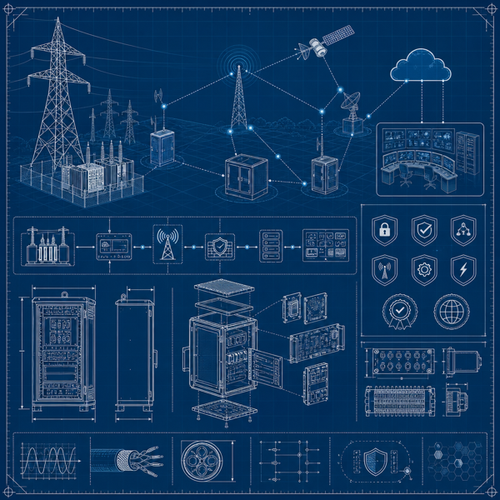
In today’s rapidly evolving energy landscape, the convergence of telecommunications, automation, and smart infrastructure has made international standards for telecontrol and telemetering vital for every modern business. As organizations deploy sophisticated networked systems and embrace smart grid technologies, adhering to robust standards is not just about compliance—it's about operational excellence, security, and future-proof scalability. This article explores four essential IEC standards shaping the backbone of secure, interoperable, and efficient power system communications: IEC 62351-7:2025, IEC TR 61850-1-1:2026, IEC TR 61850-80-5:2026, and IEC TR 62746-2:2025.
Overview / Introduction
The power utilities sector is undergoing transformative changes driven by digitalization, decentralization, and the move toward smart grids and flexible energy management. Communication and interoperability between intelligent electronic devices (IEDs), remote terminal units (RTUs), distributed energy resources (DERs), and control centers is the linchpin of resilient operations.
Why do standards matter for telecontrol and telemetering?
- Productivity: Streamlined integration and automation reduce manual intervention and errors.
- Security: Advanced cybersecurity requirements help protect critical infrastructure from evolving threats.
- Scaling: Seamless expansion and integration with new technologies ensure future-readiness.
- Interoperability: Open, standardized protocols guarantee that multi-vendor devices work harmoniously.
Whether you’re a smart grid operator, utility engineer, OT/IT integrator, or energy tech developer, understanding and adopting these standards empowers you to design robust, efficient, and secure systems—laying the foundation for modern energy ecosystems.
Detailed Standards Coverage
IEC 62351-7:2025 – Network and System Management (NSM) Data Object Models
Power Systems Management and Associated Information Exchange – Data and Communications Security – Part 7: NSM Data Object Models
The IEC 62351-7:2025 standard establishes a comprehensive set of abstract data object models tailored specifically for the network and system management (NSM) of power operations. Recognizing the increasing reliance of power systems on digital infrastructure—including communication networks, IEDs, automation, and protocols—this document provides an actionable blueprint for monitoring network health, detecting security intrusions, and managing operational reliability.
Scope & Applicability: IEC 62351-7:2025 is designed for organizations running modern power systems, including substations, grid operators, and DER aggregators, who must ensure real-time visibility and fault resilience across complex infrastructures. It complements SNMP-based monitoring by introducing power-system-specific data objects for devices such as teleprotection units, substation gateways, inverters, and protections.
Key Requirements & Features:
- Abstract modeling of device health, environmental and security status using UML.
- SNMP MIB mappings for seamless integration with network management frameworks.
- Monitoring support for prominent power protocols (IEC 61850, IEC 60870-5-104, IEEE 1815 DNP3).
- Guidelines for detection of unauthorized access, DoS attacks, intrusion detection, and physical or digital tampering.
- Enhanced with code components and revised data models, ensuring compatibility with evolving technologies.
Practical Implementation: Implementing IEC 62351-7 enables organizations to unify OT (operational technology) and IT monitoring. Health/status data objects integrate into NSM environments, facilitating advanced intrusion detection and rapid incident response, while supporting legacy and next-gen devices alike.
Key highlights:
- Unified monitoring of communication networks, devices, and protocols
- Built-in cybersecurity event detection and reporting
- Supports automation and remote diagnostics for improved uptime
Access the full standard:View IEC 62351-7:2025 on iTeh Standards
IEC TR 61850-1-1:2026 – Introduction and Overview of IEC 61850 Series
Communication Networks and Systems for Power Utility Automation – Part 1-1: Introduction and Overview
Serving as the starting point for understanding IEC 61850, this technical report describes the fundamental concepts, structure, and evolution of the world-leading standard for power utility automation. IEC TR 61850-1-1:2026 delivers an in-depth overview of how intelligent electronic devices (IEDs) communicate within a power utility automation system (PUAS), highlighting the importance of standardized protocols for interoperability and functional integrity.
Scope & Applicability: Aimed at engineers, system architects, and decision-makers, this document demystifies how the various parts of IEC 61850 fit together to support automation of substations, DER integration, and smart grid deployment.
Key Requirements & Features:
- Definitions for core terms: IED, logical node, system configuration description (SCL), ACSI (Abstract Communication Service Interface).
- Explanation of standardization approach, namespace concepts, and document structure.
- Outlines interoperability and interchangeability requirements to facilitate multi-vendor deployments.
- Updated with current industry best practices (e.g., TISSUE process updates, namespace handling).
Practical Implementation: Following IEC TR 61850-1-1 enables organizations to design projects that natively support plug-and-play device integration, future extensions, and robust lifecycle management. The overview guides users in structuring their systems for maximum efficiency and resilience.
Key highlights:
- Roadmap to the entire IEC 61850 series for telecontrol applications
- Ensures standard-compliant design and functional compatibility
- Reduces integration overhead and mitigates vendor lock-in
Access the full standard:View IEC TR 61850-1-1:2026 on iTeh Standards
IEC TR 61850-80-5:2026 – Mapping Between IEC 61850 and Modbus (IEC 61158-15)
Communication Networks and Systems for Power Utility Automation – Part 80-5: Guideline for Mapping Information Between IEC 61850 and IEC 61158-15
In mixed-protocol environments, IEC TR 61850-80-5:2026 provides the vital link for organizations that deploy both modern IEC 61850 systems and legacy Modbus technologies. This technical report lays out a formal framework and mapping guidelines for exchanging operational and configuration data via standardized gateways, ensuring robust interoperability between field-level industrial protocols and advanced utility automation systems.
Scope & Applicability: Applicable to energy, water, and other utilities facing the challenge of integrating new IEC 61850 IEDs with existing Modbus-based devices, or requiring automated gateway configuration for secure, real-time communications. Vendors, integrators, and system architects benefit from this mapping guideline.
Key Requirements & Features:
- Defines gateway architectures for seamless IEC 61850–Modbus integration.
- Provides consistent mapping for data attributes (operational state, quality, timestamps) and control commands.
- SCL (Substation Configuration Language) extensions for specifying Modbus data within the IEC 61850 configuration environment.
- Supports mapping for both Modbus RTU (serial) and Modbus TCP (IEC 61158-6-15).
- Details conversion behaviors, error handling, and additional gateway functions (alarm grouping, command interlocking).
Practical Implementation: Deploying this report’s guidelines reduces duplication of engineering effort, mitigates interoperability risks, and offers a scalable path for modernizing substations or aggregating DERs without abandoning legacy assets. By automating gateway setup, organizations realize faster deployments and maintain operational continuity.
Key highlights:
- Bridges IEC 61850 and Modbus for operational continuity
- Automation tools minimize configuration errors and reduce rollout times
- Promotes longevity of legacy investments while embracing grid modernization
Access the full standard:View IEC TR 61850-80-5:2026 on iTeh Standards
IEC TR 62746-2:2025 – Use Cases for Smart Grid Interfaces
Systems Interface Between Customer Energy Management System and the Power Management System – Part 2: Use Cases
The IEC TR 62746-2:2025 technical report focuses on the “last mile” of the smart grid—describing use cases and architecture models that enable interoperability, flexibility, and secure information exchange between a customer’s energy management system (CEMS) and the overarching grid or power management system. The document provides a structured methodology for defining interactions, information exchanges, and operational scenarios that support smart home, building, and industrial integration into the broader grid.
Scope & Applicability: Intended for standards bodies, smart grid developers, device manufacturers, and solution providers, this report is the foundation for enabling demand-side management, DER aggregation, remote control/monitoring, and enhanced grid stability through coherent customer-to-grid interactions.
Key Requirements & Features:
- Presents an up-to-date architecture model for smart grid integration.
- Catalogs extensive user stories and use cases ranging from flexible appliance starts, tariff-based control, to DER flexibility management and event responses.
- Guidelines for message content, protocols, and neutral interfaces fostering full interoperability across diverse devices and systems.
- Regular updates ensure alignment with emerging technologies and evolving industry needs.
- Collaboration with multiple IEC technical committees guarantees broad applicability.
Practical Implementation: The guidelines assist organizations in designing systems that can participate in advanced grid services—such as automated demand response, real-time tariff management, or DER flexibility aggregation—empowering consumers, commercial buildings, and aggregators to actively participate in grid management while optimizing costs and performance.
Key highlights:
- Enables new service models and revenue streams (e.g., flexibility markets)
- Reduces engineering ambiguity for digital grid and smart home projects
- Positions businesses for compliance with future smart grid regulations
Access the full standard:View IEC TR 62746-2:2025 on iTeh Standards
Industry Impact & Compliance
Implementing telecontrol and telemetering standards brings transformative benefits to organizations in power, energy, and utilities:
- Enhanced Security: Built-in models for intrusion detection, unauthorized access prevention, and encrypted communications mitigate operational risks and cyberattacks.
- Boosted Productivity: Consistent data formats and automated configuration streamline device integration, enable remote diagnostics, and reduce maintenance downtime.
- Scalable Growth: Interoperable open standards ensure smooth expansion—from adding DERs to modernizing substations or rolling out smart grid upgrades.
- Regulatory Compliance: Adoption of IEC and related global standards positions organizations for compliance with laws, regulations, and market access requirements.
- Lowered Total Cost of Ownership: Reduced vendor lock-in, easier procurement, and lower integration costs arise from standardized protocols and data models.
Risks of Non-Compliance Organizations ignoring these standards face growing risk of:
- Systemic vulnerabilities (cybersecurity, reliability lapses)
- Costly integration or maintenance silos
- Regulatory non-conformance and liability
- Inability to participate in evolving smart energy markets
Implementation Guidance
For organizations seeking to adopt or upgrade to these standards, a practical approach involves:
- Gap Analysis & Training
- Assess current infrastructure against standard requirements
- Train technical staff on IEC 61850, IEC 62351, and relevant TRs
- Architecture & Design
- Align reference architectures with IEC models
- Choose compatible IED, gateway, and networking products
- Pilot Deployment
- Start with a testbed or pilot substation integrating multiple vendors
- Use SCL/engineering tools to reduce configuration errors
- Cybersecurity Integration
- Employ NSM objects and monitoring models from IEC 62351-7
- Implement continuous event and intrusion detection
- Iterative Testing & Validation
- Use certified conformance and test tools
- Optimize communication pathways and data mapping
- Scalable Rollout
- Document all processes
- Plan for iterative integration of DERs, CEMS, and third-party systems
Best Practices:
- Leverage automated configuration and data mapping tools
- Work with vendor and integrator partners adhering to these IEC standards
- Engage in industry groups (e.g., UCA Users Group, IEC Technical Committees)
- Regularly review and update system conformance as standards evolve
Resources for Organizations:
- Training modules on SCL, IEC 61850 engineering, and NSM monitoring
- Access to iTeh Standards’ up-to-date library and implementation guides
- Networking with peer organizations through standards user groups
Conclusion / Next Steps
The rapid advancement of digital power systems and smart grid communications underscores the necessity of adopting international standards for telecontrol and telemetering. Key standards such as IEC 62351-7:2025, IEC TR 61850-1-1:2026, IEC TR 61850-80-5:2026, and IEC TR 62746-2:2025 provide the roadmap for secure, interoperable, and future-ready operations—delivering tangible improvements in productivity, system protection, and grid flexibility.
Key takeaways:
- International IEC standards are the foundation for innovation, security, and resilience in modern energy systems.
- Adopting these guidelines de-risks new technology integration while ensuring regulatory readiness and operational continuity.
- Early adopters unlock enhanced efficiency, reduced costs, and new business opportunities in the smart grid and distributed energy domains.
Recommendations for Organizations:
- Review your current system’s compliance with these four standards
- Engage with vendors and partners who demonstrate adherence to IEC standards
- Access full text and supporting materials through iTeh Standards for implementation support
Call to Action: Stay ahead in the evolving telecommunications and energy landscape—dive deeper into each standard, leverage iTeh’s resources, and future-proof your operations by embracing the standards that are shaping tomorrow’s power sector.
Categories
- Latest News
- New Arrivals
- Generalities
- Services and Management
- Natural Sciences
- Health Care
- Environment
- Metrology and Measurement
- Testing
- Mechanical Systems
- Fluid Systems
- Manufacturing
- Energy and Heat
- Electrical Engineering
- Electronics
- Telecommunications
- Information Technology
- Image Technology
- Precision Mechanics
- Road Vehicles
- Railway Engineering
- Shipbuilding
- Aircraft and Space
- Materials Handling
- Packaging
- Textile and Leather
- Clothing
- Agriculture
- Food technology
- Chemical Technology
- Mining and Minerals
- Petroleum
- Metallurgy
- Wood technology
- Glass and Ceramics
- Rubber and Plastics
- Paper Technology
- Paint Industries
- Construction
- Civil Engineering
- Military Engineering
- Entertainment