


Mastering Fibre and Cable Standards: Essential Guidelines for Telecommunications Success
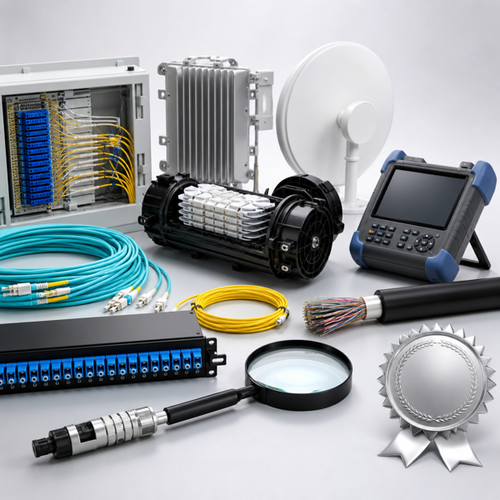
In the rapidly evolving landscape of telecommunications, the backbone of technological innovation and network reliability rests heavily on the integrity of fibres and cables. International standards provide the foundation for robust connectivity, data integrity, and seamless integration as the sector moves to support ever-increasing demands. This article offers a comprehensive look at four essential IEC standards shaping fibre and cable reliability, security, and scalability, including detailed exploration and actionable guidance for professionals and organizations adopting modern networks.
Overview / Introduction
Telecommunications networks are the nervous systems of the digital age, supporting everything from everyday internet access to critical infrastructure and global enterprise operations. As data traffic grows and cutting-edge use cases like 5G, IoT, and cloud computing become mainstream, the quality and reliability of fibres and cables take center stage. International standards are more than just regulatory checklists—they are essential benchmarks that guarantee performance, resilience, and compatibility across vendors and borders.
Professionals, network operators, and businesses must understand and adopt these standards to ensure:
- Consistent cable performance in diverse environments
- Predictable network behaviors for advanced applications
- Scalability to meet tomorrow’s bandwidth demands
- Security and integrity of mission-critical data transmission
This guide covers four key standards:
- Mechanical test methods for bending stiffness (IEC 60794-1-117:2026)
- Environmental resilience for underwater cables (IEC 60794-1-210:2026)
- Methods for measuring effective area of single-mode fibres (IEC TR 62284:2025)
- Guidance on interpreting OTDR backscattering traces (IEC TR 62316:2026)
By understanding these standards, businesses can optimize resource investments, foster interoperability, increase productivity, and build networks ready for future expansion.
Detailed Standards Coverage
IEC 60794-1-117:2026 – Bending Stiffness Test Methods for Optical Fibre Cables
Optical fibre cables – Part 1-117: Generic specification – Basic optical cable test procedures – Mechanical test methods – Bending stiffness, method E17
Scope & Application: IEC 60794-1-117:2026 prescribes uniform test procedures for measuring the bending stiffness of optical fibre cables. With telecommunications infrastructure increasingly dependent on both robust and flexible deployment, accurately measuring and specifying bending stiffness is vital. This standard applies to cables used in telecommunications equipment and devices, including those blending optical fibres and electrical conductors—a typical configuration in modern hybrid networks.
Key Requirements:
- Defines three test methods: Three-point bend, Cantilever bend, and Buckling bend (E17A, E17B, E17C).
- Specifies details for sample preparation, apparatus setup, test procedures, and result documentation for each method.
- New edition introduces expanded reporting requirements and clarifies what details must be specified and recorded for each test procedure.
Who Should Comply:
- Fibre cable manufacturers
- Network builders/installers
- Quality assurance professionals
- Product test laboratories
Practical Implications: Businesses deploying new infrastructure, especially for high-density, bend-sensitive environments like data centers or smart cities, must ensure their cables meet or exceed the bending stiffness specified. Conformance minimizes installation damage risks, optimizes network uptime, and supports future-ready designs.
Key highlights:
- Ensures optical cable resilience and performance in real-world bent configurations
- Methods tailored for both standard and hybrid cable types
- Comprehensive documentation for traceable, repeatable quality control
Access the full standard:View IEC 60794-1-117:2026 on iTeh Standards
IEC 60794-1-210:2026 – Underwater Cable Resistance to Hydrostatic Pressure
Optical fibre cables – Part 1-210: Generic specification – Basic optical cable test procedures – Environmental test methods – Underwater cable resistance to hydrostatic pressure, Method F10
Scope & Application: IEC 60794-1-210:2026 defines standardized test procedures for evaluating the resistance of optical fibre cables to hydrostatic pressure—crucial for underwater applications such as subsea telecommunications, oil and gas exploration, offshore wind farms, and underwater sensing.
This edition replaces previous method F10, expanding the methodology to cover different types of test objects and procedures—a significant evolution in environmental testing for submarine cable reliability.
Key Requirements:
- Describes three test methods (F10A, F10B, F10C) addressing both radial and longitudinal hydrostatic pressure resistance
- Specifies detailed apparatus setups, procedures, and required data reporting
- Updated to reflect new cable technologies and updated methodologies
Who Should Comply:
- Manufacturers of underwater/harsh-environment cables
- Marine and oil/gas telecommunications providers
- Regulatory compliance teams
Practical Implications: Assuring that cables can withstand the extreme pressures of underwater environments is non-negotiable for risk management in mission-critical deployments. Compliance means reduced outage risks, higher confidence during installation and operation, and an expanded service life for expensive infrastructure assets.
Key highlights:
- Directly supports reliability for submarine and harsh-environment fibre links
- Structured methods for both radial and longitudinal hydrostatic stress
- Enhanced detail facilitates thorough qualification and documentation
Access the full standard:View IEC 60794-1-210:2026 on iTeh Standards
IEC TR 62284:2025 – Effective Area Measurements of Single-Mode Optical Fibres
Effective area measurements of single-mode optical fibres – Guidance
Scope & Application: IEC TR 62284:2025 provides authoritative guidance on measuring the effective area (Aeff) of single-mode optical fibres—a critical attribute for high-speed, long-haul, and high-capacity transmission systems subject to nonlinear optical effects. The document details three recognized measurement techniques (direct far-field, variable aperture in the far-field, and near-field) and establishes the direct far-field (DFF) as the reference method for resolving measurement disputes.
Key Requirements:
- Defines procedures for measuring, documenting, and interpreting effective area values
- Establishes apparatus requirements, specimen preparation, and calculation formulas
- Includes detailed methods and annexes for each measurement technique and mapping function
- Mandates improved guidance for new fibre types and updated error considerations
Who Should Comply:
- Fibre optic manufacturers
- Optical network designers and system integrators
- Research and testing laboratories
- Quality assurance professionals in the fibre and cable industry
Practical Implications: Precise measurement of effective area enables engineers to optimize network design for minimal signal distortion, higher data rates, and compatibility with sophisticated transmission formats. This is indispensable for achieving reliable, high-bandwidth connectivity in metropolitan, long-haul, and cloud infrastructure.
Key highlights:
- Supports accurate specification, procurement, and deployment of single-mode fibres
- Guides mitigation of nonlinear effects in advanced optical systems
- Harmonizes global measurement practices for industry consistency
Access the full standard:View IEC TR 62284:2025 on iTeh Standards
IEC TR 62316:2026 – OTDR Backscattering Trace Interpretation for Single-Mode Fibres
Guidance for the interpretation of OTDR backscattering traces for single-mode fibres
Scope & Application: IEC TR 62316:2026 is a vital reference for interpreting backscattering traces captured by optical time-domain reflectometers (OTDRs)—a primary tool in fibre optic network maintenance, troubleshooting, and characterization. The report covers typical phenomena such as Rayleigh scattering, Fresnel reflections, dead zones, and provides practical insights into measurement of fibre attenuation, splice loss evaluation, and attenuation uniformity.
This edition brings updated fibre type classifications and expanded information on interpreting attenuation uniformity profiles, reflecting current deployment scenarios including FTTH (Fibre to the Home).
Key Requirements:
- Comprehensive overview of OTDR trace features and common sources of anomalies
- Methods to assess splice loss, fibre continuity, and attenuation profiles
- Step-by-step guidance to distinguish real faults from artifacts
- Clarifies terminology and measurement principles used across the industry
Who Should Comply:
- Field network technicians and maintenance teams
- Fibre optic system testers and certifiers
- Network designers and quality assurance engineers
Practical Implications: Accurate OTDR trace interpretation is essential for rapid network commissioning, pinpointing faults, and minimizing service disruption in deployed fibre networks. From metro to long-haul and FTTH, adopting IEC guidance translates to faster restoration times, higher reliability, and optimal network performance.
Key highlights:
- Eliminates ambiguity in OTDR-based diagnostics
- Updated for latest fibre types and network configurations
- Essential for standards-based testing, troubleshooting, and maintenance
Access the full standard:View IEC TR 62316:2026 on iTeh Standards
Industry Impact & Compliance
Implementing international standards for fibre optics and cable systems is not just a matter of regulatory compliance; it is a competitive pathway to operational excellence, customer satisfaction, and business resiliency.
Business Advantages:
- Enhanced reliability: Certified component performance minimizes downtime and costly maintenance.
- Improved security: Consistent test methods and environmental resistance decrease the vulnerability of critical links.
- Scalability and future readiness: Interoperability standards across suppliers support network expansion and technology upgrades.
- Regulatory conformance: Ensures legal operation in regulated markets and eligibility for government contracts.
- Global market access: Standards facilitate cross-border commerce and integration into multinational operations.
Risks of Non-Compliance:
- Increased incidence and duration of outages
- Difficulty diagnosing and repairing fibre faults
- Barriers to network interoperability and technology upgrades
- Higher lifetime costs due to increased failure rates
- Loss of customer trust or regulatory penalties
Implementation Guidance
A systematic approach to adopting fibre and cable standards will enable organizations to maximize infrastructure investments and maintain a leadership position in the telecommunications sector.
Common Implementation Steps:
- Gap assessment: Identify existing compliance with the relevant standards.
- Stakeholder engagement: Train staff, contractors, and relevant partners on requirements and testing protocols.
- Procurement alignment: Specify standards-compliance in purchasing processes for cables and network components.
- Testing and certification: Employ accredited labs or in-house capabilities to perform required conformance tests.
- Ongoing monitoring: Regularly audit cables, hardware, and network practices to sustain compliance.
Best Practices:
- Maintain up-to-date records of all specification, testing, and reporting documentation as required by each standard.
- Use OTDR and other industry-standard tools for regular network assessments.
- Collaborate with certified vendors who demonstrate proven adherence to IEC standards.
- Leverage digital platforms such as iTeh Standards for real-time access to the latest editions and implementation resources.
Helpful Resources:
- Training programs from standards bodies and equipment manufacturers
- Guidelines and white papers from telecom industry groups
- Consultation with fibre optic certification and testing organizations
- Continuous monitoring of standards updates via iTeh or IEC communications
Conclusion / Next Steps
As the telecommunications sector pushes the boundaries of data transmission and network complexity, grounding deployment and operations in internationally recognized standards is mission critical.
By thoroughly understanding and implementing the guidelines prescribed in:
- IEC 60794-1-117:2026 (bending stiffness)
- IEC 60794-1-210:2026 (hydrostatic resistance)
- IEC TR 62284:2025 (effective area measurement)
- IEC TR 62316:2026 (OTDR trace interpretation)
Professionals can future-proof their networks, drive operational excellence, and ensure seamless integration of emerging technologies.
Organizations should:
- Proactively evaluate current practices against these standards
- Prioritize staff training and standard-aligned procurement
- Utilize iTeh Standards’ platform for authoritative access and continual updates
Stay ahead of industry shifts by embedding robust fibre and cable standards into every phase of telecommunications infrastructure lifecycle—design, installation, monitoring, and evolution. For detailed requirements and actionable compliance resources, visit iTeh Standards today.
Categories
- Latest News
- New Arrivals
- Generalities
- Services and Management
- Natural Sciences
- Health Care
- Environment
- Metrology and Measurement
- Testing
- Mechanical Systems
- Fluid Systems
- Manufacturing
- Energy and Heat
- Electrical Engineering
- Electronics
- Telecommunications
- Information Technology
- Image Technology
- Precision Mechanics
- Road Vehicles
- Railway Engineering
- Shipbuilding
- Aircraft and Space
- Materials Handling
- Packaging
- Textile and Leather
- Clothing
- Agriculture
- Food technology
- Chemical Technology
- Mining and Minerals
- Petroleum
- Metallurgy
- Wood technology
- Glass and Ceramics
- Rubber and Plastics
- Paper Technology
- Paint Industries
- Construction
- Civil Engineering
- Military Engineering
- Entertainment