


January 2026 Automotive Standards: Updates in Lighting, Infotainment, and Safety
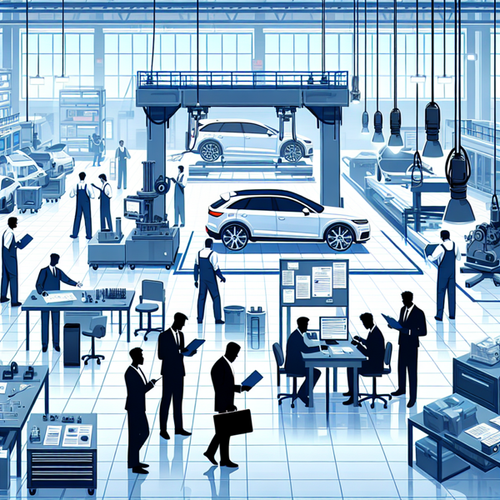
In January 2026, the Automotive and Road Vehicles sector saw the publication of five influential international standards, each bringing essential updates to lighting measurement, infotainment integration, fuel system connections, and critical braking functionalities. These standards, developed by ISO and IEC, address evolving vehicle technologies and provide robust frameworks to enhance safety, interoperability, and compliance for manufacturers, suppliers, and service providers. This part-two update offers detailed insights into each standard, its requirements, and its implications for compliance in a rapidly advancing mobility sector.
Overview / Introduction
The automotive industry is a cornerstone of global mobility, with its products requiring uncompromising attention to safety, efficiency, and technological advancement. International standards are foundational in this sector, guiding the design, testing, and implementation of everything from lighting devices and braking systems to vehicle infotainment. By establishing uniform requirements, these standards serve to protect users, streamline regulatory compliance, and facilitate innovation for engineers, quality managers, and procurement specialists alike.
In this article, you’ll find concise, actionable analyses of five newly published automotive standards. Whether you are engineering new vehicle platforms, designing safety features, sourcing critical components, or ensuring organizational compliance, understanding these updates is vital for staying competitive and compliant in 2026 and beyond.
Detailed Standards Coverage
ISO 10604:2026 - Measuring Procedure for Aiming of Luminous Beams of Front Lighting Devices
Road vehicles — Measuring procedure for aiming of luminous beams of front lighting devices
This comprehensive standard sets out the official procedures to accurately measure and verify the alignment of front lighting devices on road motor vehicles (excluding mopeds and motorcycles). The standard provides detailed specifications for test area preparation, vehicle readiness, and both distant screen and movable front-lighting testing system (MFTS) methods, ensuring lamps are aimed for optimal road illumination and safety.
Key aspects covered include:
- Test conditions and layout of the test area, with strict requirements on plane dimensions, flatness, and rigidity
- Vehicle preparation, including fuel and fluid loading, seat weight simulation, and lighting device status
- Equipment set-up, detailing the requirements for both distant aiming screens and MFTS, ensuring repeatable and accurate measurement
- Stepwise procedures for both manual and automated aiming methods, with guidelines for marking, alignment, and photometric measurements
Key highlights:
- Defines standardized measurement processes for headlamp and front fog lamp aiming
- Facilitates compliance with safety regulations and harmonized vehicle assessment
- Updates and clarifies procedural aspects compared to previous editions, focusing on practical, accurate testing
Access the full standard:View ISO 10604:2026 on iTeh Standards
IEC 63479-3:2026 - Infotainment Services for Public Vehicles (PVIS) - Part 3: Framework
Infotainment services for public vehicles (PVIS) - Part 3: Framework
This standard delivers a structured framework for deploying infotainment services within public vehicles, such as buses and trains. It defines a comprehensive reference architecture that supports scalable integration of content delivery, device management, security, and user interaction across large, dynamic passenger populations. The document distinguishes public vehicle infotainment from personal automotive systems, addressing their unique device, user, and service duration challenges.
Core topics include:
- Functional reference models for core PVIS modules (authentication, profile, device, connectivity, content, and history management)
- Interworking functions for seamless integration, including transport, messaging, and interfaces
- Information flows supporting device provisioning, monitoring, control, content deployment, and content delivery
Key highlights:
- Establishes a modular, extensible PVIS framework for transit operators and OEMs
- Includes role-based access and authentication, supporting privacy and security in multi-user environments
- Lays the foundation for advanced services such as dynamic content delivery and real-time system management
Access the full standard:View IEC 63479-3:2026 on iTeh Standards
ISO 18418-1:2026 - High Pressure Liquid Fuel Supply Connections for Gasoline Engines (Part 1: 60° Concave Cone Connectors)
Gasoline engines — High pressure liquid fuel supply connections — Part 1: 60° concave cone connectors
ISO 18418-1:2026 specifies precise dimensional requirements for 60° concave cone connectors in high-pressure liquid fuel lines of gasoline engines. Targeting connectors with externally threaded ends and compatible pipe assemblies up to 10 mm in diameter, the standard delivers granular criteria for design, manufacturing, and quality assurance.
Content highlights:
- Complete specification of connector dimensions, tolerances, and compatible pipe diameters
- Material requirements and recommendations to ensure mechanical integrity under high-pressure fuel conditions
- Guidance for operating pressure ranges and related safety considerations
- Consistent designation and part identification to maintain supply chain traceability
Key highlights:
- Enables global harmonization in high-pressure fuel system connectors
- Facilitates interchangeability and reliability in engine fuel injection designs
- Supports durability and leak prevention in mission-critical fuel supply systems
Access the full standard:View ISO 18418-1:2026 on iTeh Standards
ISO 5101:2026 - Field Load Specification for Brake Actuation and Modulation Systems
Road vehicles — Field load specification for brake actuation and modulation systems
ISO 5101:2026 is a pivotal standard providing detailed specifications for the expected field loads applied to brake actuation and modulation systems in passenger vehicles (UNECE classes M1 and N1). The standard supports vehicle development by offering a data-driven approach to defining representative maneuvers, duty cycles, and environmental profiles, crucial for simulation and validation.
Scope and key features include:
- Statistical field data from millions of vehicles across the globe, ensuring relevance and robustness
- Brake system usage parameters, including dynamic stability (e.g., electronic stability control), brake torque optimization, and advanced assistance functions
- Detailed assumptions on vehicle lifetime, braking operations, temperature distributions, environmental factors, and network effects for sensors and actuators
- Harmonized procedures applicable up to SAE Level 3 automated driving; further levels reserved for future editions
Key highlights:
- Delivers actionable reference profiles for testing, simulation, and durability analysis
- Supports integration with both regenerative (electric) and traditional friction braking technologies
- Mitigates risks associated with under- or over-designed brake system components
Access the full standard:View ISO 5101:2026 on iTeh Standards
Industry Impact & Compliance
These new standards are poised to influence every segment of the automotive value chain, from component suppliers and OEMs to public transit operators and regulatory bodies. By defining clearer test procedures (as in ISO 10604:2026), enforcing robust connectors (ISO 18418-1:2026), or providing a framework for next-generation infotainment (IEC 63479-3:2026), they:
- Reduce ambiguity in regulatory interpretation
- Support faster, more cost-effective compliance checks and certification processes
- Drive technological alignment across regions, facilitating export and manufacturing scalability
- Promote user safety and comfort through uniform requirements
Organizations should invest in early adoption, with audits and process updates aligned to publication timelines. Non-compliance can lead to certification failures, recall risks, penalties, or disqualification from public procurement processes, especially for safety-critical functions and cross-border operations.
Technical Insights
Across these standards, common technical themes emerge:
- Rigorous measurement and preparation protocols, ensuring repeatable, reliable results in lighting and braking systems
- Compatibility and interchangeability, particularly in fuel connectors, reducing supplier risk and warranty issues
- Architecture-centric frameworks, as in PVIS for public vehicles, enabling modularity, upgradability, and custom integration
- Field-data driven specification, using big data analytics to inform test profiles (braking systems), offering a level of reliability previously unattainable
Best practices for implementation:
- Integrate new test procedures and design requirements into your product development lifecycle as early as possible
- Invest in staff training and equipment updates to align with measurement or framework mandates
- Work with accredited laboratories for testing and certification
- Monitor ISO and IEC update cycles for potential future revisions, particularly where notes indicate ongoing development (e.g., SAE Level 4+ automation)
Conclusion / Next Steps
The January 2026 batch of automotive standards underlines an industry-wide drive toward greater safety, efficiency, and digitalization. For automotive manufacturers, suppliers, and public fleet operators, these standards provide both a challenge and an opportunity: adapting internal processes, updating practices, and investing in compliance will yield long-term competitive advantage and peace of mind.
Key recommendations:
- Review and integrate relevant standards into your procurement and engineering checklists
- Audit your product and process compliance in light of new requirements
- Engage with industry peers and standards bodies to stay ahead of future changes
Staying informed and proactive is essential. For direct access to all the latest standards, authoritative guidance, and updates, explore the resources available at iTeh Standards. Ensure your vehicles and systems are compliant, innovative, and future-ready.
Categories
- Latest News
- New Arrivals
- Generalities
- Services and Management
- Natural Sciences
- Health Care
- Environment
- Metrology and Measurement
- Testing
- Mechanical Systems
- Fluid Systems
- Manufacturing
- Energy and Heat
- Electrical Engineering
- Electronics
- Telecommunications
- Information Technology
- Image Technology
- Precision Mechanics
- Road Vehicles
- Railway Engineering
- Shipbuilding
- Aircraft and Space
- Materials Handling
- Packaging
- Textile and Leather
- Clothing
- Agriculture
- Food technology
- Chemical Technology
- Mining and Minerals
- Petroleum
- Metallurgy
- Wood technology
- Glass and Ceramics
- Rubber and Plastics
- Paper Technology
- Paint Industries
- Construction
- Civil Engineering
- Military Engineering
- Entertainment