


Paints and Varnishes Standards: Achieving Excellence in Corrosion, Ice Protection, and Thermal Performance
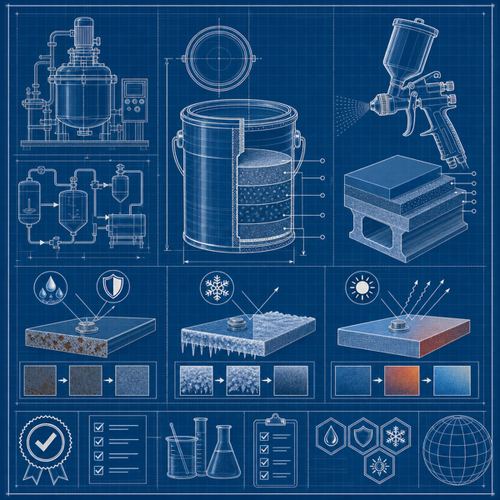
The modern paint and coatings industry sits at the intersection of aesthetics, durability, operational performance, and environmental challenge. As manufacturing, construction, and infrastructure evolve—embracing smart materials, automation, and sustainability—the need for internationally accepted standards is no longer optional. From anti-corrosion coatings for cars or bridges, to energy-saving paints for buildings, and icephobic solutions for wind energy, standards ensure reliability, facilitate technology adaptation, and foster confidence across global supply chains. This article offers a comprehensive, easy-to-digest overview of four recent international standards that are reshaping expectations and unlocking new value in the paint industries sector.
Overview / Introduction
Paints and varnishes are far more than decorative finishes—they are engineered barriers against weather, corrosion, temperature, and operational hazards. As industry demands escalate for coatings that last longer, perform better, and contribute to environmental sustainability, standards serve as the bedrock for innovation and market trust. Adhering to international standards streamlines quality assurance, enhances competitiveness, and is crucial when integrating new technologies or scaling production.
In this article, you'll gain practical insights into:
- How key standards define, measure, and compare essential paint and varnish properties
- The measurable benefits of proactive compliance, from increased product life to streamlined manufacturing operations
- Tips for successful implementation, and what compliance means for productivity, security, and environmental responsibility
Let’s explore each of the four standards—addressing corrosion resistance, UV and humidity durability, ice adhesion mitigation on wind turbine blades, and the assessment of paints’ solar performance.
Detailed Standards Coverage
ISO 11997-1:2026 - Cyclic Corrosion Testing for Paints (Wet/ Dry/ Humid)
Paints and varnishes — Determination of resistance to cyclic corrosion conditions — Part 1: Wet (salt fog)/dry/humid
Corrosion is the nemesis of metal structures, vehicles, and infrastructure globally. ISO 11997-1:2026 addresses this challenge by specifying a robust laboratory method for assessing the cyclic corrosion resistance of paint and varnish coatings under a range of wet (salt fog), dry, and humid conditions. The test simulates aggressive, real-world exposures—such as those in coastal, industrial, or automotive environments—using four standardized cycles, thus providing reliable, reproducible measures of coating durability.
What This Standard Covers
- Structured test protocols for exposing coated panels to cycles of salt fog, drying, and high humidity
- Preparation and composition of salt fog test solutions and the necessary equipment (including specialized spray cabinets)
- Detailed guidance on specimen prep: panel material, dimensions, coating thickness, and scribing
Key Requirements
- Follow one of four defined cycles (Japanese, European, UK, or Japanese Industrial Standard variants) for time and environmental control
- Use laboratory-grade sodium chloride and controlled humidity/drying parameters
- Evaluate results with visual inspections and established criteria for blistering, corrosion, delamination, etc., referencing complementary ISO standards (e.g., ISO 4628 Series)
Who Should Comply
- Automotive manufacturers and suppliers
- Industrial coatings applicators
- Construction and infrastructure asset owners
- Quality control and R&D laboratories in the paints sector
Implementation Implications
Using ISO 11997-1:2026 allows manufacturers to benchmark products, validate new formulations, and assure clients of consistent anti-corrosion performance. It’s also a vital tool for quality audits, supplier evaluations, and warranty decisions, especially as industries transition to high-performance, eco-friendly coatings.
Key highlights:
- Four internationally validated corrosion test cycles for real-world relevance
- Rigorous control of test variables ensures reproducibility across labs
- Directly supports product development, benchmarking, and market access
Access the full standard:View ISO 11997-1:2026 on iTeh Standards
ISO 11997-2:2025 - Cyclic Corrosion Testing Including UV Light
Paints and varnishes — Determination of resistance to cyclic corrosion conditions — Part 2: Wet (salt fog)/dry/humid/UV light
Adding another dimension to corrosion durability, ISO 11997-2:2025 expands upon the methodology of Part 1 by incorporating ultraviolet (UV) light exposure within its test cycles. This mirrors the harsh realities of outdoor paints and coatings, especially on buildings, infrastructure, and equipment where sunlight-driven degradation accelerates corrosion.
What This Standard Covers
- Laboratory procedure for assessing paint and varnish resistance to combined cycles of salt fog, drying, humidity, and UV irradiation
- Test solutions, apparatus (including UV lamps), and specimen preparation
- Designations for evaluating visible and structural changes in coatings post-exposure
Key Requirements
- Simulate combined UV and moisture-related stresses using controlled test environments
- Use standardized film thickness, scribing, and substrate materials for reproducibility
- Assess results using visual and instrumental evaluations for rusting, blistering, chalking, and delamination
Who Should Comply
- Manufacturers of exterior architectural paints and industrial finishes
- Maintenance coatings specifiers for bridges, pipelines, and marine assets
- Facilities managers and paint technologists working in high-UV environments
Implementation Implications
ISO 11997-2:2025 enables manufacturers to demonstrate real-world durability and compliance with performance specifications that matter for exterior applications. It assists in validating new weathering-resistant chemistries and supports global market entry—helping accelerate innovation in sustainable coatings.
Key highlights:
- Simultaneous evaluation of corrosion and photodegradation
- Enables real-time benchmarking of advanced weather-resistant coatings
- Reduces risk of premature failure and enhances warranty confidence
Access the full standard:View ISO 11997-2:2025 on iTeh Standards
ISO/TS 19392-6:2026 - Ice Adhesion Testing for Wind Turbine Blade Coatings
Paints and varnishes — Coating systems for wind-turbine rotor blades — Part 6: Determination and evaluation of ice adhesion using centrifuge
As renewable energy expands into colder climates, the resilience of wind turbine blades against ice buildup is a critical safety and performance concern. ISO/TS 19392-6:2026 provides a repeatable, scientifically validated method for determining and evaluating how effectively rotor blade coatings minimize ice adhesion using a centrifuge technique.
What This Standard Covers
- Methodology for artificially forming ice on coated rotor blade substrates
- Procedures for measuring the force required to remove ice via controlled centrifuge acceleration
- Definitions of basic ice types and parameters to replicate diverse, real-world icing scenarios
Key Requirements
- Comprehensive protocols for sample preparation (including coating thickness and surface roughness)
- Procedures for reproducible ice formation and detachment measurements
- Detailed reporting for comparing performance across products and formulations
Who Should Comply
- Wind energy turbine manufacturers and operators
- Coatings developers specializing in icephobic or anti-icing surfaces
- Testing laboratories in the renewable energy sector
Implementation Implications
With ISO/TS 19392-6:2026, the industry gains a standardized, transparent basis for certifying rotor blade protection, supporting more reliable turbine operation, and extending maintenance intervals. This is indispensable for new installations or retrofits in regions subject to severe winter weather.
Key highlights:
- Directly supports design and certification of icephobic coatings
- Mitigates operational risks from ice accretion and related hazards
- Enhances the productivity and scaling of wind energy installations in cold climates
Access the full standard:View ISO/TS 19392-6:2026 on iTeh Standards
ISO/TS 9124:2025 - Thermal Performance and Solar Irradiation Penetration of Paint Films
Paints and varnishes — Thermal performance of paint films — Determination of solar irradiation penetration ratio with heat flow meter
Energy efficiency and occupant comfort in buildings are influenced heavily by the thermal barrier properties of exterior coatings. ISO/TS 9124:2025 introduces a unified method for measuring how much solar energy penetrates paint films—critical in the evaluation of heat-shielding and energy-saving paints applied to roofs, facades, and outdoor equipment.
What This Standard Covers
- Procedures for measuring solar irradiation penetration using heat flow meters and artificial solar simulators
- Requirements for equipment (chambers, sensors, radiometers) and calibration for accurate heat flux calculations
- Calculation methods to derive the penetration ratio—a standardized, comparable metric for paint performance
Key Requirements
- Strict environmental and procedural controls for heat flow measurement
- Sample preparation standards, including substrate and coating application
- Reporting parameters to support energy modeling and building code compliance
Who Should Comply
- Manufacturers developing energy-efficient or cool roof paints
- Construction firms and building asset owners
- Regulatory bodies enforcing thermal performance standards
Implementation Implications
By applying ISO/TS 9124:2025, stakeholders can specify, verify, and compare coatings based on their actual influence on building energy loads. This empowers informed material selection, supports compliance with green building requirements, and accelerates adoption of solutions mitigating urban heat island effects.
Key highlights:
- Objective, actionable data on paint film solar penetration
- Facilitates selection of best-in-class coatings for energy efficiency
- Responds to the drive for sustainable, climate-ready construction materials
Access the full standard:View ISO/TS 9124:2025 on iTeh Standards
Industry Impact & Compliance
Adopting these four standards provides a clear competitive edge for organizations across manufacturing, construction, infrastructure, and renewable energy. Compliance delivers:
- Enhanced product reliability and customer trust through consistent, internationally verified performance
- Streamlined development and approval cycles—standards provide a shared language across suppliers, customers, and regulatory bodies
- Stronger market positioning for innovative, compliant technologies (such as icephobic rotor coatings or solar-reflective paints)
- Better risk management: reduces costly failures, warranty claims, and operational downtime
On the flip side, non-compliance can result in:
- Legal and regulatory challenges, particularly for major construction and infrastructure projects
- Reduced access to global markets and competitive tenders
- Increased liability and reputational risk
For organizations implementing new technologies—such as smart coatings or sustainable manufacturing processes—these standards are essential for scaling operations securely and efficiently.
Implementation Guidance
Steps to Successful Compliance
- Gap Analysis: Compare current product specifications and testing protocols with the requirements of each standard.
- Training & Awareness: Ensure R&D, production, and quality teams are familiar with testing cycles, preparation, and assessment criteria.
- Investment in Infrastructure: Where needed, update laboratory or testing facilities to include compliant chambers, heat flow meters, or centrifuge devices.
- Engagement with Accredited Labs: For independent performance claims, partner with ISO-recognized test laboratories or third-party evaluators.
- Documentation: Maintain thorough test records and product data sheets referencing standard clauses and assessment results.
- Continuous Monitoring: Update practices as standards evolve to maintain best-in-class processes and products.
Best Practices
- Integrate standards compliance early in product design and development
- Leverage standard references in procurement and supply chain contracts
- Use test results not only for compliance, but also to drive product marketing and transparency
- Foster a proactive culture of quality and safety
Additional Resources
- Visit iTeh Standards for direct access to the latest standard editions and supplementary guidance
- Engage with industry associations to stay ahead on emerging regulatory or technological trends
Conclusion / Next Steps
International standards are the backbone of the modern paint and coatings industry—connecting scientific testing with business imperatives, regulatory demands, and global trade. By adopting ISO 11997-1:2026, ISO 11997-2:2025, ISO/TS 19392-6:2026, and ISO/TS 9124:2025, organizations ensure superior product performance, market access, and a foundation for sustainable innovation. Whether you’re developing next-generation coatings or maintaining infrastructural assets, these standards enable measurable results in productivity, security, and scaling for any application.
Recommended Actions:
- Review each standard in detail via provided iTeh Standards links
- Conduct an internal gap analysis for your product lines
- Begin the journey toward certified, compliant, and future-ready coatings today
Staying ahead in the paint industries sector means making standards compliance a cornerstone of your business strategy—enabling you to lead with confidence, efficiency, and innovation.
Categories
- Latest News
- New Arrivals
- Generalities
- Services and Management
- Natural Sciences
- Health Care
- Environment
- Metrology and Measurement
- Testing
- Mechanical Systems
- Fluid Systems
- Manufacturing
- Energy and Heat
- Electrical Engineering
- Electronics
- Telecommunications
- Information Technology
- Image Technology
- Precision Mechanics
- Road Vehicles
- Railway Engineering
- Shipbuilding
- Aircraft and Space
- Materials Handling
- Packaging
- Textile and Leather
- Clothing
- Agriculture
- Food technology
- Chemical Technology
- Mining and Minerals
- Petroleum
- Metallurgy
- Wood technology
- Glass and Ceramics
- Rubber and Plastics
- Paper Technology
- Paint Industries
- Construction
- Civil Engineering
- Military Engineering
- Entertainment