


Mining and Minerals Standards Summary – September 2025 Overview
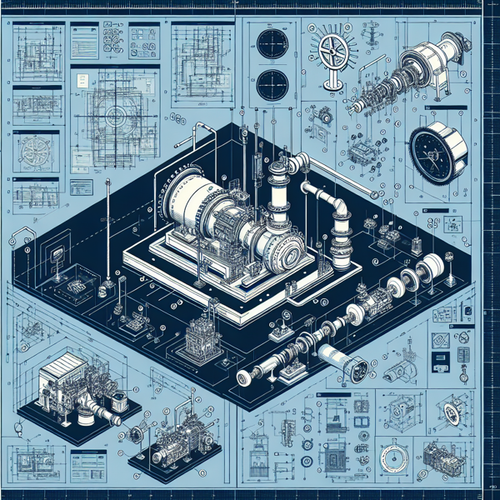
Looking back at September 2025, the Mining and Minerals sector witnessed the publication of a single, but significant, international standard: ISO 23873:2025. This document addressed the measurement of swelling properties in hard coal, a key parameter for both commercial coal evaluation and technical quality assurance within the coal and coke industries. For professionals striving to track industry-relevant standardization activity, staying up to date with these revisions is essential for maintaining both regulatory compliance and technical accuracy. In this monthly retrospective, we explore the critical components of ISO 23873:2025, analyze its context and industry implications, and discuss implementation guidance for mining and minerals organizations and laboratories.
Monthly Overview: September 2025
September 2025 represented a relatively quiet phase in terms of newly published standards for the Mining and Minerals sector, with one major release of broad technical importance: ISO 23873:2025 – Hard coal – Method for the measurement of the swelling properties using a dilatometer. The focused publication activity suggests a period of targeted refinement rather than broad regulatory overhaul. This trend highlights the industry's commitment to updating and harmonizing laboratory methodologies that underpin coal quality assurance, a growing area of focus given changing environmental and operational demands globally.
Where previous months might have seen multiple releases across extraction, beneficiation, or mineral processing, September’s activity underscores the ongoing drive toward precise characterization of raw materials. This is particularly relevant as the sector faces external pressures for transparency and consistent test outcomes supporting international coal trade.
The technical revision and consolidation present in this standard reflect a maturing stage in coal analytical standardization, emphasizing practical improvements to instrumentation and measurement reliability over wholesale procedural change. Such focus aligns with long-standing industry goals: minimizing ambiguity in test results, facilitating global market transactions, and safeguarding operational predictability.
Standards Published This Month
ISO 23873:2025 – Hard coal – Method for the measurement of the swelling properties using a dilatometer
Full Title: Hard coal – Method for the measurement of the swelling properties using a dilatometer
ISO 23873:2025 lays out an updated, harmonized laboratory method to measure the swelling (dilatation) of hard coal using a dilatometer. This physical property is critical in evaluating how coal behaves when heated—a characteristic that influences its suitability for coking, gasification, and other industrial uses. The dilatometer method provides a standardized approach, ensuring consistency and comparability of data across organizations and jurisdictions. This 2025 edition is a technical revision of the prior (2010) standard, integrating updates to terminology, apparatus specifications, and procedural clarity.
Scope and Methodology:
- The standard specifies a step-by-step laboratory procedure in which a pencil-shaped coal sample, prepared to strict dimensional tolerances, is heated in a controlled environment.
- A piston measures the change in volume (swelling/contraction) as the sample is subjected to a defined temperature profile, with all apparatus elements (mould, dilatometer, furnace, calibration tools) specified to exact requirements.
- The new edition introduces clarified units of measurement in figures and tables, an enhanced specification for temperature recording instruments, and the formal addition of a balance as required laboratory equipment.
Key Requirements and Specifications:
- Full apparatus setup: precision mould, press, calibrated dilatometer, temperature-controlled furnace, recording instruments, and cleaning materials.
- Sample preparation protocols: coal is ground, formed into pencils of set dimensions, and conditioned according to defined steps.
- Measurement process: the device records the temperature and piston movement, capturing softening temperature, maximum contraction, and maximum dilatation.
- Analytical precision: the standard specifies limits for repeatability and reproducibility.
Applicability:
- Quality control laboratories in coal mining and coking plants
- Coal traders, buyers, and sellers needing comparative swelling data
- Research institutions and organizations specializing in energy resource analysis
- Regulatory and inspection agencies overseeing coal classification and trade
Regulatory Landscape Fit: ISO 23873:2025 replaces and unifies the approaches of the Ruhr and Audibert-Arnu dilatometer methods, simplifying international testing regimes. By further harmonizing apparatus design and temperature calibration, it improves mutual recognition of results between trading partners and regulatory bodies. Adherence to this method supports technical accuracy in environmental reporting, coking plant feedstock assessment, and trade contract fulfillment.
Notable Features and Updates:
- Adoption of harmonized units of measurement throughout illustrative material (figures and tables)
- Expanded requirements for balance accuracy and temperature recorders
- Updated apparatus descriptions for greater reproducibility
- Improved guidelines for reporting and documentation of test results
Key highlights:
- Harmonizes and clarifies coal swelling tests with strict apparatus and procedural definitions
- Enhances international comparability and reliability of hard coal analyses
- Updated for improved laboratory accuracy and reporting
Access the full standard:View ISO 23873:2025 on iTeh Standards
Common Themes and Industry Trends
While only a single standard was published in September 2025, its technical refinement reflects broader sectoral trends:
- Scientific Precision: Increasing demand for accurate, repeatable laboratory measurements in coal evaluation, driven by global trade and environmental monitoring requirements.
- Harmonization of Methods: The merging of multiple previous approaches (Ruhr and Audibert-Arnu) into a single, universally applicable protocol highlights the industry’s aim for methodological convergence.
- Laboratory Competence: Emphasis on apparatus calibration, operator training, and documentation, pointing to a future where laboratory accreditation and inter-laboratory agreement are even more essential.
- Transparency and Traceability: Updated requirements for reporting and reproducibility help ensure accountability, traceability, and regulatory acceptance—critical in a climate of rising compliance scrutiny.
This focus resonates with the mining and minerals industry’s shift towards greater data integrity, process optimization, and alignment with international technical expectations. For organizations engaged in coal testing, the movement is clearly towards eliminating sources of ambiguity and fortifying technical infrastructure.
Compliance and Implementation Considerations
Organizations affected by coal analysis standards should prioritize the following steps in light of ISO 23873:2025:
- Review and Update Laboratory Procedures: Ensure that internal documentation and quality management systems explicitly reference the new standard and any changed apparatus or procedure requirements.
- Verify Equipment Compliance: Audit laboratory equipment—particularly dilatometers, furnaces, temperature recorders, and balances—to confirm conformity with the revised specifications.
- Train Laboratory Personnel: Update training materials and operator competency assessments to reflect procedural changes and emphasize new record-keeping guidelines.
- Documentation and Reporting: Adjust test report structures to align with the latest ISO 23873:2025 requirements for data capture, result expression, and repeatability/reproducibility metrics.
- Integrate into Supplier and Customer Contracts: For those engaged in coal trading or supply, verify that contracts reference the correct edition of the standard to mitigate dispute risks.
Timeline for Compliance:
- As this is a technical revision replacing an earlier edition, organizations are advised to implement updates as soon as possible, especially where contractual or regulatory requirements reference the latest version.
- Engage with accreditation bodies or regulators promptly if the transition creates timing or documentation challenges.
Resources for Getting Started:
- Full standard and supporting materials are available via iTeh Standards.
- ISO’s technical guidance and related vocabulary (ISO 1213-2) should be reviewed in tandem for a cohesive approach.
- Industry forums and technical committees (such as ISO/TC 27/SC 5) may provide implementation workshops or Q&A sessions.
Conclusion: Key Takeaways from September 2025
September 2025 marked a period of consolidation and technical improvement in coal analysis within the Mining and Minerals sector. The release of ISO 23873:2025 reinforces the industry’s direction toward methodological clarity, international harmonization, and enhanced laboratory performance. For professionals engaged in coal exploration, production, trading, or regulatory oversight, integrating these changes is pivotal for assurance of quality, process optimization, and risk mitigation.
Recommendations for the Sector:
- Prioritize review of internal laboratory and quality processes against the updated ISO 23873:2025 requirements
- Engage technical staff through targeted training and resources
- Stay connected with sector updates via trusted platforms like iTeh Standards
In an era of rising technical expectations and supply chain scrutiny, remaining current with the latest standards is not only a compliance need but a strategic advantage. Professionals are encouraged to explore the complete standard in detail and ensure robust, reliable implementation within their organizations.
Categories
- Latest News
- New Arrivals
- Generalities
- Services and Management
- Natural Sciences
- Health Care
- Environment
- Metrology and Measurement
- Testing
- Mechanical Systems
- Fluid Systems
- Manufacturing
- Energy and Heat
- Electrical Engineering
- Electronics
- Telecommunications
- Information Technology
- Image Technology
- Precision Mechanics
- Road Vehicles
- Railway Engineering
- Shipbuilding
- Aircraft and Space
- Materials Handling
- Packaging
- Textile and Leather
- Clothing
- Agriculture
- Food technology
- Chemical Technology
- Mining and Minerals
- Petroleum
- Metallurgy
- Wood technology
- Glass and Ceramics
- Rubber and Plastics
- Paper Technology
- Paint Industries
- Construction
- Civil Engineering
- Military Engineering
- Entertainment