

Key Metrology and Measurement Standards for Electricity and Magnetism: Compliance, Productivity, and Integration
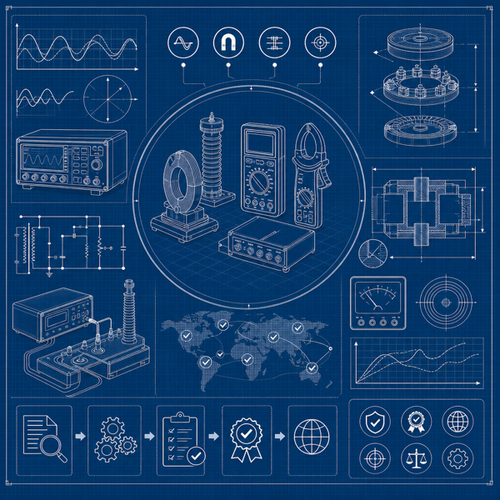
Key Metrology and Measurement Standards for Electricity and Magnetism: Compliance, Productivity, and Integration
In an era where the success of digital transformation, smart manufacturing, and energy innovation hinges on reliability and accuracy, the world of metrology and measurement plays a vital role. For electricity and magnetism, global standards ensure consistency, safety, interoperability, and the ability to scale new technologies. This article provides a comprehensive overview of four critical international standards, helping businesses, engineers, and stakeholders understand how compliance can drive productivity, enhance security, and foster sustainable, scalable growth.
Overview / Introduction
Today's industries—from power generation to electronics manufacturing—are increasingly dependent on high-quality, precisely measured electricity and electromagnetic environments. As businesses embrace automation, distributed energy resources (DERs), and advanced electronics, the need for robust measurement and control grows exponentially. Implementing the right metrology and measurement standards supports:
- Product quality and longevity
- Equipment and personnel safety
- Reliable grid operation
- Legal and regulatory compliance
- Market access and international trade
This article explains the pivotal role of IEC 60216-1:2025, IEC TR 62786-100:2026, IEC TS 61340-5-4:2026, and IEC TS 62749:2026. Together, these standards underpin advancements in material reliability, DER grid integration, electrostatic protection, and power quality assessment. You'll discover their detailed requirements and practical implications, with actionable insights for implementation and links to authoritative sources.
Detailed Standards Coverage
IEC 60216-1:2025 – Ageing Procedures for Electrical Insulating Materials
Electrical insulating materials – Thermal endurance properties – Part 1: Ageing procedures and evaluation of test results
The reliability of electrical insulating materials directly impacts the performance and lifespan of electrical equipment. IEC 60216-1:2025 establishes comprehensive procedures for the thermal ageing of such materials, enabling organizations to derive critical characteristics like the temperature index (TI) using a robust, statistically valid approach.
This seventh edition updates the TI definition and introduces procedures for evaluating thickness sensitivity—vital for assessing materials in diverse applications and forms. The guidance extends beyond just electrical insulation, accommodating any material requiring thermal endurance assessment, making it broadly relevant for many manufacturing and engineering contexts.
Key requirements include:
- Standardized test specimen preparation, exposure temperatures, and times for accelerated ageing
- Multiple evaluation procedures (non-destructive, proof, and destructive)
- Statistical analysis, including regression and calculation of TI and halving interval (HIC)
- Documentation and reporting following detailed guidelines
Who must comply? Manufacturers of electric motors, transformers, switchgear, cables, and other devices utilizing insulating materials, as well as material suppliers and testing laboratories.
Practical implications: Adherence safeguards product durability, regulatory compliance, and international market access. The robust statistical underpinnings mean higher confidence in product claims and reduced failure risk in the field.
Notable features:
- Updated TI definition and clearer selection rules for related materials (including color variations)
- New test procedures for material thickness sensitivity
- Applicability to a wider range of insulating and non-insulating materials
Key highlights:
- Comprehensive, standardized material ageing procedures
- Modernized statistical analysis for consistent TI results
- Supports product claims with international recognition
Access the full standard:View IEC 60216-1:2025 on iTeh Standards
IEC TR 62786-100:2026 – Mapping Standards for Grid Connection of Distributed Energy Resources (DER)
Distributed energy resources connection with the grid – Part 100: Generating plants and units grid connection standard mapping
As industries shift toward renewable energy and hybrid generation, Distributed Energy Resources (DER), such as solar and wind, need to integrate seamlessly and safely into existing grids. IEC TR 62786-100:2026 serves as an essential mapping report, harmonizing and guiding the drafting of all standards related to DER-grid connection.
The Technical Report organizes DER connection requirements across system, product, and testing standards, fostering interoperability and consistency. It catalogs key IEC standards and provides frameworks for drafting or revising specifications to minimize gaps and overlaps, ensuring holistic coverage of grid interconnection challenges.
Who should comply? Grid operators, DER manufacturers (solar, wind, battery storage), national and regional regulators, standardization bodies, and energy consultants.
Practical Implications: Reference to this standard is a must for those developing or deploying new DER systems. It streamlines regulatory navigation, supports smooth commissioning, and strengthens system reliability—crucial for modern power networks embracing renewables.
Notable features:
- Guidance for technical committees and standard developers
- Annexe listings of intersecting standards (vocabulary, measurement, protection, safety, and more)
- Table of national and regional regulations for context-driven compliance
Key highlights:
- Comprehensive mapping of DER-grid connection standards across the IEC
- Prevents specification overlap, fostering clearer compliance and safer integration
- Facilitates harmonization for global market access and smart grid evolution
Access the full standard:View IEC TR 62786-100:2026 on iTeh Standards
IEC TS 61340-5-4:2026 – Electrostatic Protection: Verification of Compliance
Electrostatics – Part 5-4: Protection of electronic devices from electrostatic phenomena – Compliance verification
Electrostatic discharge (ESD) can silently wreak havoc on sensitive electronics, especially in high-tech manufacturing and semiconductor production. IEC TS 61340-5-4:2026 addresses this with a comprehensive suite of compliance verification tests, as required by ESD control programs (e.g., IEC 61340-5-1).
The specification details streamlined methods for verifying static control elements such as wrist straps, footwear/flooring systems, ESD protective workstations, grounded garments, and packaging. Procedures are designed both for reference in quality assurance plans and for adaptation to specific organizational needs, ensuring robust ESD protection and compliance.
Who must comply? Manufacturers and assemblers of electronic devices, aerospace and automotive electronics plants, PCB assembly shops, R&D labs, and facilities handling static-sensitive components.
Practical implications: Following these verification protocols ensures ESD control effectiveness, minimizes costly device failures, and meets demanding customer or regulatory expectations for reliability and safety in electronic products.
Notable features:
- Expanded compliance tests for a wide range of ESD control items
- Updated and reformatted procedures to align with the latest ESD control practice
- Guidance on test equipment, calibration, and troubleshooting
- Excludes product qualification, focusing strictly on compliance verification
Key highlights:
- Detailed, actionable verification steps for all ESD program elements
- Adaptation flexibility for unique plant requirements
- Strengthened process control and reduced electrostatic risk
Access the full standard:View IEC TS 61340-5-4:2026 on iTeh Standards
IEC TS 62749:2026 – Power Quality Assessment in Public Electricity Networks
Assessment of power quality – Characteristics of electricity supplied by public networks
With the advance of smart grids and increased distributed generation, ensuring consistent power quality is critical for grid operators, utilities, and major customers. IEC TS 62749:2026 defines the expected characteristics of electricity supplied by public networks (LV, MV, HV up to 230 kV), including recommended values for power quality indices and measurement methods.
This edition aligns with recent European norms (EN 50160) and updates technical clarifications, including harmonic order recommendations up to the 40th, assessment methods for voltage deviations, unbalance, flicker, dips, swells, and interruptions. Annexes add rich detail on assessment approaches, power quality issues for distributed generation, and guidelines for continuous power monitoring.
Who must comply? Public and private grid operators, industrial consumers, renewable energy providers, facility managers, and certification bodies.
Practical implications: Adopting the standard supports objective measurement and benchmarking of power quality, essential for minimizing downtime, protecting sensitive loads, meeting contract obligations, and guiding corrective network investments.
Notable features:
- Covers all public supply networks (50 Hz / 60 Hz up to 230 kV)
- Comprehensive indices: frequency, harmonic distortion, voltage deviations, dips, swell, transient overvoltage
- Methods tailored for both event-based and continuous monitoring
- Profile examples from various world regions add practical, globally relevant context
Key highlights:
- Harmonized assessment and reporting of power quality parameters
- Facilitates fair dispute resolution and transparent grid operation
- Essential input for grid modernization projects and digital upgrades
Access the full standard:View IEC TS 62749:2026 on iTeh Standards
Industry Impact & Compliance
Implementing measurement and metrology standards in electricity and magnetism is now essential for competitive, secure, and scalable operations. These standards—spanning materials, grid integration, electrostatics, and power quality—impact:
- Safety: Reducing risk of insulation failure, equipment damage, and workplace accidents
- Reliability: Ensuring stable power, durable devices, and minimized downtime
- Productivity: Supporting smooth industrial automation and faster deployment of new technology
- Regulatory compliance: Meeting international and local requirements, smoothing global trade
- Market trust: Enhancing reputation and warranty confidence by proving product and supply chain quality
Compliance Considerations:
- Staying up-to-date with latest editions ensures you meet evolving regulatory and industry demands
- Many standards mandate repeated verification (e.g., ongoing ESD checks, regular power quality reviews)
- Non-compliance may lead to liability, production halts, equipment recalls, or lost contracts
Business Value:
- Shorter product development cycles with trusted material data and methods
- Faster, safer grid integration for renewables and smart devices
- Reduced warranty claims, scrap rates, and hidden operational costs
Implementation Guidance
Adopting these measurement and metrology standards is a strategic investment in ongoing operational resilience and competitive advantage.
Common Implementation Approaches:
- Training & Awareness: Ensure staff understand technical requirements and the benefits of compliance.
- Gap Assessment: Audit current practices and equipment against standard requirements.
- Documentation: Develop or update quality manuals, compliance verification plans, and technical records.
- Validation & Verification: Regularly perform prescribed tests and analyses with calibrated equipment.
- Continuous Improvement: Use results to identify process enhancements and feed back into risk management and product development.
- External Support: Leverage accredited labs, certification bodies, and platform resources such as iTeh Standards.
Best Practices:
- Integrate standards review into R&D and procurement processes
- Standardize compliance verification routines within ISO 9001 or similar QMS frameworks
- Monitor updates and revisions to international standards for continuous alignment
Resources:
- iTeh Standards platform for authoritative, up-to-date references and purchasing
- Specialist training in thermal ageing, ESD controls, power quality measurement, and DER grid integration
- Accredited testing labs for impartial validation
Conclusion / Next Steps
Metrology and measurement standards in electricity and magnetism are more important than ever. As digital technologies, smart grids, and high-efficiency electronics drive new competitive landscapes, these standards ensure:
- Safety and durability for products and infrastructure
- Measurable and transparent performance benchmarks
- Lower operational risk and regulatory peace of mind
- Seamless integration of emerging technologies
Recommendations:
- Audit your current processes and controls against the standards outlined
- Train key staff on the latest compliance and measurement protocols
- Access, review, and purchase the latest editions through iTeh Standards
- Approach ongoing technology upgrades and expansion projects with robust, standards-driven roadmaps
Stay ahead, stay compliant—and turn standards into a foundation for sustainable success.
Categories
- Latest News
- New Arrivals
- Generalities
- Services and Management
- Natural Sciences
- Health Care
- Environment
- Metrology and Measurement
- Testing
- Mechanical Systems
- Fluid Systems
- Manufacturing
- Energy and Heat
- Electrical Engineering
- Electronics
- Telecommunications
- Information Technology
- Image Technology
- Precision Mechanics
- Road Vehicles
- Railway Engineering
- Shipbuilding
- Aircraft and Space
- Materials Handling
- Packaging
- Textile and Leather
- Clothing
- Agriculture
- Food technology
- Chemical Technology
- Mining and Minerals
- Petroleum
- Metallurgy
- Wood technology
- Glass and Ceramics
- Rubber and Plastics
- Paper Technology
- Paint Industries
- Construction
- Civil Engineering
- Military Engineering
- Entertainment