


November 2025: Important Updates in Metallurgical Standards for Castings and Fatigue Testing
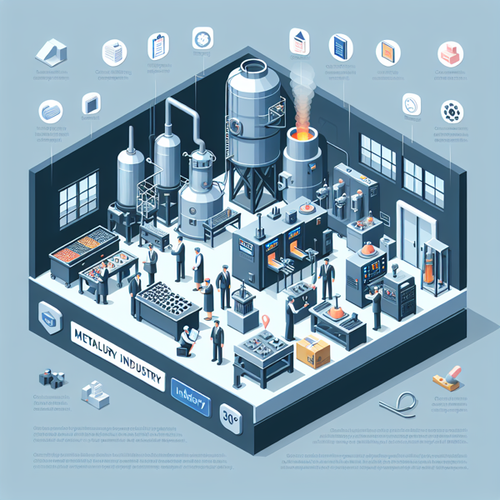
In November 2025, the metallurgy sector saw the publication of five pivotal international standards that reshape best practices for casting production, welding, fatigue testing, and non-destructive examination. Covering diverse materials and processes from arc-welded steel castings to spheroidal graphite iron, these documents introduce updated technical requirements—all crucial for manufacturers, engineers, and compliance managers aiming for quality and safety. This comprehensive guide outlines each standard, their targets, and what their adoption means for your metallurgical operations.
Overview
Metallurgy, encompassing the science and production of metals and alloys, is at the heart of countless industries—from power generation and automotive to construction and aerospace. Reliable material performance, safety, and regulatory compliance all hinge on adherence to robust international standards.
This month, five new or revised standards set updated benchmarks for welding procedure qualification, fatigue property testing, and ultrasonic non-destructive inspection for castings. Adopting these standards improves product quality assurance, streamlines procurement, and mitigates risk—making this update essential reading for professionals in engineering, quality management, R&D, supply chain, and regulatory affairs.
In this article, you’ll find:
- Summaries of the five new standards
- Key requirements and technical insights
- Practical compliance and implementation strategies
- Links to access the full standards on iTeh Standards
Detailed Standards Coverage
EN ISO 11970:2025 – Welding Procedure Qualification for Steel and Nickel-Base Castings
Specification and qualification of welding procedures for production welding of steel and nickel-base castings (ISO 11970:2025)
This standard defines a globally harmonized framework for specifying and qualifying welding procedures (WPS) used in the production welding of steel and nickel-base castings. It is crucial for manufacturers, foundries, and fabricators involved in critical components where weld integrity is essential.
Scope & Approach:
- Covers arc welding of steel castings, with optional extension to other fusion welding methods by agreement.
- Outlines how to generate and qualify a Welding Procedure Specification (WPS), including necessary test arrangements, examination, and documentation.
- Details test piece requirements, including sample geometry, welding conditions, and essential variables (material group, thickness, process, filler, heat input).
Who should comply:
- Steel and nickel-based foundries
- Heavy engineering, energy, marine, and construction sectors
- Contracting authorities and procurement specialists specifying welded castings
Practical implications:
- Prevents weld failures in service by requiring destructive and non-destructive tests.
- Ensures traceability of procedures and welder qualifications.
- Purchasers may require supplementary or stricter tests for critical applications.
Notable changes vs. prior editions:
- Added updated references and minor editorial improvements over the 2016 edition.
- Clarification of qualification validity ranges and essential testing variables.
Key highlights:
- Comprehensive testing protocol for welds (tensile, impact, macro/micro, hardness, NDT).
- Validity defined for thickness, process, position, joint type, material group.
- Acceptance of prior national qualifications within range, minimizing duplicate testing.
Access the full standard:View EN ISO 11970:2025 on iTeh Standards
ISO 23296:2025 – Metallic Materials Force-Controlled Thermo-Mechanical Fatigue Testing
Metallic materials – Fatigue testing – Force controlled thermo-mechanical fatigue testing method
ISO 23296:2025 specifies standardized laboratory practices for force-controlled thermo-mechanical fatigue (TMF) tests—a vital tool for predicting material lifespan under cyclic force and temperature. TMF simulates demanding real-world conditions for components like turbine blades and engine parts.
Scope & Approach:
- Applies to metals and alloys subject to simultaneous and cyclic force/stress and temperature change.
- Describes equipment configuration, specimen preparation, cycle control, data acquisition, and reporting.
- Outlines rigorous requirements for measuring and controlling both mechanical force and temperature profiles across the specimen gauge section.
Who should comply:
- R&D labs, OEMs, material suppliers, and testing service providers in automotive, energy, and aerospace sectors.
- Engineers developing components subjected to combined thermal and mechanical loading.
Practical implications:
- Helps establish reliable force-life (S-N) diagrams for component design validation.
- Ensures test repeatability and results comparability between labs.
- Supports product qualification and failure analysis programs.
Notable changes vs. previous edition:
- Expanded terms, improved definitions, and clarified test reporting per industry feedback.
Key highlights:
- Detailed calibration requirements for testing machines.
- Test method covers validation, temperature uniformity, waveform generation, and result analysis.
- Includes annexes on uncertainty measurement, thermocouple arrangement, and handling guidance.
Access the full standard:View ISO 23296:2025 on iTeh Standards
EN 12680-1:2025 – Ultrasonic Testing of Steel Castings for General Purposes
Founding – Ultrasonic testing – Part 1: Steel castings for general purposes
EN 12680-1:2025 establishes the requirements for ultrasonic (UT) testing of ferritic steel castings, focusing on detecting internal discontinuities using the pulse-echo technique. This procedure is essential for manufacturers requiring reliable, high-quality general-purpose castings.
Scope & Approach:
- Applies to steel castings (typically grain-refined) up to 600 mm wall thickness.
- Specifies baseline test procedures, wall zone definitions (core and rim), and acceptance criteria for both planar and volumetric discontinuities.
- Details documentation, qualification of UT personnel, and severity level assignments.
Who should comply:
- Steel foundries, quality managers, and NDT (non-destructive testing) professionals.
- End users in machinery, infrastructure and plant engineering sectors procuring standard-performance castings.
Practical implications:
- UT findings guide acceptance or further corrective action like finishing welding.
- Purchasers can specify additional or stricter criteria in procurement contracts.
- Specifies personnel qualification (EN ISO 9712 or equivalent) for test reliability.
Notable changes from 2003 version:
- Updated severity levels, discontuity definitions, and test protocols.
- Clarifies risk-based evaluation by zone, boosting product reliability.
Key highlights:
- Severity levels allow tailored quality control per casting criticality.
- Applicable to grain-refined ferritic steels; not suited for austenitic or weld joint testing.
- Clear guidance on acceptance of discontinuity types and dimensions.
Access the full standard:View EN 12680-1:2025 on iTeh Standards
EN 12680-2:2025 – Ultrasonic Testing for Highly Stressed Steel Castings
Founding – Ultrasonic testing – Part 2: Steel castings for highly stressed components
EN 12680-2:2025 advances non-destructive testing by sharpening requirements for ultrasonic inspection of steel castings intended for highly stressed or critical service—such as turbine casings or safety-relevant pressure parts.
Scope & Application:
- Specifies pulse-echo UT procedures for high-material-utilization castings, subjected to combined static, cyclic, and thermal loading.
- Applies to grain-refined ferritic steel castings up to 600 mm thick.
- Acceptance limits and zone criteria are tighter to reflect the increased safety implications.
Who should comply:
- Heavy engineering, power generation, transportation OEMs specifying high-stress castings.
- NDT and QA/QC professionals verifying structural integrity of mission-critical parts.
Practical implications:
- Purchasers define what constitutes a ‘highly stressed’ component and may specify even stricter acceptance criteria.
- Results influence final acceptance, repair cycles, and service life prediction.
- Demands stringent qualification for test personnel per EN ISO 9712.
Notable changes:
- Technical alignment with evolving industry safety standards.
- Enhanced acceptance levels and defect sizing for fracture-critical components.
Key highlights:
- Explicit requirements for core and rim zone analysis.
- Guidance on handling thick wall sections above 600 mm (by agreement).
- Requirement for documenting test sensitivity and evaluation logic in reports.
Access the full standard:View EN 12680-2:2025 on iTeh Standards
EN 12680-3:2025 – Ultrasonic Testing of Spheroidal Graphite Cast Iron Castings
Founding – Ultrasonic testing – Part 3: Spheroidal graphite cast iron castings
This part sets forth the ultrasonic testing requirements exclusive to spheroidal graphite (ductile) iron castings—distinct from steel due to their microstructure and defect profile.
Scope & Application:
- Applies to detection of internal discontinuities by pulse-echo UT in both small and large ductile iron castings.
- Excludes phased array and transmission techniques, recognizing their lower efficacy for these defect types.
- Addresses rim and core zone differentiation for proper defect evaluation and acceptance.
Who should comply:
- Foundries, quality control, and NDT teams involved in ductile iron casting production.
- Industries using ductile iron for stress-bearing machinery, pipelines, or automotive components.
Practical implications:
- Specific procedures adapt to different casting sizes, wall zones, and severity levels.
- Test reports must document detection sensitivity and specific zone-based findings.
- Personnel qualifications (EN ISO 9712) mandated for all operators.
Notable changes:
- Modernized definitions and protocols in line with current foundry best practices (over 2011 edition).
- Improved clarity on sound velocity and probe selection for graphite materials.
Key highlights:
- Customizable severity levels for small versus large castings.
- Emphasis on proper equipment qualification and record-keeping.
- Guidance on handling rim/core zone interface defects for service-critical evaluation.
Access the full standard:View EN 12680-3:2025 on iTeh Standards
Industry Impact & Compliance
Adopting these newly published metallurgy standards has wide-reaching implications for producers, end-users, and regulatory authorities:
- Quality and Reliability: Enhanced welding procedures and more precise testing directly reduce failure rates. This is especially crucial for critical infrastructure and machinery.
- Compliance Deadlines: CEN and ISO member countries must adopt these standards nationally by May 2026. All new contracts and production after this date should comply, except where explicitly grandfathered.
- Procurement and Tendering: Procurement professionals can confidently specify internationally recognized requirements, increasing transparency and interoperability.
- Risk Reduction: Clear acceptance levels for discontinuities and weld performance mean fewer ambiguous cases and less risk of catastrophic service failures.
- Cost and Efficiency: Early detection of non-conforming parts through improved fatigue and ultrasonic tests can drastically cut scrap rates and rework costs.
Organizations that do not update their processes risk failing audits, losing market access, or facing warranty claims.
Technical Insights
Several major technical themes are reinforced across these five standards:
- Standardized Qualification and Documentation: EN ISO 11970:2025 mandates a documented, repeatable welding process—backed by a tested WPS and detailed records.
- Advanced Non-Destructive Testing (NDT): The EN 12680 series brings rigour to ultrasonic pulse-echo techniques, setting a high bar on test sensitivity, zoned acceptance, and personnel competency.
- Test Machine Calibration: ISO 23296:2025 outlines stringent calibration protocols and force/temperature waveform control to ensure TMF test reliability.
- Zone-Specific Evaluation: Both EN 12680-1 and -2 require detailed distinction between rim and core zones, aligning defect size acceptance with part criticality.
- Operator Qualification: All standards require technicians to be qualified per EN ISO 9712 or equivalents—underscoring the need for ongoing training and certification.
Implementation Best Practices:
- Gap Analysis: Review current procedures and identify gaps against new standard requirements.
- Training: Ensure staff are updated on new protocols, especially for UT and TMF apparatus.
- Documentation: Upgrade WPQRs, test logs, and reports to meet the enhanced requirements.
- Supplier Audits: Verify external suppliers’ alignment with the updated standards.
Testing & Certification:
- For welding, maintain evidence of qualified procedures and skilled personnel.
- For NDT, ensure periodic calibration and performance checks of test equipment.
- For fatigue testing, follow ISO 23296's calibration and reporting mandates for repeatable, traceable results.
Conclusion & Next Steps
The November 2025 suite of metallurgy standards marks a major advance in quality, safety, and reliability for welded, cast, and fatigue-tested products. By familiarizing your technical and QA teams with these requirements and updating internal protocols accordingly, your organization can:
- Safeguard compliance and market access
- Reduce costs through early detection and defect prevention
- Deliver superior products, strengthening your reputation
Recommended actions:
- Download full texts from iTeh Standards using the links above
- Conduct internal trainings and supplier briefings
- Schedule compliance audits before the national adoption deadlines
Stay with iTeh Standards for authoritative, up-to-date guidance on international metallurgical standards. Explore Part 2 for more November 2025 metallurgy updates!
Categories
- Latest News
- New Arrivals
- Generalities
- Services and Management
- Natural Sciences
- Health Care
- Environment
- Metrology and Measurement
- Testing
- Mechanical Systems
- Fluid Systems
- Manufacturing
- Energy and Heat
- Electrical Engineering
- Electronics
- Telecommunications
- Information Technology
- Image Technology
- Precision Mechanics
- Road Vehicles
- Railway Engineering
- Shipbuilding
- Aircraft and Space
- Materials Handling
- Packaging
- Textile and Leather
- Clothing
- Agriculture
- Food technology
- Chemical Technology
- Mining and Minerals
- Petroleum
- Metallurgy
- Wood technology
- Glass and Ceramics
- Rubber and Plastics
- Paper Technology
- Paint Industries
- Construction
- Civil Engineering
- Military Engineering
- Entertainment