


Understanding Key Standards for Mechanical Testing of Metals: Indentation, Calibration, and Crack Arrest
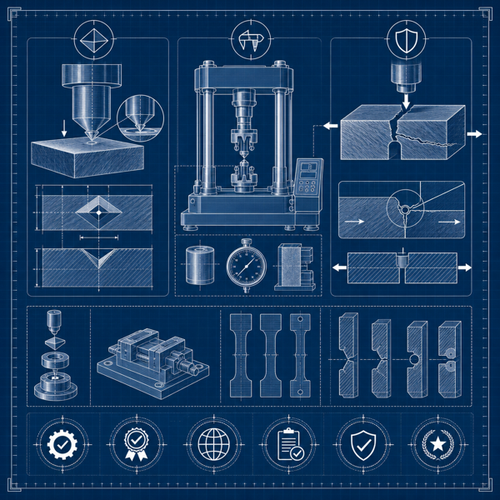
Mechanical testing of metals forms the backbone of metallurgy and modern material engineering, ensuring the integrity, durability, and reliability of countless products and infrastructures. With the rapid pace of technological advancement and globalization, adherence to internationally recognized mechanical testing standards is no longer optional for businesses – it is a strategic necessity.
From precision manufacturing to the construction of massive structures, the safety, productivity, and scalability of operations depend on standardized testing. This article delves into three pivotal international standards for mechanical testing of metals: ISO 14577-1:2026, ISO 14577-3:2026, and ISO 20198:2026. We explore their scope, requirements, and value for businesses, providing practical guidance for implementation and industry compliance.
Overview / Introduction
The metallurgy industry underpins key sectors like automotive, aerospace, construction, and electronics, with mechanical testing of metals at its core. Understanding and controlling the mechanical properties of metals—such as hardness, elasticity, and brittle fracture behavior—is fundamental for product development, quality control, and regulatory compliance.
International standards for mechanical testing, developed by organizations like ISO, provide harmonized methodologies, minimum requirements, and procedures to:
- Ensure consistent interpretation and reproducibility of test results
- Facilitate international trade and competitiveness
- Reduce safety risks and product failures
- Support process improvement and scaling
In this article, you will learn what each key standard covers, how to interpret and implement its requirements, and why compliance is crucial for your business strategy and operational excellence.
Detailed Standards Coverage
ISO 14577-1:2026 – Instrumented Indentation Test for Hardness and Materials Parameters - Part 1: Test Method
Full Standard Title: Metallic materials — Instrumented indentation test for hardness and materials parameters — Part 1: Test method
Modern manufacturing and materials engineering require not just information on a metal's surface hardness, but also a detailed understanding of its elasto-plastic properties. ISO 14577-1:2026 provides a comprehensive, reproducible, and machine-controlled methodology for the instrumented indentation test, covering macro, micro, and nano ranges. It enables manufacturers and research laboratories to measure hardness and derive additional material parameters across a wide range of metallic and coated materials.
Scope and Applicability
- Applies to metallic materials (and, with caution, to non-metallics or coated materials) in macro (2 N ≤ F ≤ 30 kN), micro (2 N > F; h > 0,2 μm), and nano (h ≤ 0,2 μm) force/depth ranges.
- Standardizes the continuous measurement and analysis of force and displacement data during depth-controlled or force-controlled indentation cycles.
- Focuses on achieving meaningful, reproducible results across different machines and indenter types by emphasizing calibration and zero-point assignment.
Key Requirements & Specifications
- Details the preparation and verification of test pieces, including surface cleanliness, demagnetization, and minimization of residual stresses.
- Specifies instrument characteristics, including the necessity for calibration and compensating for machine compliance and indenter area function.
- Outlines procedures for temperature, environmental stability, and precise assignment of the indentation zero point.
- Provides Annexes for advanced calculations: determination of material parameters, correction for radial displacement, uncertainty estimation, and more.
Who Needs to Comply?
- Metals laboratories, material research institutes, quality assurance teams in manufacturing, industries producing or using components where surface and subsurface properties are safety or function critical (e.g., aerospace, automotive, electronics, coatings, microfabrication).
Practical Implementation Implications
- Enables more reliable quality control, especially in high-precision and high-value applications
- Supports competitive product development (where deeper understanding of material behavior is needed)
- Facilitates cross-laboratory and cross-border comparability of results
Notable Features
- Three indentation regimes: macro, micro, and nano, each with explicit requirements
- Detailed procedures for calibration of instrument and indenter shape
- Emphasis on uncertainty calculation and reporting
Key highlights:
- Covers macro, micro, and nano indentation ranges
- Defines instrumented hardness and modulus measurement
- Provides procedures for calibration, uncertainty, and environmental controls
Access the full standard:View ISO 14577-1:2026 on iTeh Standards
ISO 14577-3:2026 – Calibration of Reference Blocks
Full Standard Title: Metallic materials — Instrumented indentation test for hardness and materials parameters — Part 3: Calibration of reference blocks
Proper calibration is the foundation of reliable mechanical testing. ISO 14577-3:2026 specifies the requirements and procedures for calibrating reference blocks, which are essential for the indirect verification of indentation testing machines. By standardizing the properties and calibration methods for these blocks, this document ensures measurement traceability and confidence in test machine performance over time.
Scope and Applicability
- Focuses exclusively on reference blocks used to verify and calibrate instrumented indentation testing machines as per ISO 14577-2
- Applies only to reference materials where pre-test preparation does not require removal of surface layers
Key Requirements & Specifications
- Stipulates material homogeneity, uniformity, and long-term stability requirements for blocks
- Specifies minimum block thicknesses for nano, micro, and macro force applications
- Requires thorough marking and documentation, including calibration thickness and an identifying mark on test surfaces
- Outlines test surface roughness criteria, demagnetization, mounting, and handling rules
- Details calibrating machine performance: force calibration, indenter verification, displacement calibration – all directly traceable to SI units
Who Needs to Comply?
- Testing machine manufacturers, calibration laboratories, materials testing labs, quality control departments
- Organizations that need ongoing, traceable evidence of machine performance (e.g., certifiers, large-scale manufacturers)
Practical Implementation Implications
- Ensures all hardness and modulus measurements can be tied back to a globally recognized standard
- Reduces drift, bias, or error due to machine component wear or misalignment
- Vital for laboratories seeking ISO 17025 accreditation or compliance with international buyer requirements
Notable Features
- Explicit uniformity and roughness requirements for reference block manufacture
- Comprehensive calibrating machine requirements: force, displacement, and indenter verification
- Harmonization with ISO 14577-1 and ISO 14577-2
Key highlights:
- Mandates material stability and traceability for reference blocks
- Sets minimum thickness and roughness requirements
- Details calibration intervals for instrumentation
Access the full standard:View ISO 14577-3:2026 on iTeh Standards
ISO 20198:2026 – Determination of Brittle Crack Arrest Temperature (CAT) in Steel
Full Standard Title: Metallic materials — Steel — Method of test for the determination of brittle crack arrest temperature (CAT)
Safety-critical steel structures – such as ship hulls, pressure vessels, and critical infrastructure – must be designed to prevent catastrophic brittle fracture, even at extremely low temperatures. ISO 20198:2026 defines a scientifically rigorous method for determining the brittle crack arrest temperature (CAT) for steel plate materials that exhibit ductile-to-brittle transitions.
Scope and Applicability
- Applies to ferritic and bainitic rolled steel plates with body-centred cubic structure
- Targets steels with tensile strengths up to 950 MPa and thicknesses from greater than 6 mm to 200 mm
- Defines a CAT assessment range spanning -196 °C to +100 °C
- Typically vital for materials used in marine, construction, heavy equipment, and energy sectors
Key Requirements & Specifications
- Specifies preparation and configuration of test specimens, including grooves and embrittled zones achieved by electron beam welding (EBW) or local temperature gradient (LTG)
- Outlines detailed temperature measurement and control procedures using calibrated systems per ISO 7500-1
- Describes methods for brittle crack initiation (impact or double tension)
- Instructs on fracture path observation, data recording, and valid test result judgment
Who Needs to Comply?
- Steel producers, shipbuilders, energy infrastructure developers, civil and offshore engineering, research and testing labs
- Any organization manufacturing or certifying steel plates for applications subject to low temperature or brittle fracture risk
Practical Implementation Implications
- Helps prevent catastrophic failures in cold environments or under accidental overload
- Supports compliance with marine classification society requirements, international building codes, and insurance mandates
- Facilitates objective risk assessment and material comparison for procurement
Notable Features
- Thoroughly defined test geometry and preparation, with strict requirements for side grooves, welding, and temperature control
- Scientific methodology for valid CAT assessment and reporting
- Harmonization with ISO 20064 for brittle crack arrest toughness
Key highlights:
- Enables identification of safe operating temperature limits for steels
- Supports catastrophic failure prevention in cold-climate or safety-critical applications
- Defines step-by-step procedures for specimen preparation, testing, and CAT determination
Access the full standard:View ISO 20198:2026 on iTeh Standards
Industry Impact & Compliance
How Standards Shape Business Success
International mechanical testing standards are more than just technical documents. Their adoption transforms business operations at multiple levels:
- Productivity: Testing processes become repeatable, comparable, and less prone to costly recall or dispute. Automation of reporting and data analysis is facilitated by well-specified input/output protocols.
- Security and Safety: Conformance prevents dangerous product failures and helps companies identify risks early.
- Scalability: Unified test methods mean global facilities (or supply chains) can exchange data, share learning, and rapidly expand operations without ambiguity or re-testing.
- Reputation & Market Access: ISO compliance is often a prerequisite for supplier approval, market entry, insurers, and government contracts.
Compliance Considerations
Businesses should ensure that:
- Their test laboratories are certified or audited for compliance with the latest standard revisions
- Equipment is calibrated using reference blocks and procedures as per ISO protocols
- Material certificates and test reports capture all mandatory information (e.g., environmental conditions, calibration status, uncertainty estimates)
Benefits of Adopting These Standards
- Reduced Risk: Lower likelihood of catastrophic failure and liability
- Process Efficiency: Less frequent retesting, rework, and reduced false rejects
- Customer Confidence: Greater credibility and fewer trust barriers with buyers, auditors, and regulators
Risks of Non-Compliance
- Invalid or contested test results
- Certification rejection for key markets
- Insurance coverage shortfalls
- Elevated risk of failure, recall, or legal exposure
Implementation Guidance
How to Implement Mechanical Testing Standards
- Gap Analysis: Compare current test methods, equipment, and documentation to the requirements of each applicable ISO standard.
- Training: Ensure all technicians and engineers understand the new methodologies, especially instrumented testing and data reporting.
- Calibration & Verification: Develop a routine schedule for equipment calibration using certified reference blocks and document all checks.
- Environment Control: Maintain stable temperature and humidity within the specified limits for sensitive equipment and sample preparation.
- Documentation: Record all test conditions, calibration details, uncertainties, and exceptions in standardized test reports.
- Continuous Improvement: Audit and refine internal procedures based on periodic review, client feedback, or standard updates.
Best Practices for Adopting ISO Standards
- Use only internationally certified reference materials and blocks
- Automate data capture to minimize human error
- Collaborate with upstream and downstream suppliers to align on mutual testing protocols
- Participate in interlaboratory comparison programs to validate consistency
- Engage with standards organizations and updates to stay ahead of revisions
Resources for Organizations
- iTeh Standards online platform for easy access to the full text of each standard
- Industry forums and ISO technical committee publications
- Accredited calibration and testing laboratories offering third-party verification services
Conclusion / Next Steps
The implementation of ISO standards for mechanical testing of metals—namely ISO 14577-1:2026, ISO 14577-3:2026, and ISO 20198:2026—is fundamental for today’s metallurgical, manufacturing, and infrastructure industries. These standards drive productivity, enhance safety, and provide the foundation for scalable, globally competitive operations.
Organizations should prioritize:
- Immediate review of their current procedures, controls, and reporting against these standards
- Routine training and competency assessment for staff involved in mechanical testing
- Regular calibration and documentation using reference materials traceable to international standards
Explore the latest versions on iTeh Standards to ensure your operations are not just compliant, but leading in performance, reliability, and global market readiness. Staying aligned with these standards is not simply about compliance, but is a key strategic advantage for quality-driven, safe, and efficient operations.
Categories
- Latest News
- New Arrivals
- Generalities
- Services and Management
- Natural Sciences
- Health Care
- Environment
- Metrology and Measurement
- Testing
- Mechanical Systems
- Fluid Systems
- Manufacturing
- Energy and Heat
- Electrical Engineering
- Electronics
- Telecommunications
- Information Technology
- Image Technology
- Precision Mechanics
- Road Vehicles
- Railway Engineering
- Shipbuilding
- Aircraft and Space
- Materials Handling
- Packaging
- Textile and Leather
- Clothing
- Agriculture
- Food technology
- Chemical Technology
- Mining and Minerals
- Petroleum
- Metallurgy
- Wood technology
- Glass and Ceramics
- Rubber and Plastics
- Paper Technology
- Paint Industries
- Construction
- Civil Engineering
- Military Engineering
- Entertainment